

What do you think?
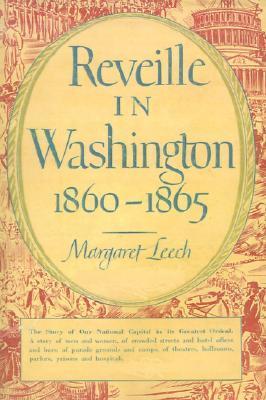
Reveille in Washington, 1860-65
1860: The American capital is sprawling, fractured, squalid, colored by patriotism and treason, and deeply divided along the political lines that will soon embroil the nation in bloody conflict. Chaotic and corrupt, the young city is populated by bellicose congressmen, Confederate
conspirators, and enterprising prostitutes. Soldiers of a volunteer army swing from the dome of the Capitol, assassins stalk the avenues, and Abraham Lincoln struggles to justify his presidency as the Union heads to war.
Reveille in Washington focuses on the everyday politics and preoccupations of Washington during the Civil War. From the stench of corpse-littered streets to the plunging lace on Mary Lincoln’s evening gowns, Margaret Leech illuminates the city and its familiar figures—among them Abraham Lincoln, Jefferson Davis, Robert E. Lee, William Seward, and Mary Surratt—in intimate and fascinating detail.
Leech’s book remains widely recognized as both an impressive feat of scholarship and an uncommonly engrossing work of history.
conspirators, and enterprising prostitutes. Soldiers of a volunteer army swing from the dome of the Capitol, assassins stalk the avenues, and Abraham Lincoln struggles to justify his presidency as the Union heads to war.
Reveille in Washington focuses on the everyday politics and preoccupations of Washington during the Civil War. From the stench of corpse-littered streets to the plunging lace on Mary Lincoln’s evening gowns, Margaret Leech illuminates the city and its familiar figures—among them Abraham Lincoln, Jefferson Davis, Robert E. Lee, William Seward, and Mary Surratt—in intimate and fascinating detail.
Leech’s book remains widely recognized as both an impressive feat of scholarship and an uncommonly engrossing work of history.
524 pages, Paperback
First published January 1, 1941
About the author
Margaret Leech
14 books12 followersMargaret Kernochan Leech also known as Margaret Pulitzer, was an American author and historian, who won two Pulitzer Prizes in history, for her books Reveille in Washington (1942) and In the Days of McKinley (1960).
She was born in Newburgh, New York, obtained a B.A. from Vassar College in 1915, and worked for fund-raising organizations during World War I, including the American Committee for Devastated France.
She started her writing career for the Condé Nast publishing company before World War I. Leech also worked in advertising and publicity. After the war, she became friendly with members of the Algonquin Round Table, including critic-raconteur Alexander Woollcott. She was an associate of some of the wittiest and most brilliant men and women of literature that spent time at the Algonquin Hotel in Manhattan.
In 1928 she married Ralph Pulitzer, publisher of the New York World newspaper. (His father, Joseph Pulitzer, had established the Pulitzer Prize by a bequest to Columbia University.) They had one daughter, Susan.
Leech also wrote three novels: The Back of the Book (1924), Tin Wedding (1926), and ,i>The Feathered Nest (1928).
Leech died of a stroke in New York City at age 80.
She was born in Newburgh, New York, obtained a B.A. from Vassar College in 1915, and worked for fund-raising organizations during World War I, including the American Committee for Devastated France.
She started her writing career for the Condé Nast publishing company before World War I. Leech also worked in advertising and publicity. After the war, she became friendly with members of the Algonquin Round Table, including critic-raconteur Alexander Woollcott. She was an associate of some of the wittiest and most brilliant men and women of literature that spent time at the Algonquin Hotel in Manhattan.
In 1928 she married Ralph Pulitzer, publisher of the New York World newspaper. (His father, Joseph Pulitzer, had established the Pulitzer Prize by a bequest to Columbia University.) They had one daughter, Susan.
Leech also wrote three novels: The Back of the Book (1924), Tin Wedding (1926), and ,i>The Feathered Nest (1928).
Leech died of a stroke in New York City at age 80.
Ratings & Reviews
Friends & Following
Create a free account to discover what your friends think of this book!
Community Reviews
Displaying 1 - 30 of 78 reviews

June 10, 2015
Reveille, as every American soldier knows, is the sunrise bugle call that tells everyone in the United States’ armed forces, every day, that the time has come to get up and go to work. And when historian Margaret Leech gave her magisterial 1942 study of Civil War Washington, D.C., the title Reveille in Washington, 1860-1865, she may have meant more by her title than simply indicating that the notes of reveille -- what soldiers have often described as you’ve-got-to-get-up, you’ve-got-to-get-up, you’ve-got-to-get-up-this-MOR-ning! -- were a melody often heard around the camps of the Union Army during the American Civil War.
Margaret Leech’s name may not be widely known today, but she was a known and respected literary figure of her time. As the frontispiece note to this New York Review Books edition of Reveille in Washington indicates, Leech not only was a successful novelist, playwright, and biographer, but also was “the first woman to win the Pulitzer Prize for History and one of only two people to win it twice”. Reveille in Washington won Leech one of those Pulitzer Prizes, and deservedly so. It is a magnificent study of how an entire city woke up to the sounds of reveille, and changed in response to the pressures of war.
The reveille, the awakening, that Washington’s new status as wartime capital brought was often a painful one. Leech tells well stories like that of Union Colonel Elmer Ellsworth, an officer whose youth and enthusiasm made him a favorite of the Lincoln family. When Colonel Ellsworth was killed in nearby Alexandria, Virginia, having torn a Confederate flag down from a hotel rooftop, the shock was palpable, not only for President Lincoln and his family but for all of Washington -- indeed, all of the nation. “From the capital, sorrow spread in a wave over the Union. It was as if the people of the republic, so inexperienced in war, had closed their eyes to the purpose for which their young men had been sent to Washington; as if Ellsworth’s death had for a moment undeceived them, and a premonition passed, like a shudder, over all hearts” (p. 101). Ellsworth’s death was one of the first; over six hundred thousand more deaths would follow.
The Civil War years were a time of profound change in Washington, extending to the passage of an emancipation act passed by the Congress and signed by the President in April of 1862. In this way, emancipation -- albeit with compensation to slaveholders who could prove their loyalty to the Union -- came to Washington, D.C., before it came to the rebellious Confederate states. Yet some things did not change; newly free African Americans were still not allowed to ride District of Columbia streetcars, and “A year and a half after Congress provided public schools for Negro children, none had been opened in the District” (p. 302). In short, in Washington, D.C., as in the nation of which Washington is the capital, the Civil War abolished slavery, but did not abolish racism; and an unjust, segregated social system would persist into the next century.
Washingtonians with an eye on their city’s Civil War history know, as Leech chronicles with an eye on the telling detail, that Washington became a combined military hospital and armed camp during the Civil War. Grievously wounded soldiers from both sides flooded into the city’s many hospitals, and luminaries like Clara Barton and Walt Whitman were among those who treated them. The endangered capital, on the very fringes of the Confederacy, was ringed with dozens of forts, and once that network of forts was tested.
In 1864, Confederate General Jubal Early, hoping to relieve the pressure that Union General Ulysses S. Grant’s Army of the Potomac was exerting against Richmond, led a Confederate army down the Shenandoah Valley of Virginia, and then all the way to the gates of Washington. His army was stopped at Fort Stevens, near the top of the diamond of contemporary Washington, and close to the modern suburb of Silver Spring, Maryland; but not before President Lincoln himself -- understandably, if somewhat imprudently, curious to see something of this war effort he had been leading for so long -- stood up on a parapet to see some battle action. “A surgeon was killed by a sharpshooter’s bullet within three feet of Lincoln….[I]t was left for [an] exasperated young aide, Lieutenant-Colonel Oliver Wendell Holmes, to shout at the Chief Executive, ‘Get down, you fool!’” (p. 423). As a native Washingtonian who has visited Fort Stevens, looking out from a reconstructed parapet at what is today the intersection of 13th and Quackenbos streets in the Brightwood neighborhood of residential Washington, I still feel that no other historian has done as well as Leech did in capturing that moment of high drama.
Leech emphasizes well how the assassination of President Lincoln in April of 1865 affected Washingtonians: shock, grief, shame that such a foul crime had been perpetrated in their city, and finally a desire for revenge. And she shows well how the grief and anger consequent upon President Lincoln’s assassination stood in stark contrast with the feelings of joy and triumph apparent in the Grand Review of the victorious Union armies along Pennsylvania Avenue in May of 1865.
The fact that Reveille in Washington was published in 1942 may have contributed to this book’s popularity. In 1942, as in 1862, Washington was the capital of a nation at war; in both the Civil War and World War II, Washington grew and changed as the pressures of total war brought in new residents, strained the city’s resources, and changed the way the people of the capital thought about American democracy itself. A helpful foreword by James M. McPherson, the premier Civil War historian of this generation, emphasizes well all that was strong, innovative, and original about this epic historical study. This edition does not have all of the photographs and illustrations that graced earlier hardcover editions of the book; but nonetheless, for both Civil War enthusiasts and students of the history of Washington, D.C., Reveille in Washington is essential.
Margaret Leech’s name may not be widely known today, but she was a known and respected literary figure of her time. As the frontispiece note to this New York Review Books edition of Reveille in Washington indicates, Leech not only was a successful novelist, playwright, and biographer, but also was “the first woman to win the Pulitzer Prize for History and one of only two people to win it twice”. Reveille in Washington won Leech one of those Pulitzer Prizes, and deservedly so. It is a magnificent study of how an entire city woke up to the sounds of reveille, and changed in response to the pressures of war.
The reveille, the awakening, that Washington’s new status as wartime capital brought was often a painful one. Leech tells well stories like that of Union Colonel Elmer Ellsworth, an officer whose youth and enthusiasm made him a favorite of the Lincoln family. When Colonel Ellsworth was killed in nearby Alexandria, Virginia, having torn a Confederate flag down from a hotel rooftop, the shock was palpable, not only for President Lincoln and his family but for all of Washington -- indeed, all of the nation. “From the capital, sorrow spread in a wave over the Union. It was as if the people of the republic, so inexperienced in war, had closed their eyes to the purpose for which their young men had been sent to Washington; as if Ellsworth’s death had for a moment undeceived them, and a premonition passed, like a shudder, over all hearts” (p. 101). Ellsworth’s death was one of the first; over six hundred thousand more deaths would follow.
The Civil War years were a time of profound change in Washington, extending to the passage of an emancipation act passed by the Congress and signed by the President in April of 1862. In this way, emancipation -- albeit with compensation to slaveholders who could prove their loyalty to the Union -- came to Washington, D.C., before it came to the rebellious Confederate states. Yet some things did not change; newly free African Americans were still not allowed to ride District of Columbia streetcars, and “A year and a half after Congress provided public schools for Negro children, none had been opened in the District” (p. 302). In short, in Washington, D.C., as in the nation of which Washington is the capital, the Civil War abolished slavery, but did not abolish racism; and an unjust, segregated social system would persist into the next century.
Washingtonians with an eye on their city’s Civil War history know, as Leech chronicles with an eye on the telling detail, that Washington became a combined military hospital and armed camp during the Civil War. Grievously wounded soldiers from both sides flooded into the city’s many hospitals, and luminaries like Clara Barton and Walt Whitman were among those who treated them. The endangered capital, on the very fringes of the Confederacy, was ringed with dozens of forts, and once that network of forts was tested.
In 1864, Confederate General Jubal Early, hoping to relieve the pressure that Union General Ulysses S. Grant’s Army of the Potomac was exerting against Richmond, led a Confederate army down the Shenandoah Valley of Virginia, and then all the way to the gates of Washington. His army was stopped at Fort Stevens, near the top of the diamond of contemporary Washington, and close to the modern suburb of Silver Spring, Maryland; but not before President Lincoln himself -- understandably, if somewhat imprudently, curious to see something of this war effort he had been leading for so long -- stood up on a parapet to see some battle action. “A surgeon was killed by a sharpshooter’s bullet within three feet of Lincoln….[I]t was left for [an] exasperated young aide, Lieutenant-Colonel Oliver Wendell Holmes, to shout at the Chief Executive, ‘Get down, you fool!’” (p. 423). As a native Washingtonian who has visited Fort Stevens, looking out from a reconstructed parapet at what is today the intersection of 13th and Quackenbos streets in the Brightwood neighborhood of residential Washington, I still feel that no other historian has done as well as Leech did in capturing that moment of high drama.
Leech emphasizes well how the assassination of President Lincoln in April of 1865 affected Washingtonians: shock, grief, shame that such a foul crime had been perpetrated in their city, and finally a desire for revenge. And she shows well how the grief and anger consequent upon President Lincoln’s assassination stood in stark contrast with the feelings of joy and triumph apparent in the Grand Review of the victorious Union armies along Pennsylvania Avenue in May of 1865.
The fact that Reveille in Washington was published in 1942 may have contributed to this book’s popularity. In 1942, as in 1862, Washington was the capital of a nation at war; in both the Civil War and World War II, Washington grew and changed as the pressures of total war brought in new residents, strained the city’s resources, and changed the way the people of the capital thought about American democracy itself. A helpful foreword by James M. McPherson, the premier Civil War historian of this generation, emphasizes well all that was strong, innovative, and original about this epic historical study. This edition does not have all of the photographs and illustrations that graced earlier hardcover editions of the book; but nonetheless, for both Civil War enthusiasts and students of the history of Washington, D.C., Reveille in Washington is essential.

April 14, 2021
This is another fine book that I would never have read, would never have even known existed, without the Time Reading Program, a short-lived book club from the 1960s whose editors chose their selections well. The full list of its books can be found with a quick internet search, and though most are long out of print, they are worth the effort to to track down from used bookstores.
It might seem like an odd subject, the biography of a city during a certain time period, but in Margaret Leech’s hands the people and events come alive. For anyone with an interest in the American Civil War, it adds nuance and context to the conflict.
This book makes only passing mention of the great battles of the war, keeping its focus firmly on the people and events in the city, and not just the politicians but the soldiers who swarmed into town, the profiteers and office-seekers, the spies, the socialites, and even the brothel keepers. As it is today, Washington has always been a city of schemers, and during the war there was no end of inept generals backstabbing each other in their attempts to further their own careers. It was during this time that one of the war’s most famous anecdotes came about. When General Halleck asked President Lincoln to relieve Ulysses Grant from command on the grounds that he was drinking heavily, and was negligent and disobedient, Lincoln replied, “I can’t spare this man; he fights.”
Washington was flooded with soldiers, some just passing through, some guarding the forts that ringed the city, and some assigned to the various operational and logistical commands. It was also, as was frequently noted by visitors, a city of hospitals. As the war progressed and casualties increased, everything that could be used to house wounded soldiers was pressed into services: hospitals, churches, the House and Senate Chambers of Congress, the Patent Office (now the National Portrait Gallery), even Georgetown University. Given the state of medical care at the time, the hospitals were also noted for the smell of death and putrefaction, almost unbearable during the hot summer months. Walt Whitman served as a medical orderly, and Clara Barton found her true calling as she moved from a Patent Office clerk to become the founder of the American Red Cross.
The war ushered in many profound changes to American society, and the book explains the background to many of these key decisions. For instance, the city was full of Southern spies and saboteurs, and there were plenty of people willing to start riots and other mayhem so that they could benefit from them; it was for this reason the Lincoln controversially agreed to suspend habeus corpus for the duration of the war. The problem of finding the money to run the war and soldiers to fight it became a major issue, especially as the fighting dragged on and casualties continued to mount. Conscription was introduced, which precipitated riots in most major cities of the North, as well as an income tax, which generated sullen resistance and numerous attempts at evasion.
Washington was a southern city, surrounded by the slave-owning states of Maryland and Virginia. Its slaves were formally freed in April 1862, before the Emancipation Proclamation of September of the same year, but emancipation was unpopular with the city’s white residents; even the loyalists were unsympathetic to the idea of abolition. Official discrimination remained, as it would till well into the next century. Blacks were not allowed to ride the streetcars, and even though Congress provided for the establishment of schools for black children, none were opened for more than a year and a half.
The stories in the book revolve around President Lincoln, and the author does a good job showing the crushing burdens of responsibility he faced, including personal tragedies such as the death of his young son, and his wife’s gradual descent into madness. He had to explain, cajole, negotiate, and compromise with Congress and members of his own cabinet, and the War Department never had a clear idea of the non-combat complexities of waging war, nor an understanding of what would have to come next once the fighting stopped.
This book won the Pulitzer Prize for history in 1942, when Washington once again found itself the center of a great conflict. It is not a book about battles, but about the people who made the decisions directing grand strategy, and the soldiers and civilians of the city who supported, opposed, profited from, or just tried to get by during those chaotic times.
It might seem like an odd subject, the biography of a city during a certain time period, but in Margaret Leech’s hands the people and events come alive. For anyone with an interest in the American Civil War, it adds nuance and context to the conflict.
This book makes only passing mention of the great battles of the war, keeping its focus firmly on the people and events in the city, and not just the politicians but the soldiers who swarmed into town, the profiteers and office-seekers, the spies, the socialites, and even the brothel keepers. As it is today, Washington has always been a city of schemers, and during the war there was no end of inept generals backstabbing each other in their attempts to further their own careers. It was during this time that one of the war’s most famous anecdotes came about. When General Halleck asked President Lincoln to relieve Ulysses Grant from command on the grounds that he was drinking heavily, and was negligent and disobedient, Lincoln replied, “I can’t spare this man; he fights.”
Washington was flooded with soldiers, some just passing through, some guarding the forts that ringed the city, and some assigned to the various operational and logistical commands. It was also, as was frequently noted by visitors, a city of hospitals. As the war progressed and casualties increased, everything that could be used to house wounded soldiers was pressed into services: hospitals, churches, the House and Senate Chambers of Congress, the Patent Office (now the National Portrait Gallery), even Georgetown University. Given the state of medical care at the time, the hospitals were also noted for the smell of death and putrefaction, almost unbearable during the hot summer months. Walt Whitman served as a medical orderly, and Clara Barton found her true calling as she moved from a Patent Office clerk to become the founder of the American Red Cross.
The war ushered in many profound changes to American society, and the book explains the background to many of these key decisions. For instance, the city was full of Southern spies and saboteurs, and there were plenty of people willing to start riots and other mayhem so that they could benefit from them; it was for this reason the Lincoln controversially agreed to suspend habeus corpus for the duration of the war. The problem of finding the money to run the war and soldiers to fight it became a major issue, especially as the fighting dragged on and casualties continued to mount. Conscription was introduced, which precipitated riots in most major cities of the North, as well as an income tax, which generated sullen resistance and numerous attempts at evasion.
Washington was a southern city, surrounded by the slave-owning states of Maryland and Virginia. Its slaves were formally freed in April 1862, before the Emancipation Proclamation of September of the same year, but emancipation was unpopular with the city’s white residents; even the loyalists were unsympathetic to the idea of abolition. Official discrimination remained, as it would till well into the next century. Blacks were not allowed to ride the streetcars, and even though Congress provided for the establishment of schools for black children, none were opened for more than a year and a half.
The stories in the book revolve around President Lincoln, and the author does a good job showing the crushing burdens of responsibility he faced, including personal tragedies such as the death of his young son, and his wife’s gradual descent into madness. He had to explain, cajole, negotiate, and compromise with Congress and members of his own cabinet, and the War Department never had a clear idea of the non-combat complexities of waging war, nor an understanding of what would have to come next once the fighting stopped.
This book won the Pulitzer Prize for history in 1942, when Washington once again found itself the center of a great conflict. It is not a book about battles, but about the people who made the decisions directing grand strategy, and the soldiers and civilians of the city who supported, opposed, profited from, or just tried to get by during those chaotic times.

August 24, 2018
It helps if you have a good general knowledge of the Civil War when reading this, as sometimes Leech jumps forward and back in time, and the focus of the book (as the title implies) is the effect/events in DC. It does feel a little dated in terms of how some of the women are discussed, but Leech is a magnificent writer.

January 15, 2021
It's not a battle book (though it has one of the best descriptions of Jubal Early's 1864 "siege" of Washington that I have encountered). Leech keeps her focus on Washington, its residents (the famous, the infamous, everyday people), and the impact of the war on their lives. I was at first amazed at the level of color and description she provided, and wondered, while she composed the book, if Leech had read the day-to-day society pages of the various Washington newspapers. How else to account for the detailed descriptions of attire and state dinner menus? The cumulative effect on the reader is quite enriching (right down to the names of the local brothels), while off beyond the horizon, over in Virginia, the gun rumble and roar, and the wounded and dead come back, seemingly endlessly. You come away from this book with new-found or deepened respect for the resilience of the Union through those hard and terrible years. One of best Civil War books I have ever read (and I have read a lot).

November 13, 2012
I’ve long had a vague impression of the Civil War as a protracted war of attrrition, pitting an undermanned and undersupplied, but resourceful South against a politically-disorganized Union whose floundering efforts were exacerbated by an ever-changing series of inexperienced military incompetents. Little information is presented here to alter or inform this view. Either the Civil War was a tedious, meandering parade of daily urban trivia, or this book is a massive disappointment.
It’s beautifully written prose; from Margaret Leech’s opening close-up of the 75 year old General Winfield Scott recalled to Washington in December 1860 to her salutatory farewell to the entire principal cast “in the golden light of afternoon” in 1865. Her Pulitzer Prize-winnning work is highly evocative of the life and times of the District, but devoid of the narrative thread so crucial to weaving sense out of the course of events. Take the summation just mentioned (from p. 418):
Leech offers tantalizing glimpses that something interesting may be happening somewhere. Following the repulse of Confederate forces at Shiloh, “There had been reports from [general commander] Halleck that [General Ulysses S.] Grant was drinking, that he was negligent and disobedient.” (p. 169) Lincoln is asked to relieve the then-undistinguished and (in terms of overall responsibility) as yet insignificant Grant of command, but prophetically responds, “I can’t spare this man; he fights.” However, the author offers no means by which to judge these statements as she provides no descriptions of Grant’s (or any other commanding officer’s) demeanor in the field, nor the barest outline of the events at Pittsfield Landing or anywhere else.
And so it goes. Emancipation is but an afterthought to the arrival to Washington of ragtag black levies and recruits (p. 252). Gettysburg appears as a mere backdrop to a presidential speech of unclear import itself referenced in passing (p. 258). The fateful assassination at Ford’s Theater is rendered as 40 pages of breathless, anticipatory speculation with nary a mention or description of the lurid event itself. Rather than illuminate what I had thought to be a pivot point in American history, Leech only lays down the capital’s veneering.
It’s beautifully written prose; from Margaret Leech’s opening close-up of the 75 year old General Winfield Scott recalled to Washington in December 1860 to her salutatory farewell to the entire principal cast “in the golden light of afternoon” in 1865. Her Pulitzer Prize-winnning work is highly evocative of the life and times of the District, but devoid of the narrative thread so crucial to weaving sense out of the course of events. Take the summation just mentioned (from p. 418):
In the golden light of afternoon, a fanciful man might have seen other ghosts on Pennsylvania Avenue. There, in some grand review of memory, passed a parade of holiday soldiers, profiteers, foreign adventurers, bounty jumpers, prisoners in butternut, spies, detectives and harlots. Mr. Buchanan took his constitutional with his head drawn stiffly to one side. General Scott lumbered by, supported by two young aides. Anxious McDowell trudged obscurely on his errands. McClellan posted through the dust, with his staff hard-pressed to follow him. Blenker flaunted his red-lined cape, and Stone went looking for justice. John Pope posed in his saddle, the military idol of an hour. Among the madams in their carriages and the painted girls on horseback, went haughty Mrs. Greenhow, and gay Belle Boyd, and Mrs. Lincoln, with madness in her eyes. Living and dead, the wind of time had blown them all from Washington. In the streets were only tired people wandering home through dust and manure and trampled garlands.Each sentence of this one paragraph perfectly synopsizes the contents of the book’s various chapters. Save for the author’s brief biographical sketches of marginalized desk-general Scott (think Hal Holbrook) and Confederate-sympathizing dilettente/spy Greenhow (think Michelle Pfeiffer), Leech’s focus remains frustratingly middle-ground. It is neither initimate enough to document the political or personal interchanges between major players, nor broad enough to embrace the details of army movements, supply chains, strategies, or battles. Not lacking in literary indulgence, her narrative appears constrained by strict adherence to the vagueness and provincialism of homespun rumor, pedestrian journals, and local news clippings.
Leech offers tantalizing glimpses that something interesting may be happening somewhere. Following the repulse of Confederate forces at Shiloh, “There had been reports from [general commander] Halleck that [General Ulysses S.] Grant was drinking, that he was negligent and disobedient.” (p. 169) Lincoln is asked to relieve the then-undistinguished and (in terms of overall responsibility) as yet insignificant Grant of command, but prophetically responds, “I can’t spare this man; he fights.” However, the author offers no means by which to judge these statements as she provides no descriptions of Grant’s (or any other commanding officer’s) demeanor in the field, nor the barest outline of the events at Pittsfield Landing or anywhere else.
And so it goes. Emancipation is but an afterthought to the arrival to Washington of ragtag black levies and recruits (p. 252). Gettysburg appears as a mere backdrop to a presidential speech of unclear import itself referenced in passing (p. 258). The fateful assassination at Ford’s Theater is rendered as 40 pages of breathless, anticipatory speculation with nary a mention or description of the lurid event itself. Rather than illuminate what I had thought to be a pivot point in American history, Leech only lays down the capital’s veneering.
For dancing was the rage, and in crimson velvet and purple moire antique, in pink and green silk and white tarletan, the ladies tossed their cataract curls in the mazes of the polka and the lancers.... The entire company was on the dance floor. No gentlemen lounged along the wainscoting, no spinsters sulked on settees. Young and old, plump and lean, pretty and plain, the ladies all found partners. Grave statesmen and stout generals capered as friskily as boyish lieutenants on leave, while the capital celebrated the third winter of civil strife with laughter and music and the soft bombardment of champagne corks.... The spring sun dried the mud with a portent of blood and death, as fashionable Washington laughed and flirted and danced, spinning like the colored, kaleidoscopic wheel in front of the Varieties. (p. 284)It’s a magnificent frame that begs to be filled, but at the end of the day, Leech is a set painter, not a story-teller. Her Civil War is ultimately a plotless stage populated only by supernumeraries. Skip it, or skim it, then turn to something more substantive.

January 7, 2020
First and foremost, this is a history of Washington itself. It's important to walk in knowing this. There won't be any detailed descriptions of battles far from the boundaries of the District, and major occurrences will be summarized in a page. Because this is about Washington in the years up to and including the War. All the focus is there. You'll learn a great deal about the choices people made, the pressures placed on key individuals, and the whimsical vagaries of the populace, swaying with every errant breeze of opinion. Leech portrays Washington with a cinematographer's eye; you nearly feel like you were there yourself to see the riots, the levees, the mobs, the celebrations, the soldiers, the wounded. It's an important book, and I think too many people shove it aside because they were hoping for more vivid descriptions of the war itself, rather than the constant rumors reaching a fearful populace. But in Washington resided the men and women who made the war for the Union, and decisions therein reached out to affect everything else. You can't have one history without the other. Excellent book with a unique perspective. Beautifully written.
October 6, 2011
Outstanding!! Margaret Leech was an incredibly beautiful writer. I really enjoyed reading this book. This is a must for anyone interested in the Civil War & Washington D.C. I can't wait to read more of her work.

October 15, 2024
Published in 1942, REVEILLE IN WASHINGTON is a riveting history of how the sleepy capital of Washington DC — moldering under confusion, squalor, and neglect at the onset of the Civil War — weathered a succession of setbacks and steeled itself to victory. In lyrical prose, Margaret Leech, Pulitzer winning historian, traces how the Union attempted to resolve vital questions of national solvency — all from the seat of power in the capital. That power center, whipped into a frenzied mobilization in 1861, quickly became the improvised training grounds for new recruits, the site of field hospitals, and the target of Confederate raids. Exhausted troops, incompetent military brass, and a bumbling political bureaucracy contributed to the Union’s defeats at Manassas, which led to waves of hysteria and desolation in the capital. Fractures within President Lincoln’s cabinet and the electoral success of the opposition further darkened the odds of military success. Yet, Leech shows how that disillusioned nation learned to hold a “grim and steadfast resolve” to win the war. After a series of sweeping military victories in the West, the capital by 1864 was, as Leech writes, “too sophisticated to panic.” As the initial wave of anxiety dissolved into an imperturbable sangfroid, the nation had emerged confident in its eventual victory. In resplendent fashion, Leech details this coming-of-age story, revealing how Washington emerged “out of pain and chaos and corruption” as a confident capital of a newly unified nation.

February 1, 2024
4.5 stars. This is a wonderfully written and evocative portrait of DC during the Civil War. Both gossipy and sweeping at the same time, it is also a refreshing companion to the standard military histories of the period (or at least the ones I am used to reading). My favorite section was about Confederate spies, some of whom were DC socialites. This book’s only flaw is its hostility to the Radical Republicans and somewhat… awkward descriptions of recently emancipated slaves. Still, highly recommended.

April 3, 2018
Brimming with limitless and vivid detail. An extremely intimate history of the District of Columbia during the American Civil War. The people who populate these pages are practically myths and legends - this book introduces us to the human beings that they were. Marvelous.

November 15, 2022
If only I could retain all the details of this exhaustingly-detailed history! Will continue to refer to it many times in research. A great lens through which to experience these times.

May 31, 2009
“That winter, the old General moved from the rooms he had rented from the free mulatto, Wormley, in I Street to Cruchet’s at Sixth and D Streets. His new quarters, situated on the ground floor–a spacious bedroom, with a private dining-room adjoining–were convenient for a man who walked slowly and with pain…
“In spite of his nearly seventy-five years and his increasing infirmities, the General was addicted to the pleasures of the table. Before his six o’clock dinner, his black body servant brought out the wines and the liqueurs, setting the bottles of claret to warm before the fire. The old man had refined his palate in the best restaurants in Paris; and woodcock, English snipe, poulard, capon, and tête de veau en tortue were among the dishes he fancied. He liked, too, canvasback duck, and the hams of his native Virginia. Yet nothing, to his taste, equaled the delicacy he called ‘tarrapin.’ He would hold forth on the correct method of preparing it: ‘No flour, sir–not a grain.’
"Such was the commanding general of the Army of the United States in December of 1860, but not so did his compatriots see him. His eye had lost its fire and he could no longer sit on a horse, but in huge epaulettes and yellow sash he was still his country’s hero. Europe might celebrate the genius of Napoleon; the New World had its Winfield Scott…”
This is Margaret Leech’s introduction to the commander of the Union army in 1860. The words are from her first Pulitzer Prize winning history, “Reveille in Washington.” David McCullough cites this as one of the books that inspired his career.
“In spite of his nearly seventy-five years and his increasing infirmities, the General was addicted to the pleasures of the table. Before his six o’clock dinner, his black body servant brought out the wines and the liqueurs, setting the bottles of claret to warm before the fire. The old man had refined his palate in the best restaurants in Paris; and woodcock, English snipe, poulard, capon, and tête de veau en tortue were among the dishes he fancied. He liked, too, canvasback duck, and the hams of his native Virginia. Yet nothing, to his taste, equaled the delicacy he called ‘tarrapin.’ He would hold forth on the correct method of preparing it: ‘No flour, sir–not a grain.’
"Such was the commanding general of the Army of the United States in December of 1860, but not so did his compatriots see him. His eye had lost its fire and he could no longer sit on a horse, but in huge epaulettes and yellow sash he was still his country’s hero. Europe might celebrate the genius of Napoleon; the New World had its Winfield Scott…”
This is Margaret Leech’s introduction to the commander of the Union army in 1860. The words are from her first Pulitzer Prize winning history, “Reveille in Washington.” David McCullough cites this as one of the books that inspired his career.

September 4, 2021
I can see why this book was influential to David McCullough, a personal favorite historian/author. As Margaret Leech does here, McCullough, in his own books, paints a vivid portrait, bright with details, big and small, of persons and places in history. I think McCullough is more successful at writing to a non-academic audience, but I can see the path set for him by Leech, who wrote this Pulitzer Prize winner in 1942. A must-read for those interested in the U.S. Civil War and the capital city.
August 29, 2017
Cannot recommend this book enough. Leech was a beautiful writer. Though she holds the same perspective as many Civil War historians of her generation, which manifests itself in a bias against the Radical Republicans and in particular Secretary of War Stanton, the chapter leading up to the Lincoln's assassination is alone worth reading the book.
September 17, 2025
This is an excellent book for readers who have already built a knowledge and understanding of the Civil War. The battles are not described, with brief references to them during the narrative, and so it is important to already know their significance. Indeed, the book is strengthened by placing the military action off stage. And so the book tracks the chronology of Washington, D.C., from late 1860 with a bumbling Buchanan to May 1865 with the Grand Army Review. As a Washingtonian, I was already familiar with this topic and had read several key chapters of this book, but I finally read the entire work. I thoroughly enjoyed it, but also found it uneven.
First, the author is a gifted writer, and there are numerous passages that leave a lasting impression due to her lyrical skill. Second, she presents a vivid and detailed portrayal of life in the capital in these times. The book is particularly strong in capturing Washington’s preparations for war in 1860-1861, the July 1864 invasion of Jubal Early, and the assassination of Lincoln. Additionally, the author presents a wide cast of characters, including well-known figures like Edwin Stanton and lesser-known individuals like Major French and William Wood.
On the weak side, the book is very outdated in terms of its treatment of Black Americans, both as citizens and soldiers. While published in 1941, I would expect a historian to present better researched and balanced facts about the USCT, the free Black citizens of DC, and the many escaped Black individuals fleeing to DC. This being 1941 isn’t enough for me to forgive the author of her shoddy treatment of this topic, and her own personal racism that comes out on the page. Her personal word choices can be jarring. Ironically, she also presents women in a fairly superficial light, with the exception of a decent treatment of the Rose O’Neil Greenhow story.
Also, on the uneven side, there are significant sections of the book that wander away from the Washington-centered narrative and fall back on summarizing heavily documented events, like the assassination, because the event happened in DC. I wish the book was more thoroughly focused on Washington during the Civil War, with more attention to local Washingtonians. For example, there are several brief suggestions that the city government led by Mayor Wallach was secessionist in its leanings. I think she could have made this more of a focus of the book, contrasting the local government and longtime Washingtonians, who may have been southern-leaning, with the more powerful and ultimately much more numerous Republican Northerners who swelled the city population during these years.
Also, the author does not show her sources but leaves only a general bibliography at the end. Indeed, at times it feels like she takes license with facts, which combined with her gorgeous prose, sometimes tilts the work from history to historical fiction.
My criticisms aside, this is a very important book about Washington during the Civil War, and it reads very well, and is highly recommended to anyone interested in civil war history. As mentioned, this would not be among the first 10 or 20 books you read about the Civil War, but if you have a good foundation, it pays big dividends in many chapters, especially if you happen to be a Washingtonian.
First, the author is a gifted writer, and there are numerous passages that leave a lasting impression due to her lyrical skill. Second, she presents a vivid and detailed portrayal of life in the capital in these times. The book is particularly strong in capturing Washington’s preparations for war in 1860-1861, the July 1864 invasion of Jubal Early, and the assassination of Lincoln. Additionally, the author presents a wide cast of characters, including well-known figures like Edwin Stanton and lesser-known individuals like Major French and William Wood.
On the weak side, the book is very outdated in terms of its treatment of Black Americans, both as citizens and soldiers. While published in 1941, I would expect a historian to present better researched and balanced facts about the USCT, the free Black citizens of DC, and the many escaped Black individuals fleeing to DC. This being 1941 isn’t enough for me to forgive the author of her shoddy treatment of this topic, and her own personal racism that comes out on the page. Her personal word choices can be jarring. Ironically, she also presents women in a fairly superficial light, with the exception of a decent treatment of the Rose O’Neil Greenhow story.
Also, on the uneven side, there are significant sections of the book that wander away from the Washington-centered narrative and fall back on summarizing heavily documented events, like the assassination, because the event happened in DC. I wish the book was more thoroughly focused on Washington during the Civil War, with more attention to local Washingtonians. For example, there are several brief suggestions that the city government led by Mayor Wallach was secessionist in its leanings. I think she could have made this more of a focus of the book, contrasting the local government and longtime Washingtonians, who may have been southern-leaning, with the more powerful and ultimately much more numerous Republican Northerners who swelled the city population during these years.
Also, the author does not show her sources but leaves only a general bibliography at the end. Indeed, at times it feels like she takes license with facts, which combined with her gorgeous prose, sometimes tilts the work from history to historical fiction.
My criticisms aside, this is a very important book about Washington during the Civil War, and it reads very well, and is highly recommended to anyone interested in civil war history. As mentioned, this would not be among the first 10 or 20 books you read about the Civil War, but if you have a good foundation, it pays big dividends in many chapters, especially if you happen to be a Washingtonian.
January 27, 2019
This is a very depressing book. As if the American Civil War were not horror enough on the fields of battle, this portrayal of the politicians, military officers, and civilians in the capitol city depicts a chaos of incompetence, infighting, backbiting, carousing, pretentiousness and jealousies. The physical scene of muddy streets and appalling sanitary conditions for an ever-increasing population only emphasizes the unpleasantness.
There is also a disorienting timeline because of the author's choice to separate the chapters into "subjects" rather than reporting events in chronological sequence. Subjects include the jails, the spies, the brothels, the (dis)organization of militias and federal enlistments, conflicts between city police and military marshals, dissension among the politicians and generals, inadequate medical camps and hospitals, parties and theater entertainments, runaway slaves. As each subsequent chapter moves back and forth in time, it becomes confusing to understand what happens when, as well as who is doing what. It isn't helpful that many characters are introduced by full name and occupation in the early pages, then reappear one or two hundred pages later with only a surname reference.
Since the author sourced so much newspaper commentary to describe every prominent (or not so prominent) individual, no one escapes scathing criticism. But an entire chapter devoted to Mrs. Lincoln may be the most offensive, as the First Lady is vilified for daring to spend lavishly on both her own clothes and furnishings for the White House when she was merely "a Southern woman with the speech and manners of her native Kentucky." I couldn't tell if the snobbery came more from the high society of the day or from the author (maybe both?). Whichever, the tone is gossipy and churlish. President Lincoln himself is described as "a long, lean, sallow frontier lawyer" whose "homely phrases and mispronunciations grated on Eastern ears." His face was "ugly."
In a book of 500+ pages there was no room to quote the President's brief second inaugural address in which, as he anticipated an imminent end to the war in favor of restoring the Union, he urged his fellow citizens "to do all which may achieve and cherish a just and lasting peace among ourselves. . . with malice toward none, with charity for all." We are shown, sadly, that after the President's murder there was much demonstration of malice toward all, and charity for none.
By the end I pondered why this book had earned a Pulitzer Prize. Then I learned that the author was married to a Pulitzer heir. Hm-m-m.
There is also a disorienting timeline because of the author's choice to separate the chapters into "subjects" rather than reporting events in chronological sequence. Subjects include the jails, the spies, the brothels, the (dis)organization of militias and federal enlistments, conflicts between city police and military marshals, dissension among the politicians and generals, inadequate medical camps and hospitals, parties and theater entertainments, runaway slaves. As each subsequent chapter moves back and forth in time, it becomes confusing to understand what happens when, as well as who is doing what. It isn't helpful that many characters are introduced by full name and occupation in the early pages, then reappear one or two hundred pages later with only a surname reference.
Since the author sourced so much newspaper commentary to describe every prominent (or not so prominent) individual, no one escapes scathing criticism. But an entire chapter devoted to Mrs. Lincoln may be the most offensive, as the First Lady is vilified for daring to spend lavishly on both her own clothes and furnishings for the White House when she was merely "a Southern woman with the speech and manners of her native Kentucky." I couldn't tell if the snobbery came more from the high society of the day or from the author (maybe both?). Whichever, the tone is gossipy and churlish. President Lincoln himself is described as "a long, lean, sallow frontier lawyer" whose "homely phrases and mispronunciations grated on Eastern ears." His face was "ugly."
In a book of 500+ pages there was no room to quote the President's brief second inaugural address in which, as he anticipated an imminent end to the war in favor of restoring the Union, he urged his fellow citizens "to do all which may achieve and cherish a just and lasting peace among ourselves. . . with malice toward none, with charity for all." We are shown, sadly, that after the President's murder there was much demonstration of malice toward all, and charity for none.
By the end I pondered why this book had earned a Pulitzer Prize. Then I learned that the author was married to a Pulitzer heir. Hm-m-m.

December 22, 2021
I thought this was a novel, but soon discovered that it seems to be a history book, with ample references in back, that's written more like a novel. Narrative nonfiction? Anyway, it's held up well since it Leech first published it in 1941. Featuring many of the usual characters in America's historical epic, Leech's book sees the war through the eyes of a city that becomes a character in itself. Washington starts out as a sleepy Southern town with big ambitions to rank as a world-class national capital but little to show for it. The war transforms the District not just into a bustling Northern commercial center like New York or Philadelphia but into its own creature, the busy brain of a newly enlarged government bureaucracy. Such an obvious idea, to see the whole war through the nation's capital, but I'm not sure anyone ever tried it before Leech. A brilliant way to bring together the stories of haughty southern politicians like John C. Breckinridge and scheming southern spies like Belle Boyd and the gang behind John Wilkes Booth with Radical Republican members of Congress like Charles Sumter and Thaddeus Stevens and Union generals from Scott to McClellan to Pope, Hooker, Burnside and finally, Grant and Sherman.
August 10, 2017
An interesting read which features an unusual layout for a popular history book. It follows the story of Washington D.C. during the civil war. It includes stories about the politicians, military leaders, general public, major events and confederate conspirators. It is loaded with vivid anecdotes of the famous and everyday people who lived in D.C. during the war. However, it does get really dry at times, especially when the author is describing the various military engagements that occurred in the vicinity of the city throughout the war which often become confusing after the author goes back and fourth from describing other topics.
Although some of the high points included the immense challenges that faced established medical facilities in the city for treating the wounded, descriptions of what everyday life was like for people and the descriptions of their experiences.
Although some of the high points included the immense challenges that faced established medical facilities in the city for treating the wounded, descriptions of what everyday life was like for people and the descriptions of their experiences.
September 13, 2023
I was drawn to this book because I have lived within about 50 miles of Washington my whole life and I had many ancestors (and friend's ancestors) in Maryland, DC, and Virginia during the Civil War. Leech had some really interesting facts about life in the Capital during that time and the way the winds of war battered the town around. I found the early passages about the rebels who wanted to argue the election results and possibly foment a coup timely as well. The book did not always keep my attention, but then I am not a CW scholar, just a curious reader. Also, the book was published in 1941 and some of the language is difficult to take (pickaninny, darkie, etc.) along with the attitude about the abilities of the newly freed slaves to master their own destinies.

April 10, 2019
Definitely not the best choice for one's first book on an aspect of the Civil War -- but no doubt to a buff it would be a fascinating account of life, politics and intrigue in the nation's capital during that time. Only vaguely familiar with many of the names, I chose not to devote the time and energy needed to steep myself in all their roles, histories and positions, and thus the heart of the book only mildly held my attention.
The last couple of pages are so beautifully written, they alone are worthy of the Pulitzer. Leech was the first woman to win a Pulitzer for history and one of only two people to win it twice.
The last couple of pages are so beautifully written, they alone are worthy of the Pulitzer. Leech was the first woman to win a Pulitzer for history and one of only two people to win it twice.
November 29, 2025
Washington D.C., the hub of the Civil War for the Union and turning a swampy corner of land to the Federal Republic stronghold. The follows many characters in the history of the Civil War and the cog in the wheel each placed. Lincoln, wife and sons trying to live a normal presidential life. But each of these players fought death, mental instability and military servitude. Throw in several others important famous people of that era : Robert E. Lee, Jefferson Davis,William Stewart and McClellan. The book was recommended by DMC and won Pulitzer Prize for history in 1942. A very deep and diverse reading that will saturate a need to know about the Civil War.

September 16, 2017
A very detailed and interesting history of Washington DC during the civil war period. Told in story form and covers everything from city layout, politics, the first family, medicine, arts, emancipation, secessionists, intrigues, assassination and development of the armies and battles. Washington, then as now, has always been a divisive place. The power in this story, as in all hero stories, is in finding those rare imperfect souls that change the world for the better In spite of the challenges and personal loss. So many of those great individuals in this book.

February 9, 2026
Excellent History Of Washington, DC, During The Civil War
Pulitzer Prize winning book with many fine details about how the city adapted to the influx of troops, politicians, injured soldiers and prostitutes during the period from Lincoln’s election until the end of the war. Counters the often laid out relating of Lincoln as masterfully in charge and shows how he was challenged both by the radical Republicans and the Copperheads.
Pulitzer Prize winning book with many fine details about how the city adapted to the influx of troops, politicians, injured soldiers and prostitutes during the period from Lincoln’s election until the end of the war. Counters the often laid out relating of Lincoln as masterfully in charge and shows how he was challenged both by the radical Republicans and the Copperheads.

September 2, 2020
So, I picked up this book because David McCullough loves it and said it was the history that interested him in writing history. And now I get why this is a pulitzer prize-winning book. The writing is lyrical and almost poetic. The story was compelling and really captured just an incredible viewpoint of history that seems ever further from today's world. I loved everything I read.

January 5, 2022
What a fascinating look at the intrigues and sectional conflicts swirling about in the nation’s capital leading up to and throughout the Civil War! This book really gives the reader a feel for how close our nation’s capital came to being captured by Confederate forces … a defeat that would have led to a very different outcome of the war. This is such a readable, excellent read!
November 11, 2023
Ken Burns and Bruce Catton not withstanding, this has become my favorite history of the Civil War.
The focus is on (and is from) Washington DC: a sleepy half built southern town which is as divided and unprepared for secession as anywhere else but which is still the center of the North, politically and militarily. And vulnerable. Politically and militarily. Highly recommended.
The focus is on (and is from) Washington DC: a sleepy half built southern town which is as divided and unprepared for secession as anywhere else but which is still the center of the North, politically and militarily. And vulnerable. Politically and militarily. Highly recommended.
December 16, 2024
Fascinating look at the capitol city throughout the Civil War. As dramatic events happen elsewhere the focus stays on the reactions and repercussions in the city. This controlled perspective makes the book unique but if your tempted it would be best to read some general Civil War history first to make this effective. I enjoyed the zoomed-in focus on the life of the city.
May 13, 2026
I very much enjoyed this book. Margaret Leech writing puts the reader into the midst of Washington DC. We can see, hear, smell and taste the city and feel the emotions of those who lived there. A roller coaster of misery, fear, worry, disappointment and joy at each change of the tides of war. I find this to be a great place to start my study of the Civil War.

December 31, 2018
Very interesting, almost day by day account of DC local during Civil War. Drags a little from so many names and details but overall fascinating. A bit dated in treatment of African Americans, written in 1941. Leech was an excellent writer with beautiful prose on many pages.

June 27, 2019
Imagine this: a woman writes the story of Washington D.C. during the Civil War and includes the voices of everyone living there--women, people of color, the poor--while also explaining the power and devastation of the war and the assassinations and the fissure.
A great listen.
A great listen.
Displaying 1 - 30 of 78 reviews