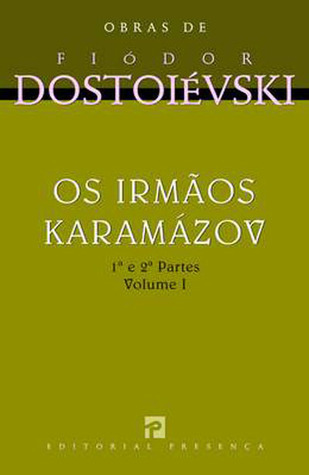
O último grande romance de Dostoiévski (1879-1880), terminado pouco tempo antes da sua morte, em São Petersburgo (1881) vem, juntamente com as obras «Crime e Castigo» (1886), «O Idiota» (1868) e «Os Possessos» (1871-72), provar que a fase final da sua vida foi, sem dúvida, a mais produtiva. «Os Irmãos Karamázov» é uma das mais geniais criações literárias de todos os tempos. Analista rigoroso do comportamento humano, Dostoiévski traz à tona o próprio sentimento de culpa pelo assassínio do pai. O autor debate de uma forma sublime as infindáveis dicotomias da natureza humana, revelando uma inquietação que é já a do homem moderno.
Works, such as the novels Crime and Punishment (1866), The Idiot (1869), and The Brothers Karamazov (1880), of Russian writer Feodor Mikhailovich Dostoyevsky or Dostoevski combine religious mysticism with profound psychological insight.
Fyodor Mikhailovich Dostoevsky composed short stories, essays, and journals. His literature explores humans in the troubled political, social, and spiritual atmospheres of 19th-century and engages with a variety of philosophies and themes. People most acclaimed his Demons(1872) .
Many literary critics rate him among the greatest authors of world literature and consider multiple books written by him to be highly influential masterpieces. They consider his Notes from Underground of the first existentialist literature. He is also well regarded as a philosopher and theologian.
În locul unei recenzii inutile, voi nota în dezordine cîteva gînduri (poate nu lipsite de interes) despre ultimul roman al lui Dostoievski.
1. Nu-mi amintesc cînd am citit pentru prima dată Frații Karamazov, trebuie să fi fost imediat după facultate. Și tot atunci am discutat cu poetul ND semnificația numelui Smerdeakov. El mi-a semnalat că numele celui de-al patrulea frate conține termenul „smerdeti” = miros urît, putoare. Dar Dostoievski știa bine limba franceză și nu e deloc exclus (ba e sigur) că numele Smerdeakov trimite la „merde”. Dacă „nomen est omen” (numele arată destinul unui individ), trebuie să înțelegem că Smerdeakov este un individ rău, imoral, „stricat”. Chiar dacă autorul nu spune niciodată limpede, el este adevăratul ucigaș al lui Feodor Pavlovici, tatăl Karamazovilor, nicidecum impulsivul Dmitri. În opinia unor exegeți, numele Dmitri, la rîndul lui, face aluzie la zeița greacă a fertilității, Demeter.
2. Fraza „Dacă Dumnezeu nu există, totul este permis”, atribuită de obicei lui Ivan Karamazov, nu se găsește, ca atare, în text. Cea mai apropiată formulare sună precum urmează: „Ceea ce mă tulbură mai ales și mă pune pe gînduri e Dumnezeu, întrebarea asta mă frămîntă tot timpul. Și dacă totuși nu există? Dacă e adevărat ce spune Rakitin, că Dumnezeu nu este decît o ficțiune a omenirii? Și atunci, dacă Dumnezeu nu există, înseamnă că omul e stăpînul pămîntului, al întregului univers”. Afirmația îi aparține lui Dmitri Karamazov. Ce-i drept, un personaj afirmă la începutul romanului că Ivan Karamazov a înnebunit, fiindcă afirmă că „dacă s-ar distruge în omenire credința în nemurirea sufletului..., atunci nimic din ce se poate întîmpla n-ar mai fi imoral, că totul ar fi permis în lume”.
3. Nu știu dacă ați observat că romanul este precedat de un prolog (intitulat sec „Din partea autorului”). Dostoievski afirmă aici că Aleoșa este adevăratul protagonist al cărții, că este „un om deosebit” și că Frații Karamazov reprezintă doar prima parte a biografiei sale. Va redacta cît de curînd o continuare. Din păcate, prozatorul a murit la puțin timp după publicarea romanului.
4. Din ce am citit (rămîne să verific), manuscrisul romanului nu s-a păstrat (ca multe din manuscrisele lui Dostoievski). În timpul unei călătorii în Crimeea (prin 1912-1914), Anna Grigorievna a luat cu ea o geantă cu manuscrise de-ale soțului. S-a găsit, firește, un hoț bine intenționat. Geanta a dispărut. Căutarea are aspecte de roman polițist și nu s-a încheiat nici astăzi, deși șansele de a găsi prețioasele documente au devenit infime. Unii au presupus că manuscrisul Fraților Karamazov fusese cumpărat de Stefan Zweig, un colecționar pasionat de suveniruri literare (cumpărase, printre altele, și un manuscris de Leonardo da Vinci). Presupunerea nu s-a adeverit...
5. Cînd a fugit de la conacul din Iasnaia Poliana, în noaptea de 27 spre 28 Octombrie 1910, Lev Nikolaevici Tolstoi a pus în traistă și romanul lui Dostoievski...
For me, this book is one of the masterpieces of world literature because Dostoyevsky contains everything: theological presentations, a detective story, love stories, and a lot of humanity. A must-read and re-read!
“If anything could dissipate my love to humanity, it would be ingratitude. In short, I am a hired servant, I expect my payment at once that is, praise, and the repayment of love with love. Otherwise I am incapable of loving any one.”
Dostoyevsky, na sua vasta obra, oferta-nos um quadro da alma humana em toda a sua complexidade espectral — das zonas mais claras às mais negras, sem descurar os múltiplos tons cinza, elas estão lá todas, esmiuçadas e espelhadas, para mera observação ou empática contemplação …
Desta feita e basicamente, serão explorados 3 protótipos: o devasso (total e parcial), o espiritual religioso e o intelectual ateu. E iremos conhecê-los todos juntos, agregados numa familória, onde, tal como num ringue, se batem e debatem, mostrando como a vida os trata e maltrata…
Numa escrita trocista, que rasa o burlesco, a história dos Irmãos Karamazov desenrola-se devagar, sem contudo entediar... São 5 estrelas nada favorecidas 👍👍👍👍👍
Nota: Deixo aqui um louvor à brilhante tradução do casal Guerra que foi efetuada diretamente a partir do russo, conferindo um maior grau de autenticidade à obra
Normalmente não aprecio afirmações do género: “Eh pá, este é o melhor livro que alguma vez li…Não há melhor!”, evito sempre cair nesta tentação. Mas o livro Irmãos Karamázov é sem dúvida uma obra que ficará gravada para sempre na minha memória e foge um pouco do “Normalmente não aprecio”. Desde que li o Idiota, O Jogador e o Crime e Castigo, o Fiódor Dósteivski (F.D.) sempre foi para mim um escritor que se diferenciou de todos os outros, não só pela sua facilidade em caracterizar todo o tipo de personagens, mas também como os expõe intimamente e consegue lidar com as suas vozes interiores...é deveras único! Ler um livro do F.D. é sempre uma descoberta sobre nós próprios, sobre as idiossincrasias de cada um de nós, é compreender as atitudes/acções bizarras (achamos nós) do nosso amigo ou familiar.
Voltando ao livro, os Irmãos Karamázov é um romance que retrata uma família de 3 irmãos oriundos de uma pequena cidade da Rússia que, embora filhos do mesmo pai, tiveram educações e trajectos diferentes durante a sua infância. O pai Karamázov é um pai distante, que abandonou e desinteressou-se pela educação dos filhos, é um indivíduo narcisista e desonesto, que enriqueceu à custa de heranças de ex-mulheres. A partir daqui F.D. cria o enredo em volta dos irmãos, Dmítri Karamázov (DK), Ivan Karamázov (IK) e Aleksei Karamázov (AK). AK é um indivíduo com o qual qualquer leitor facilmente se identifica: altamente justo, educado, honesto e emocionalmente equilibrado. F.D. caracteriza esta personagem para fornecer claramente ao leitor a ideia do ser humano utópico, o ser que todos nós gostaríamos de ser. O IK é o irmão que teve oportunidade de ir estudar para Moscovo, que teve formação e se tornou numa pessoa culta, é ateu e niilista. DK é um ex-militar que está em constante conflito com o pai por razões financeiras. É um indivíduo ingénuo, excêntrico. IK e DK são personagens que me fizeram sentir que ora os odiava, ora os admirava, e isto aconteceu-me como todas as personagens, excepção para uma outra que representa claramente a maldade. Existem outras personagens importantes no livro, mas que, caso comece a descrevê-las, completo o III volume dos Irmãos Karamázov, por isso opto por nao o fazer. Ao longo da obra F.D. surgem as perpétuas dúvidas existenciais, a riqueza dos diálogos, a sátira à sociedade de então, etc. A extensão desta obra permite expor os problemas sociais, caracterizar a humanidade, os seus defeitos e as suas virtudes, com uma clareza e astúcia muito difícil de encontrar noutros livros. Outros valores são discutidos, como a religião, a política e a justiça, mas o que realmente se eleva é a humanidade. A parte final (não vou reproduzir) é deveras um incentivo à mudança e um sinal para as gerações vindouras… Apesar de ter sido escrito há quase 150 anos, identificamo-nos claramente com as personagens e comparamo-las constantemente com as que preenchem o nosso quotidiano, com o qual observamos inúmeras semelhanças!
São estes livro, bem como A morte de Ivan Ilitch, O Idiota e tantos outros que me fazem tomar a literatura russa como uma referência. A sua preocupação na busca de um Homem melhor, a criação de enredos com a base nas relações humanas, em detrimento daqueles romances sobre o amor bacoco, são os pilares de todos estes grandes autores.
Obrigo à leitura!
P.S: Quando terminei o I volume comentei, “acho que qualquer psicólogo adoraria ler este livro…”. Vim a saber entretanto que foi considerado o melhor romance pelo Sigmund Freud…
Јако ми је тешко да оценим ову књигу јер 1. нисам прочитала други део књиге 2. била ми је јако напорна у периоду који није баш лак за све нас, али...
Чињеница је да се величина једног оваквог дела не може оспорити. У почетку се упознајемо са Фјодором, његовим животом, карактером и његовим синовима из различитих бракова који су потпуно другачији. Најсимпатичнији ми је био Аљоша који је један од ретких позитивних ликова ове књиге. Има пуно сукоба, неслагања, расправе о моралу и религији. Иако је то генијалност Достојевског, уједно ми је изазивала велику количину емоција, идеја, преиспитивања и сва та филозофија је мало теже пала мојој тренутно анксиозној глави. Књига пета и шеста, којима се први део и завршава, су ми биле најинтересантније, а говори Зосиме на крају су чисто благо.
Мораћу да се вратим Карамазовима некада поново да бих боље разумела и детаљније ушла у сваки део ове комплексне приче.
Am petrecut aproape 3 săptămâni în lumea acestei cărți. Am citit-o în paralel cu altele, ei dedicându-i exclusivitatea clipelor lipsite de oboseală. Am parcurs-o cu creionul în mână, am subliniat pasaje, le-am recitit, iar la finalul lecturii m-am simțit mai bogată. Sunt multe pasaje cu tâlc, scrise din suflet de un om erudit, îndrăgostit de viață, dar și de divin. Greu de ales dintre ele, m-am oprit, totuși, asupra acestuia:
"- Oare ce este iadul? -Suferința de nu mai putea să iubești."
Va urma volumul al doilea, alte 600 de pagini de literatură adevărată.
Não quero dizer muito, a primeira parte tem momentos sublimes, uma escrita de excelência, nota-se uma enorme solenidade, mas ainda se fica em muitas das linhas do enredo na introdução, de modo que quero ler o todo para depois poder fechar a minha ideia sobre este primeiro tomo.
Terminado o primeiro volume, ainda não sei muito bem o que pensar. Tenho estado a ler a edição de capa dura da Edição Amigos do Livro a par com a versão inglesa do Projeto Gutenberg (tradução de Constance Garnett), porque em português há partes do texto que não me parecem fazer muito sentido.
Assim, vou oscilando entre a desilusão com alguns personagens que me parecem mais “tipos” ou caricaturas do que verdadeiras personagens (o que provavelmente é propositado), e o prazer com as partes filosóficas entremeadas no texto. As estrelas e a resenha completa ficam para quando terminar o último volume.
პირველივე ფურცლიდან ვიცოდი,რომ ღვთიურ წიგნს ვკითხულობ��ი. წინ მეორე ტომი მელის და კიდევ უფრო მეტი ემოცია. დიდი ინკვიზიტორი კი არ ვიცი, არამგონია შესაფერისი სიტყვები ვიპოვო შთაბეჭდილებების გადმოსაცემად. იმდენი ციტატა დამიგროვდა, მთლიანად ამოვაციტირებდი. და მაინც:
"- ალიოშკა,არის უკვდავება? - არის. - ღმერთიც და უკვდავებაც? - ღმერთიც და უკვდავებაც.თავად ღმერთშია უკვდავება."
"ადამიანი მეამბოხედ არის შექმნილი,ხოლო მეამბოხე სულს განა შეუძლია ბედნიერი იყოს?"
"რაწამსაც ადამიანი სასწაულს უარყოფს,მაშინვე უარყოფს ღმერთსაც,ვინაიდან ადამიანი იმდენად არ ეძებს ღმერთს,რამდენადაც სასწაულს."
"რა არის ჯოჯოხეთი? ესაა ტანჯვა იმის გამო,რომ ამიერიდან სიყვარული აღარ შეიძლება."
" მთავარია მონანიება არ გაქრეს შენში,ღმერთი ყველაფერს შეგინდობს. არ არსებობს და არც შეიძლება არსებობდეს რაიმე ცოდვა ამ ქვეყანაზე,რომლის შენდობაც ღმერთს ჭეშმარიტი მომნანიებლისთვის არ შეეძლოს. ისეთ დიდ ცოდვას ვერ ჩაიდენს ადამიანი,რომელიც შეძლებს ღმერთის უსაზღვრო სიყვარულის განელებას. არსებობს კი ისეთი ცოდვა,რომელიც გადააჭარბებს ღმერთის სიყვარულს?!"
"თუ მოინანიე, გიყვარს კიდეც - უკვე ღვთიური სიყვარულით გიყვარს."
"არც ერთი მხეცი არ არის ისეთი სასტიკი,როგორც ადამიანი,არც ერთ მხეცს არ გააჩნია ისეთი არტისტული და მაღალმხატვრული სისასტიკე,როგორიც ადამიანს. ვეფხვი თავის მსხვერპლს უბვრალოდ ღრღნის და გლეჯს,მან მხოლოდ ეს იცის,აზრადაც არ მოუვა ღამით ადამიანის ღობეზე ყურებით მიჭედება,ცხადია,რომც შეეძლოს ამის გაკეთება."
"- არის ისეთი ძალა,რომელიც ყველაფერს უძლებს! - ახლაუკვე გულგრილი ჩაცინებით უპასუხა ივანმა. - რომელი ძალა? _კარამაზოვული. კარამაზოვული უსინდისობის ძალა."
Pe cât a fost tărăgănată acțiunea, pe atât m-a încântat acest roman clasic! A fost prima carte citită de Dostoievski; începusem acum vreo doi ani „Adolescentul”, dar m-a dezamăgit fontul extrem de mic al cărții, așa că am abandonat-o după 50 de pagini.
„-(...). Cel care se minte pe sine și-și pleacă urechea la propriile sale minciuni ajunge să nu mai deosebească adevărul nici în el, nici în jurul lui și să nu mai aibă respect nici pentru sine, nici pentru lumea cealaltă.”
Review en Français • in English Ce livre est le dernier terminé par Dostoïevski et j'y ai trouvé de nombreuses récurrences d'idées et de similitudes avec ses anciennes publications. Le volume est épais, mais captivant. L'intrigue est palpitante et de nombreuses histoires se croisent. Les discussions entre les personnages se transforment en discussions profondes sur la place de la religion, de l'Église et de la foi dans la vie d'une personne, et s'interrogent sur la manière dont une vie en général devrait être menée. — This is the last book written by Dostoyevsky and I could recognize many similarities with his previous work. The volume is thick, but it’s a page turner. The book has intrigue, many stories intersect. Discussions amongst characters turn into deep conversations about the place of religion, the church, and faith in a person’s life, and ponders over how a life in general should be lead, all this written in an entertaining way.
Incontestabil, capodopera romancierului rus. Ultima sa carte este o galerie uluitoare de personaje unul mai contradictoriu ca altul. E uimitor cu câtă finețe descrie Dostoievski în 1880 binele și răul ce sălășluiesc și se luptă neîncetat în sufletul oricărui om, mult înainte de teoriile psihologiei moderne. Astfel că toate personajele sale sunt sfâșiate de trăiri paradoxale, exaltate până la paroxism, ce duc cu gândul la boli mintale. Ca și la prima lectură, personajul meu favorit este - cum altfel? - Alexei Feodorovici Karamazov. Complex și, totodată, echilibrat, firesc.
04/12/2025 « Mes pères moines, pourquoi vous faites maigre ? Pourquoi vous attendez que ça vous vaille des grâces dans les cieux ? Moi, pour une grâce comme ça, moi aussi, tiens, je vais faire maigre ! Non, mon saint moine, sois vertueux dans la vie, un peu, sois utile à la société, au lieu de t'enfermer dans ton monastère sur du pain tout cuit, et sans attendre qu'on te récompense là-haut - là, j'aimerais bien t'y voir. »
02/12/2025 "J'aime, il me disait, l'humanité, et je m'étonne moi-même : plus j'aime l'humanité en général, moins j'aime les gens en particulier, c'est-à-dire individuellement, en tant que personnes distinctes. Dans mes rêves, souvent, il me disait, j'en arrivais à des élans passionnés pour servir l'humanité, et, peut-être bien, réellement, je me serais fait crucifier pour les hommes, si, brusquement, d'une façon ou d'une autre, il avait fallu le faire, et, malgré cela, je ne suis pas capable de partager ma chambre avec quelqu'un deux jours de suite, ce que je sais d'expérience. Sitôt qu'il se rapproche de moi, tout de suite, sa personnalité opprime mon amour-propre et restraint ma liberté."
I was really stunned by this passage because it circles around a lot of things I've been thinking about recently, putting into words ideas that have been on my mind, without me being sure whether or not those ideas were my opinions (if that makes sense :p). Firstly, in some way or another, I'm always thinking about religion. I do not exactly know why, but thinking about religion has been a constant in my life for years. I wasn't brought up particularly religiously, but thinking about the meaning of things and realising that I was undoubtedly agnostic in principle and very atheist in practice was a pivotal moment in my life. Ever since, I've noticed the influence of monotheistic religious moral values everywhere and constantly wonder to what extent my own moral values, unknowingly, are shaped by them. This passage in the Brothers Karamazov occurs in a church, where an influential priest tries to quell the doubts of a woman with regard to her faith. He tells her that the best way for her to experience faith is to indiscriminately love humans and have her actions be guided by that devotion to love. In response to that, she claims that she already does love humanity, but perceives her love as being conditional as she always expects gratitude for her good deeds. The priest replies by telling the story of a doctor he met, which is what I included in my quotation.
I recently found myself in a position that I seldom find myself in -especially considering that my daily life centres around scientific academia- in which I felt like I had to fervently defend my atheism. Earlier this year, I ran into an old friend and we reconnected. It quickly became evident that said friend seemed to be developing feelings of a romantic nature for me, the idea of which wasn't displeasing to me at first approach. However, after just a month and a half of conversing regularly with this person (nothing more than conversation!), they revealed two very weighty pieces of news to me: 1) that they were supposedly very in love with me (I wish I were exaggerating, the word 'obsession' was used), and that they were extremely religious. It quickly became evident to me that they were hopeful -and somehow had been encouraged to think- that I would convert to their faith in order to be with them (which in my case, is completely out of the question). At that point, I had already become aware that whatever feelings existed between me and this person couldn’t go on. Being so ‘devoutly’ (:p) atheist, I perceived that a relationship with a religious person would be logistically and practically infeasible for me. I also just find piety very unattractive, as well as a bit silly. However, I am never one to turn down an interesting conversation, so I agreed to have a chat with them about faith and our thoughts on life. I was disappointed, but not surprised, to realise that of course they saw my lack of faith and religiosity not as the result of careful consideration and years of pondering on the topic, but as misunderstanding with respect to their own faith, and confusion and misguidance with respect to the world. That, according to them, if I found out more about their faith, and thought about it a little harder, I would see that in fact my own moral values (which they were certain aligned with theirs!) were undoubtedly compatible with their faith, along which they might grow to become even more virtuous.
I found myself between a rock and a hard place: even though I didn’t care about being judged, I felt like I needed to act as a representative for atheism, which I didn't want to be misunderstood. I wanted to claim -and this is the tie to Dostoyevksi’s paragraph- that though I consider myself to be thoroughly a realist in the most proper sense, it doesn’t mean that I don’t experience what I could only call devotion; devotion to life, to the universe, to science, to humanity, to art. I regularly feel an almost spiritual exaltation when I consider matters of the world (especially when thinking about science!), I am inspired to act in a way that I consider to be morally just, and, yet, I do not consider morality to be absolute and I fervently oppose the mere concept which underlies all religion, faith. On the other hand, I instead wanted to insist on the fact that nothing could create a bigger gap between my friend and me than religion, which in my opinion points to a fundamental divergence in our understanding of the world. I did not want them to try to convince themself that we had anything in common, lest they try to use that idea against me and my sense of freedom. Perhaps despite myself, I firmly believe that even if our moral values coincide, if you genuinely have faith and practice it according to some religion, I do not have anything in common with you.
One could see the doctor's confession as a flaw exclusive to the religious. But, uncomfortably, I recognised something of it in myself, first. Yes, my friend was, perhaps innocently so, condescending towards my views. And no, I do not want to reconsider my position on religion. But did I not recoil at his profession of faith? I accuse the faithful of being self-righteous, but do I not fall victim to the same pride? Perhaps that is what the doctor meant. Once you have spent any amount of time pondering the deeper questions of life, and convincing yourself that your views are, indeed, the best, it becomes difficult not to see the imperfections embodied by the individual. The more I aspire to a moral ideal, the more flaws I find in human behaviour. It is not a negligible effort not to forget that I have the moral high ground only in my personal frame of reference.
26/11/2025 Maybe I should turn this review space into a reading log and try to give more frequent updates along the way? I'm on page 65 and so far this has been quite easily readable. Our narrator has introduced us to the three brothers, and has so far gone into the most detail about Aliocha, the "sincere, pious and naive" one. He reminds me a lot of the protagonist in the Idiot, and now I'm curious to know which of the novels Dostoyevski wrote first :) On another note, I tend to read the most during my commutes and breaks during our lectures, so I carry my books around in public quite a lot. I usually don't get much attention for reading a book, but I've only been reading the Brothers Karamazov for two days and two of my professors already struck up a conversation about it with me. Both had a similar reaction, they seemed simultaneously impressed with my choice of reading and afraid of what it should mean that I should want to subject myself to a 1000+ page Dostoyevski :p What is interesting though is that they both seemed to have an idea of Dostoyevski's writing, that I know is in fact unanimously shared by all readers, which is that his writing is somehow dark, existential, heavy... I've read Crime and Punishment and the Idiot, and while I would agree that the former goes into some psychologically darker territory, I remember the Idiot as being quite... "bright"? I really don't remember much of the story, but I remember that he describes human nature so precisely, so sensitively, that what is in fact an enormous work of insight comes off as easy and, ultimately, a delight to read. And so far I'm getting the same feeling from the Brothers Karamazov. It's slow, it's ponderous, but in every paragraph there is a touch of humour and this sense that the narrator feels a fond amusement with regard to humans.
25/11/2025 First day reading this. My last Dostoyevski was the Idiot, I believe, which I read in 2021. I forgot how absolutely exquisitely he describes human nature :)
Findo o primeiro livro, não me sinto arrebatada pela história, um pai excêntrico e 3 filhos homens, um mulherengo, um profano e um monge. Duas mulheres, uma rameira por quem pai e filho se digladiam e uma donzela histérica e vacilante na escolha de qual dos irmãos se pretende unir, um monge que vai apanhando os cacos dos reveses familiares e esforça-se por reconstruir a união familiar, digamos que tem tido algum insucesso.
É um romance filosófico onde o autor cria uma história romanceada, mas, sobretudo evidencia enormes preocupações com o ser humano, individual e coletivo. As características psicológicas dos personagens, assim como as suas ações evidenciam os lineamentos políticos, sociais e religiosos da sociedade à época: o humanismo eleva-se, assim como o respeito pela mulher enquanto cidadã, a degradação social da família quando o patriarca morre é mais uma preocupação que o autor traz ao palco, a falta de fé do povo devido ao sofrimento continuo e injusto está implícito ao longo do texto, assim como as assimetrias entre pobres e ricos, uns vivem miseravelmente e outros esbanjam em loucuras desnecessárias, em suma, a desacreditação da igreja é inversamente proporcional à fé crescente no homem e no estado.
În afară de câteva scene oarecum neinteresante peste care mi-a fost mai greu să trec, mi-a plăcut la nebunie. Foarte interesant mi s-a părut și cum Dostoievski s-a folosit de fiecare ocazie ca să portretizeze societatea la vremea aceea. Pe lângă o poveste "de familie", acest roman este și o contopire de învățături spirituale nu atât expuse ad literam, dar date ca exemplu (sau, de cele mai multe ori, ca exemplu negativ). Aștept cu nerăbdare să încep și volumul doi, atât cât și să citesc mai multe de la Dostoievski.
Meu amor pelo Ivan Karamazov é infinito, tudo relativo a ele é como se raios de sol vertessem do meu próprio âmago, mas tenho que contar que aquelas dezenas de últimas páginas referentes ao monge deste volume foram extremamente difíceis de serem lidas, presumo que toda essa filosofia cristã terá um desenrolar especial no próximo volume, mas aqui foi extremamente enfadonho passar por isso.
So...I finished the first book and have mixed feelings. On one hand, the characters are well explored and there are some wonderful passages about life, religion, relationships and everything in between. On the other hand, the author is too present in the book, constantly announcing what he will do next, which sometimes works for me in other books, but somehow not here. The atmosphere is dark, as it should be, I think I just had too grand expectations. Not sure when I will read the second book, but certainly not now. But I am intrigued and want to find out more about certain characters.
Sevgi bütün dünyayı satın alacak değerde bir cevherdir, onunla yalnız kendinin değil, başkalarının günahlarını da bağışlatabilirsin. 5/5🌟🌟🌟🌟🌟 Yazardan ilk defe seneler önce Beyaz Geceler kitabını okumuştum, tabii ki çok beğenmiştim. Ardından uzun süre kendisinden bir şey okumadım çünkü kalın kitaplarının ne kadar detaylı olduğunu tahmin edebiliyordum. Elime mini kitap sürümü geçtiğinde koca 1000 küsür sayfalık kitap gözüme daha küçük görünerek okuma hevesim bir anda arttı. İlk sayfasından itibaren dikkatle okumaya başladım ve hep öyle devam etmeye çalışsam da bir yerden sonra aşırı detaylı anlatımı okurken kafamın dağıldığı oldu. Ayrıca genel konuda anlamam gerekenler bakımından eksiğim olduğunu hissettim. Bunun üzerine kafamda ana karakterleri oturttuğum halde benzer isimlerde yan karakterlerin olması da baya kafamı karıştırdı. Böyle olunca ben de okurken yavaştan özetlerine bakınmaya başladım. Kitapta okuduğum yere kadar olan özetlerden birkaç tanesine bakmakla kitaba olan dikkatim daha net bir yola girmiş oldu. İlk yarıda kitabın ana konusu çok ufaktan işlenmeye başlamıştı ve öyle uzun anlatımlı paragraflar vardı ki kesinlikle büyük sabır isteyen bir kitaptı. Aslında bir yandan da bu uzun paragraflarla insanlığa, aile bağlılığına dair öğüt verici ve dikkat çekici cümleler okurken diğer yandan da bazı kısımların bu kadar uzatılması kitabı okumaya olan şevkimi zorladı. Her neyse, asıl kitapla olan büyük beğeni fırtınam diğer yarıyla başladı. Kitabın başından beri muhtemelen çoğu okurda olduğu gibi bende de Alyoşa'ya karşı çok farklı ve içten bir tutum oluşmuştu. Karamazov kardeşler arasında ilk ısındığım karakter kendisi oldu. Sonrasında büyük olayın patlamasının ardından çok ağır bir duygusallığa sürüklendim. Özellikle Dimitri ne zaman ağzını açıp bir şey söylese içimden bir şeyler koptu. Sanırım bu durum "bebe" bölümüyle başlayıp hiç bitmedi. Dimitri yetmezmiş gibi bir de Smerdyakov ne zaman İvan ile bir araya gelse Smerdyakov'un o kendini değersiz gördüğünü insana iliklerine kadar hissettiren konuşma tarzından daha beter duygusallığa büründüm. Kitabı kapsayan en büyük bölümse tabii ki duruşma kısmıydı. İvan'ın itirafından, Katya'nın ters dönüşünden ve Dimitri'nin yine her ağzını açtığında dolan gözlerimle o bölümleri büyük bir heyecanla okudum. Epilog bölümüne kadar zaten her duygu tarafından sarsılmış bir okur olarak Dimitri ile Katya arasında son geçen konuşma beni çok derinden etkiledi. Yazarın kaleminde aslında basit kurulmuş ama içeriğinde onca mana taşıyan o kadar çok cümle vardı ki kalemini okudukça daha çok bağlandım. Bu kadar etkileneceğimi, üç kardeşe de böyle hayran kalacağımı, genel hatlarıyla kitabı bu kadar bağrıma basacağımı hiç tahmin etmemiştim. İlk yarının sonlarına gelirken kitabı hala beğenemediğimi düşünerek "bu kitabı nasıl eleştireceğim" diye düşünüyordum. İkinci yarıyı okuduğum zaman benim için tam anlamıyla bir ters köşe oldu. Çok ağladığım bir kitap oldu, hep boğazımda bir yumruyla çevirdim sayfaları. Bu kadar ağlayacak kadar etkilendiğim için elbette her daim yeri bende ayrı olan bir kitap olarak kalıcak. Son olarak bana sorarsanız biraz yavaş okunması, okuyucunun fazlasıyla dikkatini vererek sabrını sınaması gereken bir kitaptı. Tabii ki canı gönülden öneriyorum ama henüz sadece kısa klasik kitapları okuyanlar için ilk tercih olmaması gerektiğini söyleyebilirim. Can yayınlarının çevirisi tabii ki yine çok güzeldi. Bu kadar değerli bir eseri bu yayınevinden okuduğum için çok memnun kaldım. Sizlere de keyifli okumalar dilerim..
Impresii la cald, după ce am terminat primul volum de citit. Este o lectură anevoioasă, acțiunea destul de tărăgănată și nu a fost chiar cum mă așteptam. Un volum prea mult lungit, fara sa ofere prea mult. Deși are multe personaje, mi-ar fi plăcut ca scriitorul sa se concentreze mai mult pe dezvoltarea lor. M-au plictisit atâtea idei filosofice și religioase care se întind pe zeci de pagini. Însă asta este o caracteristică a lui Dostoievski și nu trebuie sa uităm când a fost scrisă cartea. Nu descurajez pe nimeni să citească volumul, însă eu nu pot spune că mi-a plăcut pe cât mă așteptam. O nota încă nu i-am dat. In aprilie sper sa citesc și al doilea volum și mă decid atunci.
Really enjoying this novel. The themes of atheism, spirituality and politics of the time are relevant today.
This first volume has set the scene with the self absorbed greedy father and the three personalities of the three legitimate sons and the illegitimate son. Dimitry the profligate and impulsive one, Alex the rational and atheist and Alyosha the novice monk and compassionate son. Looking forward to reading the second volume.
✨Les Frères Karamazov est un roman magistral, tant par son intrigue que par sa profondeur psychologique et philosophique.
L'intrigue se concentre autour des trois frères Karamazov - Aliocha, Ivan et Dimitri - qui sont déchirés par leurs conflits intérieurs et dont l'un sera parricide...
💫Chacun de ces frères représente un aspect de l'âme humaine, un archétype de l'humanité, une facette de l'homme moderne face à Dieu, à la morale, à la justice et à la liberté.
🩵Aliocha, le plus jeune, est un personnage profondément religieux, un modèle de pureté et de bonté. Il cherche à répandre le bien autour de lui et incarne la foi inébranlable.
❤️🔥Ivan, quant à lui, est l'intellectuel torturé, un nihiliste en quête de sens. Il doute de l'existence de Dieu et remet en question la morale et la justice humaine.
💘Dimitri, le frère aîné, est plus impulsif et passionné, souvent tiraillé entre ses excès émotionnels et ses idéaux. Il est romantique, en colère contre son père et constamment en quête d'amour et d'acceptation. C'est celui qui ressemble le plus à son père et qui est conscient de ses défauts et de son caractère.
Il s'agit d'un chef-d'œuvre à lire et relire inlassablement, et qui rassemble une intrigue policière et plusieurs histoires d'amour, ponctué d'exposés théologiques et métaphysiques éblouissants!
"Le socialisme. n'est pas seulement la question ouvrière, ou celle de ce qu'on appelle "le quatrième état", non, c'est essentiellement la question de l'athéisme, la question de l'incarnation contemporaine de l'athéisme, la question de la tour de Babel qui se construit, justement, sans Dieu, non pour atteindre les cieux depuis la terre, mais pour faire descendre les cieux sur la terre".
"Le monde a proclamé la liberté, ces derniers temps surtout, et, nous, que voyons-nous dans ce qu'ils appellent la liberté : rien que de l'esclavage et du suicide ! Car le monde dit : "Tu as des besoins, et donc satisfais-les, car tu as les mêmes droits que les hommes les plus riches et les plus notables. N'aie pas peur de les satisfaire, et, même, fais-les croître" - voici la doctrine actuelle du monde. C'est en cela qu'ils voient la liberté. Et quel est le résultat de ce droit à multiplier ses besoins ? Chez les plus riches, l'isolement et le suicide spirituel, et, chez les pauvres, la jalousie et le meurtre, car, les droits, certes, sont donnés, mais les moyens de satisfaire ces besoins, eux, on ne les indique pas encore. Ils assurent que, plus le monde évolue, plus il se réunit, plus il se forme en communauté fraternelle du fait qu'il raccourcit les distances, qu'il transmet les pensées par les airs. Hélas, ne croyez pas en une telle unité des hommes. En comprenant la liberté comme une multiplication et une satisfaction rapide de leurs besoins, ils déforment leur nature, car ils font naître en eux une multitude de désirs absurdes et stupides, d'habitudes et de lubies des plus ineptes. Ils ne vivent que pour s'envier les uns les autres, pour satisfaire leur chair et leur vanité".
Din acest prim volum, de la caracterizarea femeii din perspectiva lui Feodor Pavlovici Karamazov și până la învățăturile părintelui Zosima despre dragoste și smerenie, îmi va rămâne întipărită în minte expresia „obraz de toval și suflet de Karamazov”, expresie care cred că reprezintă fundamentul genetic al omului de care acesta nu va scăpa niciodată.
"Volite sve što je Bog stvorio, i celinu i svako zrnce peska. Svaki listak i svaku zraku božju volite. Volite životinje, volite biljke, volite svaku stvar. Ako budeš voleo svaku stvar shvatićeš i tajnu božju u stvarima. Shvatićeš jednom i počećeš je neumorno saznavati sve dalje i više, svaki dan. I najzad ćeš zavoleti svet apsolutnom, vasionskom ljubavlju." Fjodor Dostojevski