

What do you think?
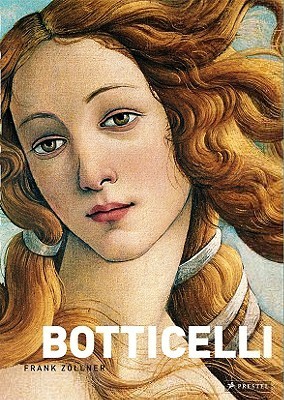
Botticelli
Botticelli is one of the most beloved figures of the Renaissance period and his seductive Venus and graceful Primavera are among the world's most recognizable works of art. Now available in an attractive and accessibly priced hardcover edition, this catalogue raisonne of Botticelli's paintings offers meticulous scholarship by the distinguished Renaissance art historian Frank Zollner and more than two hundred full-colour illustrations. As The Financial Times praised the previous edition of the book, Zollner is a fabulous, accessible scholar; his book has luscious reproductions and exquisite detail.A" Presented in chronological order, the facts of Botticelli's life and career are insightfully discussed against the background of the artistic upheaval that marked the Renaissance period. The artist's reinterpretations of ancient myths as well as his religious paintings are thoughtfully explored in this sumptuously illustrated volume, which will please scholars and delight lovers of fine art books everywhere.
320 pages, Hardcover
First published January 1, 1998
About the author
Frank Zöllner
35 books39 followersFrank Zöllner (born 26 June 1956 in Bremen) is a German art historian and professor.
Zöllner studied history of art from 1977 to 1981. In 1983-1985 he was an 'Aby Warburg Fellow' in the Warburg Institute, in London. After his 1987 graduation took place at the University of Hamburg he worked from 1988 to 1992 as a research assistant at the Bibliotheca Hertziana in Rome.
Zöllner has since 1996 been a professor of medieval and modern art history at the University of Leipzig.
Zöllner studied history of art from 1977 to 1981. In 1983-1985 he was an 'Aby Warburg Fellow' in the Warburg Institute, in London. After his 1987 graduation took place at the University of Hamburg he worked from 1988 to 1992 as a research assistant at the Bibliotheca Hertziana in Rome.
Zöllner has since 1996 been a professor of medieval and modern art history at the University of Leipzig.
Ratings & Reviews
Friends & Following
Create a free account to discover what your friends think of this book!
Community Reviews
Displaying 1 - 6 of 6 reviews

December 6, 2024
Botticelli uses pagan myths in charming art on/for domestic life. Zollner’s discussion is helpful.

July 16, 2017
A serious study of Botticelli's life and work, with abundant, good quality photographs. A professor of art history at the University of Leipzig, Zöllner, in addition to examining Botticelli's major works in detail, includes a catalog of Botticelli's works as a whole, the work of his studio, and disputed works.
Despite the quote from The Financial Times prominently featured on the back cover lauding the author's accessibility, the text would not be mistaken for a novel--it's quite determinedly scholarly. However, it is definitely worth the trouble of reading; Zöllner's analysis of the iconography of Botticelli's work is really helpful in understanding what, besides beauty of form and color, we are looking at when we see his paintings.
Despite the quote from The Financial Times prominently featured on the back cover lauding the author's accessibility, the text would not be mistaken for a novel--it's quite determinedly scholarly. However, it is definitely worth the trouble of reading; Zöllner's analysis of the iconography of Botticelli's work is really helpful in understanding what, besides beauty of form and color, we are looking at when we see his paintings.

October 9, 2025
Clearly written, not too much detail; sufficient history, background, and artistic commentary to provoke further reflection on each painting.

to-gaze-upon
December 31, 2007My favorite painter

October 22, 2011
The pictures studied in this book are Mars and Venus, La Primavera, Minerva abd the Centaur, The Birth of Venus, The Villa Lemmi Frescoes.

December 10, 2015
Its hard to go wrong with this subject matter for me as I am a huge Botticelli fan! But this was a really good, comprehensive book!
Displaying 1 - 6 of 6 reviews