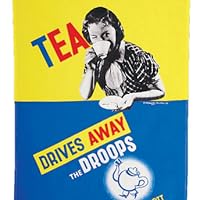
Honking and wheezing? Plumbing all messed up? Change of seasons got you down? Need a little pick-me-up?
Pat Willard has just the ticket to get you back on track. While poring over weathered, vintage cookbooks, Pat found a treasure trove of recipes from the days when ailing family members were cared for at home, and everyday aches, pains, and complaints were dealt with by turning to the kitchen pantry. With a style reminiscent of M.F.K. Fisher and Laurie Colwin, and a tone as soothing as Pat's suggestions, A Soothing Broth includes recipes for homemade broths, tonics, juices, puddings, and teas.
If a sore throat has you croaking like a frog, relieve the pain with a vinegar and cayenne pepper beverage. If you've overdone it at the gym, soak those aching muscles in a warm bath with some ginger and vinegar. A paste of wheat germ and honey will relieve the itching and take down the swelling of that nasty bee sting.
You've got a cupboard full of cures in your kitchen, and A Soothing Broth shows you how to use them.
I enjoyed this journey through the history of Invalid Cooking. Well-written and the author's own story of the inevitable failure of the project (not every invalid is restored to health) was quite rewarding. I first heard of this book in 1998 through an NPR interview with the author - I believe she had Cokie Roberts? or another of the hosts take an on-air dose of black pepper for a cold. Quite memorable, and I sought it out this year after several personal bouts of illness. There is a book for every subject.
I'm about halfway finished with this book, but have so many other books to read that I've reserved as well as class about to start that it is being put on the backburner so to speak. I will say that I am really enjoying it so far, as it is not only fascinating to learn about invalid cooking of the past and a history of it, but how useful these recipes can be today. Homemade remedies are often better than modern medicines. I am on page 92.
This is a fascinating little book on home remedies for various ailments using recipes from the invalid cooking manuals from the 19th and early 20th century. In addition to recipes for various ailments and nutrition for recovery, it also provides recipes to lift up the spirits of caretakers as well as patients. I'm surprised at how interesting I found this book to be.
I love this book about broths and tonics from invalid sections out of cookbooks, especially the example of curing nyphomania! All fairly accessible ingredients involved, and totally helpful when illness strikes!