

What do you think?

The Penguin Book of Witches & Warlocks: Tales of Black Magic, Old & New
Witches & Selected by Marvin Kaye - 1993 First Edition - Tales of black magic Old & New
519 pages, Paperback
Published October 1, 1991
About the author
Marvin Kaye
134 books84 followersMarvin Nathan Kaye was an American mystery, fantasy, science fiction, horror author, anthologist, and editor. He was also a magician and theater actor. Kaye was a World Fantasy Award winner and served as co-publisher and editor of Weird Tales Magazine.
Ratings & Reviews
Friends & Following
Create a free account to discover what your friends think of this book!
Community Reviews
Displaying 1 - 15 of 15 reviews

January 11, 2020
A slightly messy collection from the late 1980s of tales of black magic and sorcery, made up of contemporary (post-1945) fantasy and pulp intermixed with some 'classics', not always of the best, although there are some gems and some suggestive works worth noting.
The gems include short stories by Isaac Bashevis Singer, H G Wells, Ray Russell's sado-erotic 'Sanguinarius', worthy of the first executive editor of Playboy, and Robert Bloch's 'The Chaney Legacy' which is high-crafted imaginative nonsense but reads well.
I would also add Darrel Schweitzer's weaving of UFOlogy and witchcraft in a horror tale of sexual obsession and emotional cruelty for the New Age ['Seeing Them'] and C.H Sherman's Southern Gothic folk horror 'Doll-Baby', almost social realist if that were possible within the genre.
Then there is Oscar Wilde's 'The Fishermen and His Soul' which remains not a little mesmerising in its merger of decadence and fairy tale forms and a visceral body horror tale of startling frankness (it has a trigger warning before it) in Alan Rodger's 'Emma's Daughter'.
This last is remarkable for its explicit account of bodily decomposition being ignored by a desperate mother determined not to lose her dead daughter after a voodoo spell for closure goes wrong - a temporary zombification becomes 'permanent'. It is both sensitive and deeply disturbing.
There is some cute fantasy (which is not quite to my taste) but John Tunney's 'Light-Headed' gets an honourable mention for taking the story of a teenage delinquent's experimentation with drugs and shifting it into the world of H G Wells' 'Magic Box' whimsy with some success.
The Lovecraft entry ('Witches Hollow'), of course, cannot be regarded as poor - Lovecraft does not do poor - but it does rather read like a pastiche of his own work. The book closes with what is really a wry science fiction work by Fritz Leiber and Jean Ray's 'The Mainz Psalter'.
'The Mainz Psalter' is more cosmic horror than sorcery but, I suppose, being at the border between the world of the Necronomicon and that of devilry it fits the general liminal nature of the story itself which I am always, suitably, in two minds about.
I might also add the feminist reading of Snow White by Margaret Mayo McGlynn ['The Mirror'] for another Honourable Mention which is finely written although I have never really liked ideological or political point-making intruding into the fantastical and imaginary. It is good though.
These are all valuable works but they make up under a third of the total and the rest strike me as a mix of Gothic and folk tale lightweight pieces (although Nathaniel Hawthorne's 'Young Goodman Brown' and Gogol's 'St. John's Eve' are in the literary canon) and of pulp tales, some very weak.
Some classic tellers of tales in this genre (Tanith Lee, Algernon Blackwood) tend to have representation here as genre pastiche. The book stays on the shelves for the third that is interesting but I suspect magic and witchcraft remain more difficult as anthologies than other monster tales.
Perhaps this is because the zombie, the werewolf, the artificial monster of Frankenstein and the vampire are generally 'rooted' in something both fixed but not possible that we can understand as such. This enables multiple variations on a theme that can then reflect back on what is real.
That is an oversimplication but in general we can agree on these monsters even when we choose to sympathise with them or to see their tormentors or creators as the real source of evil. Witchcraft and sorcery is a little different because it is amorphous and ever-present in our own cognition.
As human beings with our infamous cognitive biases, superstition and magical thinking prove to be still present in our rationalist age. Tales of sorcery are throw-backs to something real which is just below our own surface. Our monsters, on the other hand, are like gods - truly other.
To be superstitious or engage in magical thinking or be fearful of magick is thus not so much a projection of a specific set of fears based on a single entity like the ghost but an atmosphere. Getting meaning out of a general atmosphere is tougher for a writer.
Witchcraft tales do not arise out of some specific and culturally shared imagined root (in our heads, Count Dracula, Voodoo raising of the dead, Frankenstein's monster or the Universal Studio's werewolf) but potentially out of everything we may do or say.
As a result, sorcery and witchcraft can be horrific and evil, the 'old religion' whether sinister or true can be faced by a Christianity that is vile or virtuous, can be a power to be envied, can be used for good as part of an earth mother religion, a path to the dream world, fantasy or 'real'.
When we say witch, we do not know if we mean Wiccan or crone, victim of Salem puritans or of the Witchfinder General or evil women plotting harm by sticking pins in a doll. Kaye's anthology was at the cusp of this ambiguity in defining witchery in the 1980s as he makes clear in a postscript.
In general. the stories fall into the 'evil' camp and this may reflect the influence of both pulp horror and Hollywood (and Hammer) whereas the alternative view of witches as victims had already emerged in cinema (we think of 'Witchfinder General').
Positive magic in children's literature and cinema which we associate with Harry Potter and Sabrina today was already present in films such as 'Bedknobs and Broomsticks' by the time this book was published although it also true that we are now in the age of Count Duckula.
As a result instead of the stories giving us multiple readings of one 'fact on the ground', they give us so many variations on a theme that we can draw no conclusions except that some writers are very good and some are not so good.
Perhaps there is a theme that witchcraft is irrationality and superstition from the 'old country' and the pagan past and another that sorcery is the territory of obsession and a hunger for power but there is no sense in the anthology of helping us see this. There is as much whimsy as terror.
Witchcraft and sorcery have not had their Mary Shelley, or Bram Stoker in literature although Abraham Merritt in 'Burn Witch Burn!" had a good try at it, perhaps because the tales of Salem and Matthew Hopkins Witchfinder General show all too real horror to be found in history.
As to sorcery, the great lack in the book is one of Clark Ashton Smith's stories. Ashton Smith probably came closest of all fantasy writers to creating a sense of sorcery as evil other and as power in his collections of stories, whether of Averoigne or his other dreamed worlds.
It might have been better to have internally themed the stories here with an introduction that suggested how each genre and period dealt with witchcraft and sorcery. The folk tales, tales of occult magicians, literary fantasy, pulp fiction, the 'contemporary' and so forth.
Less is more. A third of the stories could have been omitted as weak and a few more from the canon (like Clark Ashton Smith) added with more of an introduction to show us how the idea of sorcery had shifted and changed over time and then we would have had a better anthology.

March 23, 2009
This collection of stories about Witches and Warlocks runs the gambit. There is a bit of everything on offer: Good witches, bad witches, really bad witches. Serious and comedic.
My favorite story was The Witch by Isaac Bashevis Singer. I am not sure that the young lady in question is actually a witch. I feel that the protagonist chose to believe that she was a witch to rationalize his incomprehensible attraction to her. She is described as an ugly, dumpy girl/woman with no personality, but for some reason, the older hero, who is a teacher who recently lost his glamourous wife to cancer, cannot keep his hands off of her. I loved this story because it is magical realism in that you don't know what is real and what isn't, and Singer doesn't bother to explain. He allows you to draw your own conclusion. This book stayed on my mind for days afterwards, and I reread parts of it to decipher the mystery. I have my ideas, but I wish I could ask Mr. Singer what he intended. It was fantastic (I have made a note to read more of his stories).
I read pretty much all the stories in this collection, except I tried to read Sanginareus (I believe that was the title) by Ray Russell. It is based on the true story of Elizabeth Bathory, an infamous woman who murdered many young woman and bathed in their blood to keep herself looking youthful. It details her going from young innocent bride to notorious serial killer. I started reading it, but I ended up skipping it because it went on and on and I think it was too dark for my tastes (lots of bondage and sexual torture which I find nauseating, especially 40 pages of it).
Speaking of nauseating, there was an absolutely goretastic story of a woman whose child had died, and she used voodoo magic to keep her alive, but her body was rotting. It got grosser and grosser until I finally skipped ahead to the very end. Strangely, the ending was very happy.
This was another great find at good old used bookstore that paid for itself, giving me hours of entertainment and allowing me to indulge my jones for scary stories with the wicked witches and warlocks instead of the hot, sexy witches that conquer their sexy hero counterparts (they are the most boring kind of witches to this reader).
My favorite story was The Witch by Isaac Bashevis Singer. I am not sure that the young lady in question is actually a witch. I feel that the protagonist chose to believe that she was a witch to rationalize his incomprehensible attraction to her. She is described as an ugly, dumpy girl/woman with no personality, but for some reason, the older hero, who is a teacher who recently lost his glamourous wife to cancer, cannot keep his hands off of her. I loved this story because it is magical realism in that you don't know what is real and what isn't, and Singer doesn't bother to explain. He allows you to draw your own conclusion. This book stayed on my mind for days afterwards, and I reread parts of it to decipher the mystery. I have my ideas, but I wish I could ask Mr. Singer what he intended. It was fantastic (I have made a note to read more of his stories).
I read pretty much all the stories in this collection, except I tried to read Sanginareus (I believe that was the title) by Ray Russell. It is based on the true story of Elizabeth Bathory, an infamous woman who murdered many young woman and bathed in their blood to keep herself looking youthful. It details her going from young innocent bride to notorious serial killer. I started reading it, but I ended up skipping it because it went on and on and I think it was too dark for my tastes (lots of bondage and sexual torture which I find nauseating, especially 40 pages of it).
Speaking of nauseating, there was an absolutely goretastic story of a woman whose child had died, and she used voodoo magic to keep her alive, but her body was rotting. It got grosser and grosser until I finally skipped ahead to the very end. Strangely, the ending was very happy.
This was another great find at good old used bookstore that paid for itself, giving me hours of entertainment and allowing me to indulge my jones for scary stories with the wicked witches and warlocks instead of the hot, sexy witches that conquer their sexy hero counterparts (they are the most boring kind of witches to this reader).
January 25, 2022
I have arranged my takeaway thoughts on this collection into a haiku as best as I could, as is my habit.
"The gems aren’t equal,
But altogether at least. . .
It'll leave an impact."
"The gems aren’t equal,
But altogether at least. . .
It'll leave an impact."

August 1, 2009
Kaye's Witches and Warlocks anthology, featuring a story by Asimov, is not Asimov's Young Witches and Warlocks anthology. Shame on me for confusing them when I visited the library intending to find the latter and brought the former home instead.
Kaye's anthology is markedly lurid. After finding that the first few stories were focused around the topics of sex and hellfire, I skipped around and only read the stories by the authors I was interested in. By and large, I could have lived without reading them, but there were a few I felt worth the effort of tracking down.
Wells' "The Magic Shop" couldn't hold my interest. Bradbury's "The Traveler" was an excellent October Country tale, and I'm surprised that it wasn't included in the October Country collection. Pinkwater's "Wizard Crystal" was only mildly exciting; I prefer his humorous works. Lee's "Perfidious Amber" was a bit of mystery story and not one of her best. Baum's "The Tiger's Eye" was perhaps even better that Bradbury's story and one that I'm glad I read, and not just for this quote:
"Not willingly," admitted the tiger. "But here is the alternative; either you transform yourself into an eye for our child, or I and my dear wife will tear you into shreds." (Guild America Books, no ISBN, pp. 212-213)
Hawthorne's "Young Goodman Brown" is so frequently anthologized that there was little pleasure in finding it here. Asimov's "The Up-to-Date Sorcerer" was not at all to my taste. Lovecraft's "Witches' Hollow" (completed by August Derleth) was pretty bland. Stevenson's "The Song of the Morrow" started of promisingly but ended rather flat. The Appendices contained some interesting information, however.
Kaye's anthology is markedly lurid. After finding that the first few stories were focused around the topics of sex and hellfire, I skipped around and only read the stories by the authors I was interested in. By and large, I could have lived without reading them, but there were a few I felt worth the effort of tracking down.
Wells' "The Magic Shop" couldn't hold my interest. Bradbury's "The Traveler" was an excellent October Country tale, and I'm surprised that it wasn't included in the October Country collection. Pinkwater's "Wizard Crystal" was only mildly exciting; I prefer his humorous works. Lee's "Perfidious Amber" was a bit of mystery story and not one of her best. Baum's "The Tiger's Eye" was perhaps even better that Bradbury's story and one that I'm glad I read, and not just for this quote:
"Not willingly," admitted the tiger. "But here is the alternative; either you transform yourself into an eye for our child, or I and my dear wife will tear you into shreds." (Guild America Books, no ISBN, pp. 212-213)
Hawthorne's "Young Goodman Brown" is so frequently anthologized that there was little pleasure in finding it here. Asimov's "The Up-to-Date Sorcerer" was not at all to my taste. Lovecraft's "Witches' Hollow" (completed by August Derleth) was pretty bland. Stevenson's "The Song of the Morrow" started of promisingly but ended rather flat. The Appendices contained some interesting information, however.
March 15, 2012
This is a wonderful read full of many stories, both young and old. If you like stories of not only witches & warlocks, but hexes, jinxes, possesions, and more, you'll love Mr. Kaye's selection of some of the best.
No matter you taste in evil and darkness this book will cover it in one way or the other. It's not a newer publication but a great one.
No matter you taste in evil and darkness this book will cover it in one way or the other. It's not a newer publication but a great one.

October 25, 2019
500 pages of short stories about witches. Some of these stories are awful, some are fantastic, and most are just okay. My favorites:
"The Fisherman and His Soul" by Oscar Wilde -- SO GOOD. Rather a mishmash of several familiar stories/themes (The Fisherman's Wife, sirens, Vathek, DEALMAKING WITH SEXY WITCHES/THE DEVIL), just kept getting better and better. I want a lavishly illustrated edition of this story for Christmas, please.
"Emma's Daughter" by Alan Rodgers -- creepy and GROSS and great. HER BELOVED DEAD DAUGHTER IS NOW A SENTIENT ZOMBIE, HER BODY ROTTING AWAY.
"The Traveler" by Ray Bradbury -- I actually *do* have a lavishly illustrated edition of The Homecoming, a story set in the same universe. I enjoyed meeting the characters again; the story was good but not great.
"Doll-Baby" by C. H. Sherman -- satisfyingly horrific (PREGNANCY/LABOR HORROR, AAAAH) though I felt guilty for my enjoyment given the absolute wave of Southern/Appalachian white trash stereotypes.
"The Fisherman and His Soul" by Oscar Wilde -- SO GOOD. Rather a mishmash of several familiar stories/themes (The Fisherman's Wife, sirens, Vathek, DEALMAKING WITH SEXY WITCHES/THE DEVIL), just kept getting better and better. I want a lavishly illustrated edition of this story for Christmas, please.
"Emma's Daughter" by Alan Rodgers -- creepy and GROSS and great. HER BELOVED DEAD DAUGHTER IS NOW A SENTIENT ZOMBIE, HER BODY ROTTING AWAY.
"The Traveler" by Ray Bradbury -- I actually *do* have a lavishly illustrated edition of The Homecoming, a story set in the same universe. I enjoyed meeting the characters again; the story was good but not great.
"Doll-Baby" by C. H. Sherman -- satisfyingly horrific (PREGNANCY/LABOR HORROR, AAAAH) though I felt guilty for my enjoyment given the absolute wave of Southern/Appalachian white trash stereotypes.

April 27, 2020
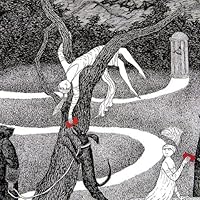
Though I purchased this tome more for the Edward Gorey illustration on the dust jacket than for any interest in the content itself, I’m not at all sorry I read it. Marvin Kaye puts together one of the most eclectic “theme” anthologies I’ve ever read (and I’ve read a few). To be sure, with “use of magic” as the only apparent criterion for inclusion, he’s got a lot of leeway to play with. And play he does. Some of the selections are dry, dull, even – shudder! – intellectual. Others are visceral enough to border on splatterpunk. On the other hand, we do get a fair number of well-crafted, entertaining, even thrill-inducing entries. For something I didn’t start out intending to read, it wasn’t bad at all.

Read
August 3, 2026PLACEHOLDER REVIEWS
A.M. Burrage's "Between The Minute And The Hour" has a shopkeeper somewhat insult an old lady begging for food, and so she applies a very off curse to him... This is an enjoyable read, more dark fantasy than supernatural fear story (even with a witch), as our shopkeeper find himself exploring various time periods which he is sent to by the curse.
A.M. Burrage's "Between The Minute And The Hour" has a shopkeeper somewhat insult an old lady begging for food, and so she applies a very off curse to him... This is an enjoyable read, more dark fantasy than supernatural fear story (even with a witch), as our shopkeeper find himself exploring various time periods which he is sent to by the curse.

November 6, 2021
I like fairytale witches, not the gothic witches

December 31, 2016
Solid collection that brings together effective doses of both well-known and lesser-known horror, sci-fi, and fantasy authors. Waves of nostalgia and exploration pulled this reader right from the end of one story into the beginning of the next one. It is very clear how much Mr. Kaye appreciates a short story collection and how deftly he balances mood, tone, and pacing when compiling them. Highlights for this reader include, "The Witch" by Isaac Bashevis Singer, "Between the Minute and the Hour" by A. M. Burrage, "Young Goodman Brown" by Nathaniel Hawthorne, "Doll-Baby" by C. H. Sherman, "Ever the Faith Endures" by Manly Wade Wellman, "The Old Man of Visions" by Algernon Blackwood, and "Witches Hollow" by H. P. Lovecraft and August Derleth.

December 31, 2011
Every once in a while, around Halloween, I pull this off our library shelf and indulge in some good old fashioned horror. I prefer subtle creepiness and thriller style format to the gore that seems rampant nowadays. A lot of the stories in this anthology are written by folks from the 1800s, and there is that sense of prevailing dread that makes them extremely delicious as far as scare factor is concerned. At the end of the volume, Marvin Kaye has listed a helpful index of other horrific reads and film that I intend to check out at some point. All in all, this is a classic book to curl up with when October creeps around.
February 19, 2017
I have a soft spot for Marvin Kaye and his goofy anthologies, but this one is way too goofy even for me. The only stories I enjoyed were A.M. Burrage's "Between the Minute and the Hour" and Tanith Lee's "Perfidious Amber." One of those anthologies where quality is a secondary consideration.

April 27, 2011
Wonderful book of short stories on witches, warlocks, and the like.

September 15, 2010
Skipping around. A lot of these are real ghost stories. Quite surprising
Displaying 1 - 15 of 15 reviews