Yes, it’s true – Rahab was a prostitute – until the day God redeemed her. But gratefully, once we have been redeemed, God doesn’t see any of us through the lens of our sin; rather, He sees us through the lens of His Son.
It was by faith, this woman of courage and strength did not die with all the others in her city. And it was by faith, she became a part of the ancestral line that led to the advent of Jesus.
This is the story of the heroine who protected the Israelite spies … and so much more.
Consider her story and the story of the times in which she lived — the portion you may already know … and the rest of the story that could have been.
Old Testament history and the people from those pages come alive as the author takes scripture and fictionalises the story. Never once altering the biblical truths or undermining the glory and acts of the sovereign God.
Not for everyone I would suggest since there is a clear Christian message here and the story is told to elevate the biblical cast to reflect their lives of faith and the judgement and love of God. This is not a hit you over the head approach to passages from the Bible to convince the doubts and uncertainties. Nor is it an excuse to abandon the first-hand accounts and the blessings reading God’s Word brings.
Rather, it is the expansion and gap filling from the basic story. Taking the core texts and building a narrative that allows the imagination to enjoy the story in new ways.
I chose this episode from the fall of Jericho and the faithfulness of Rahab as it shows the role of Women in God’s plan of salvation and much of the general accounts skip over such special female characters.
I found this book a delight. Very broad in its storytelling but allowed me to sense more of the place and time of these events.
Yet it is also difficult to see the destruction of a whole City and its inhabitants as a cause for celebration.
These theological issues are not ducked or avoided. Indeed the background story setting goes some way to place the region in context and the writer allows Rahab to address her own sense of loss and personal understanding of being saved by faith.
For me this was important in a different time and place but ultimately if we are going to graduate beyond the historical events and embrace the spiritual message we must follow Rahab’s journey to faith. That this is told in a story which reaches those who would not pick up a Bible and still resonates with the original text is a real bonus and demonstrates this author’s talent in making difficult truths more accessible and available to a wider audience.
It was fine. At least it didn't whitewash Rahab's past, and I can well believe that Canaanite culture is as depraved as it was portrayed. But I would definitely not recommend it to young adults.
Listened on the Dwell App—good narrator, clear delivery, easy to follow. This is a historical fiction account of Rahab, whose biblical story in the Book of Joshua is famously brief. Winter does solid work expanding that short account into a fuller narrative of her life and the fall of Jericho.
Rahab herself is portrayed not simply as a prostitute, but as a woman operating on the margins of Jericho’s society with surprising agency—likely an innkeeper or host figure whose position brings her into contact with travelers, merchants, and ultimately the Israelite spies. The novel leans into this, presenting her as observant, pragmatic, and keenly aware that Jericho’s fate is sealed long before the walls fall.
The central biblical episode—the arrival of the Israelite spies—is handled well. Sent by Joshua to reconnoiter Jericho, the spies take refuge in Rahab’s house, which sits on or within the city wall. When the king of Jericho orders them seized, Rahab hides them—famously sending pursuers in the wrong direction. This is the hinge of the entire story: her decision to betray her city in exchange for survival.
Winter builds on the biblical motive: Rahab has heard of Israel’s God—of the Red Sea, of prior victories—and concludes that resistance is futile. Her bargain is straightforward and coldly rational: she will deliver the spies’ lives, and in return, they swear to spare her and her family when the city falls. The scarlet cord she hangs from her window becomes the agreed signal—one of the more memorable symbols carried over faithfully from Scripture.
The novel then broadens into the Israelite assault on Jericho, though “assault” is almost the wrong word. As in the biblical account, this is no conventional siege. Joshua’s forces march around the city once per day for six days, led by priests bearing the Ark of the Covenant and blowing ram’s horn trumpets. On the seventh day, they circle seven times—then come the horns, the shout, and the miraculous collapse of the walls.
Winter treats this moment with restraint, leaning more into tension and inevitability than spectacle. The real drama is not in the mechanics of the collapse, but in the realization—shared by Rahab—that Jericho was already lost. Her earlier decision proves decisive: when the city is taken and largely destroyed, she and her family are spared, exactly as promised.
The novel also touches—implicitly or explicitly—on why Israel attacked Jericho at all. This was not a random act of conquest, but part of a larger campaign under Joshua to take possession of Canaan, believed by Israel to be land promised to them by God. Jericho, as a fortified gateway city near the Jordan River, was a logical first target—both strategically and symbolically.
⸻ Final Assessment
This isn’t a battle-heavy, visceral war story. It’s more:
a character study set against the backdrop of one of the Bible’s most famous campaigns
Strengths:
* Expands Rahab into a believable, thinking actor * Handles the spies and scarlet cord episode faithfully * Grounds the fall of Jericho in a sense of inevitability rather than spectacle
Limitations:
* Much of Rahab’s inner life is necessarily speculative * Action is limited; those expecting a Cornwell-style siege will find it subdued.
⸻
Verdict
As a passive audiobook, this works very well—especially for building familiarity with a lesser-known biblical figure. It succeeds in doing exactly what you set out to do:
take a minor character from Scripture and give her enough dimension that she stands clearly on your mental map of the campaign.
'A Heroine Called Rahab' is biblically accurate for the most part. Winter adds some personal details so as to try and humanize Rahab and make us invest in her story. Most of these added details are wise historical estimations; for example that Rahab was a temple prostitute. Given how the temples probably monopolised the trade, this is likely. However, I do find that suggesting Rahab only was a new and nearly untouched prostitute dampens the glory of God in the story. This also happens with the lack of male, child, and animal prostitutes and showing the people of Jericho as weak and fearful. No, the victory here was much larger.
Unfortunately, the emotional engagement falls flat and the novel is as dry as its counterpart. Winter uses a passive tone and slow pace, starting the story with Rahab's grandmother. There is a lack of direct dialogue as if the story is being narrated. This also serves to slow the story down and remove all of the excitement the story deserves, especially when her life is endangered. The biggest disappointment is that there is absolutely no characterization for Rahab's conversion. She believes in Yahweh out of the blue. Biblically, it is good. The story however, has much unfilled potential.
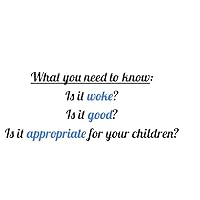
Is it appropriate for your children?
All violence and sexual content is off the page. It is as appropriate as it can be with themes of prostitution, rape, and idol worship. I believe this would be a great tool for teens to dive a little deeper into the story whilst being protected from seeing too much. 15+
This is the first of this series I have read, and while I admire what the author is trying to do, I think he gets a little carried away. The first chapter has Rahab meeting the spies; great, we know that happens, let's see what happens next.
What happens next is Rahab narrating her family history to 4 generations before this story starts, and then slowly, slowly building towards the destruction of Jericho. I would say that about 85% of this book is Rahab's family history, which is to say, complete fiction. While I appreciate the author taking the time to try to flesh this out, most of this is the history not of Rahab herself, but of her mother, grandmother, and grandfather. There was also the somewhat strange attempt to justify Rahab's position as a prostitute by reframing it as the typical role of a priestess in Jericho. While not a bad attempt... it still feels like a bit of a stretch about a person that very little is known about.
The writing is not bad, but I would say "fair to middling," especially as we get towards the actual Biblical events, which are basically narrated in a "this happened, then I saw this happen, then this happened" fashion. In fact, the story of Rahab's life and family history was written much better than the actual Biblical events. Unfortunately, I was hoping for more effort in fleshing out the Bible story itself, not using half the book to make up a story for why Rahab would betray her city.
Not terrible, but not something I would necessarily recommend.
This is an outstanding story of Rahab who played an important role in the genealogy of Jesus. The author has taken the Biblical story and embellished it a little but much of what he has included could very possibly have been a part of the story. We don't really know. Rahab had a hard life but she used it to further God's plan and in the process she and her family discovered the true and living God and ultimately lived a fulfilling and rich life.. I look forward to reading other stories in the series.
I didn’t know they threw out their pastes (makeup) after the victory! You don’t need makeup to “beguile men” ;) I really enjoyed this insight in first person POV!
“Jehovah God had removed the bitterness from my heart” 🤍 amen, rahab, amen 🥹
The theology and biblical scholarship was an absolute mess. Even just as a work of fictive without those factors, it was not well written and uninteresting.