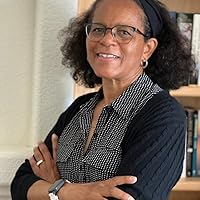
Inspiring lessons on growing older with grace and laughter, from a Zen teacher and writer who is “like a Buddhist Anne Lamott” ( New York Journal of Books )
Being a woman over sixty can sometimes be confusing, sometimes poignant, and sometimes hilarious. In this intimate and funny collection of essays, Zen Buddhist and writer Susan Moon maintains her sense of humor as she provides thoughtful insights on getting older.
In This Is Getting Old , Moon touches on both the ups and downs of Her bones are weakening, but she still feels her inner tomboy. She finds herself both an orphan and a matriarch following the death of her mother. She admits to sometimes regretting pieces of her past and to being afraid of loneliness. These musings, written with Moon’s signature wit and grace, are a touching exploration and celebration of life, age, and our “senior moments”—plus a powerful reminder to be in the here and now.
One of the only things I do right is get old. Not that there’s a right way to get old, just that no matter what I do I keep aging. It’s one of the few things I’d prefer to fail at, but I guess this is the exception that proves the rule.
When I was young I liked to think of myself as old. I loved the way the elderly dressed and copied their style. I enjoyed the company of those in dementia over the sharpies of youth. Of course, it’s easy to love what you’re not. Once I hit a certain age and my metabolism slowed, my joints hardened and my hair fell out, being old lost its romantic appeal.
That’s why I eagerly picked up THIS IS GETTING OLD: ZEN THOUGHTS ON AGING WITH HUMOR AND DIGNITY by Susan Moon, I needed help to hate the endgame and not the dying player. But Moon isn’t about hate, she’s all about acceptance, which is hard for me to accept. I mean, sure, I know I’m going to die, I just don’t want to be there when it happens. Moon feels differently. She wants to be there. It comes from her Zen practice, which informs most of the essays in this collection. She talks about the loneliness of growing old, the loss of her mother, and other indignities, with, well, the humor and dignity promised in the subtitle.
Moon never falls into the navel-gazing trap that ensnares most memoirists, because she wants to connect with others and doesn't takes herself too seriously. Her stories are moving and inspiring, without getting too religiously nutty. Her practice is fluid and curious. She uses Zen forms but acknowledges that they’re just forms. There’s no rigidity or dogma, just acceptance that things change and sometimes we don’t like them, and that seems right to me.
This was a Christmas gift from my Wish List on Amazon. Having reached my middle 50's I really enjoy this look at getting old and ways to adjust the attitude on getting old.
I really enjoyed this book. As some reviews already said, being a collection of essays, some spoke to me more than others. I particularly enjoyed her frankness about it all. Her pieces on becoming an orphan (when her mother died) and coping with depression REALLY spoke to me. As well as the aches and pains, and the worries over it all. If the reader is not a Zen Buddhist, they may find the Zen references too much. But I didn't. The book stands alone, without those bits.
I particularly liked this quote in the introduction: "As the Buddhist teacher Wes Nisker reminds us, we are called human beings not human doings. Laotzu said it, too, long ago: 'The way to do is to be.' We older people, forced to slow down in the doing department, have a leg up on being."
For a person who used to DO so much--too much even--and has slowed down, I really appreciated this view. I found it freeing.
As an official old person (80+), it's hard to find books on aging that are actually USEFUL. Such books as there are are written by people who may be age-ING ...but, in person, are not really there yet. The joy of this book is the use of the word "aging"... she's not quite "old" and doesn't claim to be. So it's a tray of canapés... identify with what fits you... and there's more wisdom than in any of those other "wise" tomes, delivering professional information that is not their own. I've read a lot if them, but haven't bothered to report on them here. A concise 150 or so pages. Enjoy!
Moon S (2010) (05:18) This Is Getting Old - Zen Thoughts on Aging with Humor and Dignity
Introduction
Part I: Cracks in the Mind and Body
01. Where Did I Put My Begging Bowl? 02. Stain on the Sky 03. Leaving the Lotus Position 04. The Breathing Tube 05. Old Bones 06. All Fall Down 07. Senior Moment, Wonderful Moment
Part II: Changing Relationships
08. In the Shade of My Own Tree 09. Exchanging Self and Other 10. House of Commons 11. Getting Good at Staying Still 12. Grandmother Mind 13. What If I Never Have Sex Again? 14. Becoming Invisible 15. The Tomboy Returns
Part III: In the Realm of the Spirit
16. Tea with God 17. I Wasn’t My Self 18. You Can’t Take It with You 19. The Secret Place 20. Talking to My Dead Mother 21. For the Time Being 22. Alone with Everyone 23. This Vast Life
I would rate higher if it wasn’t for “Zen Thoughts on Aging with Humor and Dignity” which is quite misleading. The book starts off humorous indeed but as soon as the second essay things get depressing. And this is with one of the most challenging things to read about; losing loved ones. Parents to be exact. And there is just nothing about finding the experience more peaceful in an inspirational way nor much–if any–humor. I have found the editing order bizarre about the same reason. The author’s naturally very emotional experience of losing her mother as soon as the 4th essay??
The essays are generally more like a diary of the author sharing her experiences and thought process. I can’t say there was much ‘zen’ in that either. Honest? Felt so. Zen? No. Even the parts that are actually about practicing zen reads more like completing a task, a chore than actually relaxing. e.g. In one early essay the author shares how she needs to sit on a chair now due to osteoporosis and not the floor like she used to, and that it was frowned upon in the old times and maybe also now by some, and that she herself needed to make her peace with it.
I liked most of the essays at some level. I think the book would be more enjoyable if you don’t have any expectations and totally ignore the description “Zen Thoughts on Aging with Humor and Dignity.
Moon is just a little bit farther down the road of life than I am, so it helps me a lot to see what’s ahead for me. It’s not a pretty world, the sixties. Falls, for example, are already a problem for me. I’ve already taken several spills in my fifties, all of them embarrassing but, so far, not life-altering. Moon has a whole chapter on falls which might seem tedious to a twenty-something, but is amazing insight to me at fifty-three. Moon also talks about her difficulties with depression and loneliness and caring for her elderly mother during her mother’s last days and all of these are lovely.
This book was a bit different from what I initially expected after reading the reviews but I enjoyed Susan Moon's exploration of her life and aging with all it's varied changes. Some of the story is humorous but more is contemplative, some quite sad as she deals with and seeks to find meaning in the changes we all face. Her point of view is heavily influenced by Zen Buddhism and there were occasional terms that I didn't totally understand, but that didn't really get in the way as the narrative generally explained all.
Looked this over to see if it would be a good book for a relative and was disappointed it had so many words. They are only short essays but I sort of was hoping for pithy on-page insights and I found several page essays on really depressing aspects of getting old...falling down, not begin able to open jars, etc. We don't even like to think about those things, let alone read about them. Another reminder, if we ever needed one, to read the book first before you give it as a gift. Not a favorite.
I had a lot of trouble with this. Perhaps because it was too true and real, perhaps because its California Zen author was too different from me although so much was the same. There are two quotes that I took to heart, however.
"There are times in life when nothing helps, when you just have to feel terrible for a while." p130
"Longing is its own satisfaction. It's already complete." p143
Enlightening, amusing, engaging. Very well-written. Lots of quotable sentences. A smart woman who has both spent too much time wondering why she is single, and lots of time on the reasons her life is full and rich. I found it more agreeable in small doses.
I found this book via an offer from Amazon deals and as I was approaching my 70th birthday, decided to buy it. I’m glad I did.
Ms. Moon has written a book that covers the gamut of experiences, thoughts, and feelings about being an aging woman. It’s constructed as a series of essays, every one of which had a nugget of meaning in it. She is a terrific writer, able to provide vivid descriptions of people, places and events that pull you right into her essay.
She and I are very different people ... and yet, we are very much the same. She was a tomboy. Not me. She loved to hike and sequester herself in nature from childhood and beyond. Nope, not me. I’ve only learned to appreciate the outdoors as an adult, after I rid myself of my mother’s proscriptions about being outside, which wasn’t “ladylike”. She has always had an intense desire to surround herself with people and housemates though she has found living with a partner too difficult to sustain. She’s a caregiver to some degree and that has never been my thing. But ... we’re the same.
We struggle with the physical limits imposed by aging even though we are otherwise healthy. She struggled with loneliness that was not of her choosing. She is highly introspective and has found being “in the moment” difficult. She is a reader and writer. She can be funny. And poignant. And she feels like a soul sister.
I loved the essays about her mother and her ofttimes challenging relationship with her. Her reflections on the ways in which she was freed by her mom’s death to be her self despite missing her mother and being saddened by her loss, were deeply honest and authentic. And then there is her relationship with her bones (so funny!) and her brain. And let’s not leave out what it means when you realize you’re unlikely to have a sexual relationship with someone again .. more loss. A little freedom. Either way, a transition many, if not most, women make at some point in their lives either through choice of circumstances.
I am going to recommend this to all my women friends. I’m going to keep it close to re-read it now and again as it feels loaded with lessons that will stand the test of the time left. If you are 60+ or acutely aware of the path of aging that we are all on, whether or not we are consciously aware of it, I highly recommend this book. Insightful. Beautiful.
This is not exactly the book I expected. Susan Moon is 65! I thought she'd be at least 75. I wanted to know how it would be to start getting real old. Is 65 old? A teenager will answer you, yes, definitely. But when you grow older your idea on that, changes.
Then I thought there would be humour, as promised on the cover. There isn't any. The book is honest, and often rythmic, which gives it something refreshing. But humour? Nothing at all.
Same for the Zen thoughts that were promised. Susan Moon tells us a lot about her psychological problems, like fears that come from her childhood, the fear of being alone, which have nothing to do with getting old at all. Except perhaps that when she grows old, she sees that these problems have still not been resolved, she's still struggling with it. Her zen thoughts seem to be anti-zen, it is as if she practises and embraces that philosophy in order to get rid of her problems. She approaches it from her tiny self, not wanting to ask deep questions. Ok, I'm not a buddhist, but I like zen, and this is not zen at all.
As to the subject, getting old, was sometimes nice: falling, osteoarthritis (her knees!), having white hair are the physical ones, and then there are subjects like: will I never have sex again, will I remain alone until the end of my days? But I had expected tips to the readers on how to cope with problems of old(er) age. In fact, I had expected a lively book full of humour and wise zen approaches, but also many tips like your mother, who has been through all this, or is going through it, would give them to you as she talks to you and tells how she's managing. There were no tips, only the description of some problems you will have when you're not yet really old but a 'junior senior'. I can give you a tip, for instance: online, you can find electric jar openers that work on batteries. They make much noise but they do open everything! I also found an instrument to open cans, a manual thing that you put between the lid and the can, and then you pull. That are good tips we can do something with! (Should I write a book in a few years? Grin.).
Conclusion This is an honest book on the life Susan Moon lives at 65, with the emphasis on well-being or not so well-being and how she struggles with her life at that age. But it is not a book on getting old, it is not humourous nor zen buddhist.
Another book on sale and another book one could regret one bought it. Even the picture on the cover, which looks just as sanguine as another nice outfit for a nice book, is deceptively depressing. So many candles crowd the cake that the oversized flaming top seems on the point of toppling over. However once started, I found myself enjoying it more than I had expected. I particularly enjoy the part, in which the author bought a big house, with the help from her parents, and made her home a community of friends. That's just wonderful. I think I watched a video about such kind of community before. A fashionable new company in New York that started such a thing. I wish I am involved in such kind of thing myself.
I like the part about she and her mom, their opinion of each other bordering on criticism, especially when hair is involved. I've never had such experiences with my mom since she never paid much attention to me--which is a good thing and I've become independent and self sufficient early on--and I've never been interested in people's looks or people's body enough to give opinions. I mean any opinion. I wish she elaborate more on her relationship with her mom, the prickly criticisms that come with the supports, their varied ideas or ideals, the comparison and the conflicts, the daily conversations etc. I would be really interested to know the inner working of women's relationships. There should be as many books about women's relationship as romance, but I am becoming too unrealistic here.
Sue provides food for thought, much that I could relate to although her Zen retreat experiences aren't personally appealing. She relates many experiences on these retreats and sessions that didn't seem to do much for her. I'm not a meditation type so I find it hard to understand undergoing deprivation and trying not to expect much. She admits to difficulty in keeping her mind from wandering. I do that no matter what I'm doing, and I guess I'd rather be productive and have "monkey swings" of thought than going away to uncomfortable living just to do it. But that's me. However, I did find much to relate to when she describes family relationships and disappointments with losing abilities with aging. At 76, I'm often disappointed with not being able to plan or will myself out of painful joints, trouble walking and an increasing desire to just sit in a comfortable chair and read a book. But I, as Sue does, keep trying to stay active, stay involved, stay relevant. Good work, Sue!
Zen practitioner of 4 decades tells us of insights on aging. Wabi-sabi" is a Japanese expression for the beauty of impermanence. p. xii The thief let it behind. / the moon / at my window. p. 137 Why was there only one small self inside my head, serving a life sentence in the solitary confinement of my skull, looking out of my eye sockets? It didn't make sense. p. 140 "Hello, longing. I know you." p. 143 "FOMS Syndrome" fear of missing something. p. 155 I can't be in more than one place at a time, but I can be in more than one time in the same place. p. 139 The day was on its deathbed--I watched it lie down on the brown hills. p. 163 The dark ate the trees, leaf by leaf. * * * I love the silence of this place. p. 164
Wonderful book! I laughed, and I cried as I read this. My 65th birthday is in just a few short weeks. I just received my ‘acceptance’ letter for Medicare...
This book is tender, compassionate, and at the same time quite funny, as it tells the story of a woman moving into her last third of her life. Everyday life continues, but from a different perspective now. I highly recommend this to others just moving into their ‘Medicare’ years...
As I read about the author's journey though life, I began drawing parallels to my own existence. This book is a gentle read about growing older and all the aspects of life that is impacted in the process. I really enjoyed Moon's Zen comparisons and appreciated her frankness with her own emotions. Growing up in a household that always discussed death and dying, I truly wish I had this book to reference during those conversations.
This book consists of short essays/vignettes about issues of aging. There is somewhat of a Buddhist perspective, although it's kept light. The author always explains the Buddhist concept as well. I found the book delightful, although sometimes the issues were exaggerated, at least from my 79 year old perspective. The humor and dignity are definitely there. It's a pleasant read before bed, not profound but meaningful nevertheless.
I grabbed a withdrawn library copy of this book without reading the back cover, because its title set off a little Erma Bombeck bell in my head. It turned out to be the third book by a Zen Buddhist writer I've read--and deeply enjoyed--in the last month. Moon's stories start as I expected they might, with a focus on different body parts failing through late middle age. But they grow and expand and touch on so much more. A satisfying collection.
What a joy to read this book, a first hand glimpse from someone aging like me. Her writing is light and times humorous without the gloom of getting older. She doesn't skirt around aging reality but shares her very personal experiences with humor and dignity. Was a delight reading her writing and made me grateful aging is natural, even if I would prefer that time not go by so quickly.
A gentle memoir of a former hippie about my age. Some characteristics of aging we share: arthritis, memory loss, becoming the matriarch of the family. But her lifestyle - solitary - and her religion - Buddhist - keep this from becoming the book I thought it would be, a shared vision of aging as a woman.
First thoughts: A Zen Buddhist writing essays about getting old and what she's done to handle it is definitely a niche book. So why did I read it? Being about the same age as the author, I felt she might have some insights into the process. Not really, she was just sharing her trip and a lot of meditation.
This is actually on my DNF (did not finish) shelf but not due to the writing. I felt like the author was someone I might want to meet, to talk with about aging, to ask questions ((except for the eye procedure!)).
But the narration just droned (in audio) and I just began not to care. At some point I may find this in print or ebook but there is much left to read in the world.
This is a book written from the soul and it had some very pointent moments. At times it was hard to read and at times sweet and comforting. Somehow though, it didn’t really grip me. It didn’t pull me in and make me want to read more. It was a group of personal reflections and rather self-indulgent. Overall though, I think the topic was novel and approached with honesty and heart.
This book is a collection of short reflections on aging. Susan Moon uses stories from her life to illustrate different aspects of aging--the author was in her sixties when she published the book. One passage in particular concerning her mother was very touching and had me tearing up a bit.
It's a great book if you're seeking out a Buddhist perspective on aging from one woman's vantage point.