A memoir of America's most turbulent, whimsical decade, in the words of the man who experienced it all... From the New York City of Kline and De Kooning to the jazz era of New Orleans's French Quarter to Ken Kesey's psychedelic California, Prime Green explores the 1960s in all its weird, innocent, fascinating glory. An account framed by two wars, it begins with Robert Stone's last year in the Navy, when he took part in an Antarctic expedition navigating the globe, and ends in Vietnam, where he was a correspondent in the days following the invasion of Laos. Told in scintillating detail, Prime Green zips from coast to coast, from days spent in the raucous offices of Manhattan tabloids to the breathtaking beaches of Mexico, and merry times aboard the bus with Kesey and the Pranksters. Building on personal vignettes from Stone's travels across America, this powerful memoir offers the legendary novelist's inside perspective on a time many understand only peripherally. These accounts of the 1960s are riveting not only because Stone is a master storyteller but because he was there, in the thick of it, through all the wild times. From these incredible experiences, Prime Green forges a moving and adventurous portrait of a unique moment in American history.
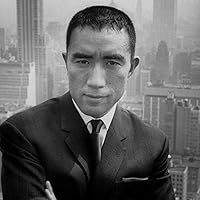
ROBERT STONE was the author of seven novels: A Hall of Mirrors, Dog Soldiers (winner of the National Book Award), A Flag for Sunrise, Children of Light, Outerbridge Reach, Damascus Gate, and Bay of Souls. His story collection, Bear and His Daughter, was a finalist for the Pulitzer Prize, and his memoir, Prime Green, was published in 2006. His work was typically characterized by psychological complexity, political concerns, and dark humor.
A lifelong adventurer who in his 20s befriended Ken Kesey, Neal Cassady, and what he called ‘‘all those crazies’’ of the counterculture, Mr. Stone had a fateful affinity for outsiders, especially those who brought hard times on themselves. Starting with the 1966 novel ‘‘A Hall of Mirrors,’’ Mr. Stone set his stories everywhere from the American South to the Far East. He was a master of making art out of his character’s follies, whether the adulterous teacher in ‘‘Death of the Black-Haired Girl,’’ the fraudulent seafarer in ‘‘Outerbridge Reach,’’ or the besieged journalist in ‘‘Dog Soldiers,’’ winner of the National Book Award in 1975.
I've had the good fortune to read two excellent literary memoirs in the last week or so. This one, and Paul Theroux's Sir Vidia's Shadow. Prime Green: Remembering the Sixties is and superbly written. The author's ability to compress this picaresque decade of his life into a mere 230 pages is a marvel. Stone has long been considered a writer's writer, still, I would lay odds that some of his nimble phrasing here came from honing these tales at dinner parties and other venues over the years. The book is very funny.
It opens with Stone at the helm of the USS Arneb. At sea he keeps two pictures over his desk: one of Bridget Bardot, the other of the New York City skyline. These he calls the poles of his desire. His descent into yellow journalism is interesting. On discharge he went to work for the New York Daily News, perhaps no worse then than it is today, and later for a few scuzzy National Enquirer-like rags. There he was responsible for headlines such as "Mad Dentist Yanks Girl's Tongue" and "Skydiver Devoured by Starving Birds." He goes to Hollywood with Paul Newman to make his novel A Hall of Mirrors into an apparently bad movie called WUSA. I've never seen it, have you?
He introduces us to Ken Kesey, author of One Flew Over the Cuckoo's Nest and other works. I'm very grateful for the introduction because I've always been led to believe Kesey was a charlatan. Au contraire. Stone eulogizes his friend here as a great—if often drug-addled—man of superior learning and charisma. Kesey and his Merry Pranksters are probably most famous for setting off from Northern California in a psychedelic bus for the 1964 New York World's Fair. Neal Cassady was the driver. Yes, that Neal Cassady, Kerouac's friend, the one immortalized in On the Road.
One tale of the Pranksters in Mexico—Kesey was on the run from drug charges—has Cassady clandestinely using a hypodermic to dose a roast pig with LSD and amphetamines, thus sending the many diners—Stone was one—on an unexpected journey. That LSD was originally intended as a Cold War weapon, coming out of CIA-funded studies at Stamford University, and ultimately became a popular drug which "changed the minds" of Baby Boomers and others in many ways during that time of heightened social consciousness, is an irony that resonates to this day.
When Stone goes to Vietnam as a stringer, the narrative grows thin, the prose seems rushed, fragmented. But this is only in the last fifteen pages or so. The rest of the book is quite wonderful.
1. I'm convinced I was born in the wrong decade. I am completely addicted to and fascinated by the '60s and '70s, to the point where it actually grieves me that I didn't live through them. 2. Within the first 10 pages, I knew that Robert Stone is the kind of guy that I would have fallen head over heels for had I existed in those times and ever met him. Maybe that's a weird thing to say, and that's honestly never happened to me while reading anything else before, but I can safely say that Robert Stone is my kind of guy.
It seems to me that most of the people who weren't pleased with this were upset by one of two things (or both): the realization that this is not, in fact, another Electric Kool-Aid Acid Test or memoir about Kesey and the Merry Pranksters and/or Stone's writing style, which is rather... fuzzy.
This is a memoir of Stone's golden years, and he treats it as such. It's written in such a way that I can hear him telling these stories to me over a meal or a few drinks. It's a bit disjointed (but not jarringly so), and it's filled with the kind of details and retrospect that make hearing about the past so damn interesting. There are moments that are stronger than others, things that are skipped over. Everything is given the proper amount of time in accordance to its weight in his life. Nothing is overly romanticized or dramatized, just the things that probably were as they happened - sunsets in Mexico, the moment he decides to marry his wife, his experience in Vietnam. He looks back not with disappointment or exultation, not with emotions distorted by memory and time, but with respect and knowledge. His passion and excitement for these stories makes it seem as though he lived all of this just yesterday, but with the knowledge he possesses today. Because of this, it feels very honest. He's upfront about his mistakes and shortcomings and those of his comrades - he doesn't hesitate to show his mistakes with drugs or his relationships, and he admits that he thinks Kesey could've been a much more monumental figure than he was, which is a pretty bold thing to say about someone worshiped as cultishly as Kesey, especially considering the two were good friends. It's actually a little hard for me to imagine what Stone's fiction must be like, because he writes memory so well.
The arc follows Stone on the wild goose chase of his life. Beginning in the Navy, it follows his early days as a war journalist and an NYC tabloid journalist, working blue collar jobs in New Orleans, writing his first novel (and seeing it turned into a movie), hanging out with Kesey and his gang (he wasn't on the entire famous bus journey, just the last few days in New York, but he did spend a lot of time with Kesey & Cassady, including their Mexican exile), living in California, London, NYC, and ending with his time in Vietnam. I rather liked that it started and ended with military service and was filled in-between with passion, debauchery, sensationalism, art and drugs. It gives him a rather grounded perspective on the era - he was clearly taken with its goals and attitudes, but not as completely as many of the decades' more famous figures.
On the whole, a delightful read, particularly for those entranced by the times, for writers who like hearing about/from other writers, and for those on a true quest to live well.
I should have stopped reading this book long before the end. I don't know why I kept going. Stone has had an interesting life, he has met some fascinating people, but by the end I really didn't care.
How can such an acclaimed author, he won the National Book Award for Dog Soldiers, make such a hash of his own story?
I guess if you are doing research about the 1960's you might want to look at this, but otherwise, I don't recommend it.
Picked this up at the local library book sale. I've never read a novel by Mr. Stone, though I intend to. There're a lot of writers in that category! I did see "Who'll Stop the Rain," the most excellent film version of "Dog Soldiers." GREAT cast in that movie ... Certainly one of the best movies from the Vietnam era. So far we're still in the late 50's. Mr. Stone is about my brother's age = 9 years older than I am.
Into the middle of this now - the early 1960's - RS is in SF and hooking up with KK(Ken Kesey). I read Tom Wolfe's "The Electric Kool-Aid Acid Test" so I'm already somewhat familiar with the events being covered. Still, it's an entertaining and informative ride. The author includes plenty of drug lore, including some history of LSD, of which I never partook. I agree with him that hallucinogens can affect one's thinking. I think that my own marijuana use(mainly in the late 60's and early 70's) was enlightening for me. I think it helped me see the world in a bigger, more objective way that got around all sorts of American cultural indoctrination. Of course, there was plenty it didn't help me see(mainly about myself). I can't bring myself to actually recommend drug use, but I do remember some fun and interesting times ... problems arise when we go down the rabbit hole too many times ... too often. It begins to take over one's life; or at least the possibility exists for that to happen - it's a risky business ...
The middle of the book spends a lot of time with the Kesey exiles in Mexico. This part was covered by Tom Wolfe too. The "Carmen Gutierrez" story in NYC was in the New Yorker long ago - very funny. "Kid ... put some PIZZAZZ in it!"
Moving on as RS moves to Hollywood to work on the screenplay for "WUSA"(based on his first book) and learns a harsh but inevitable lesson. If you try to bleep with Hollywood you'll be the one getting bleeped. Still, he did get some dough out of it even if the movie was crap(though I admit I've never seen it). I don't know if this book will cover his next La-La Land experience with "Dog Soldiers." Doesn't look like it will.
Finished over the weekend. A fine book by a fine writer. Too bad it didn't continue, but then it wouldn't have been just about the sixties. I need to order up some R. Stone from inter-library loan!
RS in Vietnam ...
"How many times did journalists in the line hear the bitterness of drafted soldiers, risking it all for their buddies, for their personal honor, even - God help us - for their country, as they had been told and believed? How many times did one hear it: You don't have to be here, you're here to make money off it, you could be anywhere you wanted - with your high school and your college - anywhere - but you're here, you sick son of a bitch, here, because you eat this shit up, don't you, and I hope you die, you rotten-hearted motherfucker, I hope you die. Many times."
Having decided "Dog Soldiers" is one of favourite books of all time, I had to get this when I found out it existed. My high expectations stemmed from the wonderfulness of that book, which I realised had to be inspired by the stuff of this memoir.
I think it's very boring in a lot places. Robert doesn't seem to remember all that much about the sixties, and he keeps ending up on sort of the mainline, impersonal narrative of the time. If you're already familiar with that, he really doesn't offer many interesting anecdotes or insights, unfortunately. He comes across as holding back a lot, for whatever reasons. Maybe he didn't know what he was going to write about?
I'm reminded somewhat of Steven Prince, the centrepiece of Scorsese's film "American Boy", who brilliantly reminisces about his drug-fueled adventures. Decades later, fans of this film sought him out and tried to recapture the brilliance of those anecdotes. Steven is older, wiser, but also much more boring, probably because he didn't take all those drugs anymore. I'm getting the same feeling from Stone in this memoir. I think Stone simply forgot all the amazing stuff he experienced and was left with only the more general public's memory, to which he keeps tying in.
I was hoping for at least some original material from those times, especially since he quotes other authors' works liberally. Unfortunately it wasn't meant to be. I'm still interested in the Robert Stone of the 60s and 70s, and will try to seek out his articles written for INK and the Guardian. Also a book I found called "Conversations with Robert Stone" seems worth checking out.
There are some interesting paragraphs and chapters, but those are overshadowed by the general boredom. It's hard to imagine the person that wrote this, also wrote "Dog Soldiers", a perfect book.
In the end, my takeaway is that Stone's style of writing is much too detached from his personal past self to make for an enjoyable read. There is almost no emotion, motivation ascribed to anything that he does.
Smart guy, wonderful voice, fascinating time to live through, interesting life, great sense of perspective on himself.
Even though he knew Kesey & co., it's not really about that; it's about a smart young man figuring out how the world works and where he fit into it as a writer and otherwise. The voice here, it has the faintest hint of Damon Runyon to it, that slightly self-conscious New York thing, as well as some phrasing left over from the sixties, so it seems like a palimpsest of growing up in NYC and living through these times. Or maybe it was just what he was reading. Anyway, I enjoyed every sentence of this. Very distinct, friendly, self-deprecating in subtle ways.
Also, his politics are great, as well as his honesty about how he grew into them.
He gets a little starry-eyed about the times, which I gather some people find off-putting, but it's really about his youth; he just happened to be young at a time when it could be particularly rewarding("but to be young was very heaven" to quote a much quoted quote in this context). He has the same response to spending a few weeks sleeping on the floor at Shakespeare & Co. in Paris, though, but that's the kind of thing that stops being magical after you're thirty or forty or so.
Maybe the bus on the cover should be a clue. That ain't THE bus, the one you were either on or not.
Stone's recollections are pretty sketchy. If you're interested in finding out more about what Kesey, Cassady, or other colorful Sixties characters were like, you won't find it here. You also won't find out what formative experiences Stone had, which might have inspired his writing of his first book, which was written and published during the 1958 to 1971 time frame recounted in the book. You won't learn what he learned from Wallace Stegner, nor what authors he read during this time period. You will find some rather misanthropic comments about certain events, without much exposition on why he thinks that way. Most of these pronouncements will only exasperate the reader. He talks about how his group of friends were snobbish about drug-taking; he still seems snobbish as he again and again talks about how they blazed this trail for all the lesser beings who would come later. A basic lack of generosity informs this book. It comes off as slightly cranky and bitter. Do we need another cranky 50s-60s self-described "bohemian" to set us straight? Well, he doesn't even seem to have the energy to really do that, even. It seems like a book designed (cynically, and it's hard not to come away thinking, "Geez, this guy is cynical!") to make a buck, to cash in on all the seemingly more interesting people Stone hung out with back in the day, populating the book with some pretty tiresome namedropping (did he mention that he knew Winona Ryder's father? Well, yes, more than once) and anecdotes without a shred of illuminating commentary. And there's really nothing about why they took so many drugs, and how they affected their lives.
But as someone who sweated out the draft in 1972 (yes, I knew people in that last lottery whose lives were affected), I was only puzzled by his statement upon arriving in Vietnam in 1971 that "it was over." Well, not quite. Tell that to the parents of the more than 4000 G.I.'s yet to die (source: National Archives), or even more dramatically, the vast numbers of Vietnamese who would be on the receiving end of massive B-52 raids over North Vietnam in 1972.
I haven't read Stone's fiction, which is purportedly dark and pessimistic. Having read this book, I'm unlikely to.
60s memoir by a novelist who crossed paths with Ken Kesey and Richard Alpert and Alger Hiss, lived in San Francisco and London and New York, had his first book made into a movie by Paul Newman and Joanne Woodward, and did some reporting in Viet Nam.
All of which makes it sound more interesting than it was. There is a decent amount of space given over to pointless anecdotes (Neal Cassady used to stand by the side of the road in Mexico and salute passing vehicles by holding up a hammer he carried everywhere -- hmmmmmm. cool), drug escapades, and unremarkable observations (I've neither written fiction nor worked on movie, but even I have heard that it's very common to be disappointed in how your writing is handled by Hollywood).
He can definitely write, and there are some memorable scenes incl. a cross-country trip via Greyhound in which he's picked on by some Navy guys from Pittsburgh, but for the most part his talent is not put to great use here.
I've thought about reading this book multiple times in the past, but having no particular interest in -- or rather, an aversion to -- old hippie memoirs, I put it down. But what was I thinking?!-- this is Robert Stone, a fabulous writer, and I can see after a very few pages that this is going to be a very interesting book.
Boy was I wrong about that. He did start the book out with a well-written account of a sight that moved him from his Navy days, a mass migration of penguins in the water... but what followed was a very lazy disjointed rambling account of the sixties that was most unmemorable. It ends weakly with the line "my only regret is that we didn't prevail" although what "prevailing" could mean for the disjointed and dissolute adventurers he describes I can't imagine.
Even those interested in writer Robert Stone and sixties counter-culture may be slightly disappointed by Prime Green. Chapter 12, published as a separate piece in the New Yorker, is a chronicle of Ken Kesey's flight to Mexico after his 1965 drug arrest. A cynical take on the mutation of the mid-sixties "hippy" culture, it is the best section of the book. The remainder of the book has a much narrower, more personal focus and does not provide much historical perspective. Unfortunately, as a personal memoir, it is about as revealing as a social calendar. Events are recounted without much context or continuity and we never really learn much about Stone's evolution as a writer during what must have been his formative years.
A rambling and entertaining memoir. Sometimes quite dark(as expected) but also pretty funny at times(as not expected). Stone's life and book definitely hit a lot of the key moments of the era including the Merry Pranksters, Hollywood in transition, culture wars, Manson Family, Vietnam, Jim Crow south, ex patriot life,and others while offering a interesting and unsentimental picture of them. The squandered hopes of an era of compromised revolution haunt this book. His take that the hedonism and freedom of the time birthed both the war on drugs and silicon valley alongside the moral tragedy of the Vietnam makes this book both an indictment, elegy, and celebration of the era and how it births the present and future.
Once you get used to the odd (to my ear) diction, this memoir of the 1960s by semi-Beat Robert Stone is engrossing and often touching. His description of a long cross-country bus ride that ended in his peril simply due to his having a beard speaks volumes about the epoch. Highly recommended for anyone interested in the larger cultural milieu of "the sixties."
This is a fantastic and very artful memoir of Stone's life in the 1960s. Extremely interesting. Talks about the violence that lurked beneath the surface of that ostensibly peaceful decade. From the NY Times review: "the current of time feels swifter than usual and the fight against it fiercer, stranger."
One of my favorite fiction writers looking back on the sixties..alternately funny and horrifying..stories about tabloid journalism in New York, Louisiana and Ken Kesey in Northern California...Paraphrasing his comment 'If you can remember being on the bus, then you probably weren't on the bus' ... A definite must for fans of Flag For Sunrise, Damascus Gate and Children of the Light.
When HarperCollins offered Robert Stone a half-million dollars for a 60s memoir in 1999 (just as Stone's health started going south), they probably imagined a dishy tale of early-60s Jim Crow New Orleans, mid-60s California free love and Merry Pranksters anarchy, mod London style, Easy Rider-era Hollywood and even a dash of on-scene Vietnam horror. These were all locales that Stone was present and active in at precisely the right times for some great stories, after all.
But the ever-reticent Stone doesn't dish. Some seven (!) years later, HarperCollins received and published this slim volume which must have been an unfortunate surprise to his publicist. Stone devotes as much reportage to his enlisted tour aboard a naval transport ship as he does to hippie California, and as many words to creating spurious copy for New York weekly supermarket tabloids as those afforded to London and Hollywood. (He originally wanted to title this memoir "Skydiver Devoured By Starving Birds," but the publisher shot that idea down.)
So readers in search of hot gossip will find instead an immediately recognizable voice (stern, reserved, professorial) addressing the MEANING of the 60s rather than the messy details. And even here, Stone, normally astute and insightful, comes up short, as his worsening health made any kind of accurate recall and close-focused observation increasingly difficult. All in all, a missed opportunity.
For once, refreshingly, reviews all over the place from one to five stars for this memoir. I added my thoughts when I originally posted this to Amazon when the book appeared back in 2007. Yes, another reviewer already cited the cliche "if you can remember the sixties, you weren't there." I was, but pretty young, being born nearer their start. So, my memories lag behind Stone's...
The title comes from the "green flash" which Stone, stoned, glimpsed from a Mexican beach. Much of the insight here resembles the recollectons one might expect from a friend of Ken Kesey, an acquaintance of Tim Leary, and one who hung out with the scions of the counterculture in New York City, New Orleans, California north and south, London, Mexico, and Vietnam. That is, pages at a time become illuminated with wisdom-- before sinking again into a miasma of mundane names, places, and events filtered muddily or waveringly through uninspired, if competent, prose. I have only read two novels by Stone, "A Flag for Sunrise," and the disappointing "Damascus Gate." Like the latter book, "Prime Green" stumbles when it could have soared on a promising premise.
The opening chapter rambles on about his stint in the Navy; polar-driven wind and the feel of being at the bridge gain evocative detail, but then the narrative wanders off into recollections of an Australian swimmer he fancied, a bit of action he glimpsed during the Suez crisis, and exchanging Playboys with a Soviet crew. All three anecdotes fizzle. They almost follow randomly, such is the nature of this compilation of memories. Perhaps this casual style conceals careful craft. But, from a writer of Stone's level, that is, of critical acclaim more than another hack bestselling scribe, the offhanded attitude towards such potentially valuable incidents became disappointing. They are treated so offhandedly you wonder why he troubled to bring them up. Much of this book follows suit. It reminds me of a few all-nighters, if you could tape them, with a great storyteller; the difference is, you tend to edit mentally what you were bored or confused by, and highlight the stories which enraptured you, to replay again in your memory. I'd return to this book in the same manner.
For instance, the Bowery and its sudden replacement of white old bums with tough young blacks released from prison circa 1960 sets up a treatise on this sociological phenomenon. But, suddenly, Stone in the next paragraph sidles off into how he wrote copy for a furniture firm. Admittedly, he excels at his harrowing yet hilarious description of writing for the right-wing populist NY Daily News, which like certain media today manages to arouse the contempt of the working class for the system that supposedly favors those less qualified, yet deflects any blame from capitalism or the rich themselves for this inequality and this cynical game of having the victims turn on one another.
His send-up of another bottom-feeding journalistic stint at what he calls the National Thunder, a sort of Weekly World News, is priceless. Anyone who could survive a paper that created headlines like "Armless Veteran Beaten for Not Saluting Flag" or a close runner-up, "Skydiver Devoured By Starving Birds," merits some acclaim for such anecdotes. His accounts of being under the knife for a burst vessel in his brain, of interviewing bitter draftees in Vietnam, of watching the moon on the night of the first landing in 1969 from the California hills, all ring true; his narrative leaps to fitful if brief elegance in these sections. On drugs, Stone glimpses time's wheel and struggles to convey his psychedelic revelation. I wonder if any bard from this time can do so?
The remainder of the book, once Stone leaves in search of the elusive authenticity that takes him, seemingly with little money and the kindness of many strangers become friends, to Stanford on a fellowship, to London, to Vietnam, and to Mexico in a tumultuous but-- for a while-- rather childlike time despite his wife and two children (who are barely mentioned) to support does create in this reader a sense of how much could be seen and heard and experienced by carefree Americans with not much cash, plenty of drugs, and a sense of adventure that in our day has narrowed and priced out all but the affluent or the heavily guarded! Comparing his coming of age with the later century, the combination of a strong dollar, cheap costs of living, and goodwill manage, nearly, to create a glimpse of utopia. On the other hand, his escape from menacing sailors on a Greyhound bus ride from hell that winds up with him barely getting away from the ironically if improbably named hamlet of Highspire, Pennsylvania, marks a gothic tale where Poe meets Genet.
If you want a sense of the Sixties, disjointed and disconnected, with wisdom scattered along with a lot of languour, this does re-create a tone appropriate to these times. No history, or even tightly written account, nonetheless for all its faults, I learned from it. The conclusions are the expected sadness at the decade's waste of its promise, and the government infiltration and corporate co-opting of its ideals and its innocence. Not as many knockout punches as I expected, for the book needed editing and substantial tightening. It keeps reeling about, when it should have cut the flab and trimmed up under a drill sergeant of an editor, such as he used to work for in Manhattan in the early 60s.
The book bumps into the famous, nods, chats, and shuffles off again, In its slackness, casual air of street cred meets the dinner party, and Hollywood mingling with the Bowery, perhaps Stone, who managed to be in all of the proper places, dreadful or erotic, exotic or hilarious, remains the jester-cynic who sneers at the powers that be but knows if he had his chance on the throne (he gets a quick perch during his Hollywood visit), he'd settle down there comfortably enough. Stone, in a sloppy but occasionally memorable account, emerges rather blowsily, yet endearingly avuncular. He's slightly askew, a fitting if exasperatingly rambling witness and slyly calculating chronicler for a messy decade.
The title comes from the name Stone and his Ken Kesey-led comrades gave to the tropical morning light they encountered in coastal Mexico, where Kesey had fled to avoid jail time in the US for drugs. Though not a bus-riding Merry Prankster, Stone did have a long relationship with Kesey through the ’60s that began with their meeting as volunteer guinea pigs in the psychedelic drug testing the US government was conducting at Stanford University. Stone, a high school dropout from Brooklyn who had completed Navy service in the late ’50s, was already working on his New Orleans novel Hall of Mirrors, eventually published in 1967, and was recommended by a New York writer acquaintance to Wallace Stegner’s Stanford writing program. The memoir concludes with his early ’70s trip to Vietnam freelancing for a UK journal, where he witnessed some of the last major combat involvements of US forces and gained material for Dog Soldiers, his second novel published in 1974. The memoir, published in 2007, is a nicely written straightforward narrative, down to earth and very modest in its way (more focused on his own life’s happenings and directions than the “bigger” picture), considering some of the sociocultural and historic currents Stone witnessed, was involved with, and later wrote about. His New York Times obituary in 2015 nicely fills out the “bigger” story and Stone’s place as an important 20th-century American writer, especially as so much of his writing followed the years covered here.
This memoir is mostly snippets (nonfiction) from Stone's life, told with fictional lilt. For a time he worked on a soul-killing assembly line but was fired for an “attitude” problem. He tried selling encyclopedias door-to-door in Alabama but ran afoul of a sheriff on suspicion of being a yankee agitator. Then he was a writer and editor for a supermarket-lane tabloid check-out rag named National Thunder that featured headlines such as: “Armless Veteran Beaten for Not Saluting Flag.” Memoir also includes serious reflections on his career and as a participant in and observer of American culture. He's forthright about his misadventures and artless 1960s friendships with counterculture characters Ken Kesey, Jack Kerouac, Jerry Garcia. He disdains fact-based journalistic writing as being too simplistic, an observation which, I suppose, can be expected from a fiction writer. Memoir closes with reflections about the Vietnam War, its “insanity,” gathered when he was a correspondent for a British publication named INK. This experience partially inspired his novel, Dog Soldiers.
I was especially engaged by the parts of the book having to do with Mexico, the Bay Area and the Santa Cruz mountains in the 1960s, where Stone hung out with Ken Kesey. He also writes about Neal Cassady, Jack Kerouac, Ram Dass and some other countercultural figures of the time. I was struck by how dangerous it could be to go to parts of the U.S. in the 60s when you looked like a hippie.
This is more a collection of essays; some kept me more engaged than others. His writing about Vietnam (at the end) and his experience in the Navy (at the start) were hard to take in, due a dense, somewhat obscure, writing style. His piece about writing for a tabloid was hilarious. He also ruminates on drugs and writing and film adaptation. He captures the creepy feeling of the end of the decade with the Manson murders and the dark underbelly of drugs.
My fave book I've read this year. Can't believe how late to the party I am on this one. I'm usually all about fiction, especially short stories—of which Stone is a master, but this memoir is simply perfect. I've recommended it to many. Stone is sorely missed.
Yes, the Ken Kesey Furthur Bus escapades are fun—but it's Stone's spot-on social commentary that I relish. Particularly enjoyed the hilarious accounts of him doing hack writing work prior to publishing his first novel, A Hall of Mirrors. Seems he wrote for Weekly-World News type tabloids in NYC—pretty much inventive comedy writing of which I also did for years. His gift for humor comes naturally and one sees it all through his work, especially in the iconic short story, "Helping," which myself and many of my famous writer friends count as their favorite short story ever.
One of the few writers I absolutely try to emulate.
I still look forward to reading Hall of Mirrors and Dog Soldiers, but this one, for the most part, really left me wondering about who was his editor and who thought the final product was ready for print. There is plenty of name-dropping from the 60's (Kerouac, Kesey, Cassidy, Stegner, etc.) but the flow is just so lacking in the overall structure of the narrative.
An interesting look at the sixties by someone who ended up with the in group. But of course you don't know at the time the importance people will attach to all the high jinks. Robert was having a good time and trying to make money by writing. Here is his reflections on the highs and the lows.