Over 50 reminiscences of pre-modern Japan—illustrations of a way of life that has virtually disappeared. Voted "Best Book of the Year" by Japan's foreign press.
This is a collective biography, based on interviews taped by a small-town doctor, recording the lives of a cotton dyer, blacksmith, tofu maker, undertaker, carter, tenant farmer, local gangster, casual laborer, horse-meat butcher, magistrate's wife, apprentice geisha, rice merchant, thatcher, carpenter, midwife, county hangman, pawnbroker, draper, fisherman, hairdresser, servant, charcoal burner, and so on-over fifty in all. Their memories are all related to a lakeside town and its rural suburbs northeast of Tokyo.
Born in the early years of this century, these people have both seen the old Japan and lived through the changes brought about by modernization and the onset of affluence. In a real sense, they provide the sole surviving links with a feudal way of life and its attitudes which have altered, in the space of fifty years or so, beyond recognition.
Through plain-spoken anecdote—their voices by turns amused, nostalgic, disturbing but unsensational—they describe their youth in a tougher world where poverty was commonplace, where unwanted children were sometimes "thinned out'' at birth, where poorer families cooked out-of-doors and fishermen in summer went almost naked. By saving their memories for posterity, the author hoped to close, just a fraction, the gap in perception between a traditional past and the Japan we know today. The result—as the distinguished anthropologist, Ronald Dore, says in his preface—is "a book to savor, and a book to learn from."
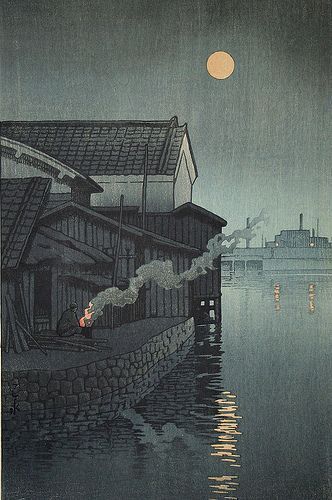
These reminiscences are accompanied by illustrations painted by the author's father, Dr. Susumu Saga—themselves a record of an old man's past.
Junichi Saga (佐賀 純一 Saga Jun'ichi?, born 1941) is a Japanese countryside physician and writer whose work records countryside experiences of numerous individuals (typically, his patients).
What a gorgeous look at Japan! I love learning about Japanese culture and history, current and past. It has a certain unique quality that both fascinates and intrigues me. I am absolutely drawn towards stories about Japan. But I am not a fan of male Japanese authors because of their intense and completely random objectification of women. For years, I have been hoping someone would write a book about Japan just like I wanted. I had no idea it already existed! This is the Japanese book I have been searching for years.
Memories of Silk and Straw: A Self-Portrait of Small-Town Japan is a wonderful portrait of life in Japan in the early years of 1900s. Silk and straw were in abundant use in old-time Japan, and hence the title. Dr Junichi Saga was the local village doctor and he decided to collect the stories of the old people in his neighbourhood before the local culture and history was lost forever. The idea came to him when his father began to draw scenes from local life as he remembered them. These images are also included in this book.
Dr Saga interviews a bunch of people, rich and poor, fishermen, geisha, seamstresses, shopkeepers, and even a gangster! Each of them presents a snippet of their lives. There were accounts of grinding poverty, of course, and war, sexism, lack of medical facilities, and all the bad stuff. The killing of babies was especially ugly to read about. But this was a very honest portrayal and there were lots to make up for these depressing bits. The descriptions of unbounded nature everywhere was rather delightful. It stood out how often a tale would mention rivers that have been filled up or woods that have disappeared.
Some of the people interviewed talked about their jobs, and it was interesting to see how people did their work. Some professions that were once so profitable do not even exist any longer. I especially enjoyed the descriptions of how a tatami mat maker would make mats. The lives of women were interesting to read about. It is quite awesome that so many girls were going to school even before WW2.
I read this on Kindle Unlimited, and I am really, really sorry that this book is not currently in publication so that I can just buy a paperback for my collection. The illustrations were in black and white and were magnificent. In colour, they would have been brilliant!
Come, sit down by the fire, and listen to the grandparents tell stories about "how it was in the old days" in a small lakeside town just north of Tokyo.
Midwives and pawnbrokers, fishermen and thatchers spin tales of a different world--one that was still very much a part of Japan's ancient feudal history.
The elderly people interviewed during the 1970s by Dr. Junichi Saga were mostly born in the late 1890s or early part of the 20th century; through the memories passed to them by their parents, the narrative stretches back into Japan's Meiji period in the 1860's.
The vignettes are organized by topics (boatmen and fishing, crafts, etc.) and give a vivid sense of what life was like for ordinary people in rural Japan. The narratives are greatly enhanced by watercolors and pen-and-ink drawings created by the author's father, Dr. Susumu Saga--and my one criticism is that the illustrations should be larger (though I suspect that reflects a sort of modesty that both the father and son must share).
Many of the memories are filtered through time and have the soft glow of a Japanese woodcut, even the hard things are recalled with a certain realism and even pride. And then, here and there, are memories that come at you like a gut punch. To give you a bit of a feel, I'll share some quotes, along with illustrations. Alas, I could not find Dr. Saga's paintings online--for that you'll have to read the book, and I hope that you will.
The Carter, Mr. Tamotsu Kimura: "They used to say a carter is 'eaten out of house and home by his horse'...But I suppose the reason I never packed it in was that I was too fond of my horses. I remember one evening I got very drunk on shochu and fell asleep splayed out in the back of the cart. The horse managed to find its way home and outside the house it neighed to let everyone know it was back."
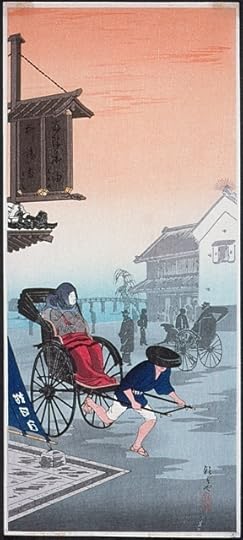
Upper Class Women, Mr. Fukasaburo Takagi: "It was also the custom that...an okusan shouldn't go outdoors in the daytime. And when she did have to go out maybe on business or to visit a friend, she always went by rickshaw...as the rickshaw passed through town, people would watch it going by and call to each other, 'Quick, come and look; it's the lady from such and such house.' It was as if they were looking at someone from a different world."
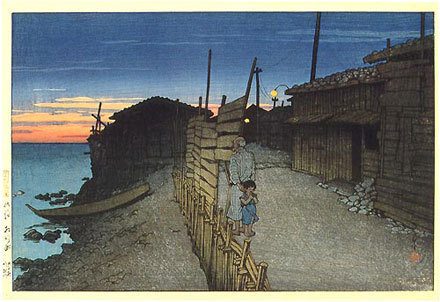
The Fudo Terrace, Mr.Ryutaro Terauchi: "The people living in the terrace were all terribly poor....Because everyone was so hard up around here, 'thinning out' the newborn was quite widely practiced. The number of children killed just depended, I'm told, on how strict the local policeman was."
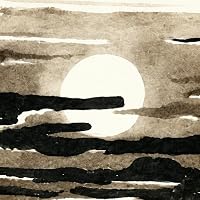
A Fisherman's Wife, Mrs. Yasu Nemoto: "I married a fisherman when I was twenty-five...life for the wives wasn't ever sweet and easy: I was up not long after midnight, I was out on the boats til mid afternoon, then, I had to cook and clean the house--and there were the paddy fields to be tended too. The only chance I ever had to do any laundry was at ten or eleven at night, and I'd end up hanging it out to dry by moonlight."
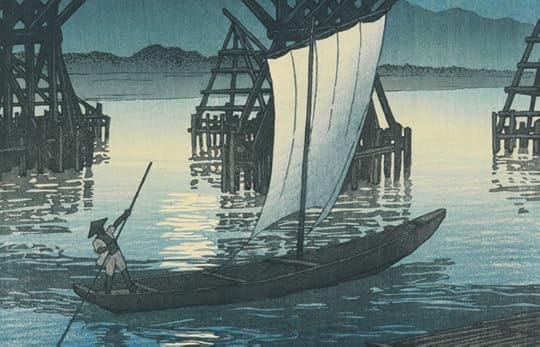
The Water Nomad, Mr. Susumu Fujii: "Fishermen seemed almost to belong to a different race from townspeople. We all had powerful muscles, huge hands and feet, and dark, weather-beaten faces. Fishing folk hardly ever got sick. Even in winter I never wore more than a pair of thin cotton shorts. And we never wore shoes, either. It was only after the war that country people started wearing shoes.I reckon it's why they're so feeble."
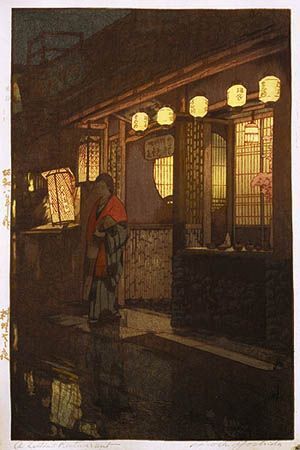
A Spending Spree, Mr. Masujiro Tsukuda: "The girls had a hard life. They had to find a customer every night or they got into trouble. If no one had come along asking for her by nine o'clock, the girl would have to hang around in the street trying to persuade passersby to come inside. She was expected to stand out there til midnight or even later. You can imagine how nasty it was in the winter; the girls had to wait outside dressed only in thin kimono--they got frozen to the marrow."
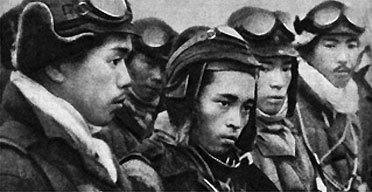
Two Geisha: "We knew the young pilots would fly to Chiran in Kyushu before going on their suicide missions...Each of them was allowed to spend his last night here with a geisha. A lot of the girls were young too at the time, and just for a night they became young wives, to comfort them...in no way could you say those young men came to enjoy themselves. They all looked desperate."
Content rating: strong PG warning for mature themes as indicated in the review above. It doesn't get any more graphic than this except for one really horrific event described by the midwife and some details about beheadings discussed by the executioner. Both chapters are clearly marked in the chapter title so they can be skipped. Otherwise, no sexual descriptions or strong language, some drunkenness and violence.
Very interesting. Still .....kind of hard to read. You learn for example exactly how one thatched a roof or dyed cloth or arranged different hairstyles. Very detailed. There are chapters about all kinds of people - gangsters to fishermen to teachers to geisha. Such poverty!No health care. Life was hard and yet they played and enjoyed life in very simple ways too.
Wonderful sketches and photos and a helpful map of all the places named.
I might have enjoyed the book more if I had read one chapter a day. This was like reading a book of poems from start to finish. Or like reading a dictionary. Each episode was interesting and informative, but the reader cannot so quickly empathize with the person talking. Each episode of 1-3 pages was just too short to allow for this. I can in no way criticize the book, but I am not going to say I was glued to the pages. I just wasn't.
These are the stories of everyday people in a small town in Japan. The narratives are short, Studs Turkel style, stories of early 20th century Japan from interviews made 70 or so years later. The small town, just outside of Tokyo is large enough to have a department store (that closes for a month to auction off silk cocoons) a draper and separate areas for brothels and geisha. There is a lake, teeming with fish and a nearby air force training center.
All interviewees agree that the area, now laced with superhighways and modern construction is not recognizable. No one is pining for "good old days".
What is striking is the poverty and its signs such as stories of paying (or not paying) the rice rent, households without pans, the work and logistics of bathing, the acceptance of infanticide and so much more.
Life is hard and most people work round the clock. The fishermen can always eat fish, but like almost everyone else has a life of continual work to make ends meet. Life as a geisha was not easy either. One former geisha's story of the kamikaze pilots was the most touching piece I've read on this topic.
There is technical knowledge here, such as how to make a roof, how to pack eggs to get them to market, how to dye fabric and how to style hair.
This book is beautifully laid out on a very nice grade of paper. While it would have changed the character of the book, the drawings are exquisite, and their level of detail begs for a larger format.
Perhaps life in larger cities is much better in pre-war Japan. Novels such as those by Tanizaki do not hint of this life. In Naomi: A Novel Joji's mother lives in the countryside, and it's a pleasant visit and he even inherits some wealth from her. The The Makioka Sisters enjoy catching fireflies in the country. In Mishima's The Sailor Who Fell From Grace with the Sea" the town is portrayed as prosperous, the protagonist's mother has a shop dealing in luxury goods. The grinding poverty in this book tells a very differnt story.
I read this book in two sittings, but the better way is to savor it with two or three portraits a day.
This is a wonderful study of Japan in the early part of the 20th century and a book that can be enjoyed by reading all the way through or by dipping into. The book was produced in the 1980s and is composed of short biographies of actual people who lived in a rural area of Japan during the years of the Meiji Restoration. Their lives are diverse...some are moderately wealthy while most live in dire poverty and feudal customs are still prevalent. In order to get the material for the book, Dr Junichi Saga interviewed a number of elderly people who were willing to discuss their lives in childhood through to middle age. Some were fishermen, some shop owners, some rice farmers. They had to be strong to follow their occupations using primitive methods, and most had no transport other then their own feet. I found it fascinating to learn how cloth was dyed, how rice crackers were made, how Geisha were trained, even how the Japanese Air Force was trained by British airmen after the First World War using aircraft that had been discarded by the Brits. A very good read and highly recommended.
Man, but I love this type of first person reminiscence of a known but unknown world. Seriously, one long lifetime ago in Japan? We're talking medieval feudalism.
This book is filled with reminiscences and detailed histories of life, back when people made their own bricks, thatched their own houses, and regularly got sick from eating bad food because food preservation was non-existent.
It's an almost sad book, since nearly every person who could remember life from 90 years ago has a lot to say on how entirely their old world is gone ... except that the stories of their old world?
Back. Breaking. Labor. And that's just to eke out a basic living.
It was fascinating to hear about how things were. Nevertheless, I'm still pretty glad I live when I do.
Some of my favorite memories: The Last Executioner, The Rice Cracker Maker, Women's Hairdressing, The Master Joiner, and the various tales of fishermen.
i really liked this, it felt like sitting down with a grandparent and listening to their life stories lol. very comforting but also a very interesting window into a different time/culture/place. was also great to read at the same time as fiction for a break every now and then
Одне із найбільш терапевтичних чтив, які мені потрапляли до рук. Нічого замудрого чи повчального, просто збірка коротеньких інтервʼю, поділених на секції, де старі люди розказують про життя в Японії на початку 20го сторіччя. Цікаво бачити Японію саме такою, а не тою про яку ми всі звикли чути чи бачити. Ця книга ідеально доповнює такі фільми Студії Джіблі як «Здійнявся вітер» чи «Хлопчик та журавель». Доповнює своїм змалюванням соціального та економічно контексту Японії тих часів. Також фільм «Ідеальні дні» є чимось схожим до настрою книги, хоч і показує сьогодення.
У передмові говориться, що це важливо розуміти як жили люди до того, як Японія стала розвиненою країною, бо стала вона такою і тому, що була саме такою. І щоб не втратити цю памʼять, її намагається задокументувати у своїх інтервʼю доктор Юнічі Сага. Це гірко-солодкі, романтичні спогади стареньких людей, про їх дитинство та молодість. Про те якими вони бачили своїх батьків, країну та своє покоління. Ось момент і ти читає про життя звичайних селян та рибалок, а потім — про крамарів та якудз, за ними — про міщянок Цучіури, а ще після — про гейш та їх стосунки з офіцерами. Перед тобою розкриваються деталі кропіткої праці ремісників та безтурботні забави школярів. І всіх цих людей, щось дійсно обʼєднує — дух колективної взаємозалежності, взаєморозрахунків, дух кооперації. Свідчення цього зустрічаються на кожній сторінці, як і свідчення неймовірної бідності та злиднів у яких жили люди.
If famed folklorist Alan Lomax had been steeped in the traditional ways of Japan and possessed a subtle eye for the Japanese character, he might have penned this book. Instead, Dr. Saga, the proverbial beloved village doctor, all but channeled Lomax, recording the stories of his elderly patients as he saw their way of life disappearing. He gets them to open up to him, and the reader is rewarded with a series of personal recollections from a tatami-mat maker, the town midwife, a yakuza, the local fishing folks (husbands and wives), woodworkers, and more. The result is a moving portrayal of village life in provincial Japan—from the inside. Wonderfully translated by Garry O. Evans. Out of print but worth tracking down.
Netušila jsem, že existuje, dokud mi o ni nezavadilo oko v knihkupectví. Pak už jsem ji tam nemohla nechat, je to od pohledu krásná kniha - a tenhle dojem se jejím čtením jen potvrdil. Více k tomu zde: https://www.laniusminor.cz/single-pos...
An utter delight - I read the new Czech edition Slama i hedvabi that is beautifully illustrated and the story selection is interesting. Offers a glimpse into the mostly forgotten lives of Japanese villagers a 100 years ago, a precious opportunity collected from the people themselves, talking about their lives.
This fascinating book consists of roughly 60 short recollections of life in a rural Japanese town between 1900 and World War II. They were collected, edited, and arranged by Dr. Saga in the 1970s and 1980s; virtually all the contributors were elderly at the time and must have now passed. The pieces are arranged sensitively, building and playing off one another, giving the book a delicate beauty - even as many of the lives it describes were full of unsparing work, with little shelter from harsh weather and poverty. Individually, many of the stories are interesting; collectively, they reveal a great deal about social structure, gender roles, changing social and familial expectations, the mechanics of the economy, and the way fishermen, farmers, merchants, and craftspeople did their jobs on a daily basis. One features that unexpectedly emerges in account after account is the incredible abundance of the local lake and river system, which later crashed after locks were built at the mouth of the river, ending the tidal flow and blocking fish passage.
Any collection of oral histories is as interesting for what it omits as what it includes. It's hard to know whether an absence is the result of editing, or avoidance by the interviewees, or simply reflects a truth taken to be so self-evident by both the historian and the interviewees that it goes unremarked. Even though geishas and lower-class companions figure prominently in some sections, the collection is relatively reticent about actual sexual habits - I'm guessing this reflects the editor's choice, since some of the interviewees seem like they'd volunteer almost any information. Many memories end with a comment about how much the world has changed since WWII, but only a couple actually include any specifics from that era. Rituals of faith - prayer, celebration - show up in several stories, but none of the interviewees explain their cosmology or theology. That said, the omissions reinforce rather than detract from the overall impact of the book, conveying a feel for a community with very local cultural horizons, trade ties to a much larger regional economy, and a resolutely practical, material focus.
I pick this book up at a used book store and it has been one of my favorite reads that I have gotten there. I have taken my time reading this book. I have read a story here and there over the last year. It is an excellent book, it gives you a window to see into the past in Japan. Dr. Saga traveled collecting stories of every day people. From farmers to artisans, midwife and gangsters and every one in between. This book is definitely worth the the read for any one intrested in turn of the century life or life in Japan during and shortly after the modernization.
Wonderful wonderful wonderful! It's basically an oral history project, transcribed and with the interviewer's questions removed so that it creates a seamless memory. As a budding oral historian I would have loved to see the questions that prompted the given responses, but oh well. There are also lovely little line drawings in the margins, done by the author's father.
Not a stunner like “Confessions of a Yakuza” but still provides a window to a simpler, poorer time.Saga is sort of the Studs Terkel of countryside Japan. I briefly lived in the same prefecture, and I can report people are all just richer these days.
Velká krása. Máte-li rádi Japonsko, nebo máte-li nějakého japanofila ve svém okolí, pak neváhejte, tohle je knížka, kterou si užije každý milovník téhle ostrovní země, stejně tak jako čtenář, který rád čte o starých časech. Knížka je opravdu krásná, a to i do ruky - hezký papír a milé ilustrace už se tak často nevidí. více tady: http://naskokjinam.blogspot.com/2022/...
This is one of the best insights into how early modern Japanese see the world. It is rural and small-town but not folksy in style. There is a straightforwardness to the prose that suggests a modern confidence, but the subject matter that is described and the angle that it is coming from is strictly pre-war Japan. Although it is factual it reads better than most novels and of course can be picked up theme by theme and give a picture of another Japan glimpsed if seen at all by most visitors, together with some things you are glad to have not seen.
Excellent collection of simply-told memories of real people living mostly in poverty-stricken pre-WWII Japan. Includes farmers and fishermen, geisha and gangsters, businessmen and craftsmen. A treasure-trove of historical and cultural details that are truly amazing, esp when compared to modern Japan.
"The rickshaws always took the road along the Sakura. As the sun went down and it began to get dark, the men would light lanterns on long poles and hang them on the rickshaws, where they'd swing from side to side as we trundled along. And on summer evenings, thousands of fireflies swarmed around, blown like sparks. Sometimes you'd hear frogs croaking: they'd stop suddenly as the rickshaws got near, but once they were past they'd start up again. it was wonderful, with the sound of running feet on the dark path and the moon over the distant mountains."
For getting a look into old-timey life in rural Japan, this was excellent. Saga records the stories of so many different kinds of people -
to name a few, not to mention the family lives, and what it was like to be a child - what toys they played with(things they made themselves), what they did (work, mostly), what school was like, things they saw, what they ate. Of course, over-riding everything was a yawning, gaping poverty. The people were so poor that they worked for that day's meal, and if they couldn't get that day's work, the family did not eat. The midwife's daughter talked about helping her mother deliver a baby to a woman who lay on the dirt floor of her shack, with not even a mat to lay on, no cloths to wrap the baby in, no diapers, nothing. There was quite a lot of baby abandonment and worse because the people simply could not take care of the children that kept coming. That part was a recurring horror, and the children who survived witnessed the deaths of many newborn siblings.
There were good things too, good moments, beauty - the portrayal of the culture was wonderful. But the poverty! And very young children having to work all day - heavy work, ploughing fields (20 miles of walking), carrying heavy loads, weeding, caring for their siblings - there was not much time to simply be a child.
I especially enjoyed the details of how things were made and done - so many of these skills are lost now, and we need people like Mr. Saga to create a record so they will not be forgotten.
*I'm always on the lookout for books about old ways, especially those from countries other than N. America and Britain - anyone have suggestions?
This has been a book that I've been reading on and off for a little over a year now. I've been trying to read more nonfiction, which I tend to have a harder time getting into than fiction books. I found this book at a old bookstore and started reading it when I started getting ready to move to Japan. I really loved the concept, and I felt the blurbs and variety of stories would be really interesting to read. And I was right!
"Memories of Silk & Straw" is a collection of stories told to author Dr. Junichi Saga from a selection of people who once inhabited the town of Tsuchiura and surrounding areas during the early 1900s. People from all walks of life in the small Japanese town shared stories; about themselves, their families, their careers, their joys and sorrows. Together, these tales create a beautiful tapestry depicting what life was like for different people in Tsuchiura.
It wasn't an exciting read, but it was very interesting, and there is just as much societal as there is personal woven in these stories. There are sections on traditional hairstyles and what your hairstyle said about your age and marital status and passages on the steps needed to get the perfect indigo color when dying a hanten. But there are also the thoughts of a daughter who nearly died at her own mother's hands or a family whose father left all labor of housework and farming to the mother alone. There is a myriad of beautiful stories, some sad, others fascinating, that litter this book.
Some of my favorite passages were "The Gangster", "The Last Executioner", "Learning to Sew", "Two Geisha" and "Shorts".
If the title of the book interests you, you will most likely enjoy reading it. It is a self-portrait of Small-Town Japan, just as the title states. Though it took me quite a bit to finish it, it truly was an enlightening and enjoyable read.
Když kniha v Česku vyšla, byl jsem zrovna okouzlen podobnými lokálně blízkými (i když vlastně nesrovnatelnými) Hovory se spodinou a tak mi Sláma i hedvábí padla do noty. V té době jsem o Japonsku prakticky nic nevěděl, snad krom notoricky známých informací o období Meidži nebo roli v I. a II. světové válce. Ohledně života obyčejných lidí jsem byl prakticky tabula rasa. Tato kniha byla proto užitečným doplněním, navíc zaměřeným na dobu proměňujících se zvyků a příchodu modernějších dob. Vše v jednom, ideální.
Zaujalo mě především to, jak moc je japonská společnost klidná... Třeba když vyprávění o rozmařilosti bohatých zní jako velmi velmi umírněná oslava zdejší. Co by tehdejší Japonci říkali na současné české, a co teprve moravské, oslavy? K tomu opakovaně zmiňovaná úcta (k zaměstnavateli) nebo z pozůstatků feudálních dob. Ty největší odlišnosti/zajímavosti jsou stále mnohem blíž evropskému chování, než tomu nejbizarnějšímu ze zmíněných čínských Hovorů nebo různorodých východoevropsky zaměřených knih od Světlany Alexijevič. Japonsko je (resp. bylo) jiné, ale stále pochopitelné...
A co mě zaujalo? Mj. noční hlídač, který klape špalíky, aby ostatní slyšeli, že nespí. Obchodníci, kteří byli připraveni pohostit a nasytit své zákazníky v době oběda. Nebo zvyk splácení dluhů jen dvakrát do roka, kdy dlužníci utíkali z domů a schovávali se různě po městě. "...a druhý den ráno, když se potkali s člověkem, kterému byli dlužni, si oba navzájem přátelsky popřáli "šťastný nový rok." Aby byl někdo takový nezdvořák a neurvalec, že by hned na nový rok vymáhal splacení dluhu, to bylo za starých časů nemyslitelné."
Měl bych jen jedinou výtku, a to, že ilustrace nejsou vždy zaměřeny na zmiňovaná témata či termíny - druhy účesů, oblečení, bot... Stylem i podobou jsou vítané, připravené více na míru by ale rozhodně neškodily. Naštěstí je dnes vyhledávač různorodých obrázků a termínů v každém chytrém telefonu.
Brief first-person accounts about early 20th century life in small-town Japan as recorded by the town doctor in the 1980s.
I kind of adore things like this - short little anecdotes about daily goings-on: life at a sewing school for young women, fishermen on the lake, the charcoal burner in the woods, practicing handwriting in the sandbox in the schoolyard.
I didn't particularly enjoy how many of the stories ended with "woe is us because now everything is different and things were so much better in the old days when Japanese people weren't wimps. Yes, I know I just told you about how little kids died constantly and everyone was dirt poor." There was a lot of survivor bias going on; many of these accounts were from more prosperous members of societies with rosy views of hard work and economic growth. The one that took the cake, however, was a roof tiler whining about how tiles were now uniformly made. "They just slide together! No gaps! Back when they were shoddily made, a man knew he was a man when he could somehow puzzle together a roof out of a batch of warped tiles. Now it's too easy." This comes after a description of how when a client's roof would leak he'd put off repairing it because he knew a layer of mold would eventually form under the tile, blocking the rain. Great.
The farmer's wife who remembers carrying her prematurely-born son to the hospital in town every week because the doctor only visited rich people? Funnily enough, she thought the future was great.
Warnings: There are some fairly graphic descriptions of how infanticide was carried out.
Imagine visiting a rural village in Japan in say, 1901 or 1911, and being surrounded by the septuagenarians residing in the village, that take turns every evening to share a memory, a custom.. a slice of their life with you; with no rules on what/how they can and cannot share.
For fifteen years starting in 1970, Dr Junichi Saga recorded voices of the oldest residents of a village, north of Tokyo, that does not even exist today - myriad oral histories of geishas, a yakuza, tofu-maker, rice-cracker maker, fishermen, horsemeat butcher, midwife, executioner, reed thatcher, okusan (translates to 'housewife that stays at the back of the house'!), charcoal burner, blacksmith on the life and times of a period that spans from the post Meji period to pre-World War II. These stories were transcribed and subsequently translated into English. A single story may seem incomplete or even abstract to a reader expecting to read a structured book; yet collectively; they present rare insights into the social & cultural fabric - some that continue into modern Japan. Despite their hardship, their strong sense of pride in following traditional cultures within the chores of their daily lives gives you a sense of why and how modern Japan is what it is.
A great book for those that are enchanted with, and eager to understand contemporary Japan. I recommend that you pace it out while reading this book, not more than a story or two each day instead of the ‘rapid read at one go’ option.
I have been blown away by this collection. If you have any interest in Japanese culture this book is a must. It is a phenomenally outstanding collection of memories from the poorer side of Japanese history. As a collection of reminiscences from various elderly people born at the start of the 1900s it blows open the doors on the narrative often presented by Japanese culture. I was shocked to learn that fish, which is often seen as a staple of Japanese food, was once a luxury that many people couldn't afford due to a lack of transportation and preservation. The overwhelming poverty of the pre-war years is told in candid detail that at times left me crying or laughing out loud. I cannot recommend this book enough. It's truly a treasure. Many of these glimpses into rural life have put into perspective many of the things I have witnessed in Japan. One of the aspects of the book that stood out to me was how the narrators often ended with a statement about how it was hard back in the day but the sense of community was so much stronger. I shall certainly be revisiting this book.
Anyone who reads my reviews knows I have "bedtime reads" to relax with. Well, this is one of my "morning reads", which are for the 30 min I spend in bed each morning waiting for my medication to take effect, so I don't get up, forget and eat breakfast too soon. Morning reads are often nonfiction, not always, but requiring more attention on my part than I want to give when preparing for sleep. I found it fascinating. I love oral histories/diaries, a person's story in their own words. Published in the late 1980s, Japan had changed out of all recognition for the tellers of the tale. All of them spoke of how fast the changes had come, except for one old gentleman who said, "Well of course things have changed after all this time!"
Sadly, the ebook edition has only fragments of the illustrations, which I'm sure were beautiful in the print editions. I thought perhaps they had been divided, so you'd get half on one "page" and half on the next, but that was not so, at least in the one I read.
"Způsob života tehdejších rybářů byl tak naprosto odlišný od toho dnešního, že když to teď budu někomu vypravovat, bude mě podezírat, že si vymýšlím, protože dnešní člověk si to už vůbec nedokáže představit. Tak především - v létě chodili rybáři úplně nazí. Nevázali si kolem boků ani bederní pás. Jen měli ve zvyku vytáhnout si předkožku a ovázat ji slámou. A takhle chodili a pracovali celý den." (s.165)
To tehdy za starých časů... tíhne-li člověk k antropologii, shledá tuto knihu fascinující. Příběhy lidí z dávných dob, do vzdáleného místa a do společnosti naprosto cizí dnešní době. Vlastně si neumím představit tíhu nebo krásu toho života a jen obdivuji. Líbilo se mi vyprávění gejš, o japonské mafii i porodní báby. Člověka vede toliko příběhů k zamyšlení, čím je naše doba a co se o ní jednou bude vyprávět a bude-li hodna zapsání. A co za stovky let budou o ní říkat lidé úplně nové generace? (Možná tedy přijdou trifidi, ale to je asi jiná kapitola. :) )
I lived in Tokyo from 1972 to 74, then from 1977 to 79. Even then the "old Japan" was slowly passing away, supplanted by the modern Japan we know today. But I did take trips out to the countryside, and I could see some of what was being lost. I loved this book even then, and I read parts from time to time to remember how lovely rural Japan was then. There is nothing like hearing these first-person accounts of what life was like then. You simply cannot imagine the poverty of those rural citizens. They knew nothing of the wealth of Tokyo and Osaka, but they remember and tell the stories of the beauty of nature they all experienced. If you want to know what Japan was like before the modern era, and if you want to hear lovely, honest stories of lives lived long ago in rural Japan, please read this wonderful book.