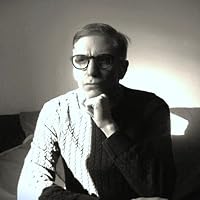
Eugen Berthold Friedrich Brecht was a German poet, playwright, and theatre director. A seminal theatre practitioner of the twentieth century, Brecht made equally significant contributions to dramaturgy and theatrical production, the latter particularly through the seismic impact of the tours undertaken by the Berliner Ensemble—the post-war theatre company operated by Brecht and his wife and long-time collaborator, the actress Helene Weigel—with its internationally acclaimed productions.
From his late twenties Brecht remained a life-long committed Marxist who, in developing the combined theory and practice of his 'epic theatre', synthesized and extended the experiments of Piscator and Meyerhold to explore the theatre as a forum for political ideas and the creation of a critical aesthetics of dialectical materialism. Brecht's modernist concern with drama-as-a-medium led to his refinement of the 'epic form' of the drama (which constitutes that medium's rendering of 'autonomization' or the 'non-organic work of art'—related in kind to the strategy of divergent chapters in Joyce's novel Ulysses, to Eisenstein's evolution of a constructivist 'montage' in the cinema, and to Picasso's introduction of cubist 'collage' in the visual arts). In contrast to many other avant-garde approaches, however, Brecht had no desire to destroy art as an institution; rather, he hoped to 're-function' the apparatus of theatrical production to a new social use. In this regard he was a vital participant in the aesthetic debates of his era—particularly over the 'high art/popular culture' dichotomy—vying with the likes of Adorno, Lukács, Bloch, and developing a close friendship with Benjamin. Brechtian theatre articulated popular themes and forms with avant-garde formal experimentation to create a modernist realism that stood in sharp contrast both to its psychological and socialist varieties. "Brecht's work is the most important and original in European drama since Ibsen and Strindberg," Raymond Williams argues, while Peter Bürger insists that he is "the most important materialist writer of our time."
As Jameson among others has stressed, "Brecht is also ‘Brecht’"—collective and collaborative working methods were inherent to his approach. This 'Brecht' was a collective subject that "certainly seemed to have a distinctive style (the one we now call 'Brechtian') but was no longer personal in the bourgeois or individualistic sense." During the course of his career, Brecht sustained many long-lasting creative relationships with other writers, composers, scenographers, directors, dramaturgs and actors; the list includes: Elisabeth Hauptmann, Margarete Steffin, Ruth Berlau, Slatan Dudow, Kurt Weill, Hanns Eisler, Paul Dessau, Caspar Neher, Teo Otto, Karl von Appen, Ernst Busch, Lotte Lenya, Peter Lorre, Therese Giehse, Angelika Hurwicz, and Helene Weigel herself. This is "theatre as collective experiment [...] as something radically different from theatre as expression or as experience."
There are few areas of modern theatrical culture that have not felt the impact or influence of Brecht's ideas and practices; dramatists and directors in whom one may trace a clear Brechtian legacy include: Dario Fo, Augusto Boal, Joan Littlewood, Peter Brook, Peter Weiss, Heiner Müller, Pina Bausch, Tony Kushner and Caryl Churchill. In addition to the theatre, Brechtian theories and techniques have exerted considerable sway over certain strands of film theory and cinematic practice; Brecht's influence may be detected in the films of Joseph Losey, Jean-Luc Godard, Lindsay Anderson, Rainer Werner Fassbinder, Nagisa Oshima, Ritwik Ghatak, Lars von Trier, Jan Bucquoy and Hal Hartley.
During the war years, Brecht became a prominent writer of the Exilliteratur. He expressed his opposition to the National Socialist and Fascist movements in his most famous plays.
Who built the seven gates of Thebes? The books are filled with names of kings. Was it the kings who hauled the craggy blocks of stone? And Babylon, so many times destroyed. Who built the city up each time? In which of Lima's houses, That city glittering with gold, lived those who built it? In the evening when the Chinese wall was finished Where did the masons go? Imperial Rome Is full of arcs of triumph. Who reared them up? Over whom Did the Caesars triumph? Byzantium lives in song. Were all her dwellings palaces? And even in Atlantis of the legend The night the seas rushed in, The drowning men still bellowed for their slaves.
Young Alexander conquered India. He alone? Caesar beat the Gauls. Was there not even a cook in his army? Phillip of Spain wept as his fleet was sunk and destroyed. Were there no other tears? Frederick the Great triumphed in the Seven Years War. Who triumphed with him?
Each page a victory At whose expense the victory ball? Every ten years a great man, Who paid the piper?
My German is too rusty for me to judge if the translation captures the feel of the original, so some of these comments are about the translation. ohmgod, it's awful. The majority of the poems that rhyme have terrible, doggerel rhymes and rhythms. I read the German aloud, but without the vocabulary needed to comprehend. I learned from this that the rhythms seem better in the original, though Brecht wrote a lot of rhyming verse.
These poems are didactic, this is Brecht, after all, and he declared that poetry should be political as a kind of manifesto. I'm OK with a degree of didacticism, as long as everything else in a poem is great, and that is another problem with these poems. Too much isn't great and the trite lines make his political points seem trite.
I did like 3 or 4 of the free verse poems quite a bit, and maybe two of the story poems. A few others are OK. This book is not a hopeless loss. I will give Brecht's poetry another chance if I can find a different translation.
"On my wall hangs a Japanese carving. The mask of an evil demon, decorated with gold lacquer. Sympathetically I observe The swollen veins of the forehead, indicating What a strain it is to be evil."
I read this along with the recent Kuhn and Constantine translation. You can see my overall thoughts of Brecht's poetry here: https://www.goodreads.com/review/show....
This is a good selection of Brecht's poetry in a manageable size, with a very good introduction. It's also great to have the German original on the facing page.
The translations are a bit stiff compared to the Kuhn set, and it doesn't really give you any information on the poems, even when they were written/published. Also, I don't know why poems/songs from the plays were included (in either edition of poems) when there are so many poems to include. (And the plays are so readily available.)
Overall, though, a good selection of Brecht's poetry.
Sadly, I did not enjoy the vast majority of these poems. There are several that I did enjoy though—I will note them here:
“Ballad of the Soldier”
“Ballad of the Adventurers” (My particular favorite)
“In Memory of Marie A.”
“Song of the Inadequacy of Man’s Higher Nature”
“Song of the Storm Trooper”
“Children’s Crusade 1939”
Overall, even given my relatively poor rating of the collection overall, I am glad that I read through it in its entirety. Maybe I should try some of his plays to get a better handle of Brecht as a whole.
Irrespective of his political affiliation,Brecht could give a true account of typically human experiences and concerns.This is why the poems lend themselves for different interpretations.His "ideology" is apparent in the poems,he is in favor of a socialist-oriented society.In fact,he could be compared to Nazim Hakmet,a Turkish poet who holds the same beliefs.They share a mutual outrage against the inhumanity of capitalism.Both use symbols to clarify their themes.The next step:I m looking forward to reading any of plays of Brecht.