

What do you think?

The Egyptian Book of the Dead: The Book of Going Forth by Day
For millennia, the culture and philosophy of the ancient Egyptians have fascinated artists, historians, and spiritual seekers throughout the world. Now, with this deluxe edition, the legendary 3,500-year-old Papyrus of Anithe most beautiful of the ornately illustrated Egyptian funerary scrolls ever discoveredhas been restored in its original sequences of text and artwork, using the latest advances in computer-imaging technology. Four exquisitely illustrated gatefold spreads and an acclaimed translation by two noted Egyptologists showcase the Papyrus's elaborately bordered images and convey its intended sense of motion and meaning in a way that other books on the subject cannot begin to match. For both lay readers and scholars interested in a wide range of topicsfrom mysticism and philosophy to anthropology and astronomythis sumptuous and accessible new volume will be an essential acquisition.
176 pages, Paperback
First published January 1, 1501
About the author
Anonymous
3,454 followersBooks can be attributed to "Anonymous" for several reasons:
* They are officially published under that name
* They are traditional stories not attributed to a specific author
* They are religious texts not generally attributed to a specific author
Books whose authorship is merely uncertain should be attributed to Unknown.
See also: Anonymous
* They are officially published under that name
* They are traditional stories not attributed to a specific author
* They are religious texts not generally attributed to a specific author
Books whose authorship is merely uncertain should be attributed to Unknown.
See also: Anonymous
Ratings & Reviews
Friends & Following
Create a free account to discover what your friends think of this book!
Community Reviews
Displaying 1 - 30 of 422 reviews

April 13, 2008
How can you not give this 5 stars when it lays out for you the exact procedure one needs to follow to ensure one's entrance into the afterlife

March 4, 2015
الحقيقة اني فخورة اني انجزت اخيرا قراءة اول كتاب في العالم و في التاريخ
:) !
على حسب ما وصلنا .. إلى الآن
*****
حاجة على الماشي كده
؛> :
واضح ان البيروقراطية دي إرث أصيل في مجتمعنا المصري :)) المتوفي عندهم كان بيتحول في 100 حالة و بيؤدي 100 طقس ، و بيمر على 100 محكمة و 100 إله ( المئات دي كلها مجازا طبعا :) ) عشان يحصل على التصاريح و الأذون اللازمة لخروجه الى النور
(العالم الآخر او الأبدية)
*****
بسم الله :) ...
(كتاب الموتى)
كتاب ديني فرعوني بيعود تاربخه الى عام 1500 ق.م تقريبا يعني من حوالي 3000 سنة ! ، الكتاب بيحوي ترانيم دينية و طقوس و تعاويذ الموتى اللي بيستعينوا بيها في المرور للعالم الآخر بعد الموت .. كان بيكتبها الكهنة و كانت بتوضع مع المتوفي في قبره عشان تساعده في الانتقال للعالم الآخر بأمان زي ماسبق و وضحنا .. طبعا كان كل متوفي من المفروض ان له كتاب .. و الكتاب اللى بين ايدينا هو كتاب ( (آني) الكاتب )، الا ان المترجم لجأ لكتب موتى أخرى من عصور مختلفة ! زود الكتاب ببعض نصوصها و استعان بها للاستدلال و التوضيح ،
المهم هنا اننا من خلالها بنقدر نستعرض لمحات عن عقيدة المصريين القدامى و الآلهه اللى كانوا بيعبدوها و افكارهم وقتها و عاداتهم و طقوسهم ، اللي لاحظت ازاي ان بعضها كان من اللي تم دسه على أديان اخرى ، و حتى على الاسلام نفسه على هيئة احاديث غير صحيحة مثلا او ممارسات و طقوس نسبها الى الاسلام باطل في الأصل
و ان كان كل دا (كل ما في الكتاب) بالنسبة لى في النهاية جزء من تراث (آدم) اللى تم تحريفه .. آدم اول البشر .. و اول الأنبياء و اللى ربنا اعطاه علم من علمه عز و جل و معرفه عن الحياة و الروح و الآخرة .. زي كل الانبيا ،، الى جانب (جزء) كبير طبعا من انطباعات (الإنسان) في تلك العهود و تأويلاته و فلسفته عن مجريات الكون ، لو حبيت اكتب عنه هاحتاج ريفيو على الريفيو
!
******
غير معروف على وجه يقيني اين و متى تتم المحاكمة (محاكمة المتوفي) .. و لا توجد دلائل كافية لأن نعتقد بأن المصريون كانوا يعتقدون بيوم حساب جماعي ، لذا فمن المرجح من الدلائل المتاحة للآن ان المصريين كانوا يعتقدون بأن كل شخص تجرى محاكمته فور وفاته ، و اعلانه بالعدم .. او بالحياة الأبدية المباركة في مملكة اوزوريس على الفور
*****
من الواضح ان المتوفي الصالح (من وجهة نظرهم) بيتحول لإله في مملكة أوزوريس (مملكة الموتى او العالم السفلي) و الدليل اقتران اسم المتوفي بـ (أوزوريس) طوال سرد ترانيم الكتاب و طقوسه ...
فآني الكاتب (الصالح تبعا لعرفهم و عقيدتهم) بعد موته أصبح
(أوزوريس - آني)
المبرأ .. المظفر .. المبجل
******
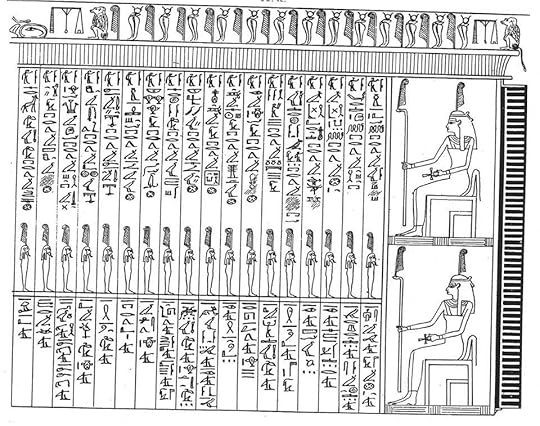
( تصور المصري القديم لقاعة ماعتي المزدوجة)
*****
عند المصريين القدماء كان المتوفي بعد رحلة طويلة و طقوس عديدة (إن مر منها بسلام!) ، بيصل لـ (قاعة ماعتي المزدوجة) اللي بيعترف فيها
(الإعتراف السلبي)
(و اللي بيمثل مدى ثراء المقياس الأخلاقي اللي كان بيطبقه المصريين في الوقت دا من 3000 سنة)
بيعترف 42 اعتراف لـ 42 إله (بيمثلوا 42 اقليم لمصر في الوقت دا) .. كل اعتراف من ال42 اعتراف بيعترفه لإله معين من ال42 إله .... و دي بعض هذه الإعترافات ، مع ملاحظة ان قبل كل اعتراف منهم كان المتوفي بيقدم التحية و الألقاب للإله اللي بيقدمله الاعتراف .. مثلا (هلا يا صاحب الوجه الملتفت .. يا من أتيت من المكان الخفي .. إني لم أتسبب في بكاء ) .. و للتسهيل هانقل الاعترافات فقط من غير تحية المتوفي
(عن بردية آني)
... إني لم أرتكب إثما
... إني لم أسرق بالإكراه
... إني لم أسطو
... إني لم أقتل و لم ارتكب أذى
... إني لم أنطق بالأكاذيب
... إني لم أستلب طعاما
... إني لم اسبب الما
... إني لم أرتكب الزنا
... إني لم أتسبب في بكاء
... إني لم أتعامل بخبث
... إني لم أفعل الغش
... إني لم أسبب خراب الأرض المحروثة
... إني لم أكن بالمتلصص
... إني لم أرتكب نميمة
... إني لم أكن حانقا غاضبا إلا بسبب حق
... إني لم أغرر بزوجة رجل
... إني لم أغرر بزوجة إنسان
... إني لم أسبب الرعب لإنسان
... إني لم أرتكب الفحش
... إني لم أصم أذني عن كلمات العدل و الحق
... إني لم أتسبب في حزن
... إني لم أمارس الكبرياء
... إني لم أشعل نيران عراك
... إني لم أحكم دون روية
... إني لم أسعى في وشاية
... إني لم أضخم الكلمات
... إني لم أسبب ضرا أو علة
... إني لم ألوث ابدا المياه
... إني لم أنطق باستهزاء
... إني لم أتلبس كلص
*****
لينك القراءة المباشرة :
http://mybook4u.com/%D9%85%D9%86%D9%8...
ملحوظة : الحواشي و الشروح و ترتيب الفصول و ترقيمها الافتراضي .. كل دا بيبدأ من صفحة 170 فأنصح ببداية القراءة من صفحة 170 حتى نهاية الكتاب ، و من ثم تعودوا تاني لقراءة الصفحات الأولى اللى بتحوى المتون لحد صفحة 170 .. و الا موش هتفهموا أي حاجه :) من فصول الكتاب و ترانيمه ... اللي أعد الكتاب تعمد الحركة دي على مايبدو لأنه عارف اننا موش هنفهم حاجه من غير شرحه و توضيحه اللي في نهاية الكتاب :))))
*****
:) !
على حسب ما وصلنا .. إلى الآن
*****
حاجة على الماشي كده
؛> :
واضح ان البيروقراطية دي إرث أصيل في مجتمعنا المصري :)) المتوفي عندهم كان بيتحول في 100 حالة و بيؤدي 100 طقس ، و بيمر على 100 محكمة و 100 إله ( المئات دي كلها مجازا طبعا :) ) عشان يحصل على التصاريح و الأذون اللازمة لخروجه الى النور
(العالم الآخر او الأبدية)
*****
بسم الله :) ...
(كتاب الموتى)
كتاب ديني فرعوني بيعود تاربخه الى عام 1500 ق.م تقريبا يعني من حوالي 3000 سنة ! ، الكتاب بيحوي ترانيم دينية و طقوس و تعاويذ الموتى اللي بيستعينوا بيها في المرور للعالم الآخر بعد الموت .. كان بيكتبها الكهنة و كانت بتوضع مع المتوفي في قبره عشان تساعده في الانتقال للعالم الآخر بأمان زي ماسبق و وضحنا .. طبعا كان كل متوفي من المفروض ان له كتاب .. و الكتاب اللى بين ايدينا هو كتاب ( (آني) الكاتب )، الا ان المترجم لجأ لكتب موتى أخرى من عصور مختلفة ! زود الكتاب ببعض نصوصها و استعان بها للاستدلال و التوضيح ،
المهم هنا اننا من خلالها بنقدر نستعرض لمحات عن عقيدة المصريين القدامى و الآلهه اللى كانوا بيعبدوها و افكارهم وقتها و عاداتهم و طقوسهم ، اللي لاحظت ازاي ان بعضها كان من اللي تم دسه على أديان اخرى ، و حتى على الاسلام نفسه على هيئة احاديث غير صحيحة مثلا او ممارسات و طقوس نسبها الى الاسلام باطل في الأصل
و ان كان كل دا (كل ما في الكتاب) بالنسبة لى في النهاية جزء من تراث (آدم) اللى تم تحريفه .. آدم اول البشر .. و اول الأنبياء و اللى ربنا اعطاه علم من علمه عز و جل و معرفه عن الحياة و الروح و الآخرة .. زي كل الانبيا ،، الى جانب (جزء) كبير طبعا من انطباعات (الإنسان) في تلك العهود و تأويلاته و فلسفته عن مجريات الكون ، لو حبيت اكتب عنه هاحتاج ريفيو على الريفيو
!
******
غير معروف على وجه يقيني اين و متى تتم المحاكمة (محاكمة المتوفي) .. و لا توجد دلائل كافية لأن نعتقد بأن المصريون كانوا يعتقدون بيوم حساب جماعي ، لذا فمن المرجح من الدلائل المتاحة للآن ان المصريين كانوا يعتقدون بأن كل شخص تجرى محاكمته فور وفاته ، و اعلانه بالعدم .. او بالحياة الأبدية المباركة في مملكة اوزوريس على الفور
*****
من الواضح ان المتوفي الصالح (من وجهة نظرهم) بيتحول لإله في مملكة أوزوريس (مملكة الموتى او العالم السفلي) و الدليل اقتران اسم المتوفي بـ (أوزوريس) طوال سرد ترانيم الكتاب و طقوسه ...
فآني الكاتب (الصالح تبعا لعرفهم و عقيدتهم) بعد موته أصبح
(أوزوريس - آني)
المبرأ .. المظفر .. المبجل
******
( تصور المصري القديم لقاعة ماعتي المزدوجة)
*****
عند المصريين القدماء كان المتوفي بعد رحلة طويلة و طقوس عديدة (إن مر منها بسلام!) ، بيصل لـ (قاعة ماعتي المزدوجة) اللي بيعترف فيها
(الإعتراف السلبي)
(و اللي بيمثل مدى ثراء المقياس الأخلاقي اللي كان بيطبقه المصريين في الوقت دا من 3000 سنة)
بيعترف 42 اعتراف لـ 42 إله (بيمثلوا 42 اقليم لمصر في الوقت دا) .. كل اعتراف من ال42 اعتراف بيعترفه لإله معين من ال42 إله .... و دي بعض هذه الإعترافات ، مع ملاحظة ان قبل كل اعتراف منهم كان المتوفي بيقدم التحية و الألقاب للإله اللي بيقدمله الاعتراف .. مثلا (هلا يا صاحب الوجه الملتفت .. يا من أتيت من المكان الخفي .. إني لم أتسبب في بكاء ) .. و للتسهيل هانقل الاعترافات فقط من غير تحية المتوفي
(عن بردية آني)
... إني لم أرتكب إثما
... إني لم أسرق بالإكراه
... إني لم أسطو
... إني لم أقتل و لم ارتكب أذى
... إني لم أنطق بالأكاذيب
... إني لم أستلب طعاما
... إني لم اسبب الما
... إني لم أرتكب الزنا
... إني لم أتسبب في بكاء
... إني لم أتعامل بخبث
... إني لم أفعل الغش
... إني لم أسبب خراب الأرض المحروثة
... إني لم أكن بالمتلصص
... إني لم أرتكب نميمة
... إني لم أكن حانقا غاضبا إلا بسبب حق
... إني لم أغرر بزوجة رجل
... إني لم أغرر بزوجة إنسان
... إني لم أسبب الرعب لإنسان
... إني لم أرتكب الفحش
... إني لم أصم أذني عن كلمات العدل و الحق
... إني لم أتسبب في حزن
... إني لم أمارس الكبرياء
... إني لم أشعل نيران عراك
... إني لم أحكم دون روية
... إني لم أسعى في وشاية
... إني لم أضخم الكلمات
... إني لم أسبب ضرا أو علة
... إني لم ألوث ابدا المياه
... إني لم أنطق باستهزاء
... إني لم أتلبس كلص
*****
لينك القراءة المباشرة :
http://mybook4u.com/%D9%85%D9%86%D9%8...
ملحوظة : الحواشي و الشروح و ترتيب الفصول و ترقيمها الافتراضي .. كل دا بيبدأ من صفحة 170 فأنصح ببداية القراءة من صفحة 170 حتى نهاية الكتاب ، و من ثم تعودوا تاني لقراءة الصفحات الأولى اللى بتحوى المتون لحد صفحة 170 .. و الا موش هتفهموا أي حاجه :) من فصول الكتاب و ترانيمه ... اللي أعد الكتاب تعمد الحركة دي على مايبدو لأنه عارف اننا موش هنفهم حاجه من غير شرحه و توضيحه اللي في نهاية الكتاب :))))
*****

January 29, 2018
This work is a historical document of enormous importance for the understanding of the theology and beliefs of pharaonic Egypt which is why I am giving it five stars. It has no literary, philosophical or theological values per se. A Book of Dead is a collection of spells inserted in the tomb of a deceased person that he or she is to use in the journey to the afterworld. Reading them is a rather peculiar experience It is like reading a holy litany rather than reciting it out loud.
Nonetheless for the reader determined to learn more about ancient Egypt, the exercise is very worthwhile. Having been aware for many years of the strange anthropomorphic pantheon of Egyptian Gods typically possessing animal heads with human bodies, I had considered pharaonic religion to be rather primitive. Reading it has led me to wonder if it in fact it is not reasonably close to modern religions. Wallis Budge the translator and editor of the version that I read believed that Egyptian religion was fundamentally monotheistic and promoted a moral code of conduct. The least that can be said is that this translation supports this thesis very well.
Budge's book is an absolute delight. The words of his English text are placed below the original hieroglyphs which serves to add an element of visual enjoyment that considerably livens the very dull text.
I read the Book of the Dead because of a deeply ingrained prejudice that I acquired as an undergraduate in history that in order to study history one must read contemporary documents and literature in addition to the works of modern historians. The experience has provided considerable insight into the challenges faced by professional historians in drawing conclusions about pharaonic religion. The one thing that I have taken away is that it is more sophisticated than I had previously believed.
Nonetheless for the reader determined to learn more about ancient Egypt, the exercise is very worthwhile. Having been aware for many years of the strange anthropomorphic pantheon of Egyptian Gods typically possessing animal heads with human bodies, I had considered pharaonic religion to be rather primitive. Reading it has led me to wonder if it in fact it is not reasonably close to modern religions. Wallis Budge the translator and editor of the version that I read believed that Egyptian religion was fundamentally monotheistic and promoted a moral code of conduct. The least that can be said is that this translation supports this thesis very well.
Budge's book is an absolute delight. The words of his English text are placed below the original hieroglyphs which serves to add an element of visual enjoyment that considerably livens the very dull text.
I read the Book of the Dead because of a deeply ingrained prejudice that I acquired as an undergraduate in history that in order to study history one must read contemporary documents and literature in addition to the works of modern historians. The experience has provided considerable insight into the challenges faced by professional historians in drawing conclusions about pharaonic religion. The one thing that I have taken away is that it is more sophisticated than I had previously believed.

January 26, 2020
The Egyptians of pharaonic times thought a great deal about their mortality – about death and the afterlife – all of which makes them very much like many people of today. And the person of today who wants to understand more about ancient Egyptian beliefs regarding death and the afterlife would do well to read The Egyptian Book of the Dead.
Throughout its history, the influence of the Book of the Dead has been considerable, particularly as it was translated by the well-known Egyptologist E.A. Wallis Budge in 1899. As fellow Egyptologist John Romer explains in a helpful foreword, Wallis Budge, who came from humble antecedents and was largely self-educated, alienated the older generation of Egyptologists by his Johnny-come-lately presumptuousness. In later years, Wallis Budge’s work has been denounced by many modern Egyptologists for what they see as his “gentleman amateur” approach – a lack, they feel, of professionalism and scholarly rigour.
And yet Wallis Budge, for all his many detractors (including James Spader’s character from the 1994 movie Stargate -- “Wallis Budge! Why do they keep reprinting him?”), remains the go-to Egyptologist for many; and it is his translation that Penguin Books chose for this 2008 reprinting of The Egyptian Book of the Dead as part of their Penguin Classics series. Why is that?
Perhaps, Romer suggests, because Wallis Budge’s use of Biblically inflected cadences conveys to the modern English-speaking reader what a sacred thing it would have been, for a person of ancient Egypt, to encounter and read the spells or “chapters” that make up this text. This particular translation, as Romer explains, has had enormous resonance within Western culture, influencing everything from James Joyce’s experimental novel Finnegans Wake (1939) to Philip Glass’s opera Akhnaten (1983), and even some of the lyrics of rock musician Jim Morrison from The Doors.
This edition of The Egyptian Book of the Dead benefits from including not only Romer’s modern foreword but also Wallis Budge’s original introduction. And that is most fortunate, because, for all the negative reactions that Wallis Budge has evoked among Egyptologists from his time to ours, he knew a lot about pharaonic Egypt, and does well at helping modern readers to understand the complexity of the ancient Egyptian religion.
For example, it is important at the outset to understand that the Egyptian concept of the soul is much more complex than what most readers might be used to. For Aristotle, the soul (the psyche or Ψυχῆ) is that which gives a living thing life and awareness and the motivation to keep on living; in most branches of Christianity, it is the immortal spiritual part of a human being that leaves the body at death but will be reunited with a resurrected body at the Last Judgment. But what is the soul for an Egyptian from the time of the pharaohs?
As Wallis Budge takes some pains to explain, it’s complicated. The nine parts of a human being included, among others things, the khat or physical body; the ka, the spiritual double to the physical body; the ba or “heart-soul”; the khaibit or “shadow”; the khu or spiritual soul; the sahu, the spiritual body or habitation of the soul; and the sekhem, the power or vital force animating a human being. Confused yet? As the spells or chapters of the Book of the Dead use these terms with considerable frequency, it may help you to familiarize yourself with all of these terms, in all their nuance and difficulty, before you move forward into the book proper.
Conscientious to a fault, Wallis Budge even provides the reader with a précis for each and every chapter of the Book of the Dead. These chapter summaries provide the reader with a helpful sense of the great Egyptologist’s own impressions of the text, as when Wallis Budge writes of Chapter 125 that “This Chapter is one of the most interesting and remarkable in the Book of the Dead, and it illustrates the lofty moral and spiritual conceptions of the Egyptians in the XVIIIth Dynasty” (p. cciii).
And indeed, this chapter is most informative for the modern reader, as it provides what Egyptologists call the “Negative Confession,” in which the recently deceased person, upon arrival in the underworld, assures 42 gods (!) that he or she has not committed any of 38 listed sins (!!). With regard to some of these sins, the citizen of the modern world may feel relatively safe telling the gods, for example, that he or she “had not stolen the offerings in the temple…or cut the bank of a canal” (pp. cciv-ccv). But when it comes to certifying that one “had not committed fornication” (p. cciv) – well, suffice it to say that not all people of modern times may be able to provide that assurance quite so easily.
After all of this conscientious introducing and “forewording,” it is finally time to get on to the Book of the Dead itself. Wallis Budge’s above-mentioned use of Biblical diction emphasizes how sacred texts from religions around the world often offer similar assurances that God, or the gods, will provide divine justice to an often unjust world – as when one of the texts in Chapter 17, from the Papyrus of Ani, states that the hawk-headed god Horus “bestoweth wickedness on him that worketh wickedness, and right and truth upon him that followeth righteousness and truth” (pp. 104-05).
The spells or chapters in the Book of the Dead have the shared goal of helping the recently deceased person successfully negotiate the complexities and challenges of the afterlife. The ancient Egyptians themselves would have known this book as The Book of Coming Forth by Day; and Chapter 64, “The Chapter of Coming Forth by Day,” is characteristic in the way in which the worshiper appeals to the sun god Ra regarding his or her prospects in the afterlife: “Make thou thy roads glad for me, and make broad for me thy paths when I shall set out from earth for the life in the celestial regions. Send forth thy light upon me, O Soul unknown, for I am [one] of those who are about to enter in, and the divine speech is in my ears in the Tuat [the underworld]” (p. 212).
A reader of the Bible might see, in passages like that one, parallels with the ways in which King David appeals to God in the Psalms. And when Chapter 151 stipulates that “The great god…leadeth thee along the path of happiness, and sepulchral meals are bestowed upon thee; he overthroweth for thee [all] thine enemies, and setteth them under thee” (p. 507), I could not help but think of Psalm 23 in particular: “He leadeth me beside the still waters….[H]e leadeth me in the paths of righteousness for his name’s sake. Thou preparest a table before me in the presence of mine enemies…my cup runneth over.”
Biblical parallels may emerge even more forcefully for some readers once they get to Chapter 125. Remember the “Negative Confession,” in which the aspirant to the Egyptian afterlife swears to 42 gods that he or she is innocent of 38 different sins? Well, that is followed by an “Address to the Gods,” in which the recently deceased person tells the gods of the good things that he or she has done – “I have given bread to the hungry man, and water to the thirsty man, and apparel to the naked man” (p. 372). This passage immediately calls to mind the “Judgment of the Nations” passage from Chapter 25 of Saint Matthew’s Gospel – “For I was an hungered, and ye gave me meat; I was thirsty, and ye gave me drink; I was a stranger, and ye took me in; Naked, and ye clothed me…”
Christian theologians like to speculate about what are called “Jesus’ lost years” – the time between the finding of the lost child Jesus in the Temple (about age 12) and the beginning of Jesus’ ministry (approximately age 30). Could Jesus of Nazareth have traveled to Egypt during the “lost years”? Could Jesus as a young man have paid a visit to the Library of Alexandria, read the Book of the Dead there? Interesting to wonder about.
There are, of course, major differences between the religion of pharaonic Egypt on the one hand and the major religions of the modern world on the other. In the Book of the Dead, there are many invocations like this invocation to the sun-god Ra in Chapter 133, from the Papyrus of Nu: “[W]hen the gods who dwell in the heavens see the Osiris Nu…triumphant, they ascribe unto him as his due praises which are like unto those ascribed unto Ra. The Osiris Nu…is a divine prince” (p. 401). Nu, for the record, was the scribe Hunefer, and the “Papyrus of Nu” is simply his personal copy of the Book of the Dead scrolls (as the Papyrus of Ani was Ani’s own copy), to be recited by his household on his behalf after his death. Nu's and Ani's papyri are simply among the most complete of the Book of the Dead scrolls, and therefore the most helpful for modern scholarship and understanding. Neither Ani nor Nu was a “divine” pharaoh.
What, therefore, is the meaning of these references to “the Osiris Nu” as someone who is “divine,” who deserves the same sorts of praises that are offered to Ra? Recall that Osiris is the murdered-and-resurrected god who presides over the world of the dead. So, does Nu, or Ani, become Osiris? Does an ordinary human being become divine? In Judaism or Christianity or Islam, such ideas would be blasphemous. In pharaonic Egypt, perhaps they were par for the course.
The Book of the Dead reveals much regarding pharaonic Egyptian society, including the culture’s class biases. Chapter 190 on “Making Perfect the Khu within Ra” includes an endnote to the effect that “This book is indeed a very great mystery; and thou shalt never allow those who dwell in the papyrus swamps of the Delta (i.e., ignorant folk) or any person whatsoever to see it” (p. 644).
It would seem, therefore, that the joys of the Egyptian afterlife – e.g., riding across the sky every day in the chariot of Ra the sun god – are reserved for the wealthy. If you’re a scribe like Nu or Ani – someone wealthy and well-connected, with a good education and ties to the royal house – then you can afford your own copy of the Book of the Dead, and you can afford for your family to recite all these spells and make all these sacrifices on your behalf after you’re gone. But if you’re one of the “ignorant folk” living in the Delta papyrus swamps, it sounds as though you’re out of luck.
I read The Egyptian Book of the Dead while traveling in Egypt. Taking a cruise boat down the Nile, seeing the tombs in the Valley of the Kings and the Valley of the Queens, stopping at pharaonic temple complexes like Philae and Luxor, I imagined how often, at these sacred sites of the kingdom, the spells from this book were recited for the nobility of ancient Egypt – people like the king’s-lieutenant Yuya and his noble wife Thuya, whose amazingly well-preserved mummies are the center of an exhibit on the second floor of the Egyptian Museum in Cairo. Anyone who wants to gain an understanding of the religion, society, and culture of ancient Egypt should make a point of seeking out the Book of the Dead.
Throughout its history, the influence of the Book of the Dead has been considerable, particularly as it was translated by the well-known Egyptologist E.A. Wallis Budge in 1899. As fellow Egyptologist John Romer explains in a helpful foreword, Wallis Budge, who came from humble antecedents and was largely self-educated, alienated the older generation of Egyptologists by his Johnny-come-lately presumptuousness. In later years, Wallis Budge’s work has been denounced by many modern Egyptologists for what they see as his “gentleman amateur” approach – a lack, they feel, of professionalism and scholarly rigour.
And yet Wallis Budge, for all his many detractors (including James Spader’s character from the 1994 movie Stargate -- “Wallis Budge! Why do they keep reprinting him?”), remains the go-to Egyptologist for many; and it is his translation that Penguin Books chose for this 2008 reprinting of The Egyptian Book of the Dead as part of their Penguin Classics series. Why is that?
Perhaps, Romer suggests, because Wallis Budge’s use of Biblically inflected cadences conveys to the modern English-speaking reader what a sacred thing it would have been, for a person of ancient Egypt, to encounter and read the spells or “chapters” that make up this text. This particular translation, as Romer explains, has had enormous resonance within Western culture, influencing everything from James Joyce’s experimental novel Finnegans Wake (1939) to Philip Glass’s opera Akhnaten (1983), and even some of the lyrics of rock musician Jim Morrison from The Doors.
This edition of The Egyptian Book of the Dead benefits from including not only Romer’s modern foreword but also Wallis Budge’s original introduction. And that is most fortunate, because, for all the negative reactions that Wallis Budge has evoked among Egyptologists from his time to ours, he knew a lot about pharaonic Egypt, and does well at helping modern readers to understand the complexity of the ancient Egyptian religion.
For example, it is important at the outset to understand that the Egyptian concept of the soul is much more complex than what most readers might be used to. For Aristotle, the soul (the psyche or Ψυχῆ) is that which gives a living thing life and awareness and the motivation to keep on living; in most branches of Christianity, it is the immortal spiritual part of a human being that leaves the body at death but will be reunited with a resurrected body at the Last Judgment. But what is the soul for an Egyptian from the time of the pharaohs?
As Wallis Budge takes some pains to explain, it’s complicated. The nine parts of a human being included, among others things, the khat or physical body; the ka, the spiritual double to the physical body; the ba or “heart-soul”; the khaibit or “shadow”; the khu or spiritual soul; the sahu, the spiritual body or habitation of the soul; and the sekhem, the power or vital force animating a human being. Confused yet? As the spells or chapters of the Book of the Dead use these terms with considerable frequency, it may help you to familiarize yourself with all of these terms, in all their nuance and difficulty, before you move forward into the book proper.
Conscientious to a fault, Wallis Budge even provides the reader with a précis for each and every chapter of the Book of the Dead. These chapter summaries provide the reader with a helpful sense of the great Egyptologist’s own impressions of the text, as when Wallis Budge writes of Chapter 125 that “This Chapter is one of the most interesting and remarkable in the Book of the Dead, and it illustrates the lofty moral and spiritual conceptions of the Egyptians in the XVIIIth Dynasty” (p. cciii).
And indeed, this chapter is most informative for the modern reader, as it provides what Egyptologists call the “Negative Confession,” in which the recently deceased person, upon arrival in the underworld, assures 42 gods (!) that he or she has not committed any of 38 listed sins (!!). With regard to some of these sins, the citizen of the modern world may feel relatively safe telling the gods, for example, that he or she “had not stolen the offerings in the temple…or cut the bank of a canal” (pp. cciv-ccv). But when it comes to certifying that one “had not committed fornication” (p. cciv) – well, suffice it to say that not all people of modern times may be able to provide that assurance quite so easily.
After all of this conscientious introducing and “forewording,” it is finally time to get on to the Book of the Dead itself. Wallis Budge’s above-mentioned use of Biblical diction emphasizes how sacred texts from religions around the world often offer similar assurances that God, or the gods, will provide divine justice to an often unjust world – as when one of the texts in Chapter 17, from the Papyrus of Ani, states that the hawk-headed god Horus “bestoweth wickedness on him that worketh wickedness, and right and truth upon him that followeth righteousness and truth” (pp. 104-05).
The spells or chapters in the Book of the Dead have the shared goal of helping the recently deceased person successfully negotiate the complexities and challenges of the afterlife. The ancient Egyptians themselves would have known this book as The Book of Coming Forth by Day; and Chapter 64, “The Chapter of Coming Forth by Day,” is characteristic in the way in which the worshiper appeals to the sun god Ra regarding his or her prospects in the afterlife: “Make thou thy roads glad for me, and make broad for me thy paths when I shall set out from earth for the life in the celestial regions. Send forth thy light upon me, O Soul unknown, for I am [one] of those who are about to enter in, and the divine speech is in my ears in the Tuat [the underworld]” (p. 212).
A reader of the Bible might see, in passages like that one, parallels with the ways in which King David appeals to God in the Psalms. And when Chapter 151 stipulates that “The great god…leadeth thee along the path of happiness, and sepulchral meals are bestowed upon thee; he overthroweth for thee [all] thine enemies, and setteth them under thee” (p. 507), I could not help but think of Psalm 23 in particular: “He leadeth me beside the still waters….[H]e leadeth me in the paths of righteousness for his name’s sake. Thou preparest a table before me in the presence of mine enemies…my cup runneth over.”
Biblical parallels may emerge even more forcefully for some readers once they get to Chapter 125. Remember the “Negative Confession,” in which the aspirant to the Egyptian afterlife swears to 42 gods that he or she is innocent of 38 different sins? Well, that is followed by an “Address to the Gods,” in which the recently deceased person tells the gods of the good things that he or she has done – “I have given bread to the hungry man, and water to the thirsty man, and apparel to the naked man” (p. 372). This passage immediately calls to mind the “Judgment of the Nations” passage from Chapter 25 of Saint Matthew’s Gospel – “For I was an hungered, and ye gave me meat; I was thirsty, and ye gave me drink; I was a stranger, and ye took me in; Naked, and ye clothed me…”
Christian theologians like to speculate about what are called “Jesus’ lost years” – the time between the finding of the lost child Jesus in the Temple (about age 12) and the beginning of Jesus’ ministry (approximately age 30). Could Jesus of Nazareth have traveled to Egypt during the “lost years”? Could Jesus as a young man have paid a visit to the Library of Alexandria, read the Book of the Dead there? Interesting to wonder about.
There are, of course, major differences between the religion of pharaonic Egypt on the one hand and the major religions of the modern world on the other. In the Book of the Dead, there are many invocations like this invocation to the sun-god Ra in Chapter 133, from the Papyrus of Nu: “[W]hen the gods who dwell in the heavens see the Osiris Nu…triumphant, they ascribe unto him as his due praises which are like unto those ascribed unto Ra. The Osiris Nu…is a divine prince” (p. 401). Nu, for the record, was the scribe Hunefer, and the “Papyrus of Nu” is simply his personal copy of the Book of the Dead scrolls (as the Papyrus of Ani was Ani’s own copy), to be recited by his household on his behalf after his death. Nu's and Ani's papyri are simply among the most complete of the Book of the Dead scrolls, and therefore the most helpful for modern scholarship and understanding. Neither Ani nor Nu was a “divine” pharaoh.
What, therefore, is the meaning of these references to “the Osiris Nu” as someone who is “divine,” who deserves the same sorts of praises that are offered to Ra? Recall that Osiris is the murdered-and-resurrected god who presides over the world of the dead. So, does Nu, or Ani, become Osiris? Does an ordinary human being become divine? In Judaism or Christianity or Islam, such ideas would be blasphemous. In pharaonic Egypt, perhaps they were par for the course.
The Book of the Dead reveals much regarding pharaonic Egyptian society, including the culture’s class biases. Chapter 190 on “Making Perfect the Khu within Ra” includes an endnote to the effect that “This book is indeed a very great mystery; and thou shalt never allow those who dwell in the papyrus swamps of the Delta (i.e., ignorant folk) or any person whatsoever to see it” (p. 644).
It would seem, therefore, that the joys of the Egyptian afterlife – e.g., riding across the sky every day in the chariot of Ra the sun god – are reserved for the wealthy. If you’re a scribe like Nu or Ani – someone wealthy and well-connected, with a good education and ties to the royal house – then you can afford your own copy of the Book of the Dead, and you can afford for your family to recite all these spells and make all these sacrifices on your behalf after you’re gone. But if you’re one of the “ignorant folk” living in the Delta papyrus swamps, it sounds as though you’re out of luck.
I read The Egyptian Book of the Dead while traveling in Egypt. Taking a cruise boat down the Nile, seeing the tombs in the Valley of the Kings and the Valley of the Queens, stopping at pharaonic temple complexes like Philae and Luxor, I imagined how often, at these sacred sites of the kingdom, the spells from this book were recited for the nobility of ancient Egypt – people like the king’s-lieutenant Yuya and his noble wife Thuya, whose amazingly well-preserved mummies are the center of an exhibit on the second floor of the Egyptian Museum in Cairo. Anyone who wants to gain an understanding of the religion, society, and culture of ancient Egypt should make a point of seeking out the Book of the Dead.

September 23, 2013
Hello! Ok first off your not going to understand all of this book.. The less schooled persons of ancient Egyptian culture will probably not even know 50% of this novel.
I have been learning hieroglyphs and ancient Egyptian., so this book was amazing to me, one fact above all others is that you are holding in your hands an ancient guide for the dearly departed.. The trouble many scholars went through over the years to translate this book was harrowing and seemed fruitless... Especially when Champollion (yes one of the discoverers of the Rosetta Stone) realized he was translating it all wrong!!
When e Wallace budge came along, the inscriptions were translated the correct way.. But so much mystery surrounds this book and the culture itself... To start reading this book with the notion that you will understand everything within the pages is stupidity..
Just relax and just accept the fact that there is great understanding in the things that you don't understand.. If you can grasp that concept then challenge yourself with this one..
It is more than a book, but an experience of the senses ..,
Happy readings!' May god bless you, in the here, now and the after....
I have been learning hieroglyphs and ancient Egyptian., so this book was amazing to me, one fact above all others is that you are holding in your hands an ancient guide for the dearly departed.. The trouble many scholars went through over the years to translate this book was harrowing and seemed fruitless... Especially when Champollion (yes one of the discoverers of the Rosetta Stone) realized he was translating it all wrong!!
When e Wallace budge came along, the inscriptions were translated the correct way.. But so much mystery surrounds this book and the culture itself... To start reading this book with the notion that you will understand everything within the pages is stupidity..
Just relax and just accept the fact that there is great understanding in the things that you don't understand.. If you can grasp that concept then challenge yourself with this one..
It is more than a book, but an experience of the senses ..,
Happy readings!' May god bless you, in the here, now and the after....

March 13, 2017
Because this isn’t so much of a book you read from start to end like any other, it took me almost two years to finish this. Having purchased this because of my childhood fascination with Ancient Egyptian culture, this was completely worth the read. The introduction was incredible helpful and, as far as I can tell, translation was good as well. I would only recommend this to someone who is really willing to put the time, patience, and energy into learning more about this culture. There is a lot of material that can feel repetitive and dull but keep in mind that this is a collection gathering over 2,000 years of an Ancient culture.

December 28, 2021
This is an ancient book of prayers over the dead compiled from archeological finds. If you enjoy ancient manuscripts, I recommend this book.

April 15, 2020
What fascinates me about ancient Egypt is how utterly mysterious it is. A civilisation that lasted 4000 years and only about 1000 pages of literature. There are so many gaps to fill. This volume by the esteemed budge is a great addition to my Near Eastern library and is a classic of scholarship. The volume consists of various papyri such as the one of Ani, filled with hymns for Ra etc and other such glimpses into Egyptian religious practice. Very much like our own, Egypt was entranced by death and sought any means to ease the passage into death and the afterlife. This can be seen clearly through their writings such as the Egyptian book of the dead. I am still currently reading this, but I had to give it 5/5 considering how significant it is to an understanding of Egyptian history and religion.

October 23, 2014
I'm sure at some point in your life, you have wondered about the afterlife. What will happen to you after you die? Have you been good enough? Will your religious faith pay off with rewards of the afterlife? Will your heart weigh the same as the feather of Maat or will your soul be eaten by Ammat? Although you may have prayed to Osiris, Ra, and Isis and all the deities from Horus and Thoth to Sobek and Anubis, there is no sense in taking chances. That is why you need The Egyptian Book of the Dead. Why should only Pharaohs and high priests have all the prayers needed for the afterlife inscribed in their fancy tombs? This book reproduces in full a complete book of the dead, containing all the prayers you will need to guide you through to Anubis and Osiris for the weighing of the heart and prayers to make sure that your body makes it into the afterlife. The complete text is in here in both Egyptian hieroglyphs and English translation.
This book is a beautiful oversized book (13" x 9") that reproduces one of the complete Scrolls of the Dead that belonged to Ani, a high Egyptian official. The book of the dead was a papyrus scroll that contained all the prayers one would need for the journey from the living to the afterlife, including the all important weighing of the heart ceremony. The photographs of the scroll have been retouched to show how the scroll would have originally looked and they are beautiful. Although you probably can't read hieroglyphs, the illustrations are easy enough to read, and one can easily recognize the various gods in the illustrations. (assuming that one has studied a bit about ancient Egypt). The book has a detailed introduction that explains how these 'books of the dead' were used and detailed commentaries on each of the 37 plates that are included (*plates meaning sections of the papyrus scroll).
The translations, even in English, have a sublime beauty in them that to me are every bit as beautiful as passages from the Bible, the Pali Canon or the Baghavad Gita. In the Chapter for going out into the day after opening the tomb
"O you Soul, greatly majestic I behold, I have come that I may see you, I open the Duat that I may see my father Osiris and drive away darkness, for I am beloved of him. I have come that I may see my father Osiris and that I may cut out the heart of Seth who has harmed my father Osiris. I have opened up every path which is in the sky and on earth, for I am the well beloved son of my father Osiris. I am noble, I am a spirit, I am equipped. O all you gods and all you spirits, prepare a path for me."
If ancient Egypt fascinates you, you should have at least one translation of the Egyptian Book of the Dead in your collection. I loved this one for its detailed copies of the complete scroll, translation and explanations. The only complaint I have is that the translations don't line up with the hieroglyphs, so you can't really learn hieroglyphs with this book. The photo of the scroll with illustrations and hieroglyphs is shown on each page at the top with the English translation below. Don't go to the Underworld without it!
This book is a beautiful oversized book (13" x 9") that reproduces one of the complete Scrolls of the Dead that belonged to Ani, a high Egyptian official. The book of the dead was a papyrus scroll that contained all the prayers one would need for the journey from the living to the afterlife, including the all important weighing of the heart ceremony. The photographs of the scroll have been retouched to show how the scroll would have originally looked and they are beautiful. Although you probably can't read hieroglyphs, the illustrations are easy enough to read, and one can easily recognize the various gods in the illustrations. (assuming that one has studied a bit about ancient Egypt). The book has a detailed introduction that explains how these 'books of the dead' were used and detailed commentaries on each of the 37 plates that are included (*plates meaning sections of the papyrus scroll).
The translations, even in English, have a sublime beauty in them that to me are every bit as beautiful as passages from the Bible, the Pali Canon or the Baghavad Gita. In the Chapter for going out into the day after opening the tomb
"O you Soul, greatly majestic I behold, I have come that I may see you, I open the Duat that I may see my father Osiris and drive away darkness, for I am beloved of him. I have come that I may see my father Osiris and that I may cut out the heart of Seth who has harmed my father Osiris. I have opened up every path which is in the sky and on earth, for I am the well beloved son of my father Osiris. I am noble, I am a spirit, I am equipped. O all you gods and all you spirits, prepare a path for me."
If ancient Egypt fascinates you, you should have at least one translation of the Egyptian Book of the Dead in your collection. I loved this one for its detailed copies of the complete scroll, translation and explanations. The only complaint I have is that the translations don't line up with the hieroglyphs, so you can't really learn hieroglyphs with this book. The photo of the scroll with illustrations and hieroglyphs is shown on each page at the top with the English translation below. Don't go to the Underworld without it!

August 24, 2009
This is a beautiful book - a large-format facsimile reproduction of the Papyrus of Ani in large color images with translation of the hieroglyphs beneath. The pictures comprising the bulk of the book are not of the Papyrus itself, held in the British National Museum; rather it is a reproduction of a carefully-made imitation of the original.
The translation is quite readable and there are several useful essays and commentaries written by competent egyptologists.
Because of the compositional unity of hieroglyphic writing and accompanying illustrations, it is highly desirable to read a translation like this which lavishes attention on the presentation of the images.
The text itself is a well-preserved specimen of a genre of funerary texts referred to in aggregate as "The Book of Going Forth by Day". It is a collection of spells and instructions buried with wealthy Egyptians to assist them in penetrating to the Hall of Two Truths where they could submit themselves to be judged for a proper dispensation in the afterlife. Most of the text is an assortment of miscellaneous incantations and lists of formulae to be recited at the appropriate time to the various guardians.
There is a great deal of material here of considerable interest to the student of mythology. Because the Egyptians provided very little in the way of religious narrative, most of what we know about their beliefs is extrapolated from texts like this work, and similar collections of funerary writings such as the Pyramid Texts an Coffin Texts.
This particular scroll was prepared for a wealthy scribe named Ani. It is a good specimen but does not contain every chapter found in the genre. A very useful supplement is included in this volume which presents the chapters not contained herein which are found in the Theban recension of this work.
This is a superb volume by every metric and it is an absolute cornerstone of the study of Egyptian religion.
The translation is quite readable and there are several useful essays and commentaries written by competent egyptologists.
Because of the compositional unity of hieroglyphic writing and accompanying illustrations, it is highly desirable to read a translation like this which lavishes attention on the presentation of the images.
The text itself is a well-preserved specimen of a genre of funerary texts referred to in aggregate as "The Book of Going Forth by Day". It is a collection of spells and instructions buried with wealthy Egyptians to assist them in penetrating to the Hall of Two Truths where they could submit themselves to be judged for a proper dispensation in the afterlife. Most of the text is an assortment of miscellaneous incantations and lists of formulae to be recited at the appropriate time to the various guardians.
There is a great deal of material here of considerable interest to the student of mythology. Because the Egyptians provided very little in the way of religious narrative, most of what we know about their beliefs is extrapolated from texts like this work, and similar collections of funerary writings such as the Pyramid Texts an Coffin Texts.
This particular scroll was prepared for a wealthy scribe named Ani. It is a good specimen but does not contain every chapter found in the genre. A very useful supplement is included in this volume which presents the chapters not contained herein which are found in the Theban recension of this work.
This is a superb volume by every metric and it is an absolute cornerstone of the study of Egyptian religion.

October 17, 2007
I can't really rate this book, because I didn't really understand it. But it's really funny if you take it literally, you know, like, "Boat bird staff staff, eye dog bird staff man reed boat!" And also it's an interesting window into the rituals of an ancient blah, blah . . .

November 20, 2022
O cartea grea care dezvăluie importanța culturală a vechiului Egipt . Multe aspecte religioase au fost transportate de-a lungul timpului pana in prezentul Occident.
De la tripartitia sufletului lui Platon , prezenta aici sub un aspect religios, până la împărțirea omul într-o ființă rațională dar si emoțională, sub inima *ib* si *hati* , Egiptul a reprezentat un centru de putere cultural.
In această carte , indicii si notițele redactorului au constituit un aspect extrem de util pentru înțelegerea textului, destul "stufos" pentru un inițiat in filosofia egipteană.
3.7/5 ✨️
De la tripartitia sufletului lui Platon , prezenta aici sub un aspect religios, până la împărțirea omul într-o ființă rațională dar si emoțională, sub inima *ib* si *hati* , Egiptul a reprezentat un centru de putere cultural.
In această carte , indicii si notițele redactorului au constituit un aspect extrem de util pentru înțelegerea textului, destul "stufos" pentru un inițiat in filosofia egipteană.
3.7/5 ✨️

August 29, 2021
Bueno, bueno, bueno…
¿Pero qué joya tenemos aquí?
El libro egipcio de los muertos es uno de los libros más utilizados en el tiempo, ya que se usó en tumbas egipcias durante más de 3 mil años. En él aparecen instrucciones, plegarias y oraciones para ayudar al difunto a pasar a la otra vida.
Este libro tiene 600 páginas y está escrito por el doctor E. Wallis Budge, entonces agente de compras del Museo Británico, en 1888.
Se divide en varias partes.
Entre ellas nos vamos a encontrar el propio libro egipcio de los muertos (versión tebana) a 3 líneas: jeroglífico, transliteración de sonidos (pronunciación reconstruída) y traducción al español.
Pero no se queda ahí, porque lo precede una amplia y completa introducción sobre el papiro de Ani, las distintas versiones del mismo, leyendas imprescindibles para entender la muerte en el Antiguo Egipto, lugares y sitios geográficos claves, ceremonias funerarias…
No es un libro básico, ni introductorio, es un estudio exhaustivo del libro egipcio de los muertos con infinidad de notas, información contextual y una amplia bibliografía.
Para frikis, entendidos y gente sumamente curiosa.
¿Pero qué joya tenemos aquí?
El libro egipcio de los muertos es uno de los libros más utilizados en el tiempo, ya que se usó en tumbas egipcias durante más de 3 mil años. En él aparecen instrucciones, plegarias y oraciones para ayudar al difunto a pasar a la otra vida.
Este libro tiene 600 páginas y está escrito por el doctor E. Wallis Budge, entonces agente de compras del Museo Británico, en 1888.
Se divide en varias partes.
Entre ellas nos vamos a encontrar el propio libro egipcio de los muertos (versión tebana) a 3 líneas: jeroglífico, transliteración de sonidos (pronunciación reconstruída) y traducción al español.
Pero no se queda ahí, porque lo precede una amplia y completa introducción sobre el papiro de Ani, las distintas versiones del mismo, leyendas imprescindibles para entender la muerte en el Antiguo Egipto, lugares y sitios geográficos claves, ceremonias funerarias…
No es un libro básico, ni introductorio, es un estudio exhaustivo del libro egipcio de los muertos con infinidad de notas, información contextual y una amplia bibliografía.
Para frikis, entendidos y gente sumamente curiosa.

March 22, 2017
A wealth of information.
I struggled a bit, though, because it assumes a working knowledge of the culture, history and religion of the ancient Egyptians.
Nevertheless, the introduction was long enough to be a book in itself and was very helpful in gaining greater insight into a topic that has fascinated me for years.
The inclusion of the hieroglyphics with the translation underneath each line were a great treat.
ElliotScribbles
I struggled a bit, though, because it assumes a working knowledge of the culture, history and religion of the ancient Egyptians.
Nevertheless, the introduction was long enough to be a book in itself and was very helpful in gaining greater insight into a topic that has fascinated me for years.
The inclusion of the hieroglyphics with the translation underneath each line were a great treat.
ElliotScribbles

September 23, 2011
This translation of the Egyptian Book of the Dead has a lot of great illustrations, which, for an amateur art history buff, are gravy. Unfortunately, the scholarly value of this edition isn’t so great. Seleem seems to have embraced Egyptian religion wholeheartedly, and spends most of the commentary pointing out how advanced the Egyptians were and how their spirituality is superior to Judeo-Christian and Islamic traditions. (He also seems to think that said traditions come from Egyptian ideas.) He also made a lot of references to mistranslations which he, in his magnanimity, has corrected; for example, the word that has been typically translated as “god” really means “law”. According to him, the Egyptians were monotheistic; the various “gods” were really “laws”, aspects of the natural order. (I feel obliged to point out that the Greeks were also monotheistic in this sense, as they too believed in a single, impersonal deity, which was above and beyond the shenanigans and goings-on on Mount Olympus.)
The Book of the Dead, which Seleem says should be translated as the Book of Coming Forth by Day, is a guide to the afterlife. It was typically buried with the dead to provide them a sort of map through Purgatory (which they called “the Dwat”) to Heaven, where they were either reincarnated or permitted to go to the Elysian fields. Seleem points out that this idea of reincarnation appeared in the Hindu religion as well, and, he thinks, was borrowed from Egyptian spirituality, since the soul is reincarnated if it hasn’t been sufficiently righteous.
Among his other irrelevant New Age-y asides, Seleem specifically repudiates Christianity, stating that the Egyptian religion is superior because salvation is by an individual’s acts, not by Christ. In addition, he remarks at one point, “Christ was crucified by those who later glorified him.” Such statements hardly increase one’s confidence in the accuracy of the translation.
If you’re looking for a shallow overview of the Book of the Dead with some awesome pictures, this is a good edition. But if you’re looking for a scholarly treatment of the subject, which I was, you’d better look elsewhere.
The Book of the Dead, which Seleem says should be translated as the Book of Coming Forth by Day, is a guide to the afterlife. It was typically buried with the dead to provide them a sort of map through Purgatory (which they called “the Dwat”) to Heaven, where they were either reincarnated or permitted to go to the Elysian fields. Seleem points out that this idea of reincarnation appeared in the Hindu religion as well, and, he thinks, was borrowed from Egyptian spirituality, since the soul is reincarnated if it hasn’t been sufficiently righteous.
Among his other irrelevant New Age-y asides, Seleem specifically repudiates Christianity, stating that the Egyptian religion is superior because salvation is by an individual’s acts, not by Christ. In addition, he remarks at one point, “Christ was crucified by those who later glorified him.” Such statements hardly increase one’s confidence in the accuracy of the translation.
If you’re looking for a shallow overview of the Book of the Dead with some awesome pictures, this is a good edition. But if you’re looking for a scholarly treatment of the subject, which I was, you’d better look elsewhere.

January 4, 2020
I've been wanting to read the so called 'Book of the Dead' for quite some time and was pleased with this copy. For my personal use/study I wanted to make sure I didn't get a translation/volume that was aimed at the crowd believing this collection of funerary texts has power. Simply put I wanted a historical approach/translation.
Budge does a good job at translating the text, the old school thee's, and thou's take some getting used to for me at least, but honestly given the time period and the origin it grew on me and fit. The illustrations are excellent throughout.
It's key to understanding Ancient Egyptian Mythology and their outlook on life/death and I am glad I read it. It was best digested in chapters, almost like a daily devotional. Read a chapter or 2 and meditate/cogitate on what the text was saying to those that believed it. In larger portions it could be fairly dry.
Budge does a good job at translating the text, the old school thee's, and thou's take some getting used to for me at least, but honestly given the time period and the origin it grew on me and fit. The illustrations are excellent throughout.
It's key to understanding Ancient Egyptian Mythology and their outlook on life/death and I am glad I read it. It was best digested in chapters, almost like a daily devotional. Read a chapter or 2 and meditate/cogitate on what the text was saying to those that believed it. In larger portions it could be fairly dry.

May 30, 2017
The Egyptian Book of the Dead is a set of rituals and incantations from an ancient civilization, and that will immediately set anyone’s interest or disinterest. The thing that interested me the most is when I realized what an expression of death anxiety these rituals, this religion, and this culture is. They worship and follow Osiris so they too can be resurrected, the name Osiris is associated with the deceased so they can invoke him, they apply rigorous embalming so no corpse could be corrupted with worms and decay further, there are incantations for deifying each body part to invoke immortality into them, there are reincarnation cycles. There is this incredible obsession over preservation and immortality that I can’t help but read into it this terrible existential cry of mortality. When I read a passage like, “I shall not decay, I shall not rot, I shall not putrefy, I shall not turn into worms, and I shall not see corruption before the eye of the god Shu. I shall live, I shall live; I shall flourish, I shall flourish, I shall flourish, I shall wake up in peace” (CLIV 17-18), it reads desperate and fearful to me. Death anxiety is the foundation for many afterlife beliefs, but none of them go quite this far in the deep about it, and that’s what I found so compelling here. Everyone knows the pyramids, but after reading this I now see them as massive monuments screaming “don’t let me die, let me live on forever,” and yet as the famous poem goes, nothing beside remains. Beyond that, there are some real interesting figures of speech put into it (a lot of cool metaphors about the sun and the sky), and you can see tiny seeds that would later spread, such as exhortations reminiscent of the Biblical Hebrew poetry (the phrase “go in peace” makes a cameo), and a handful of passages that you might find echoing in the trips to Hades in Homer and Vergil. To be sure, I wouldn’t put this as compulsory reading, the most you would get out of this is feeding a curiosity that you may or may not have. But it’s not a big investment either, the original hieroglyphics are typically included which makes the page counts bigger than the actual work is. I’d recommend it.

May 23, 2013
The true title of this work should be, "The Book of Coming Forth by Day." It's purpose was to provide the dead pharaoh with the knowledge necessary to navigate the world of the dead so that he may be able to take his place on the great solar barge. It should be pointed out that this set of instructions was drawn up for an individual and there can be great discrepancies between it and books prepared for other individuals.
This translation was intended for Egyptologists. It is not for people who are simply interested in Egypt and Egyptian Myth and Religion. Indeed, the book only makes sense if one is quite familiar with Egyptian Myths, Religions, and Philosophies. Here, one must remember that Egyptian Society lasted for over 3,000 years. Although the shell and form of religions were maintained, each age had its own definition of the mythology and that the influence of individual gods waxed and waned during Egyptian history.
As a footnote: This translation has also fallen out of favor with modern Egyptologists because (among other things) his translations are not sufficiently specific to the time period of this book.
This translation was intended for Egyptologists. It is not for people who are simply interested in Egypt and Egyptian Myth and Religion. Indeed, the book only makes sense if one is quite familiar with Egyptian Myths, Religions, and Philosophies. Here, one must remember that Egyptian Society lasted for over 3,000 years. Although the shell and form of religions were maintained, each age had its own definition of the mythology and that the influence of individual gods waxed and waned during Egyptian history.
As a footnote: This translation has also fallen out of favor with modern Egyptologists because (among other things) his translations are not sufficiently specific to the time period of this book.

February 19, 2024
Esperaba más detalle de los procesos, pero en general qué cultura tan interesante, por siempre obsessed 🫰🏼

September 25, 2024
read for school

August 20, 2025
Its real title title was “The Book of Coming Forth by Day” (𓄤𓏏𓈖𓏏𓉔𓄿𓇋𓏏𓏤), reflecting its purpose: to help the soul navigate the afterlife and emerge into the world of the gods. Starting with the spells that protect the ka (life force) so that the gods may recognize and ensure recognition of the ba (soul).
The Book of the Dead is not a single book per say, but a collection of magical texts, prayers, hymns, and spells written on papyrus or tomb walls. It was used from the New Kingdom (c. 1550 BCE) until around 50 BCE.
5/5 Without spoiling it, no wonder they spent so many recourses on the afterlife, it's like a video-game. Far more interesting as a cultural artifact than the hollywood allegations that tale it.
(Also: would recommend to anyone who's lookin for inspiration.)
The Book of the Dead is not a single book per say, but a collection of magical texts, prayers, hymns, and spells written on papyrus or tomb walls. It was used from the New Kingdom (c. 1550 BCE) until around 50 BCE.
5/5 Without spoiling it, no wonder they spent so many recourses on the afterlife, it's like a video-game. Far more interesting as a cultural artifact than the hollywood allegations that tale it.
(Also: would recommend to anyone who's lookin for inspiration.)

Did Not Finish
August 12, 2024Roppant civilizált dolog felkészülten állni mindenféle élethelyzet elé - ez már az egészen ősi írásbeliség idején is így volt, sőt! Akkor volt csak igazán prepper kultúra, mert mindenki, érts: mindenki aki csak számított, külön invesztált a túlvilági előtakarékosságba. Például feltétlen el kellett temetni vele, neki valamiféle kézikönyvet a túlvilági rituális teendőkről, ez amolyan alapfelszerelés, mint telón a térképfunkció, vagy neszeszerben a fogkefe. Hogy tudniillik itt az útmutatód, hogy ne falják fel a lelkedet odaát.
Ani papirusza tehát a rituális "Halottak könyve" szövegkészletnek egy híres és jól feltárt instanciája. kiderül az alapos előszó és magyarázat állományból, hogy maga a törzsszöveg bár tömegesen másolt és előállított kegytárgy, mégsem egy állandó és fix sztenderd, az összetétel és kidolgozottság és kivitel is a megrendelő vagyonának és státuszának függvényében... Szóval Ani egy tehetősebb hivatalnok volt, és tellett neki szép, illusztrált kézikönyvre.
Mit kezd ezzel a mai olvasó? Mivel ez eléggé egzotikus és távoli, elsősorban tanul róla, az egyes szakaszokat bevezető magyarázatokból, meg az alapos előszóból, a fogalomtárból, miegyéb - a szerző-fordító páros alapos és szakszerű "vattázást" adott a törzsszöveg köré, és erre abszolút szükség is van.
Mert a tanulási folyamat valami olyan, szinte értelmezhetetlen kozmosz és hiedelemvilág mélyére vezet, ahol az ember csak pislog: egy egész rakás istenség és természetfeletti (meg részben természeti) erő, babona, rítus, szokás, formulák érthetetlen de előre garantált helyzetekre. Ami mai olvasatban színtiszta fantasy és ezotéria, az ott és akkor nemhogy valóság volt, de teljesen széles körben alkalmazott rutin, szinte trivialitás.
Mindez jól működne, ha nem tisztán a halott szellemének túlvilági hányattatásairól, próbatételeiről, megmérettetéséről és tovább éléséről szólna, és nem egy egészében idegen fogalomvilágot mozgósítana ehhez. De sajnos mivel én személy szerint nem vagyok benne a halott lelkem továbbélését biztosító előtakarékossági programban, hát, egy darabig csodálkozva és őszinte kíváncsisággal olvasgattam, aztán egy idő után hagytam, hadd menjen ez a roppant spirituális bürokrácia a maga eljárásainak útján.
Szóval mindez baromi érdekes, de minden kapaszkodó és bányászlámpa mellett is erősen dezorientáló közeg, így nehéz volt benne igazán elmerülnöm. De amennyit be tudtam belőle fogadni a teljes cérnaszakadás előttig, az valóban érdekes volt, szóval egy próbát megér.
Ani papirusza tehát a rituális "Halottak könyve" szövegkészletnek egy híres és jól feltárt instanciája. kiderül az alapos előszó és magyarázat állományból, hogy maga a törzsszöveg bár tömegesen másolt és előállított kegytárgy, mégsem egy állandó és fix sztenderd, az összetétel és kidolgozottság és kivitel is a megrendelő vagyonának és státuszának függvényében... Szóval Ani egy tehetősebb hivatalnok volt, és tellett neki szép, illusztrált kézikönyvre.
Mit kezd ezzel a mai olvasó? Mivel ez eléggé egzotikus és távoli, elsősorban tanul róla, az egyes szakaszokat bevezető magyarázatokból, meg az alapos előszóból, a fogalomtárból, miegyéb - a szerző-fordító páros alapos és szakszerű "vattázást" adott a törzsszöveg köré, és erre abszolút szükség is van.
Mert a tanulási folyamat valami olyan, szinte értelmezhetetlen kozmosz és hiedelemvilág mélyére vezet, ahol az ember csak pislog: egy egész rakás istenség és természetfeletti (meg részben természeti) erő, babona, rítus, szokás, formulák érthetetlen de előre garantált helyzetekre. Ami mai olvasatban színtiszta fantasy és ezotéria, az ott és akkor nemhogy valóság volt, de teljesen széles körben alkalmazott rutin, szinte trivialitás.
Mindez jól működne, ha nem tisztán a halott szellemének túlvilági hányattatásairól, próbatételeiről, megmérettetéséről és tovább éléséről szólna, és nem egy egészében idegen fogalomvilágot mozgósítana ehhez. De sajnos mivel én személy szerint nem vagyok benne a halott lelkem továbbélését biztosító előtakarékossági programban, hát, egy darabig csodálkozva és őszinte kíváncsisággal olvasgattam, aztán egy idő után hagytam, hadd menjen ez a roppant spirituális bürokrácia a maga eljárásainak útján.
Szóval mindez baromi érdekes, de minden kapaszkodó és bányászlámpa mellett is erősen dezorientáló közeg, így nehéz volt benne igazán elmerülnöm. De amennyit be tudtam belőle fogadni a teljes cérnaszakadás előttig, az valóban érdekes volt, szóval egy próbát megér.

January 1, 2026
I picked up The Egyptian Book of the Dead with genuine excitement—especially since I needed it as a secondary source for a comparative mythology essay focusing on solar deities like the Egyptian sun god Ra. But while the mythic material is undeniably foundational and spiritually rich, the edition I accessed proved more frustrating than enlightening.
This wasn’t a critique of the content itself, but of the translation I had to work with: thick with archaic, Victorian English that often tangled more than it clarified. Words like “thou,” “hast,” and unnecessarily poetic flourishes got in the way of actually engaging with the theology and symbolism. It felt like I was reading a 19th-century séance transcript rather than an ancient religious text.
What made it especially difficult was trying to locate specific quotes or passages that would support my arguments. The formatting wasn’t intuitive, and without a clear guide or thematic index, the translation worked against accessibility—especially for modern readers and students seeking academic engagement rather than mystical ambiance.
That said, there were moments of brilliance. Some spells and hymns still shimmered through the dust of old language, offering a glimpse into how the ancient Egyptians conceptualized the afterlife, light, and rebirth. Ra’s role as a solar deity, traversing the underworld on his barque, remains conceptually compelling. But to fully appreciate that, I had to cross-reference other sources just to decode what this translation was trying to say.
Ultimately, I respect the historical and cultural weight of the Book of the Dead, but this edition just didn’t serve the clarity, accessibility, or usability I needed—especially in a comparative academic context. If you’re looking to study Egyptian myth for research, I highly recommend finding a modern translation with commentary!
This wasn’t a critique of the content itself, but of the translation I had to work with: thick with archaic, Victorian English that often tangled more than it clarified. Words like “thou,” “hast,” and unnecessarily poetic flourishes got in the way of actually engaging with the theology and symbolism. It felt like I was reading a 19th-century séance transcript rather than an ancient religious text.
What made it especially difficult was trying to locate specific quotes or passages that would support my arguments. The formatting wasn’t intuitive, and without a clear guide or thematic index, the translation worked against accessibility—especially for modern readers and students seeking academic engagement rather than mystical ambiance.
That said, there were moments of brilliance. Some spells and hymns still shimmered through the dust of old language, offering a glimpse into how the ancient Egyptians conceptualized the afterlife, light, and rebirth. Ra’s role as a solar deity, traversing the underworld on his barque, remains conceptually compelling. But to fully appreciate that, I had to cross-reference other sources just to decode what this translation was trying to say.
Ultimately, I respect the historical and cultural weight of the Book of the Dead, but this edition just didn’t serve the clarity, accessibility, or usability I needed—especially in a comparative academic context. If you’re looking to study Egyptian myth for research, I highly recommend finding a modern translation with commentary!

January 7, 2019

نسخة من لفافة السيد/ آني، المحفوظة بالمتحف البريطاني تحت رقم 10470، سرقها ونقلها السيد ولاس بادج عام 1881، كتبت البردية عام 1350 ق. م، لعناية السيد/ آني، كاتب القرابين المقدسة لسادة طبية والقيم على صوامع غلال سادة أبيدوس، طول البردية 23.6 متر وعرضها 39سم.
كتاب الخروج إلى النهار أو كتاب الموتى، يعد من أقدم النصوص الدينية إن لم يكن أقدمها وهو تطور للعقائد الجنائزية المصرية القديمة التي تسمى نصوص الأهرام. بالطبع هنالك ترجمة عربية ماتعة قام بها السيد/ محسن لطفي السيد، من المصرية القديمة إلى العربية والإنجليزية، من إصدارات الهيئة العامة لقصور الثقافة؛ ولكن تقريبا لا توجد نسخة تحوي النقوش والزخارف التي ضمنتها النسخة أدناه.
قد لا يفهم السيد آني دوافع الإنسان الحديث للاهتمام بكتابه ومن ثم سرقته وعرضه بالمتاحف ولكننا قد نشترك سويا في فهمنا للفن واقرارنا بالقيمة المتجاوزة للنص.
الكتاب الذي ظن السيد آني بأنه سيمنحه الخلود لينعم بحقل القصب، يارو، بعد أن يتجاوز 42 إله، كل منهم يطلب منه أن يقدم اعترافا إنكاريا، ويثبت أن قلبه ليس أثقل من الحقيقة!
ذلك الكتاب بالفعل منح آني الخلود، لكنه الخلود الأرضي، خلود الفن

October 8, 2025
Kitab Al-Mayyit, or known as The Book of the Dead, is a book that was retrieved from the Tombs, where the ancient Egyptian usually conserved the dead body. From this explanation from Budge i could understand the importance of Thoth in the matter of Kitab Al-Mayyit. And why it’s not a merely funerary guide but a profound spiritual text in the Egyptian pursuit of eternal harmony with Ma’at. As to be explained that Thoth was the Tongue of the Creator, and that he‘s the personification of justice. To be precise, the author of the book Per-T Em Thru (explained on the papyrus of Nu).
His (Thoth) verses to be known to ensure the safety through the Tuat (the underworld), of which to be the kingdom of Osiris. The cult of Osiris was also accepted by the higher and lower Egypt, onto believing that one had the opportunity to be retrieved from death. Well explained on why The Book of the Dead was crucial on Egyptian history. Remembering the book of Per-T Em Thru went through various recensions among dynasties.
His (Thoth) verses to be known to ensure the safety through the Tuat (the underworld), of which to be the kingdom of Osiris. The cult of Osiris was also accepted by the higher and lower Egypt, onto believing that one had the opportunity to be retrieved from death. Well explained on why The Book of the Dead was crucial on Egyptian history. Remembering the book of Per-T Em Thru went through various recensions among dynasties.
April 27, 2024
Я йду. В місці де закінчується думка, в місці де міститься начало всього обширу і кінець всіх часів. Я йду. В місці де світло кохається з темрявою, в місці де чути тисячоголосий хор і всюдисущий орган. Я йду. Зодягнутий в білий хітон, позбавлений вього того, що мені колись було нав’язано, всього того, що вже не є частиною мене. Я йду. Невидимим шляхом до невидимої цілі, не чорним тунелем до останньої зорі, не попід земельним ходом до дев’яти кіл, а безконечними анфіладами храм своєї конаючої свідомості. Я йду в смерть не розуміючи того, досліджуючи свої спогади і відчуття, як щось нове. Позбавлений пам’яті, позбавлений страху і ненависти, як дитина, що вперше увішла в сад, як дитина, що вперше бачить сніг, як дитина, що вперше торкнулась котячої шерсті. Я йду і ландшафти розкриваються переді мною, мільйони нейронів виконують лебедину пісню для збаламученого і приголомшеного мене. Я йду в смерть і несу на руках немічне, покалічене життям тіло. Тіло старого себе.

May 11, 2024
The mysterious Egyptian Book of the Dead is one of the oldest and most influential texts in history, being directly linked to the pyramids and an entire civilization that has been lost to time. This book covers the 37 plates found in the burial site of an scribe named Ani and the journey he had to follow to enter the Egyptian Afterlife. All the texts are translated and shown with the papyrus scrolls, giving us a great look into this ancient world.
This was something different for me, not a fictional read but an translation of an historic text about one of my favorite historical time periods. The book itself is gorgeous, neatly bound and with pretty gold foil on the cover. In the book you can find tons of illustrations and of course the translations of the texts. I would have liked for the footnotes to be on the page of the note, not the ending of the book, but other than that this was an very interesting read.
This was something different for me, not a fictional read but an translation of an historic text about one of my favorite historical time periods. The book itself is gorgeous, neatly bound and with pretty gold foil on the cover. In the book you can find tons of illustrations and of course the translations of the texts. I would have liked for the footnotes to be on the page of the note, not the ending of the book, but other than that this was an very interesting read.

October 18, 2008
I bought this at the Rosicrucian Egyptian Museum in San Jose, CA because I've been fascinated for a long time with Egyptian rituals, particularly as they concern the ancients' views on the afterlife. The Egyptians believed that they could guide a soul to the afterlife by burying them with a copy of this book, which contained instructions and charms, spells, keys and other helps that the dead person was supposed to use along the path towards resurrection. Beautiful full-color hieroglyphic images made from the original and complete papyrus of Ani found in 1888 accompany English translations of the text. Fascinating.

October 5, 2015
This book is a useless lie. It claims to be the book of the dead but it's just someone going on and on about what's inside of the book of the dead onstesd of actually being the book of the dead. It'd be like a book going "yes I am a Bible I am definitely a Bible this is a Bible" and when you open it instead of getting "In the beginning God created the heavens and the Earth," you get "Genesis is about the creation of the Earth and the legacy of Abraham," and not actually using any Biblical quotes until like 80% of the way through the book. Don't waste your time.
July 8, 2012
So I don't actually write reviews for books on this site, but I figure some explanation is needed here: it would seem exceptionally silly to give a star rating to something that some Egyptians wrote a few thousand years ago, or to pretend I'm some sort of expert who can judge this particular translation over later ones.
So instead, simply take the "four star" rating as meaning I humbly found The Egyptian Book of the Dead an enjoyable and educational read as a lay person.
So instead, simply take the "four star" rating as meaning I humbly found The Egyptian Book of the Dead an enjoyable and educational read as a lay person.
Displaying 1 - 30 of 422 reviews