"How many 'good people' prefer not to know too much about what is being done in their name? And how much easier is this to achieve when what gets done can be delegated to a separate, largely invisible class of 'dirty workers'?"
When you think of dirty jobs, you might think of garbage collectors and sewer pipe cleaners, or if you're a Dickens fan, a small, grimy child scrubbing soot from the inside of a chimney.
Dirty Work: Essential Jobs and the Hidden Toll of Inequality in America is not about those physically dirty jobs, but those that are morally "dirty".
Author Eyal Press delves into those jobs that most of us prefer not to think about, but that someone has to do. This is not just work that is unpleasant. Mr Press describes dirty work as "work that causes substantial harm either to other people or to nonhuman animals and the environment, often through the infliction of violence. Second, it entails doing something that “good people”—the respectable members of society—see as dirty and morally compromised. Third, it is work that is injurious to the people who do it, " whether morally, physically, or both.
The "good" people rely on this work being done, and see it as necessary, but can turn a blind eye and, if confronted, can disavow any responsibility. Instead, we tend to blame the people who do these jobs, look down on them, and hold them responsible, even though their jobs would not exist if they weren't deemed necessary by the majority of people.
The book is divided into four main job categories: corrections officers and health care providers who work in prisons, drone pilots, slaughterhouse workers, and oil industry employees.
Mr Press discusses the moral and psychological toll these jobs take on the majority of people who perform them. He interviews many of these workers and the book is more human interest than statistics. I liked reading about one or two workers per category but sometimes grew bored by the repetition of many peoples' stories.
Still, it's a book worth reading, repetitious or not, if only to get you thinking about the plight of people who have little choice but to perform these roles, often due to there not being many other jobs where they live, or are the only ones that pay a living wage.
I had to skip the section on slaughterhouses, but as a vegan who in no way supports the torture and murder of billions of animals, I am not the one who is responsible and needs to read this. If you consume animal products, whether by eating meat, wearing leather, eating dairy or white sugar or gummy bears (made with gelatin which is made with animal bones), you are just as responsible for the extreme suffering of animals as the people who are all but forced to work there.
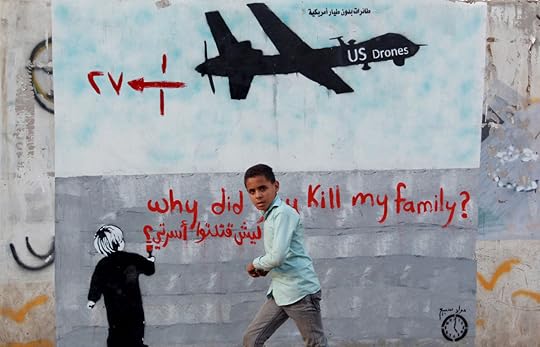
I am, however, responsible for the other jobs, both through my tax dollars that pay for prisons and drone warfare and by relying on fossil fuels. I am contributing to the moral suffering of many people who work in these industries, as well as to the abuse of people in prisons, the murder of women and children and other innocent people in drone strikes, and the destruction of our planet.
Until all the "good" people begin acknowledging our part in "dirty" work, we will not demand change. We will go about our lives happily relegating the dirty jobs to those society thinks so little of. We will continue to turn a blind eye to suffering, and take no responsibility when we are confronted with it.
But we need not personally push the button to detonate the drone bomb, or extinguish the life of a sentient creature in a slaughterhouse, or silently watch as people in prisons are abused and sometimes murdered in order to be responsible. It is not just the responsibility of those who are forced to do the jobs most of us don't want to even think about -- it is all of us who are responsible for dirty work.