

What do you think?

Man in the Holocene
Frisch charts the crumbling landscape of an old man’s consciousness as he slips away from himself toward death and reintegration with the age-old history of our planet. A “luminous parable...a masterpiece” (New York Times Book Review). Translated by Geoffrey Skelton. Illustrations. A Helen and Kurt Wolff Book
128 pages, Paperback
First published January 1, 1979
About the author
Max Frisch
277 books806 followersMax Rudolph Frisch was born in 1911 in Zurich; the son of Franz Bruno Frisch (an architect) and Karolina Bettina Frisch (née Wildermuth). After studying at the Realgymnasium in Zurich, he enrolled at the University of Zurich in 1930 and began studying German literature, but had to abandon due to financial problems after the death of his father in 1932. Instead, he started working as a journalist and columnist for the Neue Zürcher Zeitung (NZZ), one of the major newspapers in Switzerland. With the NZZ he would entertain a lifelong ambivalent love-hate relationship, for his own views were in stark contrast to the conservative views promulgated by this newspaper. In 1933 he travelled through eastern and south-eastern Europe, and in 1935 he visited Germany for the first time.
Some of the major themes in his work are the search or loss of one's identity; guilt and innocence (the spiritual crisis of the modern world after Nietzsche proclaimed that "God is dead"); technological omnipotence (the human belief that everything was possible and technology allowed humans to control everything) versus fate (especially in Homo faber); and also Switzerland's idealized self-image as a tolerant democracy based on consensus — criticizing that as illusion and portraying people (and especially the Swiss) as being scared by their own liberty and being preoccupied mainly with controlling every part of their life.
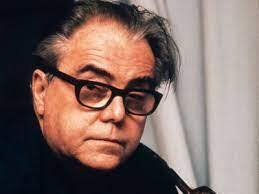
Max Frisch was a political man, and many of his works make reference to (or, as in Jonas und sein Veteran, are centered around) political issues of the time.
information was taken from
http://en.wikipedia.org/wiki/Max_Frisch
Some of the major themes in his work are the search or loss of one's identity; guilt and innocence (the spiritual crisis of the modern world after Nietzsche proclaimed that "God is dead"); technological omnipotence (the human belief that everything was possible and technology allowed humans to control everything) versus fate (especially in Homo faber); and also Switzerland's idealized self-image as a tolerant democracy based on consensus — criticizing that as illusion and portraying people (and especially the Swiss) as being scared by their own liberty and being preoccupied mainly with controlling every part of their life.
Max Frisch was a political man, and many of his works make reference to (or, as in Jonas und sein Veteran, are centered around) political issues of the time.
information was taken from
http://en.wikipedia.org/wiki/Max_Frisch
Ratings & Reviews
Friends & Following
Create a free account to discover what your friends think of this book!
Community Reviews
Displaying 1 - 30 of 238 reviews

July 18, 2023
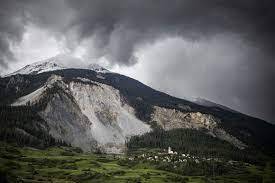
Could silence speak? What would be its language? And how do we perceive it? It is often said that silence speaks volumes and perhaps it is the loudest possible sound which strikes your soul. The existential angst of a person if left unassuaged gets transformed into the agony of his soul, and when it gets too painful to talk about it, it speaks through the profound voice of silence. And when the silence is interspersed with the inner voice of trepidation and foreboding of existential malaise then the music which origins from it resonates with the disquieting chords of your heart. Man in the Holocene is about those excruciating silences which speak louder than the deafening sounds.
source
Time, as we know it, can be cruel and unforgiving especially when you have it in surplus. You try to weave your life around the banality of life to brave the pressing and inexorable solitude of existence. Geiser, an aging man, tries to join the incoherent and disjointed pieces of life to forge a fragmentary existence around the challenges of old age in an unsympathetic and unrelenting weather. The superfluity of anything may be unbearable and unforgiving tribulation and time can be one of the cruelest ordeals of life. Geiser tries to carve an existence out of things seem trivial to uninitiated mind, although these inconsequential exploits of life appear to assuage the agitated and unsettled soul, but the savage and unreliable weather of the mountains robs him off any comfort those paltry and insignificant trivialities may provide.
Life may also become ruthless and deplorable with age since as we age the anxiety of life seeps deep into our heart with every passing moment. What might have started as an audacious and enterprising venture in younger days may become a compelling and unremitting anguish of existence over age, all the inauthentic comforts which might have been devised over the years are shred to nothingness when the probing eyes of existence see through your soul, and you realize that you have been condemned to live with your birth itself. Things like reading or building a pagoda from crispbread may help your disconcerted and ruffled soul to bear the examining and scrutinizing stare of time. Though it may be absurd, even the internal dialogues, the inner voice which responds to your weird and unavailing inquiries, provide indispensable solace as the fiendish and demonic stare of time appears to give you an unwarranted unleash of life. However, the incessant rain keeps you reminding, time and again, that the release is just temporary.
What could be the life of a person whose connect with time seems to be detached since our protagonist, Geiser, keeps losing the sense of his past though he keeps himself reassuring by remembering some trivial details from the various jumbled phases of life as if these memories are of some third person. The past of a person, isn’t it essential to define someone’s life, for the past makes us realize that we are traversing in the dimension of time as we say it makes us who we are. Our current choices have seeds of birth in the bittersweet memories of our past, so are we really free, and those choices shape our future which we realize only in the present.
What could be life without any memory of past and without any feeling of negotiating the present to graduate into the future. How do we define a man who is losing grip on time which leads to erosion of memories (just like the unforgiving and ever-changing weather of mountains leads to erosion of land), and how would that man assimilate life, would it be a grand simulation for him, or he would feel stuck in some kind of limbo. Is it really frightening to imagine that you have no memories and thereby no sense of time or is it liberating in a sense that you don’t have any past to impact your present and hence your present would not transform into past to influence your future, won’t it be truly ‘free will’ then. It may be petrifying and intimidating to note your entire life is unleased from the (in)significant stages of past, present and future, and thereby from the game of time itself, as if you are just moving along in an oblivion without any sense of start and end, and what would such an existence be called- perhaps ‘a living death’ as if its now just a borrowed existence from the hell of nothingness..
What about God, would he come to save his man from the eternal hell of nothingness? Geiser wonders if God is not a creation of human brain which can’t live without it- the idea of creation without a creator, the idea has tormented humankind right from the onset of civilization and perhaps the man has devised the comfort of a creator to assuage his tormented soul, so how could such an inauthentic idea help anyone. For a moment, Geiser thinks that reading might provide him refuge from the probing eyes of existence but soon he realizes that the world of novels is too idealistic to be true, for everything is so perfect in it while his own world is full of thunderous rains and unsettling environment which may be treacherous at times. How would the knowledge of humanity and its origin help him to infuse essence to his borrowed existence even if he cuts the seemingly important portions from various indispensable books and paste them on the wall of his living room to transform it into a sort of ‘memory-ledger’.
source
The author crafts a searing narrative on memory and its cessation with sparse prose by suffusing details of some other landscapes and timelines infused in it to give it a different treatment altogether. It is like a literary conundrum wherein the details are revealed piece by piece to create a picturesque narrative in which you may actually hear the raindrops falling around you or watching in horror with bated breath the land sliding down but the question is whether it will linger on your memory or will sway away like everything does with the passage of time.
source
Time, as we know it, can be cruel and unforgiving especially when you have it in surplus. You try to weave your life around the banality of life to brave the pressing and inexorable solitude of existence. Geiser, an aging man, tries to join the incoherent and disjointed pieces of life to forge a fragmentary existence around the challenges of old age in an unsympathetic and unrelenting weather. The superfluity of anything may be unbearable and unforgiving tribulation and time can be one of the cruelest ordeals of life. Geiser tries to carve an existence out of things seem trivial to uninitiated mind, although these inconsequential exploits of life appear to assuage the agitated and unsettled soul, but the savage and unreliable weather of the mountains robs him off any comfort those paltry and insignificant trivialities may provide.
Life may also become ruthless and deplorable with age since as we age the anxiety of life seeps deep into our heart with every passing moment. What might have started as an audacious and enterprising venture in younger days may become a compelling and unremitting anguish of existence over age, all the inauthentic comforts which might have been devised over the years are shred to nothingness when the probing eyes of existence see through your soul, and you realize that you have been condemned to live with your birth itself. Things like reading or building a pagoda from crispbread may help your disconcerted and ruffled soul to bear the examining and scrutinizing stare of time. Though it may be absurd, even the internal dialogues, the inner voice which responds to your weird and unavailing inquiries, provide indispensable solace as the fiendish and demonic stare of time appears to give you an unwarranted unleash of life. However, the incessant rain keeps you reminding, time and again, that the release is just temporary.
What could be the life of a person whose connect with time seems to be detached since our protagonist, Geiser, keeps losing the sense of his past though he keeps himself reassuring by remembering some trivial details from the various jumbled phases of life as if these memories are of some third person. The past of a person, isn’t it essential to define someone’s life, for the past makes us realize that we are traversing in the dimension of time as we say it makes us who we are. Our current choices have seeds of birth in the bittersweet memories of our past, so are we really free, and those choices shape our future which we realize only in the present.
What could be life without any memory of past and without any feeling of negotiating the present to graduate into the future. How do we define a man who is losing grip on time which leads to erosion of memories (just like the unforgiving and ever-changing weather of mountains leads to erosion of land), and how would that man assimilate life, would it be a grand simulation for him, or he would feel stuck in some kind of limbo. Is it really frightening to imagine that you have no memories and thereby no sense of time or is it liberating in a sense that you don’t have any past to impact your present and hence your present would not transform into past to influence your future, won’t it be truly ‘free will’ then. It may be petrifying and intimidating to note your entire life is unleased from the (in)significant stages of past, present and future, and thereby from the game of time itself, as if you are just moving along in an oblivion without any sense of start and end, and what would such an existence be called- perhaps ‘a living death’ as if its now just a borrowed existence from the hell of nothingness..
What about God, would he come to save his man from the eternal hell of nothingness? Geiser wonders if God is not a creation of human brain which can’t live without it- the idea of creation without a creator, the idea has tormented humankind right from the onset of civilization and perhaps the man has devised the comfort of a creator to assuage his tormented soul, so how could such an inauthentic idea help anyone. For a moment, Geiser thinks that reading might provide him refuge from the probing eyes of existence but soon he realizes that the world of novels is too idealistic to be true, for everything is so perfect in it while his own world is full of thunderous rains and unsettling environment which may be treacherous at times. How would the knowledge of humanity and its origin help him to infuse essence to his borrowed existence even if he cuts the seemingly important portions from various indispensable books and paste them on the wall of his living room to transform it into a sort of ‘memory-ledger’.
source
The author crafts a searing narrative on memory and its cessation with sparse prose by suffusing details of some other landscapes and timelines infused in it to give it a different treatment altogether. It is like a literary conundrum wherein the details are revealed piece by piece to create a picturesque narrative in which you may actually hear the raindrops falling around you or watching in horror with bated breath the land sliding down but the question is whether it will linger on your memory or will sway away like everything does with the passage of time.

July 12, 2019
Climate Change
Floods, avalanches, landslides, mass extinctions. What are we to make of these randomly destructive events? Do they exist if there is record, no memory of them? And what difference would it make to not know about them? Or to receive no news from the rest of the world at all? Catastrophe really can’t be prepared for can it? And news is almost always irrelevant.
But how about events closer to home? Like whether the Alpine valley in which one lives is in danger from continuous Summer storms? Are there any signs of new cracks in the cliffs or across the sudden fields? Alas, even then, what good would it do to know?
Surely though, one’s own state of being is of crucial import. As one gets older, minor infirmities can only be expected. But are things now progressing more rapidly? Wouldn’t it be prudent to be worried about them? Perhaps they should be noted down somewhere.
Yes, that’s it. But then it’s really essential to go far enough into the past in order to discern the pattern of development. Not just the history of this one life, but the cumulative experience of the species as well. And the geological formation of the valley itself is as relevant as anything else.
Indeed the tens and hundreds of millions of years of planetary development in its distinct periods from the Cambrian to the Quaternary, these too have to be considered. And with those, the numerous bits of human knowledge - how to construct a geometric golden section, the constituents of the cells of the human body, the expansion of the universe, train timetables - are things that must be remembered if one is to diagnose the changes taking place in oneself.
So notes proliferate. They fill the house. Their purpose is to keep memory alive. But they are actually symptoms of its death. The only disaster that matters is the one we can’t see taking place. We survive it; but at a price. The Holocene epoch is that during which the world loses its memory in a flurry of notes, and note-like memories. “Erosion is a slow process.” But eventually it triumphs.
Floods, avalanches, landslides, mass extinctions. What are we to make of these randomly destructive events? Do they exist if there is record, no memory of them? And what difference would it make to not know about them? Or to receive no news from the rest of the world at all? Catastrophe really can’t be prepared for can it? And news is almost always irrelevant.
But how about events closer to home? Like whether the Alpine valley in which one lives is in danger from continuous Summer storms? Are there any signs of new cracks in the cliffs or across the sudden fields? Alas, even then, what good would it do to know?
Surely though, one’s own state of being is of crucial import. As one gets older, minor infirmities can only be expected. But are things now progressing more rapidly? Wouldn’t it be prudent to be worried about them? Perhaps they should be noted down somewhere.
Yes, that’s it. But then it’s really essential to go far enough into the past in order to discern the pattern of development. Not just the history of this one life, but the cumulative experience of the species as well. And the geological formation of the valley itself is as relevant as anything else.
Indeed the tens and hundreds of millions of years of planetary development in its distinct periods from the Cambrian to the Quaternary, these too have to be considered. And with those, the numerous bits of human knowledge - how to construct a geometric golden section, the constituents of the cells of the human body, the expansion of the universe, train timetables - are things that must be remembered if one is to diagnose the changes taking place in oneself.
So notes proliferate. They fill the house. Their purpose is to keep memory alive. But they are actually symptoms of its death. The only disaster that matters is the one we can’t see taking place. We survive it; but at a price. The Holocene epoch is that during which the world loses its memory in a flurry of notes, and note-like memories. “Erosion is a slow process.” But eventually it triumphs.

Read
June 13, 2023We use the commands 'select', 'copy', 'cut', 'paste', 'look up' so often on our screens that it's easy to forget that the words themselves are not new, though their virtual use is an innovation of this computer age we live in.
I thought of those words while I was spending time with the main character of this story, set before the computer age. Geiser, for that is his name, likes to look things up in encyclopedias and history books, and copy down information he wants to remember. He's very interested in the geology of the area he lives in, a remote valley in the mountains of Ticino in the southernmost part of Switzerland.
Geiser didn't always live in Ticino and therefore doesn't know all the things the locals know about the region. And so, as a displaced person in a sense (he's completely cut off from his former urban life in northern Switzerland), he feels the need to inform himself about Ticino in order to feel he's on firm ground. The geology of the area is on his mind particularly because of a period of persistent rain that has caused a landslide, damaging a section of the only road out of the valley in which he lives.
Since the rains show no sign of ending, Geiser begins to fear a more catastrophic landslide that would wipe out the entire village, and he searches his books for information about such catastrophes in the past.
Geiser fears other things besides erosion of the landscape. There is the erosion of his physical abilities—his back aches constantly and his knees are weakening. But the thing he fears the most is the erosion of his mental faculties—which is why he copies down what he reads, and pastes the resultant notes on to the walls of his living space as a memory aid. When his fingers get cramped from writing, he resorts to cutting out selected paragraphs from his books which he then pastes on the walls. The sections that interest him most are about glaciation and erosion, sections that tell how, during the Pleistocene period, glaciers cut through the rocks and created valleys such as the one he lives in, and then carried the debris they'd carved out further down and deposited it as moraines.
I was struck by the parallel of Geiser's habit of cutting and pasting sections of information that were precisely about how nature cut sections of mountains long ago, and pasted them further down the plains. I wondered if the author had intended that parallel.
Nature is everything for Geiser—though he does open up his bible when the rains start, and pastes some lines from Genesis on his memory wall. But in spite of the Bible, Geiser knows he's a man of the Holocene period. And he's also aware that nature has no need for names such as God or Holocene or Pleistocene—or even for Man himself. He knows that Nature recognizes no catastrophes.
This slim little book has pasted itself on the wall of my memory. I hope it will remain there for a very long time.
…………………
In the other Max Frisch books I've read, names have sometimes carried extra meanings. I looked up Geiser in German and it turns out that it means geyser or hot spring—and there is a section where Geiser talks about hot springs in Iceland.
Incidentally, Geiser is not young and he is a bit of a curmudgeon, so sometimes I thought of him as an old geezer. But I liked him a lot.
I thought of those words while I was spending time with the main character of this story, set before the computer age. Geiser, for that is his name, likes to look things up in encyclopedias and history books, and copy down information he wants to remember. He's very interested in the geology of the area he lives in, a remote valley in the mountains of Ticino in the southernmost part of Switzerland.
Geiser didn't always live in Ticino and therefore doesn't know all the things the locals know about the region. And so, as a displaced person in a sense (he's completely cut off from his former urban life in northern Switzerland), he feels the need to inform himself about Ticino in order to feel he's on firm ground. The geology of the area is on his mind particularly because of a period of persistent rain that has caused a landslide, damaging a section of the only road out of the valley in which he lives.
Since the rains show no sign of ending, Geiser begins to fear a more catastrophic landslide that would wipe out the entire village, and he searches his books for information about such catastrophes in the past.
Geiser fears other things besides erosion of the landscape. There is the erosion of his physical abilities—his back aches constantly and his knees are weakening. But the thing he fears the most is the erosion of his mental faculties—which is why he copies down what he reads, and pastes the resultant notes on to the walls of his living space as a memory aid. When his fingers get cramped from writing, he resorts to cutting out selected paragraphs from his books which he then pastes on the walls. The sections that interest him most are about glaciation and erosion, sections that tell how, during the Pleistocene period, glaciers cut through the rocks and created valleys such as the one he lives in, and then carried the debris they'd carved out further down and deposited it as moraines.
I was struck by the parallel of Geiser's habit of cutting and pasting sections of information that were precisely about how nature cut sections of mountains long ago, and pasted them further down the plains. I wondered if the author had intended that parallel.
Nature is everything for Geiser—though he does open up his bible when the rains start, and pastes some lines from Genesis on his memory wall. But in spite of the Bible, Geiser knows he's a man of the Holocene period. And he's also aware that nature has no need for names such as God or Holocene or Pleistocene—or even for Man himself. He knows that Nature recognizes no catastrophes.
This slim little book has pasted itself on the wall of my memory. I hope it will remain there for a very long time.
…………………
In the other Max Frisch books I've read, names have sometimes carried extra meanings. I looked up Geiser in German and it turns out that it means geyser or hot spring—and there is a section where Geiser talks about hot springs in Iceland.
Incidentally, Geiser is not young and he is a bit of a curmudgeon, so sometimes I thought of him as an old geezer. But I liked him a lot.
March 10, 2011
Today I went for a walk down the street and through the gate to the cement road, steeply inclined and overgrown in patches with thistles and weeds sprouting from the droppings of many cows, who roam the now yellowing hills that despite the overcast sky are impressively laid out for many miles, a winding valley through which a running creek cuts and crosses over grey and under green.
The cement road branches at its base, and if you follow the right path you will come to a gate and yet another branch, and if you continue to veer to the right you will walk down a wide and well-maintained construction, bounded by the base of a slope on the left and riotous growth on the right. If you walk down far enough, you will see a small area that slopes and suggests the beginning of one of those cow trails that cut into the hills in a zigzag shape, treacherous and sometimes humiliating to take when thinking on how creatures much larger and more unwieldy than yourself not only forged the road but unwaveringly maintain it.
Except that is a trap. It would not have been a trap fifteen years ago, when the stream was a mere two feet wide and barely six inches deep and even my six-year old self was able to jump across it with relative ease, six-year old eyes recording the sight of sunny gold burbling along as six-year-old feet readied themselves at the bottom of a gentle slope to jump across with six-year-old legs and land on the sandy shore across. Now, that slope cuts off a foot from its origin, and what greets you is a drop that would break both legs and maybe a neck, across a creek that has carved itself into a sizable expanse that rapidly spills and churns volumes into a deep basin that could easily swallow you down, should you lose your footing. A while back I heard from a surveyor that it had been measured at sixteen feet, surrounded by loose walls of mud and flimsy roots that could no more support a grasping hand than a daisy could resist the pull of eager six-year-old fingers.
I have no six-year-old memories of that landscape gullet.
The creek that chewed out that deepening hollow as well as the surrounding valley and hills is called Sabercat Creek, and if you went back and back and farther back to the first fork in the road and took the left path, you would walk along a road similar to its mirror, albeit more overgrown and more steep in its slopes, a high yellow slope pocked with trees and shrubbery on your left and a deep green gorge massed with fallen branches and poison ivy on your right. At the end of this path there is a gate, and beyond the gate is the place that the creek was named for, where 50 years before I was born they excavated the bones of monumental felines that returned to earth entirely 1.6 million years before humans gained their modern physiology. You can hike up the cliff that was left, look down at the long yellow grasses and tall thin whips of pink and green that healed the gouges left by the archaeological endeavor long ago, and wonder if there are any bones still resting in shapely divots, cool and dry under the earth that hasn't seen anything but a light rain for many weeks.
They were there long before us, and should the creek continue its destructive path and course itself into landslides that cause the houses to slip and slide and batter themselves into oblivion, possibly with their inhabitants within their walls, they will be there still.
One of those houses is mine, and in that house I have a laptop, and in that laptop there is a word document with which I have been keeping a collection of names, words, phrases, poetry, quotes both categorized by book and miscellaneous by necessity, and more recently reviews that differ from their lettered brethren in being of my own design. The document is 360 pages long, and is a boon for someone who could never keep a diary yet still wishes to have some record on hand, that both absorbs the new and cradles the old for rediscoveries by a brain that may still be young but is not infinite. It has survived three computers, four years, and countless accidentally closed windows and abruptly errant shutdowns. By it, I see myself, and slowly but surely, the changes of said self.
There may come a time in old age or even younger, when in the throes of Alzheimer's or some other decay of the brain I will open this document and forget words as soon as I read them, or forget it for long periods until a sudden retrieval reassures me that all is not lost, or delete it unknowingly and forget that such a thing ever existed.
If you keep in mind: the ceaseless biting and gnawing of water in a fierce erosion that can wear away the physical and make one question the mental; the monumental backdrop of time that one plays a blip of a part upon in this period that in the spirit of the Triassic and the Jurassic and the Cretaceous is termed the Holocene; the quickening sink and slippage of layers of the mind that jerks and shudders towards a broken record of a living that forsakes the straight road of the present for the drop into the deep waters of memory, no matter how many words are written on the wall.
You'll get a sense of what this book is like.
The cement road branches at its base, and if you follow the right path you will come to a gate and yet another branch, and if you continue to veer to the right you will walk down a wide and well-maintained construction, bounded by the base of a slope on the left and riotous growth on the right. If you walk down far enough, you will see a small area that slopes and suggests the beginning of one of those cow trails that cut into the hills in a zigzag shape, treacherous and sometimes humiliating to take when thinking on how creatures much larger and more unwieldy than yourself not only forged the road but unwaveringly maintain it.
Except that is a trap. It would not have been a trap fifteen years ago, when the stream was a mere two feet wide and barely six inches deep and even my six-year old self was able to jump across it with relative ease, six-year old eyes recording the sight of sunny gold burbling along as six-year-old feet readied themselves at the bottom of a gentle slope to jump across with six-year-old legs and land on the sandy shore across. Now, that slope cuts off a foot from its origin, and what greets you is a drop that would break both legs and maybe a neck, across a creek that has carved itself into a sizable expanse that rapidly spills and churns volumes into a deep basin that could easily swallow you down, should you lose your footing. A while back I heard from a surveyor that it had been measured at sixteen feet, surrounded by loose walls of mud and flimsy roots that could no more support a grasping hand than a daisy could resist the pull of eager six-year-old fingers.
I have no six-year-old memories of that landscape gullet.
The creek that chewed out that deepening hollow as well as the surrounding valley and hills is called Sabercat Creek, and if you went back and back and farther back to the first fork in the road and took the left path, you would walk along a road similar to its mirror, albeit more overgrown and more steep in its slopes, a high yellow slope pocked with trees and shrubbery on your left and a deep green gorge massed with fallen branches and poison ivy on your right. At the end of this path there is a gate, and beyond the gate is the place that the creek was named for, where 50 years before I was born they excavated the bones of monumental felines that returned to earth entirely 1.6 million years before humans gained their modern physiology. You can hike up the cliff that was left, look down at the long yellow grasses and tall thin whips of pink and green that healed the gouges left by the archaeological endeavor long ago, and wonder if there are any bones still resting in shapely divots, cool and dry under the earth that hasn't seen anything but a light rain for many weeks.
They were there long before us, and should the creek continue its destructive path and course itself into landslides that cause the houses to slip and slide and batter themselves into oblivion, possibly with their inhabitants within their walls, they will be there still.
One of those houses is mine, and in that house I have a laptop, and in that laptop there is a word document with which I have been keeping a collection of names, words, phrases, poetry, quotes both categorized by book and miscellaneous by necessity, and more recently reviews that differ from their lettered brethren in being of my own design. The document is 360 pages long, and is a boon for someone who could never keep a diary yet still wishes to have some record on hand, that both absorbs the new and cradles the old for rediscoveries by a brain that may still be young but is not infinite. It has survived three computers, four years, and countless accidentally closed windows and abruptly errant shutdowns. By it, I see myself, and slowly but surely, the changes of said self.
There may come a time in old age or even younger, when in the throes of Alzheimer's or some other decay of the brain I will open this document and forget words as soon as I read them, or forget it for long periods until a sudden retrieval reassures me that all is not lost, or delete it unknowingly and forget that such a thing ever existed.
If you keep in mind: the ceaseless biting and gnawing of water in a fierce erosion that can wear away the physical and make one question the mental; the monumental backdrop of time that one plays a blip of a part upon in this period that in the spirit of the Triassic and the Jurassic and the Cretaceous is termed the Holocene; the quickening sink and slippage of layers of the mind that jerks and shudders towards a broken record of a living that forsakes the straight road of the present for the drop into the deep waters of memory, no matter how many words are written on the wall.
You'll get a sense of what this book is like.

July 15, 2019
This was a very strange reading experience: a loose sequence of descriptive and narrative sections, encyclopaedic articles, bible excerpts and (indirect) memories. It takes a while before you realize that the book revolves around the older man, Herr Geiser, a confused loner who lives in a valley in southern Switzerland, not far from the Italian border. Geyser is clearly intrigued by the signs of decline in his environment (landslides due to constant rain, ants in his house, bus connections that have been interrupted), but also within himself: he has difficulty remembering things and doing the most basic actions. He tries to hold on tightly to reality by making lists of things in his house, or collecting encyclopedia-articles and bible fragments (from Genesis) about the earliest geological and biological history. The author - Frisch - inserts these articles and fragments into the text, with the original layout (up to and including texts in gothic lettering), just like Geiser sticking them all over the walls in his house.
Geiser next ventures into a rather perilous trip through the mountains, clearly on shaking legs, trying to resume a journey that he used to undertake. It's another attempt to connect with the reality he once knew. Certainly towards the end there seems to be something seriously wrong with the man: he sometimes seems unconscious for hours, and eventually people (apparently including his daughter) pop up and speak to him as if he was a child.
The author, Frisch, keeps himself in the background, but his seemingly purely descriptive report harshly portrays the dementing process of an old man who is more or less aware that something is wrong. And also the broader metaphor, the reference to the ruthless power of erosion and thus to the nullity of man (which only ‘appeared in the Holocene’, that is very late in the history of the earth) finally becomes clear. What is a human life? What is man himself and can he withstand the enormous power of nature and time? Frisch makes his reader really sweat in this awkward philosophical parable.
Geiser next ventures into a rather perilous trip through the mountains, clearly on shaking legs, trying to resume a journey that he used to undertake. It's another attempt to connect with the reality he once knew. Certainly towards the end there seems to be something seriously wrong with the man: he sometimes seems unconscious for hours, and eventually people (apparently including his daughter) pop up and speak to him as if he was a child.
The author, Frisch, keeps himself in the background, but his seemingly purely descriptive report harshly portrays the dementing process of an old man who is more or less aware that something is wrong. And also the broader metaphor, the reference to the ruthless power of erosion and thus to the nullity of man (which only ‘appeared in the Holocene’, that is very late in the history of the earth) finally becomes clear. What is a human life? What is man himself and can he withstand the enormous power of nature and time? Frisch makes his reader really sweat in this awkward philosophical parable.

November 9, 2024
Der Mensch erscheint im Holozän liest sich wie eine Meditation.
Ruhig, dicht, nachdenklich, fragmentiert.
Einer der vielen Ausschnitte des Wissens – der Anti-Vergesslichkeit Geisers, die im Wohnzimmer hängen, seinem Rettungsseil, das er sich selbst hinwirft, um die Wand zu erklimmen – besagt:
Mensch: geschichtliches Wesen
Formung über Künste, Wissenschaften, Sitten
Produktive Phantasie, Wille
Nur der Mensch hat Zukunft
Lebt nicht eingepasst in eine Umwelt, nicht angepasstes Verhalten möglich – Irrwege, Fehlentwürfe, Fehlentscheidungen
Weite Gebiete der Erdoberfläche hat er für seine Bedürfnisse umgestaltet; der Anteil der Kulturlandschaft nimmt ständig zu.
Dass Max Frisch in diesem Spannungsfeld des Nicht-Angepasst-Seins lebte, ist bekannt. Das Bedürfnis nach Unabhängigkeit und Selbstbestimmung durchlebt Geiser auf seiner Wanderung in die Berge.
Frisch greift ein doppeltes Motiv auf: Natur und Gesellschaft.
Der Grundtenor des Buches ist die Entfremdung und Verletzlichkeit, Verwundbarkeit des Menschen gegenüber der Natur.
Ein weiterer Schnipsel seines Wissens sagt:
Umgestaltung des Erdbildes, durch sie werden Pflanzen und Tiere zur Anpassung an neue Lebensverhältnisse, zur Wanderung oder zum Untergang gezwungen.
Deshalb muss Geiser wandern. Allein. Auch im Nebel. Es ist nass, glitschig, widrig. Das ewige Rutschen. Die Risse. Die Erosionen. Aber frei.
Das Unwetter im Buch hat Stromausfälle und Erdrutsche zur Folge. Die Turmuhr steht still.
Kultur? Ein paar Jungs in der Kneipe:
Die Burschen haben ihren lauten Spaß; die Erosion, die draußen stattfindet, bekümmert sie überhaupt nicht.
Frisch verdichtet alles auf die Isolation Geisers und den Verlust der Zeit als Ankerpunkt. Die Einzelempfindungen von Moment zu Moment geben den Takt vor. Regen, Nebel und „Lavendel ohne Duft, wie in einem Farbfilm“. Sonne und sinnliche Momente sind verbraucht. Frisch erzeugt einen drückenden, stillen Raum der Zeit. Während in Mrs. Dalloway Zeit als Orientierungspunkt dient, der Gegenwart und Vergangenheit verbindet, setzt Frisch das Klingeln und die Glockenschläge aus.
Geiser ist völlig auf sich selbst zurückgeworfen. Allein. Verwitwet, mit schwindendem Gedächtnis. Seine Beschäftigung mit den Erdzeitaltern lässt das menschliche Leben fragil und bedeutungslos erscheinen.
Geisers Ich, steht symbolisch für die Natur und Landschaft. Sie verschmelzen ineinander.
Das Rutschen. Die Risse. Die Erosionen (schädigt bei Kahlschlag und übermäßiger Nutzung). Der Nebel.
Geiser sieht aus wie ein Lurch. Geiser mag keine Feuersalamander. Transformiert er sich durch seinen Gedächtnisverlust in ein instinkthaftes, kleinhirniges Dasein einer Echse oder eines Dinosauriers? Nein, er wehrt sich. Er hat den Willen. Hat sein Wissen. Seine Zettel. Seine Erinnerung. Der Mensch ist ein geschichtliches Wesen. So steht es auf dem Zettel. Warum hat er einen Hut auf dem Kopf? Er hat die Streichhölzer vergessen.
Das doppelte Motiv: nicht angepasstes Verhalten, das Bedürfnis nach Nähe und die Angst vor dem Verlust der Freiheit, hat Frisch zeitlebens beschäftigt. Menschliche Bindungen – welche Sicherheit können sie mir bieten? Geiser sieht sich existentiellen Bedrohungen ausgesetzt. Das Rutschen. Die Risse. Die Natur, die Erde – wie können sie ein für alle Mal gesichert sein, damit ich es wagen kann, mich um Gesellschaft und Beziehungen zu kümmern?
Geiser erinnert sich an seinen Bruder. Das Seil. Der Berg. Vertrauen und Verlässlichkeit. Geiser wehrt sich im Jetzt gegen das Seil der anderen. Er wirft sich sein eigenes Seil – zu kurz und brüchig. Er klettert ohne Halt. Die Brille ist auch kaputt.
Corinne kommt vorbei. Knäckebrot ist noch da.
Ruhig, dicht, nachdenklich, fragmentiert.
Einer der vielen Ausschnitte des Wissens – der Anti-Vergesslichkeit Geisers, die im Wohnzimmer hängen, seinem Rettungsseil, das er sich selbst hinwirft, um die Wand zu erklimmen – besagt:
Mensch: geschichtliches Wesen
Formung über Künste, Wissenschaften, Sitten
Produktive Phantasie, Wille
Nur der Mensch hat Zukunft
Lebt nicht eingepasst in eine Umwelt, nicht angepasstes Verhalten möglich – Irrwege, Fehlentwürfe, Fehlentscheidungen
Weite Gebiete der Erdoberfläche hat er für seine Bedürfnisse umgestaltet; der Anteil der Kulturlandschaft nimmt ständig zu.
Dass Max Frisch in diesem Spannungsfeld des Nicht-Angepasst-Seins lebte, ist bekannt. Das Bedürfnis nach Unabhängigkeit und Selbstbestimmung durchlebt Geiser auf seiner Wanderung in die Berge.
Frisch greift ein doppeltes Motiv auf: Natur und Gesellschaft.
Der Grundtenor des Buches ist die Entfremdung und Verletzlichkeit, Verwundbarkeit des Menschen gegenüber der Natur.
Ein weiterer Schnipsel seines Wissens sagt:
Umgestaltung des Erdbildes, durch sie werden Pflanzen und Tiere zur Anpassung an neue Lebensverhältnisse, zur Wanderung oder zum Untergang gezwungen.
Deshalb muss Geiser wandern. Allein. Auch im Nebel. Es ist nass, glitschig, widrig. Das ewige Rutschen. Die Risse. Die Erosionen. Aber frei.
Das Unwetter im Buch hat Stromausfälle und Erdrutsche zur Folge. Die Turmuhr steht still.
Kultur? Ein paar Jungs in der Kneipe:
Die Burschen haben ihren lauten Spaß; die Erosion, die draußen stattfindet, bekümmert sie überhaupt nicht.
Frisch verdichtet alles auf die Isolation Geisers und den Verlust der Zeit als Ankerpunkt. Die Einzelempfindungen von Moment zu Moment geben den Takt vor. Regen, Nebel und „Lavendel ohne Duft, wie in einem Farbfilm“. Sonne und sinnliche Momente sind verbraucht. Frisch erzeugt einen drückenden, stillen Raum der Zeit. Während in Mrs. Dalloway Zeit als Orientierungspunkt dient, der Gegenwart und Vergangenheit verbindet, setzt Frisch das Klingeln und die Glockenschläge aus.
Geiser ist völlig auf sich selbst zurückgeworfen. Allein. Verwitwet, mit schwindendem Gedächtnis. Seine Beschäftigung mit den Erdzeitaltern lässt das menschliche Leben fragil und bedeutungslos erscheinen.
Geisers Ich, steht symbolisch für die Natur und Landschaft. Sie verschmelzen ineinander.
Das Rutschen. Die Risse. Die Erosionen (schädigt bei Kahlschlag und übermäßiger Nutzung). Der Nebel.
Geiser sieht aus wie ein Lurch. Geiser mag keine Feuersalamander. Transformiert er sich durch seinen Gedächtnisverlust in ein instinkthaftes, kleinhirniges Dasein einer Echse oder eines Dinosauriers? Nein, er wehrt sich. Er hat den Willen. Hat sein Wissen. Seine Zettel. Seine Erinnerung. Der Mensch ist ein geschichtliches Wesen. So steht es auf dem Zettel. Warum hat er einen Hut auf dem Kopf? Er hat die Streichhölzer vergessen.
Das doppelte Motiv: nicht angepasstes Verhalten, das Bedürfnis nach Nähe und die Angst vor dem Verlust der Freiheit, hat Frisch zeitlebens beschäftigt. Menschliche Bindungen – welche Sicherheit können sie mir bieten? Geiser sieht sich existentiellen Bedrohungen ausgesetzt. Das Rutschen. Die Risse. Die Natur, die Erde – wie können sie ein für alle Mal gesichert sein, damit ich es wagen kann, mich um Gesellschaft und Beziehungen zu kümmern?
Geiser erinnert sich an seinen Bruder. Das Seil. Der Berg. Vertrauen und Verlässlichkeit. Geiser wehrt sich im Jetzt gegen das Seil der anderen. Er wirft sich sein eigenes Seil – zu kurz und brüchig. Er klettert ohne Halt. Die Brille ist auch kaputt.
Corinne kommt vorbei. Knäckebrot ist noch da.

May 17, 2014
This was my first experience with the Dalkey Archive, revered by many of my friends on Goodreads, and unfortunately the first impressions were very poor: can it really be, I thought, unwrapping this in front of my postbox and examining it, that they spelled the name of the translator wrong on the front cover of the fucking book?!
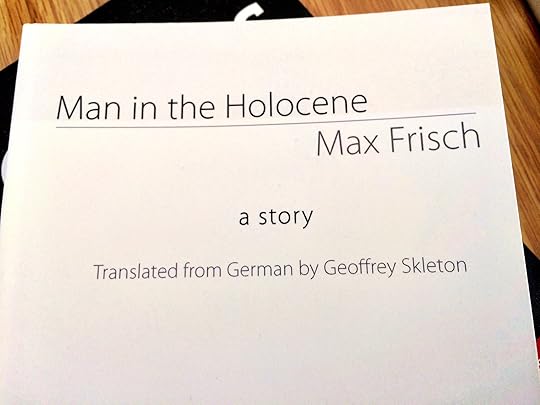
Geoffrey Skelton was one of the greatest German translators we had (he died in 1998). How many people, I keep thinking, must have looked at this cover design before it got approved and printed? I mean seriously! The only way it could be any worse is if the book had been called Man in the Plasticine by Mark Fish.
Anyway. A shame, because the book is very interesting and deserves to be kept in print. A sort of existential collage, it follows a few days in the life of 73-year-old Geiser, a German-speaker from Basel, a widower, who has retired to live in a valley in Ticino, in Italian-speaking Switzerland. The narrative is impressionistic, staccato, often quite striking:
A little wall in the lower garden (dry-stone) has collapsed: debris among the lettuces, lumps of clay under the tomatoes. Perhaps that happened days ago.
Still, one can get tomatoes in cans.
Lavender flowering in the mist: scentless, as in a color film. One wonders what bees do in a summer like this.
It is important to Geiser to take note of what he sees. His memory is failing him, and he's compulsive about hoarding his knowledge – creating lists of the food in his kitchen, or of the sixteen different types of thunder he has distinguished echoing around his little house. His walls are covered in handwritten notes or clippings cut from the encyclopaedia, with his interests tending to geology and palaeontology.
Geiser knew at one time what caused tides, just as he knew about volcanoes, mountain ranges, etc. But when did the first mammals emerge? Instead of this, one knows how many liters of heating oil the tank contains, the time of the first and last mail bus – that is, when the highway is not blocked. When did man first emerge, and why? Triassic, Jurassic, Cretaceous, etc., but no idea how many millions of years the various eras lasted.
Man emerged in the Holocene – the epoch we're still in. This book thus deftly takes the scattered thoughts of one old man and locates them in the vast reaches of geological time. The disjointed style of his own reminiscences combines with the cuttings on his walls – excerpted here piecemeal from various Swiss reference works – to create a cut-up effect that juxtaposes the banal with the dramatic, dinosaurs with lettuces, continental drift with a fall down the stairs, and that ultimately becomes quite moving. Recommended, though possibly not in this badly-jacketed edition.
(One last quote to finish, because it didn't fit in the review and it demands to be shared.)
Ever since the young men have owned motorcycles, incest has been dying out, and so has sodomy.

April 1, 2024
Ein Buch aus der Stille der Einsamkeit heraus. Was übrigbleibt, wenn die Kraft ausgeht.
Inhalt: 4/5 Sterne (die letzten Tage eines Menschen)
Form: 4/5 Sterne (collagierte, reduzierte Diktion)
Komposition: 5/5 Sterne (konsequent personal erzählter Erschöpfungsprozess)
Leseerlebnis: 5/5 Sterne (eisig, kühle Stoizität)
Der als „Eine Erzählung“ titulierte Kurzroman „Der Mensch erscheint im Holozän“ gehört zum Alterswerk von Max Frisch und erschien 1979 nach zwölfmaliger Umarbeitung. Wie über seine ganze Schaffensperiode hinweg experimentiert Frisch auch in diesem Text mit modernen und postmodernen Erzählweisen, mischt sie und sucht in ihnen einen eigenen Weg hin zum individualisiert-temporal-singulären Ausdruck eines Ichs, das nur in der Gegenwart, geologisch gesprochen im Holozän, erscheint:
Man kennt die Gestalt des Matterhorns von zahllosen Bildern; aus der Nähe, wenn man am Fels steht und sich eine Rast gönnt, das Seil um einen zuverlässigen Block geschlauft, und wenn man Ausschau hält, so ist von dieser Gestalt nichts zu sehen; nur Zacken und steile Platten und Kolosse von Gestein, zum Teil nicht senkrecht, sondern überhängend, man wundert sich, daß sie nicht längst abgebrochen und in die Tiefe gestürzt sind.
Erst mit dem Abschnitt der Besteigung des Matterhorns konnte Frisch das Manuskript für ihn befriedigend komplettieren. Das Matterhorn selbst lässt sich als „das Ich“ verstehen, das immer wieder uneinnehmbar vor einem steht, das nur im Gedächtnis, in der bewusstgemachten Selbstreflexion und Zeitfolge existiert und sich stets von Neuem aus dem Wust der Ereignisse selbst erschaffen muss, und doch, wie der Abschnitt betont, stets wieder droht, in die Tiefe, die Bewusstlosigkeit, hinabzustürzen.
Die Ameisen, die Herr Geiser neulich unter einer tropfenden Tanne beobachtet hat, legen keinen Wert darauf, daß man Bescheid weiß über sie, so wenig wie die Saurier, die ausgestorben sind, bevor ein Mensch sie gesehen hat. Alle die Zettel, ob an der Wand oder auf dem Teppich, können verschwinden. Was heißt Holozän! Die Natur braucht keine Namen. Das weiß Herr Geiser. Die Gesteine brauchen sein Gedächtnis nicht.
Zeit selbst existiert nur für den, der die Vergangenheit bewusst hält, nicht von Moment zu Moment lebt. Herr Geiser, der Protagonist von „Der Mensch erscheint im Holozän“, bringt bis auf die Erinnerung an die Besteigung des Matterhorn kaum noch kohärente Gedanken zustande. Er steht am Ende seines Lebens, isoliert, verwitwet, mit einem klopfenden, unruhigen Herz konfrontiert. Ihm steht klar vor Augen, dass die Welt, die sich in ihm geöffnet hat, wieder verschwinden kann. Er beginnt zu schreiben, Wissen zu sammeln, sein Gedächtnis zu bestärken, vor allem: mit der Welt, seiner Welt, der Gesamtvergangenheit zu kommunizieren, denn nur im Akt des Vermittelns, der Weitergabe dieser inneren, einmaligen Welt, bleibt die Welt eine offene:
Das Letzte, was Herr Geiser noch vernommen hat, sind schlimme Nachrichten gewesen, wie meistens, von Attentat bis Arbeitslosigkeit; dann und wann der Rücktritt eines Ministers, aber eine Hoffnung, daß es heute gute Nachrichten wären, besteht eigentlich nicht; trotzdem ist man beruhigter, wenn man von Tag zu Tag weiß, daß die Welt weitergeht.
„Der Mensch erscheint im Holozän“ liest sich zu schnell, zu einfach weg und hat deshalb den Ruf erhalten, lediglich ein schnödes, unwichtiges Beiwerk aus Frischs Œuvre zu sein. Je kompilierender, fokussierter jedoch die Lektüre, desto klarer geht hier ein Erkenntnis- und ein Entwicklungsprozess vonstatten. Es gibt den Kosmos, das Außen – und das Außen hat ein Innen. Der Riss in der Steinwand erinnert Geiser an den Schlaganfall, den er bereits in sich spürt, die Angst, die Ausweglosigkeit, die sich in einem letzten Akt der Rebellion vollzieht. Herr Geiser gibt sich nicht geschlagen, auch wenn die Welt ohne ihn weitergeht, aber eben um ein paar Inkommunikabilitäten ärmer.
Inhalt: 4/5 Sterne (die letzten Tage eines Menschen)
Form: 4/5 Sterne (collagierte, reduzierte Diktion)
Komposition: 5/5 Sterne (konsequent personal erzählter Erschöpfungsprozess)
Leseerlebnis: 5/5 Sterne (eisig, kühle Stoizität)
Der als „Eine Erzählung“ titulierte Kurzroman „Der Mensch erscheint im Holozän“ gehört zum Alterswerk von Max Frisch und erschien 1979 nach zwölfmaliger Umarbeitung. Wie über seine ganze Schaffensperiode hinweg experimentiert Frisch auch in diesem Text mit modernen und postmodernen Erzählweisen, mischt sie und sucht in ihnen einen eigenen Weg hin zum individualisiert-temporal-singulären Ausdruck eines Ichs, das nur in der Gegenwart, geologisch gesprochen im Holozän, erscheint:
Man kennt die Gestalt des Matterhorns von zahllosen Bildern; aus der Nähe, wenn man am Fels steht und sich eine Rast gönnt, das Seil um einen zuverlässigen Block geschlauft, und wenn man Ausschau hält, so ist von dieser Gestalt nichts zu sehen; nur Zacken und steile Platten und Kolosse von Gestein, zum Teil nicht senkrecht, sondern überhängend, man wundert sich, daß sie nicht längst abgebrochen und in die Tiefe gestürzt sind.
Erst mit dem Abschnitt der Besteigung des Matterhorns konnte Frisch das Manuskript für ihn befriedigend komplettieren. Das Matterhorn selbst lässt sich als „das Ich“ verstehen, das immer wieder uneinnehmbar vor einem steht, das nur im Gedächtnis, in der bewusstgemachten Selbstreflexion und Zeitfolge existiert und sich stets von Neuem aus dem Wust der Ereignisse selbst erschaffen muss, und doch, wie der Abschnitt betont, stets wieder droht, in die Tiefe, die Bewusstlosigkeit, hinabzustürzen.
Die Ameisen, die Herr Geiser neulich unter einer tropfenden Tanne beobachtet hat, legen keinen Wert darauf, daß man Bescheid weiß über sie, so wenig wie die Saurier, die ausgestorben sind, bevor ein Mensch sie gesehen hat. Alle die Zettel, ob an der Wand oder auf dem Teppich, können verschwinden. Was heißt Holozän! Die Natur braucht keine Namen. Das weiß Herr Geiser. Die Gesteine brauchen sein Gedächtnis nicht.
Zeit selbst existiert nur für den, der die Vergangenheit bewusst hält, nicht von Moment zu Moment lebt. Herr Geiser, der Protagonist von „Der Mensch erscheint im Holozän“, bringt bis auf die Erinnerung an die Besteigung des Matterhorn kaum noch kohärente Gedanken zustande. Er steht am Ende seines Lebens, isoliert, verwitwet, mit einem klopfenden, unruhigen Herz konfrontiert. Ihm steht klar vor Augen, dass die Welt, die sich in ihm geöffnet hat, wieder verschwinden kann. Er beginnt zu schreiben, Wissen zu sammeln, sein Gedächtnis zu bestärken, vor allem: mit der Welt, seiner Welt, der Gesamtvergangenheit zu kommunizieren, denn nur im Akt des Vermittelns, der Weitergabe dieser inneren, einmaligen Welt, bleibt die Welt eine offene:
Das Letzte, was Herr Geiser noch vernommen hat, sind schlimme Nachrichten gewesen, wie meistens, von Attentat bis Arbeitslosigkeit; dann und wann der Rücktritt eines Ministers, aber eine Hoffnung, daß es heute gute Nachrichten wären, besteht eigentlich nicht; trotzdem ist man beruhigter, wenn man von Tag zu Tag weiß, daß die Welt weitergeht.
„Der Mensch erscheint im Holozän“ liest sich zu schnell, zu einfach weg und hat deshalb den Ruf erhalten, lediglich ein schnödes, unwichtiges Beiwerk aus Frischs Œuvre zu sein. Je kompilierender, fokussierter jedoch die Lektüre, desto klarer geht hier ein Erkenntnis- und ein Entwicklungsprozess vonstatten. Es gibt den Kosmos, das Außen – und das Außen hat ein Innen. Der Riss in der Steinwand erinnert Geiser an den Schlaganfall, den er bereits in sich spürt, die Angst, die Ausweglosigkeit, die sich in einem letzten Akt der Rebellion vollzieht. Herr Geiser gibt sich nicht geschlagen, auch wenn die Welt ohne ihn weitergeht, aber eben um ein paar Inkommunikabilitäten ärmer.

February 11, 2012
"Panning for gold in the streams has never been worth the trouble. All in all, a green valley, wooded as in the Stone age. There are no plans for a reservoir. In August and September, at night, there are shooting stars to be seen, or one hears that call of a little owl."
I took the hologramscenic route. Stars hurtling towards the earth and lands somewhere in some planetary crust. It could be a three or a four star book. I don't know how much I like it yet so I think I'll just walk around a bit in a goodreads review (kind of like Geiser does in the book). I know I've written about this nature shit love before on goodreads but I can't remember where. Geiser's Alzheimers like symptoms are contagious, maybe. I would blame my digressions on him if I thought I could get away with it. I know I've written about my fantasy from my youth (er, 26) of running away to the Florida natural history museum at least twice, somewhere. (Maybe I'll go there when I'm done writing this review.) Tear out the photos from books and paste them to the walls. Dinosaurs and relating to the extinct. He had enough opposable thumbtacks for all the note cards and facts. Four walls as many facts. Maybe he was sniffing some post-it glue too. This is that kind of book.
Too bad this brain is going to go the way of libraries of Pompeii or Alexandria. Natural disasters strike. A natural death...
Geiser is a seventy two year old man. Who is counting? Tick, tock. His Swiss valley is the ice age of isolation and get off my lawn because the one I want to see died in the terrible trivium picking up particles of sand with an eye dropper and losing the big picture in the needle of the eye in the haystack that's one of the wars. What was I saying again? Man in the Holocene was written circa 1980, I think (or maybe it was translated from German into English then). It's as same old shit as listening to The Sisters of Mercy song "Lucretia, my reflection" in 2012. Or anything else that has its time stamped on it (and doesn't because people don't change). The '80s never ended. Genesis threw in the towel too soon. Everything would be different if they had made more animated videos. I would ask why we couldn't live a good decade over and over again but there was no such thing. So, the 1980s is the dark ages. Cataracts, and don't close my eyes too early, and they will steal all my money and then no one will see me across the river Styx. Frozen over, anyway, for sure. Tony Soprano's midas touch in reverse golden age. Silver tongue of talking shit age. Bronze turns your skin green age. I'd finally figure out how to use a semicolon there but it would turn my internet emoticon into a ;) wink. Gotta keep both eyes open. I might miss something as the life flashes before my eyes.
I liked a lot that there are pictures. Definitions like you would walk into a dictionary as you muffle through the meaning of life, one last time. 'Holocene' is a lot of the time like reading an encyclopedia. Is there anything else for Geiser to do but read? (He asked and I answered as if he were actually asking me. No. No! I don't think so.) The encyclopedia as barrage of information like all of the rain. It rains as much in 'Holocene' as it did in Twilight or before the ark. I thought maybe Geiser would stop pontificating about religion and gather up all of his ripped out pictures of extinct animals and rescue them one more time for the apocalypse. If he had saved them, maybe, did more than recite. I thought when he threw the salamander from the bathroom into the fire that he would feed it. No.
What it was missing was the feeling of running away and reaching that favorite spot in the natural history museum (for me it is the oceanic ridge and the animals). What was missing also made it great because you wouldn't be lost if there was somewhere you wanted to go.
It was like being already dead. Too lost in the forest. He says he doesn't want anyone to come get him. He tells himself that no one knows where Geiser is. The reason why I probably don't read encyclopedias as much as I used to is (besides that I won't remember any of it anyway) that you can stamp a card on it. Holocenic age. He is a man in the holocene. A man of. It's like if you were in the womb with another baby and you crane your necks over the choking umbilical cord and confess that you don't know if you want to live. You don't know if you especially don't want to live either. I know what's out there. They've been playing me these shitty Now that's what I call pop music! volumes and it's like the sleek production skills of the '80s never left us. It's a kind of haunting feeling but it isn't as much of a moving one as it could be, if you didn't know where you were going. So I know what the holocene looks like sort of but it has to be a lot bigger than this. It kind of goes on forever like an ocean you can't see the other end. Or maybe it's just a lake. (Geiser's mom probably spit him out in a geyser.)
It put me in a talking too much mood instead of being in a lonely forest somewhere. Maybe it's like his onslaught of information was like talking too much in the head when you had nothing to say...
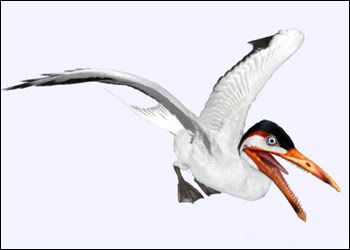
Get on my wall!
If you wanted a short version of this review it is this: Not as good as Kawabata's The Sound of the Mountain. I wanted to hear the unattainable sea in the shell like Julien Gracq talks about. Feel lonelier for one man than if you wiped everybody out all at the same time.
Does the holocene ever end? At least this review is! (The tidal brain waves keep going, though. Natural history is fascinating.)
P.s. I liked the R. Steel Jurassic drawings but couldn't find them in a half-assed google search for this review.
P.s.s. I'm not gonna be like that other mean reviewer who spoiled about the completely horrible thing Geiser does to his cat. That's the kind of person that the Holocene produces. My god! I'm gonna make sure the museum says that too.
I took the hologramscenic route. Stars hurtling towards the earth and lands somewhere in some planetary crust. It could be a three or a four star book. I don't know how much I like it yet so I think I'll just walk around a bit in a goodreads review (kind of like Geiser does in the book). I know I've written about this nature shit love before on goodreads but I can't remember where. Geiser's Alzheimers like symptoms are contagious, maybe. I would blame my digressions on him if I thought I could get away with it. I know I've written about my fantasy from my youth (er, 26) of running away to the Florida natural history museum at least twice, somewhere. (Maybe I'll go there when I'm done writing this review.) Tear out the photos from books and paste them to the walls. Dinosaurs and relating to the extinct. He had enough opposable thumbtacks for all the note cards and facts. Four walls as many facts. Maybe he was sniffing some post-it glue too. This is that kind of book.
Too bad this brain is going to go the way of libraries of Pompeii or Alexandria. Natural disasters strike. A natural death...
Geiser is a seventy two year old man. Who is counting? Tick, tock. His Swiss valley is the ice age of isolation and get off my lawn because the one I want to see died in the terrible trivium picking up particles of sand with an eye dropper and losing the big picture in the needle of the eye in the haystack that's one of the wars. What was I saying again? Man in the Holocene was written circa 1980, I think (or maybe it was translated from German into English then). It's as same old shit as listening to The Sisters of Mercy song "Lucretia, my reflection" in 2012. Or anything else that has its time stamped on it (and doesn't because people don't change). The '80s never ended. Genesis threw in the towel too soon. Everything would be different if they had made more animated videos. I would ask why we couldn't live a good decade over and over again but there was no such thing. So, the 1980s is the dark ages. Cataracts, and don't close my eyes too early, and they will steal all my money and then no one will see me across the river Styx. Frozen over, anyway, for sure. Tony Soprano's midas touch in reverse golden age. Silver tongue of talking shit age. Bronze turns your skin green age. I'd finally figure out how to use a semicolon there but it would turn my internet emoticon into a ;) wink. Gotta keep both eyes open. I might miss something as the life flashes before my eyes.
I liked a lot that there are pictures. Definitions like you would walk into a dictionary as you muffle through the meaning of life, one last time. 'Holocene' is a lot of the time like reading an encyclopedia. Is there anything else for Geiser to do but read? (He asked and I answered as if he were actually asking me. No. No! I don't think so.) The encyclopedia as barrage of information like all of the rain. It rains as much in 'Holocene' as it did in Twilight or before the ark. I thought maybe Geiser would stop pontificating about religion and gather up all of his ripped out pictures of extinct animals and rescue them one more time for the apocalypse. If he had saved them, maybe, did more than recite. I thought when he threw the salamander from the bathroom into the fire that he would feed it. No.
What it was missing was the feeling of running away and reaching that favorite spot in the natural history museum (for me it is the oceanic ridge and the animals). What was missing also made it great because you wouldn't be lost if there was somewhere you wanted to go.
It was like being already dead. Too lost in the forest. He says he doesn't want anyone to come get him. He tells himself that no one knows where Geiser is. The reason why I probably don't read encyclopedias as much as I used to is (besides that I won't remember any of it anyway) that you can stamp a card on it. Holocenic age. He is a man in the holocene. A man of. It's like if you were in the womb with another baby and you crane your necks over the choking umbilical cord and confess that you don't know if you want to live. You don't know if you especially don't want to live either. I know what's out there. They've been playing me these shitty Now that's what I call pop music! volumes and it's like the sleek production skills of the '80s never left us. It's a kind of haunting feeling but it isn't as much of a moving one as it could be, if you didn't know where you were going. So I know what the holocene looks like sort of but it has to be a lot bigger than this. It kind of goes on forever like an ocean you can't see the other end. Or maybe it's just a lake. (Geiser's mom probably spit him out in a geyser.)
It put me in a talking too much mood instead of being in a lonely forest somewhere. Maybe it's like his onslaught of information was like talking too much in the head when you had nothing to say...
Get on my wall!
If you wanted a short version of this review it is this: Not as good as Kawabata's The Sound of the Mountain. I wanted to hear the unattainable sea in the shell like Julien Gracq talks about. Feel lonelier for one man than if you wiped everybody out all at the same time.
Does the holocene ever end? At least this review is! (The tidal brain waves keep going, though. Natural history is fascinating.)
P.s. I liked the R. Steel Jurassic drawings but couldn't find them in a half-assed google search for this review.
P.s.s. I'm not gonna be like that other mean reviewer who spoiled about the completely horrible thing Geiser does to his cat. That's the kind of person that the Holocene produces. My god! I'm gonna make sure the museum says that too.

January 8, 2013
Oh, what a brief and fleeting moment we have to be alive. What tiny insignificant blips on the radar we all are.
Our minds will eventually erode. The way ecosystems came and went. The way lifeforms came into existence, flourished, died out...so too will we.
I have never read a book that captured the disorientation, isolation and tragedy of old age in such an unsentimental and yet obsessive and moving way. I read it in one sitting and felt as claustrophobic and lonely as the character did alone in his cabin with the rain and the thunder and the decaying world outside mirroring beautifully and chillingly the slow descent going on within.
Wonderfully human.
Our minds will eventually erode. The way ecosystems came and went. The way lifeforms came into existence, flourished, died out...so too will we.
I have never read a book that captured the disorientation, isolation and tragedy of old age in such an unsentimental and yet obsessive and moving way. I read it in one sitting and felt as claustrophobic and lonely as the character did alone in his cabin with the rain and the thunder and the decaying world outside mirroring beautifully and chillingly the slow descent going on within.
Wonderfully human.

December 23, 2024
یک رمان تجربی با فرمی غریب، کلاژی تکهپاره و ازهمگسیخته در فضایی آخرالزمانی و سرد و تاریک دربارهی پیرمردی که حافظهاش به زوال رفته و هراسِ از دستدادنِ دانشی که احتمالا مهمترین داراییش است رهایش نمیکند. "بدون حافظه دانشی وجود ندارد." و همچنین دربارهی موقعیت ناپایدار بشر فانی در برابر طبیعت نامیرا و جاودان، دربارهی انقراض گونههای مختلف جانوری و بازگشتشان به چرخه حیات، دربارهی زنبورها و مورچهها و شاهبلوطها و پدیدههایی که کمتر مورد توجه هستند، دربارهی اسکاتولوژی(فرجامشناسی) و سرنوشت نهایی بشر پس از پایان جهان و دربارهی انسان، خود انسان، که هر چقدر هم دانش به کمکش آید نمیتواند آفرینش بدون آفریننده را بپذیرد. "انسان در هولوسِن پدیدار شد."

January 11, 2015
I am a Man in the Holocene.
Geologic epoch. Mankind flourishes in the Holocene.
My head feels strange.
I am a Man in the Holocene.
History has its way with me. It spits me out and brings me forth.
These notes help. Freshly taped to wall.
Geiser is my name. Geiser is my name. Geiser. Name.
I miss her.
I am a Man in the Hollow Cene.
I do what I can. The rain is flowing over the hills and valleys.
The rain falls, eroding away my mind. My mind is all I have.
I am a Man Holocene.
It’s wet. I see rain.
I am a Man.
It’s dark now.
I miss her.
I am.
Geologic epoch. Mankind flourishes in the Holocene.
My head feels strange.
I am a Man in the Holocene.
History has its way with me. It spits me out and brings me forth.
These notes help. Freshly taped to wall.
Geiser is my name. Geiser is my name. Geiser. Name.
I miss her.
I am a Man in the Hollow Cene.
I do what I can. The rain is flowing over the hills and valleys.
The rain falls, eroding away my mind. My mind is all I have.
I am a Man Holocene.
It’s wet. I see rain.
I am a Man.
It’s dark now.
I miss her.
I am.
December 16, 2024
In vielerlei Hinsicht eine wunderbare, interessante, beieindruckende und sehr lesenswerte Parabel.
Herr Geiser, ein einsamer Witwer lebt in einer Gemeinde in Tessin. Es will nicht aufhören zu regnen. Umgeben von Post-Its schult er sein Gedächtnis.
Wir erfahren vieles über Zeitepochen, Mathematik, Dinosaurier, Gedächnisschwäche und auch über Herrn Geiser.
Manche seiner gesammelten Artikel sind in Altdeutsch oder so klein geschrieben, dass das Lesen für mich eine kleine Herausforderung darstellte.
Bei Regen und Nebel wagt Herr Geiser noch einmal eine Wanderung, er erinnert sich an seinen Bruder, wie heißen nochmal die Enkelkinder? Herr Geiser liegt auf den Küchenboden, ein Auge ist gelähmt oder vielleicht sogar die ganze Körperhälfte. Herr Geiser erinnert sich nicht, wie er da hin kam.
Es geht um Zeit, das Leben, die Natur, die eigene Bedeutungslosikeit, und auch um den Tod.
Tolle Rezensionen, denen ich nichts mehr beifügen oder die ich nicht wiederholen möchte von @Alexander Camelle und @Anna Carina
Herr Geiser, ein einsamer Witwer lebt in einer Gemeinde in Tessin. Es will nicht aufhören zu regnen. Umgeben von Post-Its schult er sein Gedächtnis.
Wir erfahren vieles über Zeitepochen, Mathematik, Dinosaurier, Gedächnisschwäche und auch über Herrn Geiser.
Manche seiner gesammelten Artikel sind in Altdeutsch oder so klein geschrieben, dass das Lesen für mich eine kleine Herausforderung darstellte.
Bei Regen und Nebel wagt Herr Geiser noch einmal eine Wanderung, er erinnert sich an seinen Bruder, wie heißen nochmal die Enkelkinder? Herr Geiser liegt auf den Küchenboden, ein Auge ist gelähmt oder vielleicht sogar die ganze Körperhälfte. Herr Geiser erinnert sich nicht, wie er da hin kam.
Es geht um Zeit, das Leben, die Natur, die eigene Bedeutungslosikeit, und auch um den Tod.
Tolle Rezensionen, denen ich nichts mehr beifügen oder die ich nicht wiederholen möchte von @Alexander Camelle und @Anna Carina

March 3, 2021
სამწუხაროდ, ძალიან დამჩემდა წიგნის კითხვის პროცესის გაწელვა მისი ზომის მიუხედავად. ამ შემთხვევაში ამას მნიშვნელობა არ აქვს, ეს ტექსტი მაინც აუვილებლად აგავსებს მოზღვავებული სიმარტოვის განცდით.
February 11, 2025
Lies sich flüssig und schnell lesen. Kurze Sätze, verdichteter Stil.
Das Leben von Geiser bzw. seine letzten Tage, während der es unaufhörlich regnet in den Bergen, bilden den konkreten Vordergrund, während parallel die gesamte Erd- und Menschheitsgeschichte skizziert wird.
Das Leben von Geiser bzw. seine letzten Tage, während der es unaufhörlich regnet in den Bergen, bilden den konkreten Vordergrund, während parallel die gesamte Erd- und Menschheitsgeschichte skizziert wird.

December 11, 2024
beş yıldız olmayabilir, size bağlı ve çok da önemli değil. ben bir hafta önce bitirdim seksen sayfalık bu kitabı. bitirip kaldırdım ama can sıkıcı biçimde kitap beni bırakmadı. arka kapakta yazdığı üzere bir başyapıt olduğu için mi sadece, emin değilim. beni yakalamasının kişisel sebepleri de vardır. onlardan bahsetmeyeceğim. ama yakalama biçimini, nasıl yakaladığını kayda değer buluyorum.
kitap en iyi açılış cümleleri türünden listelere girebilecek bir cümleyle başlıyor. sonra inanılması güç bir saflıkta, berraklıkta cümlelerle akıyor. anlatması zor. sadeliğin gücü diye açıklamak hafiflik olur. birkaç kelimeden oluşan ve bir paragraf oluşturan, zaten tam anlamıyla da paragraf olan cümleler. örnekler yazayım:
-fırtınasız ve sağanaksız bir gece bile yok.
-bellek olmazsa bilgi de olmaz.
-bugün hiçbir köpek havlamıyor.
-insan her yerde yaşlanır.
-demek cumartesi.
-erezyon yavaş işleyen bir süreçtir.
-insan amatör olarak kalır.
-evin içinde ayak sesleri, kendininkiler.
-kestane ağaçlarının çoğu kanserlidir.
böyle cümlelerle hem dramatik yapısı sağlam bir öykü kuruyor yazar hem de derinlikli düşüncesi, felsefesi olan bir metin ortaya koyuyor. mesele varoluş meselesi, olabilecek en karmaşık mesele. ama bu berrak cümlelerle sanki kolayca çözülüyor. öyle ki, böyle cümlelerle konuşulabileceğini, yazılabileceğini ve öyle de yapmak gerektiğini, öyle yapılırsa her şeyin aydınlanabileceğini düşünüyorsunuz.
ben düşünüyorum. başa dönmüş olayım.
hafızasını kaybetmekte olan kahramanımız bir mücadele vermektedir. hem kendi içinde, hem sert, acımasız, felaketlerle dolu bir doğanın içinde. önce doğa karşısında kendi zayıflığını görür, sonra doğanın zayıflığını. hafızası onu terk edecektir, kimliği silinecektir, o zaman doğa da onun için sona erecektir. sonra, ondan sonra kalan doğa da. herkesten sonra kalan doğa da. her şey de.
bitecektir.
kitap en iyi açılış cümleleri türünden listelere girebilecek bir cümleyle başlıyor. sonra inanılması güç bir saflıkta, berraklıkta cümlelerle akıyor. anlatması zor. sadeliğin gücü diye açıklamak hafiflik olur. birkaç kelimeden oluşan ve bir paragraf oluşturan, zaten tam anlamıyla da paragraf olan cümleler. örnekler yazayım:
-fırtınasız ve sağanaksız bir gece bile yok.
-bellek olmazsa bilgi de olmaz.
-bugün hiçbir köpek havlamıyor.
-insan her yerde yaşlanır.
-demek cumartesi.
-erezyon yavaş işleyen bir süreçtir.
-insan amatör olarak kalır.
-evin içinde ayak sesleri, kendininkiler.
-kestane ağaçlarının çoğu kanserlidir.
böyle cümlelerle hem dramatik yapısı sağlam bir öykü kuruyor yazar hem de derinlikli düşüncesi, felsefesi olan bir metin ortaya koyuyor. mesele varoluş meselesi, olabilecek en karmaşık mesele. ama bu berrak cümlelerle sanki kolayca çözülüyor. öyle ki, böyle cümlelerle konuşulabileceğini, yazılabileceğini ve öyle de yapmak gerektiğini, öyle yapılırsa her şeyin aydınlanabileceğini düşünüyorsunuz.
ben düşünüyorum. başa dönmüş olayım.
hafızasını kaybetmekte olan kahramanımız bir mücadele vermektedir. hem kendi içinde, hem sert, acımasız, felaketlerle dolu bir doğanın içinde. önce doğa karşısında kendi zayıflığını görür, sonra doğanın zayıflığını. hafızası onu terk edecektir, kimliği silinecektir, o zaman doğa da onun için sona erecektir. sonra, ondan sonra kalan doğa da. herkesten sonra kalan doğa da. her şey de.
bitecektir.

August 7, 2023
An older man slowly losing his mental faculties lives alone in Switzerland and is obsessed with dinosaurs, the 16 samples of thunder and the constant rain in his little village. Geiser, the main and only character concerned about climate change, the ice age and apocalyptic endings. To help him remember what he has read he tears pages from encyclopedias and thumb tacks them on the walls of his house.
It’s a novella that is best read slowly. It’s a bit sad to witness Geiser losing it but I thoroughly got lost in the idea of old age and dementia. Something I hope and pray never happens to this brain!
I’ll be reading this book again one day because it’s that excellent. And I’ll be looking for more from Max Frisch! Read it!
It’s a novella that is best read slowly. It’s a bit sad to witness Geiser losing it but I thoroughly got lost in the idea of old age and dementia. Something I hope and pray never happens to this brain!
I’ll be reading this book again one day because it’s that excellent. And I’ll be looking for more from Max Frisch! Read it!

December 21, 2024
In questi giorni i romanzi non funzionano, vi si tratta di persone nel loro rapporto con se stesse e con gli altri, di padri e madri e figlie rispettivamente figli e amanti ecc., di anime, principalmente infelici, e di società ecc., come se il terreno per tutto ciò fosse garantito, la terra una volta per sempre terra, l’altezza del livello del mare regolata una volta per sempre. (p. 8)
Il signor Geiser si ritrova isolato in casa, nel Canton Ticino, in seguito a un temporale che sembra non voler finire. Lo scroscio della pioggia ti accompagna durante la lettura, un senso di impotenza di fronte agli eventi meteorologici, o forse dovremmo dire climatici, estremi. Sembra che tutta la valle stia per franare. E il signor Geiser cerca di aggrapparsi a quelle certezze per lui costituite da nozioni e definizioni, perché “il brutto sarebbe la perdita di memoria”. Quel che il signor Geiser non sa è che propria la memoria lo sta abbandonando, piano piano, impercettibilmente. Un settantaquattrenne alle prese con formule matematiche, immagini illustrate tagliate dalle pagine di dizionari e incollate al muro per non dimenticarle. Decide persino di fare un’escursione che non va come se lo aspettava. Ma il signor Geiser sa che qualcosa sta cambiando, che le estati sono più torride e secche e la pioggia rischia di far crollare i pendii. Qualsiasi cosa per lui costituisce un ricordo o l’innesco per cercarla sul dizionario, per conservarla nella memoria. È un personaggio che commuove perché solitario e pagina dopo pagina la sua memoria peggiora mentre lui non se ne rende conto. Ma la prosa non è scorrevole, ti perdi tra i pensieri sconnessi del signor Geiser e le sue azioni. Purtroppo, non mi ha tenuta incollata e ho fatto fatica a finirlo.
Il signor Geiser si ritrova isolato in casa, nel Canton Ticino, in seguito a un temporale che sembra non voler finire. Lo scroscio della pioggia ti accompagna durante la lettura, un senso di impotenza di fronte agli eventi meteorologici, o forse dovremmo dire climatici, estremi. Sembra che tutta la valle stia per franare. E il signor Geiser cerca di aggrapparsi a quelle certezze per lui costituite da nozioni e definizioni, perché “il brutto sarebbe la perdita di memoria”. Quel che il signor Geiser non sa è che propria la memoria lo sta abbandonando, piano piano, impercettibilmente. Un settantaquattrenne alle prese con formule matematiche, immagini illustrate tagliate dalle pagine di dizionari e incollate al muro per non dimenticarle. Decide persino di fare un’escursione che non va come se lo aspettava. Ma il signor Geiser sa che qualcosa sta cambiando, che le estati sono più torride e secche e la pioggia rischia di far crollare i pendii. Qualsiasi cosa per lui costituisce un ricordo o l’innesco per cercarla sul dizionario, per conservarla nella memoria. È un personaggio che commuove perché solitario e pagina dopo pagina la sua memoria peggiora mentre lui non se ne rende conto. Ma la prosa non è scorrevole, ti perdi tra i pensieri sconnessi del signor Geiser e le sue azioni. Purtroppo, non mi ha tenuta incollata e ho fatto fatica a finirlo.

December 14, 2010
Bit sick, don't seem to have the wherewithall to write about this, so I thought I'd let Frisch do that. A few extracts from a Paris Review interview, the entirety of which can be found here: http://www.theparisreview.org/intervi...
INTERVIEWER
When did you first decide to create the flat, cold, “affectless” hero we have been discussing?
FRISCH
Hard to know. I think I made it not all at once, but slowly; gradually it felt more and more comfortable. Just now I think—I don’t know if it’s right or wrong—that if you describe emotions, or the hero describes his emotions, as in the work of Dostoyevsky, for instance, or Melville, or other great writers, the danger that you will fall into the conventional is very great. It was Goethe who told us how we feel if we are in love with a girl—there are forms for that. But suppose you try to establish a situation, a movement, to show gestures and faces, and not talk about it. This is closer to film than old literature was. We have learned a lot from movies about what can be expressed without words. I would be proud or happy if a reader could feel the essential situation of, say, the man in Man in the Holocene, to feel how it is to be wet in your pants, how it’s getting colder, the feeling of growing tired, of melancholy or despair. That you get without using all those words. That you feel sensually and see with your eyes. I want to give that, or I try, anyway.
INTERVIEWER
Do you have a kind of control that is not within your conscious grasp?
FRISCH
Yes, I have this control that tells me when to cut something, improve it, or give it up, often without knowing why. But just how much of this capacity you have is important in determining, I think, whether you’re a writer or not. If you criticize what you’re doing too early you’ll never write the first line. Then, if you don’t have this capacity at all, that’s also a danger. Before I published Man in the Holocene, it was not a bad book, but I had an uncomfortable feeling about it. That’s criticism. Then after I wrote a second draft I had the feeling, “Now it works, now it’s okay.” And afterwards, again this shock that it didn’t work. If I hadn’t had that feeling it would have been published and I would never have reached the point I could reach. You’re awfully dependent on that critical sense. When I was young, around thirty, it took me much more time to get the feeling of a scene, to know whether it worked or not, and to be able to give up on it if it didn’t. I would work for half a year sometimes on something that didn’t work—I couldn’t give up.
INTERVIEWER
The opening sentence of Man in the Holocene reads, “It should be possible to build a pagoda of crispbread, to think of nothing, to hear no thunder, no rain . . . Perhaps no pagoda will emerge, but the night will pass.” One accepts it upon first reading. Then suddenly, it strikes one, “What is this man thinking of?” It’s a remarkable image, a weird image. How did you come upon it?
FRISCH
I think you’re right; reading it for the first time it’s a little unusual, a little crazy. A person with strange problems, obviously; we feel he’s doing nonsense, he’s bored, and we understand he has to wait because of the rain. Later when you know him it acquires a different meaning even if one doesn’t go back to read the book again, but simply remembers the sentence. A pagoda is a full, complete picture of the world. That’s what he tries to have because he’s afraid that the world will get lost. And what he’s doing with this crispbread, of course, is just the opposite. So it’s a dream that the world should be perfect, that we should be able to view it as a whole in its perfect, clear beauty. I started only the last version of the book with that sentence. Before then I had it later on, on the second page. It was important to have it for the beginning; otherwise you get the description of the painful weather, so what? Only this pagoda sentence brings it immediately onto another level. There must be something else. That’s, of course, what you call craft, isn’t it?
………….
With the parable you think—you hope—you can get a complicated reality. Nowadays I doubt that too, because the parable always has the tendency to prove something, to teach something, and I found out that I don’t have to teach. I just want to show the thing—and so I have stopped using parables.
…………….
Literature should show possibilities and avoid the idea that what happened had to happen. I don’t believe this aphorism.
FRISCH
Yes, I do. I always try, but I never succeed. Between us, I would say my favorite book, at this time, is Man in the Holocene.
A few months after our interview, I called Mr. Frisch to see if he had any final corrections or comments to add. “Yes,” he said. “Tell them that for just a brief moment I flew. Only for a moment—to the kitchen and back—but that you saw me fly.”
INTERVIEWER
When did you first decide to create the flat, cold, “affectless” hero we have been discussing?
FRISCH
Hard to know. I think I made it not all at once, but slowly; gradually it felt more and more comfortable. Just now I think—I don’t know if it’s right or wrong—that if you describe emotions, or the hero describes his emotions, as in the work of Dostoyevsky, for instance, or Melville, or other great writers, the danger that you will fall into the conventional is very great. It was Goethe who told us how we feel if we are in love with a girl—there are forms for that. But suppose you try to establish a situation, a movement, to show gestures and faces, and not talk about it. This is closer to film than old literature was. We have learned a lot from movies about what can be expressed without words. I would be proud or happy if a reader could feel the essential situation of, say, the man in Man in the Holocene, to feel how it is to be wet in your pants, how it’s getting colder, the feeling of growing tired, of melancholy or despair. That you get without using all those words. That you feel sensually and see with your eyes. I want to give that, or I try, anyway.
INTERVIEWER
Do you have a kind of control that is not within your conscious grasp?
FRISCH
Yes, I have this control that tells me when to cut something, improve it, or give it up, often without knowing why. But just how much of this capacity you have is important in determining, I think, whether you’re a writer or not. If you criticize what you’re doing too early you’ll never write the first line. Then, if you don’t have this capacity at all, that’s also a danger. Before I published Man in the Holocene, it was not a bad book, but I had an uncomfortable feeling about it. That’s criticism. Then after I wrote a second draft I had the feeling, “Now it works, now it’s okay.” And afterwards, again this shock that it didn’t work. If I hadn’t had that feeling it would have been published and I would never have reached the point I could reach. You’re awfully dependent on that critical sense. When I was young, around thirty, it took me much more time to get the feeling of a scene, to know whether it worked or not, and to be able to give up on it if it didn’t. I would work for half a year sometimes on something that didn’t work—I couldn’t give up.
INTERVIEWER
The opening sentence of Man in the Holocene reads, “It should be possible to build a pagoda of crispbread, to think of nothing, to hear no thunder, no rain . . . Perhaps no pagoda will emerge, but the night will pass.” One accepts it upon first reading. Then suddenly, it strikes one, “What is this man thinking of?” It’s a remarkable image, a weird image. How did you come upon it?
FRISCH
I think you’re right; reading it for the first time it’s a little unusual, a little crazy. A person with strange problems, obviously; we feel he’s doing nonsense, he’s bored, and we understand he has to wait because of the rain. Later when you know him it acquires a different meaning even if one doesn’t go back to read the book again, but simply remembers the sentence. A pagoda is a full, complete picture of the world. That’s what he tries to have because he’s afraid that the world will get lost. And what he’s doing with this crispbread, of course, is just the opposite. So it’s a dream that the world should be perfect, that we should be able to view it as a whole in its perfect, clear beauty. I started only the last version of the book with that sentence. Before then I had it later on, on the second page. It was important to have it for the beginning; otherwise you get the description of the painful weather, so what? Only this pagoda sentence brings it immediately onto another level. There must be something else. That’s, of course, what you call craft, isn’t it?
………….
With the parable you think—you hope—you can get a complicated reality. Nowadays I doubt that too, because the parable always has the tendency to prove something, to teach something, and I found out that I don’t have to teach. I just want to show the thing—and so I have stopped using parables.
…………….
Literature should show possibilities and avoid the idea that what happened had to happen. I don’t believe this aphorism.
FRISCH
Yes, I do. I always try, but I never succeed. Between us, I would say my favorite book, at this time, is Man in the Holocene.
A few months after our interview, I called Mr. Frisch to see if he had any final corrections or comments to add. “Yes,” he said. “Tell them that for just a brief moment I flew. Only for a moment—to the kitchen and back—but that you saw me fly.”

July 12, 2023
انسان در هولوسن پدیدار میشود
نوشته ماکس فریش
ترجمه زینب آرمند
.
آقای گایزر، مردی ۷۴ ساله است که در دهکدهای کوهستانی، در ارتفاعات آلپ و در منطقه ایتالیایی زبان سوئیس زندگی میکند؛ دهکده تیچینو.
او در ابتدای داستان درحال ساختن ساختمانی است با نانهای خشک! که هرکاری میکند طبقات آن استوار نمیماند و فرو میریزند. گویی از همین ابتدا با فروپاشی مواجهیم.
خود آقای گایزر با زوال عقل و فراموشیای که مدام در حال گسترش است دست و پنجه نرم میکند و از چشمان او جهان در حال فرسایش و نابودیست؛ بارانی سیل آسا در کل داستان فضا را خیس و مرطوب میکند، راهها به واسطه ریزشی که جاده را مسدود کرده بسته شده، و تمامی اهالی نگران دفن شدن در زیر سنگها و لایههای آبرفتی کوه هستند. حال مگر اهمیتی دارد؟ آقای گایزر همه چیز را فراموش میکند دنیا برایش همین لحظه است! از زمان حال راه گریزی ندارد.
چه فایدهای دارد اگر کسی نباشد که کتابها را بخواند؟ اگر دیگر توانِ خواندن نداشته باشیم، کتابها چه فایدهای برای ما دارند؟ اگر چیزی را که خواندهایم فراموش کنیم، مثل این نیست که اصلاً هیچ نخواندهایم؟
او عادت کرده که تکههای دانشنامه ۱۲ جلدی خود را بر روی دیوار بچسباند. همچو یک کلاژ دیواری. او دودستی به دانش چسبیده گویی که دانش میتواند به این زوال و فرسایش و نابودی آرام آرام کمکی کند. تمامی دیوار پر از نوشتههایی راجع به چندین نوع رعدوبرق، دورههای زمینشناسی، اطلاعاتی در مورد شکل گیری زمین و تاریخ تکامل و داییناسورها و بخشهای از سفر پیدایش کتاب مقدس است.
«هرازگاهی آقای گایزر از خودش میپرسد که واقعا میخواهد چه بداند؟ در این همه دانش دنبال چیست؟»
او گشتوگذار میکند(با واهمه گم شدن، و دلیل گشت و گذار در ذهنش نمیماند.) و در این گشتو گذار با محدودیتهایی که دارد دوباره به کلبهاش بازمیگردد، از همه فاصله میگیرد، در تنهایی خود حبس میشود؛ در تمامی داستان نوعی اضطرار حس میشود. او میخواهد که بداند، هرچند که فراموش میکند و برایش بیفایده است.
هولوسن نام دور دوم از دوره کواترنری است که ما در همین دور زندگی میکنیم. هولوسن از حدود ۱۱۷۰۰ سال پیش شروع شده و هماکنون نیز ادامه دارد. این دوره پس از عصر یخبندان آغاز شده است. در ذهن رو به زوال آقای گایزر، که تمامی دورههای ۵میلیارد ساله کره زمین را مرور و اطلاعت آنها را از روی دیوار خود میخواند، بشر در همین هولوسن ظهور کرده.
این مرد فرتوت با زوال عقل، در این تکهپارههای دانش، در این داستان پر از فرسودگی، نماد چیست؟
انسان در هولوسن پدیدار میشود اثری است از ماکس فریش، نمایشنامهنویس، داستاننویس و خاطرهنویس سوئیسی که بیشتر دربارهی کشمکش انسان برای حفظ هویت نوشته است، آن هم در دنیایی که ارزشها، ایدئولوژیها و تکنولوژیهایش هر روز در حال تغییر است. فریش را میتوان یکی از تأثیرگذارترین نویسندههای آلمانیزبان قرن بیستم دانست. آثار او به بیش از ۴۷ زبان ترجمه شده و جوایز بسیاری دریافت کرده است.
او این رمان را بهترین اثر خود میدانست و میراث ادبی خود به حساب میآورد. در این داستان فریش بدون تکگوییهای پیچیده و طولانی، و بدون هذیانهای فکری، زوال را به تصویر میکشد؛ زوال در بیرون و درون مردی که همسرش را از دست داده و تنها زندگی میکند. نابودی بشری که در مقایسه با تاریخ پیدایش زمین طفلی نوپاست و تنها دستآوردش تکههایی کاغذ دسته بندی شده دانشنامه است.
پی نوشت: در نقدی نوشته شده بود که این اثر پستمدرن است، به دلایلی تکنیکی بیشتر مدرن است تا پستمدرن.
در پناه خرد
نوشته ماکس فریش
ترجمه زینب آرمند
.
آقای گایزر، مردی ۷۴ ساله است که در دهکدهای کوهستانی، در ارتفاعات آلپ و در منطقه ایتالیایی زبان سوئیس زندگی میکند؛ دهکده تیچینو.
او در ابتدای داستان درحال ساختن ساختمانی است با نانهای خشک! که هرکاری میکند طبقات آن استوار نمیماند و فرو میریزند. گویی از همین ابتدا با فروپاشی مواجهیم.
خود آقای گایزر با زوال عقل و فراموشیای که مدام در حال گسترش است دست و پنجه نرم میکند و از چشمان او جهان در حال فرسایش و نابودیست؛ بارانی سیل آسا در کل داستان فضا را خیس و مرطوب میکند، راهها به واسطه ریزشی که جاده را مسدود کرده بسته شده، و تمامی اهالی نگران دفن شدن در زیر سنگها و لایههای آبرفتی کوه هستند. حال مگر اهمیتی دارد؟ آقای گایزر همه چیز را فراموش میکند دنیا برایش همین لحظه است! از زمان حال راه گریزی ندارد.
چه فایدهای دارد اگر کسی نباشد که کتابها را بخواند؟ اگر دیگر توانِ خواندن نداشته باشیم، کتابها چه فایدهای برای ما دارند؟ اگر چیزی را که خواندهایم فراموش کنیم، مثل این نیست که اصلاً هیچ نخواندهایم؟
او عادت کرده که تکههای دانشنامه ۱۲ جلدی خود را بر روی دیوار بچسباند. همچو یک کلاژ دیواری. او دودستی به دانش چسبیده گویی که دانش میتواند به این زوال و فرسایش و نابودی آرام آرام کمکی کند. تمامی دیوار پر از نوشتههایی راجع به چندین نوع رعدوبرق، دورههای زمینشناسی، اطلاعاتی در مورد شکل گیری زمین و تاریخ تکامل و داییناسورها و بخشهای از سفر پیدایش کتاب مقدس است.
«هرازگاهی آقای گایزر از خودش میپرسد که واقعا میخواهد چه بداند؟ در این همه دانش دنبال چیست؟»
او گشتوگذار میکند(با واهمه گم شدن، و دلیل گشت و گذار در ذهنش نمیماند.) و در این گشتو گذار با محدودیتهایی که دارد دوباره به کلبهاش بازمیگردد، از همه فاصله میگیرد، در تنهایی خود حبس میشود؛ در تمامی داستان نوعی اضطرار حس میشود. او میخواهد که بداند، هرچند که فراموش میکند و برایش بیفایده است.
هولوسن نام دور دوم از دوره کواترنری است که ما در همین دور زندگی میکنیم. هولوسن از حدود ۱۱۷۰۰ سال پیش شروع شده و هماکنون نیز ادامه دارد. این دوره پس از عصر یخبندان آغاز شده است. در ذهن رو به زوال آقای گایزر، که تمامی دورههای ۵میلیارد ساله کره زمین را مرور و اطلاعت آنها را از روی دیوار خود میخواند، بشر در همین هولوسن ظهور کرده.
این مرد فرتوت با زوال عقل، در این تکهپارههای دانش، در این داستان پر از فرسودگی، نماد چیست؟
انسان در هولوسن پدیدار میشود اثری است از ماکس فریش، نمایشنامهنویس، داستاننویس و خاطرهنویس سوئیسی که بیشتر دربارهی کشمکش انسان برای حفظ هویت نوشته است، آن هم در دنیایی که ارزشها، ایدئولوژیها و تکنولوژیهایش هر روز در حال تغییر است. فریش را میتوان یکی از تأثیرگذارترین نویسندههای آلمانیزبان قرن بیستم دانست. آثار او به بیش از ۴۷ زبان ترجمه شده و جوایز بسیاری دریافت کرده است.
او این رمان را بهترین اثر خود میدانست و میراث ادبی خود به حساب میآورد. در این داستان فریش بدون تکگوییهای پیچیده و طولانی، و بدون هذیانهای فکری، زوال را به تصویر میکشد؛ زوال در بیرون و درون مردی که همسرش را از دست داده و تنها زندگی میکند. نابودی بشری که در مقایسه با تاریخ پیدایش زمین طفلی نوپاست و تنها دستآوردش تکههایی کاغذ دسته بندی شده دانشنامه است.
پی نوشت: در نقدی نوشته شده بود که این اثر پستمدرن است، به دلایلی تکنیکی بیشتر مدرن است تا پستمدرن.
در پناه خرد

May 3, 2011
basically there are two things i want in fiction at this point in my life and that's a] a miserable european male who b] confronts the absolute terror/absurdity/meaninglessness of existence/the universe/everything in the form of some sort of inscrutable edifice [can be literal edifice, physical phenomenon, artwork, w/e, i don't care]. thankfully there are like a million zillion books that fall into my relatively narrow aesthetic+narrative comfort zone. bonus points if it's all internal monologue. this particular novel also has pictures of dinosaurs so it's a cut above. good jobeb frisch.

November 11, 2019
ამ წიგნში ხშირად წვიმს და ქუხს, მაგრამ ყველაზე მეტად მაინც მარტოობა ხმაურობს. ბატონი გაიზერის დაჟინებული სწრაფვა კი, შეაგროვოს დასავიწყებლად განწირული საკაცობრიო ცოდნა, გახვედრებს, რომ ახალ ეპოქაში ინფორმირებულად ყოფნა, წვდომა სამყაროზე, გონების გამოკვება ზოგჯერ უფრო მნიშვნელოვანი ხდება, ვიდრე ფიზიკური საკვები - ელექტროენერგიის არქონის გამო რომ ფუჭდება მაცივარში.
„ადამიანი გაჩნდა ჰოლოცენში“ თხრობის ფორმით გამორჩეული ნაწარმოებია. აქ აღწერილი გარემო - უწყვეტი წვიმით, გაწყვეტილი ელექტროკავშირითა თუ უფუნქციოდ დარჩენილი მოქმედი ფოსტის შენობით - ერთი შეხედვით, ჩვენი ყოველდღიურობისაგან არაფრით განსხვავდება. თუმცა, მაინც გეფიქრება, რომ შესაძლოა სულაც სამყაროს ბოლო დღეების ქრონიკას ეცნობი იმ ერთი ადამიანის თვალთახედვით, რომელსაც კაცობრიობის შავი ყუთი შექმნას სურს, რადგან ახალი კიდობნის აშენების ენერგია აღარ დარჩა
„ადამიანი გაჩნდა ჰოლოცენში“ თხრობის ფორმით გამორჩეული ნაწარმოებია. აქ აღწერილი გარემო - უწყვეტი წვიმით, გაწყვეტილი ელექტროკავშირითა თუ უფუნქციოდ დარჩენილი მოქმედი ფოსტის შენობით - ერთი შეხედვით, ჩვენი ყოველდღიურობისაგან არაფრით განსხვავდება. თუმცა, მაინც გეფიქრება, რომ შესაძლოა სულაც სამყაროს ბოლო დღეების ქრონიკას ეცნობი იმ ერთი ადამიანის თვალთახედვით, რომელსაც კაცობრიობის შავი ყუთი შექმნას სურს, რადგან ახალი კიდობნის აშენების ენერგია აღარ დარჩა

September 17, 2019
Reading this again
a landslide blocks off a mountain village in the Swiss Alps. The power is out, no one can get in and out. An old man counts his food stocks, reads the encyclopaedia, gardens, redistributes his defrosting meats among the village...
looks like the right book to read while staring at a period of quarantine.
Followed by Thomas Mann, The Magic Mountain, The Decameron - the original epidemic novel..
add your own...
a landslide blocks off a mountain village in the Swiss Alps. The power is out, no one can get in and out. An old man counts his food stocks, reads the encyclopaedia, gardens, redistributes his defrosting meats among the village...
looks like the right book to read while staring at a period of quarantine.
Followed by Thomas Mann, The Magic Mountain, The Decameron - the original epidemic novel..
add your own...

July 7, 2007
Old age is a motherfucker.

February 22, 2025
A 74-year-old man named Geiser lives in a valley that is currently experiencing torrential rains. There is some concern that a landslide might bury the village so he decides to pack some things, leave the house, and follow the path through the woods to safety; it doesn't take long, however, for him to abandon this idea and return home. His memory and physical health are not the best so he removes pages from encyclopedias and the bible and posts them on the walls to remind himself of what he's thinking about (these portions of the encyclopedia appear in the book with pictures).
Having just read a book that purports to explore the existential crisis of man (The Evenings) but which, in my opinion, failed, I would have to say that this book (covering the same themes) is an example of a book that actually succeeds. Geiser ruminates on the flood myth in the bible, on the encyclopedia entries about the arrival and demise of dinosaurs, on man's trivial appearance during the Holocene. The erosion of the outside world, falling away and changing shape, represents his own personal erosion as well as that of mankind's. It's a very succinct method of looking at the insignificant ants we are (actual ants are also present in the book) and how quickly life can be formed and destroyed in equal measure. But it's hard for the human mind to grasp the massive time scales involved and so we struggle to see how we don't feature prominently in the life of this planet. Surely, we are the stars of this particular show, its greatest achievement.
Frisch barely narrates this thing, he gives a very stark, even aloof third person narration interspersed with Geiser's thoughts, and encyclopedia entries which work as a way of fleshing out Geiser into a person with a full, rich life, this all despite not getting much in the way of details (probably his memories of his brother Klaus gets the most attention). Like I said, it's very effective and does a good job of exploring the existential nightmare of a transient life in a way that other books often struggle to achieve. It's very simple but it gets to the point. Everything erodes, everything changes.
That all being said, the book is rather lightweight and you can essentially read it in one sitting so I wouldn't call it a masterpiece or anything. It's a solid entry into the existential canon, a lonely old man coming to terms with his smallness in the grand scheme of things. And the ending is rather brilliant, one last encyclopedia entry which Geiser presumably looked at before we, the readers, got to see it. Definitely worth a look.
Having just read a book that purports to explore the existential crisis of man (The Evenings) but which, in my opinion, failed, I would have to say that this book (covering the same themes) is an example of a book that actually succeeds. Geiser ruminates on the flood myth in the bible, on the encyclopedia entries about the arrival and demise of dinosaurs, on man's trivial appearance during the Holocene. The erosion of the outside world, falling away and changing shape, represents his own personal erosion as well as that of mankind's. It's a very succinct method of looking at the insignificant ants we are (actual ants are also present in the book) and how quickly life can be formed and destroyed in equal measure. But it's hard for the human mind to grasp the massive time scales involved and so we struggle to see how we don't feature prominently in the life of this planet. Surely, we are the stars of this particular show, its greatest achievement.
Frisch barely narrates this thing, he gives a very stark, even aloof third person narration interspersed with Geiser's thoughts, and encyclopedia entries which work as a way of fleshing out Geiser into a person with a full, rich life, this all despite not getting much in the way of details (probably his memories of his brother Klaus gets the most attention). Like I said, it's very effective and does a good job of exploring the existential nightmare of a transient life in a way that other books often struggle to achieve. It's very simple but it gets to the point. Everything erodes, everything changes.
That all being said, the book is rather lightweight and you can essentially read it in one sitting so I wouldn't call it a masterpiece or anything. It's a solid entry into the existential canon, a lonely old man coming to terms with his smallness in the grand scheme of things. And the ending is rather brilliant, one last encyclopedia entry which Geiser presumably looked at before we, the readers, got to see it. Definitely worth a look.

May 8, 2024
Immediate thought. Short and strange. Written in 1979. German-Swiss. A novelette that gives you no footholds to get a purchase and progress at the beginning; put it down - pick it up - put it down - pick it up; then gradually it eases till you have the holds in your grasp.
I got here through Homo Faber, a journey novel that seems like film noir. This does not. If anything it seemed like another potential Wittgenstein's Mistress. But even that is way off the mark. This is a book for ageing, or should that be 'for the ageing'; for those with time on their hands. All these motettes are snatches of an internal monologue. As such there is only one character - Geiser. Reminiscing, but not reminiscing. Cut off in his not-cut-off-but-merely-secluded Italian-Swiss valley. Widowed. Living alone (bar the cat). The seemingly endless rain. Landslips in over-sodden ground. The slickensides and fault planes of slope failure lubricated by the endless penetrating rain making even solid geology appear liquid. All metaphors for his own ageing process.
Geiser is alone. Now marooned by the landslips fallen down the steep faces of the valley, he has enough food in the house not to worry, then the power goes. Becoming erratic. Power and host. A napper choc-full in the house of thoughts diverse that pass through the cinematic wall of the mind when there is space for them to flow. But this time, I shall look them up in the encyclopedia, cut them out and stick them around the walls like aides memoires - the ephemera of an ageing cerebral data dump. How fear narrows the cutting edge of being to the icy accentuated necessity of decision. Getting gripped on the Matterhorn when off-route on the descent (been there, done that, the marked fear of existence and possible death all within your command as is the opposite, of fighting and living, as long as you keep it together and do the right thing and circumstances do not inveigh against you, that utter hyperreal sharpness of life). Like deciding to go for a walk in the rain - not just any walk but a severe walk (at your age, you fool, and particularly when no one knows where you are.... you could have been killed! You could have frozen to death! ANYTHING could have happened to you and nobody would have known) particularly given the rain and landslips, like proving to oneself that you can still do the business despite what they all think. And in any case they think of you as eccentric anyway! Eccentric - 1) unconventional and slightly strange. 2) not placed centrally. Not having a central axis.
But in truth we are ageing / have aged / will age further. This is not Chess with Bergman's Grim Reaper, that is still way over the hill to come... but just maybe it is the slippery slope at the top of the glacis of dementia. We all revert to becoming children again needing the care of loved ones we provided the care for many years ago. Love given / Love returned. The dinosaur. Fossilisation.
There is far more to this than meets the eye and head immediately. The perfect book for lockdown, or in my case, post-operative house-bound recuperation on crutches. Short. Initially hard to get to grips with (where the f*** is this going!!). Ultimately a statement on ageing, existence and ennui. Human.
I got here through Homo Faber, a journey novel that seems like film noir. This does not. If anything it seemed like another potential Wittgenstein's Mistress. But even that is way off the mark. This is a book for ageing, or should that be 'for the ageing'; for those with time on their hands. All these motettes are snatches of an internal monologue. As such there is only one character - Geiser. Reminiscing, but not reminiscing. Cut off in his not-cut-off-but-merely-secluded Italian-Swiss valley. Widowed. Living alone (bar the cat). The seemingly endless rain. Landslips in over-sodden ground. The slickensides and fault planes of slope failure lubricated by the endless penetrating rain making even solid geology appear liquid. All metaphors for his own ageing process.
Geiser is alone. Now marooned by the landslips fallen down the steep faces of the valley, he has enough food in the house not to worry, then the power goes. Becoming erratic. Power and host. A napper choc-full in the house of thoughts diverse that pass through the cinematic wall of the mind when there is space for them to flow. But this time, I shall look them up in the encyclopedia, cut them out and stick them around the walls like aides memoires - the ephemera of an ageing cerebral data dump. How fear narrows the cutting edge of being to the icy accentuated necessity of decision. Getting gripped on the Matterhorn when off-route on the descent (been there, done that, the marked fear of existence and possible death all within your command as is the opposite, of fighting and living, as long as you keep it together and do the right thing and circumstances do not inveigh against you, that utter hyperreal sharpness of life). Like deciding to go for a walk in the rain - not just any walk but a severe walk (at your age, you fool, and particularly when no one knows where you are.... you could have been killed! You could have frozen to death! ANYTHING could have happened to you and nobody would have known) particularly given the rain and landslips, like proving to oneself that you can still do the business despite what they all think. And in any case they think of you as eccentric anyway! Eccentric - 1) unconventional and slightly strange. 2) not placed centrally. Not having a central axis.
But in truth we are ageing / have aged / will age further. This is not Chess with Bergman's Grim Reaper, that is still way over the hill to come... but just maybe it is the slippery slope at the top of the glacis of dementia. We all revert to becoming children again needing the care of loved ones we provided the care for many years ago. Love given / Love returned. The dinosaur. Fossilisation.
There is far more to this than meets the eye and head immediately. The perfect book for lockdown, or in my case, post-operative house-bound recuperation on crutches. Short. Initially hard to get to grips with (where the f*** is this going!!). Ultimately a statement on ageing, existence and ennui. Human.

July 10, 2013
An unusual, 'experimental' quite short postmodernist novella, this book is strangely moving in its general conception, though hardly in its parts. It is the first specimen of Frisch I've read, and I have no idea whether (though I rather doubt it) it is representative or similar to Stiller or Homo Faber (which I plan to read soon).

September 18, 2021
Evoking the fractured consciousness of David Markson’s Wittgenstein’s Mistress, this one came across as blandly cryptic, flat on the sentence level, and ineffective in its use of collage. It’s a no from me.

February 11, 2020
4.5 stars. Video review https://www.youtube.com/watch?v=t7F5s...


February 17, 2018
This is the second novel in a row I read which deals with the loss of memory. This one deals with the 73 year old Geiser who lives in a small Swiss town, and is starting to suffer from dementia.
Even though it’s not a first person narrative, we see it more or less from his point of view. It is a short and fragmented book, which seems to fit the subect very well. I felt his battle with his memory very well. He is trying to figure out what knowledge he needs, what he should try to keep, and what he doesn’t need. And one can see it is a loosing battle.
At the same time Frisch is also dealing with the way mankind treats nature, and the consequences of that. A lot of it seems quite topical in today’s debate about climate change, and environmental issues in general. Just to be clear, Frisch isn’t preaching, he’s telling a story of one man’s struggle to keep his mind.
I think I can safely say that this is an odd, fragmented book, that uses a technique which I haven’t seen often. Things like inserting clips from encyclopedias into the narrative, clips that on the surface don’t have that much to do with the story, but still form a part of it. Quite fascinating method actually.
But I think it works mostly because it is a very well written story. Late in the book there is a story of Geiser who in his youth climbed a mountain, and it turned out to be quite hazardous journey. It’s just beautifully done. And the same applies to other nature descriptions.
Simply fascinating.
Even though it’s not a first person narrative, we see it more or less from his point of view. It is a short and fragmented book, which seems to fit the subect very well. I felt his battle with his memory very well. He is trying to figure out what knowledge he needs, what he should try to keep, and what he doesn’t need. And one can see it is a loosing battle.
At the same time Frisch is also dealing with the way mankind treats nature, and the consequences of that. A lot of it seems quite topical in today’s debate about climate change, and environmental issues in general. Just to be clear, Frisch isn’t preaching, he’s telling a story of one man’s struggle to keep his mind.
I think I can safely say that this is an odd, fragmented book, that uses a technique which I haven’t seen often. Things like inserting clips from encyclopedias into the narrative, clips that on the surface don’t have that much to do with the story, but still form a part of it. Quite fascinating method actually.
But I think it works mostly because it is a very well written story. Late in the book there is a story of Geiser who in his youth climbed a mountain, and it turned out to be quite hazardous journey. It’s just beautifully done. And the same applies to other nature descriptions.
Simply fascinating.
Displaying 1 - 30 of 238 reviews