Jump to ratings and reviews
Rate this book

The Occult Roots of Nazism : Secret Aryan Cults and Their Influence on Nazi Ideology

Rate this book
Over half a century after the defeat of the Third Reich the complexities of Nazi ideology are still being unravelled. This text is a serious attempt to identify these ideological origins. It demonstrates the way in which Nazism was influenced by powerful occult and millenarian sects that thrived in Germany and Austria at the turn of the century. Their ideas and symbols filtered through to nationalist-racist groups associated with the infant Nazi party and their fantasies were played out with terrifying consequences in the Third Auschwitz, Sobibor and Treblinka are the hellish museums of the Nazi apocalypse. This bizarre and fascinating story contains lessons we cannot afford to ignore.

304 pages, Paperback

First published January 1, 1982

162 people are currently reading
3144 people want to read

About the author

Nicholas Goodrick-Clarke

25 books91 followers
Nicholas Goodrick-Clarke, D.Phil. (St. Edmund Hall, Oxford; B.A., Bristol University) was Chair of Western Esotericism at University of Exeter and author of several books on esoteric traditions.

He is the author of several books on modern occultism and esotericism, and the history of its intersection with Nazi politics. His book, The Occult Roots of Nazism, has remained in print since its publication in 1985 and has been translated into 12 languages. He has also written on the occultist aspects of neo-Nazism in Black Sun: Aryan Cults, Esoteric Nazism and the Politics of Identity.

He was Professor of Western Esotericism and Director of the Centre for the Study of Esotericism (EXESESO) within the School of Humanities and Social Sciences at the University of Exeter in the United Kingdom. He lived in Southern England with his wife and sometime collaborator Clare.

Ratings & Reviews

What do you think?
Rate this book

Friends & Following

Create a free account to discover what your friends think of this book!

Community Reviews

5 stars
197 (28%)
4 stars
266 (38%)
3 stars
176 (25%)
2 stars
36 (5%)
1 star
16 (2%)
Displaying 1 - 30 of 75 reviews
Profile Image for John Anthony.
942 reviews166 followers
April 14, 2018
Contents:

Foreword
Introduction

PART 1: THE BACKGROUND
1. The Pan-German Vision
2. The Modern German Occult Revival 1880-1910

PART 2: THE ARIOSOPHISTS OF VIENNA

3. Guido von List
4. Wotanism and Germanic Theosophy
5. The Armanenschaft
6. The Secret Heritage
7. The German Millennium
8. Jorg Lans von Liebenfels and Theozoology
9. The Order of the New Templars

PART 3: ARIOSOPHY IN GERMANY

10. The Germanenorden
11. Rudolf von Sebottendorff and the Thule Society
12. The Holy Runes and the Edda Society
13. Herbert Reichstein and Ariosophy
14. Karl Maria Wiligut: The Private Magus of Heinrich Himmler
15. Ariosophy and Adolf Hitler

Appendices
Notes and References
Bibliography
Index
Acknowledgements


I hesitated before reading this book fearing it might be some wacky neo nazi treatise that tends to froth and then bore. I found it to be nothing of the sort. It was grounded, very factual, meticulously researched (too much detail for some I guess) and hugely interesting. For me it brilliantly put into European context the rise of Hitler and the Third Reich. Goodrick-Clarke’s conclusion is fairly emphatic: that the various movements and cults detailed here did not bring about and influence the rise of National Socialism to any great extent: rather, it pointed to its increasing inevitability. The conditions were right for it: a defeated, demoralised people fearing an uncertain future amidst social and economic chaos. The old familiar world was dying (be that the age old and stolid Habsburg Empire or the placid pastoral idyll of the many German Princedoms). Rapid industrialisation and urbanisation made the change inevitable. Life was now more materialistic, it felt out of control; worse still, it was feared control was in the hands of alien forces, non Aryan ones. Cue German Romanticism. It all sounds so familiar – today we talk of the perils of globalisation, mass migration, loss of individual and national identity.


Some of the esoteric writers, movers and shakers featured here verged on the wacky to say the least and Goodrick-Clarke argues that Hitler did not have too much time for them. (This contrasted with Himmler, who had his personal and high ranking SS magus, Karl Maria Wiligut. The latter heavily influenced ceremonial and SS ritual at their special castle). For Hitler they had their uses though, further fomenting ever present anti-semitism, ever present in Austria and Germany and helping to make it feel more acceptable?

I read this on Kindle which had mistakes on every page and some words appeared merely as a set of symbols...One of the more readily translated mistakes was “Hider” for Hitler. Notwithstanding this extra challenge I persevered and it did not dampen my interest unduly; I have ordered a paperback copy and will look at it in more depth. That should be a doddle after the cryptic ordeal on kindle.

The author's penultimate conclusion:

" Semi-religious beliefs in a race of Aryan god-men, the needful extermination of inferiors, and a wonderful millennial future of German world-domination obsessed Hitler, Himmler, and many other high-ranking Nazi leaders. When the endless columns of steel-helmeted legionaries marched beneath the swastika...Germany was effectively saluting the founder-emperor of a new One Thousand Year Reich. But all this...was matched by a hellish vision. The shining new order was sustained by the wretched slave-cities where the Jewish demons were immolated as a burnt sacrifice or holocaust. The Nazi crusade was indeed essentially religious in its adoption of apocalyptic beliefs and fantasies including a New Jerusalem (cf. Hitler's plans for a magnificent new capital at Berlin) and the destruction of the Satanic hosts in a lake of fire. Auschwitz, Sobibor and Treblinka are the terrible museums of twentieth century Nazi apocalyptic".

PS I HAVEN'T READ THIS TWICE. FOR SOME REASON ANY REVIEWS I NOW POST SHOW THIS.
Profile Image for Owlseyes .
1,805 reviews304 followers
July 28, 2024
Denn es kommt ein Reicher zum Ringe der Rater
Ein Starke von Oben beendet den Streit
Mit Schlichtenden Schlüssen entscheidet er alles,
Bleiben soll ewig, was er gebeut [gebot].

(From the Norse legend, in the Voluspa, Guido von List found a "messianic figure")


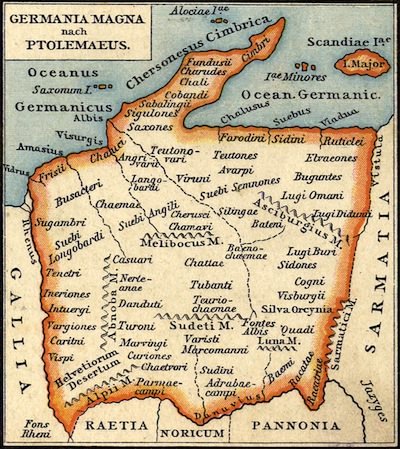
(Tacitus' Germania)


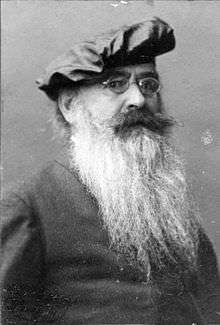
(Guido von List)

Drawing heavily on the analysis of the Theosophical work of Blavatsky (namely, about earth's several root races) the author concentrates then on one of the main precursors of the Nazi philosophy: the Austrian Guido von List. List, a believer in the Pan-German sentiment and philosophy which were based on a "search for the ancient religion" and on the belief in the "wisdom of the runes, mantic sciences, The Edda and Teutonic astrology". The work of Guido von List is seen as a combination of "völkish" ideology with Occultism and Theosophy; he lectured on "Wotanist priesthood". Guido von List died in 1919, but, as the author points: "Although List never lived to see the Nazi party, he was honored by its nascent spirit". In the long run, his work would gather groups such as The Templars, Renaissance humanists, Kabbalists, and the Rosicrucians.


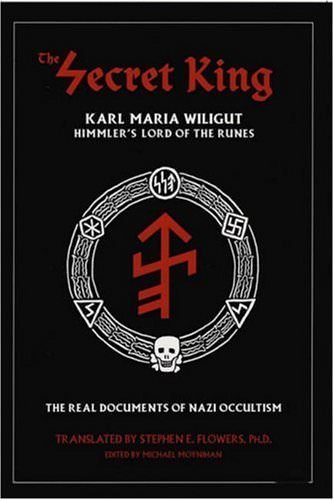
(Karl Maria Wiligut, the Private Magus of Heinrich Himmler)

Next to Guido, the author focus on Adolph Joseph Lanz (alias Jörg Lanz Liebenfels), one of the main proponents of Ariosophy, and who wrote some papers on the issue, some of them (Das Buch Des Psalmen Teutsh, 1920) found in Hitler's 2,000 books library. Lanz wanted a Pan-Aryan state, under the Vienna Hapsburgs, yet Hitler dispensed with the Austrian dynasty.

Another character, still with that "ancestral clairvoyant memory", and under analysis, is Karl Maria Wiligut: he's sure about a "secret line" in the German royalty.

"In the places of our princes of Germanic blood rules our deadly enemy: Judah! (...) I am determined to pledge the Thule to this struggle. Our Order is a Germanic Order. Loyalty is also Germanic. Our god is Walvater, his rune is the Ar-rune. And the Trinity: Wotan, Wili, We is the unity of the trinity. The Ar-rune signifies Aryan, primal fire, the sun and the eagle."


That was part of the speech by Rudolph von Sebottendorff to the Thule Society, in response to the traumatic events of a bloodless revolution in November, 1918, in Bavaria; led by socialist Jews. Sebottendorff read a lot about List. Thule people would be the first ones Hitler would turn to.

One should never forget about the Nazi link to the East. Maybe due to the Blavatsky writings (The Secret doctrine), the notion of "hidden sacred centers" inside the earth, was known to the Nazi people*.

It is said that Hitler was influenced by these two men (1) Dietriech Eckhart who attended the Thule Society meetings, and was "violently antisemitic" and (2) Karl Haushofer who served as military attaché in Japan and was an admirer of oriental culture. Haushofer was also member of the Luminous Lodge, a secret Japanese society, and the Thule society; he defended the colonization of central Asia, so that Germany would have access to the "hidden centers of powers in the East".


(German expedition to Tibet led by Ernst Schäfer, 1938-1939)

Author Trevor Ravenscroft ventured into saying that those two aforementioned men "initiated Hitler into black rituals designed to establish contact with evil powers "

Conclusion

As for the "black rituals", it just didn't work. The Third Reich just crumbled under its own evil.

The Goodrick-Clarke work is well-researched and fascinating. It offers appendixes on the blood lineages of some of the Nazi "initiates".

*Nazis on the Roof of the World
A Bizarre SS Expedition to Tibet
in: http://www.spiegel.de/international/z...

https://rarehistoricalphotos.com/germ...

https://www.spectator.co.uk/2017/06/d...

UPDATE

Canada's parliament blunder makes many wonder...
Profile Image for AC.
2,214 reviews
September 8, 2014
informative -- on the outer limits of political psychology. A good follow up to Fritz' Stern's the Politics of Cultural Despair, which covers some of the same topics.

There is another good, and far briefer discussion of this material in an essay of George Mosse entitled, "The Mystical Origins of National Socialism", in Journal of History of Ideas 12 (1961), 83-96; it is reprinted in several of Mosse's collections.

No one goes further than Goodrick-Clarke, however, in developing the outer reaches of this racist theosophy -- a very clear echo of which can be found in certain radical writings in the US. This type of thinking, in other words, is not dead and buried.
Profile Image for noblethumos.
745 reviews75 followers
October 17, 2025
Nicholas Goodrick-Clarke’s The Occult Roots of Nazism (originally published in 1985) remains one of the most authoritative and meticulously researched studies of the esoteric and ideological underpinnings of early twentieth-century German völkisch thought and its intersections with the rise of National Socialism. The book occupies an important position within the historiography of modern esotericism and fascism, providing a sober, evidence-based counterpoint to the sensationalist treatments that have long surrounded the supposed “occultism” of the Third Reich.


Goodrick-Clarke, a historian trained at Oxford and later a leading scholar in Western esotericism, sets out to trace the origins and transmission of specific occult and mystical ideas that were prominent in the broader cultural milieu from which Nazism emerged. His central thesis is not that Nazism was an “occult movement,” but rather that a constellation of esoteric doctrines—rooted in late nineteenth-century Ariosophy—helped form the symbolic and ideological background that predisposed segments of the German and Austrian public to accept racial and nationalist mysticism.


The first chapters explore the intellectual genealogy of Ariosophy, a hybrid of Theosophical concepts, German nationalism, and racial myth. Goodrick-Clarke devotes particular attention to figures such as Guido von List and Jörg Lanz von Liebenfels, whose “Ariosophical” teachings combined pseudo-scientific racial theories, ancient Germanic paganism, and esoteric notions of a mystical Aryan past. Through an exhaustive analysis of primary sources—pamphlets, journals, and correspondence—the author demonstrates how these movements constructed a mythic narrative of Aryan supremacy and cosmic struggle that paralleled, in symbolic form, the later ideological language of the National Socialist movement.


In subsequent chapters, Goodrick-Clarke situates these cultic movements within the broader völkisch milieu of Wilhelmine and interwar Austria and Germany. He shows how occultism became a vehicle for nationalist sentiment and social criticism during a period of intense political and cultural upheaval. Particularly insightful is his discussion of the Guido von List Society and the Ordo Novi Templi, which functioned as semi-religious orders fusing occult ritual with racial ideology. These movements did not directly lead to Nazism, but they contributed to a “mythological reservoir” that the National Socialists later drew upon—often unconsciously—in shaping their own mythos of blood, soil, and destiny.


One of the book’s most valuable contributions lies in its methodological clarity. Goodrick-Clarke is careful to delineate between causal influence and thematic affinity. He critiques earlier writers, such as Louis Pauwels and Jacques Bergier (The Morning of the Magicians, 1960), whose speculative approach blurred the boundaries between historical documentation and esoteric fantasy. Instead, Goodrick-Clarke’s approach is rooted in rigorous archival research and historiographical precision, allowing him to map the diffusion of ideas without resorting to determinism or sensationalism.


The final chapters address the broader implications of these occult ideologies for understanding Nazi symbolism and myth-making. Goodrick-Clarke explores the cultural fascination with runes, the myth of Thule, and the pseudo-historical quest for a lost Aryan homeland—motifs that would find distorted echoes in Heinrich Himmler’s SS mysticism and the activities of the Ahnenerbe. Yet, he insists that these elements remained peripheral and symbolic rather than constitutive of Nazi policy. Nazism’s power, he argues, derived less from occult belief than from its political exploitation of mythic and mystical themes embedded in the popular imagination.


Stylistically, The Occult Roots of Nazism combines academic rigor with clarity of exposition. Goodrick-Clarke’s analysis is both erudite and restrained, steering clear of both apologetics and moral sensationalism. His work stands as a model of historical demystification: by grounding occult and racial ideologies in their socio-intellectual context, he reveals how irrationalism and myth can serve as potent vehicles for political extremism.


Goodrick-Clarke’s study offers a nuanced and essential contribution to the understanding of the cultural preconditions of Nazi ideology. It bridges the fields of intellectual history, esotericism studies, and political thought, demonstrating how marginal mystical movements can foreshadow and symbolically prefigure mass political phenomena. Far from endorsing the thesis of a “magical” Nazism, the book exposes the cultural and psychological allure of mythic racialism in an age of modern disenchantment.

GPT
Profile Image for Maureen.
12 reviews9 followers
October 18, 2007
This was somewhat difficult reading, particularly the primary sources, not necessariy because the ideas were complex, but because I struggled to find the frame of mind that would consider these ideas compelling, internally consistent, and socially useful.

What I found most interesting from Goodrick-Clarke's piece was his chronology of how the effort to make this occultist movement take roots within a wider context (in its shifting names and forms) kept failing. As I was reading, I kept wondering how these ideas were distributed and accepted in a wider context among the masses of Germans who eventually bought in to Nazi rituals and practices, and I think the answer is that they only did so in a fragmented, echoing manner.

Goodrick-Clarke chronicles occult societies with failing budgets and dwindling members, rituals with only a half-dozen attenders and lodges split by internal, petty conflict. On the other hand, we learn of ariosophist publications that eventually become the journalistic arm of the Nazi party and that Hitler himself tried to exert the force of will that would transform the DAP from a small conspiracy group to a large, national party. While I understand how some of these ideas floating in the cultural ether and fed by anti-Catholocism and a general anxiety about the strength of German identity could be taken as the basis for a leader's platform, I don't have the sense of how these ideas took root in more mainstream associations (beyond volkisch movements, which themselves only bear a weak connection, I think, to more bizarre occult ideas), like civic organizations, the army, youth groups, workers' guilds or unions, or protestant churches.
Profile Image for Oscar Lye.
119 reviews1 follower
May 10, 2025
It’s impossible to properly understand Nazism without conceptualising the occult. It’s what differentiates Nazism from the classical fascism of Mussolini or the Falangism of Franco’s Spain. The insidious growth and proliferation of Austro-Germanic neo-pagan occult societies - described in this exhaustive study - led tangibly to these racist theories finding their way into the hands of nationalist extremists and provided the Nazi inner circle with the pseudo-scientific justification for their sickening policies of genocide. The influence of these ‘Aryan’ occultists led to the fantastical desire to establish a pan-German millenarian utopia reinforced by a ruthless campaign of eugenics in order to achieve ethnic homogeneity.

This book was difficult to read, but echoes profoundly in the present moment. It is important that the liberal arts and the humanities remain robust in challenging those who seek to pervert anthropology and use invented cultural narratives to rationalise horror and murder.
Profile Image for Ole Saßenberg.
11 reviews1 follower
December 12, 2021
Insgesamt etwas speziell gelesen, jedoch eines der essentiellsten Werke bei der Beschäftigung mit Okkultismus aufgrund dessen dass Clarke sämtliche Informationne gut aufbereitet wiedergibt und einen guten, durchaus tiefgreifenden Einblick in die Thematik gibt.
Profile Image for Michael.
982 reviews175 followers
April 27, 2009
This is a detailed historical study of the ties between National Socialist ideology and esoteric groups operating in Germany, Austria, and the rest of Europe during the late-nineteenth century. The book clarifies many points which have been ill-handled by popular writers (no, links between beliefs does not equate to "secret control" by an occult organization), and also introduces many bizarre and fascinating groups which other historians have overlooked. Among the best sections of the book is that describing Jorg Lanz von Liebenfels and his theory of "theo-zoology, which states that Aryans were fallen angels who committed the sin of bestiality - thus creating the "lower" races as admixtures of animal and angel! His cranky ideas influenced few during his lifetime, but one of his biggest fans was Adolf Hitler, who apparently traveled to his home to meet the great man and purchase issues of "Ostara" to complete his collection. Also interesting, although more widely known, is the chapter on Rudolf von Sebottendorff, head of the Thule Society, which sponsored the first meetings of the future Nazi Party and ultimately sold it its newspaper. Sebottendorff comes off as an adventurer and maverick, whose experiences in the Middle East convinced him of the corruption of German Freemasonry by Jews and returned home determined to create a "true" Masonry on the Turkish model.

This is one of the only books with the word "occult" in the title which you can cite in papers written for graduate-level history courses.
Profile Image for Simon.
1,039 reviews9 followers
October 7, 2013
This is an extremely thorough scholarly run down of the topic, meticulously researched with around 75 pages of references, which was quite impressive for a book of this nature.

It is primarily concerned with providing a run-down of the volkisch occult movement in Germany in the 50 or so years leading up to the second world war. Charting the history of some of the players and thinkers behind the movement, which was mostly organised along ethnic and religious grounds, providing a framework for thinking that the German Aryan nation was superior to the 'non-human races', which included... basically everybody who wasn't a pure-blooded German.

It was a movement that grew out of the increasing panic brought on by the approach of the modern world, globalism, the rising threat of equal rights, and was essentially the efforts of rich white men to hold on to the good old days where aristocrats ruled the roost and everybody else did as they were told.

These were pretty small organisations and secret societies though, really more gentlemen's clubs than anything else, the largest had maybe a couple of hundred members, so really fairly insignificant in the grand scheme of things.

It's very noticeable that the first 90% of the book is concerned with talking about these early Volkisch movements, and then only right at the very end do we get to the bit where the author tries to link them with the Nazis, and this is really where things fall apart, because honestly? There is virtually no evidence that any of these occult groups really had any influence with the Nazis at all, indeed some of the groups that people try and argue had lots of influence with the Nazis were in fact banned by the Nazis, and their members chucked in jails for subversive activities.

There is some evidence that one minor volkish occultist was employed by Himmler, and may have exchanged some letters, but given the tens of thousands of rich white men Himmler employed in the SS, it stands to reason that at least one of them might have had an occult background. And of course once the mental instability of this guy was recognised by Himmler, he was forcibly retired to Austria in case he became an embaressment to the party.

So, yeah, this is not a strong case for the Nazi movement being grounded in the occult. If anything, it demonstrates that in the years leading up to the Nazis gaining power, there was a great raft of extremist thought that created lots of weird belief systems designed to demonstrate the superiority of the White Aryan Man over all other forms of life, which was a wave of thought that clearly the Nazis were on the crest of the wave of. But was it the occult? No, not really.

One of the appendices also contains an excellent overview of the Nazi Occult literature, most of which is based on a handful of books that came out in the 70s in the wake of the Holy Blood Holy Grail scam, and was basically all just a bunch of lies made up to sell books because Nazi Occultism is cool and sell books.

Basically? Not a shred of good evidence for any of it.
Profile Image for T. Frohock.
Author 17 books332 followers
August 17, 2018
I used this book as research for my novel Where Oblivion Lives, and I have referred to Goodrick-Clark's research several times.

This is one of the the best researched books I've ever seen; however, it is neither an easy or a quick read.
Profile Image for Simon.
430 reviews98 followers
October 9, 2014
Contrary to the title, the bulk of the book is actually about the revivals of Paganism and general Occultism in the German-speaking countries from the late 19th century to the early 20th. The NSDAP's inspiration from these movements does not come up until halfways through.

I were aware of these already, but I had no idea how many of these Germanic Neo-Pagan movements had a very clear political agenda behind them connected to the unification of Germany and the need to find a common heritage for the German-speaking cultures. One thing I find amusing here is that the biggest Germanic neo-pagan movement in this era, the Armanenschaft formed by real-life Thomas Pynchon novel character Guido von List, owed at least as much to the syncretic occult movement of Theosophy as to what we actually know about historical Nordic paganism. For those who don't know, Theosophy supposedly reconstructs a lost primordial esoteric tradition all religions are derived from while actually drawing mostly upon Buddhism, Hinduism and Greco-Roman pantheism... not to mention that it was started by a Ukrainian! Anyway, the occult Thule Society from which much of the Nazi leadership came were strongly influenced by List's Armanenschaft.

The other of the occult movements covered in this book is the Theozoology of Jörg Lanz von Liebenfels, which must be the single strangest religion I've ever heard of. Basically, its central thesis is that humanity is the result of interbreeding between extraterrestrials with psychic powers and the early hominids, with the Germanic peoples being the closest modern day relatives of the alien gods thus necessitating eugenics programs to create a new race of Nordic star gods. The really weird part of Theozoology is that Liebenfels, a former Cistercian monk, tried to reconcile all of that with traditionalist Roman Catholicism! More importantly, Liebenfels also served as editor of an occult newsletter titled "Ostara" which a young Adolf Hitler subscribed to... even though he later in his life would be the least mystically-minded of the Nazi leaders.

As you can guess, this book was a very dense read. A lot of different personalities and movements are covered in its pages. More importantly, Goodrick-Clarke also takes time to dispel some of the myths regarding the NSDAP's connections to the occult. It could actually have been quite a bit longer if you ask me, since some of the topics covered are gone through in a somewhat superficial manner for one of the few sober books on the general subject. On occasion its tone also gets a bit more "The Nazis were CRAZY!" than it should, while there's no doubt that someone like Jörg Lanz von Liebenfels must have had a few screws loose I don't think it is a good idea to attribute too much of extremist ideologies' appeal to their followers' neuroses. (were the Italian Fascists or the Bolsheviks also "crazy"?)

Nonetheless, while "The Occult Roots of Nazism" is far from a perfect book on the subject it's probably the best introduction I've found. It still does a mostly good job at putting the late-19th/early-20th century Germanic occult movements in their proper historical context. Goodrick-Clarke's central point in the book also remains quite relevant during an era as globalized as this one: When does a positive desire to preserve local traditions and culture become negative by turning into violent xenophobia? That line is demonstrated within its pages to be much more blurry than many people think.
Profile Image for Aaron Meyer.
Author 9 books57 followers
November 20, 2010
An excellent book which gives a very detailed look into the lives and thoughts many major players of nordic philosophy, magic, and religion, which in turn sharply influenced many of the leaders of the third reich. I would consider this an essential book for the period. The only problem I had was the occasional slip here and there where the author stops being objective and says what he really thinks. Pet peeve, perhaps, but some of the comments had me scribbling all over the margins in response LOL. But nonetheless a well put together book which I am sure I will come back to many times in the future.
Profile Image for Robert M..
11 reviews3 followers
May 22, 2020
After rereading years later, still the most objective compilation of material on the German Occult Revival, and the Author is not to be blamed for the sensationalism of its marketing, nor for the apologetics of the final chapter obviously necessary to lick the boots of modern publishers. Buy a hard copy today!
Profile Image for Kate Schaller.
73 reviews1 follower
Read
July 7, 2025
fascinating but pretty dry and academic. every time my house has a showing I have to make sure I hide this book
11 reviews
February 26, 2020
This book is for anyone interested into a more different kind of history. Yes, most of the facts are well known to people but what if there was more to it? This book is not your everyday history lesson, but nevertheless provides a much deeper inquiry into the origins of the nazi movement.

The author does a really great job and goes deep into the research. The book is very thorough and detailed about the dates, names and its sources, containing about 50 fuss notes per chapter, providing enough proof about everything the author states. As a matter of fact, this might be the best book about this topic on the market.

The author himself is a college professor in the field of western esotericism and not just some dude from the streets that read a few conspiracy theories. For me this is very important because I need my sources to be as verified as possible before reading.

The book itself tells us the story how early 19th century eastern mythology, religion and western paganism evolved over time and influenced the creation of the nationalistic movements of the 20th century in Germany and Austria.

From Madame Blavatsky's Theosophy, to the development of Ariosophy, rise of the "volkish" movement, the resurrection of the Templar Knights Order, the creation of the Germanenorden which gathered many modern nazis into the movement and lastly the impact it had on the main nazi leaders, Adolf Hitler and Heinrich Himmler. We can see how much deeper impact early mythology has had on the evolution into a full blown nationalistic movement.

Not only does the book provide insight into the occult roots of nazism, it also provides a solid base of knowledge into the many interesting theories of the pagan stories and Ariosophic mythology of the so called "Armanenschaft" - the legendary priest kings of the first german people. And many more.

The only negative side I found with the book is that the book, as the title says, dwells only on its connection it has with the nazi movement. It doesn't go distance trying to explain what the secret societies were actually doing and the bizarre research they were conducting, such as the search for the lost grail or the search for Atlantis.

For anyone willing to dig deeper this might be a great start. But once you do, there is a chance you end up being engulfed by the various mysteries and secrets of nazis which still attract historians around the world.
Profile Image for Vatikanska Milosnica.
122 reviews36 followers
January 29, 2025
Part 1: The Background
1. The Pan-German Vision
2. The Modern German Occult Revival 1880–1910

Part 2: The Ariosophists of Vienna
3. Guido von List
4. Wotanism and Germanic Theosophy
5. The Armanenschaft
6. The Secret Heritage
7. The German Millenium
8. Jörg Lanz von Liebenfels and Theozoology
9. The Order of the New Templars

Part 3: Ariosophy in Germany
10. The Germanenorden
11. Rudolf von Sebottendorff and the Thule Society
12. The Holy Runes and the Edda Society
13. Herbert Reichstein and Ariosophy
14. Karl Maria Wiligut: The Private Magus of Heinrich Himmler
15. Ariosophy and Adolf Hitler
Profile Image for Tristram.
145 reviews
November 26, 2024
Wow!! This is one of the best history books I have read in a very long time. It is an absolutely incredible piece of research, so professionally done with such expansive insight from Goodrick-Clarke. Not a single thing I could possibly fault with it. It just really astonished me, both in his academic skills and in how he explains relations between certain concepts and links. I genuinely cannot praise it highly enough.

Another reason I am so amazed by this is because it taught me that there is still so much about the world and beliefs that I do not know. I felt my brain whirring and ticking all the way through, it was so stimulating and thought-provoking. I have no background in religion and occultism, so maybe if you already do, then some stuff in here might not be so interesting and new to you. However, I doubt most people interested in The Third Reich/Nazism/WWII would actually know how deep this relation between esotericism and National Socialist racism goes.

Goodrick-Clarke is great at summarising his own thoughts in relation to the facts he writes down, and he is very adept at clarifying the sensationalist elements of the Nazi-occult interest as opposed to the true early and fleeting influences from groups such as The Thule Society.

If you have any interest in this area of history, please do yourself a favour and get a hold of this book! It was so good.
Profile Image for Hryuh.
132 reviews2 followers
December 16, 2022
Очень сухая книга про десяток-другой поехавших на Блаватской и величии немчуры, но никакой конкретной и ощутимой связи с нацизмом как государственной идеологией. Сразу видно, что писал историк, а не философ, - идеи он так поверхностно проскакал: антисемитизм, неотамплиерство, ариософия, нацизм, проклятые жиды и славяне, душат ариев, ордена по образцу масонских, тыщи дат, кто куда поехал и переехал. Сути не уловил и не выложил, вывод - да не, не было особого оккультизма. А чё книгу тогда писал, непонятно. Копаем дальше.
Profile Image for Cem.
183 reviews3 followers
Read
October 31, 2019
çok iyi bir araştırma. 3. reich'ın ortaya çıkmasındaki 'savaştan mağlup çıkmanın getirdiği psikoloji ve ekonomik kriz'den farklı sebepleri merak edenler için tavsiye edilir.
Profile Image for Clark Wilson.
8 reviews2 followers
May 1, 2021
I started reading this a couple of years ago but stopped. Just this week I noticed in the Amazon Kindle store that the book had a yellow boxed legend at the top of its page: "ITEM UNDER REVIEW" and a smaller legend "The Kindle title is not currently available for purchase" This sparked me to resume reading.

It's a detailed, scholarly treatment of a narrow slice of the history of ideas. It draws significant but measured and limited conclusions. The author is an academic who later wrote_ The Western Esoteric Traditions: A Historical Introduction_, published by Oxford University Press. It would be silly for Amazon to deem it objectionable.

An editorial sparked by the book: We can agree that the pseudo-fact systems described in this book were false and evil. That's an important but not particularly interesting conclusion for a reader to draw. What I myself in my own voice ask readers to carry away from the book is a bit of humility or caution: These systems were detailed and complex, developed over decades by communities of thinkers who in many cases were true scholars in some disciplines. Some of the systems incorporated some of the very latest scientific and academic research findings. I ask people to be reminded that fact systems we encounter right now may be less than we hope or fear them to be. We hear that "the science on that is settled," that our new systems are morally superior to previous or alternative ones, or that now we _really_ understand the history. Let's be less self-assured, folks.
4 reviews1 follower
January 30, 2009
Yes, read this one. Vril/Thule/Nazi... you'll understand today's politics (which are based on the covert Nazi usurpation of US).
Profile Image for Douglas Kim.
170 reviews14 followers
May 21, 2025
I rated this a 3, because there is no way I'd have read this book for the sake of its content alone, because learning about German paganism and occult rituals is like being forced to learn the lore of a fantasy series you hate, like Harry Potter. In fact, seeing how some German occultists/mystics saw Nazism and Hitler as a literal Godly savior to restore the Aryan people to a once forgotten Atlantean era of god-like existence demystifies how so many Americans view politics through the lens of Hollywood derivative art (seeing Americans draw lessons from Star Wars content is rich, considering that America is supposed to be the Empire, and Vietnam are the rebels).

However, this book is valuable for my other purpose, tracing the roots of the Nazi ideology, from their more respected philosophers (Kant, Schopenhauer, Hegel, Nietzsche, Heidegger, et al.) to their much more weird esoteric roots, which explains how the Nazi regime somewhat operated as a pseudo-religious cult, most highlighted by Heinrich Himmler's (an original member of the Thule Society) strange policies with the SS. This is the stuff that the western allies try to avoid talking about when it comes to the Nazis, because it reveals the roots of their racial ideology, instead of reducing it to blanket anti-semitism. While of course, anti-semitism is a cornerstone of National Socialist policy and ideology, the more esoteric reasons as to why (such as the idea that Jews introduced a Christian, or oriental, ideology, to Aryan European society, thus distancing Germany from its strong pagan culture) are either forgotten or straight up buried from mainstream consciousness.

Stylistically, it leaves something to be desired, as a lot of the book is a data dump of names and figures that no one will remember. Perhaps it's for completeness as an academic look into this subject, but I believe a lot of this sort of content should've been moved to the appendix. Ironically enough, some of the sections of the appendix I think should have been front loaded to the audience to explain what Ariosophy and the ideology essentially was before tracing its history.
412 reviews16 followers
May 3, 2021
A scholarly study of the occult ideas that emerged in Germany and (especially) Austria in the year leading up to and after the First World War. It raises many ideas, most of them disquieting – not least the similarities with modern-day tendencies to believe in hidden plots and secret societies controlling the world's destiny. Perhaps this is a common reaction to feelings of social and economic dislocation, but it's worrying nonetheless.

Goodrick-Clarke is entirely honest about his inability to definitively establish a causal chain from the Thule Society and like-minded groups to the Nazis. He presents two hypotheses: that the members and hanger-on of the Thule did indeed have some influence, notably over Heinrich Himmler's view of the SS as a revenant mediaeval order of chivalry; and that the ideas were simply "in the air", a symptom of the times than were independently picked up and developed by the Nazis.

It'd be easy for a book on this theme to become lost in fables, and indeed many other works have done so. (Goodrick-Clarke devotes an appendix to dismantling these "crypto-histories".) You never get the feeling, reading him, that he's in the slightest bit a believer, even as he recounts the (probably and putatively sincere) beliefs of his subjects. That many of these beliefs can be traced back definitively to works of late-nineteenth-century fiction (notably to the books of Edward Bulwer-Lytton) makes their attraction all the more surprising, even given that the belief was always a niche one.
Profile Image for Andrew.
38 reviews2 followers
December 21, 2024
The story of a motley group of goofy German racist mystics who ultimately had not much influence on Hitler. Goodrick-Clarke spends a lot of the last chapters making the case that the guys covered in this book should be seen as symptomatic of a general cultural milieu that enabled the Third Reich, and specifically not as some kind of secret brain trust that powered Nazi ideology, which would mean that the main title of this book is misleading. Probably chosen by the publisher to boost sales or something. It worked on me! I mean, I downloaded a PDF from the Internet Archive, so it didn't exactly boost sales, but it did get me to read it. Contrary to what some reviewers here seem to think, it is a fairly short and readable book, for a proper academic book. Helped me round out my understanding of how the influence of Blavatsky and Theosophy did and didn't continue to propagate during the early 20th century: the main current here was that Karl Maria "von" Wiligut, the only character in the book who attained real influence in the Reich, as a sort of personal mystic to Himmler, had a bespoke system called Ariosophy that was one of the many cuckoo Weltanschauungen floating around in the soup of early 20c occult and occult-adjacent circles (along with Rudloph Steiner's Anthroposophy, which doesn't come in for much examination here, presumably because it was less Nazi-adjacent). Also learned that Evola got canceled by the Reich for not being enthusiastic enough about the made-up ancient German post-Atlantean Wotanist priesthood.
10 reviews
May 26, 2025
Tempting as it may seem to blame the rise of Nazism on occult ideologies - something common to much historiography of the Nazis - Goodrick-Clarke's rather misleadingly titled book excellently displays why this was not so. While such esoteric ideologies were patronized by some Nazis - Himmler a notable one among them - the ultimate conclusion of the author is that they had little to no influence, but shared a similar appeal to, the ultimate ideology of Nazism. Indeed, as pointed out in Appendix C, the idea that Nazism was some dark-magic fuelled cult is pure pseudohistory - and in my opinion, detrimental to the actual academic study of Nazism and its rise, as if we dismiss the Nazis as merely crazy dark wizards we ignore the potential rise of such ideas in the modern day - Nazis become comic book villains, more or less.

Goodrick-Clarke manages to offer a sobering account of figures such as Guido von List, Lanz von Liebenfels, and Karl Maria Willigut who while possessing absurd and idiosyncratic - in addition to highly racist - ideas were not evil masterminds nor incompetent idiots but men whose crises of faith in modernity led them to embrace such occult racial theories. The dramatic narrative of secret societies and an occult elite pushed by some historians and even neo-Nazis and white supremacists today is brushed aside with a heavy focus on the factors that created such beliefs. Much recommended for all those interested in academic study of the occult and its impact on society.
This entire review has been hidden because of spoilers.
Profile Image for Arnost Stedry.
83 reviews8 followers
January 11, 2018
Tak to bylo zajímavé. Autor nejprve představí velmi podrobný exkurs do historie německého a rakouského okultismu se zvláštní zřetelem na dílo Guido von Lista a Jorga Lanze s podrobným popisem všech jejich mašíblovských názorů a představ, následně vyšvihne velmi erudovaný přehled německé okultní scény včetně společnosti Thule, pak přejde k osobě Karla Maria Wiliguta, tedy osobního mága Heinricha Himmlera, a začne se věnovat vztahu Adolfa Hitlera k okultním vědám, zvláště pak ariosofie, aby zjistil, že Hitler pravděpodobně znal některé názory Lanze i Lista, ale jeho zájem o okultismus byl pramalý a z 2000 svazků dochovaných z Hitlerovy knihovny je jen kniha od von Lista.

Pak už následuje jen mlýnek na maso, ve kterém autor přesvědčivě rozemele romantické a pobloudilé představy o pangermánském okultismu jako hybné síle nacismu a druhé světové války vůbec.

Velmi zábavná je rozhodně první část, zvláště pokud oblibujete pošahané vize. Škoda, že není zasazena do širšího kontextu, neboť z knihy není patrné, jestli všichni vyznavači okultních nauk byli elitářští rasisté s ultrapravicovými názory, nebo tento dojem pramení pouze z úzkého zaměření autora. Závěr knihy je velmi překvapivý, jak už jsem byl pravil.

Pokud by vám této radosti nebylo dost, kniha disponuje rozsáhlým aparátem včetně desítek stran bibliografie.
Displaying 1 - 30 of 75 reviews

Can't find what you're looking for?

Get help and learn more about the design.