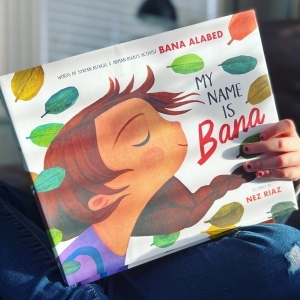
A poignant picture book memoir from Bana Alabed, the seven-year-old Syrian girl from Aleppo whose messages to the world have turned her into a global symbol and advocate for refugee rights.“I just want to live without fear.” —Bana Alabed, Twitter, October 12, 2016 When seven-year-old Bana Alabed took to Twitter to describe the horrors she and her family were experiencing in war-torn Syria, her heartrending messages touched the world and gave a voice to millions of innocent children. Written in Bana’s own words, this picture book offers a uniquely intimate child’s perspective on one of the biggest humanitarian crises in history. Bana has lost her best friend, her school, her home, and her homeland. But she has not lost her hope—for herself and for other children around the world who are victims and refugees of war and deserve better lives.
I think I would feel more comfortable with this in biography than picture book.
Tells of the girl who tweeted during siege of Aleppo. The main story is about living up to her name. However, the Author's Note tells about losing her best friend, school, home. She says she wrote her story for children who still live in war zones.
Unfortunately, the book still seems to be needed. Maybe 4.5 with Russia's invasion of Ukraine.
What a beautiful, masterful piece of writing from Bana Alabed. Written in simple words, short easy to read text, and with beautiful pictures, the book explores what the name Bana means. Bana asks her mother (a hijabi) what her name means, and her mother responds a tall tree that reaches toward the sky. She then asks what it means to be strong, and her mother talks about how being strong means being brave even if you are scared. The book details certain events that happened in the young girls life, like the war in Syria, fleeing to another place, learning a new language in a new school, and speaking in front of crowds of people about her country. She details how being strong is persevering, learning, and being creative in caring for her siblings. The book ends with a hopeful message and an author note about how this is based on a true story and that though she is inspiring children to be strong, they shouldn’t have to be! This heartfelt tribute to Bana’s name shows the reader what it is like to be a Syrian Refugee. With Arabic words and definitions sprinkled throughout to increase cultural touches, and beautiful loving interactions between Bana and her mother, the struggle of Syrian refugee children is detailed and pulls the reader in emotionally. I have read a lot of books on Syria, and I am also Syrian, so I didn’t know what to expect with reading this, although I do tend to search for myself within the pages of Syrian books and not always find authenticity. But this book touched me deeply and made me miss my home country, making duaa that Syria will be at peace someday🤲 Let’s be like Bana, and reach for the sky and Amal (hope)❤️
When I was little there were not a lot of books that had Arabic main characters (let alone any Arabic characters). The illustrations were better than the words, in my opinion. It's nice because the pictures broke from the color palette that the book had (mainly when it talked about the war). Again, another book I would add to my classroom library.
This review was originally written for The Baby Bookworm. Visit us for new picture books reviews daily!
Hello, friends! Our book today is My Name is Bana, written by Bana Alabed and illustrated by Nez Riaz, a powerful tale of resilience, tenacity, and strength.
When Bana asks her mother how she got her name, her mother explains that she was named after a tall, green tree that grew in their native Syria. Bana’s parents gave her the name with that hope that their daughter would be strong like the tree – by showing kindness to others, by standing up against injustice, and by being brave in the face of fear. And in fact, Bana has already shown such strength in many ways: bringing joy to her brothers even amidst bombings and war; starting over in a new country with a new language and new classmates; and speaking on behalf of all Syrian refugee children in front of world leaders. Bana has more than shown that she is “qawia” (strong) like her namesake tree, and stronger still that her strength is rooted in “amal” – in hope.
Stirring. Based on Alabed’s true life story, this inspiring and empowering tale of fortitude manages to finely balance the gravity of its subject matter with language and a tone filled with the concept of hope that it explores. Riaz’s emotional illustrations capture moments of strife, courage, and peace with incredible nuance; Alabed’s text is lyrical yet conversational, and lovely to read aloud. Alabed’s author’s note in the backmatter is not to be skipped, and the closing lines will remind adult readers that strength should not always lie on the shoulders of children. The length is great for a storytime, and JJ and I really enjoyed the heartwarming exchange between mother and daughter. Overall, this is a fantastic book that covers a crucial topic in an accessible and uplifting way, and we highly recommend it. Baby Bookworm approved!
(Note: A copy of this book was provided to The Baby Bookworm by the publisher in exchange for an honest review.)
In picture book format and with well crafted words and phrases, Bana shares her story. We learn in very simple language what war does to the people and children of countries in conflict. When you are forced to leave the only home you have ever known, it is scary. Feelings of fear, loss, uncertainty, and confusion are overwhelming. The story is told using beautifully detailed illustrations. With patience, strength, hope and time Bana can begin to heal. The message is clear and will resonate with youth and adults alike.
Bana's name means strong and her mother has told her all of the ways she can be strong so that when war comes to her homeland of Syria, Bana lives up to her name. Based on the author's childhood an endnote explains that she is now attending school in Turkey and what prompted her to speak out for not just Syrian children but children everywhere.
Featuring striking illustrations created with acrylic paint and Procreate, this picture book recalls the origin of its author's name. As her mother responds to her questions about what it means to be strong, readers observe the different ways Bana is strong. The narrative then shifts back in time to a period when that strength was particularly needed as her home city of Aleppo, Syria, was bombed, and she and her family had to hide. She kept her siblings occupied, and when they had to move to an unfamiliar country [Turkey], she stayed strong and filled with hope. The back matter includes background about Bana and how her tweets, written when she was only seven, brought attention to her family's plight and the war raging all around them. Her story is inspiring and brings awareness to readers about the consequences of war on civilians. Since it's told from the perspective of a child, some of the violence is appropriately downplayed; nevertheless, readers can sense the fear and disorientation youngsters experienced during this time. This would be a good addition to a collection of picture books dedicated to war and peace or one on resilience. Here's hoping that Bana will grow up to see all her dreams come true.
My Name is Bana is a powerful autobiographical icture book about a young girl growing up in war-torn Syria. Through simple yet heartfelt language, Bana shares her experiences of fear, hope, and resilience. The story offers a childs perspective on conflict. making complex issues accessble and emotional for young readers. It promotes empthay, peace, and the eimprtnace of using ones voice to stand up for what is right. This book encourages awareness of global issues while celebrating courage and the strength of children. I love this story because I have a unique name and I think its so important for kids to learn about there heritage and where their name came from. I hated my name my whole childhood but if we had more books about kids with unique names and a beautiful story behind it I think it would have helped me learn sooner that its okay to not have a common name!
Syrian refugee and human rights activist Bana Alabed has written a children's book explaining that she is named after a tree in Syria because her family wanted her to be strong. Bana's mom explains in the book what it means to be strong, such as being brave when you're scared. The book then talks about the ways that Bana showed strength, when bombs were falling in Syria and the children couldn't play outside because of the war, as well as the strength it takes to move somewhere new and make new friends like she had to do as a refugee. The book teaches readers a few Arabic words and is a beautiful "Own Voices" story to add to your collection. I enjoyed the illustrations, too!
This story is written by Syrian Refugee and Human Rights activist Bana Alabed who shares her story and tells of what strength really means (her name "Bana" means strength). I really appreciated the author’s note and sharing the message of peace. That children deserve to not have to be strong, but to be able to live in peace. I like the overall message of the book—and although it might be difficult to explain war and its impacts on children, I think this book can provide perspective on its impacts on those effected, in particular, children.
An inquisitive girl learns the meaning of her name from her mother and tells the story of how she exemplified the strength and resilience necessary to survive the Syrian refugee crisis. Simple illustrations dramatize Bana’s family’s harrowing ordeal and underscore her pleas for basic human rights, especially for children in war-torn countries.
For Bana, she lost her friends, her school, her home, and her homeland. But she didn’t lose hope for herself or other children around the world who are victims and refugees of war. Bana was named after a tree from Syria. She is strong and she is brave. Including this book in my classroom would mean a lot to me because this powerful woman shines through the story.
A story of what Bana's name means, her hope for children to live in peace, and how she uses her voice to speak up about the injustices in her homeland of Syria. Such a young, strong advocate for others!
Amazing! Bana Alabed shares her experience in war torn Syria, how she was strong and brave even when bombs fell from the sky. Bana, named after a tree, shares what it means to be strong, to speak up for others, to face challenges and changes, and to have hope, always.
Incredibly sweet story of a child's view of war and being a refugee. Great for storytime: kindness, multicultural, Arabic, strength, women/girls, funding your voice, making a difference, trees, names
A mother and daughter converse about why the daughter was called Bana and it turns to how she has displayed the strength of a tree during the siege of Aleppo in Syria and her moving to another country. Biographical picture book
This nonfiction picture book tells the story of young Bana, named for the strong, resilient tree in her Syrian country. The author tells of her name's provenance and escaping Aleppo at the height of the Syrain crisis.
Bana Alabed young girls from Syria who had some fame for tweets writes of her experiences in war. Terribly sad and encouraging at the same time. It could be a very important resource in the right hands for a a discussion on war and suffering.
This is a touching and brave book about a young girl who reflects upon her experiences and thinks of all the ways she was strong when experiencing flight from war in Syria.
A moving true story about a young Syrian girls experiences during war. Does not shy away from the horrors of war and the experiences of refugees. Dark, but still age appropriate.
A real-life, insightful account of a child's harrowing life and eventual escape from war-torn Syria, written by 14 year-old Bana Alabez, a human rights activist who became known worldwide for her tweets about life in Aleppo before she and her family escaped to Turkey.