The story of Land of Black Gold begins with an ominous atmosphere: war is looming in Europe and, in fact, the entire world. The conflict is fueled by concerns over oil supplies. Various companies are in conflict over the right to supply oil, and the tension is rising between the Arab states that hold reserves of this precious liquid.
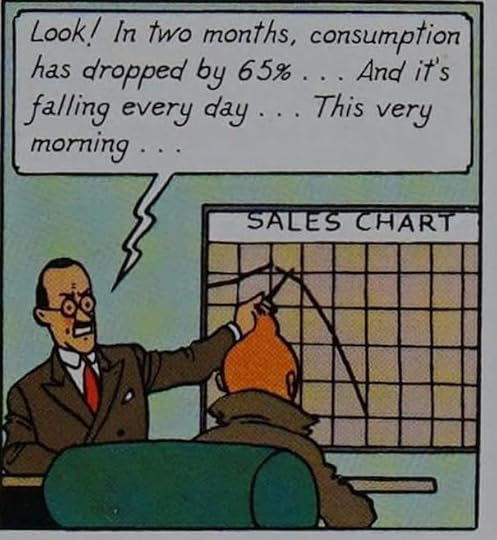
Saboteurs have added a mystery chemical to petrol supplies, rendering cars, airplanes and military vehicles (and thus the military) useless. Tintin sets off for the Middle East. There, he hopes to unmask those responsible for the plot. The leader turns out to be none other than Doctor Müller.
Georges Prosper Remi (22 May 1907 – 3 March 1983), better known by the pen name Hergé, was a Belgian comics writer and artist. His best known and most substantial work is The Adventures of Tintin comic book series, which he wrote and illustrated from 1929 until his death in 1983, leaving the twenty-fourth Tintin adventure Tintin and Alph-Art unfinished. His work remains a strong influence on comics, particularly in Europe.
"Hergé" is the pseudonym of George Remí, making a game with the initials of his name inverted. Throughout the evolution of his star character, Tintin, we can see the progress of this author: from the first titles marked by the ultraconservative doctrine of the director of the newspaper Le Petit Vingtième, to the breaking of conventions embodied from The Blue Lotus , as well as the evolution of the society of his time. The research carried out by Hergé to historically contextualize his Adventures, as well as his implicit social criticism, have made Tintin a masterpiece of the 20th century.
این جلد درباره قدرت نفت و تأثیرش روی سیاست جهانه. هرژه با خلق یه کشور خیالی میخواست نشون بده که چطور شرکتهای خارجی، دیکتاتورها و شورشهای محلی همه مثل یه پازل کنار هم قرار میگیرن و سرنوشت یک ملت و حتی جهان رو تعیین میکنن.
یه نکتهی جالب درمورد این جلد وجود داره و اینه که هرژه اول این قصه رو قبل از جنگ جهانی دوم شروع کرده بود. اون زمان اشارههای مستقیم به فلسطین و حضور انگلیس و یهودیان تو داستان بود. یعنی داستان واقعاً به شکلگیری اسرائیل و تنشهای اون دوره چشم داشت. ولی بعد جنگ، وقتی دوباره سراغش رفت، همه رو حذف کرد و ماجرا رو توی دنیای خیالی تعریف کرد. پس میشه گفت طلای سیاه، نسخهای سانسورشده از یه نقد خیلی تند بوده.
Tintin was one of the comic book heroes of my childhood. I'm going to read my way through the series again as I listen to a radio program about him, and his creator, Hergé. Book fifteen in the Tintin series actually has a very long story behind it. Hergé began to write, and publish it years before, but the outbreak of the second world war put a stop to that. Then after the war had ended Hergé began working on it again.
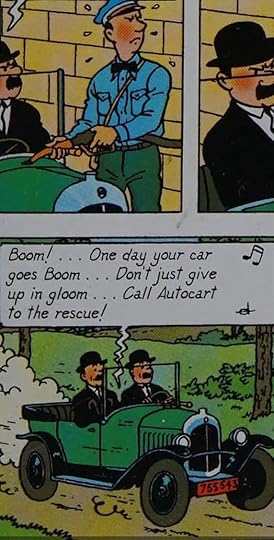
It begins with Thomson, and Thompson driving when their car goes boom. Their car isn't the only one to do this, as there seems to be an outbreak of cars going boom for no apparent reason. War is on the horizon, and Captain Haddock is enlisted to the navy, but Tintin starts to investigate this strange car disease, an investigation that leads him to the Middle East.
Reading this book now is interesting in many ways because of certain similarities between what is happening in the book and on the news. Just think about the European energy crisis for example. But that is about it. It's interesting, but not a great book. Perhaps it suffers from coming after two good two book adventures, and perhaps it's just the long time it took to make it. Either way, it never really takes off for me.
The humour is there, Thomson and Thompson are the butt of most of the jokes, some of which are very well done, like the illness they contract at the end. There is also the long joke around Captain Haddocks mission in the later part of the book, which is unusual in the series, and has quite a funny punchline. But on the whole it's just too little. The adventure is a bit aimless, and the writing doesn't feels as tight as in some other books.
So not among the best, and not among the worst, just a passable Tintin adventure.
Tintin finds himself entangled in another adventure when suddenly the vehicles all over the country start blowing up. The petrol is suspected to be doctored, but by who and for what purpose? With a mind to find answers to this riddle Tintin heads to the Middle East, the land of the "Black Gold (oil)".
The plot isn't neatly arranged. It is more like a patched up series of actions. There was enough humour though with the mishaps almost always meet the Thompsons and the childish pranks of the young prince, Abdullah, and they keep you laughing throughout. This adventure sees Tintin and Snowy alone in their quest with only partial assistance of Professor Calculus and Captain Haddock. The latter character, in my view, was just added in haste to the story with no plausible cause.
Overall, this isn't one of my favourite Tintin adventures but still was an enjoyable read.
There's surely something fishy about the petrol that makes cars go "boom". Tintin must investigate. If only Greta could help. I know she's not interested.
Done with it. Greta didn't help much. But formula 14 was the fishy thing, Tintin found out.
Best were the punches between Tintin and German Müller working for a foreign power.
Atchoooo! Poor Thompson brothers who took in some of the new chemical.....
Πάνω από ένας χρόνος πέρασε από την τελευταία φορά που διάβασα ιστορία του Τεντέν και η αλήθεια είναι ότι μου έλειψε πάρα πολύ. Απολαυστική ιστορία, γεμάτη περιπέτεια, τρελές σκηνές και ευχάριστο χιούμορ, με το γνωστό σχέδιο που μας έχει συνηθίσει ο Ερζέ. Σίγουρα ο παρών τόμος δεν φτάνει τους κορυφαίους της σειράς (π.χ. "Ο Τεντέν στο Θιβέτ"), όμως δίχως αμφιβολία είναι σε υψηλά επίπεδα ποιότητας -τόσο σχεδιαστικά όσο και σεναριακά-, ενώ η ψυχαγωγία είναι εγγυημένη.
An oil crisis breaks out, leading Tintin to the Arab Emirate of Khemed. There he works his way through a series of escapades in the desert and the cities of Kemekhal and Wadesdah where Tintin must deal with the thuggery of the local Arabs . Tintin meets with Emir Ben Kalish Ezab and agress to rescue his kidnapped son Prince Abdullah leadfing him to confront his old enemy Dr Muller, as well as the impossibility of dealing with his charge, the young Abdullah. Quite fast moving and without the flow of some of the Tintin books, this adventure is nonetheless jam-packed with action.As usual the rest of the gang such as the fiery Captain Haddock and the disastrous Thompson and Thomson add to the brew!
العدد ده بالذات شيق وفيه أحداث مثيرة أكتر ويتسم عن غيره برضه بالكوميديا الزايدة.. رغم انه كالمعتاد متأثر بالصورة النمطية بشكل يقل أو يزيد في تصوير الشعوب التانية
Tintin, una de las series de historietas europeas más famosas del mundo. Yo creo que todo el mundo reconoce a Tintin y a Milou. Sin embargo para aquellos que no lo sepan, Tintin, nuestro protagonista es un reportero belga que junto a su perro, Milou, los agentes secretos Dupond y Dupont ( Hernández y Fernández en España), el capitán Haddock y el profesor Tournesol ( a veces) viven sus aventuras alrededor del mundo y de la luna también.
Desde que era pequeña, solía leer algunos que otros comics que tenía en mi casa, lo más que leía era Mortadelo y Filemón (admito ahora que no me enteraba de casi nada a los 9-10 años) y Astérix y Obélix. Ambas historietas marcaron mi infancia. No fue hasta que comencé la carrera que me dio la afición por leer Tintin, sabía que formaba parte de la cultura franco-belga y no podía no leerlos. Estas historietas eran un tanto diferentes, pues tenían un carácter más adulto y contenían muchísimo dialogo. Aun así me gustaron muchísimo creo que si los hubiese leído mucho antes no me hubieran gustado tanto. Después de leer “Las treces bolas de cristal” hice un parón hasta ahora.
En concreto este tomo no me gustó tanto como otros. Sí, había momentos que me sacaban alguna risa pero no es de mi favoritos. Igual también influyó el hecho que se hicieran referencias a otros títulos anteriores y no recordaba casi nada de ellos. (Por ello caerá alguna relectura cuando los consiga en papel todos en francés).
En conclusión y lo diré seguramente en las siguientes reseñas. Tintin es una serie que debería leerse si o también.
La gasolina de mala calidad levanta sospechas entre Tintín y su círculo. Ello les llevará a un país ficticio —en la edición definitiva— de Oriente Próximo. Los detectives Hernández y Fernández protagonizan una serie de hilarantes escenas, en las que Hergé se vale del fenómeno de los espejismo para propiciar algunos de los momentos más graciosos de la pareja. Aparece de nuevo, tras muchos números, la figura del niño, aunque con un enfoque muy diferente a la de El loto azul. Esta historia sigue la estructura que, a mi juicio, mejor le sienta a Tintín, pero, pese a ello, no consigue brillar como otras. De todos modos, es muy disfrutable, como lo son todos los álbumes del reportero belga, y contiene paisajes de hermosa belleza. Además, se recuperan personajes muy característicos de antiguos títulos.
Another wonderful adventure of tintin!! This used to be one of my favorite toons during my childhood!!
In this adventure, tintin has got more of physical than his holmes' style!! Haddock was as usual!! Snowy has got a bit lesser role!! Thompson n Thomson are always a comic relief!! But the role of abdullah was hilarious! It will create a serious of troubles n laughters in this episode!!
On the whole this can be rated as one of the best episodes of the entire adventures of tintin!!
War is coming! Meanwhile, cars are also exploding all over the place. There is something wrong with the petrol and when the two Thom(p)sons face this issue, our whole gang gets involved. They get work as crew members in a ship carrying petrol and eventually find themselves in the middle of a fight between the Emir (of who knows where - UAE, Kuwait, Iraq, Saudi?) and an insurgent, Bab El Ehr. When the Emir's son is kidnapped, it's Tintin to the rescue.
The humour comes from the rascally 6 year old spoilt kid who is kidnapped. I thoroughly enjoyed the little twat going through life making everybody miserable. The Thom(p)sons driving through the desert was also great fun! And of course, the little Abdullah renames our brave Captain Haddock as 'Blistering Barnacles' - one of my favourite moments in Tintinverse!
Characters from previous books were revived, notably Oliveira da Figueira, a minor character in Cigars of the Pharaoh, but gets a larger role in this one. The other notable repeated character is Dr Müller, the evil German psychiatrist that Tintin outwitted in The Black Island. Excellent characters to bring out again!
Overall, a fun story with excellent humour and action.
Tam Herge ırkçılığı frenledi derken Kara Altın Diyarında'yla yine tavan yaptı. Namaz kılana tekme atmak mı dersin, Arap ve zenci stereotipi mi dersin, Dupont ve Dupond'un camiye arabayla dalması mı dersin ne ararsanız vardı.
Bu sefer hikaye de çok başarısızdı. Arap Şeyhi (Altes dedikleri) kapısında Belçikalı Tenten'i buluyor, huzuruna kabul edip petrol açmazını anlatıyor, sonra da oğlumu niye kaçırdılar ki çok manasız diyor. Tenten açıklıyor, bunun üzerine de "sen de senin ırkından herkes gibi yalan söylüyorsun" diye çemkiriyor. Saçma sapan bir metin.
Yani bu seriyi tekrar okuyarak çocukluk anılarımı, hayalimdeki Tenten'i kirlettim resmen. Eğer aklınızda Tenten'le ilgili güzel anılar varsa bırakın orada kalsın. Bir tane bile kitabı tekrardan okumayın. Üzülürsünüz.
به ترتیب که می خوانم متوجه می شوم که چند شماره ای ست که «هرژه» به پختگی مطلوبی در خلق تن تن رسیده. فرمول های تن تن تقریباً به ثبات رسیده اند ولی به هیچ عنوان خسته کننده و تکراری نشده اند. این کتاب (آلبوم) تن تن برای من بسیار عزیز و دوست داشتنی است. شوخی های بامزه هم کم ندارد.
This is my fourth Tintin comic. Before this, I had read King Ottokar’s Sceptre, The Castafiore Emerald and The Blue Lotus and to be honest, I did not enjoy them as much as I should have. Loved the art, but I did not like the deus ex machina in every story. Was starting to think maybe I should have read them at an early age. But this one I thoroughly enjoyed (even with the deus ex machina), although I think this had to do with Thompson & Thomson getting featured more in the story than they usually do. In any case, this book has convinced me to check out more Tintin stories.
Suurvaltapolitiikka kummittelee viidennentoista Tintti-seikkailun taustalla, jossa selvitellään räjähtävien moottorien arvoitusta aavikolla. Saksan ja Belgian kireistä suhteista ja toisen maalilmansodan syttymisen pelostahan tässä on kyse, vaikka tarinaa on vuosien varrella moneen otteeseen muokattu ja pyritty etäännyttämään todellisuudesta.
"Mustan kullan maan" sivuhenkilögalleria on herkullinen: mukana ovat niin pahailkinen Abdullah kuin mestarillinen tarinankertoja signor Di Olivieirakin.
Tintin 15. seikkailu vie aavikolle ja keskelle öljy kiistaa.
Kuvitus on edelleen upeaa, mutta tässä tarina on jotenkin poukkoileva. Saattaa tietysti olla sekin, että Tinteiltä on alkanut vaatimaan enemmän sillä lähes kaikki tarinat ovat tähän mennessä olleet niin hyvin kirjoitettu. Nyt ajoittain tarina oli hieman sekava ja osittain polki paikoillaan.
Näistäkin asioista huolimatta tämä on hyvä albumi ja tutustumisen arvoinen. Varsinkin kun ottaa huomioon, että se on vuodelta 1950 ja silti kestänyt hyvin aikaansa.
Suosittelen tätä kirjaa kaikille, joita sarjakuvat, Tintti, seikkailut ja aavikko kiinnostavat 😊
این بار تن تن و میلو میروند غرب آسیا. قسمت ناراحت کننده و البته جالب اثر هم اینکه هرژه در نسخهی اولیهی اثر که در سال ۱۹۴۸ خلق شده بود، به قضیهی شکل گیری رژیم اسرائیل و اشغالگری آن در سرزمین فلسطین هم پرداخته بوده که بعدتر با لابی و فشار بریتانیا اثر زیر تیغ سانسور میرود و بار دیگر صدای یک ضد اسرائیلی دیگر خفه میشود. مجموعا مثل همیشه خوش گذشت.
Jälleen yksi Tintti-seikkailu Arabiassa. Politiikka, sisällissotia, salakuljetusta, taloudellista hyötyä sodankäynnistä jne. Dupond ja Dupont huikean hauskoja hahmoja!
In Land of Black Gold, Tintin is investigating a mysterious case of sabotaged petrol supplies, which leads him right into the middle of a tense political conflict in the Middle East.
It is a mix of adventure, mystery, and a subtle look at how greed and power can shape events far beyond what most people see.
Like many Tintin stories, it blends humour, danger, and clever twists in a way that keeps you turning the pages without realising how much time has passed, helped along by those two bumbling detectives, Thomson and Thompson, who somehow make everything funnier.
The desert scenes feel vast and warm, the bustling streets are full of life, and even the smallest background details seem to tell their own story.
There is a mastery in how Hergé balances the serious themes with lighthearted moments, making the adventure feel both real and timeless. It is a reminder that great art is not only about what is drawn, but about how it makes you feel long after you close the book.
If you have ever loved Tintin, you know that each story is more than just a comic. It is a journey you can return to again and again.
Owning the Tintin collection is a joy in itself. Sometimes I just take the books off the shelf, not even to read them fully, but to flip through the pages and revisit moments from past adventures.
The colours, the clean lines, the way each panel feels alive, they make every return feel like meeting an old friend.
হার্জ Arabian peninsula এর religious & cultural component গুলো খুব diligently & aesthetically render করেছে এ গল্পে। যেমন, বইয়ের খুব ছোট ছোট ডিটেইলস গুলোতে - টাইটেল পেজেই Land of Black Gold নামের চারধার জুড়ে Arabic words এ লা ইলাহা ইল্লাল্লাহ calligraphy করে repetitively লেখা, অথবা আযানের ভার্সগুলো ঠিকমত মেনশন করা ।
while i can appreciate the political aspect of this story that would have mostly gone over my head as a kid, land of black gold has never been one of my favourites. maybe it's the absence of captain haddock or calculus, but in comparison to the rest of hergé's output, this is one of the weaker tintin stories.