

What do you think?

33⅓ Main Series #120
Angelo Badalamenti's Soundtrack from Twin Peaks
When Twin Peaks debuted on the ABC network on the night of April 8, 1990, thirty-five million viewers tuned in to some of the most unusual television of their lives. Centered on an eccentric, coffee-loving FBI agent's investigation into the murder of a small town teen queen, Twin Peaks brought the aesthetic of arthouse cinema to a prime time television audience and became a cult sensation in the process.Part of Twin Peaks' charm was its unforgettable soundtrack by Angelo Badalamenti, a longtime musical collaborator of film director and Twin Peaks co-creator David Lynch. Badalamenti's evocative music, with its haunting themes and jazzy moodscapes, served as a constant in a narrative that was often unhinged and went on to become one of the most popular and influential television soundtracks of all time. How did a unique collaborative process between a director and composer result in a perfectly postmodern soundtrack that ran the gamut of musical styles from jazz to dreamy pop to synthesizer doom and beyond? And how did Badalamenti's musical cues work with Twin Peaks' visuals, constantly evolving and playing off viewers' expectations and associations? Under the guidance of Angelo Badalamenti's beautifully dark sonic palette, Clare Nina Norelli delves deep into the world of Twin Peaks to answer all this and more.
164 pages, Kindle Edition
First published February 9, 2017
About the author
Clare Nina Norelli
3 books8 followersClare Nina Norelli is an Australian writer, composer, and musician who holds degrees in composition and musicology from the Western Australian Academy of Performing Arts (WAAPA). She has composed music for ensembles and film, and her writing has appeared in publications such as Sound Scripts and SCAN: Journal of Media and Arts Culture. In 2017 her first book - Angelo Badalamenti's Soundtrack from Twin Peaks - was published as part of Bloomsbury's 33 1/3 series. She has also written about film music for MUBI's Notebook and The Script Lab.
Ratings & Reviews
Friends & Following
Create a free account to discover what your friends think of this book!
Community Reviews
Displaying 1 - 30 of 74 reviews

March 21, 2019
Angelo Badalamenti has continued to work until the present day, but it was his collaborations with David Lynch, beginning with Blue Velvet, that film music fans most closely identify him with. The 33 1/3 series, an imprint of Bloomsbury, provides in depth analyses of mostly iconic as well as lesser known albums, but so far, this is the sole soundtrack. Clare Norelli's knowledge of music and her reverence for this genre is apparent on every page. And thanks to today's technology, it is possible to listen to the cuts while reading the text. From the haunting opening theme, through all its permutations, and even the full orchestral treatment on a symphonic compilation album, the music bathes the listener in disquietude.
As a genre, television soundtracks have provided the background to my life, beginning with Peter Gunn and Mr. Lucky, right up until today's astounding West World. But Twin Peaks was in a class by itself, and whereas I felt the show lost its way early on (I never did see the more recent episodes from 2015), the music remains noirish, evocative at times of Gato Barbieri's Last Tango in Paris. (". . . Beautiful dissident [notes] that kind of rub you wrong...").
Has it really been almost 30 years since the pilot of Twin Peaks galvanized us?
As a genre, television soundtracks have provided the background to my life, beginning with Peter Gunn and Mr. Lucky, right up until today's astounding West World. But Twin Peaks was in a class by itself, and whereas I felt the show lost its way early on (I never did see the more recent episodes from 2015), the music remains noirish, evocative at times of Gato Barbieri's Last Tango in Paris. (". . . Beautiful dissident [notes] that kind of rub you wrong...").
Has it really been almost 30 years since the pilot of Twin Peaks galvanized us?

March 4, 2017
I requested this book because I'm a big fan of the TV show Twin Peaks. When I was a teenager obsessively buying soundtracks in order to find new bands, I bought the soundtracks for the show and Twin Peaks: Fire Walk With Me. I was fascinated by the music and the imagery, and I still own both CDs today.
The author tried to write this book in a way that would be accessible even to people who aren't at all educated about music. Which would be me. Although I love music, I can't tell you the different notes. I don't know what a register is, or a bar, or basically anything else the author talks about here. I can't even pick out individual instruments from a song most of the time.
So, clearly, some of this book was utterly lost on me. Thankfully, it wasn't a large portion of the book. I enjoyed the recreation of scenes from the show with the context of the music (which I admit I never thought too deeply about) and discussions about the characters. I also liked reading about Badalamenti and Lynch's partnership, and the way Lynch described the songs he wanted: "Just make it sound like wind." This book really made me want to watch the series again, and the ending got me excited all over again about season 3.

I received a copy of this book via Netgalley in exchange for an honest review.
The author tried to write this book in a way that would be accessible even to people who aren't at all educated about music. Which would be me. Although I love music, I can't tell you the different notes. I don't know what a register is, or a bar, or basically anything else the author talks about here. I can't even pick out individual instruments from a song most of the time.
So, clearly, some of this book was utterly lost on me. Thankfully, it wasn't a large portion of the book. I enjoyed the recreation of scenes from the show with the context of the music (which I admit I never thought too deeply about) and discussions about the characters. I also liked reading about Badalamenti and Lynch's partnership, and the way Lynch described the songs he wanted: "Just make it sound like wind." This book really made me want to watch the series again, and the ending got me excited all over again about season 3.
I received a copy of this book via Netgalley in exchange for an honest review.

February 10, 2025
an excellent read for any twin peaks fan who wishes to dip deeper into the series' haunting soundtrack. norelli provides biographical background on angelo badalamenti, the history of his collaborations with david lynch and the birth of twin peaks, and analyses of the use of music to convey information and set the atmosphere of the show.
i particularly enjoyed the discussion of the "brilliant cross-pollination of ideas" that began with blue velvet in 1986, continued with twin peaks, julee cruise's albums (cowritten by badalamenti and lynch), wild at heart, and fire walk with me in 1992. what an amazing era for this powerful creative partnership.
also super interesting are the discussions of cultural associations within music - how certain sounds can evoke americana, or noir, or innocence, or deviance. it's fascinating to see specific examples of music being used to convey significance within the show. this is something that i'm not usually aware of while consuming media, as someone who has never studied music.
it's clear norelli is a composer, as her musical analyses sometimes go over my head. i think the ideal reader would be a twin peaks fan with strong foundational knowledge of music theory. but solely as a fan of the show, this was still a valuable read!
Thank you to NetGalley and Bloomsbury Academic for providing me with a copy of this book in return for an honest (and belated) review.
i particularly enjoyed the discussion of the "brilliant cross-pollination of ideas" that began with blue velvet in 1986, continued with twin peaks, julee cruise's albums (cowritten by badalamenti and lynch), wild at heart, and fire walk with me in 1992. what an amazing era for this powerful creative partnership.
also super interesting are the discussions of cultural associations within music - how certain sounds can evoke americana, or noir, or innocence, or deviance. it's fascinating to see specific examples of music being used to convey significance within the show. this is something that i'm not usually aware of while consuming media, as someone who has never studied music.
it's clear norelli is a composer, as her musical analyses sometimes go over my head. i think the ideal reader would be a twin peaks fan with strong foundational knowledge of music theory. but solely as a fan of the show, this was still a valuable read!
Thank you to NetGalley and Bloomsbury Academic for providing me with a copy of this book in return for an honest (and belated) review.

March 12, 2021
Yet another ARC I never read or reviewed until years later.
My vampire ninja recently posted an article in the group chat I have with my favorite ladies about the best books inspired by Twin Peaks which made me remember that I had never read nor reviewed this book I got from Netgalley in 2016. As I am a lover of all things TP, this book seemed right down my alley. And for the most part it was.
In addition to loving the TV show, I am also a huge lover of the show's soundtrack as well as the soundtrack to the movie Fire Walk With Me so it was really interesting to get some history of the composer as well as his relationship with the man himself.
And I really enjoyed the parts of this book that discussed the ins and outs of the show. The atmosphere Badalamenti was trying to convey with his music, and the little easter eggs of understanding on which the music shed light. Because I love this world and its characters so so so so much, reading this put me back there and into my happy place.
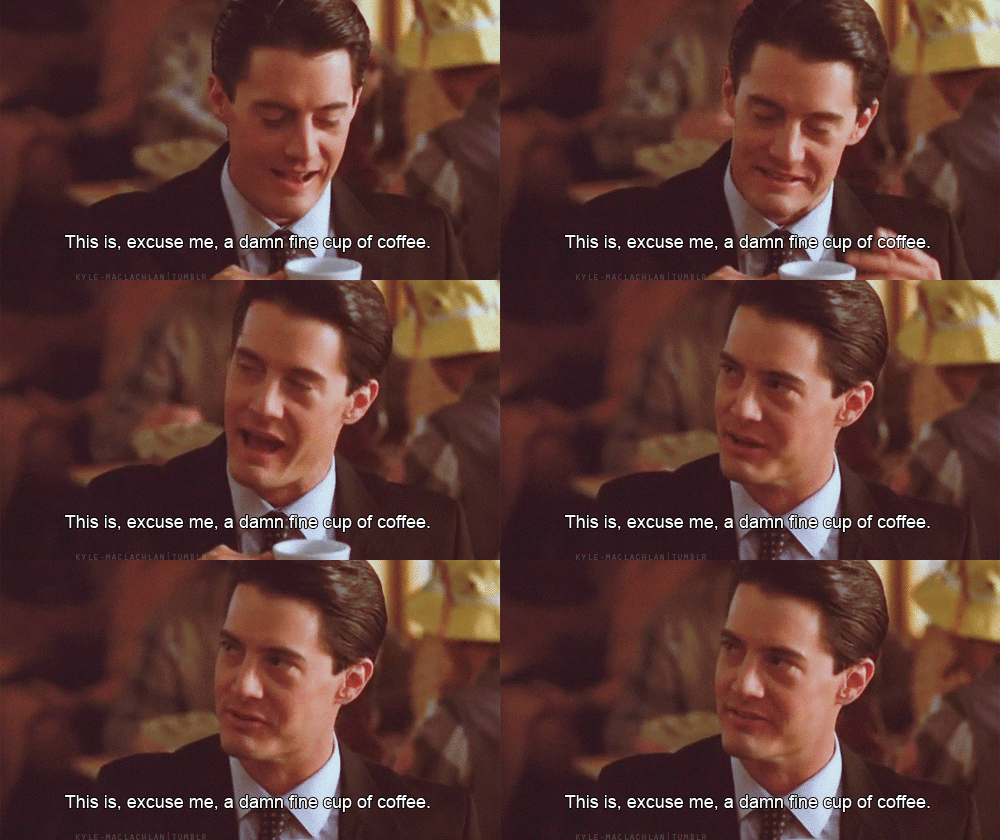
I read that the author is actually a composer herself, and so where this book lost stars were in the passages when she became very technical with the composition aspect of the soundtrack. I am trained in music and understand what the notes are, but this aspect didn't interest me and I mostly skimmed these parts.
There was also an entire section devoted to none other than my alter ego, Miss Audrey Horne, so this also won points.
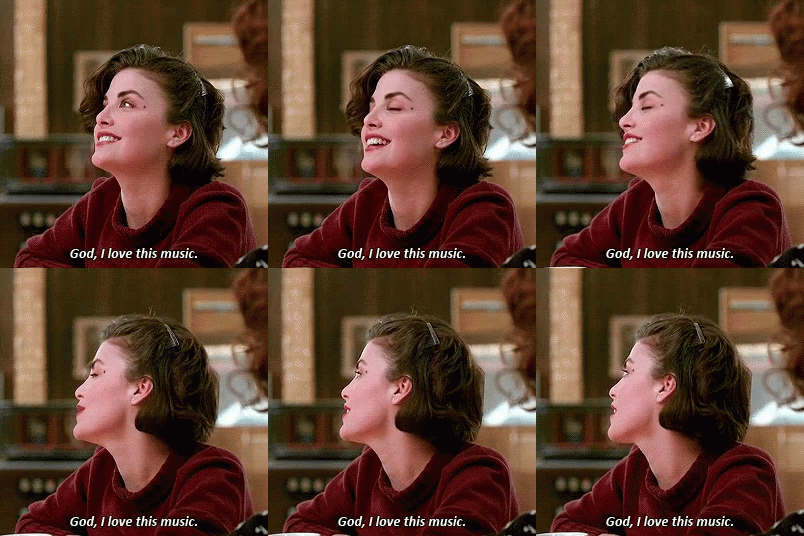

I also discovered a lot of songs and playlists that inspired the writing of this soundtrack, and finding new music always makes me happy.
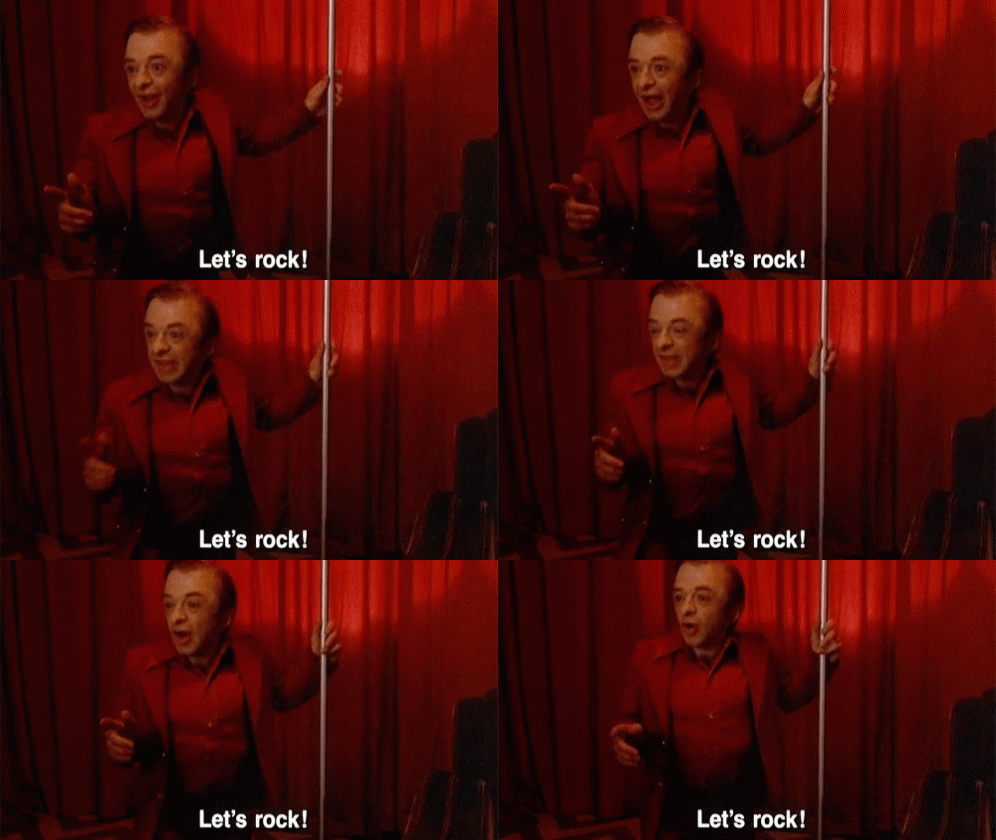
All in all, I enjoyed this very short little book that just gave me more info on my favorite series of all time. It made me want to go back and rewatch all of it, with a new ear for the music, to put even more pieces of the entire world together.
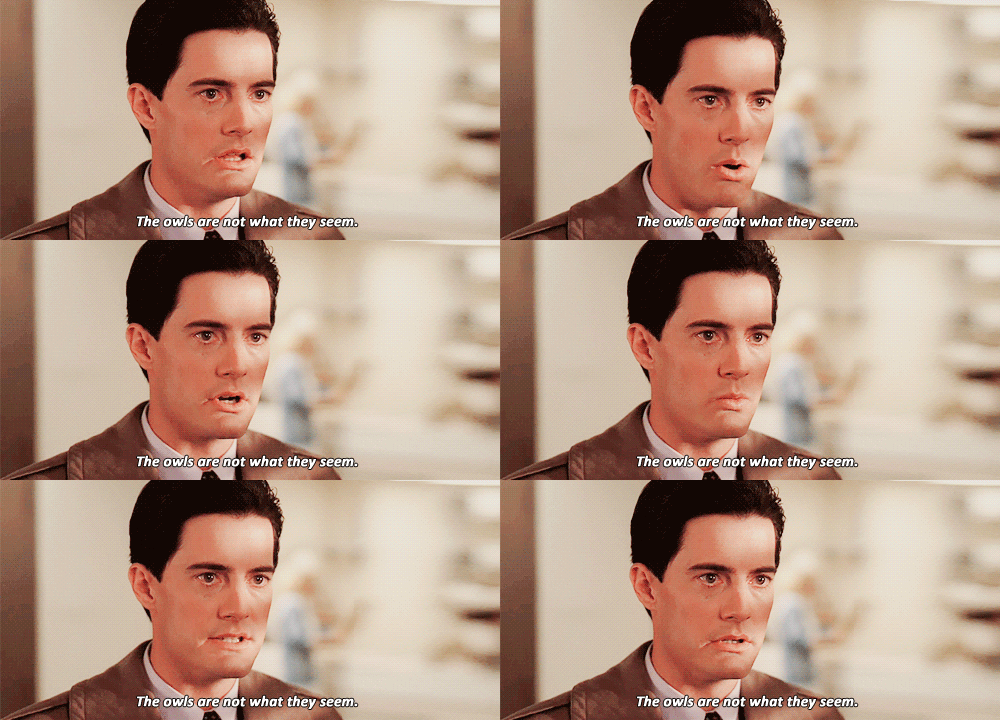
December 31, 2019
Obviously this is going to be a five-star review. From me? Given my love of Twin Peaks this can hardly be a surprise for anyone.
Though I'm inclined to go soft on anything vaguely Lynch-adjacent, there's no need with Norelli's excellent entry in the 33 1/3 series of works: it's a solid entry, which offers thematic, technical and widescreen views of the sonic doings in that small town in the Pacific Northwest, where there's always music in the air.

Norelli's text is a little bit of a cheat, though not an unwelcome one. It doesn't focus entirely on the show's soundtrack album because in taking a longer view at David Lynch and Angelo Badalamenti's working relationship, it shows how much cross-pollination has occured: how much stuff from Blue Velvet germinated into other projects. The book is an examination of the whole Peaks sound-world – well, from the two series produced in the '90s, to the film Fire Walk With Me. While this slightly bends the remit of the 33 1/3 series, it's necessary: the music across all entries in that world are cut from the same cloth, and it's impossible to talk about one part without talking about the whole.
Though I'm quite a fan of the show and collector of trivia, Norelli's book threw up a load of neat facts I'd not previously known, including Badalamenti's early-career link with synth guru Gershon Kingsley. Her description of the way the composer came into the Lynch fold is told well, and conveys the simpatico way of working the pair enjoy. With plenty of credit given to sidemen and vocalists for the happy accidents that led to the soundtrack's best moments, the book is a wealth of geek detail, as well as a very pleasant portrait of a creator who's got a thing for the bittersweet.
I found Norelli's unpicking of the different versions of tunes from the soundtrack – cues, songs, stings, drones et al – and the explanation of Badalamenti and Lynch's 'firewood' way of constructing new pieces from individual isolated tracks to be engrossing, and the appendix detailing the use of variations on main tunes (as they appear in the Twin Peaks Archive collection) quite handy. Where the author shines, though, is in her examination of how music informs the drama of the series' first episode: this section is a bravura piece of writing, and it unpicks how essential Badalamenti's work is to making the drama as successful as it is.
There's music theory stuff in here – mostly about suspension and resolution, given Badalamenti's propensity to use same – but it's understandable enough for those without specific theory backgrounds. The enthusiasm that Norelli brings to the subject ensures that this is a quick read, and one that's a shared delight.
It's a shame that this book came out before Twin Peaks: The Return had come to fruition. That series – with its notable use of Penderecki, amongst other non-Badalamenti pieces – would offer an interesting juxtaposition to what's on offer here. Of course, an update is always on the cards, I guess, and it would be nice to see Norelli complete her examination of the Badalamenti-Lynch nexus in light of this new, and perhaps final, entry.
If you're not a fan of Twin Peaks, you probably won't get as much out of this book as I did. If you've a bit of a knowledge of musical theory, though, it might serve to intrigue you, particularly if you missed the show the first time around. But for anyone who's lived and loved the world of cherry pie, dwarfs, giants and damn fine coffee, this is a must.
Though I'm inclined to go soft on anything vaguely Lynch-adjacent, there's no need with Norelli's excellent entry in the 33 1/3 series of works: it's a solid entry, which offers thematic, technical and widescreen views of the sonic doings in that small town in the Pacific Northwest, where there's always music in the air.
Norelli's text is a little bit of a cheat, though not an unwelcome one. It doesn't focus entirely on the show's soundtrack album because in taking a longer view at David Lynch and Angelo Badalamenti's working relationship, it shows how much cross-pollination has occured: how much stuff from Blue Velvet germinated into other projects. The book is an examination of the whole Peaks sound-world – well, from the two series produced in the '90s, to the film Fire Walk With Me. While this slightly bends the remit of the 33 1/3 series, it's necessary: the music across all entries in that world are cut from the same cloth, and it's impossible to talk about one part without talking about the whole.
Though I'm quite a fan of the show and collector of trivia, Norelli's book threw up a load of neat facts I'd not previously known, including Badalamenti's early-career link with synth guru Gershon Kingsley. Her description of the way the composer came into the Lynch fold is told well, and conveys the simpatico way of working the pair enjoy. With plenty of credit given to sidemen and vocalists for the happy accidents that led to the soundtrack's best moments, the book is a wealth of geek detail, as well as a very pleasant portrait of a creator who's got a thing for the bittersweet.
I found Norelli's unpicking of the different versions of tunes from the soundtrack – cues, songs, stings, drones et al – and the explanation of Badalamenti and Lynch's 'firewood' way of constructing new pieces from individual isolated tracks to be engrossing, and the appendix detailing the use of variations on main tunes (as they appear in the Twin Peaks Archive collection) quite handy. Where the author shines, though, is in her examination of how music informs the drama of the series' first episode: this section is a bravura piece of writing, and it unpicks how essential Badalamenti's work is to making the drama as successful as it is.
There's music theory stuff in here – mostly about suspension and resolution, given Badalamenti's propensity to use same – but it's understandable enough for those without specific theory backgrounds. The enthusiasm that Norelli brings to the subject ensures that this is a quick read, and one that's a shared delight.
It's a shame that this book came out before Twin Peaks: The Return had come to fruition. That series – with its notable use of Penderecki, amongst other non-Badalamenti pieces – would offer an interesting juxtaposition to what's on offer here. Of course, an update is always on the cards, I guess, and it would be nice to see Norelli complete her examination of the Badalamenti-Lynch nexus in light of this new, and perhaps final, entry.
If you're not a fan of Twin Peaks, you probably won't get as much out of this book as I did. If you've a bit of a knowledge of musical theory, though, it might serve to intrigue you, particularly if you missed the show the first time around. But for anyone who's lived and loved the world of cherry pie, dwarfs, giants and damn fine coffee, this is a must.

March 20, 2018
How could anyone mess this book up?
Unfortunately I am probably one of the few people who has never seen Twin Peaks but I do know the soundtrack and Norelli does a fantastic job of explaining the backgrounds of Lynch and Badalamenti's backgrounds, the composing of the soundtrack and the influences behind the compositions.
The book also goes behind the non orchestral music and the impact of the soundtrack plus a small update on the Fire Walk with me series.
Without a doubt this volume is a highlight and also stands as being the most well written one as well. Claire Nina Norelli, please write a novel.
Unfortunately I am probably one of the few people who has never seen Twin Peaks but I do know the soundtrack and Norelli does a fantastic job of explaining the backgrounds of Lynch and Badalamenti's backgrounds, the composing of the soundtrack and the influences behind the compositions.
The book also goes behind the non orchestral music and the impact of the soundtrack plus a small update on the Fire Walk with me series.
Without a doubt this volume is a highlight and also stands as being the most well written one as well. Claire Nina Norelli, please write a novel.

August 8, 2019
A very quick explanation of how Badalamenti's music was a vital part of the Twin Peaks phenomenon. Specific musical examples of how Angelo B. created the atmosphere and the correlation to the characters and situations are written out in staff and instrumentation choices described. It left me feeling that much more in awe of Lynch in how he could create this soundscape by closely working with the composer.

May 4, 2021
god this show is so good
love the talk of multisensory interaction in soundtracks, love the term "listener-viewer". Norelli gives a good history of the show and the relationship bt Lynch and Badalamenti.
music writing for a general audience is always gonna be hard bc you'll either underexplain or overexplain. i'm gonna be picky: Norelli underexplains the functional harmony of Badalamenti's compositions. given Badalamenti's background as a jazz pianist (among other things), he probably thought in terms of jazz harmony (chord extensions, circle-of-fifths jumps, and so on). Norelli seems to stick more to Western classical theory: lots of cool discussion of voice leading, but the notions of "tension" and "instability" are left vague. still, Norelli does a thorough job describing Big B's arrangement choices (her discussion of the use of synth strings is esp cool to me) and the general idea of his (and Lynch's) use of cultural signifiers in the soundtracks.
if you know little about music but you love lots about Twin Peaks, this book could be useful to you. if you know theory, you'll probably be better off just playing Badalamenti's music, although you'll still get the fun stories and insights
love the talk of multisensory interaction in soundtracks, love the term "listener-viewer". Norelli gives a good history of the show and the relationship bt Lynch and Badalamenti.
music writing for a general audience is always gonna be hard bc you'll either underexplain or overexplain. i'm gonna be picky: Norelli underexplains the functional harmony of Badalamenti's compositions. given Badalamenti's background as a jazz pianist (among other things), he probably thought in terms of jazz harmony (chord extensions, circle-of-fifths jumps, and so on). Norelli seems to stick more to Western classical theory: lots of cool discussion of voice leading, but the notions of "tension" and "instability" are left vague. still, Norelli does a thorough job describing Big B's arrangement choices (her discussion of the use of synth strings is esp cool to me) and the general idea of his (and Lynch's) use of cultural signifiers in the soundtracks.
if you know little about music but you love lots about Twin Peaks, this book could be useful to you. if you know theory, you'll probably be better off just playing Badalamenti's music, although you'll still get the fun stories and insights

June 14, 2021
While I think the perfect audience here would be a well-versed David Lynch fan with a background in music theory, this short, little book was still an enjoyable read for someone who's really only coming at it from a Twin Peaks angle (me). I particularly enjoyed the history presented on the Lynch-Badalamenti working relationship and how the author pulled in more of both their works than the title might indicate. While I found some of the sections discussing chord progressions and key signatures to be a bit dry, the scattered insights about how music was central to the viewer/listener experience kept me interested and smiling.

January 20, 2025
allegedly you are supposed to be able to read and understand this even if you haven’t studied music, but i would say someone with a better working knowledge of sight reading would get the most out of this. however, there were pieces about badalamenti and lynch’s collaborations that made it worth reading for me

June 6, 2022
i thought the writing was good and i liked how they used theory (not too heavy) but there was one major flaw: i dont really care as much as i thought about this

September 1, 2025
One of the most interesting books I’ve ever read - the breakdown of the soundtrack for the specific scenes were the highlight for me. All hail Angelo.

August 11, 2017
much like the twin peaks revival this was more art than i was expecting


March 8, 2021
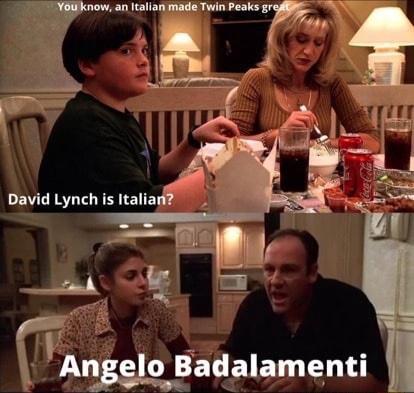
This music is a complete counterweight to the story.

June 27, 2025
Angelo is a special man. Uncovering more on his background, the breadth of his expertise, and his relationship with Lynch will be a treat for any Lynch fan readers. While this essay was overly repetitive at times (but as can be Twin Peaks’ musical themes & cues) and read more like a listener’s instruction manual, some of the more rote sections should act nicely as a viewer’s companion, notably pairing the Wrapped in Plastic chapter with the Pilot episode. All in all, I found myself finger-snapping my way around town with Angelo’s wondrous melodies in my head.
A few shout outs: Grady Tate and his delicate brushed snare work. Matthew Smith and his YouTube archiving of the TP Archives - https://youtube.com/playlist?list=PL5... - well worth a listen through.
A few shout outs: Grady Tate and his delicate brushed snare work. Matthew Smith and his YouTube archiving of the TP Archives - https://youtube.com/playlist?list=PL5... - well worth a listen through.
February 7, 2021
Quite heavy on the music theory, which isn't in itself a bad thing, but it didn't always illuminate. When explaining how the score functions Norelli occasionally forgets to explain why we should care.

February 16, 2023
Ok, dit is een nogal uit de kluiten gewassen stuk geworden, dus ik post maar een gedeelte, zie onderaan de link naar het hele stuk.
#120 Clare Nina Norelli – Angelo Badalamenti’s Soundtrack from Twin Peaks (1990)
Mensen die mij een beetje kennen, weten dat ik al sinds 2008 compleet geobsedeerd ben door de tv-serie Twin Peaks (maar mijn obsessie voor alles wat met David Lynch te maken heeft is zelfs al wat ouder). Sinds 2008 kijk ik de serie minstens één keer per jaar, lees en luister ik alles wat los en vast zit over deze serie en bezit ik inmiddels bijna alle soundtracks op vinyl, die ook erg regelmatig de revue passeren.
Ik leef dus zo’n beetje voor deze serie, en nu in 2022 zowel Julee Cruise (zangeres van de liedjes op de soundtrack) als Angelo Badalamenti (de componist van alle muziek voor de eerste twee seizoenen en de componist van een deel van het derde seizoen) overleden, leek het me wel gepast om eens te duiken in het ontstaan van de soundtrack. Ik dacht dat ik eigenlijk al alles wist over Twin Peaks, maar zelfs ik leerde nog heel wat door dit boekje uit de 33 1/3 reeks.
[...]
Genoeg geleerd dus weer dankzij dit boekje, maar als je de serie niet (goed) kent, heb je er helemaal niks aan. Norelli haalt heel vaak heel specifieke momenten uit de serie naar voren en hoe enkele noten een bepaald beeld proberen te bekrachtigen. Nu ken ik de serie zo goed dat ik precies voor me zie en hoor wat Norelli bedoelt, zodat ik begrijp wat ze probeert te zeggen, maar als je niet zo bekend bent met Twin Peaks moet het vast overkomen als een betekenisloze woordenbrij.
Ik ben door het boek niet per se anders naar de soundtrack of de serie gaan kijken (van alle kunst die ooit gemaakt is, vind ik Twin Peaks nog steeds het allermooist, daar zal nog weinig verandering in kunnen brengen), maar door te lezen hoe de soundtrack is ontstaan heb ik wel nog meer waardering gekregen voor de werkwijze van Lynch en Badalamenti. Ik wist niet dat het mogelijk was om nog meer idolaat te raken van David Lynch en Angelo Badalamenti, maar het is gebeurd.
Nu alle mensen die een rol speelden bij de totstandkoming van Twin Peaks één voor één overlijden is het me steeds duidelijker dat dat hele team echt iets volkomen unieks heeft neergezet en dat ik die drie seizoenen en die film moet koesteren (hoe geniaal is het eigenlijk al dat er in 2017 een derde seizoen kwam en dat dat ook nog eens briljant was!), want dit is waarschijnlijk waar het bij zal blijven. Zoiets geniaals zal er waarschijnlijk nooit meer gemaakt worden, en dat is prima, want ik kan mijn hele leven teren op deze ene serie en de bijbehorende soundtracks.
33 1/3: Angelo Badalamenti's Soundtrack from Twin Peaks
#120 Clare Nina Norelli – Angelo Badalamenti’s Soundtrack from Twin Peaks (1990)
Mensen die mij een beetje kennen, weten dat ik al sinds 2008 compleet geobsedeerd ben door de tv-serie Twin Peaks (maar mijn obsessie voor alles wat met David Lynch te maken heeft is zelfs al wat ouder). Sinds 2008 kijk ik de serie minstens één keer per jaar, lees en luister ik alles wat los en vast zit over deze serie en bezit ik inmiddels bijna alle soundtracks op vinyl, die ook erg regelmatig de revue passeren.
Ik leef dus zo’n beetje voor deze serie, en nu in 2022 zowel Julee Cruise (zangeres van de liedjes op de soundtrack) als Angelo Badalamenti (de componist van alle muziek voor de eerste twee seizoenen en de componist van een deel van het derde seizoen) overleden, leek het me wel gepast om eens te duiken in het ontstaan van de soundtrack. Ik dacht dat ik eigenlijk al alles wist over Twin Peaks, maar zelfs ik leerde nog heel wat door dit boekje uit de 33 1/3 reeks.
[...]
Genoeg geleerd dus weer dankzij dit boekje, maar als je de serie niet (goed) kent, heb je er helemaal niks aan. Norelli haalt heel vaak heel specifieke momenten uit de serie naar voren en hoe enkele noten een bepaald beeld proberen te bekrachtigen. Nu ken ik de serie zo goed dat ik precies voor me zie en hoor wat Norelli bedoelt, zodat ik begrijp wat ze probeert te zeggen, maar als je niet zo bekend bent met Twin Peaks moet het vast overkomen als een betekenisloze woordenbrij.
Ik ben door het boek niet per se anders naar de soundtrack of de serie gaan kijken (van alle kunst die ooit gemaakt is, vind ik Twin Peaks nog steeds het allermooist, daar zal nog weinig verandering in kunnen brengen), maar door te lezen hoe de soundtrack is ontstaan heb ik wel nog meer waardering gekregen voor de werkwijze van Lynch en Badalamenti. Ik wist niet dat het mogelijk was om nog meer idolaat te raken van David Lynch en Angelo Badalamenti, maar het is gebeurd.
Nu alle mensen die een rol speelden bij de totstandkoming van Twin Peaks één voor één overlijden is het me steeds duidelijker dat dat hele team echt iets volkomen unieks heeft neergezet en dat ik die drie seizoenen en die film moet koesteren (hoe geniaal is het eigenlijk al dat er in 2017 een derde seizoen kwam en dat dat ook nog eens briljant was!), want dit is waarschijnlijk waar het bij zal blijven. Zoiets geniaals zal er waarschijnlijk nooit meer gemaakt worden, en dat is prima, want ik kan mijn hele leven teren op deze ene serie en de bijbehorende soundtracks.
33 1/3: Angelo Badalamenti's Soundtrack from Twin Peaks
August 31, 2025
Leí este libro en la edición de Dobra Robota y Walden, no sabiendo qué esperar al respecto.
La icónica serie creada por Frost y Lynch, genera en sus fanáticos -entre los cuales me cuento- reacciones más dignas del melodrama o charla Ted que de la crítica musical o audiovisual. Precisamente, este libro podía ser tranquilamente uno de esos alegatos coming of age, más dignos de una carta dirigida a la redacción de una revista cultural que a un análisis de por qué funciona la música de Twin Peaks y es tan fácilmente reconocible.
Por suerte, la autora evitó estos arrebatos de nostalgia para entregarnos un libro mucho más técnico e informativo. Tras documentar la carrera de Badalamenti dentro de la industria musical y cinematográfica, se centra mucho en el análisis musical de piezas claves tanto en la serie como en blue velvet y otras obras de juventud, buscando las notas y patrones de su estilo.
La única metáfora para calificar su música en todo el libro es la de "agridulce", entregando un correlato técnico-compositivo de este adjetivo en lugar de la escritura impresionista que abusa de términos descontextualizados pero que tienen un aire barrial a la musicología.
Si bien se genera la paradoja de un libro sobre lírica para nada lírico -el gran traductor, Maximiliano Gonnet hace lo que puede ante una prosa tan desierta como la nacionalidad de la autora-, personalmente al tener nociones de notación musical y composición disfruté sus ejercicios semióticos que van desde la distinción entre canciones (tracks) y entradas (cues), pasando por las connotaciones satánicas del trítono hasta las implicancias e influencias del ¡chasquido! en composiciones como "Audrey´s dance"
Esta edición -gracias nuevamente a su traductor y en ciertos casos, editor- es profusa en notas sobre términos intraducibles como "Americana", "Schmalzt", "Torch music" que harán las delicias de quien busque por boludismo ilustrado enriquecer su slang.
La única tortuga que creo se le escapó fue la de transcribir lo que en su metodología compositiva Badalamenti y Lynch llamaban "logs" (se traduce correctamente por "Leña" pero creo que sus artífices jugaban con la idea de "registro", tal como hace Cooper en su grabadora o la dama del leño escuchando al susodicho). Como no tengo la edición original, probablemente esté diciendo una burrada, pero me resultó poco satisfactoria la imagen de una pila de leña, sirviendo para hacer distintos fuegos aunque idénticos en su material. Demasiada precisión para algo que en la ambigüedad, genera mejores migas.
La icónica serie creada por Frost y Lynch, genera en sus fanáticos -entre los cuales me cuento- reacciones más dignas del melodrama o charla Ted que de la crítica musical o audiovisual. Precisamente, este libro podía ser tranquilamente uno de esos alegatos coming of age, más dignos de una carta dirigida a la redacción de una revista cultural que a un análisis de por qué funciona la música de Twin Peaks y es tan fácilmente reconocible.
Por suerte, la autora evitó estos arrebatos de nostalgia para entregarnos un libro mucho más técnico e informativo. Tras documentar la carrera de Badalamenti dentro de la industria musical y cinematográfica, se centra mucho en el análisis musical de piezas claves tanto en la serie como en blue velvet y otras obras de juventud, buscando las notas y patrones de su estilo.
La única metáfora para calificar su música en todo el libro es la de "agridulce", entregando un correlato técnico-compositivo de este adjetivo en lugar de la escritura impresionista que abusa de términos descontextualizados pero que tienen un aire barrial a la musicología.
Si bien se genera la paradoja de un libro sobre lírica para nada lírico -el gran traductor, Maximiliano Gonnet hace lo que puede ante una prosa tan desierta como la nacionalidad de la autora-, personalmente al tener nociones de notación musical y composición disfruté sus ejercicios semióticos que van desde la distinción entre canciones (tracks) y entradas (cues), pasando por las connotaciones satánicas del trítono hasta las implicancias e influencias del ¡chasquido! en composiciones como "Audrey´s dance"
Esta edición -gracias nuevamente a su traductor y en ciertos casos, editor- es profusa en notas sobre términos intraducibles como "Americana", "Schmalzt", "Torch music" que harán las delicias de quien busque por boludismo ilustrado enriquecer su slang.
La única tortuga que creo se le escapó fue la de transcribir lo que en su metodología compositiva Badalamenti y Lynch llamaban "logs" (se traduce correctamente por "Leña" pero creo que sus artífices jugaban con la idea de "registro", tal como hace Cooper en su grabadora o la dama del leño escuchando al susodicho). Como no tengo la edición original, probablemente esté diciendo una burrada, pero me resultó poco satisfactoria la imagen de una pila de leña, sirviendo para hacer distintos fuegos aunque idénticos en su material. Demasiada precisión para algo que en la ambigüedad, genera mejores migas.

March 31, 2026
Ojalá tuviera mil páginas más este pequeño abordaje del tándem Badalamenti-Lynch, con lanzadera en Twin Peaks, porque es una gozada de libro. El enfoque ambivalente de Norelli, ni en exceso académico pero tampoco alejado de la teoría musical, fluye con naturalidad en cada capítulo, trascendiendo la mera anécdota en favor de un alcance hondo de las singularidades compositivas de este par sin igual, a saber: el oscuro empaste tímbrico, el drone y diseño sonoro denso y oculto, siempre en la misma tonalidad (do menor) para poder manipularlo en beneficio de la imagen (sonido de leña lo llaman ellos), el uso intencionado de una armonía ambigua (con acordes suspendidos en pulso fuerte y sin resolver) o la narración y teatralización ante el Fender Rhodes, juntos al piano como relataba Badalemnti en ese famoso video de youtube, como eje para la improvisación (las cimas de Blue Velvet, los discos de Julee Cruise y todo Twin Peaks vienen de aquí). Leer lo que ya sabíamos tan bien escrito es una verdadera delicia y, además, pese a la escasez de páginas, el descubrimiento de lo ignorado lo convierte en una lectura gratificante.
Al pensar en el modus operandi de este equipo, es inevitable trazar puentes con otros universos donde la imagen y el sonido son una misma hermandad orgánica. Pienso en la simbiosis generacional de Alex G y Jane Schoenbrun (con esa joya a reivindicar que es I Saw the TV Glow), o en las atmósferas de neón y sintetizador de Cliff Martinez y Winding Refn, la inventiva sin límites de Teiji Ito y Maya Deren o el tejido psicodélico/drone de Bobby Beausoleil y Kenneth Anger y, lo que a mí me parece, el combo más explosivo y original desde el de Badalamenti-Lynch: Mica Levi con Jonathan Glazer haciendo del ingreso del sonido en la imagen un todo definitivo, capaz de reescribir el lenguaje del cine actual a través de texturas magnéticas/alienígenas (el sonido te atrapa en la imagen) y una tensión casi física. Al igual que en Twin Peaks, la música en todos estos ejemplos completa la imagen, la subvierte y la define.
Sirva esta reseña como elogio al compositor de oficio para TV y cine
Al pensar en el modus operandi de este equipo, es inevitable trazar puentes con otros universos donde la imagen y el sonido son una misma hermandad orgánica. Pienso en la simbiosis generacional de Alex G y Jane Schoenbrun (con esa joya a reivindicar que es I Saw the TV Glow), o en las atmósferas de neón y sintetizador de Cliff Martinez y Winding Refn, la inventiva sin límites de Teiji Ito y Maya Deren o el tejido psicodélico/drone de Bobby Beausoleil y Kenneth Anger y, lo que a mí me parece, el combo más explosivo y original desde el de Badalamenti-Lynch: Mica Levi con Jonathan Glazer haciendo del ingreso del sonido en la imagen un todo definitivo, capaz de reescribir el lenguaje del cine actual a través de texturas magnéticas/alienígenas (el sonido te atrapa en la imagen) y una tensión casi física. Al igual que en Twin Peaks, la música en todos estos ejemplos completa la imagen, la subvierte y la define.
Sirva esta reseña como elogio al compositor de oficio para TV y cine

Read
July 3, 2026I picked this up to see if I’d be interested in the format of the 33 1/3 books. I’m not sure to what extent they are like this one, as they seem to all be from different authors. This one is very musically inclined, as in, lots of musical staves, talking of majors and minors and key changes and etc. etc. I ended up skimming a lot of it, because I don’t have the vocabulary or the knowledge to connect many of those words to sounds or concepts, which I feel a little embarrassed to admit. I can read sheet music a bit; I played the trombone, but I was the kind of player that didn’t want to practice and just wrote slide positions on the sheet. I love listening to music, and I have a good feel for it, but I don’t know what I’m looking at on paper.
What I kept wishing was for this to be an hour and a half long video essay with scenes, musical staves illustrated to the sounds we’re hearing. I know that probably sounds like Baby’s First Music Theory Lesson, but it’s what I think I need.
So, my rating (or lack thereof) of the book should probably not be taken seriously. If you love Badalamenti’s music for Twin Peaks, and you have more musical knowledge than me or your average fourth grader, you’ll probably really like this!
What I kept wishing was for this to be an hour and a half long video essay with scenes, musical staves illustrated to the sounds we’re hearing. I know that probably sounds like Baby’s First Music Theory Lesson, but it’s what I think I need.
So, my rating (or lack thereof) of the book should probably not be taken seriously. If you love Badalamenti’s music for Twin Peaks, and you have more musical knowledge than me or your average fourth grader, you’ll probably really like this!

April 17, 2020
First, a disclaimer: I am in no way a musician or someone who has a true working understanding of musical theory. All I know about music is that if it sounds good to me, I will probably like it. Discussion of chords and octaves and musical resolution puts me in mind of overhearing people discuss the more technical aspects of a language; I might recognize a few of the words they're talking about as words, but the concepts involved are things I have yet to grasp.
All of that out of the way, I think that Norelli's book is an excellent guide to the history behind and creation of the most iconic pieces of music in the first two seasons of Twin Peaks. It's definitely written in a way that those without much (or any) musical training can understand the mechanics that are being explained, but without a grander context (the kind of thing such training could provide) Norelli's reference to notes and scales only faintly resonated with me.
Nonetheless, if you are a fan of the series and have at least some interest in the role that music plays in it, you should seek this quick read out. But if you're the kind of person who was not at all bothered by the relatively silent sound track of The Return, then feel free to pass this one by.
All of that out of the way, I think that Norelli's book is an excellent guide to the history behind and creation of the most iconic pieces of music in the first two seasons of Twin Peaks. It's definitely written in a way that those without much (or any) musical training can understand the mechanics that are being explained, but without a grander context (the kind of thing such training could provide) Norelli's reference to notes and scales only faintly resonated with me.
Nonetheless, if you are a fan of the series and have at least some interest in the role that music plays in it, you should seek this quick read out. But if you're the kind of person who was not at all bothered by the relatively silent sound track of The Return, then feel free to pass this one by.

November 10, 2025
This was much more technical than other 33 1/3 books I read. For instance, multiple times you are told the chord progressions being played, the notes that make up those progressions, and I feel like anybody besides a very studied musician can actually read something like that and hear in their head what the author is talking about. I am a musician and songwriter and even I was lost at times. So I don't think something like that is the best approach for these books. I simply don't think writing very literally about music really works.
However this book excelled in many other ways. Connections the author made between the score for Twin Peaks and the musical history and context of this kind of music was fascinating (for example, the chapter about the finger snaps and connecting Cooper finger snapping to remember a dream to obscure quotes decades earlier from Jack Kerouac about finger snapping to remember a dream.) Exploring the idea of "cool" jazz and what "cool" means in the context of the Twin Peaks characters. Connecting various scenes from the show together that all use parts of the same musical piece, and interpreting why that is. I also appreciated the connections to Lynch's other works. I'd say this is a must read for Twin Peaks fans.
However this book excelled in many other ways. Connections the author made between the score for Twin Peaks and the musical history and context of this kind of music was fascinating (for example, the chapter about the finger snaps and connecting Cooper finger snapping to remember a dream to obscure quotes decades earlier from Jack Kerouac about finger snapping to remember a dream.) Exploring the idea of "cool" jazz and what "cool" means in the context of the Twin Peaks characters. Connecting various scenes from the show together that all use parts of the same musical piece, and interpreting why that is. I also appreciated the connections to Lynch's other works. I'd say this is a must read for Twin Peaks fans.

December 4, 2017
This volume in the 33 1/3 series covers the haunting soundtrack to one of my favorite TV shows, Twin Peaks. Norelli gives a nice overview of Badalamenti's life and career and a lot of interesting detail about how he and Lynch collaborated on the music for the show. The other half of the book is a brief informative look at the music itself, how it is used in the TV show, and the ways in which it sets the mood and tone for scenes and characters. Being a big fan of the show, I really enjoyed this view of Twin Peaks through its music. I just wish the book had been a little longer so that Norelli could have included more scenes, particularly some of the one that I found most pivotal and affecting.

July 24, 2018
"Badalamenti's soundtrack features cool jazz, classical, soap-opera melodrama, retro teen balladry, and everything in between. It was a postmodern melting pot of musical genres and an unusually sophisticated outing for a television soundtrack. This synthesis of styles added to the anachronistic feel of Twin Peaks; we are never quite sure when the show takes place, and the world which its characters inhabit is splintered between the mundane and the mythical. Badalamenti's ubiquitous soundtrack also helped anchoring Twin Peaks' oft-unhinged narrative, supplying a prevailing mood that consolidated the entire series".
A proper companion to a challenging and shape-shifting piece of art.
A proper companion to a challenging and shape-shifting piece of art.

April 11, 2023
I've complained about other books in this series, most significantly with the OK Computer volume, misusing or misapplying musicology/music theory/whatever you want to call it. But I've also insisted that my problem isn't with music theory itself, and that in principle it should be possible to have it be an asset and not a burden. And here comes Clare Nina Norelli to make it look easy! I'm still no more knowledgeable about this stuff than I was before, but everything here is both explained enough for us laypeople and integrated enough into an actually insightful and interesting take on the music (and here, the show) that the theory is about that it was downright gripping. It really did give me a new level of appreciation for the work of Badalamenti, Lynch, Frost et al.

December 28, 2024
Scratches the itch to re-watch Twin Peaks. Norelli explores the theme music of almost every character and Badalamenti's life and work as a composer. I've read only a few of the 33 1/3 editions. This one went into chord progressions and reprinted lines of sheet music throughout but at the same time felt very surface level. Don't get me wrong, there are details here but maybe for the average viewer and fan of TP, we don't need to know much about dissonant chord structures but something...else. I'm not sure what. Only 123 pages! Entertaining, it made me listen to the music on its own without the show and gain a new appreciation for it. Remember: sound is story! And no one understands that more than David Lynch (and Badalamenti!!).
February 23, 2025
33 1/3 books are fascinating in that they’re easier to buy than read—I buy them as if they’re records, but they sit around (mostly) unread. The two best-known books in the series—Carl Wilson’s Let’s Talk About Love and John Darnielle’s Master of Reality—use the records as jumping-off points to talk about something much larger. This also outgrows its purview in interesting ways, offering insights into Lynch’s methods of working and how he relates to music, but is also the work of an actual musicologist who’s equipped to explain how the sounds are created, what they’re created with, and the emotional effects they have on us. I don’t sight-read and don’t even know the scales, which would have enhanced my reading of this, but it’s still great and I’m glad I read it.

August 8, 2017
Now, it is better I come forward and admit I know nothing about music theory. I can read notes, and I have played the piano… but when it comes to harmony and theoretical knowledge I am the equivalent of a fish on land.
I requested this book because I'm a big fan of the TV show Twin Peaks. I expected it to be less theoretical than it is and more… enjoyable. It is a great read, if only I knew more on the subject so I can fully appreciate it.
Any Twin Peaks fan will love this book. It sets the history as well as gives you great insights. I was super impressed.
I requested this book because I'm a big fan of the TV show Twin Peaks. I expected it to be less theoretical than it is and more… enjoyable. It is a great read, if only I knew more on the subject so I can fully appreciate it.
Any Twin Peaks fan will love this book. It sets the history as well as gives you great insights. I was super impressed.

Read
February 18, 2022I have always loved Twin Peaks but, for my partner, it maintains a place of particular prominence in his personal canon. So when he offered to read this book aloud, I had to say yes, but I also did so with genuine enthusiasm
Even without a robust musicological background, I tend to enjoy soundtrack analysis because the other elements of the storytelling help to anchor my understanding of what the author is trying to tell me. In this case, that was very much true, and I am glad I available myself of what the author had to say.
Even without a robust musicological background, I tend to enjoy soundtrack analysis because the other elements of the storytelling help to anchor my understanding of what the author is trying to tell me. In this case, that was very much true, and I am glad I available myself of what the author had to say.
Displaying 1 - 30 of 74 reviews