Jump to ratings and reviews
Rate this book

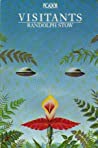
Visitants

Rate this book
Set on a Papuan island in 1959, this is a tale of magic and mystery.

Paperback

First published January 1, 1981

8 people are currently reading
200 people want to read

About the author

Randolph Stow

22 books37 followers
Born in Geraldton, Western Australia, Randolph Stow attended Geraldton Primary and High schools, Guildford Grammar School, the University of Western Australia, and the University of Sydney. During his undergraduate years in Western Australia he wrote two novels and a collection of poetry, which were published in London by Macdonald & Co. He taught English Literature at the University of Adelaide, the University of Western Australia and the University of Leeds.
He also worked on an Aboriginal mission in the Kimberley, which he used as background for his third novel To the Islands. Stow further worked as an assistant to an anthropologist, Charles Julius, and cadet patrol officer in the Trobriand Islands. In the Trobriands he suffered a mental and physical breakdown that led to his repatriation to Australia. Twenty years later, he used these last experiences in his novel Visitants.
Stow's first visit to England took place in 1960, after which he returned several times to Australia. Tourmaline, his fourth novel, was completed in Leeds in 1962. In 1964 and 1965 he travelled in North America on a Harkness Fellowship, including a sojourn in Aztec, New Mexico, during which he wrote one of his best known novels, The Merry-Go-Round in the Sea. While living in Perth (WA) in 1966 he wrote his popular children's book Midnite.
From 1969 to 1981 he lived at East Bergholt in Suffolk in England, his ancestral county, and he used traditional tales from that area to inform his novel The Girl Green as Elderflower. The last decades of his life he spent in nearby Harwich, the setting for his final novel The Suburbs of Hell. He last visited Australia in 1974.
His novel To the Islands won the Miles Franklin Award for 1958.[1] He was awarded the Patrick White Award in 1979. As well as producing fiction, poetry, and numerous book reviews for The Times Literary Supplement, he also wrote libretti for musical theatre works by Peter Maxwell Davies.
A considerable number of Randolph Stow's poems are listed in the State Library of Western Australia online catalogue[2] with indications where they have been anthologised.

Ratings & Reviews

What do you think?
Rate this book

Friends & Following

Create a free account to discover what your friends think of this book!

Community Reviews

5 stars
34 (30%)
4 stars
49 (44%)
3 stars
21 (18%)
2 stars
5 (4%)
1 star
2 (1%)
Displaying 1 - 20 of 20 reviews
Profile Image for Vit Babenco.
1,789 reviews5,822 followers
May 15, 2022
“Be not afeard; the isle is full of noises…” William ShakespeareThe Tempest
Visitants vaguely echoes The Tempest… The story is told in many voices that sound so much like those noises in the epigraph… And the planter’s house resembles Prospero’s dwelling…
The light falls through the shutters green with leaves. His paths on the matting shine. If you knew nothing of the house, you would know of him from the shine. You would say: There is someone here who walks and walks between the shutters. Someone who leans with his arms on the window-sills to watch the sea.
A house is a conch, he said; and I thought of the sound.

It is a collision of two cultures… Beliefs clash… Customs collide… Superstitions oppose superstitions…
But when Saliba walked near them to go to the dinghy Sagova jumped to his feet, because the sand was so narrow that he saw she would have to step over their legs almost, and he was nervous. And he kept looking down at Mister Cawdor and Mister Dalwood and muttering: ‘Taubada, taubada,’ until Mister Dalwood stood up too, though he did not understand the reason. But Mister Cawdor stayed where he was, and just nodded to Saliba as she passed.
When Sagova and Mister Dalwood had sat down again, Mister Cawdor said: ‘Why did you do that, Sagova?’
Sagova laughed and looked shy. ‘I was afraid,’ he said, ‘of being made impotent.’
‘O!’ said Mister Cawdor. ‘Then, am I impotent now?’
‘I don’t know, taubada,’ Sagova said, full of shame. ‘Your custom is different. For us, if a woman’s box passed over our legs like that, that would be the end.’
‘Sssss. You talk gammon,’ I said to Sagova.
‘Osana, shut up,’ said Mister Cawdor.
‘Very good, taubada,’ I said. ‘He does not talk gammon, and you are impotent.’

The world is an enigma… The world is full of wonders: simple and complicated… The world is full of tales: credible and tall…
‘What do you say, Beni?’ he said. ‘What is not a war-machine?’
‘The star,’ I said. ‘The star-machine.’
Misa Kodo turned and stared at me, with great eyes. ‘The star-machine?’ he said. ‘What is that, a star-machine?’
‘It is like a star,’ I said, ‘at first, when it is far away in the sky. But when it comes close, it is a machine. With the brightest light, taubada, and people. Like a plane, taubada, but it is not a plane.’

Sometimes it is impossible to distinguish between reality and the play of imagination.
Profile Image for Ali.
1,825 reviews164 followers
October 13, 2015
A tapestry of voices, views, consequences, lives, cultures and personalities all interwoven so delicately that the complexity never feels burdensome, and the myriad of differing ways to understand the book feels not ambiguous but rather textured. This is one hell of a good book.

I've been wanting to read this for some time, waiting for it to come out in ebook because apparently I find paper books too hard these days, so I was thrilled when a bunch of Randalph Stow was added to the Text Classics line up including Visitants, with an introduction by the divine Ms Modjeska. A word to the newbie - read the intro at the end, it is spoilery, but also much more meaningful when you've had your own conversation with the book.

The genius of this book is the way that every voice is distinct. Telling the story from various points of view nots only allows for Dimdim and Kiriwina (bith male and female) perspectives to be shown, but allows for differing voices within these groups, avoiding simplistic 'us and them' and allowing the full complexity of relationships between these eight people to be explored without reduction. The strong attraction between Saliba and Dalwood, for example, consists both of things they see about each other that others don't and shared feelings of yearning that the older anrrators seem to have forgotten the power of, and understandings/values that are so far apart disasterous hurt can be anticipated by the reader well before it hits. Nothing in this book is simple, but Stow never needs to explain either, choosing instead to show.

While the subject matter is on the face of it grim, the book never seemed tragic to me. Partly because Stow retains such sympathy for his characters, even Osana and Dalwood, despised by almost all the others, and whose roles in obsfucating clarity are not skipped over. Their voices, while providing very subtle humour at times for what is not seen (or in Osana's case, how transparent he is to others) are paid respect by Stow throughout.

This is a novel about change, and about belonging and, well, visiting. And how we change when we go to a place, and how that place changes, and how simply by interacting with others we change them. It would be easy to make this a novel about how white Australians buggered PNG, but that woukd imply a simplicity Stow moves well beyond. And it would be possible to read this as a fanciful book about how white men 'go troppo' and all the complexity in that phrase. But instead we have a book that I can't sum up in a phrase or even really a review, so just go read it already :)
Profile Image for Bruce Williams.
68 reviews3 followers
October 3, 2020
Superb novel by a sadly neglected poet and novelist. Heart of darkness - with more heart.
Profile Image for Yuri Sharon.
270 reviews30 followers
June 3, 2019
Randolph Stow is an unfairly neglected writer. It amazes me that I can find no record of any of his major novels having been translated; but I have no doubt that his work shall be rediscovered and reach a wider readership.
Other readers may consider his best novels to be “To the Islands” (1958/82) or “The Merry-Go-Round in the Sea” (1965), but I think “Visitants” (1979) has a philosophical and emotional reach beyond practically anything else produced by an Australian writer. What he shows us about modern consumerism, through the lens of “primitive” society, arrives in the reader’s consciousness with the impact of a slow, deep explosion.
I agree with that other reviewer who favorably compared this book to Conrad’s “Heart of Darkness”. It is in the same league.
Profile Image for Sammy.
955 reviews33 followers
July 20, 2019
A remarkable, bewildering, uncomfortable, imaginative, heavily symbolic piece of writing. Stow is not easy to understand, I think, for my generation, but every page is intriguing and rewarding to me.
Profile Image for Wendy Orr.
Author 63 books208 followers
October 11, 2016
A deep and many layered novel set in Papua. I listened to it on audio - it was beautifully done, but I want to go back and read it for myself now, because I think its complexity needs to be savoured slowly, in print.
Profile Image for Chiefdonkey Bradey.
611 reviews6 followers
December 1, 2017
Beautiful and mysterious and terrifying - the visitants from the stars and in our heads
Profile Image for Rupert Osborn.
49 reviews2 followers
September 7, 2025
Intensely interesting and beautifully written post-colonial literature.
"It is like my body is a house, and some visitor has come, and attacked the person who lived there. ... My house is bleeding to death"
Profile Image for Ron.
136 reviews12 followers
January 5, 2026
So I wanted, actually, to read The Merry-Go-Round in the Sea, because we read that - and presumably studied it - in secondary school, and I thought it might be interesting to revisit it after all this time. But the library didn’t have it, so I looked at other novels by Stow and thought this one looked promising.

Aliens in space craft visiting First Nations Niugini villages, a critique of colonialism, cargo cult shenanigans… it all sounded rather jolly.

Of course, it wasn’t.

Technically, and thematically, this is a remarkable book, and I will remark upon it now.

Stow uses a range of voices to tell this story, and in doing so we see the unfolding events from the perspectives of both the First Nation people and the Dimdims (remember that word, it means the Australian government patrol officers and just generally Australians as a concept). In using this structure he is able to show us, dear reader, the Dimdims as the exotics, rather than the more usual approach of showing us the “natives” as the exotics as seen through the eyes of the apparently eponymous visitant non-natives.

The depiction of the aliens, seen off stage through reports and descriptions by observers whose lenses are quite differently shaped to that of a Dimdim, could just as easily be the depiction of run-of-the-mill non-native (but still human) visitors to the island. And likewise the depictions of the Dimdims could be, at times, the depiction of aliens. There is a considerable interest in the nature and design of the bodies of the Dimdims by the First Nation people, for example, especially on the part of some of the girls and young women, and there is the inevitable exploration of the cargo cult culture that grew up in the islands as the First Nation people witnessed planes (as the successors to ships) being attracted from the sky to the ground by Dimdim magic, and then disgorging trousers, and sugar, and teapots, or whatever magical somethings the Dimdims enjoyed through their intercessions with the aircraft gods.

If aliens arrived on this planet, we’d be interested in their biology and the cool duty free stuff they had in their duffle bags, too. Maybe we’d try to talk to them about philosophical matters and culture and stuff, but mostly we’d want those phone batteries that last a decade between recharges.

This is definitely an interesting read if you are interested in the impact of colonisation, administration, and palletisation on the still (in 1979) largely traditional lands to the north of Australia, but also to the south of Asia.

So, that is, the islands in that gap between the two continents. The Solomon Sea and so forth.

Stow himself spent some time (five months is quoted at one point in the Introduction) in the Trobriand Islands as a patrol officer, and so we can assume that he is writing this with good intentions in his heart, in his exploration of the othering of his own people through the eyes of a different culture. And, inevitably, vice versa.

Let’s hope he got that right.

During his time in the Trobriands, he suffered a physical and mental breakdown. This is perhaps any of our god-damned business because he clearly and explicitly used his experiences there to inform this novel. Was it the village politics? His oppressed sexual relations with other people? The complete lack of aliens? He did, in his time on Earth, attempt suicide at least twice, so that could also be taken into consideration when we're thinking about this novel and what it has to say about being a fish very much out of water, and how that lack of water impacts upon us.

...if you're a member of that vast community of readers who don't care that the author is dead - either literally or in terms of their contribution to their works - that is. If you believe that texts exist independently of their author, and that they just sort of appear and we don't need to think about the role the author's life experiences played in the creation of the novel - sort of a cargo cult approach - then let's just move on.

So yes, technically, structurally, and thematically, this is a remarkable novel, and the part of your reading brain that constructs meaning from text will certainly benefit from engaging with it.

It is, though, deadly dull for much of the time you will spend with it.

Crashingly boring.

The promised aliens don’t really make an appearance that would justify this being touted as a story about them (which it’s not, of course, and it was never intended to be in any way other than allegorically), and the minute Machiavellian details of village politics combine with explorations of the interpersonal dynamics both between the Dimdim patrol officers and how those dynamically interpersonal Dimdims interact with those around them, creating a heady mixture of character-focused plot.

Sure, there’s a bit of violent slashing and burning of things that should neither be slashed nor burned, some complex characters in various states of undress, and some inappropriate sexual behaviour en masse, and all non-gratuitous and with good purpose that furthers the exploration of the themes, so there’s that to look forward to.

But if you’re expecting this to be the story of first contact with an actual extraterrestrial alien species, rather than just some Austr-aliens, then you will be disappointed.
Profile Image for zunggg.
542 reviews
November 6, 2024
Short but dense immersion in a Papuan island and the lives of several of its inhabitants (including an elderly white planter) and three “visitant” Australian government functionaries. The other obvious visitants are the extraterrestrials and John Frum-a-likes who loom in the local mythology which boils into a night of madness and internecine strife.

I was about a third of the way through this book before I felt comfortable with its spotlighting narrative points of view and the initially confusing use of Papuan vocab and Aussie colonial jargon. But it’s very effective at communicating the deep cross-cultural misunderstandings, but also surprising concordances, that arise between the locals and the incomers, yes, but also within each of these groups. Amazing and shocking conclusion bumps it up to a four. Will read more by Stow.
Profile Image for Darren.
1,161 reviews52 followers
June 3, 2024
Interesting portrayal of village life/culture in Papua New Guinea, with multiple POV's of testimony given relating to both the leadership/societal changes within a group of 3 villages, and to some unexplained events/disappearances. I think the author was trying to make some connection between the close encounters with "star people" and the "Dimdim" (white Australian colonial) influence, but that didn't work very well for me, so 3.5 stars but rounding up for originality.
Profile Image for Mike Davies.
140 reviews1 follower
October 6, 2025
Surprisingly the story came together, despite the fragmented different and sometimes foreign voices. A brave piece of work, certainly felt different, and put together in an attractive way. Overall of very little interest to me though, unfortunately; probably meaning the whole thing didn't work. Did introduce me to the notion of a ‘cargo cult’ which without doubt would be something western nations exploited.

My first by Randolph Stow, hopefully better to come.
43 reviews
August 11, 2021
Another masterpiece from Randolph Stowe; not sure why he's not regarded as one of Australia's greatest authors, his novels move me in a way that no other author does.
Profile Image for Noah Melser.
176 reviews7 followers
January 10, 2024
Colonial men travel the islands collecting taxes. Mix of characters and muddied experience. Set in Papua, the voices and landscape integrated without fuss. Yes, like heart of darkness with more shifts in perspective. Stow is generous in not defining the scene.
Profile Image for Text Publishing.
713 reviews288 followers
January 24, 2017
‘A brilliant, ambitious novel.’
Sydney Morning Herald

‘Tautly and vibrantly written, and brilliantly evocative of its Trobriand Islands setting.’
Australian Book Review

‘Storytelling at its very best…An extraordinary novel.’
Boston Globe

‘It is a rare pleasure for those of us who are already fans to have these works at our disposal…[Stow was] the most talented and celebrated Australian author of the post-White generation.’
Monthly

‘It should be taken as no commentary on contemporary Oz Lit that I choose Text’s fistful of Randolph Stow reissues for my local favourite(s) during 2015. Their appearance reminds us that a gentle, wise, wounded, and immensely talented poet in prose once lived among us.’
Geordie Williamson, Australian Book Review, Books of the Year 2015

‘Stow is an exceptional writer, truly gifted at capturing the natural environment as well as the essential physical and psychological characteristics of his characters. What makes his work memorable however is his examination of human connections…Beautiful.’
Salty Popcorn
Profile Image for Robert Watson.
676 reviews4 followers
November 3, 2020
I am having a Randolph Stow binge since hearing Christos Tsiolkas recommend his work. After Merry go round in the sea, Tourmaline and To the islands, I found this more of a challenge and difficult to enjoy. The theme of visitants- colonial invaders and their impact- is central to Stow’s work and reflects his personal respect for indigenous peoples. Interesting and reminiscent of Graham Greene.
20 reviews
March 1, 2016
Overlooked novel by Randolph Stow set in New Guinea, where he worked as a patrol officer, and referencing a famous encounter a priest had with with a UFO in 1959, hence the title. But don't think this is a story of an encounter with aliens or that it has any science fiction element. The visitant could just as well be Stow's narrator,who has several self-apparent reasons for feeling alienated.
Displaying 1 - 20 of 20 reviews

Can't find what you're looking for?

Get help and learn more about the design.