In People of the Raven, award-winning archaeologists and New York Times and USA Today bestselling authors W. Michael Gear and Kathleen O'Neal Gear spin a vivid and captivating tale around one of the most controversial archaeological discoveries in the world, the Kennewick Man---a Caucasoid male mummy dating back more than 9,000 years---found in the Pacific Northwest on the banks of the Columbia River.
A white man in North America more than 9,000 years ago? What was he doing there?
With the terrifying grandeur of melting glaciers as a backdrop, People of the Raven shows animals and humans struggling for survival amidst massive environmental change. Mammoths, mastodons, and giant lions have become extinct, and Rain Bear, the chief of Sandy Point Village, knows his struggling Raven People may be next.
W. Michael Gear was born in Colorado Springs, Colorado, on the twentieth of May, 1955. A fourth generation Colorado native, his family had been involved in hard-rock mining, cattle ranching, and journalism. After his father's death in 1959, Michael's mother received her Master's degree in journalism and began teaching. In 1962 she married Joseph J. Cook, who taught tool and die making, and the family lived in Lakewood, Colorado, until 1968. At that time they moved to Fort Collins so that Joe could pursue his Ph.D.. During those years the family lived in the foothills above Horsetooth Reservoir.
It was there that Mike developed a love of history, anthropology, and motorcycles. They would color his future and fill his imagination for the rest of his life. During summers he volunteered labor on local ranches or at the farm east of Greeley and landed his first real job: picking up trash at the lake and cleaning outhouses. It has been said that his exposure to trash led him into archaeology. We will not speculate about what cleaning the outhouses might have led him to. On his first dig as a professional archaeologist in 1976 he discovered that two thousand year old human trash isn't nearly as obnoxious as the new stuff.
Michael graduated from Fort Collins High School in 1972 and pursued both his Bachelor's (1976) and Master's (1979) degrees at Colorado State University. Upon completion of his Master's - his specialty was in physical anthropology - he went to work for Western Wyoming College in Rock Springs as a field archaeologist.
It was in the winter of 1978 that he wrote his first novel. Irritated by historical inaccuracies in Western fiction, he swore he could do better. He was "taking retirement in installments," archaeology being a seasonal career, in the cabin his great uncle Aubrey had built. One cold January night he read a Western novel about a trail drive in which steers (castrated males) had calves. The historical inaccuracies of the story bothered him all night. The next morning, still incensed, he chunked wood into the stove and hunkered over the typewriter. There, on the mining claim, at nine thousand feet outside of Empire, Colorado he hammered out his first five hundred and fifty page novel. Yes, that first manuscript still exists, but if there is justice in the universe, no one will ever see it. It reads wretchedly - but the historical facts are correct!
Beginning in 1981, Michael, along with two partners, put together his own archaeological consulting company. Pronghorn Anthropological Associates began doing cultural resource management studies in 1982, and, although Michael sold his interest in 1984, to this day the company remains in business in Casper, Wyoming. During the years, Michael has worked throughout the western United States doing archaeological surveys, testing, and mitigation for pipelines, oil wells, power lines, timber sales, and highway construction. He learned the value of strong black coffee, developed a palate for chocolate donuts, and ferreted out every quality Mexican restaurant in eight states. He spent nine months of the year traveling from project to project with his trowel and dig kit, a clapped-out '72 Wonder Blazer, and his boon companion, Tedi, a noble tri-color Sheltie.
That fateful day in November, 1981, was delightfully clear, cold, and still in Laramie, Wyoming. Archaeologists from all over the state had arrived at the University of Wyoming for the annual meetings of the Wyoming Association of Professional Archaeologists. It was there, in the meeting room, way too early after a much too long night, that Mike first laid eyes on the most beautiful woman in the world: Kathleen O'Neal Gear. The BLM State Archaeologist, Ray Leicht, introduced him to the pretty anthropologist and historian, and best of all, Ray invited Mike to lunch with Kathleen. It was the perfect beginning for a long and wondrous relationship.
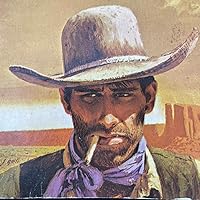
I bought this book almost…wow…ten years ago at a library book sale. At the time, I remember seeing these “First North Americans” books everywhere and, frankly, I liked the almost cheesy cover art, so I thought I’d give it a go and see what these Native American books were all about. I started it not long after buying it. And then university happened and I sort of forgot about it until recently. I don’t even know what brought it to mind after all these years, but I was looking for something a little out of my ordinary reading choices and “People of the Raven” instantly came to mind. My old copy of the book is long gone, so I purchased the Kindle version and got right down to business. I wasn’t sure what to expect. My forays into Historical Fiction have been limited and my knowledge of the first peoples of North America is almost nonexistent, and perhaps because of that I couldn’t stop flipping through the pages to learn more about this time period and people who inhabited it. Spoilers follow.
Before I get into my review, I’m going to throw up my general disclaimer when it comes to historical fiction. I am not a historian. Anything I know about history generally comes from documentaries, the paltry amount that I remember from my schoolyears, and clicking around online. Case in point: when Kennewick Man appeared in the prologue, I had to put down my Kindle and run a quick google search because I’d never heard of him and had no idea who he was (and I’m glad I did because he seems to have brought up a fascinating argument in the prehistoric historian community!). With that in mind, I approached this more as a work of fiction with historical elements than a straight factual historical novel. I’m not here to nitpick on the Gears’ research or their historical accuracy. This is historical fiction and I’m happy to overlook some historical inaccuracy provided that the story (the “fiction” side of this genre) is interesting. I’m far more concerned with the reading experience that the novel provided.
The book opens with a sort of prologue that focuses on the enigma that is Kennewick Man – the remains of a prehistoric man found in Washington that, at the time, was determined to have more Caucasoid traits than Native American. After this introduction, “People of the Raven” launches readers into the past through a speculative journey of who Kennewick Man might have been, how he lived, and how he died. The Pacific Northwest circa 10,000 years ago provides the backdrop to this tale of intrigue, war, and change. The North Wind People and the People of the Raven have maintained a symbiotic relationship for many years. The People of the Raven provide tribute in the form of food and material resources in return for the North Wind People’s knowledge of the land and mysterious artefacts. Over the years, however, this relationship has degraded and now the two groups teeter on the edge of war, and it looks like the North Wind People are prepared – and willing – to make the first decisive move.
Rain Bear, the somewhat reluctant leader of the People of the Raven finds himself facing a desperate fight to save his people, aided by Evening Star, a North Wind matron in the making who was abused by her own people for her village’s sympathy toward the People of the Raven. Rain Bear also finds himself in the possession of Tsauz, the blind son of the North Wind People’s Starwatcher with the potential for being one of the greatest dreamers ever known. They face Cimmis, the formidable North Wind Chief who secretly doubts the council of elders and relies more on his ill wife’s guidance and his private assassins to make his will known, and the superior might of the North Wind people. Meanwhile, Dzoo, a renowned healer and dreamer with unimaginable abilities and the personality of an enigma, finds herself battling the dangerous affection of Coyote, a mysterious witch who will kill to reach the object of his desire and is feared for his cruelty.
The book is a little under 500 pages long and the story more than adequately fills those pages. Since I’ve been reading a lot of series of late, I questioned whether a full story complete with setup and an introduction to the time period could be told in one book, but I needn’t have worried. The Gears are masterful storytellers and excel in mixing plot and exposition in a fluid, satisfying presentation. Additionally, I was never bored while reading. There’s a lot packed into this novel with a little bit of everything thrown in: intrigue, mystery, action, strategy, friendship, sorrow, and romance. The story is constantly moving from one point to the next, never stalling or belabouring the point; it feels like every scene accomplishes something, which is one of those little things that I look for in a good book. That’s not to say that it’s all just a nonstop rollercoaster of action and excitement. There’s a great balance of fast and slow scenes with the characters racing ahead when they need to while also slowing down to develop important themes and concepts. In short, it’s a very satisfying read that never disappoints and always keeps you guessing, all packed neatly into one 500 page book.
As a brief word of warning, however, there is a lot to get familiar with early in the book. The cast of characters is huge and the setting is very foreign to the modern reader. This, of course, necessitates some exposition and the rapid introduction of a lot of figures that might throw some readers off. My normal genres are fantasy and sci fi, so keeping track of worldbuilding is hardly a new thing for me, but it can be a bit daunting for someone who isn’t used to having a lot of information tossed at them at once.
I also personally found “People of the Raven” to be full of surprises. Now, granted, this is the first of these authors’ offerings that I’ve read and it seems like other reviewers have started to notice certain patterns emerging in this long series, but as a newcomer I was pleased to be kept guessing and often didn’t know where the story was going.
When I read historical fiction, the main thing I’m looking for is immersion into the time period. I don’t want to feel like I’m reading about modern characters with modern ideologies tossed into a world where the historical context is mere set dressing (as I’ve felt when reading other historical fiction offerings); I want to feel like I’m transported back into the era in which the novel takes place. “People of the Raven” more than succeeds on that front. The Gears have clearly done their research into the technology that would have been available to prehistoric America’s people and have used it to extrapolate further into how the characters would have thought, what their values would have been, how they would have spoken, and how they would have lived. Since we don’t have written record of these peoples, there’s a lot of guesswork in figuring out what their day to day lives would have consisted of and the authors did a fantastic job in giving an educated suggestion that portrays our distant ancestors in an authentic, genuine manner. Rather than try to twist the historical setting around an agenda or message (can you tell that I’ve been disappointed by historical fiction in the past?), the authors let the characters and their very different way of life speak for themselves and it paints a picture of a time very unfamiliar to us…which is what I live for when I’m reading this genre.
This ancient landscape is far more brutal than ours and our ancestors lived lives that were often difficult, dangerous, and cut horrifically short…and all of these tribulations are depicted. I wasn’t quite expecting this book – part of a series that, at the time, I’d seen popping up in places as mainstream as my local grocery store and made available to a very broad audience – to be as violent as it is. Since I often end up reading a lot of grimdark fantasy (which tends to err on the side of bluntly expressing the harsh realities of life…and then some), I wasn’t particularly bothered by this, but more sensitive readers might want to be aware that the Gears pull absolutely no punches in showing the merciless existence of the novel’s characters. Torture, rape, abuse, war violence, beheadings, and other grisly ways of dying are all present and no one is exempt…not women, not children, not the elderly, and especially not the warriors and chiefs that dominate this prehistoric period. It feels accurate to the era and there’s a little historical epilogue that explains that the remains that have been found from this time bear the signs of a violent life, so there’s some foundation for the sometimes graphic events. Again, not really an issue for me and I never saw it as gratuitous, but if you’d rather not read about people going through some awful things in your historical fiction, “People of the Raven” may not be for you.
On a final history related note, I was very impressed with the Gears’ depiction of the ancient peoples’ beliefs. Both the People of the Raven and the North Wind People hold tight to their firm convictions in their various gods and beliefs – especially as the fear in the mysteries of healing and magic pertains to Dzoo and Coyote – and these convictions are treated very much as fact from the characters’ points of view. They don’t speak of the sun rising and setting, thunder rumbling, and lightning striking; instead they speak of deities carrying the sun to the sky or swallowing it in the evening and fantastical entities emitting the thunder that accompanies a storm. Rites of passage a treated with utmost seriousness and healers are held in a position of reverence. These aren’t motions that the characters go through because they are tradition; they are strong beliefs that are unquestionably true to America’s earliest peoples. If you pay close attention, there are subtle suggestions slipped in to explain away the more fantastical elements. A boy’s flight with the Thunderbird could have been the result of a potent drink consumed before the rite; a woman’s unexplainable escape may have been owed to a rope that went missing; sometimes science and what we consider common knowledge of the natural world is the answer to one of the great mysteries attributed to the actions of a god. Whatever the case, the presentation of these beliefs as fact adds an element of authenticity to both the story and the characters (and I’m a little surprised to read some people griping about it – if you want a straight, factual account of America’s prehistoric past without fictional elements, historical fiction might not be your cup of tea) and I was pleased to see it be utilized so well.
The single thing that I really wish would have been given more attention is the race issue that is reference many times throughout the novel. The North Wind people are portrayed as being very Caucasoid (paler skin, facial hair, lighter hair colours including red, etc.) while the People of the Raven are more the typical Native American (tan skinned, strong facial features, dark hair, and so on). I suppose it’s possible that race was never intended to play a big role beyond simply distinguishing the two different tribes, but I found it odd that these differences were often noted and then brushed aside. Combined with a premise that seems centered around the idea of two races coexisting less than peacefully, I was just a little surprised to not see it appear as a more prominent big issue in the novel.
My one major gripe with “People of the Raven” was the romance. As a general disclaimer and rule, I tend to almost always dislike romance and wish that it didn’t seem to be a prerequisite for pretty much every novel written. That being said, if it’s done well with characters that are intriguing and sizzle when together, I can find it in my icy heart to be more forgiving of this annoying ever-present theme. Unfortunately, the relationship in this book is pretty dull and eats up far too many pages. The involved characters themselves are interesting in their own rights, I suppose, but they’re so perfectly set up for a romance that it’s worthy of an eyeroll. Evening Star is a redheaded, young matron with a beautiful body, a tragic past (her husband and daughter were tortured and killed before her eyes by her own people before she was enslaved), and the potential to wield power due to her family line. Rain Bear is the stoic, strong leader of the People of the Raven with a perfectly chiseled body, convenient moments of vulnerability, and the fortune of being available after his beloved wife’s death (their story actually sounded pretty interesting…why couldn’t we have gotten that?). On their own, they’re perfectly passable characters with roles to play. Together they’re very…blah. Attractive man and attractive woman get together to heal one another’s hurts, and that’s about it. There’s potential that, given their positions among their respective peoples, they’ll usher in a new age of cooperation, but they just aren’t a very interesting pair beyond that. And I really wish that their blossoming relationship hadn’t been focused on so much. In a novel that did a lot of things right, the romance was so underwhelming that it stood out for it.
Normally when I discuss characters, I touch on the main character(s) and then any noteworthy minor characters, but I’m not going to do that for this book simply because the cast list is huge and there are many “main” characters. As this is only a single novel story, I honestly wasn’t expecting much from the characters, especially when I realized just how many figures would populate this story…and that was entirely to my folly because the characters are actually pretty well developed for a 500 page novel. Some are pretty basic (see Rain Bear and Evening Star above) and are exactly what you would expect while others are brimming with secrets and intrigue (Dzoo in particular stands out), but every one of them is fleshed out and plays their role. They all have their place in their society, they all have a part in this story, and they all fit into the time period very well. There are a lot of personalities and, surprisingly, they all get a decent amount of time to shine (however short some of their lives may end up being). The Gears do a fine job of giving the characters that populate their world plenty of attention, making us care not only about what is happening, but also to whom.
The one exception to this is Starwatcher Ecan, who was a little over the for me. He’s painted as the “bad guy” of the story…and my God does he embody every despicable trait that a man possibly could. He’s bloodthirsty, he’s manipulative, he lies, he abuses his son, he killed his son’s mother and her family, he regularly rapes women, he mistreats slaves, he blinded his son, and it’s strongly implied that he has an interest in torturing children if not flat out committing pedophilia. It’s all just too much. While the other characters (even those on the antagonists’ side) being so wonderfully balanced, Ecan is way over the top. There’s a late attempt at giving some ambiguity to Ecan toward the end of the novel by revealing that he really does care for his son Tsauz, but it’s too little too late. He’s perhaps not THE villain, but he’s the most prominent negative figure and I really wish that he’d been handled with a little more nuance.
So after having finished “People of the Raven,” I think I’d definitely read another novel by the Gears. The story is tight, well-paced, and full of surprises and the characters are interesting and balanced with many being portrayed. The most important aspect to me, however, is that it succeeds in transporting the reader to a completely different time. The era isn’t just fancy scenery for an otherwise modern story, it’s almost a character in and of itself and the people living out their lives in it are very different in their values, ideologies, and way of life than you or me. In short, it’s exactly what I look for when reading historical fiction. There are a couple of issues that keep me from giving it a full five stars, but it’s a solid four star novel.
It turns out there is a very specific subgenre of historical fiction writing called prehistoric fiction, taking place in eras before the written word and allowing a lot more fantastical elements. "People of the Raven" won the 2005 Spur Award for best novel of the west, but it really isn't a standard western; it is rather an epic novel of prehistoric North America and centered on Rain Bear, the chief of a tribe in the Pacific Northwest 9,000 years ago.
The Raven clan lives under the protection/exploitation of the North Wind clan and the novel has a world-building fantasy kind of setup with a lot of characters and clan history explained quickly. Evening Star is a defeated clan's princess who has escaped the North Wind ruler's captivity and is given sanctuary by Rain Bear and the Ravens. Points of view shift between an assortment of characters with varying moral and familial obligations or evil designs, with prehistoric native American tribal politics, genocide, destiny, and atrocities with a dash of supernatural fantasy thrown in.
Verdict: Not really my thing, but I tried. It reads like a fantasy novel with overdramatic internal monologuing, tribal court politics, grotesque adult content scenes, beyond-evil bad guys, and unrelatable good guys. Then the last hundred pages specifically took me forever to read, a confusing and badly-written battle sequence. I kept getting lost because it is so boring and I forgot what was happening, who was where, which of these characters was crossing or double-crossing whom, and there are spirits flying all over and dream sequences coming true and it is just so awful.
Jeff's Rating: 1 / 5 (Bad) movie rating if made into a movie: R
I thoroughly enjoyed this book. It is a tale of survival and strategy. The People of the Raven are in a subservient relationship with the North Wind People; they provide food and resources whilst the North Wind People provide them with skilfully-produced artefacts. What should be a symbiotic relationship has descended into one that verges on the borders of genocidal warfare - and it is the North Wind People who have the edge! Anyone who comes to the First Americans series has to accept that these are not (pre-)historical novels based simply on the archeological expertise of the authors. We see the world as the Native Americans would have seen it... the wind, the rain, the thunder all take on an extra dimension as they become the gods and spirits of their world. There is also another dimension that I always find a little uncomfortable but end up putting up with - the realm of fantasy. It is one thing to believe in communication with the spirit world and witches etc, it is a completely different ball game to write as if these things actually DO exist. Given my small caveat, this series is generally entertaining. I would find it hard to accept this mixture of verisimilitude and fantasy as anything other than pure fiction... but it's not bad fiction!
I wanted to like it very badly, because I really like these authors… but it was just so confusing. The names of the groups and sometimes even the characters did not make sense (ex. One war chief having white hair but being called Dogrib and the opposing war chief being called White Stone… they could’ve made it a bit easier and called the white haired person White Stone… I know that’s not how the world works but it would’ve made it less confusing for me). I felt like there wasn’t a lot of discussion of traditional/cultural stuff… I would’ve liked more about their Dreams and Spirit things. I also would’ve like more information about the food they ate and their villages, that sorta stuff! I will try them again but this book was just not it for me. Book from RCC LFL
This was one of the best books of this series. It deals with the fictional setting for the Kennewick Man. The story takes place at a time when the "Caucasian-type" prehistoric North Americans were diminishing and the "Mongoloid-type were expanding.
The story is very hard to get into because of the number of characters and the profusion of names like "Windwoman"that may apply to a person or, in this case the wind. Anyone who has read books by the Gears is familiar with this and has to be prepared to reread several chapters in order to get them straight. It is worth taking the time though as the books are well written and informative.
Not the Gears' best work. At the time this was written, it was based on a controversial finding some claimed was a Caucasoid skeleton. The book is based on this premise (which has since turned out to be false). That aside, the fetishization of multiple female characters with red hair, while almost no male Caucasians appear is problematic.
I'm starting to feel like I'm reading the same book. Young, seemingly incapable boy who must Dream a new spiritual path for his people. Old (but not too old) powerful woman dreamer who dances on the sides of both good and evil. Strong leaders who fall in love and help lead their clans away from the bad guys. The good news is this means you don't have to read any of the other books, you'll be just fine reading this on your own.
The Raven People and the North Wind People have always had an uneasy alliance. With tempers like their fiery hair, the North Wind People are accustomed to being leaders. And the Raven people are beginning to resent it. When several events fall into place to cause a cataclysmic war, it seems that few people are willing to look past revenge and actually work towards a better future for their peoples. Add in a witch that is stirring up trouble and there is no telling what side will win.
First off, the witch. What the heck is with his storyline? And maybe I just missed it but I never really figured out who he was, which bothers me. He wasn't important enough to be such a mystery. But anyways, on to the other characters. As I mentioned before they were a rehash of other characters from other books. It's formulaic actually. Evening Star was the young female leader who must sacrifice her own happiness in order to achieve peace for the people. Dzoo was the strong female Dreamer. And then there were all the men who were either good, or they weren't. None of them were standout characters.
The plot was perhaps a little different. You had the story altered by a possible explanation of the Kennewick Man which explains all the red hair in this book. But really, hair color didn't give anyone special powers, so it was just an explanation, not a plot driver. There was plenty of violence, sex, rape, and all the other normal unsavory things that this series has as well. It's definitely not a book for the squeamish. They have a certain obsession with ripping guts out anyway. I can't say that anything was overly exciting in this book. It was mostly scheming and a few light battles, but the majority was dialogue.
I could take or leave this book. I don't really feel like it was an integral part to the series at all.
People of the Raven By W. Michael Gear and Kathleen O’Neal Gear
Despite personal beliefs history is dynamic, and conflict in universal. Looking at the archeological history of the United States has only happened in 2% of the land, but that does not negate controversy. The problem of Kennewick man is one of those historical anomalies, believed to be a Caucasoid skeleton on the North American Continent over 10,000 years ago. This caused many legal conflicts that resulted in adaptation to traditional belief to prove through science what was always known. With DNA testing this fact has changed. The Native American lineage is there and he has been repatriated to the land. The Gears dive head first into the controversy. They look an the previous theory of the Anu immigration ocean immigration, and prehistoric movements through the ice barrier far to the north. This Theory that there are three genetic groups that settled in the American Continent. The archeological evidence shows the nature of conflict is not a new circumstance, Kennewick man has injuries inflicted in his life time. Although his remains have been repatriated his scientific evidence is part of the changing theology of the historical record.
The People of the Raven book, gives a plausible dynamic story of how interracial conflict is not something new. The People of the Raven and the North Wind people are in brutal conflict of power and politics and mutual destruction. The racial identity of us verses them. The ideology of obsession and corruption cause more difficulty for the two groups to resolve their conflict. Those who crave power will use any dived to manipulate people and events.
These always looked like they would be interesting books to read, so I grabbed a few from the library booksale one time. I really enjoyed this story, set in the Pacific Northwest/British Columbia region of North America. Even though the characters, their ways, customs, and culture are prehistoric, their emotions and actions are so very human. It reminded me that throughout the ages, people are essentially the same, especially in regards to their motivations and desires, hopes and fears. This is a story of decisions and choices and how they can greatly affect the future of so many. It is also a story of massive environmental change, which is especially interesting to read about in this day and age. I will certainly read another novel by the Gears! This one was fascinating.
Favorite quotes: “True compassion does not make a man feel pride. Its core is humility and sacrifice. If you feel pride after an act of compassion, you’ve clearly only sacrificed enough to make yourself feel good… When a human being sacrifices so much for another’s sake that he feels empty and bereft, he has, for one shining moment, been truly compassionate. All other acts of ‘compassion’ are simple selfishness.” – Rides-the-Wind
“One hurt does not heal another.” – Rain Bear “Yes, true, but those who are hurting rarely understand that.” – Rides-the-Wind
“One never knows how life would be different if one had chosen another path. And for every decision, there is a price.” – Rain Bear
Following the discovery of the Kennewick Man, a skeleton discovered o the banks of the Columbia River around which much controversy flowed for years, the Gears attempt to show his possible origins in this fabulous addition to their First North Americans series.
Matron Ashcat of the North Wind People's soul is flying - is she having visions or suffering from dementia? Fear has overtaken her people, and the council of elders, without her leadership, have acted out of that fear and enslaved the neighboring clans of the Raven People, massacring them if they refuse to pay tribute, even though they have no more left to give, as massive environmental changes are causing the glaciers to melt and animal species to die off, and people are starving as a result. Chief Rain Bear of Sandy Point village has one last chance to save his struggling people, who are next in line to be massacred by the North Wind clan, but in order to do so he must create an alliance between the remaining Raven People clans.
My imagination was captivated by the Prologue which deals with the modern day story of Kennewick Man and the legal battle which at the time was pending in the U.S. Supreme Court. It presented the dilemma of archaeologists and judges when faced with evidence of great importance which may be suppressed because of indigenous law and religion and the world denied the truth that it could reveal.
Once into the novel, however, I found the prehistoric story so full of violence, cruelty (often to their own children), betrayal, jealousy, hatred, and greed that it overshadowed almost all of the spiritual aspects that were very interesting and some of the protagonists who were under such pressure to work for good and the survival of their people. It was a very long slog — 557 pages — and I had to force myself to finish it. When I started it, I thought I would probably want to read others in the series by these authors, but before I was even half way through, I knew I would not. Hugely disappointing — and I had started it with such enthusiasm.
the "people of..." series has become my brainless book. what i find annoying, even though i keep reading them, is while the science and history behind them is quite fansinating, the novels themselves are tedious and lack development. the politics seem contrite. the endings are anti-climatic. i guess that's what happens when you churn out a novel every 18mons.
these books could be really well written and deep (if you want really well researched, well-written historical fiction, try colleen mccollough's masters of rome series), but they are not. either the gears dont care to write them, preferring quantity over quality, or just cant.
also, im annoyed by how 'white' and misleading the models on the covers are - in one of the books, the main male character had a misformed arm, but the cover should hale and whole people.
Finally done! I've been cleaning out the books from the last paperback swap I went to. As a rule I love paleo fiction. This book just seemed to on and on. It uses the discovery of Kennewick Man, a caucasoid type skeleton, found in Washington state (Read the book Kennewick Man by Chatters, which I rated 5 stars). Using the premise that there were 2 distinct races competing for the same dwindling resources at the time the Ige Age was receding and ecosystems were in major transition.
The book was OK. It was too long, and the major question of "Who is Coyote?" was never answered, even though it was a major theme in the novel. I'm happy to move the novel from my book shelf back into the donate pile.
Ready for your next adventure? The Gears have truly outdone themselves with this exceptional read.
People of the Raven by W. Michael Gear and Kathleen O'Neal Gear is a gripping historical fantasy set in ancient America. The story unfolds in the Pacific Northwest, where the Raven People struggle to adapt to a rapidly changing world as melting glaciers reshape the landscape. At the heart of this tale is Rain Bear, the chief of Sandy Point Village, who must navigate the perilous balance between survival and the looming threat of extinction. The plot thickens when Evening Star, a mysterious red-haired woman, seeks refuge in Rain Bear's lodge. She is a fugitive from the North Wind People, the Raven People's sworn enemies, and brings with her a dire warning of an impending war. Rain Bear faces a brutal choice: shelter Evening Star and risk an all-out assault from the North Wind People, or send her back to almost certain death.
As tensions escalate, Rain Bear must decide whether to prepare his people for a fight they may not win or seek sanctuary elsewhere. The stakes are high, and every decision could shatter the fragile existence of the Raven People. The authors masterfully weave a tale of endurance, sacrifice, and loyalty against a majestic yet unforgiving world. People of the Raven is a thrilling saga that explores the complexities of leadership, the harsh realities of survival, and the enduring human spirit. The Gears' meticulous research and vivid storytelling bring to life the ancient struggles and triumphs of America's earliest inhabitants, making this a must-read for historical fiction and fantasy fans. So, pick up your copy today and prepare for an incredible read.
• ASIN: B0DSCH74JK • Publisher: Wolfpack Publishing • Publication Date: 2/11/2025 • File Size: 6689 KB • Print Length: 333 pages • Genre: Historical Fantasy Fiction - Native American Literature
This is the first novel in this series that I have read. Actually, I listened to the audio book. More than the actual story, I enjoyed the prehistoric world the authors created. The culture and traditions were interesting and believable. The intro chapter which follows a modern day scientist who wants to study the remains of one of the prehistoric individuals drew me into the story. This could have been the basis for another novel. I'm not sure why the authors inserted a bizarre little prelude to Christianity. There was no follow through and no warning. Just weird and unnecessary.
I think I read one from this series way back when they were first published, although I don't recall which one. I enjoyed this. Large cast of characters? Yes. Confusing because of the large cast? Not really. At least I wasn't confused. It's an intriguing saga, mixing historical fact with fiction. Some of that fact has now been - I don't want to say discredited, so let's say updated given the advances in technology, DNA advances especially. At any rate, it's a fascinating read. Very well done.
I don’t understand how these people have written so many books. They’re just so boring. I mean, how many times can you read in a book that the Indian untied his cape and hung it on a hook that he went to the teabag and dipped a cup in it? So many pages are wasted on mundane events. OK so I did care about one character but only because he’s a little kid who likes dogs.
every book in this series is very thought out, full of knowledge, and detail. the story line is awesome, and some story lines overlap in other books in the series. you could tell a lot of study went into writing each of these books regarding the native american peoples.. .
I must admit I know less than nothing about archeology and or human evolution. These books have opened a new world for me. If your brain is a “sponge’ like mine, you will definitely enjoy this journey.
A lot of storytelling but not much "historical" references. The sophistication of the language did not feel in keeping to the era. And it took a REALLY long time to get to the final action.
Another exciting chapter of American prehistory from The Gears. An unresolved mystery keeps this from being a 5 star read, but it was very hard to put down.
People of the Raven By W. Michael Gear and Kathleen O’Neal Gear Review History is dynamic, and conflict in universal. Looking at the archeological history of the United States has only happened in 2% of the land, but that does not negate controversy. Kennewick man is one of those historical anomalies, a Caucasoid skeleton on the North American Continent over 10,000 years ago. The Gears dive head into the controversy. Theory that there are three genetic groups that settled in the American Continent. The People of the Raven book, gives a plausible dynamic story of how interracial conflict is not something new. The People of the Raven and the North wind people are in brutal conflict of power and politics and mutual destruction. Rain Bear leader of the surviving band of Raven people has paid his tribes tribute to the North Wind people. He hopes to continue peaceful relations and avoid his small bands destruction. Evening Star Matron of the North Wind People believed that her close family ties would protect her until her mother’s murder in a political ploy by her Uncle Cimmis. Little Tsauz loves his father, and believes despite his mother’s tragic death that his father loves him too. Will the conflict find a solution, will the heroes of this dawning age find a solution that will allow the people to survive or will they continue a spiral path of destruction that will leave the land abandoned and destitute. Character list People of the Raven
Red Dog: warrior of the north wind people was saved by Dzooin the past and has strong connections with the Raven People, is used as a messenger between groups.
Starwatcher Ecan: an elder of the North wind people, corrupted by power, has destroyed his wife and injured his son in his attempt to consolidate his power. He plans to change the world and become the great chief, and lead his people into a new world.
Cimmis: the current Great chief of the North Wind People, frighten by his wife’s illness and the loss of her advice has continued to alienate the Raven People, with continuous warfare, and using the Wolf tails to exterminate his enemies.
Old woman north: one of the four women leading the council of elders of the North Wind people, she has come to believe she has a dream of Destroying the Raven People and Bringing the North Wind People into a new age. She hopes to lead the North Wind People to greatness.
White Stone: War leader of the North Wind People, follower of Cimmis, reluctantly follows all but one of his chiefs demands, and has become feared and hated across the North Wind Nation and the Raven People.
Tsauz: son of Ecan, a young blind boy, who is required by power to dream balance into the world. He is a part of each nation, since his mother was of the Raven People. He is tested and taught to fly by the old
Rain Bear: a renowned leader of the Raven People, he has continued despite the problems with the North Wind raids to supply the North Wind People with the tribute they request, even with the starvation of his own people. He is a peaceful man and does not want to cause more conflict. A reluctant hero, who once was a slave to the North Wind People, only to fall in love with Cimmis daughter and by her love separate himself from them.
Dzoo: a renowned healer, and dreamer, with unique abilities and personality, she has come to the Raven People to heal them, and has gained their trust. It is her closeness to the Raven People and her presence with in Rain Bear’s small village that has protected them. She was kidnapped as a small child and taken far to the east to be raised by her captors, only to return to her people as agreat and powerful leader.
Evening star: a young matron, taken in a raid by Ecan and his brother, made into a slave, and sexual pawn, in their power struggle. Niece to Cimmis, escapes her captors after killing one to run to Rain Bear for help. After all she went through only to find that her presence may bring his destruction, just as she is beginning to love him.
Coyote: a devilish witch who wants Dzoo, he is renowned and terrible; those he centers his attention on die horribly. He creates evil fetishes that he traps people’s souls in.
Pitch: a young singer of the Raven people married to Rain Bear’s daughter.
Power object: two bundles: “two sacred bundles hung from the lodge pole... the bundle on the left was decorated with red and yellow circles, imitating the pattern of the Star people in the Wolf Pup constellation. an eye glared from the center of the bundle, black and glistening as thought alive. Beside it Dzoo's Noisy one bundle hung. The miniature face of her Spirit Helper covered the leather. The Noisy One had empty white eyes, a black circle for a mouth, and a squat, hair0voverd body."
The obsidian fetishes of many animals containing the souls of people
The Gears this time have thrown you back in time 9,000 years ago. Set in the Pacific Northwest along the banks of the Colombia River, People of the Raven brings the reader up close and personal with the controversial Kennewick man. Kennewick man is a Caucasoid mummy found here on those very banks. Why so controversial? Supposedly white men didn’t show up in North America until the Vikings made a few tentative trips to the area called Vineland. This story follows the two different races of people, the North Wind peoples and the People of the Raven. For generations now, the North Wind people have dominated and enslaved the Raven people, demanding tribute and taking Raven people as slaves in their own villages. With resources growing thin and the landscape changing as sea levels rise. The large game animals have become extinct, and people are forced to search for other edibles and game animals. Things have come to head now between the two, as politics, religion and power boil over like a pot left too long on the fire. Rain Bear, chief of Sandy Point village, a Raven people, has done everything his North Wind superiors have asked him to do, tribute, workers, pretty much anything to keep the peaceful relations between his villages and the North Wind peoples. Things change though when Ecan, the Starwatcher has taken Evening Star, in line to inherit the status as Matron of the North Wind peoples, captive because of her sympathy towards the Raven people and as a pawn in her Uncle Cimmis’s political plans. Evening Star is able to escape Ecan’s cruel grasp and finds sanctuary in Rain Bear’s village. She seeks out the help of Dzoo, also of the North Wind people and a famed healer who at the moment is in another village taking care of the sick caused by something evil, only known as Coyote. Rain Bear allows her to stay only because of the common enemy they now share. Ecan and Cimmis plot to get Evening Star back and to punish the Raven people for not turning her over their forces. On the pretense of the upcoming religious ceremony at a nearby village, Ecan and his forces pass through Sandy Point village but once they pass, they head to the other villages and bring death and destruction to them. As they plot together, they each plot against each other seeking their own way to keep power. Caught in the middle of the plotting and hating is Ecan’s young and blind son. Taken along on the raid, Tsauz gets lost in the melee of the fight, leaving him alone. Desperate to get him back, Ecan seeks help from Coyote. As you read along, you can feel the pine duff crunch under foot and smell the borne in off the coast. You can feel the tension between to the two peoples, the deepening relationship between Rain Bear and Evening Star and fear the twisted evil of Coyote. Read on to see if these peoples can resolve the conflict or will one of them go by the wayside like the mammoth and giant lions.
Ready for your next adventure? The Gears have truly outdone themselves with this exceptional read.
People of the Raven by W. Michael Gear and Kathleen O'Neal Gear is a gripping historical fantasy set in ancient America. The story unfolds in the Pacific Northwest, where the Raven People struggle to adapt to a rapidly changing world as melting glaciers reshape the landscape. At the heart of this tale is Rain Bear, the chief of Sandy Point Village, who must navigate the perilous balance between survival and the looming threat of extinction. The plot thickens when Evening Star, a mysterious red-haired woman, seeks refuge in Rain Bear's lodge. She is a fugitive from the North Wind People, the Raven People's sworn enemies, and brings with her a dire warning of an impending war. Rain Bear faces a brutal choice: shelter Evening Star and risk an all-out assault from the North Wind People, or send her back to almost certain death.
As tensions escalate, Rain Bear must decide whether to prepare his people for a fight they may not win or seek sanctuary elsewhere. The stakes are high, and every decision could shatter the fragile existence of the Raven People. The authors masterfully weave a tale of endurance, sacrifice, and loyalty against a majestic yet unforgiving world. People of the Raven is a thrilling saga that explores the complexities of leadership, the harsh realities of survival, and the enduring human spirit. The Gears' meticulous research and vivid storytelling bring to life the ancient struggles and triumphs of America's earliest inhabitants, making this a must-read for historical fiction and fantasy fans. So, pick up your copy today and prepare for an incredible read.
• ASIN: B0DSCH74JK • Publisher: Wolfpack Publishing • Publication Date: 2/11/2025 • File Size: 6689 KB • Print Length: 333 pages • Genre: Historical Fantasy Fiction - Native American Literature