

What do you think?

Maria Chapdelaine
Ce classique de la littérature du xxe siècle a pendant longtemps été récupéré par les idéologies conservatrices qui ont voulu le présenter comme un « modèle de littérature canadienne » et même comme un « chef-d’oeuvre catholique ». À des degrés divers, les très nombreuses éditions publiées jusqu’à tout récemment reprenaient les « corrections » qui servaient à perpétuer le mythe d’un Canada français où « rien ne devait changer ». La présente édition est conforme à celle de 1980, établie d’après le manuscrit original de Louis Hémon. Elle comprend un avant-propos, un relevé des variantes ainsi qu’un index des personnages et des lieux.
218 pages, Paperback
First published January 1, 1913
About the author
Louis Hémon
58 books7 followersLouis Hémon (12 October 1880 – 8 July 1913), was a French writer, best known for his novel Maria Chapdelaine.
In 1911, he moved to Canada, settling initially in Montreal. Hémon wrote Maria Chapdelaine during his time working at a farm in the Lac Saint-Jean region.
Hémon died when he was struck by a train at Chapleau, Ontario. He never saw the widespread publication of his landmark novel.
In 1911, he moved to Canada, settling initially in Montreal. Hémon wrote Maria Chapdelaine during his time working at a farm in the Lac Saint-Jean region.
Hémon died when he was struck by a train at Chapleau, Ontario. He never saw the widespread publication of his landmark novel.
Ratings & Reviews
Friends & Following
Create a free account to discover what your friends think of this book!
Community Reviews
Displaying 1 - 30 of 185 reviews

November 14, 2017
Time stands still, for a moment, in Louis Hémon's Maria Chapdelaine, allowing us a view into a society that faced an internal upheaval, stemming from its very roots. While Hémon was penning his novel, Québec was undergoing a mass migration of its French Canadian citizens into the United States: between 1840 and 1930, just over a million Québécois made the move to industrial towns in the US, seeking jobs. Hémon's novel reflects this heartbreaking quandary in which the citizens found themselves: how does one leave behind one's hearth and the place of ancestors; and conversely, how does one ignore the cry of the future and hungry children to feed?
The story is a simple one, commonplace and (almost) devoid of romance. Maria Chapdelaine is courted from three worthy suitors: Francois Paradis, the very essence of the adventurous coureurs de bois who were the backbone of early Québec society, they being responsible for carving a way into the harsh Canadian landscape; Eutrope Gagnon, the embodiment of the habitants who followed behind and carved the broken trails into concessions and built farms and towns in the heart of the country; and Lorenzo Surprenant, a "surprising" gift from the south, who represents American temptation and allure for an easier life: one that she will never know if she remains behind in Quebec.
Paradis alone offers Maria a chance at romantic love.
Francois Paradis regarda Maria à la dérobée, puis détourna de nouveau les yeux en serrant très fort ses main l'un contre l'autre. Qu'elle était donc plaisante à contempler! D'être assis auprès d'entrevoir sa poitrine forte, son beau visage honnête et patient, la simplicité franche de ses gestes rares et de ses attitudes, une grande faim d'elle lui venait et en même temps un attendrissement émerveillé, parce qu'il avait vécu presque toute sa vie rien qu'avec d'autres hommes, durement, dans les grand bois sauvages ou les plaines de neige.
Il sentait qu'elle était de ces femmes qui, lorsqu'elle se donnent, donnent tout san compter: l'amour de leur corps et de leur coeur, la force de leurs bras dans las besogne du chaque jour, la dévotion complète d'un esprit sans détours. Et le tout lui parissait si précieux qu'il avait peur de la demander.
The other two offer stability, dependability, and a sedate constancy which, while laudable, just don't pull at her heartstrings. She is head over heels in love with the adventurer, the romantic pioneer, and she would follow him, willingly -- despite her own better judgement.
Il lui semble que quelqu'un lui a chuchoté longtemps que le monde et la vie étaient des choses grises. La routine du travail journalier, coupée de plaisirs incomplets et passagers; les années qui s'écoulent, monotones, la rencontre d'un jeune homme tout pareil aux autres, dont la cour patiente et gaie finit par attendrir; le mariage, et puis une longue suite d'années presque semblables aux précédentes, dans une autre maison. C'est comme cela qu'on vit, a dit la voix. Ce n'est pas bien terrible et en tout cas if faut s'y soumettre; mais c'est uni, terne et froid comme un champ à l'automne.
Ce n'est pas vrai, tout cela. Maria secoue la tête dans l'ombre avec un sourire inconscient d'extase et songe que ce n'était pas vrai. Lorsqu'elle songe à Francois Paradis, à son aspect, à sa présence, à ce qu'ils sont et seront l'un pour l'autre, elle et lui, quelque chose frissonne et brûle tout à la fois en elle. Toute sa forte jeunesse, sa patience et sa simplicité sont venues aboutir à cela: à ce jaillissement d'espoir et de désir, à cette prescience d'un contentement miraculeux qui vient.
By wanting to choose a "miraculous" life instead of one "as cold as a field in autumn", it is almost predestined that Maria will lose her paradise. When the fall finally comes, she barely grieves, subjugating her life and her emotions, with barely a whimper, to those who rule her hearth, if not her heart.
While it is the song of a lonely girl, it is equally the song that Hémon wanted to sing for Québec, his adopted land. He saw the flow of humanity moving south of the border, giving its heart, and its best years, to a foreign beauty; some part of him yearned to want to stanch the flow, and so not lose all the best that there was.
Maria frissonna: l'attendrissement qui était venu baigner son coeur s'évanouit; elle se dit une fois de plus: "Tout de même ... c'est un pays dur, icitte. Pourquoi rester?"
Alors une troisième voix plus grande que les autre s'éleva dans le silence: la voix du pays de Québec, qui était a moitié un chant de femme et à moitié un sermon de prêtre ...
[Elle disait]
Nous avions apporté d'outre mer nos prières et nos chansons: elles sont toujours les mêmes. Nous avions apporté dans nos poitrines le coeur des hommes de notre pays, vaillant et vif, aussi prompt à la pitié qu'au rire, le coeur plus humain de tous les coeurs humains: il n'a pas changé ... ici toutes les choses que nous avons apportées avec nous, notre culte, notre langue, nos vertus et jusqu'à nos faiblesses deviennent des choses sacrés, intangibles et qui devront demeurer jusqu'à la fin.
C'est pourquoi il faut rester dans la province où nos pères sont restés, et vivre comme ils ont vécus, pour obéir au commandement inexprimé quie s'est formé dans leurs coeurs, qui a passé dans les nôtres et que nous devrons transmettre à notre à de nombreux enfants: Au pays de Québec rien ne doit mourir et rien ne doit changer...
This is a period piece if ever there was one: a slice of early (Québécois) pioneering life, caught in amber. Maria will forever be casting her eyes down, silently mourning for Paradis; she will be caught in that eternal spring, ever-promising to marry Gagnon -- an eternal consummation-postponed.
I view it in the end as a museum piece, and see it with charitable eyes: I recognize that it was poignant, and emotional without being (altogether) persuasive; un cri de coeur from a distant past.
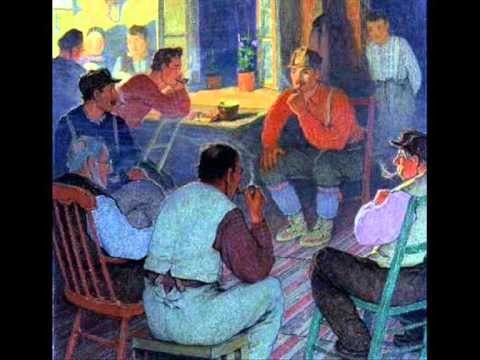
The story is a simple one, commonplace and (almost) devoid of romance. Maria Chapdelaine is courted from three worthy suitors: Francois Paradis, the very essence of the adventurous coureurs de bois who were the backbone of early Québec society, they being responsible for carving a way into the harsh Canadian landscape; Eutrope Gagnon, the embodiment of the habitants who followed behind and carved the broken trails into concessions and built farms and towns in the heart of the country; and Lorenzo Surprenant, a "surprising" gift from the south, who represents American temptation and allure for an easier life: one that she will never know if she remains behind in Quebec.
Paradis alone offers Maria a chance at romantic love.
Francois Paradis regarda Maria à la dérobée, puis détourna de nouveau les yeux en serrant très fort ses main l'un contre l'autre. Qu'elle était donc plaisante à contempler! D'être assis auprès d'entrevoir sa poitrine forte, son beau visage honnête et patient, la simplicité franche de ses gestes rares et de ses attitudes, une grande faim d'elle lui venait et en même temps un attendrissement émerveillé, parce qu'il avait vécu presque toute sa vie rien qu'avec d'autres hommes, durement, dans les grand bois sauvages ou les plaines de neige.
Il sentait qu'elle était de ces femmes qui, lorsqu'elle se donnent, donnent tout san compter: l'amour de leur corps et de leur coeur, la force de leurs bras dans las besogne du chaque jour, la dévotion complète d'un esprit sans détours. Et le tout lui parissait si précieux qu'il avait peur de la demander.
The other two offer stability, dependability, and a sedate constancy which, while laudable, just don't pull at her heartstrings. She is head over heels in love with the adventurer, the romantic pioneer, and she would follow him, willingly -- despite her own better judgement.
Il lui semble que quelqu'un lui a chuchoté longtemps que le monde et la vie étaient des choses grises. La routine du travail journalier, coupée de plaisirs incomplets et passagers; les années qui s'écoulent, monotones, la rencontre d'un jeune homme tout pareil aux autres, dont la cour patiente et gaie finit par attendrir; le mariage, et puis une longue suite d'années presque semblables aux précédentes, dans une autre maison. C'est comme cela qu'on vit, a dit la voix. Ce n'est pas bien terrible et en tout cas if faut s'y soumettre; mais c'est uni, terne et froid comme un champ à l'automne.
Ce n'est pas vrai, tout cela. Maria secoue la tête dans l'ombre avec un sourire inconscient d'extase et songe que ce n'était pas vrai. Lorsqu'elle songe à Francois Paradis, à son aspect, à sa présence, à ce qu'ils sont et seront l'un pour l'autre, elle et lui, quelque chose frissonne et brûle tout à la fois en elle. Toute sa forte jeunesse, sa patience et sa simplicité sont venues aboutir à cela: à ce jaillissement d'espoir et de désir, à cette prescience d'un contentement miraculeux qui vient.
By wanting to choose a "miraculous" life instead of one "as cold as a field in autumn", it is almost predestined that Maria will lose her paradise. When the fall finally comes, she barely grieves, subjugating her life and her emotions, with barely a whimper, to those who rule her hearth, if not her heart.
While it is the song of a lonely girl, it is equally the song that Hémon wanted to sing for Québec, his adopted land. He saw the flow of humanity moving south of the border, giving its heart, and its best years, to a foreign beauty; some part of him yearned to want to stanch the flow, and so not lose all the best that there was.
Maria frissonna: l'attendrissement qui était venu baigner son coeur s'évanouit; elle se dit une fois de plus: "Tout de même ... c'est un pays dur, icitte. Pourquoi rester?"
Alors une troisième voix plus grande que les autre s'éleva dans le silence: la voix du pays de Québec, qui était a moitié un chant de femme et à moitié un sermon de prêtre ...
[Elle disait]
Nous avions apporté d'outre mer nos prières et nos chansons: elles sont toujours les mêmes. Nous avions apporté dans nos poitrines le coeur des hommes de notre pays, vaillant et vif, aussi prompt à la pitié qu'au rire, le coeur plus humain de tous les coeurs humains: il n'a pas changé ... ici toutes les choses que nous avons apportées avec nous, notre culte, notre langue, nos vertus et jusqu'à nos faiblesses deviennent des choses sacrés, intangibles et qui devront demeurer jusqu'à la fin.
C'est pourquoi il faut rester dans la province où nos pères sont restés, et vivre comme ils ont vécus, pour obéir au commandement inexprimé quie s'est formé dans leurs coeurs, qui a passé dans les nôtres et que nous devrons transmettre à notre à de nombreux enfants: Au pays de Québec rien ne doit mourir et rien ne doit changer...
This is a period piece if ever there was one: a slice of early (Québécois) pioneering life, caught in amber. Maria will forever be casting her eyes down, silently mourning for Paradis; she will be caught in that eternal spring, ever-promising to marry Gagnon -- an eternal consummation-postponed.
I view it in the end as a museum piece, and see it with charitable eyes: I recognize that it was poignant, and emotional without being (altogether) persuasive; un cri de coeur from a distant past.

October 17, 2017
دوستانِ گرانقدر، این رمان بنظرم به نوعی عشق و احتیاجات زندگی همچون زمین را مقابل یکدیگر قرار میدهد و البته میتواند اهدافِ دیگری را در دلِ خود داشته باشد
--------------------------------------------
عزیزانم، داستان مربوط میشود به کوچِ مهاجرانِ فرانسوی به سرزمین کانادا.... خانواده ای به نامِ <شابدولن> که از پدر و مادر و چهار برادر و یک خواهر تشکیل شده است به سویِ زمین هایی که در کانادا قرار گرفته است، مهاجرت میکنند و در این مسیر سه مرد دیگر نیز آنها را همراهی میکنند: <فرانسوا پاراد> مردی که عاشقِ زمینهای جنگلی و زندگی در دلِ طبیعت است - <اوتروپ گانیون> که مردی دهقان و کشاورز است - <لورنزو> که به آمریکا رفته و به خواسته اش نرسیده و نظرش تغییر یافته و حال با شابدولن ها، همسفر شده است تا به کانادا برود
****************
دخترِ خانوادهٔ شابدولن ها، که شخصیتِ اصلی داستان است، <ماریا> نام دارد.. ماریا و فرانسوا، عاشقِ یکدیگر هستند، ولی فرانسوا از آنها جدا میشود تا به سرزمینهای جنگلیِ کانادا سفر کند و به ماریا قول میدهد که بازگشته و با او ازدواج میکند......... زمانِ بسیار زیادی میگذرد و فرانسوا در سفرش گُم میشود و هیچ کس خبری از او ندارد از سویِ دیگر، ماریا از انتظار برایِ رسیدنِ به فرانسوا دلزده و خسته میشود و عشقِ به فرانسوا را با عشقِ به زمین عوض میکند و برایِ آنکه بتواند به زندگی ادامه دهد، تصمیم میگیرد تا با اوتروپ که دهقانی کارکشته است و حال صاحبِ زمین شده است، ازدواج کند
عزیزانم، بهتر است خودتان این داستان را بخوانید و از آن لذت ببرید
-------------------------------------------
امیدوارم این ریویو در جهتِ شناختِ این کتاب، مفید بوده باشه
<پیروز باشید و ایرانی>
--------------------------------------------
عزیزانم، داستان مربوط میشود به کوچِ مهاجرانِ فرانسوی به سرزمین کانادا.... خانواده ای به نامِ <شابدولن> که از پدر و مادر و چهار برادر و یک خواهر تشکیل شده است به سویِ زمین هایی که در کانادا قرار گرفته است، مهاجرت میکنند و در این مسیر سه مرد دیگر نیز آنها را همراهی میکنند: <فرانسوا پاراد> مردی که عاشقِ زمینهای جنگلی و زندگی در دلِ طبیعت است - <اوتروپ گانیون> که مردی دهقان و کشاورز است - <لورنزو> که به آمریکا رفته و به خواسته اش نرسیده و نظرش تغییر یافته و حال با شابدولن ها، همسفر شده است تا به کانادا برود
****************
دخترِ خانوادهٔ شابدولن ها، که شخصیتِ اصلی داستان است، <ماریا> نام دارد.. ماریا و فرانسوا، عاشقِ یکدیگر هستند، ولی فرانسوا از آنها جدا میشود تا به سرزمینهای جنگلیِ کانادا سفر کند و به ماریا قول میدهد که بازگشته و با او ازدواج میکند......... زمانِ بسیار زیادی میگذرد و فرانسوا در سفرش گُم میشود و هیچ کس خبری از او ندارد از سویِ دیگر، ماریا از انتظار برایِ رسیدنِ به فرانسوا دلزده و خسته میشود و عشقِ به فرانسوا را با عشقِ به زمین عوض میکند و برایِ آنکه بتواند به زندگی ادامه دهد، تصمیم میگیرد تا با اوتروپ که دهقانی کارکشته است و حال صاحبِ زمین شده است، ازدواج کند
عزیزانم، بهتر است خودتان این داستان را بخوانید و از آن لذت ببرید
-------------------------------------------
امیدوارم این ریویو در جهتِ شناختِ این کتاب، مفید بوده باشه
<پیروز باشید و ایرانی>

February 21, 2011
Moral of the story: you should remain miserable your whole life to honor your equally miserable ancestors.

September 15, 2014
Oh. My. God. Was this book ever boring. Maria Chapdelaine is about a girl whose father spends his entire life slaving away to build farms in the Canadian wilderness. Once his farm is complete, however, he gets bored, moves away, and begins the process again, willfully casting himself into servitude of the savage Canadian landscape. Maria, who has clearly inherited her father's stupidity, falls in love with men after meeting them an entire two times in her isolated life. Given a chance to leave her dreadful life and join civilization, Maria abandons any hope of living happily ever after following her mother's death. Reflecting on her mother's stoic adherence to her father's foolish whims, Maria listens to the wind and gets momentarily sentimental, thus choosing to reside in Northern Quebec - the forest she claims to hate several times throughout the novel. What a bore. "Maria Chapdelaine" is a boring title for this book, so I've included some of my own interpretations:
"We're Always Cold" by Louis Hemon
"How to Cut Hay" by Louis Hemon
"We Made Land" by Louis Hemon
EDIT: I wanted to come back to this because we discussed the book in class (the one in which I was forced to read Maria Chapdelaine) and a lot of the allegory went over my head. Upon a deeper reading, there really is a beautiful allegory of the Quebecois culture behind the characters. It's just underneath the long and arduous descriptions of how to get tree trunks out of the ground and stuff.
"We're Always Cold" by Louis Hemon
"How to Cut Hay" by Louis Hemon
"We Made Land" by Louis Hemon
EDIT: I wanted to come back to this because we discussed the book in class (the one in which I was forced to read Maria Chapdelaine) and a lot of the allegory went over my head. Upon a deeper reading, there really is a beautiful allegory of the Quebecois culture behind the characters. It's just underneath the long and arduous descriptions of how to get tree trunks out of the ground and stuff.

July 25, 2011
Maria Chapdelaine is the story of Maria, a girl living in rural Quebec in the early days of the twentieth century, and the hardships that come with living at this time in this place. It addresses themes prevalent in Canadian Literature; that of climate, isolation and hard work in overcoming both. In true Canadian literary fashion, the story is harrowing but satisfying. It can be boring and tedious - though it is never through the fault of authors; it is simply the fact that those days offered little fun as people were too busy surviving harsh Canadian weather and harvesting food, what else can the authors do? But it is never void of touching moments. I remember a very lovely, innocent, romantic scene with Maria and a love interest out in the woods....
The tragedies that mark Maria's life and the important choices she's given as well as the even more crucial decision she has to make, makes her a sympathetic and wonderful character. Everything you did at the time was meant to ensure the survival of the family, of the community. And Maria's ultimate selflessness is both heartbreaking and admirable.
I think this is a true Canadian classic.
The tragedies that mark Maria's life and the important choices she's given as well as the even more crucial decision she has to make, makes her a sympathetic and wonderful character. Everything you did at the time was meant to ensure the survival of the family, of the community. And Maria's ultimate selflessness is both heartbreaking and admirable.
I think this is a true Canadian classic.

February 18, 2014
"Maria Chapdelaine" is a true Canadian classic. I read it in French in high school and now in English on my ipad. The translation is good but the editing was less than stellar with lots of spelling errors.
Like all great literature, the tale is symbolic of much more than the lot of the book's characters. The choice faced by the heroine is really one faced by everyone at some point in life - between duty and ambition, known and unkown, heritage and progress.
It is also a beautiful description of rural life in Quebec at the turn of the last century. It captures some of the complexity of Quebec's situation. One that drove many French-Canadians to find their fortune elsewhere in Canada and the United States.
The fact that it is so easy to question Maria's decision adds to the book's relevance. Her choice is not self-evident, nor particularly compelling, even on the author's own terms. But life is like that. Maria's mother had a similar choice to make and always harboured some regret. Few people go through life without some thought of the fickleness of fate. This book does not skirt from the difficulty of these choices or console us with a certain outcome.
The book also illustrates the social environment that would In the second half of the 20th century, drive the Quiet Revolution in Quebec, and inspire the Parti Quebecois and divide Canada.
Overall, the writing is beautiful and the characters come to life. It is a very memorable book
Like all great literature, the tale is symbolic of much more than the lot of the book's characters. The choice faced by the heroine is really one faced by everyone at some point in life - between duty and ambition, known and unkown, heritage and progress.
It is also a beautiful description of rural life in Quebec at the turn of the last century. It captures some of the complexity of Quebec's situation. One that drove many French-Canadians to find their fortune elsewhere in Canada and the United States.
The fact that it is so easy to question Maria's decision adds to the book's relevance. Her choice is not self-evident, nor particularly compelling, even on the author's own terms. But life is like that. Maria's mother had a similar choice to make and always harboured some regret. Few people go through life without some thought of the fickleness of fate. This book does not skirt from the difficulty of these choices or console us with a certain outcome.
The book also illustrates the social environment that would In the second half of the 20th century, drive the Quiet Revolution in Quebec, and inspire the Parti Quebecois and divide Canada.
Overall, the writing is beautiful and the characters come to life. It is a very memorable book

June 4, 2015
This story is so removed from the reality of modern life that it is easy to understand why some readers might find it difficult to relate to. It is, however, a true depiction of a particular time and place (e.g.: Early 20th c. in Québec, in a remote area of French Canada.) My own grandparents and those before them lived this kind of reality: Harsh long winters, hard work, sacrifices, isolation and a deeply held religious belief. Dutiful Maria Chapdelaine is at the centre of this moving story. Will she follow her heart or will she choose the life her family wants for her?... I read the original version in French in the 1960's, and then again in English in 1978. Like all good books, it should be read again.

February 6, 2023
Las expectativas eran altas y por desgracia no las ha cumplido.
La ambientación y las descripciones de la naturaleza son muy buenas pero la trama de la historia en sí me ha parecido muy floja. Básicamente trata sobre la elección de marido por parte de la joven Maria.
La ambientación y las descripciones de la naturaleza son muy buenas pero la trama de la historia en sí me ha parecido muy floja. Básicamente trata sobre la elección de marido por parte de la joven Maria.

October 22, 2014
Don't read this if:
-you're depressed
-it's the beginning of winter
-you're about to move to a cabin in the woods, especially if you're going to clear unbroken land and farm it. This book will make you run screaming towards the nearest city.
Although this is an interesting period piece, the sheer tyranny of snow, oppressive woods, mosquitoes, stumps and people unable to speak their thoughts make this a bleak read. And I never figured out how Maria communicated so much pent-up emotion to so many suitors by looking down demurely and saying nothing.
The best part was the introduction, in which the translator griped about the French vocabulary used by the author (a Frenchman writing about Quebec), which isn't terribly relevant in an English translation. He also pointed out bloopers, which were fun to look for!
-you're depressed
-it's the beginning of winter
-you're about to move to a cabin in the woods, especially if you're going to clear unbroken land and farm it. This book will make you run screaming towards the nearest city.
Although this is an interesting period piece, the sheer tyranny of snow, oppressive woods, mosquitoes, stumps and people unable to speak their thoughts make this a bleak read. And I never figured out how Maria communicated so much pent-up emotion to so many suitors by looking down demurely and saying nothing.
The best part was the introduction, in which the translator griped about the French vocabulary used by the author (a Frenchman writing about Quebec), which isn't terribly relevant in an English translation. He also pointed out bloopers, which were fun to look for!

March 27, 2019
This book was very wonderfully written and filled with complicated characters that complimented each other. From the parents who came from different backgrounds (but love each other none the less) to Maria's struggle to pick between the many different men in her life, when only one of them has her heart.
Even though I only read this book for a French class, I really liked it and found that the growth of each character and the story was never too slow or annoying. It was smooth flowing and kept me intrigued. I found myself rooting for Maria to make the best choice, in my opinion, but ended up seeing her way by the end because she was so independent and thought of everyone around her and of her culture in all her decisions, which was an interesting factor.
A great read for anyone who loves French reading and 'la littérature de terroir'.
Even though I only read this book for a French class, I really liked it and found that the growth of each character and the story was never too slow or annoying. It was smooth flowing and kept me intrigued. I found myself rooting for Maria to make the best choice, in my opinion, but ended up seeing her way by the end because she was so independent and thought of everyone around her and of her culture in all her decisions, which was an interesting factor.
A great read for anyone who loves French reading and 'la littérature de terroir'.

July 30, 2021
This book was pretty sad and had an abrupt ending, but I actually really liked it!
It was SO refreshing to read a book with true Catholic culture interwoven throughout. It felt very natural and so genuine.
It was definitely a coming-of-age story, but I also will say that I never felt like I totally connected with Maria. Perhaps I need to re-read it or the author just didn't spend enough time on that point.
Regardless, it's well worth the sweet read!
It was SO refreshing to read a book with true Catholic culture interwoven throughout. It felt very natural and so genuine.
It was definitely a coming-of-age story, but I also will say that I never felt like I totally connected with Maria. Perhaps I need to re-read it or the author just didn't spend enough time on that point.
Regardless, it's well worth the sweet read!

September 9, 2025
3,5 ⭐️
Je suis frustrée des deux morts. Je n’ai pas aimé qu’il n’y ait pas d’éléments interessants pendant environ 10 chapitre et que le moment où c’est enfin interessant et que leur amour se développe, ou essaie du moins, BAM FRANÇOIS MEURT.
Frustrant. Frustrée.
J’ai aussi été insultée par le curé qui dit à maria qu’elle n’a pas le droit d’être affecté par sa mort car ils n’étaient pas fiancés/mariés.
Je comprends bien la nécessité des deux morts pour en arriver à cette fin et cette conclusion que l’auteur voulait atteindre mais vraiment frustrant.
Je pensais pas vivre tant d’émotions pour un livre d’école
Je suis frustrée des deux morts. Je n’ai pas aimé qu’il n’y ait pas d’éléments interessants pendant environ 10 chapitre et que le moment où c’est enfin interessant et que leur amour se développe, ou essaie du moins, BAM FRANÇOIS MEURT.
Frustrant. Frustrée.
J’ai aussi été insultée par le curé qui dit à maria qu’elle n’a pas le droit d’être affecté par sa mort car ils n’étaient pas fiancés/mariés.
Je comprends bien la nécessité des deux morts pour en arriver à cette fin et cette conclusion que l’auteur voulait atteindre mais vraiment frustrant.
Je pensais pas vivre tant d’émotions pour un livre d’école
This entire review has been hidden because of spoilers.

June 19, 2026
Lectura e plăcută, dar nu prea pot să mă împac cu alegerea Mariei de a se căsători cu Eutrope, cel puțin nu din motivul prezentat în carte. Pot înțelege că Maria ar fi ales să continue același stil de viață cruntă, din dragoste pentru Francois și dacă ar fi ales același lucru pentru că, între timp se îndrăgostise de Eutrope, nu aveam nimic împotrivă. Dar, ea alege o viață chinuită pentru că strămoșii ei au avut o viață chinuită, așa că nu poate duce ea o viață bună cu Lorenzo, departe de pădure... Pot înțelege și nevoia de sacrificiu pentru frații mai mici, după moartea mamei, dar sincer, cred că plecând cu Lorenzo în state și apoi înlesndu-le și lor venirea acolo ar fi fost o alegere mai bună. Așa ce a rezolvat? Frații ei pot oricând să aibă soarta lui Francois Paradis și surioara ei e condamnată la aceeași viață izolată și chinuită ca mama lor și Maria. Bună alegere...
This entire review has been hidden because of spoilers.
February 18, 2021
So Beautifully written that it is a pleasure to read. Elegantly evocative of early settlement life in northern Quebec.

December 12, 2022
The version I read of this was published independently by someone out of the public domain, and they were a poor editor, but that is really here nor there about this short romance of the French Canadian frontier at the turn of the previous century, which turns downright elegiac at the end when the title character makes her choice about whether to stay or head to the US for an entirely new and different life. Apparently considered a classic in its native land, and I guess I can see why.

September 22, 2011
I read a different French edition, but close enough. An allegory of sorts. Pastoral. Roughly idyllic or idealized version of French Canadian "frontier" life around the turn of the last century. I did enjoy the colloquialisms, such as the French-speaking Canadians referring to themselves as les Canadiens and les habitants (tr. as inhabitants, those who live in this place), whereas the English-Speaking Canadians are labeled les Anglais, les Russes, les Italiens, etc. One of the dominant themes is the Christian struggle between good and evil, dark and light, here embodied in the antagonism between primeval forest and farm. Slaying the forest as quickly and completely as possible, both by logging the Old Growth and by hacking fields out of the forests is portrayed as a religious duty, the bringing of the Word to the wilderness, civilization to barbaric nature (one that shows no particular use for man). This brings to mind what Americans often think of as the Puritan view of the wilderness. Apparently, a view also shared by the pious Canadian Catholics. Their world view is fatalistic. God has his mysterious purposes, not to be questioned by humans. One must bend to his will. And in return, nature must bend to the will of man. What we think of as the Puritan work ethic manifests itself here as the work ethic of the Catholic peasant. A man proposes to a woman by claiming to be a hard worker and never drinking a drop. Certainly, a drinking man would make a miserable life for a woman, true everywhere, but even more true in the hard circumstances of the northern homestead. Everyone here must be able to get up at the crack of dawn and labor hard till dark, just to survive. A drinking man would mean an impoverished family. A woman married to such a man would live a miserable existence in an environment where the best situation is already a tough one. This is also an unquestionably patriarchal world. A woman marries a man's decisions as well as the man himself. If he, like Samuel, Maria's father, is never a settler, must always move on once a farm has been cleared and is ready to become part of a settled community, then his wife has no choice but to move with him. She can be happy or not about it, but the decision is his to make, not hers. In other respects, putting aside the gender-based division of labor, such a life is a partnership. Also, as indicated by Maria's consideration of her 3 suitors, a woman marries not only a man, but a way of life and a place, the land. In the final instance, when faced with choosing between Lorenzo Surprenant (tr. Surprising) who would take her away to city life in the United States and Eutrope Gagnon (perhaps from the verb gagner, to earn or to win), her closest neighbor, which would mean a life exactly like the one her mother had with her father (her mother, prematurely dead of a mysterious malady), chooses to stay(after having been spoken to by the voice of the land & the voice of duty). She might have faced a somewhat different life if her first fiance, François Paradis (tr. obviously as paradise) hadn't died of exposure in the winter en route to visit her for the New Year. He was an adventurer, a guide to buyers of pelts from the Indians and a lumberman, not a farmer. The lesson intended, perhaps, is that paradise is meant not for daily life but only for the afterlife.

October 29, 2014
Avec Maria Chapdelaine, Hémon nous a donne une héroïne de la grande tradition de George Sand; c'est-à-dire, dénuée de toute mondanité et sans façons. Parce que les romans de George Sand parlent de la France, les héroïnes sont des filles des cultivateurs. Maria qui vit au Canada est la fille d'un bucheron.
Notre héroïne sort donc d'un roman de Georges Sand. Cependant, il nous faut un héros. Hémon se sert de l'héros du Pécheur d'Islande de Pierre Loti. Hélas, tout comme le pécheur qui meurt dans les eaux froides d'Islande, l'amoureux de Maria meurt sur ses lignes de trappe dans le foret boréale.
Il y a vraiment tous les clichés chez Maria. Quand j'ai lu le roman comme adolescent il y a cinquante ans je l'ai trouvé lamentable. Les commentaires sur "Maria Chapdelaine" que j'ai lu récemment dans "Histoire de la littérature Québécois" de BDN (Michel Biron, François Dumont et Élisabeth Nardout-Lafarge) m'ont ouvert les yeux aux bonne qualités du roman. D'après BDN, pendant le demi-siècle avant "Maria Chapdelaine" on avait publié au Québec un grand nombre de romans de terroir qui étaient beaucoup pire. Le roman d'Hémon a constitué en effet un grand pas d'avant. En plus, "Maria Chapdelaine" a provoqué une grande réflexion chez les écrivains québécois au sujet de la vocation agricole de la race Canadienne-Française. Le résultat a été une série d'excellent romans québécois sur la vie rurale (parmi d'autres "Trente Arpents" e t "Le Survenant".)
Maria Chapdelaine a donc joué un role important dans l'histoire du roman Québécois. Néanmoins, c'est pénible à lire.
Notre héroïne sort donc d'un roman de Georges Sand. Cependant, il nous faut un héros. Hémon se sert de l'héros du Pécheur d'Islande de Pierre Loti. Hélas, tout comme le pécheur qui meurt dans les eaux froides d'Islande, l'amoureux de Maria meurt sur ses lignes de trappe dans le foret boréale.
Il y a vraiment tous les clichés chez Maria. Quand j'ai lu le roman comme adolescent il y a cinquante ans je l'ai trouvé lamentable. Les commentaires sur "Maria Chapdelaine" que j'ai lu récemment dans "Histoire de la littérature Québécois" de BDN (Michel Biron, François Dumont et Élisabeth Nardout-Lafarge) m'ont ouvert les yeux aux bonne qualités du roman. D'après BDN, pendant le demi-siècle avant "Maria Chapdelaine" on avait publié au Québec un grand nombre de romans de terroir qui étaient beaucoup pire. Le roman d'Hémon a constitué en effet un grand pas d'avant. En plus, "Maria Chapdelaine" a provoqué une grande réflexion chez les écrivains québécois au sujet de la vocation agricole de la race Canadienne-Française. Le résultat a été une série d'excellent romans québécois sur la vie rurale (parmi d'autres "Trente Arpents" e t "Le Survenant".)
Maria Chapdelaine a donc joué un role important dans l'histoire du roman Québécois. Néanmoins, c'est pénible à lire.
October 1, 2012
A classical story depicting rural life near Lac St-Jean at the turn of the 20th century. I thought it was beautiful and interesting, but Maria, the main character, was a little too saintly for my taste.
It felt like Hémon was teaching women a lesson through his tale...Something like, "Hey girls, why don't you be more like her?"
It's hard to believe that a woman who lived isolated from any other girls her age and whose life revolved around serving her brothers food, cleaning, sewing, and praying, could be so patient, peaceful and most of all, silent.
Her one true love dies and she sits at the window and cries without a noise?
I"m willing to believe that times were very different, but what about hormones and passion...I believe those things existed in the 1900s. :-)
Other thing that irked me: as a Québécois, reading a piece of my history written by a French man, was a little off-putting. I know Hémon worked in Lac Saint-Jean and fell in love with Québec, but his classical education comes through in his prose and messed with me. He goes from joual (Québec's sort of dialect) to "proper" French, and even in dialogue. Some passages felt more like an anthropological study then a true homage.
I'll stick to Hébert or Guèvremont, thank you.
It felt like Hémon was teaching women a lesson through his tale...Something like, "Hey girls, why don't you be more like her?"
It's hard to believe that a woman who lived isolated from any other girls her age and whose life revolved around serving her brothers food, cleaning, sewing, and praying, could be so patient, peaceful and most of all, silent.
Her one true love dies and she sits at the window and cries without a noise?
I"m willing to believe that times were very different, but what about hormones and passion...I believe those things existed in the 1900s. :-)
Other thing that irked me: as a Québécois, reading a piece of my history written by a French man, was a little off-putting. I know Hémon worked in Lac Saint-Jean and fell in love with Québec, but his classical education comes through in his prose and messed with me. He goes from joual (Québec's sort of dialect) to "proper" French, and even in dialogue. Some passages felt more like an anthropological study then a true homage.
I'll stick to Hébert or Guèvremont, thank you.

February 28, 2016
Having grown up in Canada, including several years spent in Quebec, but settling as an adult in the United States, Maria Chapdelaine touched my heart.
Canadians, even now, are hearty co-conspirators to Mother Nature, making plans & living actively with Her and in spite of Her, ever respectful of Her. The lure of a life with Lorenzo, who promises ease & excitement, and represents something "other" than that which Maria knows, still calls to Canadians. The writing in the final pages, as Maria decides her fate, is hauntingly beautiful. In the end, her choice is clear. It's not about suffering nor family nor love nor adventure nor self; it's about home. And Maria chooses home.
Canadians, even now, are hearty co-conspirators to Mother Nature, making plans & living actively with Her and in spite of Her, ever respectful of Her. The lure of a life with Lorenzo, who promises ease & excitement, and represents something "other" than that which Maria knows, still calls to Canadians. The writing in the final pages, as Maria decides her fate, is hauntingly beautiful. In the end, her choice is clear. It's not about suffering nor family nor love nor adventure nor self; it's about home. And Maria chooses home.
This entire review has been hidden because of spoilers.
August 14, 2018
It seemed almost like a pioneer story, since Maria's family is clearing land from the forest for their farm. But with talk of street lights and picture shows in the big city, it's definitely not set in the pioneer era.

March 20, 2017
Fascinating story of a pivotal year in the life of the titular character in rural Quebec right before WW1. I couldn't help thinking of the later Little House books when reading this, because of the frontier setting, though it's actually written and taking place more in the era of the L M Montgomery books, though over in French speaking territory.

July 15, 2018
I can see why it's a Quebec classic. The story is fine and makes a nice québécois pastoral (paysan)novel.
The bit going on about Quebec culture just before the end laid it on a bit thick, I think. The book was doing a perfectly fine job of letting the culture stand for itself, it didn't need to tell me what it means on top of that.
The bit going on about Quebec culture just before the end laid it on a bit thick, I think. The book was doing a perfectly fine job of letting the culture stand for itself, it didn't need to tell me what it means on top of that.
November 12, 2022
10/10 for a random French man mansplaining the culture of my birthplace, and using it to justify his bland as fuck main character’s misery.
1000/10 for using “simple” as a descriptive for literally every single character mentioned in the story…
1000/10 for using “simple” as a descriptive for literally every single character mentioned in the story…

February 5, 2016
Maria
Why
Won't
You
Love
Lorenzo
Why
Won't
You
Love
Lorenzo

September 26, 2022
bull shit a fini avec eutrope looser

May 21, 2020
Lorsque j'ai fait mon école secondaire, en Acadie du Sud-Est du NB, on ne nous faisait pas lire de classiques. On ne croyait pas à ça. Mieux valait laisser les élèves "libres" de choisir eux-mêmes parmi les livres de la bibliothèque. Notre "liberté" était si précieuse qu'on ne nous offrait même pas des listes de livres suggérés. J'en ai lu, des merdes, à la dernière minute pour des compte-rendus de livre. Et bien sûr, l'enseignant n'ayant pas lu ces merdes lui-même, je pouvais raconter à peu près n'importe quoi et quand même décrocher un "A". Je ne sais pas si les écoles du NB ont laissé tomber cette politique depuis, mais j'ai souvent pensé que la jeunesse méritait - avait un droit, même - de savoir quels sont les ouvrages qui ont le plus marqué la société, au moins du dernier siècle!
Certains me diront, "Maria Chapdelaine, quand même! Tu aurais eu amplement le temps de le lire à l'université, ou depuis!" C'est vrai. Et je me suis effectivement rattrapé jusqu'à un pont pendant toutes ces années. Mais dans le cas de Maria Chapdelaine, j'avais une certaine réticence. Je supposais que ça allait être quétaine, corny, kitch (choisissez votre préféré). J'avais entendu qu'on s'en était servi comme histoire édifiante, que c'était une ode à la gloire du peuple canadien-français, en particulier de sa tradition agricole et paysanne. Je n'avais pas envie de lire ce que j'imaginais de la propagande.
Joel, Joel, Joel... pourtant, maints exemples t'avaient déjà démontré que, généralement, les classiques sont désignés comme tel pour une raison. J'ai trouvé dans ce roman une description poignante et sensible du rude vécu des paysans qui colonisaient la région du Lac Saint-Jean au tournant du 20e siècle. La surprise, c'est que ce mode de vie n'est pas tant glorifié qu'il est décrit, à la fois avec un grand réalisme et un certain lyrisme. Les difficultés de ces pauvres gens ne sont aucunement minimisées; au contraire, elles sont décrites au point où on a impression d'y être, de les vivre avec les protagonistes. J'ai eu un réel respect et une meilleure appréciation pour le travail de nos ancêtres en le lisant. (Bon, mes ancêtres ont défriché des terres du comté de Kent, et non du Lac-Saint-Jean, mais à part un été marginalement plus long, la réalité était semblable.)
Surprise agréable: la "supériorité" ou la plus grande désirabilité du mode de vie agricole n'est pas affirmée dans le roman (du moins, pas avant la fin - nous y reviendrons). Au contraire, les divers protagonistes - Maria en premier - se retrouvent souvent à rêvasser des villes américaines et du travail bien payé qu'on y trouve, et où on peut vivre entouré d'autres émigrés canadiens, et même aller à la messe en français. (Ou alors, quelquefois, à s'imaginer vivre l'aventure du coureur des bois et trappeur dans les forêts boréales.) Cette alternative déchirante, elle s'est présentée à des milliers de Canayens à cette époque. L'ambivalence de plusieurs envers celle-ci est bien décrite par Hémon, qui montre aussi comment ces décisions étaient généralement prises par des gens qui n'étaient pas équipés pour comparer froidement ces différentes possibilités.
Un autre aspect de ce roman qui m'a semblé moderne, c'est que la protagoniste principale est une femme, une jeune femme. Maria, bien sûr. Je serais curieux de lire ce que les littéraires en ont dit. Car j'imagine qu'on peut la dépeindre comme une femme terriblement passive, soumise à toutes fins pratiques, qui se plie à la tradition (ne serait-ce que familiale) et qui fait ce qu'on attend d'elle. D’une femme aliénée, à 180 degrés de la libération. Mais en même temps, c'est clairement à travers de ses yeux qu'on découvre cette histoire. Et on les ressent bien, ses impressions, ses hésitations, ses (dé)goûts et ses désirs, même. Même soumise, elle est clairement le sujet (dans le sens fort du terme) de ce roman. Son humanité transperce les pages, et on s'y identifie.
Puis, finalement, il y a les dernières sept pages, désolantes. Sept pages qui sortent de nulle part et qui tentent à elles seules d'infirmer presque tout ce que j'ai dit plus haut. Placée devant des choix difficiles, Maria se faire dicter par des "voix" ce qu'elle devrait faire, ce qu'elle *veut* faire, en fait, et elle les accepte. Tout ceci me semble nettement moins moderne que l'ensemble du roman. Était-ce un clin d'oeil à l'idéologie nationale "agriculturiste" canadienne-française? Hémon s'est-il senti obligé d'offrir une sorte de "morale" à son histoire à la toute fin? D'autres ont sûrement disserté sur le sujet, et j'ai trop d'autres chats à fouetter pour m'y pencher. Mais je dirai quand même que pour moi, ces sept pages malencontreuses (et souvent citées, en passant) n'enlèvent (presque) rien à la richesse ou à la fraicheur du témoignage dans son ensemble.
Alors, si cela vous chante, lisez ce classique. ;-)
Certains me diront, "Maria Chapdelaine, quand même! Tu aurais eu amplement le temps de le lire à l'université, ou depuis!" C'est vrai. Et je me suis effectivement rattrapé jusqu'à un pont pendant toutes ces années. Mais dans le cas de Maria Chapdelaine, j'avais une certaine réticence. Je supposais que ça allait être quétaine, corny, kitch (choisissez votre préféré). J'avais entendu qu'on s'en était servi comme histoire édifiante, que c'était une ode à la gloire du peuple canadien-français, en particulier de sa tradition agricole et paysanne. Je n'avais pas envie de lire ce que j'imaginais de la propagande.
Joel, Joel, Joel... pourtant, maints exemples t'avaient déjà démontré que, généralement, les classiques sont désignés comme tel pour une raison. J'ai trouvé dans ce roman une description poignante et sensible du rude vécu des paysans qui colonisaient la région du Lac Saint-Jean au tournant du 20e siècle. La surprise, c'est que ce mode de vie n'est pas tant glorifié qu'il est décrit, à la fois avec un grand réalisme et un certain lyrisme. Les difficultés de ces pauvres gens ne sont aucunement minimisées; au contraire, elles sont décrites au point où on a impression d'y être, de les vivre avec les protagonistes. J'ai eu un réel respect et une meilleure appréciation pour le travail de nos ancêtres en le lisant. (Bon, mes ancêtres ont défriché des terres du comté de Kent, et non du Lac-Saint-Jean, mais à part un été marginalement plus long, la réalité était semblable.)
Surprise agréable: la "supériorité" ou la plus grande désirabilité du mode de vie agricole n'est pas affirmée dans le roman (du moins, pas avant la fin - nous y reviendrons). Au contraire, les divers protagonistes - Maria en premier - se retrouvent souvent à rêvasser des villes américaines et du travail bien payé qu'on y trouve, et où on peut vivre entouré d'autres émigrés canadiens, et même aller à la messe en français. (Ou alors, quelquefois, à s'imaginer vivre l'aventure du coureur des bois et trappeur dans les forêts boréales.) Cette alternative déchirante, elle s'est présentée à des milliers de Canayens à cette époque. L'ambivalence de plusieurs envers celle-ci est bien décrite par Hémon, qui montre aussi comment ces décisions étaient généralement prises par des gens qui n'étaient pas équipés pour comparer froidement ces différentes possibilités.
Un autre aspect de ce roman qui m'a semblé moderne, c'est que la protagoniste principale est une femme, une jeune femme. Maria, bien sûr. Je serais curieux de lire ce que les littéraires en ont dit. Car j'imagine qu'on peut la dépeindre comme une femme terriblement passive, soumise à toutes fins pratiques, qui se plie à la tradition (ne serait-ce que familiale) et qui fait ce qu'on attend d'elle. D’une femme aliénée, à 180 degrés de la libération. Mais en même temps, c'est clairement à travers de ses yeux qu'on découvre cette histoire. Et on les ressent bien, ses impressions, ses hésitations, ses (dé)goûts et ses désirs, même. Même soumise, elle est clairement le sujet (dans le sens fort du terme) de ce roman. Son humanité transperce les pages, et on s'y identifie.
Puis, finalement, il y a les dernières sept pages, désolantes. Sept pages qui sortent de nulle part et qui tentent à elles seules d'infirmer presque tout ce que j'ai dit plus haut. Placée devant des choix difficiles, Maria se faire dicter par des "voix" ce qu'elle devrait faire, ce qu'elle *veut* faire, en fait, et elle les accepte. Tout ceci me semble nettement moins moderne que l'ensemble du roman. Était-ce un clin d'oeil à l'idéologie nationale "agriculturiste" canadienne-française? Hémon s'est-il senti obligé d'offrir une sorte de "morale" à son histoire à la toute fin? D'autres ont sûrement disserté sur le sujet, et j'ai trop d'autres chats à fouetter pour m'y pencher. Mais je dirai quand même que pour moi, ces sept pages malencontreuses (et souvent citées, en passant) n'enlèvent (presque) rien à la richesse ou à la fraicheur du témoignage dans son ensemble.
Alors, si cela vous chante, lisez ce classique. ;-)

November 14, 2025
Maria Chapdelaine est un classique de la littérature québecoise qui nous raconte la vie, pendant deux années, d'une famille de paysans au début du siècle dernier, vivant dans le nord habité de la province du Québec. Une famille dure à la tâche puisqu'ils ont choisi d'habiter à une certaine distance des habitations pour défricher une terre encore vierge et s'y bâtir un espace pour cultiver la terre. Ils ne se rendent que rarement "au village" et passent l'hiver en quasi-autarcie.
Louis Hémon parvient avec une grande justesse à restituer le quotidien de ces paysans dont le mode de vie n'a pas beaucoup évolué depuis que leur ancêtres ont émigré de France pour s'installer sur ces terres inhospitalières. Ce sont des gens durs au mal, taiseux, excessivement pieux, fatalistes et surtout dont la noblesse qui se dégage de leur attitude suscite en ce qui me concerne un immense respect. Ce livre est un instantané d'une grande précision d'un monde disparu, qui parvient à faire revivre et à nous émouvoir en nous racontant la vie de ces paysans là. Restituer cette émotion est d'autant plus méritoire que ces héros parlent peu et ne s'épanchent pas vraiment lorsque le sort les frappe. Hémon a un style un peu élégiaque et ajoute à sa prose des paragraphes bienvenus pour nous éclairer sur certains aspects de la vie là-bas avec le vocabulaire à la fois simple (personne ne fait de phrases complexes) et fleuri (Hémon use des mots de canadien français lorsqu'il le faut) qui fait encore plus couleur locale.
Un beau livre, simple, pudique comme les hommes et les femmes qu'il décrit, qui nous restitue merveilleusement le dureté mais aussi la noblesse de la vie de ses personnages.
Louis Hémon parvient avec une grande justesse à restituer le quotidien de ces paysans dont le mode de vie n'a pas beaucoup évolué depuis que leur ancêtres ont émigré de France pour s'installer sur ces terres inhospitalières. Ce sont des gens durs au mal, taiseux, excessivement pieux, fatalistes et surtout dont la noblesse qui se dégage de leur attitude suscite en ce qui me concerne un immense respect. Ce livre est un instantané d'une grande précision d'un monde disparu, qui parvient à faire revivre et à nous émouvoir en nous racontant la vie de ces paysans là. Restituer cette émotion est d'autant plus méritoire que ces héros parlent peu et ne s'épanchent pas vraiment lorsque le sort les frappe. Hémon a un style un peu élégiaque et ajoute à sa prose des paragraphes bienvenus pour nous éclairer sur certains aspects de la vie là-bas avec le vocabulaire à la fois simple (personne ne fait de phrases complexes) et fleuri (Hémon use des mots de canadien français lorsqu'il le faut) qui fait encore plus couleur locale.
Un beau livre, simple, pudique comme les hommes et les femmes qu'il décrit, qui nous restitue merveilleusement le dureté mais aussi la noblesse de la vie de ses personnages.
June 11, 2026
Mon doux que ça a mal vieillit
Quelques opinions :
L'église catholique à empêché des générations de s'épanouir au niveau émotionnel.
Ce livre fait le culte de la femme silencieuse et effacée. Pour une livre qui porte son nom, Maria dit environs 4 phrases dans tout le roman.
On y fait aussi le culte de l'homme indomptable qui déménage sa famille au gré de ses envies en allant à l'encontre de ses promesses et engagements. Mais pour une raison obscure (le patriarcat I guess) c'est tellement cool qu'il soit comme ça le père !
Bref, c'est clairement écrit pour les prêtres de l'époque qui voulaient garder leur ouailles en rangs bien ordonnés.
Quelques opinions :
L'église catholique à empêché des générations de s'épanouir au niveau émotionnel.
Ce livre fait le culte de la femme silencieuse et effacée. Pour une livre qui porte son nom, Maria dit environs 4 phrases dans tout le roman.
On y fait aussi le culte de l'homme indomptable qui déménage sa famille au gré de ses envies en allant à l'encontre de ses promesses et engagements. Mais pour une raison obscure (le patriarcat I guess) c'est tellement cool qu'il soit comme ça le père !
Bref, c'est clairement écrit pour les prêtres de l'époque qui voulaient garder leur ouailles en rangs bien ordonnés.
August 31, 2024
Certains diront que c’est arriéré de limiter la vie d’une femme à ses perspectives de mariages (ils n’auraient pas nécessairement tort). Mais ici, dans le Nord du pays de Québec, c’est l’évolution d’une résilience féminine qui est mise en évidence, dans toute sa patience, ses douleurs et ses joies. Le constant labeur des habitants des régions éloignées du début du siècle ne les rend que plus fiers et c’est cette fierté qui fait de Maria une véritable force. Son mariage ne me semble être qu’en second plan dans ses questionnements: elle n’arrête pas sa vie à un homme.
September 9, 2024
I liked the slow nature of this read. The description of what life was like on this land was beautiful; well written to also feel the frustration of being reliant on the weather and back breaking labor. Faith was interwoven in the book as much as the land and it was written with beauty and reverence. The suitors were rather shallow and there I wanted more of who they were, but I respect Hemon’s choice to leave them that way. I am grateful I read this.
Displaying 1 - 30 of 185 reviews