Britannia rules the waves TA-RA, but on occasions she waives the rules and Spike is all set to liberate -gasp- Italy. In this fourth volume of war memoirs, Lance-Bombardier Milligan (Spike actually) continues his notorious sage of World War II - from the long remembered outbreak of crabs in monkey to the unfortunate ack-acking of and American killyhawk. Dio mio, is war is a game of cards, someone was cheating.
Terence Alan Patrick Seán Milligan, known as Spike, was a comedian, writer and musician. He was of Irish descent, but spent most of his childhood in India and lived most of his later life in England, moving to Australia after retirement. He is famous for his work in The Goon Show, children's poetry and a series of comical autobiographical novels about his experiences serving in the British Army in WWII. Spike Milligan suffered from bipolar disorder, which led to depression and frequent breakdowns, but he will be remembered as a comic genius. His tombstone reads 'I told you I was ill' in Gaelic.
Spike Milligan's war memoirs continue in the same vein as the last two volumes. This book covers his time spent fighting (amongst other things) in Italy. It's both ridiculously hilarious and deeply upsetting and doesn't even give a passing nod to political correctness.
I read this many years ago, as a teenager, the whole series of Milligan's war memoirs in fast succession, actually. I really find him a comic genius, if such a thing can be said of anyone, not necessarily because he's funnier than anyone else (that sorta depends on context, I reckon) but because his vision of the world is so different to everyone else's. Anyway - I loved the whole 'trilogy', but this is the one that packs the real punch. You're so absorbed in the banal, hilarious but also horrific world of Milligan's war, you're almost comfortable with it, and he's sort of distanced from everything awful that happens around him, or a least able to look for the absurd in it, and find pleasure where he can (music, collegiality, japes, the endless search for women to sleep with), that when he is finally and unexpectedly taken by an extreme breakdown it shocks and moves. You realise that there's no way to escape the cumulative effect of the whole lot, it's been built up in all the books, and then it comes to get him, completely and uncontrollably. It had a big impact on me as a 15 year old.
On the subject of Spike Mulligan and British humor, the case can be made that between people like Spike Mulligan, his compatriots in radio, famously, Peter Sellers and the folks who would be best known in the US as Monty Python’s Flying Circus, this group may have invented an entirely new and genuinely English school of humor. As much of an art and as much national as can be said about Jazz and America.
Specific to book four in his war time memoirs, Mussolini, his Part in my Downfall, we se what may be the end of the off hand sly private soldier humor and the beginning of the reality that war is not a laughing matter.
The darker tone is there at the beginning. Note that previous titles have had Spike victorious over much gander names. Here he titles the book as the story of the author’s downfall. The parties are not as light as friends begin to die and the motor fire is aimed at the writer. Personally.
Many of the reviewers express relief that Spike Mulligan is an honest antidote to so many flag waving histories of WW II. He is that, and usually by poking fun, refusing to acknowledge the heroic while remembering the dull, the dirty and the rare flickers of humans sharing enforced closeness. A stand out moment to me is early in the book. He is part of the allied invasion of Italy. It is generally agreed that this was not a finest hour and that the failure can be pointed at the American Command. Mulligan does not follow that line, but his overall mood for this period is that his side is losing. The British Army, Spike a part of it had just run Germany out of Africa, Sicily had been taken and on all fronts his side was moving forward. Yet his language does not reflect a sense that England had turned any corners or that it was possible to believe that something like a victory was in the future .
Back in book 1 when the war in the world of Mulligan was phony, such a view point would be understandable. Had he limited his dark view to the mess that was the beaches it would make sense. But the lack of a sense of momentum had to be a contributor to what will be his “downfall.
The cover of my copy blurbs:” Don’t be fooled this is the last, volume 4 of the war memoirs.” Given Mulligan’s dry humor, and the obvious need for this narrative to continue, I think this should be read as , no follow on volume will be called Volume 4.
I am fascinated by the mind of this man, and do not want this to be the last I get to listen to mulligan’s cockeyed viewpoint. I will be getting the rest of this series.
I could read Spike Milligan all day. He is the funniest writer I’ve ever come across. Pure silly, slapstick humour but tinged with sadness. He lost some good friends during the war years. From his war memoirs the general consensus is he had as much interest in the war effort as a truant has at school. While he tells his story brilliantly he needs the humour to hide the painful episodes. I have found myself laughing out loud on the train. He is still a god to some modern day comedians notably Eddie Izzard who called him the godfather of alternative humour
Ну вот и война по-взрослому, теперь в Италии, 1943 год. Хотя как война - это в мемуарах маршала Штеменко война была, армия туда, дивизия сюда. А тут сплошная тупорыловка и каждодневное выживание в траншеях, блиндажах, укрытиях и под нескончаемым дождем, быт, сон, курево, помыться и горячая еда. Вернее - как обустроить этот самый быт и добыть еды и курева. И, по возможности, воевать поменьше, а побольше стараться разукрасить эти дни джазом и нескончаемыми шуточками, дурацкими каламбурами, нелепыми приколами и розыгрышами, тем паче - с бестолковым и часто неприятным начальством и командованием. Здесь и лежат корни The Goon Show, поскольку абсурд был средством не свихнуться в окопах, на маршах невесть куда и на орудийных позициях незнамо где, когда даже спортивного азарта от убийства неприятеля нет, зато ужас от увиденного крайне зрим. Недаром свою артиллерию - gunnery - они называли goonery. Ну а отдельно потешного тут то, что почти весь 1943 год в Италии им пришлось заниматься практически исключительно кабельными работами, как Веничке.
As a former Signaller attached to the artillery in the Canadian Forces I had a heightened interest in this book owing to my love of history and the author’s related experience as a Signaller with the British Army 56th Heavy Regiment during WWII.
I was inspired to pick up this book after listening to the audio book for the first installment in the memoir series entitled “Adolf Hitler: My part in his downfall”; a hilarious diary account narrated by author Spike Milligan. The audio book covers his enlistment into the British Army and basic training in England prior to his deployment to North Africa.
This review of the hard copy “Mussolini: His part in my downfall” is the third book of the series picking up in Italy during the 1943 Allied campaign to defeat the occupying Jerries (aka Nazis) in the “drive up the boot”. Both books provided courtesy of the Toronto Public Library.
As an army veteran I found a lot of the anecdotal humour relatable when you consider War is a game of mistakes with victory belonging to the side who makes fewer mistakes - poor mediocrity may secure that. Many army cliches are brought to life such as lousy food (curried grass anyone?) and inept leadership (“there was only one way he became an officer, he was baptized one”). One gets the impression Bombardier Milligan was a morale booster among men in an otherwise miserable and bleak existence.
Jokes aside the author conveys the cold hard facts about War as a tragic and horrible exercise of futility. This is exemplified when four Gunners in his battery are burned alive by enemy artillery shells; a preventable tragedy had they not carelessly placed charge boxes next to their dug-outs (shell fire hit the charge boxes which set the camouflage net over the dugout on fire).
The less tragic “downfall” of the author takes place in the closing chapters of the book when he is placed under the command of one Major Jenkins - an inept officer loathed by his men for his callous disregard of human life among other charming qualities.
One of the greatest terrors of war is what you don’t know of the men in command who tell you what to do - where to go and when. What if they are mad - or stupid? What if their fear is greater than yours? Or what if they are brave and crazy - wanting and demanding bravery from you?
Tragedy strikes when Bombardier Milligen is ordered to perform a fool’s errand: carry a heavy radio set and batteries to an Observational Post located at the top of a mountain - while under artillery fire. Narrowly killed by enemy mortar fire, Milligen retreats back to his command post with a wounded leg only to be shouted at and accused of cowardice by the evil Major who later demotes him to Gunner (aka buck private). Thankless job.
Shell shocked from the near death experience, Milligan undergoes a nervous breakdown and develops a stutter speech impediment preventing him from carrying out his duties as an artillery Radio Operator.
Memoirs such as this provide a balanced perspective of the war sometimes missing from “big picture” text books and documentaries. War memoirs like this also remind Peacetime soldiers like me how lucky we are to have been spared the ravages of war due in part to the sacrifices of men like Milligan.
I think this book is excellent but there is a definite change of tone from his earlier war diaries. In the earlier episodes, Milligan is lighthearted and his crazy sense of humour pervades. In this installment, death and tragedy looms large from the early chapters as Milligan and his friends begin to struggle with the hardships of war.
The book begins with Milligan landing in Italy and the comical observations and word-play that you would expect accompany his arrival. However, a short illness sees him have to attend the medical facilities and the number of wounded and dead men that he encounters clearly leave a lasting impression. This mention of death is constantly revisited thoughout the book: he talks about how war effects civilians and children as well as soldiers that he has fought alongside.
Throughout the book there is also some very graphic imagery of war - the white teeth of a gunner showing through the black, charred flesh of his corpse, the dead baby being held by the woman in black. Milligan even recalls friends who survived the war who he is no longer able to ask for information as they have died since. This is juxtaposed with his usual comic capering and, on occasion, makes it uncomfortable reading. But that's the point.
I found this difficult to read at times but it is definitely worth reading for any fans of comedy or people who want a realistic view of war.
This was part of my downfall - was reading quite a lot up until this but haven’t read in ages. Was actually quite sad at parts (still funny too) and considerably longer than the other.
Audiobook this was great and has the usual Humor of spikes books, excellent recount of his story and has great change when darker parts occure and serious situation really expressing to the reader what is happening and how the mood changes
'You don't have to be mad to fight here, but everyone else is so you'd fit right in' would be an approprate summation of these books. Words like: honour, glory, heroism, patriotism are for posters. After reading these books you'd know they should contain such words as: mud, hunger, mud, smoking, mud, boredom, mud, terror, mud, smoking. Certainly, it seems like the exploits of Milligan and others like him kept people going through the hells they found themselves in. Filled with his unique brand of humour and daftly captioned pictures, these books give great insight into the thoughts, feeling and camaraderie of the average soldier. What makes this book different to the three before it is the life-changing event that befell Milligan when he narrowly missed getting blown up by a mortar. Tonally the book changed from a humorous account of the bloody uselessness of it all to the drastic need of a damaged man to write down memories that haunt him.
Milligan moves from North Africa to Italy. The usual humour is tempered by the prevalence of violence. Ultimately Spike is wounded carrying out a mission that would, today, see his OC arrested! Spike suffers PTSD and his OC adds to the wounds by accusing Spike of cowardice and busts him back to Gunner. Spike sums up the little man accordingly so I’ll refrain. Richard Head springs-to mind.
So, end of the book, what will become of the now depressed, morose, drugged and bored hospital patient? My third reading of these, roughly every 8 years or so. Always satisfying. Next book please ........
This is the lynch-pin and pinnacle of all the Milligan war diaries. The book where the series truly moves from being a piece of Milligan's whimsy to being one of the most important war diaries. Here, combined with the dark humour and barrack-room bawdiness seen in his previous diaries, is an authentic perspective on the horrors of war, resulting in Milligan's own 'Downfall'.
Very poignant, historically important memoir of National Treasure Spike Milligoon. Hilarious, outrageous but also touching and moving, this record of 19 Battery, 56th Heavy Regiment, Royal Artillery's experiences in Italy will leave you in awe of ordinary men who did extraordinary things. Wonderful.
This book starts with an angry preface from Milligan who is incensed that critic Clive James has referred to his memoirs as 'unreliable' (the irony being that just two years later, James published his own 'Unreliable Memoirs'). More time was spent researching the book, says Milligan, than writing it. Diaries and memories have been check and cross-referenced - even the weather has been verified - and everything happened when and where he said it did and all the people are real, '... so no more of the "unreliable history of the war" chat.' Point taken, but how could he remember all those conversations and the exact sequence of minor events for all those days, from just a fairly spare diary? I'm sure he could remember the general tenor of his conversations with various people, but surely much of the dialogue has had to be imagined, using his subsequent skills as a scriptwriter and author. Or am I just projecting my own lousy memory on someone who had a particularly sense of recall? Then there's the humour. It's clear he had an unusual sense of humour as a young man - the later comedy didn't just spring from nowhere - but it does seem that some later humour has been 'retrofitted' on his wartime experiences. But why not - they're his memoirs? Ultimately, I don't think it really matters whether he has spiced up the narrative with reimagined dialogue and later humour or not. The book still represent a brilliant account of life in the lower ranks in Italy - although the infantry experience would have been very different. An account of how unwilling, civilian soldiers - 'browned-off* and bloody minded' - coped with the frustrations and insanity of army life and war and, with the help of a lot of humour, did a remarkably good job. The account of Milligan's final breakdown, which ends the book, is genuinely moving.
It's worth noting that the book does contain attitudes and language that are not considered acceptable today, but that won't surprise anyone who is aware of some of Milligan's less celebrated comedic ventures!
*I was delighted to see that one of his letters does actually refer to being 'browned-off'!
'Mussolini...' is one of the best entries in Spike Milligan's war autobiography series, which is no mean feat considering how good the preceding volumes were. I am a big fan of all entries in the series, however 'Monty: His Part in My Victory' (the third of these books) is a little light-on, and lacks some of the emotional intensity that comes from Milligan recounting his part in the Italian campaign of late 1943/early 1944. In some respects, like 'Rommel? Gunner Who?' this book is the most accessible and most engaging because the anecdotes and events recounted here are not uniquely 'Milliganeseque'. The reality of battle, of a soldier's life, the disconnect between the military world and that of the civilian is given far more emphasis here than in the last (and next) volume, and I think that elevates 'Mussolini' above other entries by Spike. In terms of narrative and form 'Mussolini...' is constructed with plenty of humour, pathos, relatively conventional prose and a structure that flows with little distraction or need for diversion. Spike's humour is of course ever-present, however unlike other entries in his war autobiographies he doesn't use that as a supporting structure for his personal reminiscences. It may be argued that from hereon Spike drops his more surreal interpretation of his wartime experience and spends more time and energy trying to bring into relief how important that time and those experiences were for him. I've got more reasons to like this book based in part on my own circumstances, as to when I got my copy, and how many times I've read it. Bottom line; 'Mussolini: His Part in My Downfall' is definitely a Millgan must-have and one fo my all time fave books.
This is a book of its time. A time before political correctness. It is a strange mixture of Milligan's time as a British soldier in war interlaced with the wisecracks, wit and humour of a close-knit camaraderie of wartime soldiers from many strata of society.
At the time Milligan was a Lance-Bombardier (lance corporal) in a signals unit that was part of a heavy artillery regiment supporting the allied invasion of Italy in 1943. His battery landed after British and American infantry had established a beach-head at Salerno. His artillery unit was therefore supporting the front line infantry from further behind, and took few casualties compared with the heavy losses of the infantry. However, illness was frequent and Milligan himself eventually succumbs to mental breakdown: 'battle fatigue' and was invalided out. Milligan describes the privations, discomfort and occasional real danger from German bombers and artillery, but laced with resigned humour. He and his colleagues continually complain about the food, the weather, being on observation post duties at ungodly hours, lack of sleep and being wet and muddy. The dependence of the British soldier on a ready supply of tea is obvious.
Prejudices against ethnicity, religion, nationality and the status of women are freely and frankly written about in a way that would not be acceptable now but reflect the attitudes of some Englishmen at that time.
Milligan's quick and zany wit later made him an ideal creator and member of the 'Goon Show', the surreal comedy with Peter Sellers, Harry Secombe and Michael Bentine that the BBC radio broadcast in the 1950s.
This is part four in Spike Milligan’s series of Second World War memoirs, which I’ve always found to be super readable. Perhaps it helps that I’m fascinated by the war, but I also love Milligan’s writing style and his idiosyncratic sense of humour, which means that there’s plenty here for me to enjoy.
As you can probably guess from the title, this book focusses specifically on Milligan’s time in Italy, which wasn’t the best for me because the Italian front is probably the area of the Second World War that I’m the least interested in. With that said, it’s more about the people and the effects of the war than about any particular incident, anyway.
One thing that stood out to me in particular is the way in which Milligan is able to juxtapose humour with horror, often on the same page. He had some super moving lines where he talked about the effect that the war has had on young people, who are being forced to mature way too quickly. And of course, he also had a ton of stuff on the senselessness of it all.
I can’t help wondering what Viktor E. Frankl would have made of Spike Milligan, because I think that Milligan’s ability to find humour in even the toughest of situations tallies nicely with Frankl’s thoughts on man and his search for meaning. Milligan certainly found meaning in humour throughout the war.
All in all, this surprised me by being one of Milligan’s better war memoirs, although they’re all good and well worth a read.
Probably the best of Spike's war memoirs, in that it has all the goofy comedy of the first 3 volumes but then by the last few pages drops the pretense of comedy and becomes very real very quickly. There's always a level of disconnect in Spike's writing when something as horrific as war is viewed through a pretty removed (and comedic) lens; Spike chooses to focus more on the comradery of the troups rather than the turmoil that surround them. Whether this is due to his personality or just the perspective soldiers were forced to bear is unclear, but by the end of the book he he is forced to drop it entirely when moved to the front lines and faced with the very real consequences of the war he's been fighting. It's a sobering yet interesting read to see how the operation was being run with such little regard to human life and how it contributed to Spike's mental break and resultant shell-shock. As Spike put it himself "All the laughter had stopped." If you read one of his memoirs, I'd recommend it be this one, I remember this one hitting me hardest when I first read it as a teenager and that's still true to this day.
While maintaining a thread of reportage, Spike includes lots of humour and also some heartbreakingly sad tales. I don't read a lot of war memoirs and i have not been in military service but Spike's books read as real to me.
This is the third time i've read this but still the hillbilly v bear joke he tells half-way through had me laughing almost uncontrollably and the scenes towards the end where he sees the victims of the war and the raw emotion that he conveys in the describing thereof had me in tears.
It would perhaps be wrong of me to to say i enjoyed this book as some of it is harrowing, really harrowing. But i'm certainly glad i read it again.
Another great entry in Milligan's war memoirs. You still have to overlook an awful lot of racism to enjoy it, but there's some genuine pathos in this one that makes it feel a little more complex. The previous books have all showcased Milligan's sense of humour and constant need to crack a joke (he must have been a right pain to listen to all the time), but during the final moments in this entry, you see a man who has been torn down and reduced to nothing. War is a terrible thing and it absolutely destroys Milligan. It's a stark and unnerving conclusion that proves that even the strongest of mind have their limits.
This entire review has been hidden because of spoilers.
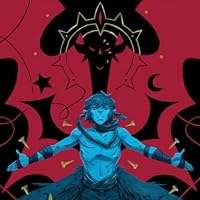
I found this book in the Bothenhampton phone box/book depository. The cover made me laugh out loud with the big red dot and an arrow saying “where we had egg and chips” (different to the cover in GoodReads).
Spike Milligan gives a great insight into the Second World War in this book (volume 4 of his war memories) which starts with his regiment landing in sunny Italy in 1943. For me, he really gets across the British sense of humour, which is there even in the most dire situations, and the incredible camaraderie amongst the men. It made me laugh and also stop and think about the atrocities of war and the incredible spirit of human beings.
Spike Milligan has a very unique mind and you can't helped but be sucked into his writing because of it. Awful puns, bad jokes and abstract silliness galore. I loved every minute of it.
It's also an authentic and interesting account of life as a British soldier during WWII. How he managed to balance this and the hilarity is a mystery to me, but he does it expertly.
I only had a physical copy of this 4th volume of his war memoirs but now I definitely have to go back and read the first three!
Another gripping volume in Spike Milligan’s wartime memoirs. This covers his time fighting and carrying on through the Italian campaign. I like the fact it’s not all full of heroic deeds and is a true reflection of what operations are like. Intense action followed by periods of boredom, these often lead to mischief and high jinx. The book ends with Spike in the military hospital psychiatric ward with combat fatigue. He meets this with his usual good but dark humour. I cannot wait for the next instalment.
This 4th of 7 books continues the hilarity started in “Adolf Hitler: My Part In His Downfall.”
"Mussolini: His Part in My Downfall" is a memoir written by Spike Milligan, British comedian and writer. The book is about his experiences as a soldier during World War II, and his time spent serving in North Africa and Italy. The book is considered to be a humorous and irreverent account of Milligan's time in the army, and his interactions with the Italian dictator Benito Mussolini.
R.I.P. Spike Milligan - you may be gone, but never forgotten!
Spike Milligan's world war 2 memoir is a relentless series of jokes . He cant help it, no matter the situation, its all related with humour depicting the comradery boredom and threat in his wartime experience. Took ages to get used to the audiobook narrated inimitably by Spike himself with some gusto, voices and laughing at his own words . Spent the first half thinking this would be better reading it but then coming round and ending up liking his performance. 3.5 stars really
This is a very memorable book, almost as long as the three previous ones put together. Spike is wounded. He explores some of Roman Italy - something a man of his class could never have hoped to do in peacetime. He falls in love with an Italian woman (with whom he was still in touch at the time of writing). There are wonderful descriptions of the mundanity of war. I think my memory is right on this story: When a group of Germans with a white flag turn up, his bored and distracted CO asks "What do they want?" Spike tells him they want to surrender. "Well tell them to go somewhere else."
A similar book to Gunner Who in terms of writing style and jokes, maybe not as funny. But interesting to see what we did laugh at, yes much has changed but still there are common aspects that arch the generations. The last chapter is somber as he explains how he became “shell schoked” or battle fatigue this was the term used to describe people had a mental breakdown during the war. This may have been the beginning of the mental struggle that he faced for the rest of his life. It’s a sobering thought when you reflect on his humorous tales throughout the book. The novel in the series promises in his words to reveal the outcome of this experience.
I gave this a 3 because- I'm not sure why. I suppose because his honest writing about what we'd now call PTSD was a actually very moving.
But this was written in 1978 - so far all of the books in this series have had astonishing moments of racism and sexism, but the anti-Semitism in this one really stood out. At the time of writing, Spike Milligan would have known very well the horrors of the Holocaust commited by the Nazis he was fighting. Why include cheap stereotypes about Jews?