"I have never met a person with ADHD who was not constantly bedeviled by self-doubt." — Dr. William Dodson, from the Foreword
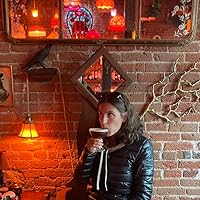
Cynthia Hammer wasn't diagnosed with ADHD until she was 49. By then, she'd already spent a lifetime quietly explaining away a life that didn't add up — the missed appointments, the forgotten reservations, the sense that she was somehow always getting it wrong. She'd also survived a night on open water that nearly killed her, decades before she had a name for the impulsivity that put her there.
Living with Inattentive ADHD is Cynthia's unflinching memoir of what it's like to move through the world with a brain that works differently — and no one, including yourself, knows it yet. It's a story of a marriage, a career in social work, three sons, a devastating loss she carried in silence for over twenty years, and the slow, hard-won process of understanding that none of it was a character flaw. It was ADHD.
Written with the same honesty and dark humor that made her one of the first ADHD activists in the country — she founded one of the earliest nonprofits for adults with ADHD in 1992 — this memoir doesn't just describe inattentive ADHD from the outside. It shows you exactly what it feels like from the shame before diagnosis, the grief that surfaces after it, and the years it takes to rebuild a life around the truth instead of around the mask.
You'll walk away Why inattentive ADHD is so often missed — especially in women who "function" on the outside What it actually feels like to live with undiagnosed ADHD for decades, told through one woman's real, specific, sometimes harrowing experiences How diagnosis in midlife can bring relief and grief at the same time — and how to move through both What it takes to go from shame to self-acceptance, and finally, to advocacy
I think it really important to flag this up at the start of the review as the book did not do this at all. I'm not a parent and even I was kinda disturbed that the stories went from, leaving keys in the car to I accidentaly killed my child because of my undiagnosed ADHD!!! Like WTAF!
There were a lot of stories and I felt sorry for this author. Especially as 25 years or so after diagnosis, and leading ADHD support groups she still hadn't figured out basic things that will help an ADHD person. It seemed that she was simply trying to force her brain to act like a NT brain and that was sad. So I can't really recommend this book. Because I learned more in 20 minutes watching ADHD-Love videos on what helps people with ADHD than I did with this book.
I read this to try to better understand my son. This really is from an adult diagnosed perspective and I think serves best to enhance empathy rather than give the reader a grounding in the science/study of adhd. While there were some good stories the writing is exhausting to read (someone without adhd probably should have edited closer but maybe that’s part of the empathy building in reading this) and once she made a dumb blonde joke I was out. Moreover, she references herself and her nonprofit as reliable sources of information about medication rather than a primary source. This is a red flag. I’d skip this one.
I don't recommend this book. The tips are antiquated and the stories harrowing. You know how boomers always have to casually bring up the most horrible stories? If you like this and a touch of ableism, read this.
'Oh, remember the time our toddler died because ADHD people are careless? Well, we got over it, but yeah.'
Very informative, though I do find "self-help" books as a category of books to be difficult to judge. It is difficult to know how helpful they are to you without doing extensive research into the background of the author and other contributors. At times, I found the book great as I thought, "Oh that sounds exactly like me" but on the flipside, it caused some real anxieties as to how far I have got to go with my ADHD journey. So, in saying all of that, it made me realise that I am sure I do have Inattentive ADHD, and that I have had it all my life. But it also made me think about how far I've got to go to meet all the challenges a life with ADHD has, and the necessary steps to "better" myself and live a more productive life. As I said, a two-sided coin, but that is my issue with self-help books as a category. Sometimes, they harm more than help. Putting all that aside, it was a good first resource so long as you consider it as one person's account of their experience and don't try to immediately "fix" all of your shortcomings based on one author's experiences. I know this review says more about me than the book, but it is a drawback that I have found with many self-help books. They are an entire industry of their own and one must be careful how much they take from each one. But all in all, I am glad that I have read this book, but I will stick to my usual fiction for a while before reading another self help book.
Largely a telling of the author’s experience. I was hoping to better understand what is inattentive adhd and how that differs from hyperactive and other subtypes. Still a fuzzy topic for me.
This is a memoir – actually a medical memoir written from the personal perspective of the author. It is not intended to be a go-to medical book on Inattentive Disorder, or any of the other types of ADHD, but there are a lot of links and references to useful info in the addendum that will provide places to go for info on ADHD. What this memoir does do well is to give the readers a look at the experience of the author, an adult with Inattentive ADHD, and to read about her issues. Readers should remember that ADHD, like most disorders, or diseases, does not treat everyone the same. People diagnosed with one of the types of ADHD may vary greatly with the number of their ADHD issues, or the severity, of them. As in most medical disorders, the affected need to advocate for themselves, and work with their medical professional to come up with the best action plan. I see people frequently who I know have undiagnosed ADHD – especially Inattentive ADD. Getting diagnosed, and admitting it, is a big step in moving forward. Kudos to Cynthia Hammer for bringing this type of ADHD out of the closet.
I dont know what I was expecting, but I guess the cover made it look like a non-fiction or self help. In fact it's a memoir, everything is brought back to the author's difficulties and personal journey. I was hoping for biological or psycological insight but it felt... whiny. Maybe it is because I work so hard to stop myself from whining about the same stuff, but I just really became annoyed by the tone and content. Reliving the litany of disasters and near disasters that constitute their lives maybe hit too close to home for me.
I really want to like this book. But so much just seems like the author’s daily diary and random retelling of stories and feelings that I can’t give this more than 3 stars. It could have been a much shorter book, and not exactly the best prose, but the overall intent of educating the reader of ADHD life impacts redeems the rest of the book. I wouldn’t read it again, but I did highlight maybe 4 or 5 phrases and sections that were specifically poignant among the rest of the text; I think that sums up the book pretty well.
There was a lot of good information that was presented in an interesting way. Perhaps a bit of the narrative could have been left out, but the author definitely hit on some good points in understanding more to this disorder.
Cynthia has put together a very detailed, personal and helpful book that is interesting and informative. She has dedicated a lot of her own time to this subject which has without doubt helped many many people get a better understanding of ADHD / ADD. This book will be appreciated by those who are new to the subject and for the many people who have yet to learn about it in their own lives or in the lives of their family & friends. People like Cynthia make a difference to peoples lives not for the desire of "likes", publicity or money, but through the rare and much more valuable human qualities of generosity, empathy and kindness.