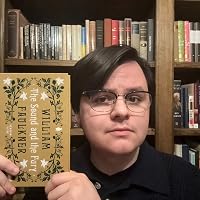
My 3-star attention averages out this 5-star book to a 4-star read. Any of Roger Scruton's books feel to me like his Wagner essays, musical criticism regardless of subject matter, ie I appreciate the existence of deeper meaning without understanding it, enjoy the beauty that he so clearly sees within it without seeing it myself and generally accept that I'm here to read about the very personal experience an expert has when engaging with a difficult stimulus that is currently beyond me. I began to access this book only starting with its sections on human freedom and political theory, whose ideas were the most intelligible and therefore least insightful, especially since the insights lay not in the expression of the ideas but the process of their reasoned extraction from the set of metaphysical axioms explained in the previous sections, the ones that gave me a vague experience of comprehension without actual comprehension, the same sort of intuitive grasp that I was amused to find tackled specifically by Spinoza as being meaningless without the resulting formulation into theory.
Notes
Spanish Jew exiled after Isabella/Ferdinand drive the tolerant Moors out of Spain. Jews forced to convert to catholicism. Flee to tolerant Holland, but under scrutiny, even by Dutch Jews.
Meaningless to talk about knowledge through ‘language of man’ (Moses Maimonides), so Spinoza tries to replicate Euclidian geometry (self-evident axioms leading to proofs/theories) in the realm of the sciences.
Proof by paradox of immanent God: by ontological argument for God as only substance that is independent, and causally dependent on nothing, then how can any of his actions be contingent on certain events by man, like eating an apple or building a tower?
Linear algebra’s 2 variables (cartesian plane) and Euclidian geometry are both two mutually exclusive ways of explaining a certain truth, ie you can elaborate the entire theorem in 1 mode or the other, but not skip from 1 to the other within the proof. In the same way, mind and body are two different modes (extensions) of the same truth (substance)
Difference between ‘members are in a club’ (belong to a club) and Spinoza’s version of ‘in’, ie ‘club is in its members’, ie members have independent existence but club does not. If A is in B, then it is dependent on B for existence. Extrapolating, there is a certain C which is not in anything, ie not dependent on anything for existence. This is a Substance.
0, 1, infinity not as numbers but as ontological categories. So Upanishadic. Treating them as symbols for the abstract ideas of ‘non-existence’, ‘independent existence’, and ‘boundariless existence’ respectively.
“Happiness comes only through the right exercise of practical reason, so as to fulfil our nature, and not to thwart it. A rational being has not only reason, however, but also emotion. His happiness depends upon his establishing such an order in his emotions as to be led always in the path that reason advises. This in turn can be achieved only by developing certain dispositions of character – the virtues – which lead a man to do and to feel spontaneously that which is in accordance with rational nature.”
the wise man, in so far as he is considered as such, is scarcely moved in spirit: but, being conscious of himself, of God, and of things, by a certain eternal necessity, he never ceases to be, but possesses eternally true complacency (acquiescentia) of spirit.
Miracles are impossible, and the belief in them nothing more than a peculiarly exhilarating form of ignorance
Spinoza’s conception of the state is of a system of laws and institutions, organized so as to permit the influence of reason. He implicitly contrasts the power of philosophy, which is guided by reason, with that of faith, which is guided by prophecy.
The task of politics is to build a constitution that is obedient to reason, just as the task of the individual person is to understand the laws of reason and submit to their sovereignty. This submission of the state to reason is secured, not by the virtue of the ruler, but by the adoption of a constitution that makes the virtue of the ruler irrelevant: if a state is to be capable of lasting, its administration
our thoughts are liable to be dominated by the imagination, and we fall easy victim to the prophetic order which promises a passionate salvation. We may then welcome slavery as the end of fear and conflict, not realizing that ‘peace is more than the mere absence of war, but rather a virtue which springs from the fortitude of the soul’ (P v, 4); however, ‘if slavery, barbarism and desolation are to be called peace, peace is the greatest misfortune that men can suffer’
It is the political order alone which can establish the possibility of a genuine peace between people, and our allegiance to it is not a form of coercion or slavery, but on the contrary a form of freedom. In obeying the laws of a liberal constitution, we obey the dictates of reason, and to be compelled by reason is to be free. For the citizen of the liberal polity, therefore, civil disobedience, which threatens the condition upon which his freedom depends, involves only a partial understanding of what is at stake, and therefore an inadequate idea of his own motive. Such disobedience is an expression, not of freedom, but of inner bondage.
While reasonable people will see the intrinsic virtue of offices, the mass of mankind will always prefer the rule of prophets and figureheads, who claim a purely personal loyalty. Only ceremony can attract the imagination to look with favour on the offices whose true virtue it cannot understand.
The history of the Netherlands proved that the towns could protect themselves only when the citizens were prepared to lay down their lives for their common salvation. In public as in private life (E 4, 58), therefore, honour may be required by reason, and is a part of power.
The prophetic order, which promises salvation, in fact destroys the conditions of our salvation, by sacrificing religion to its outward form, and so destroying the precious principle upon which peace and happiness depend: the respect for truth. It is not the prophetic order, but the political order, which has the final claim to be God’s vicar on earth. Only in a secular state, therefore, can true religion flourish.
Spinoza, like Pascal, saw that the new science must inevitably ‘disenchant’ the world. By following truth as our standard, we chase from their ancient abodes the miraculous, the sacred, and the holy. The danger, however, is not that we follow this standard, for we have no other. It is that we follow it only so far as to lose our faith, and not so far as to gain it. We rid the world of useful superstitions, but continue to see it in fragmented form. Oppressed by its meaninglessness we succumb to new and less useful illusions – superstitions born of disenchantment, which are all the more dangerous for taking man, rather than God, as their object. The remedy, Spinoza reminds us, is not to retreat into the pre-scientific worldview, but to go further along the path of disenchantment; losing both the old superstitions and the new, we discover at last a meaning in truth itself.