

What do you think?

Selling Beauty: Cosmetics, Commerce, and French Society, 1750–1830
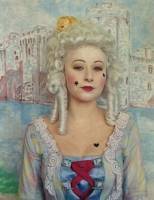
Morag Martin’s history of the cosmetic industry in France examines the evolution of popular tastes and standards of beauty during the late 18th and early 19th centuries. As the French citizenry rebelled against the excesses of the aristocracy, there was a parallel shift in consumer beauty practices. Powdered wigs, alabaster white skin, and rouged cheeks disappeared in favor of a more natural and simple style. Selling Beauty challenges expectations about past fashions and offers a unique look into consumer culture and business practices. Martin introduces readers to the social and economic world of cosmetic production and consumption, recounts criticisms against the use of cosmetics from a variety of voices, and examines how producers and retailers responded to quickly evolving fashions. Martin shows that the survival of the industry depended on its ability to find customers among the emerging working and middle classes. But the newfound popularity of cosmetics raised serious questions. Critics―from radical philosophes to medical professionals―complained that the use of cosmetics was a threat to social morals and questioned the healthfulness of products that contained arsenic, mercury, and lead. Cosmetic producers embraced these withering criticisms, though, skillfully addressing these concerns in their marketing campaigns, reassuring consumers of the moral and physical safety of their products. Rather than disappearing along with the Old Regime, the commerce of cosmetics, reimagined and redefined, flourished in the early 19th century, as political ideals and Enlightenment philosophies radically altered popular sentiment.
- GenresHistoryNonfictionFashion
240 pages, Hardcover
First published August 18, 2009
Ratings & Reviews
Friends & Following
Create a free account to discover what your friends think of this book!
Community Reviews
Displaying 1 - 1 of 1 review
April 2, 2010
This book explores the cosmetics of the latter Eighteenth-century to the beginning of the Napoleanic period. The work commences with a necessary 3- chapter introduction to cosmetics of the time period: how they were worn, who wore them, how much they wore, and the social implications of wearing fard. The author's analysis begins then in chapter 4 to not only provide commentary on the critics of fard but also on the need for retailers to re-adjust their public claims, in various affiches of the time, about their products. Retailers amended their public advertisements to tweak their claims from a negative one to positive one, so that in the end their wares continue to sale.
Morag sees this as the beginning period of a commercial revolution and of a commerical market, a time period studied from 1750 to 1830 that catered advertisements to popular thought and sentiment. To do so, she shows how cosmetics and products in the toilette became orientalized when the Orient was a popular fad, became naturalized when notions of natural beauty were popular, and became masculinized when the postrevolution removal of men's wigs necessitated new hair products for the masculine toilette.
Even for the non eighteenth-century fanatic, this book was equally an eye-opening read in that most of it inevitably demonstrates parallels to the commercial market of today. Although the author does not draw on such a conclusion herself, the connection is striking to those of us who have watched ads on television for men's hair products, or who have been told at the grooming salon of our poor hair follicles, or who have been tempted by the newest and heavily priced facial lotions, or who have been tempted by the ideals of beauty in an ever-changing market.
Morag sees this as the beginning period of a commercial revolution and of a commerical market, a time period studied from 1750 to 1830 that catered advertisements to popular thought and sentiment. To do so, she shows how cosmetics and products in the toilette became orientalized when the Orient was a popular fad, became naturalized when notions of natural beauty were popular, and became masculinized when the postrevolution removal of men's wigs necessitated new hair products for the masculine toilette.
Even for the non eighteenth-century fanatic, this book was equally an eye-opening read in that most of it inevitably demonstrates parallels to the commercial market of today. Although the author does not draw on such a conclusion herself, the connection is striking to those of us who have watched ads on television for men's hair products, or who have been told at the grooming salon of our poor hair follicles, or who have been tempted by the newest and heavily priced facial lotions, or who have been tempted by the ideals of beauty in an ever-changing market.
Displaying 1 - 1 of 1 review