Longlisted for the Center for Fiction 2023 First Novel Prize
A novel inspired by true events
The coming-of-age story of Philbet, a gay, physically-misshapen boy in rural Georgia, who battles bullying, ignorance, and disdain as he makes his way in life as an outsider—before finding acceptance in unlikely places.
Fueled by tomato sandwiches and green milkshakes, and obsessed with cars, Philbet struggles with life and love as a gay boy in rural Georgia. He’s happiest when helping Grandaddy dig potatoes from the vegetable garden that connects their houses. But Philbet’s world is shattered and his resilience shaken by events that crush his innocence and sense of security; expose his misshapen chest skillfully hidden behind shirts Mama makes at home; and convince him that he’s not fit to be loved by Knox, the older boy he idolizes to distraction. Over time, Philbet finds refuge in unexpected places and inner strength in unexpected ways, leading to a resolution in the form of a letter from beyond the grave.
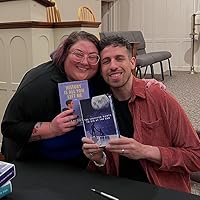
Jeffrey Lofton hails from Warm Springs, Georgia, best known as the home of Roosevelt’s Little White House. He calls the nation’s capital home now. During those early years he spent many a night trodding the boards of DC’s theaters, including the Kennedy Center, Woolly Mammoth, Washington Shakespeare Company, Signature Theatre, and Studio Theatre. He even scored a few television screen appearances, including a Super Bowl halftime commercial, which his accountant called “the finest work of your career.”
Today he is a senior advisor at the Library of Congress where he is surrounded by books and people who love books—in short, paradise.
Red Clay Suzie is his first novel, a fictionalized memoir written through his personal lens as an outsider—gay and living with a disability in a conservative family and community in the Deep South.
Red Clay Suzie was named a Lambda Literary Most Anticipated LGBTQIA+ Book, awarded the Seven Hills Literary Prize for Fiction, and Longlisted for The Center for Fiction 2023 First Novel Prize.
This coming-of-age novel reads like a series of vignettes very close to memoir. I warmed to young Philbet right away, and was content to listen to his stories about Hot Wheels, growing up in rural Georgia, his Granddaddy's wisdom, and how he became aware that not only was he physically different from the other boys his age, but he was also attracted to them. Thus, Red Clay Suzie develops into a coming-out story, and I loved how this small, sweet boy stood on his family's shoulders and finally found the voice and courage to be his true self.
Reading this, I felt like I was on the porch swing of my first house, a 4-room cottage in the middle of North Carolina, sipping lemonade and listening to the crickets and cicadas. It's a slow, gentle burn, so be patient with it. You'll be rewarded if you just sit back and let it carry you along.
Sometimes you read a book that makes you realize what is missing from the other books you've read lately. This beautiful debut novel made me realize that a lot of current fiction is completely devoid of descriptive writing. Here, the book is driven by description; the story reads more like a memoir and has a languid, impressionistic pace. There isn't a propulsive plot; instead, we explore the inner life, sensory experiences, and deep emotions of the narrator. The descriptive writing grounds us in a highly specific place and we come to know Philbet's family and community well through his astute powers of observation. I grew up in rural Georgia, near where this story takes place, and every passage of Red Clay Suzie evoked strong memories of the thick air, the red clay, and the languorous pace of that area. This is just a lovely reading experience and I haven't read anything like it in recent memory.
Intimate and beautifully written, authentic and immersive, Red Clay Suzie portrays the life of Philbet, a physically misshapen gay boy growing up in rural Georgia. His story is told with such sweetness and truth, the book is destined to become a classic of Southern literature.
Red Clay Suzie is a coming-of-age story following Philbet, a gay, physically-misshapen boy in rural Georgia, who battles bullying, ignorance, and disdain as he makes his way in life as an outsider—before finding acceptance in unlikely places.
I thought Red Clay Suzie captured the atmosphere of a conservative household in rural Georgia so well, and I really liked the attention to detail that was given to the members of Philbet's extended family, bringing them to vivid life. I could feel the heat of the sun and the baking red clay, the freedom to play in the woods and the suffocating pressure of racial segregation and hiding one's sexuality. I thought the author did an impressive job of communicating the wide-eyed innocence of Philbet, especially when it came to not understanding why he and his best friend are treated differently, but knowing those of the older generations would see their friendship as a problem. Equally with his sexuality, knowing he does not want to kiss or marry a girl but knowing this is a secret he can never tell. The novel is told with a strong Southern voice, but for my personal preferences I would have wished for more emotional immediacy, as I felt the narrative voice holds the reader at a psychological distance as the story is told. In some ways the novel reminded me of To Kill A Mockingbird, and I can see Red Clay Suzie appealing very much to readers who enjoy memoir-esque fiction.
I am grateful to NetGalley and the publisher for providing an ARC of Red Clay Suzie. These opinions are my own.
Thank you for TLC Book Tours for giving me this book in exchange for my honest review.
This is the authors debut novel and the story is based on his life- which just makes it pack more of a punch. Or at least it did for me emotionally.
The story starts off (the first third of the book) when Philbet is four years old. He lives in the deep south with his parents and brother, and his Grandfather and Grandmother live next door. He spends his days helping his Grandaddy dig potatoes while he teaches him life lessons. He is obsessed with Matchbox cars and tomato sandwiches. As he is growing up through his family's treatment of him he learns that the way he behaves and his appearance isn't like everyone else or what society expects of "little boys". (This part of the story made me so mad because it is so true about how people cause other people to have insecurities, like when we are little we don't know any different.)
Then the story jumps forward to his early elementary to middle school. We learn about how he makes friends with James, a boy in his grade, and he learns that James will never be welcome over because he is black. (This book is set when there is still segregated waiting rooms) He also starts to wonder why he isn't intersted in any girls like his older brother Adam.
Then he meets Knox- in part three of this book Philbet is between 16 and 18. He hones his car skills, learns that he can go to college and falls in love with Knox. He also meets another gay man that he knew from his childhood and it gives him an adult to confide in when he needs it. The relationship between Knox and Philbet is sweet but also iffy due to the age difference but its written well and there's a clear understanding that its a young boy falling for an older person which is not reciprocated at the time.
My favorite character in this story is Grandaddy. He is always there for Philbet or Whoop and he teaches Philbet what it means to be cared for. He is always there when Philbet needs him and he loves all of him. The life lessons that are learned through Grandaddy are so important and not everyone has that kind of support in their life. I cried a few times because of Grandaddy-I will say I also have a grandfather that I am close with which probably caused my emotional attachment to Grandaddy.
Overall a great debut that makes you think about a lot about what shapes people throughout their life and it will definitely tug on your heart strings.
Red Clay Suzie is a moving and beautiful written coming-of-age story based on personal experience. The story focuses on Philbet, a physically misshaped gay teenager who lives in rural Georgia and struggles throughout the book to find his place in society. Philbet looks up to an older boy named Knox. Even as he grows more conscious of the numerous obstacles in the way of his relationship with Knox. His unwavering affection for Knox is the driving force. Philbet struggles with his own identity and desire.
Philbet is taunted and teased by his classmates at school because of the lack of acceptance and understanding from his family. His family is unable to accept him for who he is. His grandfather was the only one who understands and cares about Philbet. He finds comfort in his passion for cars and helping his Grandfather in the vegetable garden. I rooted for Philbet throughout the whole story.
Thank you, Post Hill Press, Jeffrey Dale Lofton and Pride book tours, for letting me join the book tour.
This book is the epitome of “all the feels.” It was so heartbreaking…it made me feel so sad and guilty and lonely with the main character for the majority of the reading of this book. But as I grew up with him throughout the book, I experienced with him his feelings of love and acceptance and hope that he comes to find when he can finally bring himself to just accept and share who he is! This book was also made even more interesting by its comments on questionable social norms such as race relations and even parenting that were more prevalent in the time period in which the book is set, but which unfortunately linger today. Having a young boy myself, I hope that he never suffers the way this character did just to find his love for himself, his family, and his community. I think everyone should read this book and I honestly can’t wait to experience this again (and I almost never re-read books)!
Red Clay Suzie is my first read of 2023 and I could not be happier as I have found a new book to put in the favorites list.
"I live my whole life inside my own heart. I feel like my heart gets squeezed inside me ‘cause I’m all deformed, and then I’ve got to squeeze it down even more because it wants to love a boy and even if people say it’s okay, they have to say it’s only okay because they’re looking the other way and letting me be this way because they’re being real big about it and, I don’t know, tolerating freaky little me."
I thoroughly enjoyed every second of Philbet's story from the time he was four to his eighteenth birthday detailed in Red Clay Suzie. Philbet is the sweetest boy with a deformed chest cavity due to his sternum being rotated. On top of that, he's grappling with being gay. The second half of the story genuinely had me in tears the whole time. Reading his internal monologue that consists of deep longing and loneliness is heartbreaking. I read reviews all the time that say, "This book broke me and then put me back together again," and it (truthfully) usually makes me cringe but, my God, did this book break me and then put me back together again.
I loved almost all of the characters. Philbet, especially, but also Knox (the most perfect, kindest boy), Grandaddy, Mama, James, Adam, and Beau. I would love to have two more stories from this 'verse that tell the story of Knox's POV once he met Philbet and also Beau and Dean's story.
“ I hate her, hate her so much. The one you’ll say yes to. The one you’ll kiss. The one you’ll choose. And then I felt bad; she hasn’t done anything except be what he wanted…That girl he’ll love, she and I are alike, I thought. Her heart will fill up with him just like mine. She and I are the same.”
I'm not ready to say goodbye to Philbet and Knox so I don't know what I'm supposed to do right now. This is easily a book that I could turn right around and read again, front to back.
Read this if you like Markus Zusak Celeste Ng, and want to read passages that describe longing in the most palpable way.
Visit www.instagram.com/tabbybookclub on January 9 to see my stop on the Red Clay Suzie bookstagram tour hosted by Pride Book Tours. Thank you to Pride Book Tours, Jeffrey Dale Lofton, and Post Hill Press for the finished copy in exchange for a review.
It took me quite a while to really engage with this book. I'd originally requested it because I love to read new authors and the storyline really appealed to me being based on the life of the author but also written as YA fiction.
The book tells the story of Philbet who is born disfigured although it is never really learned why. He is born into a poor Southern family, most of whose expectations of life are very small. Philbet, however, dreams big.
His first love is cars and he longs to drive them, fix them, be part of them. His second love is a boy, which is a secret he keeps to himself because he knows it will be seen as wrong.
The story gently leads us through the first 18 years of Philbet's life up until the point he is ready to move on.
It was a little slow at first but around the halfway mark I fell in love with this book. It is about a young boy's dreams and fears. It is about family and relationships. It is about love, rejection and loss. I'm not ashamed to say that for a good part of the last half I cried an awful lot.
This may be Mr Lofton's first novel but I hope not his last. The writing became much more fluid towards the end as though it wasn't just Philbet who was becoming his true self but also the author was learning how to express his emotions as he wrote.
It's an interesting book which deals with some serious subjects and handles them carefully. I'd definitely recommend it to anyone who appreciates YA literature. Fans of Benjamin Saenz should like this. I only knocked off one star because I struggled with the beginning. If you do too then persevere, it's worth it.
Thanks to Netgalley for this ARC in exchange for an honest review.
Reading Red Clay Suzie is like sitting on the front porch swing chatting with your favorite cousin you haven't seen for years. Jeffrey Dale Lofton is a gifted storyteller. His words so beautifully weave the coming of age story of Philbet, a young, gay boy (who doesn't even seem to know what gay is yet) in rural Georgia who was born with a physical deformation of the chest. He endures years of bullying at the hands of his own kin until he stands up to that Unca. He innocently learns about segregation through the eyes of his black best friend James. When Philbet finally shares his feelings with his longtime crush, will they be returned or will sharing those secret feelings result in dire consequences.
I cried the whole last hour of this book. Full review to come.
Philbet, a gay boy in rural Georgia, navigates love, loss, and self-discovery while grappling with personal insecurities and a world that seems to reject him.
Well… don’t let Pete Cross pick your first audio of the year. Just kidding - he recommended this book to me and I literally could not stop listening. Philbet is the sweetest, most lovable character and you just want to protect him with your whole heart and soul.
Philbet had this beautiful innocence about him - just a wonder about the world and he wanted to know things. He asked questions that made adults uncomfortable, and he did it in such a way that you just wanted to protect him. He tried to make sense of the world the best way he knew how and it just tugged at my heart!!
When he realizes he’s different because of his chest, I cried. When he asked Mama about his sister, I cried. When he tried to understand friends, I cried. When he lost his friend, I cried. When he realized he liked boys, I cried. When he opened up to Beau (you guessed it) I cried. But oh my god, when he lost granddaddy, I lost it. Full on sobs with tears running down my face. The ending of this book is so so so perfect and it’s an incredible coming of age story.
I related so much to Philbet’s loneliness. And he was so good at saying why and how he felt to the ones he loved most. And those conversations with James and Knox!!?? 😭😭😭
Honestly, I loved this book so much. And to start this as my first audio of the year???? Any other books have a lot to live up to….and I already ordered a signed copy for my bookshelf. Incredible. I’ll be recommending and thinking about this one for a long time.
“If you let fear make your decisions, you’ll never be what you are meant to be.”
This is a very popular book. It follows Philbet, a gay, physically deformed boy, who grows up in the south with a very conservative family. He gets bullied a lot and tries to figure out his way. He falls for a boy, Knox, who doesn’t seem to feel the same. His granddaddy is his favorite person in the world. This is a story based on true events, about Philbet navigating this life.
Soooooo, I hated the first half of the book. I don’t DNF books, and I’m glad I didn’t because I did enjoy the second half of the book.
The first half read like a memoir, and I feel like it could have been summed up in just a few chapters. I’ll be honest, I skimmed a lot of the first half of this book. The first chapter was great, and then it went back in time and it lost me.
But I’m someone that likes action, and I felt like there was no action in the beginning. I felt like there was no point to any of the first half other than to give me some background info, and background info shouldn’t take 50% of the book.
The second half was far better. It was interesting and engaging. There was more dialogue, which I love. I enjoy stories that are driven by dialogue. Just a personal preference.
All in all, it was a decent book. But I cannot give it more than 3 stars.
I deeply enjoyed this fiction novel set in Georgia in the second half of the 20th century. The plot is coming of age and follows Philbet, a young gay boy with a physical deformity growing up in the south. The story is heartwarming, tender, and honest, and speaks to the resiliency of the author, whom the story is based on.
The book follows Philbet from age 5 to age 18 and is narrated with colorful and descriptive narration that stands out from other books. Many times in this book I noted how the author perfectly described a feeling I hadn’t thought about before. I also loved Philbet as a character and wanted to give him a big hug. The ending of this book has me a little bit ruined right now too. It was unexpected but the perfect, most emotional ending. The scenes describing tense and difficult family relationships had me feeling really seen as well. I always love a good gay triumph story, and this was had me tearing up by the end.
As I mentioned, this book is richly descriptive on every page, but the detail was bogging me down a little bit until the final chapters, where a surprising turn had me feeling super emotional. Can’t speak highly enough about the ending though and how the story was tied up. I highly recommend reading this if you have not already!
I felt like I was living with Philbet for the 3 days I read this, traveling up country roads and through the woods with him. The story was vivid with all the beautiful and creative details. It was a pleasure getting into this characters mind and heart—my heart shrunk, broke, grew, and exploded right alongside his!
Review 🍅🍅🍅🍅🍅🍅(6/5) Red Clay Suzie by Jeffrey Dale Lofton Post Hill Press
🍅If you’ve ever met anyone from the south you’ll know that we are born long winded. A story is never quick & we say goodbye at best 3 times at any departure. We hug everyone because we have no boundaries when it comes to personal space. And we love pretty! Keep all of the above in mind when you meet Philbet. I have every confidence in saying this darling protagonist will become a favorite of yours. 🍅 Red Clay Suzie drops its readers right into the heart of a little boy of four years old growing up in rural Georgia. You’ll start out right beside him in the red clay filled soil in his granddaddy’s vegetable garden. This is a novel that needs to be read with the heart and not the mind. As Philbet experiences all that life sends his way, you find yourself so immersed in raw emotions. From laughter, to tears, to down right fretting you will feel all of the things. ✨”It’s not easy to talk to someone about something that’s important to you. Maybe you only get one chance at this, and you don’t get what you want if it doesn’t go well. And here I was having the most important conversation I’d ever had. “ ✨ 🏎️Jeffrey Lofton had a story to tell. His. Quite frankly I love memoirs carefully flung out into the universe by way of a novel. Red Clay Suzie is a moving, funny, gut wrenching LGBTQ coming of age story. Imagine being a little guy in the late 60’s discovering who you are during a time that one wouldn’t and shouldn’t dare to do so. We have such a long way to go to get society to join as a whole and just accept humans for exactly who they are. Acceptance, understanding and kindness is what makes the world go round. Philbet’s journey towards all of those things was trying as he grew older. I wanted to swoop that little boy up into my arms so many times but this was his path. We could only be so lucky that Philbet had Jeffrey to bring his story to print with the distinctive grace that sets the finest of southern fiction writing apart from all the rest. 🏎️I will not go over every little detail because I can’t without my heart bursting and ugly crying. I can assure you though that you will never look at a heirloom tomato, matchbox car, cinnamon toast, or a green milkshake the same way. 💚P.S. 🥹This guy wrote Red Clay Suzie on his phone…… 🍅🏳️🌈🍅
"If you let fear make your decisions, you'll never be what you are meant to be." - Grandaddy
First of all, I would like to thank the folks at @pridebooktours for not only inviting me on this tour, but also for contacting me again after I had initially passed on this one due to a full schedule. Because if they hadn't offered me that second chance, I may never have gotten to experience the joy of reading Red Clay Suzie by Jeffrey Dale Lofton.
OMG this book, y'all. It was simply incredible, a stunning debut. The story, based on the real life experiences of the author, introduces us to Philbet, a boy growing up in the deep south, with a bit of a misshapen body but with a heart that shines so brightly it's blinding. Bullied for his quirks, desperate to hide his physical difference from the world, and being gay in a conservative place and time, Philbet reminds us that kindness to others costs us nothing.
Lofton's prose brings to life the rural Georgia landscape. I could practically feel the red clay under my feet, smell the bounty of Granddaddy's garden, and hear the sound of a '72 Pontiac GTO pealing off down the street. In these pages we see the beauty of friendships, the wisdom of our elders, the power of love in all its forms, and the strength we all have to be our authentic self and to shine like the chrome on a classic car. I cried through probably the last third of this book, and I really didn't want it to end. Also, it should be noted that I have re-read the last chapter of the book approximately eleventy-billion times because it is just heartachingly beautiful. Perfect for anyone looking for a beautiful coming of age story, I really hope you will check this one out.
Thank you to Pride Book Tours for providing a copy of this book in exchange for an honest review.
This was an interesting one because the descriptions of Georgia life and the red clay metaphor, though the story takes place in the 1970s, took me immediately to my grandparents' property from growing up in rural Arkansas. I enjoyed the story a lot, which is largely a family drama as the main character grows up as a queer boy in a conservative family. The chapters are short vignette scenes, which is nice too. I think as autobiographical fiction it's good, but I think it would have been an absolute knockout if it had been presented as a memoir instead (especially since it reads like a memoir more than fiction already anyway). Def recommend though if you like family dramas, southern fiction, or 1970s vibes and cars. Rating: 6.5/10
Thank you for a free copy in exchange for an honest review!
Red Clay Suzie is the kind of book that sneaks up on you. I picked this lovely debut up and before I knew it a few hours had passed and I was all done and sitting in my feelings.
This was a beautiful memoir-esque fiction that reminded me of so many coming of age books and movies I’ve loved but was still unique. I loved the Southern background, the characters, the descriptions. The feeling of being different and misunderstood resonated deeply with me. And, although I don’t do it often, I found myself tabbing lots of quotes that carried a lot of emotional weight.
Red Clay Suzie is beautiful and makes your heart ache. The writing is so personal that I was not surprised to learn that this was inspired by true events. As the plot unfolded I found myself in the edge of my seat rooting for the protagonist to find love, acceptance, happiness. I don’t think this book falls neatly into one category, there is really something here for everyone. If you are like me and enjoy reading first time authors, then pick this up and settle for an amazing read.
Descriptive. Reads kind of like a memoir. I found myself having to push through reading it more than a few times. Maybe I'm an unfeeling bitch for not rating this higher but some stories just don't hit me hard like they do to other people I guess. The family dynamics were easily the best part of this novel.
Not bad, just too slow for me. I may pick it up again later. Keeping it next to my reading chair so I can read a chapter here and there when I feel like
I opted for the audiobook version of Lofton's coming-of-age tale, which had its good and bad points. The good was that the narrator's Georgia accent always brought me back to the potent setting of this story (and it helped that his character voices were compelling but not so different from one another that it felt forced or awkward). The bad was that I was driving when I got to the last chapter and almost had to pull over because I was crying so much I thought I might get in a wreck.
Listening to a book also slowed me down, but that was both good and bad. As much as I might have wanted to keep reading longer than I was sometimes able to, it allowed me to savor the story, which spans more than a decade as Philbet grows from a little boy through all the awkward years until the story ends on the cusp of manhood.
Many of the markers of a typical coming-of-age novel appear here: life lessons, learning to see your parents as people, navigating first loves, first heartbreaks, first experiences with death, and morphing from the person people wanted you to be into the person you were meant to be. But because of the boundaries of this particular story (a boy with a disability who grows up to be gay, living in the South), there are also important themes about race, class, disability, sexuality, the meaning of family, and courage that make it stand out.
By far, my favorite passages are moments when Lofton slows down time, and things that only take a second -- declaring your love for someone, realizing a truth about yourself or your family, watching someone take their last breath -- are captured in slow-motion, with every conflicting emotion given its due.
Lofton is a wonderful writer, and Red Clay Suzie is a beautiful book.
I leave you with this: “Don’t be too sad. When you cry, you can’t see so well. You just might miss seeing somebody standing right there who does love you back.”
📚📚📚
The writing of Red Clay Suzie is perfectly fine, but I couldn’t really engage with the characters too much for about the first half of the book. I wish I liked this more because there is potential here. Not sure if this is the author’s first book but it definitely reads like one. That’s not necessarily a bad thing, though. What I did love was Philbet and Knox. They’re so sweet. I still think that there are readers who will enjoy this, which is why I’ll still recommend it.
Red Clay Suzie will be available on January 10, 2023.
There is a depth of raw honest emotion you get to experience through Philbet's eyes that you rarely find in a book.
As the book starts, the narrative feels almost chaotic. Trains of thought jumping tracks only to pull back into their original station. It took some time for me to allow myself to experience Red Clay Suzie as a child. Jeffrey had perfectly remembered and beautifully captured the way our brains connect bits of life at a tender age.
We grow up with Philbet through this story. That childhood joy turning into cautious youth then teenage angst and finally growing into the uncertainty of facing adulthood.
The most powerful theme in this book for me was the retrospective grief. The things we didn't know we could lose until they were gone. The moments we did something profoundly beautiful for the last time without ever knowing it. The moments lost because we were too afraid or distracted.
Red Clay Suzie is vibrantly alive with its own story, but somehow little pieces of it were glittered with life that felt like my own.
And it made me desperately miss growing tomatoes with my Grandma and Grandpa.