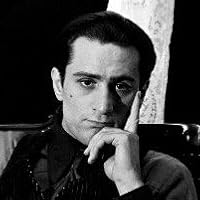
Lieutenant Fred O'Connor of the NYPD Narcotics Bureau has a an apartment on Central Park West, jointly purchased with ill-gotten gains by Fred and a corrupt fellow officer. The place is a refuge for Fred from a society he finds repellently ill-ordered. But his own equilibrium is disturbed, first by a series of brutal murders of his colleagues, then by the appearance at the apartment's door of wan Leo Smith, who claims to be the cop-killer...'Fleetwood is a compulsive pattern-maker, and a master of the ambiguous thread which finally pulls all together. It is a rich, gruesome, irresistibly readable book.' Times'Fleetwood can write like a dream... and really get into your head. He reaches down and stirs with venomous delight the nameless, faceless things swimming far below the level of consciousness.' Scotsman
Hugh Fleetwood was born in England in 1944. At the age of 18 he went to live in France; at 21, he moved to Italy, where he remained for the next fourteen years. He had his first exhibition in 1970 at the Festival dei Due Mondi in Spoleto; in 1971 he published his first novel, A Painter of Flowers, for which he also designed the jacket, as he did for his second novel, The Girl Who Passed for Normal, winner of the John Llewellyn Rhys Memorial Prize. His fifth novel, The Order of Death, was made into a film starring Harvey Keitel and John Lydon (Johnny Rotten). His most recent one-man show, at the Calvert Gallery in London, coincided with the reissue of six of his books by Faber & Faber’s Finds series. In 2012, he was cited in David Malcolm’s The British and Irish Short Story Handbook as a key figure in the development of the English short story; his most recent publication, “How the Story Ends”, will appear in the anthology Speak My Language in November 2015. Hugh Fleetwood currently lives in London.
Right up there with some of George Simenon's or Patricia Highsmith's best work. A NYC detective who's used skimmed money to buy himself and a fellow detective an apartment to hide away from what he sees as an increasingly degenerate world gets a visit from a sociopathic young man who claims to be responsible for a stream of recent murders of policemen. Headgames ensue. Also the basis for a weird little movie variously titled CORRUPT or COPKILLER, starring Harvey Keitel as the detective and Johnny Rotten as guess who. (And yes, the Public Image Limited song of the same name was to have been used in the film.)
This book was very in the head of the main character and dark. It was interesting but also hard because it was so dark and hopeless in some ways. It's 1984ish is some ways if that makes sense. The main character has a secret apartment that he will do anything to protect and as he starts to protect it things spiral out of his control. I really enjoyed it but isn't a book I can just read for light-hearted escapism.
This little rediscovered classic from Faber’s imprint Faber Finds proved a real hit with me. Originally published in the 1970′s, Fleetwood produces an intense, violent yet ultimately satisfying criminal morality tale, that had this reader questioning the motivations of not only the central ‘criminal’ protagonist but also the loose relationship with morality displayed by the main police character.
Written in a spare and uncompromising style, The Order of Death, sees the seemingly upstanding police lieutenant Fred O’Connor, enjoying the fruits of his secretive embezzlement and ill-gotten gains accrued in his police career. His private world begins to unravel after a series of cop killings and the entry of the unstable Leo Smith into his life purporting to be the killer, and who threatens O’Connor’s career. What follows is a series of claustrophobic mise en scenes between the two, that unsettle the reader as O’Connor descends into depravity and murder to protect his reputation at the expense of this vulnerable young man. The whole crux of the tale revolves around a quote by Smith’s grandmother when she says, ” I think it is always difficult to know whether our fears and desires shape our moral choices, or whether our moral choices shape our fears and desires”. This is illustrated so clearly by the thoughts and actions of both O’Connor and Smith, whose actions become defined by their moral choices and what leads to them, which provides the reader throughout with shifting reactions to both and to a naturally thought provoking conclusion to the book, that leaves you still pondering the motivations of both men.
This is an intelligent and clever read that completely immerses the reader into the tale with its spare and beautifully dispassionate prose, playing with our own perception of morality and causing the shifting of allegiances throughout. It has an innate sadness when viewed as a whole, with more than a nod to the traditional tragedy style which could easily translate to the stage, although ostensibly will just labelled as a crime book. A powerful and emotive read.
Very odd book about a corrupt policeman who uses his bribe money to rent a large, empty flat along with another cop. One day a young masochistic man turns up at the flat claiming to be a murderer, and threatening to spill their secret. Clever but bizarre.
Interesting as fuck after watching the movie. i mean, if you dont like that im sure you wont like this so id see it first, but it turned the movie from dumb and delightful to absolutely fascinating and i LOVE that.
Written in 1976, the book is described as a psychological horror story, and if this isn't a psychological thriller, then I have no idea what one is. The plot involves 'corrupt' cops in New York City with the main character being a Lieutenant in the Narcotics Squad. Lt. Fred O'Connor is one of the weirdest characters I've ever read, only because I could never figure out when he was thinking clearly or was dreaming, was real or imaginary. But I guess that is what makes a psychological thriller what it is. There are other police officers, five of them dead, having already been brutally murdered...and one of the officers, Bob, having purchased expensive New York real estate with Lt. O'Connor which overlooks Central Park.
There is one other 'rogue' character who at first does not seem to fit into the story. But the young man presents himself to the Lieutenant early in the book and announces that he is the Cop Killer. From there, the reader can surmise that truth is a lie and vice versa no matter who is speaking or thinking.
It was a fast read and the author has written other thrillers which received some acclaim.