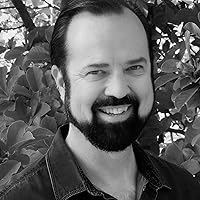
William Patrick Kinsella, OC, OBC was a Canadian novelist and short story writer. His work has often concerned baseball and Canada's First Nations and other Canadian issues.
William Patrick Kinsella was born to John Matthew Kinsella and Olive Kinsella in Edmonton, Alberta. Kinsella was raised until he was 10 years-old at a homestead near Darwell, Alberta, 60 km west of the city, home-schooled by his mother and taking correspondence courses. "I'm one of these people who woke up at age five knowing how to read and write," he says. When he was ten, the family moved to Edmonton.
As an adult, he held a variety of jobs in Edmonton, including as a clerk for the Government of Alberta and managing a credit bureau. In 1967, he moved to Victoria, British Columbia, running a pizza restaurant called Caesar's Italian Village and driving a taxi.
Though he had been writing since he was a child (winning a YMCA contest at age 14), he began taking writing courses at the University of Victoria in 1970, receiving his Bachelor of Arts in Creative Writing there in 1974. He travelled down to Iowa and earned a Master of Fine Arts in English degree through the Iowa Writers' Workshop at the University of Iowa in 1978. In 1991, he was presented with an honorary Doctor of Literature degree from the University of Victoria.
Kinsella's most famous work is Shoeless Joe, upon which the movie Field of Dreams was based. A short story by Kinsella, Lieberman in Love, was the basis for a short film that won the Academy Award for Live Action Short Film – the Oscar win came as a surprise to the author, who, watching the award telecast from home, had no idea the film had been made and released. He had not been listed in the film's credits, and was not acknowledged by director Christine Lahti in her acceptance speech – a full-page advertisement was later placed in Variety apologizing to Kinsella for the error. Kinsella's eight books of short stories about life on a First Nations reserve were the basis for the movie Dance Me Outside and CBC television series The Rez, both of which Kinsella considers very poor quality. The collection Fencepost Chronicles won the Stephen Leacock Award for Humour in 1987.
Before becoming a professional author, he was a professor of English at the University of Calgary in Alberta. Kinsella suffered a car accident in 1997 which resulted in a long hiatus in his fiction-writing career until the publication of the novel, Butterfly Winter. He is a noted tournament Scrabble player, becoming more involved with the game after being disillusioned by the 1994 Major League Baseball strike. Near the end of his life he lived in Yale, British Columbia with his fourth wife, Barbara (d. 2012), and occasionally wrote articles for various newspapers.
In the year 1993, he was made an Officer of the Order of Canada. In 2005, he was awarded the Order of British Columbia.
W.P. Kinsella elected to die on September 16, 2016 with the assistance of a physician.
I love W.P. Kinsella's work. This book of short stories is the first, although he is more recognized for Dance Me Outside. All of the stories are written in the voice of Silas Ermineskin and are about things that happen on his small Albertan reserve. While many people dislike Kinsellas Indian book because they don't feel he can write authentically about Indians being white, I strongly disagree. I think his characters are flawed yet beautiful, and capture something of reserve life that often gets overlooked or left behind. There wasn't a single story I didn't enjoy.
I have read a lot of Kinsella in the past. This one slipped by me somehow. I always enjoy his writing. It is truthful and harsh, yet sweet and poignant. It will make you laugh and cry all in the same short story.
Kinsella's Silas Ermineskin stories are some of my favorite works of fiction. Scars, even though it contains some very fine stories, contains too much of what I think of - for want of a better term - as "Tonto talk" when using the verb, to be: "The man be a boy, fourteen or so and Indian'; "That Indian be stupid drunk."; "it be kind of hard to make into English.", etc. I don't find that in the other Ermineskin collections, and his use of "be" isn't consistent here, as far as I can tell. It bothered me enough that I won't be rereading or even keeping this collection.
16 short stories, featuring Silas, and his friends Bedelia Coyote, Frank Fence-post, Sadie One-wound. Some of the stories I've read before, others were new to me.
The book jacket describes the stories as full of laughter, but it is definitely dark humour, laughter that keeps you from crying. In the nearly 40 years since this book was published, there has been too little progress with First Nations, too much condescending by governments, too little understanding by them.
I wish I could say that these stories didn't ring true, but they do.
One of my favourite short story collections ever, which possibly influenced my own short story writing style. Kinsella is the master of the significant or twist ending that casts new light on the story just told.
One of the highlights of my own early writing career was receiving a positive review from Kinsella for my first book, Cheeseburger Subversive
Very good compilation of short stories about first nations in Hobbema. Very succinct from the point of view of the oppressed and how they survive, day by day.
I think this is Kinsella's first collection of short stories. This collection is ok, but it doesn't compare to the magic and creativity of his later collections.