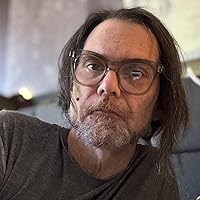
John Edgar Wideman's first novel, A Glance Away, was published in 1967 when the author was just 26 years old. The New York Times Book Review raved "Here is a novelist of high seriousness and depth. He has all sorts of literary gifts, including a poet's flair for a taut, meaningful, emotional language." The action unfolds over the course of a single day, but deftly jumps through time to interweave the life journeys of two very different men whose paths converge one unforgettable evening with surprising and unforgettable results. Eddie Lawson, a young African-American, has spent a year kicking his drug habit and finally returned home. Robert Thurley, a white college professor, is on the verge of crumbling under the weight of haunting family memories, alcoholism, and a tormented struggle with his ambiguous sexual identity. Their encounter forcefully illustrates the consequences of our failure to understand one another, and the transformative possibilities that open up for those brave enough to try.
A widely-celebrated writer and the winner of many literary awards, he is the first to win the International PEN/Faulkner Award twice: in 1984 for Sent for You Yesterday and in 1990 for Philadelphia Fire. In 2000 he won the O. Henry Award for his short story "Weight", published in The Callaloo Journal.
In March, 2010, he self-published "Briefs," a new collection of microstories, on Lulu.com. Stories from the book have already been selected for the O Henry Prize for 2010 and the Best African-American Fiction 2010 award.
His nonfiction book Brothers and Keepers received a National Book Award. He grew up in Pittsburgh, Pennsylvania, USA and much of his writing is set there, especially in the Homewood neighborhood of the East End. He graduated from Pittsburgh's Peabody High School, then attended the University of Pennsylvania, where he became an All-Ivy League forward on the basketball team. He was the second African-American to win a Rhodes Scholarship (New College, Oxford University, England), graduating in 1966. He also graduated from the University of Iowa Writers' Workshop.
Critics Circle nomination, and his memoir Fatheralong was a finalist for the National Book Award. He is also the recipient of a MacArthur genius grant. Wideman was chosen as winner of the Rea Award for the Short Story in 1998, for outstanding achievement in that genre. In 1997, his novel The Cattle Killing won the James Fenimore Cooper Prize for Best Historical Fiction.
He has taught at the University of Wyoming, University of Pennsylvania, where he founded and chaired the African American Studies Department, and the University of Massachusetts at Amherst's MFA Program for Poets & Writers. He currently teaches at Brown University, and he sits on the contributing editorial board of the literary journal Conjunctions.
Although Wideman doesn't quite stick the landing, he gets one hell of an admirable blastoff here. As the first book in a career that would see him be the first two-time recipient of the once-credible PEN/Faulkner Award, back when that still meant shit, it is ambitious in conception and design. That Wideman doesn't conflate ambition with literal scale makes me all the more appreciative. Shit, he was all of 26 when he wrote this and I'd give your left ear to have a few bits with my name attributed.
Wideman is apparently as out of vogue as celluloid collars. I don't get it; he ticks so many of those boxes that usually trigger the excreting glands of the bookish modern lovers that a fair portion of my friends on here 'should' be cutting throats over "True First/First" fuckery on eBay. If it takes NYRB to induce this dropping of trou' either jean or slack, so be it. Just read the fucking guy; I will vouchsafe that he is, in the vernacular of the superpositional Bookstagrammer dude, "the real deal." So don't say I didn't give you ample time to BuyItNow at a price you can whip out later as proof of being ahead of the mangy beasts coupling beneath the streetlight your shadow casts a long and imposing shadow across.
When reviewing a book I try to keep myself out of the argument. The purpose is to reflect upon the work, to enter its world in its own style. It’s a process that often clarifies issues and prioritises arguments for the reviewer as much as it helps inform the review’s reader. Whether I liked or disliked the book in question is an opinion that’s perhaps less than irrelevant, because it adds a double confusion. You, the reader, don’t know the book, but then you know even less about me, so what price my humble, unexplained, unjustified recommendation?
I used to work on a market stall. Alongside household cleaners and soap powder, the stall also offered kitchenware and fancy goods, items to be considered considerably less often than weekly. Running up to Christmas, we also carried large, high cost toys, such as board games, construction kits and the like. The stall’s owner handled that end of the business, leaving the dealings in shoe polish, soap, bleach and toilet paper to his minions at the other end. The minions, incidentally, were his daughter and me.
If a potential customer dithered over a purchase, the vendor’s shock tactic was to offer the reassurance of solidarity. “We’ve used it” or “We have one at home” were the phrases he used. “And we are happy with it” then followed in judgment. Often – more often than not – the punter smiled, purchased and so profit was pocketed.
But there was nothing cynical about this process. The stall-owner came weekly to each pitch. He would take things back if they were broken – but usually not if they were merely disliked. People didn’t bring things back if that was the case, except, of course, to exchange. And, given his household’s general pursuit of novelty, he probably had tried out the products in question, at least for a while.
He had, personally, what twenty-first century capitalism calls a brand. He was a trusted face – not a name, because none of his customers knew anything other than his first name – and his recommendations carried the authority of that trust. He did good business and made a good living, his punters’ trust being well-placed.
But as an internet reviewer, what might my opinion be worth to a browsing punter? If a reader regularly follows my opinion, of course, then a pattern might emerge and some conclusion might be drawn. The chances are, however, that you are not that reader, that you have stumbled almost randomly upon my thoughts and thus what I say is potentially worthless. I present a double unknown, an unread book and an untried, untrusted opinion.
I am prompted to reflect on the nature of the internet book review because I have just finished A Glance Away by John Edgar Wideman. It’s a short book but far from succinct. The style is often sparse, its words deliberated over, even missing for effect, unsaid on behalf of communication. On the fly-sheet it’s a novel at the front and, in a quoted review at the back, an autobiography. I too was confused.
But not by the style… There’s a family. There are brothers. With apparent prescience of some stylistic devices used later by Toni Morrison to both define and characterise a specifically black culture that is both part of but also separated from the general, John Edgar Wideman allows the reader into a family’s passion, conflicts and confusion. The brothers live different lives, meet different people and aspire to different ideals. There may be reasons, explanations, but what people think is largely hidden by a profound opacity. Perhaps the characters themselves are confused. Perhaps that’s also the point.
As an experience, A Glance Away is a powerful, sometimes provocative novel. But its detail often reads as obfuscation, demanded by its lack of continuous thread. Perhaps it’s a book to read again, its challenge not met by a punter who was unfamiliar with its brand.
A Glance Away by John Edgar Wideman was not a book I was at all engaged in, or liked very much. It was a book whose characters I cared not at all about, and actually found them pretty pathetic. It is a book that came out of the 60s and 70s, and though I like those eras, some of the literature featuring characters that cannot communicate or change and who make their own damn lives miserable just leaves me cold.
This book features two characters, Eddie, who I have a bit more sympathy for, is a young black man back to his urban home from a rehab stint in the South. And while I could be OK with Eddie being an addict, his inability to deal with an overbearing mother, or even have the slightest ability to say one word that would make the situation better, just evokes nothing but contempt and derision from me, especially as he knows how he could make this situation and his life better.
The other character is Robert, a middle-aged queen, a professor who has devolved into alcoholism and pretended literary aspirations. Really he does not write at all, is scared to go into his classroom and feels like life has taken a dump on him. Guess what Robert, THAT is life! Get over yourself and your little petty difficulties...they are not that overwhelming! They can be pretty easily solved, at least many of them. But he is just wallowing in self-pity for supposed injustices.
There is a bit of plot where these two meet, but most of the book is examining the two psyches of the men. And quite frankly, neither psyche in very interesting. I am glad it was a short book.