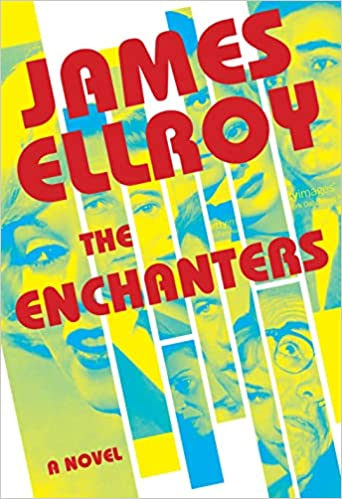
James Ellroy--Demon Dog of American Letters--goes straight to the tragic heart of postwar Hollywood with the story of Marilyn Monroe's untimely death, in an astonishing, ripped from the headlines crime story.
Los Angeles. August 4, 1962. The city broils through a mid-summer heat wave. Marilyn Monroe ODs. A B-movie starlet is kidnapped. The overhyped LAPD overreacts. Chief Bill Parker is looking for some getback. The Monroe investigation feels like a moneymaker. He calls in Freddy Otash.
The freewheeling Freddy O. Ex-cop, defrocked private eye, dope fiend, and freelance extortionist. A man who lives by the maxim "Opportunity is love." Bill Parker tosses him the opportunity of a lifetime. Freddy sees dollar signs and untold glory, and runs with it. He dimly perceives Marilyn Monroe's death and the starlet's kidnapping as a poisonous confluence that only he has the will to unravel. We are with him as he ravages and exploits all those who would block his path to the truth. We are with him as he penetrates the faux sunshine surrounding Jack and Bobby Kennedy and the shuck of Camelot. We are with him as he falters and grasps for love. We are with him as he traces Marilyn Monroe's final harrowing fall into the hellish back-burner of Los Angeles that he helped create. And we are with him as confronts his own descent into madness.
The Enchanters is a transcendent work of popular fiction. It is James Ellroy at his most crazed, brilliant, provocative, profanely hilarious, and stop-your-heart tender. It is at once a scandal-rag expos� and a gut-shot confession. It is a psychological novel of luminous depth and an unparalleled thrill ride.
Lee Earle "James" Ellroy is an American crime fiction writer and essayist. Ellroy has become known for a telegrammatic prose style in his most recent work, wherein he frequently omits connecting words and uses only short, staccato sentences, and in particular for the novels The Black Dahlia (1987) and L.A. Confidential (1990).
Five hundred pages of hard-boiled fiction written in James Ellroy’s signature style. A harsh version of the myth of Marylin Monroe’s death that mixes fictional with real-life characters in a story set in the hot summer of 1962, in a city where the dazzle of Hollywood stars and charismatic politicians makes for a falsely bright world. It’s Ellroy’s LA, a place as filthy as it is glamorous. His writing is raw and irreverent but every time his cynicism comes dangerously close to derailment, he takes a last-minute turn towards heart wrenching tenderness for his characters’ transgressions and saves the day for them, since they hardly seem able to do so themselves.
Among those tormented creatures who enchant and repel us are Monroe, a handful of the Kennedys, a handful of LAPD high and low ranking members, Liz Taylor, Carole Landis, Eddie Fisher, Jimmy Hoffa - and at the center of it all Freddy Otash: the very real police officer, private eye, author and Hollywood ‘fixer’ whose first-person account we follow, as he’s trying to connect past and present crimes and dramas. He is a dirty on and off cop, an extortionist, a drug addict. He’s also stubborn, methodical, observative and obsessed. He takes us along for a wild ride brimming with so much excruciating detail and so many names that we want to get off the wagon every hundred or so pages. But we don’t; Ellroy knows how to grab and hold his readers’ attention.
To his credit, he leaves no loose ends. If we follow through with his feverish narration, we are rewarded with a story that connects every one of its elements and characters in a coherent, if sacrilegious, manner. Read it and see for yourselves if you’ll ever again look at those holy monsters of American mythology under the same light.
Lo primero con este autor siempre es el miedo. El miedo a que se le haya ido la pinza y haga una novela maníaca que tenga que abandonar en la pagina 4.000 que en realidad es la 10. Pero está la otra posibilidad: la novela genial. La que no abandonas, la que no desbarra con ochocientos datos y precisiones sino con cuatrocientos y digeribles, la que es una genialidad y por tanto soportable.
Veo “Los seductores” a la venta. Nueva novela traducida de James Ellroy. Pintaza. Rezo porque sus editores le hayan ayudado a simplificarse o para que la haya escrito bajo los efectos de sedantes. La empiezo casi sin respiración. Buen comienzo. Cómo no, en las primeras paginas una retahíla de nombres de agentes y puntos exactos de una carretera angelina y demás localismos cool que ignoro y que ponen las pinzas a una estructura monstruosamente buena que arranca con la historia de una joven actriz secuestrada. Entre medio puntean las impresiones de un agente sobre un lugar que le suena de aquel verano fundido a negro por las drogas del que solo quedaron las sensaciones, allá en el pasado. Por allí debe andar la chica. Tienen una conjetura interesante sobre lo que ha ocurrido (no hago spoiler).
Me relajo. Alivio. Ya no me dejo intimidar por si seré capaz de retener tanto nombre y sobrenombre y ubicación. Da lo mismo porque hace tiempo que no lo intento. Solo voy a las tripas de lo que me puede transmitir la historia, de los lugares a los que me va a llevar y creo que lo va a hacer.
Me sumerjo en la novela. Larga, larga, larguísima como siempre. Eso me echa para atrás. Cada vez aguanto menos las novelas largas sobre todo cuando no me fío de que el autor no desbarre. Va de un detective que espía lo que hace Marilyn Monroe, pero en realidad la protagonista es una Los Angeles sucia, sórdida y perdida. Muchos nombres de locales, de gente, direcciones, famosos, políticos, gentuza, lo importante es la atmósfera. Si soportas tanto desvío, desbarre, nombre, monólogo e inmersión total en un los ángeles donde hace sol pero todo es negro, puedes pasar a la siguiente fase: Marilyn Monroe muerta. Su casa y su vida espiadas de cerca,los kennedy, las drogas, el trato hacia las actrices es denigrante. Ignora los detalles y fluyes con la historia, es la única manera.
Si le pillas el ritmo y cabalgas por su monólogo, te va llevando en sus pesquisas detectivescas por el inframundo de los famosos.
Dicen que Ellroy es el Dostoiewski norteamericano, y estoy de acuerdo: puedes leer un montón de páginas insufribles, dándote cuenta a la vez de que es genial, y pensando en descartar el libro, porque no sabes si te merece la pena tanto brillo bajo tanta cacharrería, o seguir. Decidí seguir, me gustó cuando le agarré el punto y también lo soportè. La recomendaría? Ni idea.
Holy Toledo Batman. The demon dog of pulp noir is back, and he has not mellowed with age. He remains as outrageous and potty mouthed as ever.
It’s 1962, and the magic of Camelot has everyone under its spell. All in the thrall of the fairytale that was the reign of Jack and Jackie Kennedy.
If you’re looking for a book of pure escapism, filled with adrenaline, cortisol, assorted illegal drugs, booze, naughty adult parties and plenty of machismo, this is the one for you.
”Yock yock.”
Freddy Otash (Freddy O. to his frenemies) is a disgraced ex-LAPD cop, now on the payroll of whomever is paying. Jimmy Hoffa? Tick. Bobby Kennedy? No worries. No job is too big or too small for the abilities, or sensibilities, of Freddy. Shakedowns, surveillance, break ins, a bit of good old fashioned phone tapping. Put it on the tab. You need a job done? Freddy’s your man. And let’s not forget the opening scene where Freddy assists a crim to freefall off the edge of a cliff straight down to the Pasadena Freeway.
”You’re a shit magnet, Freddy. You live to offend.”
With the mysterious death of Marilyn Monroe running always in the background of the story (and often at the forefront), we meet all the movers and shakers, wannabees and has-beens of the movie, politico and police world. In fact, there is such a veritable cast of thousands that I often had to turn to the Dramatis Personae to work out who’s who in the zoo. And what a zoo it is. Everybody who’s anybody is here, and a pretty picture ain’t painted of them.
”This bullshit caper -whatever it is - could bite us on the ass six million ways.”
Debauched lifestyles. Illegal chemists. Psychotic psychologists. Call waiters and waitresses who do more than serve food and drinks at the parties of the rich and infamous. Get out your rolodex and tick off all the names.
Blink and you’ll miss it, there’s a lightning fast mention of the Black Dahlia which was part of Ellroy’s L.A Quartet. And there are few quick references to the Nite Owl incident which occurred in L.A Confidential. As a bit of an Ellroy tragic, it was interesting to see these references pop up.
In his own imitable way Ellroy paints a picture of frenetic lifestyles and power which cannot be maintained:
”Marilyn was devoured by the psychic nothingness of American values.”
There are no niceties, and no small talk. Zip zip zip. The characters are all in a rush to get where they’re going. Fame - or infamy - is calling, and there’s no time to waste. The pace is frenetic as Ellroy’s books are.
The weirdest thing of all (if I can drill it down to simply one) is the ending. The final paragraph to be exact. Despite all the nastiness and callous disregard for others, and with an impressive body count, there appears to be redemption. Freddy O. commits (as that’s the only word that fits) an unlikely act of kindness. To redeem past sins? Not the ending I was expecting, but then it is an Ellroy novel. Perhaps he has mellowed a tiny bit after all.
Back on familiar territory with the Kennedy's and LA in 1962, this is classic Ellroy that fans will enjoy. Not for the fainthearted though, this a deep dive into sleaze, corruption and murder. By the end you need a shower to wash the dirt off. I'm not convinced the life of Marilyn Monroe deserves this treatment in the same way dodgy politicians and law enforcement officers do, but a thrilling read nonetheless.
It’s James Ellroy. How could it not be great? How could it not enter the pantheon of “greatest crime fiction of all time”? Scratch that — how could it not enter the pantheon of “greatest books of all time”? Loved, loved, loved it. Which is why I should be sent a free copy, so I can emphasize to everyone I know how much I LOVE demon dog Ellroy and this book in particular.
First the Ana de Armas movie, now this. Why do so many Marilyn Monroe projects seem to be written by men who absolutely despise her...? You could say maybe this book is the main character's opinion of her, because he's an absolutely horrible f'ing human being, but it's just so constant that I'm sure he was a mouthpiece for the author. She was a slut, an idiot, a fraud, a talentless grifter, a thief, a prostitute, you name it, she was it. "She emitted a stale stench of desperate fear and put her own artistic success above all moral considerations." I've read books where villains were painted with a more balanced brush than Marilyn was in this book.
Also, this book is almost 500 pages/19 hours in audiobook, and he could have cut 1/3 of that just by NOT REPEATING THINGS OVER AND OVER AD NAUSEUM. Instead of just saying the main character read six crime scene reports and noting the similarities, Ellroy decided to list ALL SIX CRIME SCENE REPORTS one right after another, literally two full pages of just near-identical reports. Was Ellroy paid by the word? Because this feels like he was paid by the word.
The narrator also had an issue where I *swear* he was literally turning pages in a book, because there were so many odd pauses mid-sentence. "We crashed in green ... wingback chairs." Not a huge hiccup but more noticable as the book dragged on (and on).
This book was a tedious, overlong, and ultimately pointless excuse to drag Marilyn (and the Kennedys) through the mud. This book won't stick with me, but the opinion of James Ellroy it left me with won't go away any time soon.
This was a difficult read. The sixties slang threw me off at first, but I did eventually get over it. By the end of the book I actually kinda liked the style. It's very direct, in that Ellroy way. There was just too many damn characters, it was impossible to keep track of everyone. There's a five page list of characters at the back of the book that I had to flip to quite often to remember who was who. Ellroy expects you to remember and he'll throw names at you without any help.
The story was excellent and I think this book would be better enjoyed with a second read-through. It's so sleazy and I liked how most of the characters are real life people. If anyone he writes about were still alive he'd be sued about a dozen times.
The three stars I've given this book reflect the level I enjoyed it and not exactly what I think it "deserves" if that makes sense. It probably deserves higher based on the intricate story created. It's just not all that easy to take in.
Los Ángeles, verano del 62. La comidilla de la ciudad es la desastrosa producción de Cleopatra, que tiene a la 20th Century Fox al borde del abismo. Jimmy Hoffa contacta con Freddy Otash para investigar la relación entre Marilyn Monroe y los Kennedy. El objetivo: sacar a la luz posibles trapos sucios con los que protegerse de la inminente demanda del fiscal Bobby Kennedy. Sin embargo, unos meses después del inicio de la operación, la estrella del momento aparece muerta en su casa de Fifth Helena Drive, el mismo día en que una ex actriz de la Fox es secuestrada... En este contexto da comienzo la última novela de James Ellroy, uno de los más grandes escritores americanos de todos los tiempos.
Para un servidor cada novela de Ellroy que sale a la luz es un acontecimiento de índole casi espiritual, tanta es la admiración y fascinación que siento hacia el genio angelino. Ahora, a sus más de setenta años, se encuentra en la cúspide de sus capacidades literarias, y parece importarle menos que nunca hacer nuevos amigos. De alguna manera se ha convertido en uno de esos artistas -pienso en Yazujiro Ozu, por ejemplo- que han encontrado su estilo y que ya solo piensan en llevarlo hasta sus últimas consecuencias, depurando la forma hasta el paroxismo. Muchos dirán que leída una novela de Ellroy leídas todas, y puede que no les falte razón, pero creo que el americano ya no escribe para nadie más que para él mismo. En cierta manera se ha convertido en un mitómano de su propia creación. Y esa creación, por la que sin duda será recordado y valorado, es su visión de Los Ángeles de mediados del siglo XX, durante la Era Dorada de Hollywood.
La ciudad de las estrellas ha sido su gran musa y su obsesión, convirtiéndola en su Jardín de las Delicias particular; un espacio no ya físico, sino moral y existencial, en el que dar forma al mundo tal y como él lo ve. Y para Ellroy el mundo es sin duda un lugar oscuro y cruel, en el que el vicio, la violencia, el poder y el sexo forman un totum revolotum donde todo está conectado: desde los bajos fondos y el mundo del hampa, hasta las altas instituciones políticas como el LPDA o el FBI, pasando por los grandes estudios de Hollywood. Nadie se libra del mal que campa a sus anchas en una ciudad donde todo el mundo esconde turbios secretos y sórdidas obsesiones.
Nadie ha descrito como Ellroy el nihilismo implacable de una sociedad podrida y corrupta hasta la medula. Sus novelas están plagadas de lo peor que puede dar de si el ser humano: asesinos, proxenetas, policías de extrema derecha, músicos de jazz adictos a las drogas, voyeurs, psicólogos dementes, narcotraficantes comunistas, directores de cine porno, productores mafiosos... Un cabaret infinito de toda la maldad y podredumbre que se esconde tras el lujo, la fama y el poder. Incluso el elenco de personajes reales que pueblan sus novelas se convierte en el reverso más tenebroso posible de lo que fueron en realidad. El Jefe del LAPD William H. Parker, jesuita alcohólico y criptofascista. Bobby Kennedy, fiscal general arribista y conspirador. Su hermano el Gran K, presidente de USA drogadicto y adicto al sexo. Marilyn Monroe, ex chica de compañía manipuladora, obsesionada con los criminales y adicta a la bencedrina. Nadie se salva, no hay luz al final del túnel, sino tan solo un abismo sin fin.
Esta inclemencia moral se ve respaldada por el "Estilo" marca de la casa: una prosa seca y cortante, de una extrema violencia verbal, en la que las frases parecen construidas a golpe de fogonazos, sin dejar que el lector respire entre suceso y suceso. En este caso Ellroy escoge la primera persona de manos de su protagonista Freddy Otash -detective privado a sueldo del mejor postor con el fin de destapar la basura de los famosos, que existió en la realidad (trabajó para el mítico tabloide Confidential) y que Ellroy conoció y entrevistó durante años- otro personaje fascinante en su extrema oscuridad: expeditivo, violento, inteligente, obsesivo, alcohólico, adicto a todo tipo de substancias, corrupto y romántico. El alter ego perfecto de Ellroy y protagonista prototípico de sus novelas: capaz de encontrar la redención en el asesinato y la paz entre las piernas de una mujer o en el fumadero de opio de Kwan.
La narración avanza de forma inmisericorde: una escritura alucinada, demente y frenética que no da tregua al lector. Los personajes de Ellroy parecen vivir en un estado de vigilia perpetua, alimentados a base de alcohol y propulsados por las drogas en su siempre obsesiva investigación, que hace del crimen y de la depravación una obsesión catártica y voyerística de lo más pútrido e infame del alma humana. Y de esa manera el lector queda atrapado en ese universo tan personal y mítico que sin embargo se siente real. Las decenas de lugares que Ellroy nos presenta con maníaca precisión es inabarcable: tugurios, casas de citas, clínicas de desintoxicación regentadas por eugenistas, estudios de cine clandestinos, salas de tormento de la policía, hoteles de lujo plagados de micrófonos... Perderse en una novela de Ellroy es como trasladarse a un tiempo y lugar que podemos sentir en nuestras carnes y que es tan opresivo como subyugante. Y a todo esto solo queda añadirle el virtuosismo con el que Ellroy emplea el argot callejero de esa época y que acaba siendo otra de las columnas vertebrales de ese Los Ángeles imaginado y fantaseado por su autor. Un lugar literario de una fuerza cautivadora, sin ningún atisbo de duda el gran protagonista de todas sus novelas y a fin de cuentas su gran obra maestra y testamento. Un Los Ángeles que quizás nunca existió pero en el que Ellroy se pierde -y nos pierde- con una melancolía masoquista y obsesiva.
En fin, creo que este texto ha sido más un homenaje a uno de mis escritores preferidos que una crítica propiamente dicha de su última novela. Pero qué puedo añadir, hablar de James Ellroy es predicar a los conversos, quién sea acólito de su culto no necesita más y quien no lo sea nunca lo entenderá. Espero con ansias el próximo caso de Freddy Otash que, o mucho me equivoco, o nos llevará a visitar el 10050 de Cielo Drive...
Imperfect but peak late stage Ellroy with some of the most famous and notorious figures of mid twentieth century America at the center— Marilyn Monroe, JFK, and Jimmy Hoffa. The more I think about this book, the more it haunts me. It’s such a wild and riveting amalgam of real historical context and psychosexual speculative fiction.
When Ellroy published ‘Widespread Panic’, the first volume in the Freddy Otash saga, two years ago it was difficult not to see it as a throwaway bit of fun - a distraction from the serious work of the Second L.A. Quartet. Anyone expecting more of the same from Otash vol. 2 will find a very different work. ‘The Enchanters’ is as labyrinthine, driven and punishing as, say, ‘The Big Nowhere’. Ellroy eschews his trademark alliterative narration for a more reflective, autumnal style. Regret and romanticism are writ large. Which isn’t to say the Demon Dog has mellowed: there are some wince-inducing moments of extreme violence and psychological depravity. It’s a rich, immersive and satisfying work, but - as with ‘Widespread Panic’ - I reached the end kind of wishing it had been the next title in the Second L.A. Quartet.
At 130 pages in, I was worried. Does Marilyn merit the Demon Dog treatment? By 423, I was breathless. An instant Ellroy classic. An epic comeback after the Widespread Panic diversion. The Enchanters is peak late era-Ellroy. It's blistering and gutting and far more emotional than I expected. It's challenging and complex and confusing and brilliant. Ellroy dissects 1960s LA, the failing Hollywood studio system, the American addiction to porn and drugs, our willingness to defame and dethrone and murder, and in doing so writes his most relevant novel in years.
A contender for my favorite read of the year. And my copy's signed by Ellroy. I have a picture of him holding it with me at his right.
I’m incapable of giving Ellroy anything less than four stars. And Iiked the book anyhow. If you’re an Ellroy fan, you know what you’re getting. It’s narrated by Freddy Otash, the sleazy Hollywood PI and fixer who’ll usually do the right thing, and it’s full of fun, alliterative, snappy, hip early ‘60s L.A. and cop lingo.
I caught Ellroy in two historical inaccuracies, hence the one-star knockoff. That may not be fair since the plot plays extremely fast and loose with the lives of various film stars plus the Kennedys, but neither of these details were germane to the plot, just lazy oversights.
Demon Dog is back! I was so thrilled to read this. It is not my favorite, but then Fred Otash is growing on me. (I really didn't like Widespread Panic, mainly due to over-alliteration, which is thankfully absent this time around.) The Enchanters is much easier to follow than Perfidia and The Storm, which was a relief.) I lived through the times, and Ellroy has a gift of elucidating them and catching the machinations, and paranoia..and even wonder. He is at his best when he lays out how things really work, not the way we think they should work or are dumb enough to think the do work. We live in a rotten, corrupt culture, but most people just close their eyes. Ellroy also believes in redemption. I'm not sure I do, but it's nice when it happens in his work which it does in a small way.
Ellroy's dislike of MM is interesting and jolting, and I'd like to know the root of it. I see some reviews here that criticize him and the book for that, but I can tell you that back in the day there were plenty of people who didn't like her--especially women. She was no beloved tragic icon like she is with so many today. When she married Arthur Miller people were shocked.
Fred's relationship with Lois Nettleton carried over from Widespread Panic...where did that come from? I mean, was she's Ellroy's silver screen crush? She's not exactly obscure, but when she showed up in the previous book it surprised me. And Pat Kennedy Lawford. Oh boy, I love that! Peter Lawford IRL and in the book, was a bit of a schmuck, but he also took a lot of abuse from his family starting at an early age that continued from others throughout his life. He was a Kennedy and Rat Pack punching bag. That Pat would fall in love (I guess) with Fred and Peter says something about her taste in men
I realize this isn't much of a review,but I'm cleaning my office and wanted to get this done, so I can put the book on my Ellroy shelf. As always I all as the Master's feet.
I’m a huge fan of Ellroy’s gritty and seedy American noir style; with ‘The Black Dahlia’ and ‘American Tabloid’ being two of my all time favourite crime novels.
‘The Enchanters’ does not disappoint! We follow crooked PI Frank Otash as he navigates the riddle of Marilyn Monroe’s freak death. Played by all sides but owned by none Otash weaves into the seedy underbelly of 1962 Hollywood looking for answers.
I devoured it and it’ll remain a top recommend for years to come.
Col suo stile inimitabile (anche se tanti hanno provato ad imitarlo…) Ellroy ritorna al torbido periodo della storia americana in cui ama ambientare la maggior parte dei suoi romanzi. Tra la fine degli anni ’50 e l’inizio dei ’60 la figura più rappresentativa, posta simbolicamente nel cuore della connessione fra la dissolutezza di Hollywood, la corruzione politica, l’ingerenza della malavita e l’immaginario internazionale, non può essere che Marilyn.
E’ il personaggio centrale attorno a cui ruotano le contorte vicende di “Gli incantatori”, anche se il vero protagonista narrante è Freddie Otash, faccendiere corrotto, investigatore ossessionato, definito in modo efficacemente esplicito, “spalatore di merda”, al quale tutti ricorrono, dal Presidente al Capo della Polizia, dal Procuratore generale al leader del Sindacato, ogni volta che c’è bisogno di pescare nel torbido.
Vi ricorre un’altra volta anche Ellroy, dopo averne già utilizzato il personaggio in “Panico”, per fornire al romanzo un punto di vista sempre in scena, ed al lettore un Virgilio sufficientemente corrotto e astuto per guidarci nei meandri della Los Angeles più viziosa, feroce e segreta.
Travolti dal caos totale di nomi di personaggi e ruoli, strade e quartieri losangelini, sigle ed acronimi di agenzie ufficiali o sotterranee, molti mandano Ellroy… a quel paese (eufemismo) dopo poche pagine, nella consapevolezza che il ritmo e la confusione non sono destinate a deflettere lungo le quasi 600 pagine del romanzo, anzi se possibile ad ingarbugliarsi ad ogni capitolo; e a poco giovano una pagina di wikipedia molto dettagliata o la funzione “cerca” dell’e-book, mai così utlizzata.
Ma il concetto che Ellroy sembra voler affermare nel sottoporre i lettori a un tale tour de force, una cascata di nomi e di dati impossibile da memorizzare (cosa che, per inciso, esaspera gli amanti del poliziesco in cui alla fine tutto torna o quasi), è che quel mondo, quell’intreccio, quel sottobosco di insidie, tradimenti, violenze, mistificazioni, falsi miti, affari sporchi, non può essere trattato in altro modo.
Il diluvio di personaggi e situazioni impone un linguaggio telegrafico, disorientante e sincopato, per nulla “scorrevole” (attributo a dopppio taglio…), una scrittura che è stata giustamente associata ad una partitura jazz, e non al rassicurante be-bop bensì al free jazz estremo con “stacchi, controtempi, ripetizioni, sfuriate di semibrevi” che quasi ostacolano il naturale ritmo respiratorio di chi vi si inoltra.
Con tutti i suoi tic e le sue ben note ossessioni che noi ellroyani amiamo, l’autore ormai vicino agli 80 procede imperterrito, con la sua faccia da lupo sotto amfetamine che ne accompagna le sentenziose interviste, a tessere la sua tela su un’epoca e un ambiente che ama setacciare e adora dissacrare.
James Ellroy’s latest novel, “The Enchanters”, is all about the summer of '62 and the death of Marilyn Monroe, but it’s not a Marilyn Monroe novel; it’s something much bigger and much more interesting than that. Monroe’s sudden death is the catalyst for this book, if you will. Freddie Otash investigates Monroe’s death and, when called to the scene by a grief-struck Peter Lawford, he discovers a myriad of oddities in Monroe’s house which makes him think there’s something bigger going on here, and her death is more than meets the eye.
That’s really all I’m gonna say in terms of plot summary because this novel goes to places and does things you won’t believe.
James Ellroy is still at the top of his game here; his writing is just as powerful and sharp as it’s ever been, and he really makes you root for Freddie Otash (who, in reality, was a pretty deplorable figure), and like him. With this novel and his previous work, “Widespread Panic” he has really let us get to know Otash, or at least Otash as Ellroy sees him, and it’s been an incredibly interesting experience.
I think with these two Otash-centered novels and through Otash’s narration, Ellroy has really tapped into his comedic side, something he’s really only hinted at in his previous novels. I laughed out loud more than a few times just from Otash’s cutting jabs and the outrageous way he sustains himself for days and sometimes weeks of no sleep. He takes an absurd amount of Dexedrine (never less than two at a time) and smokes and drinks an otherworldly amount throughout this whole novel. He’ll show up trashed to bug someone’s house or to a crime scene and will do the job fine; in fact, he’ll do the job great. Odd as it may sound, it made me like him all the more.
Ellroy plans to write two more Otash-centered novels for a second L. A. quartet (after abandoning his first idea and making that a quintet), all taking place in the summer of 62’ and referencing the events of WW2 and the Japanese internment. If he writes those and puts them out, I’m all for it.
Write as much as you can, Mr. Ellroy. I want it all.
If ever there is a contemporary author that can wear his readers out, it has to be Ellroy, especially in this series. And not in a bad way, but you really can't just speed through his stories, particularity when he employs the machine-gun staccato delivery almost like bullets, filled with police jargon, early twentieth-century LA patois, and drug-addled (though often brilliant) observations of his shady detective work. Ellroy mixes true crime and real-life characters with fictional events and conspiratorial rumors as he delves into the sordid underbelly of Hollywood and Los Angeles, this time centering around the (what many people believe to be) mysterious death of Marilyn Monroe and many of the naughty behaviors of film stardom. And many of the fringe characters who participated in creating a debauched and desperate subculture. If anyone thinks the 40s and 50s was some pure idyllic time, read this (and Ellroy in general). There's not much new in the world, especially when concerning drugs, alcohol, sex, crime, and brutality (police and otherwise). Freddy Otash (a fictional character here, based on a true life detective) is intimately connected to infamous characters like the Kennedys (and their entourage), movie stars, Jimmy Hoffa, and police kingpins William Parker and Daryl Gates. Even I have heard of some of the locations (clubs, vice dens, restaurants, gay playpens, and others places) and underground activities. That's part of the fun of reading Ellroy (who, by the way, although a bit strange is a very nice guy in person and made me feel once like a million bucks and a big deal with his personal attention to a nobody like me). Many of his books are best enjoyed by readers who have some historical background of the times and some knowledge of the cultures described. And his books are not for the faint of heart.
I did this one by way of the audiobook. My experience may have been different had I read it the traditional way. It's James Ellroy, so it's going to be good. This one has all the hallmarks of Ellory's best. Great flawed characters, including and especially Freddy O the protagonist, sordid L.A. is featured quite well, snappy dialogue, plenty of corruption, violence and action. The 1960s jargon took some getting used to, but eventually felt normal. The folding in of real historical characters from Marylin Monroe to JFK to Liz Taylor and more is masterful and makes me want to do some research to figure out how much is fabrication in the service of a cracking story, and how much is based on reality.
I'm just taking away a star for a couple of reasons. It's convoluted. WAY convoluted. Again, had I read a hard-copy book, maybe this would have been better. But it was very difficult to keep track of who everyone was, what each thread of investigation was based on, or where it was supposed to be headed. And, I felt that it went on a bit longer than necessary. Purely in my humble opinion it would have been five starts if it were maybe 25% shorter. Still, solid Ellroy/L.A./Corrupt Cops/Crime thriller.
A follow-up novel to Ellroy's Widespread Panic, which means yet another frenetic dose of Freddy Otash! And while Freddy spoke to us from his perch in Purgatory (yes, that Purgatory), The Enchanters is more conventional . . . barely. It is a crazy, convoluted, criminally insane cascade of low-life scheming in Los Angeles in the late-1950s and early-1960s. Marilyn Monroe, the Kennedy boys, LAPD, Hollywood moguls, waaaay too much booze and drugs. Wowza! Let the good times roll! And then there's Freddy Otash!
An extremely well crafted but ultimately shallow 60's detective noir. No one is likable, every one is at their worst at all times. I will say this, unlike J.J. Abrams and his "mysteries" in S., this has an actual resolution to the central mysteries and everything fits together. The end result is so banal, it's disappointing. I really didn't love the depictions of Marylin Monroe, JFK or RFK. I can't speak to all the other celebrities but they don't come off any better. No one does.
The WP calls the style "jumpy and nervy." That's about right as Ellroy captures the hard-drinking, drug-taking, sexually-liberated mood of a nation obsessed with Marilyn Monroe when she dies of a drug overdose in 1962. As rumors circulate about Marilyn's affair with JFK, Bobby Kennedy cuts a deal with former cop and sketchy Private Eye Freddy Otash to squash the rumors.The story rings of verisimilitude as real-life characters populate 1962 LA including Eddy Fisher, Peter Lawford, Pat Kennedy, Elizabeth Taylor, and Jimmy Hoffa.
Sadly, I could not finish this. I've been a big Ellroy fan for years. Saw him in DC reading from White Jazz, and he was charming and gracious. Really. I think the LA Quartet is fabulous. But I've been less enamored of his historical fiction, particularly The Enchanters. The hipster patois is unrelenting, and the emphasis on historical figures' peccadilloes is distracting. I'm looking forward to re-reading his earlier work much more so than I am his later work.
This book had so much potential. I love the concept: LA in the 60s and a disgraced former police officer turned PI, who’s watching Marilyn Monroe in the weeks before her death & who is also mixed up with the Kennedys and Jimmy Hoffa. It starts off okay, but just goes on and on in repetition and nothing is being resolved. I found myself not wanting to read because I was so bored with this one. Again great idea, but bad execution.
Amo Elroy. Quindi non sono obiettiva. Un buon editor gli avrebbe fatto tagliare un centinaio di pagine, ma solo perché si incarta un po’, non perché siano mal scritte. Bella storia, bella trama. Poliziotto immorale e star del cinema, politico corrotto e trafficoni del demi monde hollywoodiano: una delizia.
Classic Ellroy. As a lifelong fan I wasn’t sure if he still had it in him but who am I kidding: of course he does.
The Enchanters vibes B&E and dexedrine and no sleep … as a Monroe fan I didn’t think I wanted an Ellroy takedown and I’m still not sure that I do, but the amount of skeezy Marilyn lore woven in here is undeniably impressive. The main thing to bear in mind is that Ellroy’s a process queen: leads, and the chasing, following,losing,killing of them. Lots of shoe leather, lots of sausage making, and it’s all very macho throwback of course. But it’s Ellroy. Macho throwback is right there on the box. It’s an intense deep dive into a de-glamoured version of Marilyn, and de-glamoured Hollywood as only Ellroy can spin it. Maybe not for everyone, probably not going to win over new fans but definitely, definitely For Me.
I’ve read many of James Ellroy‘s books, but this one rattles along at a pace I’ve not seen before. It likely would be described as a rollercoaster ride but think more being strapped to the bonnet of a high-performance sport car driven by a lunatic. In the dark. The book fixates on Marilyn Monroe and her link with the Kennedy brothers. The hypothesis of the book is that she’s going to blackmail them and focuses on her life and death around this time. I’m always amazed by James Elroy books as most of the characters are famous people. I understand that there’s no libel after death and as he has stated on repeated occasions “Can you prove what I’ve written didn’t happen?” There are no heroes here and he never has a good word to say about anybody and to be fair this includes himself. I think because of the pace of the book some of the writing quality dropped and I prefer some of his other books, but still well worth the read. Buckle up!
A really really good LA crime novel involving Marilyn Monroe and the Kennedys. The language and cadence of the narration is profoundly 60s cop. Challenging until you get the hang of it. No movie adaptation could do justice to this novel.