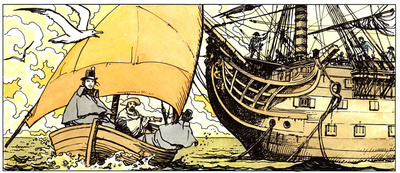
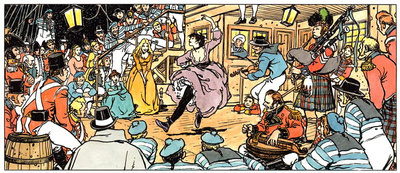
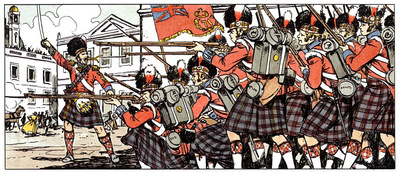
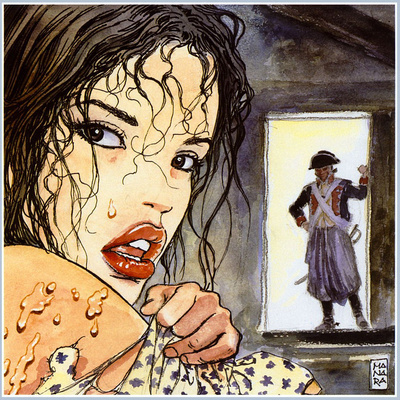
Početak je 20. stoljeća. Tijekom popisa indijanskog stanovništva, vojna patrola nailazi na starog engleskog bubnjara koji je u Argentinu stigao prije sto godina, kad su britanske trupe namjeravale osvojiti Buenos Aires i svrgnuti španjolsku vlast. Ono što je trebala biti jednostavna vojna akcija s unaprijed poznatim ishodom, ubrzo se pretvara u priču bez povratka za šesnaestogodišnjeg Toma Browna, lijepu irsku prostitutku Molly i grbavog mornara Matthewa, koji u Argentini vide priliku da promijene tok svog života. U El Gauchu, koji je Milo Manara u trenutku inspiracije nacrtao s manijakalnom preciznošću, dočarana je jedna zaboravljena, ali uzbudljiva povijesna epoha. U isto vrijeme, ovo je roman o sazrijevanju u kojem Hugo Pratt prepričava svoje iskustvo života u Argentini, kamo je 1949., s nešto više od dvadeset godina, otišao na poziv tamošnjeg izdavača stripa i gdje je ostao sve do 1962.
PT Uma obra que reúne duas lendas da banda desenhada italiana e europeia.
Ao contrário de "Verão Índio", que li recentemente e adorei, aqui senti que a química entre estes dois gigantes da nona arte não estava tão afinada. Parece-me que Manara queria contar uma história com uma aura diferente daquela que Pratt pretendia transmitir.
O traço de Manara continua exímio, fiel à sua identidade visual, mas o erotismo que costuma introduzir nas suas obras não me pareceu encaixar tão bem em certos momentos da narrativa — algo ficou a faltar.
Ainda assim, está longe de desiludir. Apesar de o considerar um degrau abaixo de "Verão Índio", continua a ser uma leitura bastante boa e interessante, obrigatória para qualquer fã de banda desenhada europeia — e em particular para admiradores destas duas figuras incontornáveis da arte sequencial.
--
EN Unlike "Indian Summer", which I recently read and loved, here I felt that the chemistry between these two giants of the ninth art wasn’t quite in sync. It seemed to me that Manara wanted to tell a story with a different tone from what Pratt had in mind.
Manara’s linework remains exquisite, true to his trademark style, but the eroticism he usually brings into his stories didn’t quite fit in some parts of the narrative — something felt off.
That said, it’s far from disappointing. Even though I see it as a step below "Indian Summer", it’s still a very good and engaging read, essential for any fan of European comics — especially for those who admire these two iconic figures of the medium.
El dibujo me flipa y eso es lo que destaco en verdad. La historia podría haber sido mejor, pero no me transmitió mucho la verdad. Me esperaba más de la dupla Manara-Pratt pero en fin, gustos colores.
With Hugo Pratt in charge of the story, this comic is, as expected, rich in historical context, dark and violent in plot, cynical and mostly downbeat in character development. The starting point is an episode in the Napoleonic Wars, where England tried to profit from the weakness of occupied Spain and attacked Buenos Aires in 1806. Pratt paints a vivid and detailed picture of the opposing forces, mixing in francmasonery, slaves emancipation, the desire for independence of the criollos, the rivalry between redcoats and sailors in the British expeditionary force. His sympathies lies in general with the Argentine side and against British imperial ambitions. The main actor is a drummer boy betrayed by his commanders and later caught prisoner on the shore. Disillusioned with his own side, he decides to remain in the new country and becomes the Gaucho from the title.
With Milo Manara in charge of the graphics there is of course a lot of explicit sex and nudity (definitely aimed at an adult audience), but also very well drawn characters and clear line backgrounds. He is better though at drawing women bodies, preferably unclothed, than at male expressions or action scenes. The story angle of the Irish prostitutes that accompanied the expedition is probably also introduced by Manara.
At about 150 pages, the story is sometimes rushed but complex enough to hold my interest, enough to make me look up on wikipedia the period and the conflict. It also made me put a reservation at the library for the other Pratt / Manara project : Indian Summer.
Wordier and slower than the other Manara/Pratt graphic novel I have read (Indian Summer) and the ending is about the most unsatisfying thing I have ever read, but Manara's art is a joy to behold.
Hugo Pratt is rightly famous for making dark, cynical, deeply researched historical comics. Milo Manara is also rightly famous for giving assorted fantasy kinks an Athena-poster makeover and becoming the No 1 name in 80s Euro-smut. Putting them together could have worked marvellously - Pratt’s writing giving Manara’s work more body and complexity while Manara’s luxuriant art brought Pratt’s historical worlds to vivid (and sexy) life.
But it doesn’t quite work out that way. El Gaucho tells the story of some adventurers in late 19th century Argentina who come upon an ancient gaucho and are shocked to learn he was born an Englishman and fought in a minor offshoot of the Napoleonic Wars. The book tells the brutal, melodramatic story of how he ended up here.
There are good, atmospheric sequences, particularly early on when the action takes place on board ship in the run up to a British attack on Buenos Aires. But overall the two creators are pulling against each other - Manara’s art is just too clean for the grim, dog-eat-dog world Pratt’s script wants to evoke; Pratt’s historical infodumps leave Manara twiddling his thumbs. The ending is downbeat and historically appropriate but also a little baffling - it reads like a rushed cancellation of a series, not a planned conclusion to an 150 page graphic novel.
W fabule Pratta wyczuwam wiele punktów wspólnych choćby z Corto Maltese. Podobne rysy charakterologiczne bohaterów, podobnie rozbudowana fabuła i świetne zorientowanie w historycznym kontekście. Manara to ładnie obrazuje, choć nie byłby sobą, gdyby całości nieco nie rozerotyzował. Potrafi na tym polu przegiąć, jak wtedy, gdy podczas brutalnego gwałtu prezentuje kobietę tak, jakby miała pozować do rozkładówki Playboya. Zdziwiony nie byłem, ale myśl, że tym razem mógłby sobie darować, przyszła oczywiście do głowy. Mimo wszystko rzecz na półkę obok "Indiańskiego lata"
Riddled with all sorts of human malfeasances including, but surely not limited to, murder, rapes, orgies, prostitution, abuse, voodoo and even a single golden shower to boot, Pratt and Manera’s El Gaucho should have resulted in a poignantly red-blooded reading affair. Yet a half-baked narrative populated by equally mal-constructed characters hardly results in anything approaching a properly throbbing member above in the mind’s eye or below where we’d typically expect such ribaldry to naturally excite. Devoid of the tumescence necessary for a fully engorged member, both your mind and your love-tool will remain flaccid throughout.
So what does this leave us with? We get a Corto Maltese inspired analog from the self-same author, Hugo Pratt. And just like Pratt’s pathetically overrated, culturally eponymous prototype, which has been horribly overshadowed by his obvious successors, first Doc Savage, and more potently and recently Indiana Jones second; everything here speaks toward the power and prestige of a bygone era. Which is a shame because while the internal structure and its corresponding characters that populate it are falteringly flimsy facsimiles at best and mere narratory accoutrements at worst that only belong to the preceding era where they truly shined, Milo (of true Euro-smut fame) Manera’s artwork shines through the written crud. Opposing intrinsic expectations based upon his voluminously notorious canon of Euro-Sex-Smut which has spanned decades, Milo’s art bathes in the best aspects of a bygone era that are perennially relevant, unlike like what Pratt’s writing attempts to resuscitate, Manera’s pencils revel in the floral naturalism of early 19th Century South America for our delight. Not too detailed but, certainly not lacking in that department, a plush middle ground forms an equally sturdy half-way point that does well to undergird the shoddy story it buoys. Well bodied by Laura Battaglia’s pretty color work the visuals are clearly the best, and most likely the only good, part.
Manifesting itself at the end of the Pratt’s life, this ante-penultimate offering, just four short years before his final breath; should have resulted in a splendorous send-off for one of comic’s more famed writers. But it’s not. Instead, it remains a disappointing totem of the central truth of comics since time immemorial. No matter the intellectual drapery. No matter the self-edifying arguments derived from a thorough dissection of the text. And no matter the firm references they have bequeathed first and burnt second into our cultural memory. Comics always have been, no matter the individual deployments of differentiated set and setting, will always be the childish fantasies they’ve always been.
Mere child’s play.
So when the orgies unfurl, the stabbings take place genitalia are unclothed, and all sorts of malfeasance manifest themselves, the historical set and settings, no matter how eruditely researched – to Pratt’s credit, produce a sick concoction of the sacred and profane. Far more leaning toward the latter than the former, what appears to provide a self-evident intellectual foundation proves itself to be nothing more than a palette for typical masculine favoring exessesive fantasies to take place on. So when the drapery that girds the story is removed, the truth is revealed. Like the Wizard of Oz begging for the truth to be forgotten so the illusion can be maintained, when disrobed - Pratt’s El Gaucho is nothing more than typical: BIF! – BAM! – POW! comic book styled affair. A simulacrum of a higher story at best, the puerile platonic forms they’re based on reveal themselves, like the story itself, to be nothing more than the charade they truly are.
De Hugo Pratt sabemos que podemos esperar uma boa história de aventuras, com raízes na história mas andando por aquelas paragens do mundo onde os acontecimentos não costumam deixar mais do que pequenas notas de rodapé nos livros de história. De Manara, sensualidade, não só a do erotismo mas a de um traço limpo e rigoroso. Eu sei, nas vinheta de Manara o olhar detém-se sobre alguns pormenores específicos, mas se prestarem atenção ao que está à volta, descobrem que não foi só um excelente desenhador do corpo feminino).
Da conjugação destes dois gigantes da banda desenhada italiana nasceu este livro. Um mergulho na história do século XIX, no ocaso do império espanhol, nos tempos em que a marinha britânica espalhava os tentáculos do império inglês pelo mundo. Somos levados ao que para nós é um recanto obscuro da história, a uma Argentina indecisa entre o reino espanhol e a independência. Uma indecisão que uma frota britânica quer ajudar a resolver, sabendo que uma independência abre novos mercados e esferas de influência.
Sob esse pano de uma geopolítica esquecida seguimos a história de Tom, um soldado apaixonado por uma das raparigas irlandesas que, vendidas para prostituição, seguem para o degredo na Austrália. Mas que, durante o caminho, têm de prestar serviço aos oficiais da marinha. Algo que revolta o jovem soldado, que ao oferecer-se para uma missão de reconhecimento e ligação com escravos revoltosos, acaba capturado por argentinos fieis ao regime. Entretanto, Buenos Aires cai, mais pela traição do governador do que pelo poderio militar do regimento britânico atacante, e um grupo de marinheiros e raparigas, onde se inclui a jovem pela qual o soldado se apaixonou, aproveita para fugir e procurar a liberdade no continente sul americano. Após o natural reencontro, optam por acreditar numa amnistia britânica a todos os ingleses e escoceses fugidos na Argentina, mas não terão a liberdade que almejam. A rapariga acabará na ponta de uma corda, e quanto ao rapaz, sabemos que sobrevive porque, cem anos depois e no meio de uma limpeza dos argentinos a territórios índios, conta a sua história a um soldado incrédulo.
Visualy boring, dull, mostly pastel colors doesn't create atmospere, just make you longing for the end. Story could be interesting, but writing is sometimes hasty, draggint it down, characters appear from thin air, make their part and then dissappear. So it feels like mosaic of random events with random people. 2,5 *
Hugo Pratt e Milo Manara dois génios da banda desenhada “assinam” “El Gaucho” uma história sobre um capítulo fundamental da América do Sul. No século XIX militares ingleses a bordo do “Encouter”, comandam uma poderosa frota de navios que planeiam a invasão de Buenos Aires, onde a recente aliança entre a Espanha e a França de Napoleão, ameaçam os interesses da Inglaterra. Nessa embarcação e para satisfazer os impulsos sexuais dos oficiais encontram-se “pegazinhas” irlandesas, e onde Molly Malone e o jovem tambor Tom Browne vivem um romance tórrido mas sem futuro. Misturando ficção e realidade, poder e traição, com muito sexo, numa história trágica, mas desequilibrada, na estrutura e com um fim abrupto, faz de “El Guacho” um livro aquém das expectativas criadas pela junção de dois dos expoentes máximos da banda desenhada – Hugo Pratt e Milo Manara.
Hugo Pratt is in my opinion the greatest comic book creator of all time. Milo Manara is one of the best artists. They were great friends, and often collaborated, usually quite successfully. This really isn't one of those successful times.
Pratt's story is moving and complex, and Manara's art is lively and energetic, but the two never quite mesh. Manara's art doesn't truly have the range that was needed for the story...a Manara woman is always dripping with eroticism, and Manara men are always noble and handsome, and this story would have been better fit by a darker and grittier artist, like a Jordi Bernet.
So, while story and art in this graphic novel are both quite accomplished, they remain separate.
La maestría narrativa de Pratt y el certero trazo de Manara recogen un novelesco episodio de la invasión británica a Buenos Aires en 1806. Sin el solemne heroísmo que empapa los libros de historia, la crónica del joven tambor Tom Browne y su arribo con la flota inglesa refiere a temas más urgentes, como el encontrarse atrapado en un conflicto ajeno y la ilusión amorosa que dura lo que un destello.
Prat ovde piše priču koja je prepoznatljivo njegova jer se bavi ratom na nihilistički hladan i bezobziran način, žrtvama na koje retko ko obraća pažnju i životu koji se lako gubi. Manara je, naravno, sjajan kao i uvek, i savršeno oživljava Pratove reči.
(PT) Perto do final do século XIX, uma patrulha de gaúchos encontra um velho, que afinal, é branco. E lhes conta que está ali desde o inicio do século, quando esteve numa expedição inglesa para capturar Buenos Aires. E ali conta, entre outros, sobre uma fogosa irlandesa que estava na frota para entreter os oficiais...
"El Gaúcho" é a segunda e última colaboração entre Hugo Pratt e Milo Manara. Depois do sucesso de "Verão Índio", seguiu-se "El Gaúcho", onde ambos contaram a história do assalto britânico a Buenos Aires, no meio das Guerras Napoleónicas, e que, de certa maneira, começou as Guerras de Independência na América do Sul, e que iriam durar mais de um quarto de século.
É um excelente álbum, mas não traz tanto o impacto que teve "Verão Índio". Não é tanto culpa dos desenhos - continuam a ser bons - mas mais o argumento que parece ser um pouco mais falho. Mas isso não impede de afirmar que é uma excelente história, bem desenhada e bem contada, e que cai na lenda e no panteão dos melhores álbuns da chamada "linha clara", ou seja, o padrão europeu.
Vale a pena ler e se sair dali deslumbrado, então o álbum cumpriu o seu propósito.
Belo quadrinho de ficção histórica ambientado na Argentina durante a Invasão Britânica de 1806. Só gostaria que fosse maior, para ter mais desenvolvimento da história. É uma história legal, tem uns personagens curiosos e um desfecho que, apesar de corrido, me surpreendeu, mas me pareceu comprimida em 140 paginas. Os desenhos do Milo Manara estão simplesmente absurdos nessa história.
Manara y Pratt haciendo de las suyas en un relato con tintes aventurescos magníficos que deja crecer la trama hasta llegar a un lugar vacío y banal, el final es un atropello, la obra está muy bien construida pero a último momento dobla en una salida fácil para terminar de repente. Con diez páginas más o por lo menos dos páginas enteras de texto se arreglaba, una lastima.
A los lapices Manara el maestro de la sensualidad. La historia narrada por un experto en aventuras e historia como Hugo Pratt. El resultado es una obra que cumple muy bien tanto como relato historico belico como novela de amorios.
Stormagterne kæmper om Sydamerika og Buenos Aires, imens forsøger de små bare at overleve. Det er Pratt & Manara - så der er naturligvis et hold irske ludere med ombord. Det er ikke helt helstøbt men smukt tegnet som altid.
يااااه... يا لها من قصة، يا لها من حبكة، يا لها من إثارة، ويا لها من نهاية. نهاية غير متوقعة تشعرك وكأنها بداية لقصة موالية. ياااا سلام على السرد والرسم. لم أقرأ شيئا مماثلا لهذا العمل الأدبي منذ فترة طويلة، تبًا كم أنا منتشّ الآن. 💀
Of the three historical epics I've read by Manara this week (two in collaboration with Pratt), this is the most fully realized. The artwork in all of them is stunning, but I wish they were longer. 150 pages isn't enough to tell a sweeping historical epic.