A challenging, innovative approach to a delicate subject. It’s sure to benefit church leaders and members of all ages who dream of a “reinvented” church. ― Publishers Weekly
Has your church been stolen out from under you?
A storm hits a small New England town late one evening, but the pelting rain can’t keep a small group of church members from gathering to discuss issues that lately have been brewing beneath the surface of their congregation. They could see their church was changing. The choir had been replaced by a fl ashy “praise band.” The youth no longer dressed in their “Sunday best.” The beautiful pipe organ sat unused. How will this group overcome a deepening rift in their fellowship and nourish the relationship between the young and old? Can their church survive or even thrive?
Who Stole My Church? is a fictional story that tells the all too real tale of many church communities today. In this book you can walk alongside an imaginary community, led by real life pastor Gordon MacDonald and his wife, Gail, and discover how to meet the needs of all believers without abandoning the dreams and desires of any.
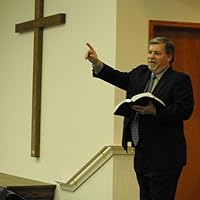
Gordon MacDonald has been a pastor and author for over forty years. For many years he pastored Grace Chapel in Lexington, Massacusetts and continues to serve as Pastor Emertius. He has also provided leadership to influential ministries such as Intervarsity Christian Fellowship, which he served as President for three years, and World Relief, which he currently serves as Chairman. Gordon’s best-selling books include Ordering Your Private World, Mid-Course Correction and, most recently, A Resilient Life. He also writes and serves as Editor-at-Large for Christianity Today’s Leadership Journal. When not writing, leading or speaking at conferences, Gordon and his wife Gail can be found hiking the trails of New England.
This was a very well written book about the subject of church change. My church is going through many transitions right now, and I thought this book was appropriate.
What made it readable was that it isn't straight, dry non-fiction. This is non-fiction, presented in a fictionalized format. The author places himself as pastor of a church in New England, and his church is going through some transitions which aren't sitting well with the older members of the church who feel like their church is being stolen from them. The book takes them through the reasons for change and the need for change to keep the church viable.
Really excellent book, I highly recommend it for all pastors and church leaders, but also for those who might be struggling on either end (either resisting change or wondering why people are so reisitant)with church changes.
currently reading this with a group from my congregation who are asking this very question.
UPDATE: The good news: this book might be pragmatically useful in some congregational settings, especially dealing with change. Introduces basic theories of organizational change in a way that is accessible to people who have never thought of it before. The bad news: is it ever irritating and agonizing to read. It somehow manages to be preachy, boring, overstated, and unrealistic all at the same time.
Good diagnoses of church dysfunction and resistance to change — I had eerie feelings that MacDonald had been peering over my shoulder from my time pastoring in New England. But the book is tainted by superficial remedies and trite exchanges. The answers too convenient and the resolutions too pat.
I give it 2 stars because it provokes good discussion and asks needed questions, but I do not agree with MacDonald's conclusions. The narrative form is helpful in getting his points across in an easy-to-read manner, but does not prove those points conveniently. Perhaps this is because the story itself is largely unbelievable. Everything wraps up too neatly (especially for a traditional New England church, which I have pastored). The one character who disagrees most with the pastor ends up being an all-around bad guy who conveniently moves away after leaving the church. The other main characters all get on board and live happily ever after. The "shocking" unbeliever who enters the story is strangely welcomed by the church and gets saved. Although the author doesn't say this explicitly, the underlying message of the narrative is: make these attitude changes and your church will grow. It is simply not realistic.
Quite a contrived "novel" about a post-modernized pastor who collects a group of conservative church members into a committee whereby he can convince them to think his way...for the good of the church, of course. The overall concept of change is addressed; change will happen, but the way it happens defines the character of the church (it's people and leadership). This story left me sorrowful that so many people will read this and use it as a model when I found it lacking grace and the love the Christians are called to. When the church decides to function by business models, it suggests that the purpose and life-source of the church are in question.
Simply awful and frustrating to read for one coming from a Presbyterian and Reformed perspective. 1. The problem with the story telling approach is that you can determine the outcome of your story and paint a pretty picture that does not match reality and paint yourself as a hero/savior. 2. There is selective use of Scripture. In his storytelling, he uses Scripture when convenient to make his point but ignores a whole host of Scripture that may work against his point or does not use Scripture when it cannot make his point because it will not. 3. He paints all change in church history as good. While some different approaches might have had good goals and achieved good things, that doesn't mean the different approach is God approved/ordained. You can't put changes made by Constantine, Luther, Wesley and Booth all in the same category. Not all change is change for the better. In other words, when it comes to worship and outreach, the ends do not justify the means. 4. Cultural and technological changes warrant changes in worship. The author seems to approve of the multi-site church movement and has no concept of the regulative principle for worship. Just because younger generations may be visual, does not scripturally warrant using PowerPoint or other technology for the sake of reaching the culture. 5. The root of the problem is seeing the corporate worship service as being a means of outreach. Thus he conflates the two main missions of the church which creates problems. Corporate worship is not about being seeker sensitive or reaching the culture. Corporate worship is about believers meeting with God and God meeting with them through Word and Spirit and equipping them so they can go out to do outreach.
One positive of what I read is that it reminded me that when conflict and anger arise in the church, people need to be listened to and the heart of the issue diagnosed. However, I couldn't even finish the book because of the above points. I was only attempting to read it in the first place because somebody loaned it to me.
My only gripe in this novel was that the pastor was always right in regard to the proposed changes. Fifteen church mainstays gather to discuss their fear and frustration with the direction of their church. Churches want to attract new people but rarely do churches want to change. They hire pastors and assign them the task of attracting young people but nobody knows what to do if young people actually arrive. MacDonald sets up an interesting discussion, sometimes forced, about music preferences, technology, church names, and evangelism. Easy to understand and a quick read.
I read this book last year, when I found it at a local discount store, I decided to read it again. This might be the best book I have read on helping a church through change. Written as a fiction story, MacDonald touches on so many important factors in bringing our churches into the 21st Century. I love this book and recommend it to anyone, but especially to those of us called by God to lead His Church.
This is a great book to read for those wondering what impact their church is making in today's world. Gordon McDonald offers great insights as he tells the story of a church of over 100 yrs of history transforms toward a church that can impact the people of today. A must read for those who love their churches.
Some of my friends liked this book, but it is such a poor work of fiction that I did not like it at all. I can't believe this actually found a publisher. But, like I said, some find it helpful.
We were supposed to have this book as the basis for a series of sermons at church, starting in March of 2020 ... and guess what happened?
Things got disrupted, and our church staff made pretty heroic efforts to transfer to worshipping online and making it as easy as possible for our church membership to be fed and have needs met and watch over those with special needs during the whole pandemic mess. Which is still going on today, just with a little less isolation. God has been good to us, and our church staff are wonderful, sacrificing people.
Anyway ... this book basically follows a group of people who are concerned and sometimes cranky and sometimes downright ticked off over changes taking place in their church, reflecting changes in society and the media and the needs of modern life. They deal with a lot of questions and gripes and fears. Some of them stomp away in a snit and some of them are humbled and some of them grow and learn to serve and get excited about worship again.
Usually I avoid "talking heads" books, where the author creates a pretty unbelievable "fictional" setting and creates some cookie cutter characters, and then spends the next 200 pages lecturing the reader. (Can I hear an "ugh" from the congregation?)
This ain't one of them. The members of the discovery group are real, three-dimensional people and they're not copies of each other and they most certainly aren't yes-men. This feels believable, and in places uncomfortable, and in some places reveals a lot about the reader's prejudices and fears as the characters learn from each other. It's an uplifting and encouraging book, and quite frankly, every church member today and especially their pastors and worship teams and church staff should read this. Some need to be slapped across the face with this book, to get them moving and let go of the "but we've never done it that way before" attitude that, quite frankly, is killing churches and driving members away, to find teaching and spiritual food given in the language and style they understand.
Wake up, behind-the-times churches. If you don't use the language people understand to tell the unchanging truth from God's Word, they won't listen! If they don't listen, they won't learn and grow, and then what use are YOU?
I have had an on and off again relationship with Gordon MacDonald. As a young associate pastor in the mid-eighties I read his best seller “Ordering Your Private World” (which is still in print). A couple of years later I read his book “Renewing Your Spiritual Passion.” Although it was twenty-five years ago, I kind of remember spiritually profiting somewhat from those books, although if I were to re-read them now, I might have a different opinion. However, an admission of an extra-marital affair that he was involved in while writing those books kind of soured me on him. I did not read his “Rebuilding Your Broken World” or anything else by him (although that may be more of a reflection upon my former phariseeism than his restoration.)
Gordon MacDonald has been a pastor and author for more than forty years. He has also been the president of a couple of well-known parachurch organizations and is currently an editor at large for the magazine Leadership. He and his wife of almost fifty years live in New Hampshire.
This book first caught my eye a couple of years ago when it came out in hardback. I skimmed it a couple times at the bookstore, but didn’t want to pay the hardback price. However, when I eventually saw it in paperback, I plopped down my money. I am glad I did.
The subtitle of this book is “What to Do When the Church You Love Tries to Enter the 21st Century.” It is a fictional tale told in the first person. MacDonald writes as a pastor of an imaginary New England congregation of a few hundred people. The church has had a proud history and is part of a (unnamed) denomination. The sixtyish “Pastor MacDonald” has been at the church for several years and has overseen the last of a series of changes designed to attract younger people. Not everyone is on board with these changes, especially the aging boomer generation. Plus, there are more changes on the horizon. A proposed $150,000 initiative to upgrade the sanctuary technology did not get the expected congregational approval. This has brought the change issues to a head. Also being debated is a proposed name change of the church.
The story revolves around a series of Tuesday evening meetings that Pastor MacDonald has with a group of long time church members in their fifties and sixties. This group shares a common church experience. They remember the same hymns, the evening services, prophecy conferences and “revivals”. They miss the choir and the organ, even the “singing Christmas tree”. They don’t connect with contemporary Christian music and casual church attire. Deep down, Pastor MacDonald feels their pain.
Each chapter details successive meetings of this group of believers, which Pastor MacDonald has dubbed the “Discovery Group.” Before each chapter, he gives us (“from his notes”) a brief biography sketch of different attendees. Some are retired, some self-employed, some widowed, some married, some well off, some not so much. Although one seemingly turns out to be a non-believer, the others are serious about their faith and honor the scriptures.
I especially enjoyed the group’s discussion of the hymns, particularly the hymns of Isaac Watts. Until the change that Isaac Watts eventually brought to the church, congregational singing was confined to singing the psalms. This singing was “in a more-or-less monotone form with no instrumental accompaniment, because instruments in a church were considered worldly” (p. 96). Young Isaac Watts found this style of singing stifling. When he complained to his father, who happened to be the pastor, his father, rather than argue, wisely suggested that Watts write some of his own music. What if his father had responded negatively? What if Watts had taken his talents elsewhere, outside the church? What if he had never written, “When I survey the Wondrous Cross” or “I sing the Mighty Power of God”? “What we have in this little story is an example of the way an older generation needs to respond to the younger generation when it’s time for a change” (p. 96). Isaac Watts’ hymns were the contemporary Christian music of the day. “I’m going to guess that, if Isaac Watts were alive today, he’d be among the very first to say ‘My songs have had a good long shelf life, but now it’s time for some new writers and new music.’ I don’t think he’d see things the way some of us see them” (p. 97).
As Pastor MacDonald gently guides the group into critical thinking about the issues, he is really helping the readers. I couldn’t help but see myself sitting in the group. I have also felt their pain. Though this book is not an in-depth Bible study, the real MacDonald does use the Bible occasionally to bring the light of scripture to the issues. He also gives several good history lessons. I found both approaches to be beneficial, as did his fictional discovery group.
This is an entertaining book, which makes it a pretty easy read. If you are over fifty and you have been in church most of your life, you ought to read this book. Discussion questions for each chapter are provided at the end of the book. You may not agree with all the group’s discoveries, but it will help you see the other side of the issue.
There were so many things I imagined about this book when it was recommended to me. I thought for sure I would find clarification on problems that face churches today, especially since churches today seem to be fighting for their existence. I did not expect the definitive "how-to" book that provided all the answers; but I did think that maybe there would be guidelines or ideas that could be helpful. Instead I discovered a didactic treatise that basically is the opposite of everything I expected. The writing was simple and full of cliches. The portrayal of the people was simple and degrading. The author constantly talked down to the congregation and treated them like a bunch of poorly educated country bumpkins. Nowhere did I ever see any sign that he thought anyone in the group was nearly as intelligent as he was. And finally, the question of what to do when someone tries to make lots of changes in your church turned out to be very simple: you change your attitude and jump on board without any fuss. Who stole my church? That is an important question for many today. But you won't find your answers in this book.
Rarely do I give 5 stars to a book, but this one was very well-written and on point. As I read it, I thought the author had been a fly on the wall in the church that I attend. However, his accuracy and clarity are due to his 40+ years in ministry and the predictability of human nature. Written in the style of fiction, Gordon MacDonald writes of a church in which some of the older members feel as though their church has been stolen (hence the title of the book) as they "relinquished control and influence to others younger than they are" (p. ix). In the book, MacDonald's primary concern is, "how do people face change when it threatens their comfort zone?" (p. x).
Several topics are dealt with, the primary one being worship, but other sources of contention in "a growing number of congregational 'wars' [include:] replacing pews in the sanctuary with individual chairs, placing coffee kiosks in the church lobby, relaxing membership requirements for involvement in certain church programs, or--this used to be a big one--abandoning the midweek prayer service" (p. xvii). Commonly heard comments can include, "This new music...this new kind of preaching--it looks like a slippery slope toward liberalism...or shallowness...entertainment" (p. xvii).
As MacDonald's character in the story brought a group of older members together to meet to discuss changes in the church, one member early on accurately describes what happens to many people: "Of course it's God's church just as the man said. But it's something that's easy to forget. I mean, you put a lot of work into a church...you give money...you're there every time the doors are opened, and the next thing you know, you're thinking the church is more yours than God's" (p. 18). Another member admitted that she never really thought about the fact that church does in fact belong to God and maybe, just maybe, God is the one doing the changing. "He's stealing it back because we haven't been doing a real good job with it. So I think we need to keep on talking together and asking if God isn't dealing with us at heart levels we've forgotten about" (p. 20).
As the story proceeds, MacDonald's character continues meeting with this group and we the reader are privy to their conversations and revelations as MacDonald shows them through scripture how the early church endured much change. This change continued into the modern era with people like Martin Luther, St. Patrick, John Wesley, etc. As the weeks roll on this fictional group meets with young people in the church who lead worship, they have an encounter with one member's nephew who is clearly an outsider and deal with other changes in the church, all of which contribute to some healthy outcomes.
I thought WSMC would be another pop take on either disappearing young adults or generational conflict, full of charts and graphs and catchphrases. And while these all do show up in the book from time to time, it's a lot more than a "What to do" guide (deceiving subtitle).
Didactic fiction can be very, very bad. Take for instance another book I've stumbled on, Look Back, Leap Forward: Building Your Church on the Values of the Past. The writing in it is abysmal--almost too bad to keep reading. The characters in didactic fiction sometimes speak with all the personality of a screechy chalkboard.
But WSMC isn't a bad read. MacDonald will never win awards as a novelist, but he's up there with McLaren for readability. The story's at least engaging, and the characters usually are believable.
But the content of WSMC also comes out swinging. While staying solidly on Evangelical turf, MacDonald pushes here and there. Mostly he pushes at the way we've come to do church, the way we think it should be done, the way we fight for it to continue to be done. I don't know if I agree with all the strategies his eponymous character presents, but they're at least good for starting a conversation.
I'll recommend this book to members of my church leadership. It's very good fuel for conversation.
Review Title: Resurrecting a Church (review of Who Stole My Church? by Gordon MacDonald) Reviewer: Janice S. Garey ***** 5 Stars
This book presents the story of a church in decline and explains how it got to that point without placing blame upon individuals within the church. That alone makes this book valuable as a peace promoting tool for adult church members to read and consider. It reaches into what often becomes a briar patch of thorns in the declining church and rescues various people in leadership positions from people sticking them with all the blame. I really appreciated that aspect of this book most of all.
The value of a church consultant shines in this story. Someone from outside can analyze and get things restarted on the true foundation once the no longer working programs are dismantled. The church in this story would have totally been gone in two years if changes were not made.
This has been a great book for my husband and me to read aloud. It resonates with the truth about declining churches that we have seen during our past thirty years of church involvement in an urban environment. I highly recommend this book for people in urban areas, in large city or smaller city churches especially. Rural area churches may not be affected in the same manner as larger population areas in regards to why the church declines.
I received this book in ebook format free of cost through bookfun.org in exchange for an honest review. I am pleased to be able to highly recommend it to adult members of churches.
This was a reading assignment for the whole church because our church is searching for two new pastors...it was just okay...I enjoyed about 5 chapters of this very much. While I think it will serve the purpose of giving people a different way to view change....or the purpose of getting buried thoughts out in to the open to deal with as a congregation, I felt sorry for the beleagard elders of the church.
I agreed with the older group in the book most of the time, but then I am sensitive to change rather than invigorated. The elders in the book seemed to really do a 180 in their thinking and eventually really welcomed all types of ideas. I did get a little tired of always being in and around the "Discovery group"...--the older generation of the church---and thought that there was too little focus on the other groups that made up the generations of the church. Therefore the focus was not very balanced. What kinds of things should the younger group be grasping to comprehend? Why is the focus always on the younger group?
At times the dialogue was too detailed and drawn out to feel like real conversations, and at other times I could not believe that the pastor in the story, or anyone would actually talk that much or so much like an encyclopedia.
The best parts of the novel were when people got more intimate with what they shared. Unfortunately that is not until halfway or more through the book. This is a book created to generate conversation.
I'm half-way finished with this very interesting and useful book for those of us who are in churches going through tough transitions. As a member of a United Methodist Congregation that is in the midst of selling our 130 year old building and joining in covenant with a Lutheran Church to occupy their building, I see this book from two sides: a. the side of grieving the loss of a building while gaining a new found independence in worship because the building is no longer our reason for being, and b. the side of being the intruder into another church group which is welcoming us, yet a bit aprehensive that we are going to take over their church and do away with their traditions as well. MacDonald gives us a good read as he and his congregational members struggle with group dynamics, all of which would be classified as very human in nature although often not at all Christ like. A good book to open discussion of how ecumenical synthesis can take place within dwindling denominations and in the process attract a whole new clientel of members to join in meaningful worship and rebuild churches in different ways. If you are thinking as you read this, you'll probably be able to recognize parts of your own church and even see where you and your congregation fit in the scheme of church transitons and growth.
The introduction of this book reads, "Millions of people in their fifties, sixties, and seventies feel their church has been hijacked by church-growth movements characterized by loud praise bands, constant PowerPoint presentations...." I think I'm on the other end of the spectrum where I want to see a church with a common mission with which everyone is on board. If that means changes in the church that will lead to members being enlivened and excited to be at church, then I want that embraced.
Regardless, the first several chapters of this book are relevant to many of the churches I have visited including the church for which I have had an association for 50 years. The book hits on some real points, making anyone going through this type of frustration to reflect and be considerate. Despite it being a work of fiction, the book crafts its way through some real situations happening in a large number of churches today.
I'm sure it wasn't the author's intent (or perhaps it was), but the content made me contemplate what church is best for me and my family. It motivated me to consider other options that would help me and my family in our spiritual growth.
If there is one complaint, it is that you see early on that the author is going to weave the story to an obvious happy ending - that isn't reality.
Really gave me an insight into the struggles most, IMHO, Christian churches are having today. How to keep two, three, four or more generations "happy" with the inevitable changes in the World. I especially liked the looking back at how the church has had to adapt to changes in history, from the very first century through today. As one on the upper end of the age continuum, I was very appreciative of the insights into the feelings of today's much younger generations about music. It really made me pay attention to the music choices in my church yesterday. My wife told me it was "a good read." I started it about 8:30 p.m.; finished at 3:00 a.m. the next morning.
Overall I found “Who Stole My Church” to be a quick engaging read. The format of the book in the form of a fictional story worked well and there were several key takeaways I would like to explore in this review. In addition there are a few areas of concern.
The biggest take away I had was on the importance of leadership to shepherd people through the process of change. The story revolved around how the Pastor worked with the ‘Discovery Group’ to move them from being resisters of change to becoming supporters of change. The book demonstrated clearly that this wasn’t an easy task and took many months of constant shepherding to accomplish. I really appreciated this aspect of the book, for it seems to me that many of the church growth advocates that I have heard over the years seemed to downplay this aspect of Pastoring and have been content to ignore the 20% that resist change and plow on ahead.
Leaders can learn from this. Forcing change without working to create a culture of engagement with the varying demographics within the church is bound to create resentment and increased resistance. I am not sure what this engagement would look like practically. Certainly the concept of the ‘Discovery Group’ from the book seems to be more of a plot device than a recommendation of a workable means to achieve increased engagement.
The second take away I had was on the importance of inter-generational connections. I loved how the Discovery Group and the youth worship team connected in the book, as well as the connection that Ernie made with Ben. Most programming models seem built strictly around demographics (ie. a different class for every age and stage). This has several inherent problems some of which were addressed in the book such as increasing the cultural divide between each group rather than decreasing it and creating an us vs. them attitude rather than a just us attitude.
Leaders can do more to facilitate the coming together of the various groups in a church. I remember when I was in grade 9, I had a school project where we needed to meet weekly with a senior. Looking back it was a great way for my younger self to learn to appreciate what seniors have to offer their communities. In another instance my wife asked a senor lady to be a prayer partner with my daughter for a season and when she was asked to participate, she could not have been more overjoyed. She mentioned that she would love to be my daughters prayer partner and thanked us for thinking of her. This has created a connection that wouldn’t have been there otherwise.
The third take away I had was the importance of relational evangelism. I think the author did a great job with the character of Ben. His wasn’t an overnight conversion experience, it took months of relationship building and discipleship. I saw an echo of Paul’s statement “follow me as I follow Christ”, in the way that Ben came to faith.
Next I want to discuss areas of concern that I had with the book “Who Stole My Church.”
My first concern was the impression the book gave that we need to target our services towards the young and towards unbelievers. I believe that every service needs to present the gospel message in a culturally relevant way so that not only unbelievers, but believers are captivated by its beauty and awe stuck by God’s grace. Having said that the purpose of our services is to corporately bring worship to God in a manner that is pleasing to him and not just pleasing to me. There is a danger to jumping on every bandwagon of innovation without standing back and asking the question of whether or not the change facilitates our corporate worship of God.
Secondly I struggle with the concept of belonging before believing. From the perspective of relational evangelism I wholeheartedly agree that people need to feel genuinely loved and cared for, before they will consider what you have to say. However since Ben was not a Christian, he did not belong to Christ. The church is Christ’s body, so Ben didn’t belong to the church either. What exactly was is that Ben belonged to in the book? I can only guess that it was a feeling of acceptance of him as a person by those at the church he considered friends. Where I struggle is knowing where the line is regarding what an unbeliever is permitted to participate in with respect to the worship service. The book presents Ben working in the sound-booth, but what if he wanted to be a musician on stage? What about an usher? Could he distribute the emblems of communion, yet not be able to take them himself? This question wasn’t addressed in the book and the impression the book gives is that it wasn’t even a question anyone would have asked.
Finally I am concerned with the way the book presented the spectrum of people's response to change. The book presented the idea that everyone falls into one of five categories with respect to their response to change. They are either innovators, early adopters, early/late majority or they are laggards. The book further promoted the idea that the goal of leaders is to move people along the spectrum towards the innovators side. Two comments I have to make on this premise. One, for the most part this spectrum is driven by our individual personalities and I think the book was a bit unrealistic as to the ability to move people along the spectrum. Laggards may eventually embrace the change, but when they do, it doesn’t mean that they have moved along the spectrum, it just means that it took a while, but they eventually saw the benefit of the change. Consequently I was disappointed that the book so clearly identified innovators as good, laggards as bad. I don’t see it that way. Laggards bring to the table a sober second thought that is very necessary at times and to label them troublemakers or undesirable, is to really undermine the goal of unity within the body. For myself I also see that in some areas I am an innovator and in others I am closer to being a laggard, so I don’t believe that anyone is fixed in one place for all issues. For the amount of time spent on this topic, I felt that it was the most underwhelming part of the book.
Overall, I liked this book. It is written in the form of a novel, and as a novel, it is not very good. There is more to novel writing than placing people in rooms, doing and saying things, which is what this book tends to do. But Gordon MacDonald is not a novel writer, so we can cut him some slack on that.
This book describes a scenario that is not uncommon in the modern church, that of change and those who resist it. I thought some of the points he made through his characters were very helpful, though I think he gave the difficulties that existed in his fictional New England church a Hollywood sort of ending. Things ended up the way a pastor would hope, with very minimal exiting of people from the church.
If you are a person for whom the title of this book feels like a direct quote from your own lips, I would recommend giving it a read. Don't expect a gripping novel, but you may just wrestle with some of the arguments that are made for one generation passing the torch to another. It might help to soften the blow a bit from the changes that seem so inevitable in today's Church.
The book is a narrative and technically fiction, but any pastor will tell you that it reads true to life, only the names have been changed. If you're church is going through a time of transition/change and you think there will be people for whom it may be difficult, buy a bunch of these books used for real cheap and leave a stack on the table in the fellowship hall and let people know they are free for the taking for anyone who will actually read it. Once a few people begin reading it they will do all the advertising for you and and the book will start getting passed around the church. Since the book will be well received, next make sure those in your leadership who haven't read it yet get a copy and tell them you'd really appreciate it if they found time to read it. This will help get a group of people in your church ready to both understand and compassionately and effectively encounter those who are having difficulty with the changes happening in your church, whether it's the music, technology or moving to a new location.
I probably should give it 5 stars, but it was a clear 4.5 It was not the normal, get yourself in gear you hypocrites and accept change book. It gave an account of what could happen in churches who need to go through change. It is a reminder that instead of lecturing sometimes (or most of the time) we need to listen. Though it does not deal with the issue that change is not a cure-all for church decline.
I was very surprised at how easy this book was to read for non-fiction. It is actually written as a fictional story based on the author's experiences as a pastor.
This book addresses the ever changing world and what churches (and really any organization) have to take into consideration in order to survive with the technological savvy younger generation without alienating the older generation. It can be tricky to convince those that are set in their ways that change is good. The author is also able to pull in scripture to illustrate his points as well as asking questions of the older generation about things that they did that moved the church to make changes which may have met with resistance from their parents.
The dynamics are very interesting and I fall somewhere in the middle, liking some tradition but realizing we have to appeal to the younger generations to draw them into the church.
I haven't disliked a book like I disliked this one in quite some time. The book is a fictional telling of an older New England congregation trying to cope with changes they see in the 21st Century. The narrative was cheesy and the dialogue was completely unbelievable. One chapter after another was just a series of canned softball questions and statements posed by the pastor's "discovery group" that were meant for him (the superstar of the story) to knock out of the park.
More importantly, however, is the fact that a vast majority of the decisions this pastor is trying to get his church to accept are un-biblical strategies that died just a few years after this book was published with the seeker sensitive movement. The pastor argues for entrepreneurial endeavors with a much heavier fervor than biblical ones.
If you're looking for a book to help think through church in the modern age, skip this one.
A fictional account written in the first person, by a real-life pastor. MacDonald does a good job of making his scenarios seem real... a historical fiction of sorts. The story is of a pastor who holds weekly meetings with a group of older members who are upset with the direction the church is heading.
Explores issues of change within Chrisitianity and the desire for and unwillingness toward reinvention in how we "do church." Tackles important issues, especially regarding generational gaps, and many I'd never considered.
There seems to be an underlining philosophy that church is more about the lost than the saved. Not sure I agree with him on this point, but I'll always look differently at the way a church functions because of the things I encountered here.
Gordan MacDonald creates a fictional story based on the types of people he's come across in nearly 50 years of pastoral ministry. I must say I have met many of these people myself, some of them attend the church I pastor. While the names and the specifics may be fictional, the story he creates about how people take ownership of something (even church) and get upset over changes that are made is very real. I disagree with the one review that says Gordon portrays himself as being the one with all the answers. He learned a lot and grew over the course of the story, as did everyone.
Bottom line, I highly recommend this book for its wonderful insight, and for how much difficulty I had in putting it down once I picked it up to read.