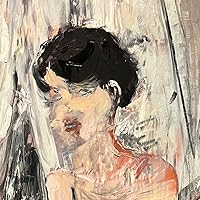
Contains The Cloud of Unknowing, The Mystical Theology of Saint Denis, The Book of Privy Counselling, and An Epistle on Prayer. Against a tradition of devotional writings which focussed on knowing God through Christ's Passion and his humanity, these texts describe a transcendent God who exists beyond human knowledge and human language. These four texts are at the heart of medival mystical theology in their call for contemplation, calm, and above all, love, as the way to understand the Divine.
Books can be attributed to "Anonymous" for several reasons:
* They are officially published under that name * They are traditional stories not attributed to a specific author * They are religious texts not generally attributed to a specific author
Books whose authorship is merely uncertain should be attributed to Unknown.
Ok so! I have a very complicated relationship with mysticism in general—there’s something inherently appealing in the concept that there’s a level of reality that goes beyond what we can rationalize, conceptualize and analyze, but whenever I have an experience that seems like it’s bordering on mystical, I can’t quite bring myself to believing it truly was. I’ll find some rational explanation for the sensation that I had, the feeling of brief transcendence or inexplicable power/elation, and I have yet to really experience something that doesn’t have a natural explanation, I think—whether that’s some hormonal shift, biological drive, or even potentially hypomania, etc.
But I do like reading about mysticism! For the class that I’m in right now, we’ve been chugging through many books in the annals of Christian mysticism, and it’s caused varying degrees of curiosity and skepticism for me—a lot of what they’re saying (especially the more apophatic ones—talking about how much we can’t know God and have to engage with and reflect on God’s transcendence beyond a rational level to experience communion with God) sounds suspiciously like BS to me? It’s the kind of thing that you can never truly know for sure, and could spend your whole life exploring and juuust about being sure that you’ve experienced God, but then could be wrong about 🤷♂️
This was a much more easily accessible and engaging piece of mystic theology though, and probably the clearest articulation of what it means to engage with God while God remains transcendent and unknowable—reflecting on the mystical “Cloud of Unknowing” past what our minds can comprehend, not on a rational level, but out of Love and Desire—and is very appealing. It just all feels so nebulous and soooo easy to make up and believe in SO fully, with absolutely no justification or support that whatever you’re doing is truly making you closer to God, or simply closer to an idea of God that you’ve constructed.
It’s a bit frightening to me—I wish I could let go of my skepticism towards this idea and experience it more fully, but I see so much evidence that engaging with others and the world clearly benefits others, the world, and yourself, and creates a more well-rounded person, and think this is justified pretty strongly by a lot of what Jesus taught, so I’m gonna go with that for now.
(Last side note: This morning in a class on Theories of Psychology for my Psych major, we listened to The Only Thing by Sufjan Stevens and I had two reflections—1). That what Sufjan’s singing about—“signs and wonders” and mysteries of the world giving him a reason to go on—works both as a beautiful affirmation that there are realities that we can experience partially but never fully comprehend and that give our life inestimable meaning, and as evidence that we want to believe there’s something beyond the reality we live in to give our life meaning, depending on who you ask, and 2). That, despite all my skeptical ramblings earlier, music is the thing that’s made me feel closest to transcendence of anything I can think of, and it’s something I cannot explain. Maybe there’s something in the way that music is structured and performed that activates your neurons in juuust the perfect way to create a sense of longing and beauty that’s extremely difficult to put into words, but why, evolutionary, would that be beneficial? Like what function does that serve? I’d be really interested to know if there’s an answer to that, but as of now I can see no reason why music has the effect it does from a naturalistic worldview—so maybe there is something to this whole mysticism thing 🙃
Very liberating ideas about accessibility to God. The plan of establishing a "cloud of forgetting" between you and everything that was ever created. Then to work on piercing through a "cloud of unknowing" which separates from truly knowing God as He exists within Himself.
This theology is very appealing and quite extraordinary in coming from an author assumed to be a Catholic monk as the author describes the process as being a personal journey, "free from any intermediaries".
The author leads the reader through a plan toward the contemplative life where one might learn to put the world behind them, their own good works and aspirations out of their memory, and to seek God without any conceptions at all...to be truly free to see God as he is.
It is good to have this work in volume with the The Mystical Theology of Saint Dennis, as the Cloud of Unknowing shares some theological foundation with this work.
This book is very good in encouraging the reader toward a very deep contemplative life with a tremendous potential to experience God in a very profound way. It was placed among Renovare's list of "25 Books Every Christian Should Read" and it well belongs among them.
I couldn't have started my Lent reading any better. The Cloud of Unknowing covers the most part of the collection and is why I ended up giving this five stars. I actually read the most of this on a two hour long retreat and it couldn't have been better setting for reading this book.
This is probably the best book on the contemplative life in the apophatic tradition that I have read. In short, apophatic theology is an attempt to know God by recognizing that everything we think we know, every thought and all human language is inadequate to truly grasping the nature of the divine. The author of the Cloud of Unknowing, an anonymous 14th century English monk, leads the reader into attempting to do this precisely. His primary thesis in the Cloud, as well as the other short related works also found here, is that the contemplative needs to establish a cloud of forgetting. He needs to lay aside all that he thinks he knows and understands. Then and only then he will be equipped to move past a cloud of unknowing to see even a dim reflection of the God who is beyond all comprehension or existence.
With this premise in hand, tCoU is surprisingly accessible and practical. The author is far more grounded and even at times humorous than I would have expected considering his vocation and this subject matter. This isn't the best book on Christian mysticism out there, but it is a bit better than I expected it would be.
I'm not sure how to rate this book, so I chose 3/5. Reading Christian mystics this semester has made me simultaneously curious and skeptical. Curious about the ubiquitous testimonies of Christians (and other religious mystics) of ineffable encounters with transcendence through contemplative prayer. Skeptical that these experiences can be completely explained in terms of natural causes. Reading these mystics has given me much to think about.
This anonymous work in particular is very apophatic in its approach to God and could be contrasted to Julian of Norwich who is more cataphatic. I'm not convinced by everything this work advocates for (some of it just seems silly). But there's some helpful, thought-provoking content here.
This is a book written by an anonymous Christian author in English in the 14th Century.
The title comes from an idea that there is a cloud or fog between human language and the transcendence of God. The book is essentially a 'how to' guide for how to meditate or get closer to God. The book allows a much wider interpretation of God, and of concepts like heaven/hell, than I had ever associated with Christianity. Some people have argued it is closer to Buddhism, and Aldous Huxley used it as an example to show common routes and features of all main religions (it's citation in his book the Perennial Philosophy led me to read it).
Whichever religion or non-religion you wish to categorise it as; reading this book, and knowing that somebody wrote these beautiful ideas in the 14th Century made me happy.
very solid and interesting book. I definitely recommend it to anyone with any theological interest. You have to be dedicated and committed to reading it, but it without a doubt pays off and is an interesting and thought provoking read.
“I charge and beg you, with all the strength and power that love can bring to bear, that whoever you may be who possess this book (perhaps you own it, or are keeping it, carrying it, or borrowing it) you should, quite freely and of set purpose, neither read, write, or mention it to anyone, nor allow it to be read, written, or mentioned by anyone unless that person is in your judgement really and wholly determined to follow Christ perfectly.”
I don’t have a review of this because all my thoughts are contained within the quotes and passages I marked in the book.
Despite having been in the written in the Middle Ages, no other texts I've read collapse the distance between one's self and whatever one considers to be infinite so well. Using langauge, they try to strip away the conventions of language to bare expereince. Because the period in which they were composed is distant, it is much easier to peel off the Medieval Catholic theology in which they are imbedded and begin to grasp what the words are actually pointing at than it would be if the same were presented in contemporary cultural context. Like a koan or haiku, though, you either get it or don't.
Started off reading this book with a jaundiced (Protestant) view of Christian mysticism. However, I really liked it. I have read John of the Cross and Theresa of Avila and while I didn't anticipate enjoying this book, I thought it was really relevant and quite wonderful. The introduction was excellent. As I have not read other translations it is tough to comment, but the book was entirely readable. This edition also includes the Mystical Theology of St. Denis, the Book of Privy Counselling and An Epistle on Prayer. Overall an excellent work on contemplation and wanting to know God.
Despite the considerable difficulty to judge a work like this, where several factors can veil the originally intended meaning, such as language in itself, the translation, the interpretation of symbols or the competence and knowledge of the reader, I’m gonna try to argue with some points that were made in the main text.
In the prologue, the unknown author made it very clear that this work is highly at risk of being misunderstood. In fact, he even warned against reading it, unless one is „secretly stirred by the spirit of god“ and „inclined by grace towards the highest level of contemplative activity“ (Prologue, page 12). I can both understand and not understand this warning. There is this highly complex and abstract metaphysical concept of a totally transcendent god, who can only be „known“ through a cloud of unknowing, which means the total annihilation of all conceptual thinking. This is definitely prone to being misunderstood if you’re not able to explain it with absolutely plausible logic and coherence.
At this point I anchored my basis of arguing, because I could relate this concept to other versions of the perennial philosophy.
“Nirvana is where there is no birth, no extinction; it is seeing into the state of suchness, absolutely transcending all the categories constructed by mind, for it is the Tathagatas inner consciousness.” (Lankavatara Sutra)
This knowing of god or reality through pure awareness of existence is also found in a concept in parts of Hindu philosophy, called “Sat Chit Ananda”, which means “Being, Consciousness, Bliss”.
This is exactly what Aldous Huxley experienced when he took Mescaline and looked at a vase with flowers: “I was not looking now at an unusual flower arrangement. I was seeing what Adam had seen on the morning of his creation – the miracle, moment by moment, of naked existence.”
Furthermore, i experienced this altered state of consciousness “myself” in a state of no-self, through the consumption of psilocybin mushrooms.
So, regardless of wether you wanna call it god, brahman, nirvana or anything else, unconceptual, ego-less marveling at the naked fact of existence is what this “handbook of contemplation” is about.
Now, to continue my point about his warning against reading the book: I can understand it on the one hand, but on the other hand, it seems like he knew subconsciously that he could have explained it better. This might seem radical, but if you look at other versions of the perennial philosophy, you will see that it is indeed possible to write unmistakably about the transcendent substance of existence and especially of how to “get there”.
Stoicism for example provides probably one of the most strikingly clear sets of ethics, logic and physics, which is absolutely coherent in itself. Now, Marcus Aurelius never wrote his meditations for the public, but I’m 100% sure that he wouldn’t have warned against reading it out of a fear of getting misunderstood. His meditations also didn’t center around the contemplation of the transcendent substance of existence, but were more about how to live perfectly, but that right living and contemplation is inextricably linked together is exactly what the unknown author of the cloud should have explained more clearly. He did that to some extent, but he didn’t provide precise ethical and moral maxims that would have helped the reader in the process of leading a more contemplative life and, above all, would have reduced the risk of misunderstanding dramatically.
Another problem I see is his idea of god being radically transcendent, rather than transcendent and immanent at the same time. Contemplating the naked fact of unmanifested existence is only possible if there is something that this unmanifested existence is manifested in. If there would be nothing in the entire universe (meaning all of existence) which would embody it, existence couldn’t exist.
God, or the naked, unmanifested fact of existence, can then be reached by contemplating the transience of things. Existence itself is the only thing being permanent. But this existence is also the core of all manifestations, only that they are transient. A flower is a manifestation that will die and become something else, but the substance of it is naked existence.
In Spinozas words:
“By substance I understand what is in itself and is conceived through itself, i.e., that whose concept does not require the concept of another thing, from which it must be formed. (E1D3)”
This is of course very hard to “see” in manifestations like flowers or anything else, but without manifestations it couldn’t be seen at all and there wouldn’t even be something to perceive it in the first place.
Overall, this is one of the more complex and challenging accounts of the perennial philosophy, but nevertheless worth reading. I can only speak for myself, but exploring exoterically different religious texts made me understand the individual metaphors and symbols and their common mystical core way better, as opposed to just studying one religious branch in particular.
“And if it seems to you that there is any material in it that you would like to have more fully expounded, let me know what it is and your ideas about it, and I will improve it if I can, to my humble ability” (page 100)
If the unknown author really meant what he wrote, he could hopefully reply to it without disregarding my arguments as coming from a “worldly chatterer, public self-praiser or fault finder” (cf. page 12).
This is a phenomenally thought provoking book by a Medieval mystic. His insights into pursuing God wholeheartedly above all else and entering a contented cloud of unknowing, being satisfied in the ultimate transcendent mystery and nature of God, are fascinating. Some great thoughts on prayer as well, on pursuing humility and God above all else, and keeping our finite sinful selves from polluting our view of his being. A bit dense, but fascinating stuff.
Anonymous medieval mystical work on knowing God through accepting His total mystery in the "cloud of unknowing." Although the work is written for contemplatives, it has much to teach any serious Christian. The book focuses on God's grace and its necessity in finding Him, a somewhat unusual theme for a medieval work.
Solid advice on meditation and contemplation mixed with a healthy dose of fear and shame-based religion. The author intentionally takes focus off of Jesus and towards a bigger picture of God with tips on how to empty your mind of thoughts and sensations in order to be more receptive to a relationship with the divine.
Precisely the sort of a blow-up into the mind of a medieval mystic that I've been yearning: colourful, yet deeply aware of the ambiguity of internal musings and the stakes thereof. The anonymous author shows with his linguistic sensibility that the medieval people, too, were painfully aware of the dangers of language, in how it is so very general and so very metaphorical, which can heavily lead one astray.
In The Cloud of Unknowing, he offers advice to an acquaintance of his on how to exercise perfect contemplation, i.e. the soul's union with God. The key thing is to forget pretty much anything: bodily sensations, intellectual concerns, intrusive thoughts, metaphors... for they are all in the way of contemplation, without exception. The perfect contemplation, the perfect union with God that a worldly being can achieve is listening to the inner stirring towards the love of God, and this loving, however brief, can only be achieved in the titular "cloude of unknowyng". This cloud represents a mental or spiritual state, where one simply is and focuses on God's goodness, without any kind of thinking.
This union cannot be achieved through one's own efforts only. God's grace is needed to be able to mount to such spiritual heights. One also needs to be sure that one has confessed one's sins before engaging in contemplation. After that, the first thing to do is to convince oneself fully of one's wretchedness through humility. This, when achieved, should be followed with as honest and persistent understanding of God's love towards such a wretch. Yet the key thing is not to try to think about these things verbally or in images: if one finds this difficult, one can always attempt to use single short words into which one has compressed big Christian thoughts, like "God". (The author is also at pains in trying to reconcile his ideas with some Christian doctrines, such as that of spiritual superiors, works of charity etc. This does not sound very convincing, especially since the author is at his most decided when he speaks of the utmost importance of a close union with God. The rest sounds like an afterthought: "But also, remember to do good works too!" It is clear that he prefers vita contemplativa to vita activa, but it is also clear that he does not belittle the latter; he just cannot reconcile the two.)
While for the author, this union is the best thing of all possible things on Earth, the problem is that it's very difficult to know, if one has achieved such a union. One can be led astray by the Devil or by bodily sensations or by thoughts (however pious). The author is careful in pointing out that he is not a definitive authority, and definitely does acknowledge the dangers of contemplation: but he also tries to offer guidance in how to detect which kinds of qualia could be more safely interpreted as conducive to contemplation, which kinds of feelings lead to madness. In chapters 52 and 53, he also lists a wonderfully comical set of gestures that wrongful contemplation brings about (such as, what we would today call "stimming"). It also appears that some people, who are called the Devil's contemplatives, misunderstood the meaning of "spiritual contemplation" to mean "turning oneself bodily inwards", which led to them trying to see within their craniums, taste the contents of their mouths, feel the innards of their body... truly, a frightening exercise!
It's great to read such early works that emphasise the limits of language and how metaphors, such as "up", "down", "inner" etc. are, at the end of the day, simply metaphors. Through the impossible Christian concept of God, the medievals were given the opportunity to really delve into language itself, as well as the nature of psychological states. Some of the contents here sound a lot like today's meditation practices, and while I do not believe contemplation achieved a union with God, I do believe these psychological movements and linguistic musings had no connection whatever to actually beneficial states of mind. At the same time, I am touched by the anguish of people, who truly believed in these things and were so intent on trying to make sense of these holy mysteries.
Finally, I must say that though the outlook of the author on the worldly state of Man is bleak, and Man is nothing but a miserable worm, the writings here are not written in a tone of raving wrath. They are genuinely trying to be helpful, and they are understanding. There is great warmth in them, as well as great feeling.
In reading other books and articles I have often come across the idea of the "Cloud of Unknowing". This concept seemed fascinating to me, as it had always been connected to the idea that we as humans can't fully know God or understand everything about him. From what I could understand the idea of God being behind a "Cloud of Knowing" came from this work by an unknown author who is believed to be an English monk.
Upon reading it, I was a little disappointed. The idea is there and set in the idea of contemplation of God, which I have no trouble with, but his advice on how to achieve that contemplation felt unattainable. I felt this was mainly due to the author's rather dualistic way of looking at the world. In order to achieve contemplation of God we have to forget all our past and even our physical experience in the world to focus all our love and yearning for God in order to pierce this cloud of unknowing. This just feels off to me. If the author is a monk, then this makes sense, as I struggle with the monastic understanding of life and interaction with the spiritual and the material.
Even if this idea fully presented is a bit of a disappointment, I do still like the idea that no matter our learning or our natural intelligence there is no way to fully understand God. While I may not go so far as to say we need to forget all our learning, our past, and our experience to be able to contemplate God, but I do think that the idea that we're not going to understand God fully and completely by reading more books or our learning. We may not even actually experience God or know God through these means. There is truth here, even though I may not agree with all the details the author puts forward.
The other works tend to have a similar flavor as well. They aren't as long as the "Cloud of Unknowing," but are similar in presenting a rather dualistic view of the world and seeking the kind of contemplation that he outlines in "Cloud of Unknowing".
Overall, it's an interesting book. I didn't really agree with it enough to recommend it. The author warns the reader from the outset of his work to only read it if you're truly committed to the contemplative life. This is a fair warning a good glimpse of the kind of writing you're going to be dealing with. Maybe I'm just not the target audience here, but I can still appreciate some of the ideas presented.
I will not lie, 'The Cloud of Unknowing,' 'The Epistle of Privy Counsel,' and 'Dionysius' Mystical Teaching' were hard to understand due to their messages on mysticism, examples, language, and other concepts.
The first work is probably the most comprehensive, with the central message that if one wishes to achieve theosis (a word not really used in the book, but I will use here), one must contemplate in order to achieve two states: the cloud of unknowing— focusing on God as incomprehensible except through love—and the cloud of forgetting—which is setting aside one's intellect. The author described tips to consider and hazards to avoid, examples from Scripture such as between Mary's servitude and Martha's complaining, and the value of both short and mental prayer. Nonetheless, for all of the issues I had trying to understand and digest the work, I enjoyed it for its mediaeval wisdom.
The second, 'The Epistle of Privy Counsel,' was somewhat easier to understand, being about the 'naked' intent to reach God in spite of our thoughts and words, which could turn our prayer into a feeling rather than an act of will. Contemplation seeks to rid itself of self knowledge until one is 'in the ocean of God's love.' I enjoyed this book probably the most out of the three major works in this compendium for its simple (enough) message.
The third, 'Dionysius' Mystical Teaching,' is an attempt to reconcile Christianity with neo-platonism and highlights the via negativa, or how incomprehensible God is (in comparison to the via positiva that highlights what we know of God through revelation). It is dense like The Cloud bit not as long.
The last, while not as long or as in depth, 'The Epistle of Prayer' is both a rewarding and wonderfully written work of advice on how to pray amidst distractions and hindrances. The answer? Remember your lowly state, the fact you could die, and the highness of God to help you.
In conclusion, these were probably some of the most complicated Christian works I have read to date. Reflecting on it, reading this as part of a book club or class would have helped immensely, nonetheless I may understand the messages later on. If you are an advanced reader who can understand these concepts that I have described, or are interested in Christian mysticism past and present, I recommend this compendium to you.
Just once, in this fairly long treatise, does the light break through. In all this effort only once does the cloud admit anything but unknowingness. Somewhere in the middle of the text. I find this very gratifying: gratifying in this text, which so dislikes text, is nonetheless alive to such structural wisdom. That the words do, in a way, leap from the page; that they do, in a way, mediate somewhere between the body and the mind. They are abstract, flimsy things but – especially in the vernacular, that language of the heart – they cut as close to an idea as can be made bodily (or figurative, on the page). This is the Cloud author’s fascinating relation to English rather than Latin; worldly English over transcendent Latin. The notion is that one must be close to go far; one does not venture to the outer limits of human, material consideration to make the additional leap, rather one travels as close to the heart as possible, and through it comes to the absolute extent of conscious perception. Although I must jut against some of the author’s own misgiving: his mistrust of prepositions for precisely this reason, given they imply some kind of physical in/out/up/down, which may end with a man admiring the clouds for their proximity to heaven. There is an interesting preconception here: in the universal map we now possess, the relativity of ‘up’ is such as to make the preposition cosmically redundant. There is no definable ‘up’ This would have pleased the Cloud author immensely, because he was already very much aware of this state of affairs; but he did not know that our ‘up’ was on a constantly shifting swivel, which drives the notion into total absurdity. The attempt is two-sided: to use great literary language to escape language; to exploit prepositions to abandon prepositions; to use the babbling, fleshy tongue so as to supersede it. The paradox of the attempt must, in some aspect, self-defeat; but it is equally a exploitation of contradictions; it is a richness in tension. Perhaps we do not take the Cloud author completely at his word, or we all in him these multiple spheres. It can only ever the case: one must travel through that which it is not in order to reach that which it is.
The Cloud of Unknowing is a seminal text of Christian mysticism written in the 14th century by an anonymous Carthusian monk. It is written in the form of a treatise in which the author addresses a younger pupil seeking to understand God through contemplative prayer.
The author suggests that the way to achieve knowledge of God is not through relying on one's bodily senses and intellect, but by accepting that one can never know God.
God, he says, is a presence who transcends the constraints of language as well as this reality. We may speak of God as good, divine, perfect in form, living above in the heavens, but these too are merely words founded in human concepts that do not describe His essence. It is thus not possible to quantify a being as impenetrable as God through something as limited as language. The intellect also is suffused with its own flaws as it seeks empirical and logical truths for God's existence whereas God himself lies beyond comprehension and the tenets of logic.
The right way to see God in his naked truth, says the author, is through an ascetic rejection of all knowledge, where one places their sense-perceptions and intellectual faculties behind them under a cloud of forgetting, and turns towards God, accepting that He will forever remain unknowable and beyond grasp. Once one is under this cloud of unknowing, they have to take the plunge towards God through intuitive feeling of the soul, and by the blind and binding leap of love.
Though the internal premise of the work is rooted firmly in Christian theology, the form of contemplation described here shares a lot of core concepts with Eastern philosophy and will be accessible to those interested in mysticism.
I'm neither Christian nor religious, but I do lean towards the idea that the universe has a mystical core, and just beyond our human comprehension there is a greater, more rich fabric of existence. And God, if anything, is energy; an essence contained within all of matter and its intricate interplay.
The Cloud of Unknowing certainly leaves me with valuable new insights towards understanding the nature of being and God through the pinhole lens of my conscious mind.
It’s always good to start the year off with a good philosophy book. Or, in this case, theology book. The passages were quite beautiful and poetic at times. The chapters on devotion to God and contemplation reminded me of the book “Imitation of Christ,” another thoughtful book I really recommend.
Mysticism connotes something unusual or even supernatural. It isn’t. It’s simply a way of expression outside of normative reality. Setting aside time to contemplate existence, Death, God, Nature and Time. To fall under the spell of a belief so strongly the experience can be “orgasmic” (see Bernini’s “Ecstasy of St. Teresa”).
Perhaps in our secular age, all this sounds silly or even “off.” But what of it? What is so wrong with believing in an “Unknowable Truth?” Isn’t that what science is for? The search for truth? And in the last century, that saw what science is capable of, what have we to show for it? Put it another way, have we not found ourselves with more questions than answers since Evolution? Einstein? The atomic bomb? The Internet? Are we wiser than before? “Smarter?” Arguably. Wiser? No.
If anything we’ve become disillusioned. Disconnected. Alienated from the real world, and even suspicious not only of others but of ourselves. It’s quite possible we lost something in our march to progress that has yet to be replaced. In rereading this book for the first time in years, I couldn’t help but wonder if the answer lies in our spiritual past.
What if answers could be gleaned from intense meditation? From active prayer? From pondering without expectations the actual meaning of life? Monks and nuns spent their entire lives praying and reading in monasteries up in mountains. They ate little. Discarded the secular world, relying solely on each other, and their god. And they wrote books like this one. To a modern audience this sounds terrible, but to them might they think the same of us?
I’ve deliberately avoided discussing the book in detail. I’d rather you read it for yourself and come to your own conclusions. I think you’ll enjoy it.
Not being a terribly contemplative person I am immediately condemned by this book, which the anonymous author is at pains to point out is not to be read by the casual observer or by anyone with a passing interest in the subject. For such a reader, this book is a pearl cast before a swine.
That being said, I did rather enjoy this rather entertaining piece of Fourteenth Century pastoral theology with its injunction that to truly know God we enter a cloud of unknowing before us with a cloud of forgetting behind us. Sounds like dementia to me. But joking aside, this is practical mysticism rather than simply a series of uninterpretable visions, and you really get the impression that this is a master of his art speaking down to the aspiring pupil. I was surprised by the strong emphasis on a physical resurrection and the refusal to accept a literal view of multi-storied universe with heaven "up there" somewhere. Clearly my views on popular medieval views of the afterlife need adjusting somewhat. His view on salvation also seem far more "Lutheran" than I would have expected with a definite emphasis on saving faith rather than religious duties (two words we need in prayer -"sin" and "help!"). Perhaps the author had some sympathies with his contemporary John Wycliffe? Or perhaps, there again, my prejudices about the medievals need addressing.
And yes, reading it does make me long for a closer union with God even whilst acknowledging that my temperament is ill-suited to the life of mysticism.
For me, the title of this substantial book suggestive initially: the cloud of unknowing by Anonymous fascinated me. I found it to be brilliant religious writing of the late 1300's, not the magical story I expected.
After the useful introduction by the translator A. C. Spearing, we delve into the mystical theology of St. Denis. He prepares us for The Cloud of Unknowing by Annonymous (the English Author) by describing things we can not say about God: that He (gender?) lives is good, is father or son or spirit; whether He exists or not, is God; and, that we cannot know him, and He does not know any other things as they are in themselves. "There is an absolute fissure between God and everything human '(37).
I was ready for the next part of this four-part volume, The Cloud of Unknowing.
This passage fascinates me: "And if you should ever reach this cloud [of unkowing], and dwell and work in it as I am telling you, then, just as this cloud of unknowing is above you, between you and your God, so you will need to put a cloud of unknowing beneath you and everything that was ever created" (191). These operating assumptions about the above and below are inconsistent with my God-centeredness. As I read, the concept of the gap [in being?] became very clear and distinct from my life.
What I do have in common with the English Author is God as Cause.
Satisfied that I learned what I came for in the 74 chapters, I did not read parts 3. The Book of Privy Counselling and 4. An Epistle on Prayer.



 .
.