

What do you think?
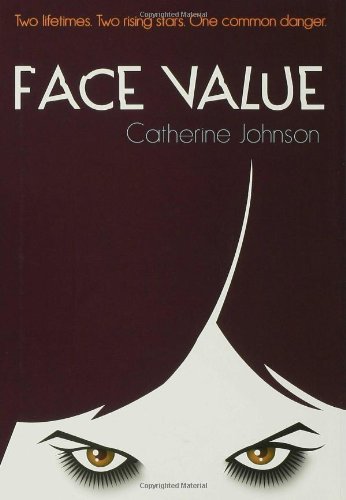
Face Value
Two lifetimes. Two rising stars. One common danger.
As a daughter starts her rise in the glamorous London fashion scene, she begins to uncover secrets and clues about the mother she never knew -- a beautiful teenage model who became a victim in the high stakes, high pressure world where international fashionistas and mobsters intersect.
The fast cars, flashy parties, and easy money can be so enticing. But in a world where everybody is taken at face value, there is always a high price to pay for such fleeting fame.
As a daughter starts her rise in the glamorous London fashion scene, she begins to uncover secrets and clues about the mother she never knew -- a beautiful teenage model who became a victim in the high stakes, high pressure world where international fashionistas and mobsters intersect.
The fast cars, flashy parties, and easy money can be so enticing. But in a world where everybody is taken at face value, there is always a high price to pay for such fleeting fame.
- GenresYoung AdultFiction
256 pages, Hardcover
First published May 1, 2004
About the author
Catherine Johnson
86 books65 followersCatherine Johnson is a British author and screenwriter known for her young adult fiction and work in film, television and radio. Born in London to a Jamaican father and Welsh mother, she studied film at St Martin's School of Art before publishing her debut novel, The Last Welsh Summer (1993). She has since written around 20 novels, including works on Arctic explorer Matthew Henson, and won the 2019 Little Rebels Award for Freedom. Her historical novel Sawbones (2013) earned multiple shortlistings and the Young Quills Award. Johnson co-wrote the screenplay for Bullet Boy (2004) with Saul Dibb, and has served as Royal Literary Fund Fellow, Writer in Residence at Holloway Prison, and judge for the Jhalak Prize. In 2019, she was elected a Fellow of the Royal Society of Literature.
Ratings & Reviews
Friends & Following
Create a free account to discover what your friends think of this book!
Community Reviews
Displaying 1 - 7 of 7 reviews

March 25, 2012
I remember being confused throughout this book.
Why did I read this? Because it was on the library bookshelf, and it just looked interesting.
***MY SYNOPSIS (FROM MEMORY - SPOILERS)***
All I really remember is that it's about a girl who is looking for something. it takes place in some place foreign I believe London and she is looking for answers about her family.
***REASON FOR MY ODD REVIEW***
MARCH 28, 2013 (Thursday) - 2:06 AM *JOURNAL - Writing old notes I wrote in a journal about books I read and wrote about years later after I read them... wanted to know what I remembered... and just so I could have this information for future re-reads or just so I can remember my thought or anything for future reference because I use to think I would remember a book years after I read it then I realize that's not always the case especially when the book doesn't leave a strong impression and even when it does you tend to forget curtain things... re-reading books made me realize that like I could remember how I felt while reading if anything, but sometimes not the story itself... as I re-read then I'll start remembering curtain things...
Why did I read this? Because it was on the library bookshelf, and it just looked interesting.
***MY SYNOPSIS (FROM MEMORY - SPOILERS)***
All I really remember is that it's about a girl who is looking for something. it takes place in some place foreign I believe London and she is looking for answers about her family.
***REASON FOR MY ODD REVIEW***
MARCH 28, 2013 (Thursday) - 2:06 AM *JOURNAL - Writing old notes I wrote in a journal about books I read and wrote about years later after I read them... wanted to know what I remembered... and just so I could have this information for future re-reads or just so I can remember my thought or anything for future reference because I use to think I would remember a book years after I read it then I realize that's not always the case especially when the book doesn't leave a strong impression and even when it does you tend to forget curtain things... re-reading books made me realize that like I could remember how I felt while reading if anything, but sometimes not the story itself... as I re-read then I'll start remembering curtain things...

April 10, 2018
I enjoyed the book but was confused about Lauren's race for a long time - her mum was black and she was white? then i came to the conclusion that perhaps her mother was mixed raced and her father white. The book felt rushed in terms of Lauren and Luke's relationship. I hated when Lauren blamed Vanessa for the death of Paula although Nessa tried everything to stop it - lawyers and confessing. The book is okay but is good for its standard of 2005.
April 3, 2018
It was actually really good and it kept me hooked! 😝

April 18, 2026
Honestly, I think this book is really good. It kind of reminds me that most things in life aren’t what they seem on the surface. Like, you never really understand something until you experience it yourself. Especially when things look all nice and glamorous, there’s usually a lot going on behind that. Unless you’re born rich with strong connections, it probably takes a lot out of a person to get there. And whether we like it or not, money really does open doors.
I also like how the book touches on racism, not just in big cities but across the country, even in smaller places. It shows that it’s not limited to one type of environment. It’s not necessarily that people are outright horrible, but a lot of the time people are either ignorant or just too caught up in their own lives to really care unless something big happens. You can see this through characters like Chloe’s mum and even the police, especially when Nessa tries to explain that Paula didn’t shoot McKay, or when McKay says people like Paula should be the ones convicted, basically targeting people of colour and poorer communities.
Another thing that stood out to me is how the book shows that money can push people to do terrible things. Like Paula being driven by not having enough, and Ed McKay being influenced by having too much. It actually made me think of cases like Epstein, or just the idea that there are probably a lot of people like this out there that we don’t even know about.
If i had to complain about something though, it would be the constant switching between Paula’s and Nessa’s perspectives, plus the different timelines. It got a bit confusing at times and made the story harder to follow. But maybe that’s just me. Overall, I think it’s a really good and important book, especially for young adults. It kind of opens your eyes so you don’t get too caught up in things that seem perfect or too good to be true.
I also like how the book touches on racism, not just in big cities but across the country, even in smaller places. It shows that it’s not limited to one type of environment. It’s not necessarily that people are outright horrible, but a lot of the time people are either ignorant or just too caught up in their own lives to really care unless something big happens. You can see this through characters like Chloe’s mum and even the police, especially when Nessa tries to explain that Paula didn’t shoot McKay, or when McKay says people like Paula should be the ones convicted, basically targeting people of colour and poorer communities.
Another thing that stood out to me is how the book shows that money can push people to do terrible things. Like Paula being driven by not having enough, and Ed McKay being influenced by having too much. It actually made me think of cases like Epstein, or just the idea that there are probably a lot of people like this out there that we don’t even know about.
If i had to complain about something though, it would be the constant switching between Paula’s and Nessa’s perspectives, plus the different timelines. It got a bit confusing at times and made the story harder to follow. But maybe that’s just me. Overall, I think it’s a really good and important book, especially for young adults. It kind of opens your eyes so you don’t get too caught up in things that seem perfect or too good to be true.

August 22, 2025
I will always love me a book set in London and this one did not disappoint too much.
It was a bit difficult to follow - it’s split between two different lives; in the past and the present.
I wish that the story lines evolved a bit more and the story telling went into a bit more detail.
It is gripping and I did get into it and cared for the characters but I felt it needed more.
It was a bit difficult to follow - it’s split between two different lives; in the past and the present.
I wish that the story lines evolved a bit more and the story telling went into a bit more detail.
It is gripping and I did get into it and cared for the characters but I felt it needed more.
August 29, 2020
i dont know if me being 14 when i read this book has any correlation to this but it was a bit confusing and flat. nothing notable or interesting happens and the ending wasnt really satisfactory. i finished the book feeling ??? on a side note C=C look at this ethene

August 3, 2013
It's not the best written book ever but it does have a good plot and some decent minor twists. A good choice if you want a quick easy read.
Displaying 1 - 7 of 7 reviews