

What do you think?

The Eastern Stars: How Baseball Changed the Dominican Town of San Pedro de Macoris
"A fantastic social history" from the author of Salt and Cod ( USA Today )
In the Dominican Republic town of San Pedro de Macorís, baseball is often seen as the only way to a better life. For those who make it, the million-dollar paychecks from Major League Baseball mean that not only they, but their entire families as well, have been saved from grinding poverty. The successful few set an example that dazzles the neighbors they left behind. But for the majority, this dream is illusory.
In The Eastern Stars, New York Times bestselling author Mark Kurlansky reveals the connection between two countries' love affair with a sport, and the remarkable journey of impoverished San Pedro and its baseball players-including Rico Carty, Albert Pujols, Robinson Canó, Sammy Sosa, and Alfonso Soriano-who have sought freedom from poverty through playing ball.
In the Dominican Republic town of San Pedro de Macorís, baseball is often seen as the only way to a better life. For those who make it, the million-dollar paychecks from Major League Baseball mean that not only they, but their entire families as well, have been saved from grinding poverty. The successful few set an example that dazzles the neighbors they left behind. But for the majority, this dream is illusory.
In The Eastern Stars, New York Times bestselling author Mark Kurlansky reveals the connection between two countries' love affair with a sport, and the remarkable journey of impoverished San Pedro and its baseball players-including Rico Carty, Albert Pujols, Robinson Canó, Sammy Sosa, and Alfonso Soriano-who have sought freedom from poverty through playing ball.
352 pages, Paperback
First published January 1, 2010
About the author
Mark Kurlansky
61 books2,235 followersMark Kurlansky is an American journalist and author who has written a number of books of fiction and nonfiction. His 1997 book, Cod: A Biography of the Fish That Changed the World (1997), was an international bestseller and was translated into more than fifteen languages. His book Nonviolence: Twenty-five Lessons From the History of a Dangerous Idea (2006) was the nonfiction winner of the 2007 Dayton Literary Peace Prize.
Ratings & Reviews
Friends & Following
Create a free account to discover what your friends think of this book!
Community Reviews
Displaying 1 - 30 of 89 reviews
May 18, 2011
I can't believe just how bad this was.
It was an aimless look at baseball in the Dominican Republic town of San Pedro. I think. That's what Kurlansky tells me this is about. There is some information on how the town came to be - and the role of the sugar markets. But the books drifts from topic to topic, often repeating itself in a way that reads like bad editing and hasty first-draft writing.
And perhaps there are readers who know nothing about baseball, but this is written as if to explain baseball to a three-year old from Venus.
At times, a reader feels that she or he is following a writer who keeps reaching interview dead ends, and so describes those dead ends. In detail. There's not much personality to the people and he hints that the Dominican simply has no culture of its own, which is an interesting statement.
The book feels uninspired, and doesn't answer the question in the title very effectively. It gets a second star for occasionally catching up with the Julio Francos of baseball, for mentioning some of Sammy Sosa's conflicted relationship with where he is from. But in the end, Kurlansky half-asks a question and answers it in a line; the rest feels like a fluff job to get over 200 words and make a saleable book. I really like a lot of Mark Kurlansky's other work, and was shocked at how disappointing this was; I almost put it down, but had made a pact with myself to finish the book.
It was an aimless look at baseball in the Dominican Republic town of San Pedro. I think. That's what Kurlansky tells me this is about. There is some information on how the town came to be - and the role of the sugar markets. But the books drifts from topic to topic, often repeating itself in a way that reads like bad editing and hasty first-draft writing.
And perhaps there are readers who know nothing about baseball, but this is written as if to explain baseball to a three-year old from Venus.
At times, a reader feels that she or he is following a writer who keeps reaching interview dead ends, and so describes those dead ends. In detail. There's not much personality to the people and he hints that the Dominican simply has no culture of its own, which is an interesting statement.
The book feels uninspired, and doesn't answer the question in the title very effectively. It gets a second star for occasionally catching up with the Julio Francos of baseball, for mentioning some of Sammy Sosa's conflicted relationship with where he is from. But in the end, Kurlansky half-asks a question and answers it in a line; the rest feels like a fluff job to get over 200 words and make a saleable book. I really like a lot of Mark Kurlansky's other work, and was shocked at how disappointing this was; I almost put it down, but had made a pact with myself to finish the book.

September 22, 2010
This book badly needed to be written. May it please be put on library shelves, replacing dull histories of the Yankees, Red Sox, and Brooklyn Dodgers. Mark Kurlansky, meanwhile, ain't Walt Whitman, and no disrespect to Whitman, but that's a good thing. Baseball lovers will be disproportionately attracted to the book, but it notably is not about baseball, and it's not geared toward baseball fans. It's more about the surrounding society and the history of how this small island has changed and been impacted by global forces.
I've personally been fascinated with the Dominican Republic since I was baseball-obsessed and three apples tall, a time when the only Latinos I'd ever seen were on big league rosters. Eastern Stars offers a portrait of the Dominican Republic, and San Pedro de Macoris in particular, and its evolution in becoming the cradle of baseball stars.
I'm not sure Kurlansky is the ideal writer for this subject, but he is an excellent historian and his perspective is very sober and balanced, good with big-picture perspective. And given that he is someone who is clearly more at home thinking about political economy matters than sports, he's probably written a book that's a lot more interesting than whatever Mike Lupica or Rob Neyer might have put together. (I also am not sure if Kurlansky has ever written a book that doesn't include a few recipes. The man must love to eat, and that can't be a bad thing.) I read somewhere that the book doesn't effectively humanize the people of San Pedro, and that's a fair criticism. But from his emotional distance we are nonetheless given what I take is probably a pretty accurate perspective on the country and on baseball's role in the community.
I've personally been fascinated with the Dominican Republic since I was baseball-obsessed and three apples tall, a time when the only Latinos I'd ever seen were on big league rosters. Eastern Stars offers a portrait of the Dominican Republic, and San Pedro de Macoris in particular, and its evolution in becoming the cradle of baseball stars.
I'm not sure Kurlansky is the ideal writer for this subject, but he is an excellent historian and his perspective is very sober and balanced, good with big-picture perspective. And given that he is someone who is clearly more at home thinking about political economy matters than sports, he's probably written a book that's a lot more interesting than whatever Mike Lupica or Rob Neyer might have put together. (I also am not sure if Kurlansky has ever written a book that doesn't include a few recipes. The man must love to eat, and that can't be a bad thing.) I read somewhere that the book doesn't effectively humanize the people of San Pedro, and that's a fair criticism. But from his emotional distance we are nonetheless given what I take is probably a pretty accurate perspective on the country and on baseball's role in the community.
December 23, 2011
ark Kurlansky wrote one of my favorite books (Salt) and one book I used for summer reading for my European History class (Cod). Kurlansky specializes in bringing together the most varied strings of information to produce an overall history of a single item. I was very excited for this book, as:
1. I am a baseball nut.
2. I love the other three books of his that I have read.
Alas, it was not to be.Kurlansky breaks down the book into two sections, Sugar and Dollars.
Sugar
"For those who don't make it, there is sugarcane." (1) So begins the second paragraph of the book, and section one will tell you everything you ever wanted to know about the hard labor that is the zafra, the cane harvest, in the Dominican. The first half is by far the more compelling section of the book, as Kurlansky uses his experience as a correspondent in the Caribbean for the Chicago Tribune to excellent effect. The great number of Spanish sources helps in this area. I was astounded by the racial attitudes surrounding the Domincan Republic, down to a 1912 law "that imposed restrictions on bringing in workers who were not white." (41) I would have liked Kurlansky to spend more time comparing the institutional racism of the U.S. with the "pan-Caribbean obsession of calculating racial differences." (71) I found his discussion of race in a decidedly mixed race society quite interesting and wished there was more than the 15 or so pages allotted. I did not know that San Pedro de Macoris was famous for its poets long before it was called "The Cradle of Shortstops" and will look for works by Pedro Mir, whose poems are quoted throughout.
Dollars
The second section is where the book falls apart. In his short discussion of baseball and race, Kurlansky trots out the old chestnut that Cap Anson was nearly single-handedly responsible for the banning of blacks in organized baseball. Well, he wasn't. As Bill James pointed out in The Historical Baseball Abstract, it is downright foolish to think one person could do that, much less enforce his will on club owners. Sure, Anson was a racist, but I would guess 99.5% of whites in the United States in 1890 were racist on one level or another. In another bit, he writes that in 1978 Alfredo Griffin posted a .500 batting average. HOLY SHIT! I thought. Then I thought wait a minute, how many times did he hit? Four times in five games. That's just silly and sort of lazy, but it typifies the attitude of the book towards the research on the sport.
In discussing "San Pedro's Black Eye" Kurlansky opines "in America the idea that there is something less than proper about all these foreign and wild "Latins" getting into baseball has considerable resonance." (206). I call bull shit on that. He bases this on more than 100 letters he received after his article for Parade magazine about San Pedro de Macoris in 2007, many from African Americans. I think this is bull shit for several reasons, but the most reasonable is historical development. After the integration of baseball in 1947, black players were dominant throughout the 1960s and 1970s. In the 1980s, baseball featured a good mix of ethnicites, with the exception of Asian players. By the late 1990s and early 2000s, Latin players began to dominate: David Ortiz, Albert Pujols, Alex Rodriguez, Pedro Martinez. As baseball becomes the way out, it stands to reason that there will be more "Latin" players. Sure, Gary Sheffield may complain about the academy system, but to insist that the idea that most fans do not want to see "wild Latins" on the field is bull shit.Kurlansky is correct in writing that baseball is playing second fiddle to football (has been since the late 1960s) and this is one reason why teams are scouring the Caribbean, South America, Australia, Japan and South Korea for players. This is not news; using the views of one player (Gary Sheffield) to support a wrong headed assessment is incorrect.
The most famous son of San Pedro is probably Sammy Sosa. In the chapter entitled "Fickle Judgment from the Peanut Gallery", Kurlansky writes the following: "In 1999, Sosa, the former shoe shine boy too two hundred shoe shine boys in Santo Domingo to lunch, to which Macorisanos responded that he had failed to do anything for their shoe shine boys." (215) I think Kurlansky is on the side of the Macorisanos, especially after his treatment of the baseball "academies" (read: factories) that MLB runs throughout the Caribbean. The tone is ambiguous. I just am confused by the "fickle Judgment from the peanut gallery" chapter title. Kurlansky writes "Heroics is a lot to expect for someone snatched away without education at 16 and handed fame and wealth" (219); while I agree, I do not think that it is incorrect to expect it. Sosa got in trouble for pointing out all he does for the town while really not doing very much. America loves to catch people acting like big mouthed hypocrites, regardless of whether or not they are athletes. Is this wrong? Not at all; it becomes wrong when it is unwarranted. Some ballplayers do a lot for their hometown, some don't. Sosa's big sin was lying about his contributions to charity and hurricane relief.
Ah hell. The first half of the book is great. I'll probably check out a few books on Caribbean history because of it.
1. I am a baseball nut.
2. I love the other three books of his that I have read.
Alas, it was not to be.Kurlansky breaks down the book into two sections, Sugar and Dollars.
Sugar
"For those who don't make it, there is sugarcane." (1) So begins the second paragraph of the book, and section one will tell you everything you ever wanted to know about the hard labor that is the zafra, the cane harvest, in the Dominican. The first half is by far the more compelling section of the book, as Kurlansky uses his experience as a correspondent in the Caribbean for the Chicago Tribune to excellent effect. The great number of Spanish sources helps in this area. I was astounded by the racial attitudes surrounding the Domincan Republic, down to a 1912 law "that imposed restrictions on bringing in workers who were not white." (41) I would have liked Kurlansky to spend more time comparing the institutional racism of the U.S. with the "pan-Caribbean obsession of calculating racial differences." (71) I found his discussion of race in a decidedly mixed race society quite interesting and wished there was more than the 15 or so pages allotted. I did not know that San Pedro de Macoris was famous for its poets long before it was called "The Cradle of Shortstops" and will look for works by Pedro Mir, whose poems are quoted throughout.
Dollars
The second section is where the book falls apart. In his short discussion of baseball and race, Kurlansky trots out the old chestnut that Cap Anson was nearly single-handedly responsible for the banning of blacks in organized baseball. Well, he wasn't. As Bill James pointed out in The Historical Baseball Abstract, it is downright foolish to think one person could do that, much less enforce his will on club owners. Sure, Anson was a racist, but I would guess 99.5% of whites in the United States in 1890 were racist on one level or another. In another bit, he writes that in 1978 Alfredo Griffin posted a .500 batting average. HOLY SHIT! I thought. Then I thought wait a minute, how many times did he hit? Four times in five games. That's just silly and sort of lazy, but it typifies the attitude of the book towards the research on the sport.
In discussing "San Pedro's Black Eye" Kurlansky opines "in America the idea that there is something less than proper about all these foreign and wild "Latins" getting into baseball has considerable resonance." (206). I call bull shit on that. He bases this on more than 100 letters he received after his article for Parade magazine about San Pedro de Macoris in 2007, many from African Americans. I think this is bull shit for several reasons, but the most reasonable is historical development. After the integration of baseball in 1947, black players were dominant throughout the 1960s and 1970s. In the 1980s, baseball featured a good mix of ethnicites, with the exception of Asian players. By the late 1990s and early 2000s, Latin players began to dominate: David Ortiz, Albert Pujols, Alex Rodriguez, Pedro Martinez. As baseball becomes the way out, it stands to reason that there will be more "Latin" players. Sure, Gary Sheffield may complain about the academy system, but to insist that the idea that most fans do not want to see "wild Latins" on the field is bull shit.Kurlansky is correct in writing that baseball is playing second fiddle to football (has been since the late 1960s) and this is one reason why teams are scouring the Caribbean, South America, Australia, Japan and South Korea for players. This is not news; using the views of one player (Gary Sheffield) to support a wrong headed assessment is incorrect.
The most famous son of San Pedro is probably Sammy Sosa. In the chapter entitled "Fickle Judgment from the Peanut Gallery", Kurlansky writes the following: "In 1999, Sosa, the former shoe shine boy too two hundred shoe shine boys in Santo Domingo to lunch, to which Macorisanos responded that he had failed to do anything for their shoe shine boys." (215) I think Kurlansky is on the side of the Macorisanos, especially after his treatment of the baseball "academies" (read: factories) that MLB runs throughout the Caribbean. The tone is ambiguous. I just am confused by the "fickle Judgment from the peanut gallery" chapter title. Kurlansky writes "Heroics is a lot to expect for someone snatched away without education at 16 and handed fame and wealth" (219); while I agree, I do not think that it is incorrect to expect it. Sosa got in trouble for pointing out all he does for the town while really not doing very much. America loves to catch people acting like big mouthed hypocrites, regardless of whether or not they are athletes. Is this wrong? Not at all; it becomes wrong when it is unwarranted. Some ballplayers do a lot for their hometown, some don't. Sosa's big sin was lying about his contributions to charity and hurricane relief.
Ah hell. The first half of the book is great. I'll probably check out a few books on Caribbean history because of it.

December 4, 2012
San Pedro de Macoris is a city in the Dominican Republic (population nearly 200,000 as of 2010) which is famous for producing numerous major league baseball players over the past 50 years, including stars such as Rico Carty, Pedro Guerrero, Joaquin Andujar, Julio Franco, Sammy Sosa, Alfonso Soriano, and Robinson Cano. It's been justly described as the richest hotbed of baseball talent in the world. This book delves into the history of the city; its nation; and the players themselves, investigating how this came to be, and what the impact has been on the city. That last aspect makes the most interesting reading; it's hard to begrudge these players their multi-million-dollar salaries after reading about what a huge difference that money makes in the lives of the players, their families, and their community.
When Kurlansky writes about baseball, though, the text is riddled with factual errors and other subtle clues that his understanding of the sport isn't very thorough. He describes Charlie Dressen as a "legendary Hall of Fame manager"; Dressen hasn't been inducted into the Hall of Fame, and it's not likely that he ever will be. Writing about the slow process of integration in baseball, Kurlansky says: "By the 1960s, while integrated teams were prospering, the Red Sox stubbornly remained at the bottom with their all-white team." It's true that the Boston Red Sox were the last major league baseball team to integrate; but they did so in 1959. The most amusing mistakes come at the end of the book, where Kurlansky provides capsule summaries of the careers of every player from San Pedro de Macoris who had reached the major leagues. He claims that relief pitcher Guillermo Mota, in his career, had hit 67 home runs by the end of the 2008 season; and that another relief pitcher, Hector Carrasco, had hit 69. Kurlansky is apparently unaware that, when looking at pitching statistics, "HR" refers to how many home runs the pitcher has given up, not how many he's hit.
All of these, of course, are trivial and petty details. Nobody who reads this book, myself included, really cares whether Charlie Dressen is in the Hall of Fame. The problem is that there are so many of these errors; and they should have been very easy to check. You have to wonder: if Kurlansky did such a sloppy job of researching and fact-checking the easy stuff, how much confidence can you have in the more obscure details (such as the sections about the history of the Dominican Republic)? It goes beyond this book, too. I've previously read two of Kurlansky's other books, "Cod" and "The Basque History of the World", and I liked both of them. But I'm not knowledgeable enough about those subjects to spot inaccuracies. After reading "The Eastern Stars", I can't help harboring doubts about those other books. And I'm disinclined to read any more of his writing in the future.
It's a shame that I can't recommend this book; the subject is meaty, and deserves to have somebody write a great book about it. This simply isn't that book.
When Kurlansky writes about baseball, though, the text is riddled with factual errors and other subtle clues that his understanding of the sport isn't very thorough. He describes Charlie Dressen as a "legendary Hall of Fame manager"; Dressen hasn't been inducted into the Hall of Fame, and it's not likely that he ever will be. Writing about the slow process of integration in baseball, Kurlansky says: "By the 1960s, while integrated teams were prospering, the Red Sox stubbornly remained at the bottom with their all-white team." It's true that the Boston Red Sox were the last major league baseball team to integrate; but they did so in 1959. The most amusing mistakes come at the end of the book, where Kurlansky provides capsule summaries of the careers of every player from San Pedro de Macoris who had reached the major leagues. He claims that relief pitcher Guillermo Mota, in his career, had hit 67 home runs by the end of the 2008 season; and that another relief pitcher, Hector Carrasco, had hit 69. Kurlansky is apparently unaware that, when looking at pitching statistics, "HR" refers to how many home runs the pitcher has given up, not how many he's hit.
All of these, of course, are trivial and petty details. Nobody who reads this book, myself included, really cares whether Charlie Dressen is in the Hall of Fame. The problem is that there are so many of these errors; and they should have been very easy to check. You have to wonder: if Kurlansky did such a sloppy job of researching and fact-checking the easy stuff, how much confidence can you have in the more obscure details (such as the sections about the history of the Dominican Republic)? It goes beyond this book, too. I've previously read two of Kurlansky's other books, "Cod" and "The Basque History of the World", and I liked both of them. But I'm not knowledgeable enough about those subjects to spot inaccuracies. After reading "The Eastern Stars", I can't help harboring doubts about those other books. And I'm disinclined to read any more of his writing in the future.
It's a shame that I can't recommend this book; the subject is meaty, and deserves to have somebody write a great book about it. This simply isn't that book.
April 20, 2010
Mmmm. Not as enthralling as Kurlansky's best works, nor as thorough. I don't think that the book was as much about HOW baseball changed San Pedro as it was about WHY San Pedro produces so many Major League players, so if you're expecting more of a "baseball and all its money came to town, here's what happened" story, that's not what you'll be getting. It's more of a "why baseball and all its money came to San Pedro in the first place" kind of story. One isn't better than the other, but they are not the same.
The book (not unlike this review) was disjointed, in part because it was trying to solve both of those questions in 220 pages. I think also because Kurlansky doesn't seem fluent in baseball, his descriptions of certain statistics or players would fall flat and would lead him away from any narrative flow he had going.
Recommended if you want a brief course in the history of baseball in the Dominican Republic, but it'll probably leave you wanting more.
The book (not unlike this review) was disjointed, in part because it was trying to solve both of those questions in 220 pages. I think also because Kurlansky doesn't seem fluent in baseball, his descriptions of certain statistics or players would fall flat and would lead him away from any narrative flow he had going.
Recommended if you want a brief course in the history of baseball in the Dominican Republic, but it'll probably leave you wanting more.

April 12, 2011
Once again, the moral of the story is that practice, the willingness to devote your time, energy and focus to something, will result in making you better at it.
The rules that make it cheaper to sign a 16 year old Dominican, instead of an 18 year old US citizen are both part of the problem of the decline of baseball, and a logical response to that decline in the US. In places the stuff about rules and fans and how teams find talent, reminded me of the wistfulness of Fever Pitch. It seems like team sports are locked in a downward spiral with their fans.
There was a lot to think about here, and there is no better reason to read a book.
The rules that make it cheaper to sign a 16 year old Dominican, instead of an 18 year old US citizen are both part of the problem of the decline of baseball, and a logical response to that decline in the US. In places the stuff about rules and fans and how teams find talent, reminded me of the wistfulness of Fever Pitch. It seems like team sports are locked in a downward spiral with their fans.
There was a lot to think about here, and there is no better reason to read a book.
April 2, 2024
This book was a fine look at San Pedro in the DR and its relationship to baseball, but it struggled with being all over the place. The first couple of chapters organizational made sense by explaining some history of the Dominican Republic, baseball, and the intersection of the game and the place. Hearing about the sugar companies creating the first leagues, how the DR was a haven for the Negro League players in the winter, and the complicated racial history was fascinating but ultimately it ran into trouble after that. The book was nonlinear and disorganized, which felt much more like someone rambling about the facts they learned on a vacation or weekend article assignment than a functioning book. Ultimately, it did make me want an author to tackle the full history of Caribbean/globalization of baseball in a David Goldblatt’s “The Ball is Round”, as something that is needed in this genre.

March 13, 2024
All about baseball - so much about Dominican changes to adapt to the American game.

March 7, 2017
I feel a little bad giving this a poor review, because there is a lot to like about it. I read it because it is the time of the year for baseball books, and I didn't know anything about the history of baseball in the Dominican Republic. I have been playing around with a lecture on the spread of sports in the Americas, and there is lots of interesting stuff here that I could throw in.
But then I started to notice mistakes. And once I started noticing them they kept popping up. First it was little grammar stuff, like misplaced modifiers. Then sentences that popped up out of nowhere and seemed to belong elsewhere in the book. There is one sentence about Sammy Sosa that shows up at the start of a paragraph about other players, a couple pages before Sosa is introduced.
And then weirder. Kurlansky writes that Jackie Robinson and the Dodgers won a World Series in 1956, when it was '55. He writes that a famous pitchers duel between the Giants and Braves took place on January 2nd, 1963.
And beyond the mistakes, does he have to explain every little thing about baseball in this book? How many people who decide to read this book don't know what a shortstop is? Or a grand slam?
The only other Kurlansky book I read was "Cod," and I listened to the audio book that time. Were there mistakes in that one too? Audio can be forgiving because you aren't going to go back and check. In print a baseball game in January just stares you in the face. It just seemed sloppy. But if you love baseball and really want to read about the DR and baseball, you would probably still like the book, all in all.
But then I started to notice mistakes. And once I started noticing them they kept popping up. First it was little grammar stuff, like misplaced modifiers. Then sentences that popped up out of nowhere and seemed to belong elsewhere in the book. There is one sentence about Sammy Sosa that shows up at the start of a paragraph about other players, a couple pages before Sosa is introduced.
And then weirder. Kurlansky writes that Jackie Robinson and the Dodgers won a World Series in 1956, when it was '55. He writes that a famous pitchers duel between the Giants and Braves took place on January 2nd, 1963.
And beyond the mistakes, does he have to explain every little thing about baseball in this book? How many people who decide to read this book don't know what a shortstop is? Or a grand slam?
The only other Kurlansky book I read was "Cod," and I listened to the audio book that time. Were there mistakes in that one too? Audio can be forgiving because you aren't going to go back and check. In print a baseball game in January just stares you in the face. It just seemed sloppy. But if you love baseball and really want to read about the DR and baseball, you would probably still like the book, all in all.

January 27, 2018
The subtitle of The Eastern Stars is accurate, but incomplete. As with just about everything Kurlansky writes, there's a whole lot of background leading up to the main theme. The book is certainly about baseball changing San Pedro, but it's also about everything else that impacted San Pedro and the rest of the Dominican Republic, as well as quite a bit of baseball history.
The early chapters are largely about the origins of the city of San Pedro, and how it became a production powerhouse in the sugar industry. That industry helped form the city's baseball roots in many ways, including factory-sponsored teams that were early places to discover talent. The middle and later chapters focus more on baseball, including quite a few stories of individual players. There's still plenty about the changes in San Pedro, though, and how the city has changed over the decades.
For me personally, the subject matter is a perfect match. I've visited the Dominican Republic a few times, and baseball is easily my favorite sport. I found Kurlansky's meticulously researched details fascinating: about the town of San Pedro and the Dominican Republic, the sport of baseball, and many of the key figures involved with both.
Having said that, I could see how someone who isn't quite as interested in one or both subjects might not find this book as interesting as I did. If you're not into either of those subjects, this book probably won't change your mind. But I think anyone curious about either the Dominican Republic or baseball history would find The Eastern Stars a good read.
The early chapters are largely about the origins of the city of San Pedro, and how it became a production powerhouse in the sugar industry. That industry helped form the city's baseball roots in many ways, including factory-sponsored teams that were early places to discover talent. The middle and later chapters focus more on baseball, including quite a few stories of individual players. There's still plenty about the changes in San Pedro, though, and how the city has changed over the decades.
For me personally, the subject matter is a perfect match. I've visited the Dominican Republic a few times, and baseball is easily my favorite sport. I found Kurlansky's meticulously researched details fascinating: about the town of San Pedro and the Dominican Republic, the sport of baseball, and many of the key figures involved with both.
Having said that, I could see how someone who isn't quite as interested in one or both subjects might not find this book as interesting as I did. If you're not into either of those subjects, this book probably won't change your mind. But I think anyone curious about either the Dominican Republic or baseball history would find The Eastern Stars a good read.

January 15, 2020
There’s a lot of history here. One might say all this is not necessary, but leading up to an understanding of why San Pedro was such an important part of the DR is good to know. This distilled version of that history included many details I wasn’t aware of about the country.
There is, at times, some repetition in passages, notably mentioning that Alfredo Griffin won the Rookie of the Year is mentioned twice by page 125. Repeating these details makes me think the book could have done with a better edit.
Of interest was the reference to Toronto’s baseball stadium in chapter 12. Kurlansky calls it “Sky dome” and not its (once) proper “Skydome”.
Lots of San Pedro related local Domincan customs and words are thrown in throughout. Through a prism of baseball (this area’s major export), you get a feel for a people and place I’ve come to know (mainly from the north end of the island). A good book if you’re interested in Dominican baseball tinged with some history.
There is, at times, some repetition in passages, notably mentioning that Alfredo Griffin won the Rookie of the Year is mentioned twice by page 125. Repeating these details makes me think the book could have done with a better edit.
Of interest was the reference to Toronto’s baseball stadium in chapter 12. Kurlansky calls it “Sky dome” and not its (once) proper “Skydome”.
Lots of San Pedro related local Domincan customs and words are thrown in throughout. Through a prism of baseball (this area’s major export), you get a feel for a people and place I’ve come to know (mainly from the north end of the island). A good book if you’re interested in Dominican baseball tinged with some history.

December 26, 2022
This book has many faults, but to me the most egregious is giving the incorrect date for the murder of the Mirabal sisters in the timeline. He has it as 1959; they were murdered on November 25, 1960. This well-documented key event in Dominican history directly led to the assassination of the dictator Trujillo a little over six months later. Of course, one giant mistake makes me questions all of the other facts. And as previous reviewers have confirmed, this book is FULL of errors of all kinds.
More off-putting is Kurlanksy's glaring far left agenda working its way into the book at every chance. To paraphrase (just one example), he writes that someday the US will "make peace" with Cuba, allowing a free interchange of Cuban ball players. As if their communist dictatorship would just let them come and go at will, if only Uncle Sam played nice. Please. He can have his politics and opinions all he wants, obviously, but I bought this book to read about the history of Dominican baseball.
More off-putting is Kurlanksy's glaring far left agenda working its way into the book at every chance. To paraphrase (just one example), he writes that someday the US will "make peace" with Cuba, allowing a free interchange of Cuban ball players. As if their communist dictatorship would just let them come and go at will, if only Uncle Sam played nice. Please. He can have his politics and opinions all he wants, obviously, but I bought this book to read about the history of Dominican baseball.
January 23, 2026
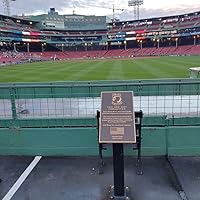
"The Eastern Stars, How Baseball Changed the Dominican Town of San Pedro de Macoris," by Mark Kulansky is baseball history book that chronicles just how this talent in the Dominican Republic was cultivated. The short answer is over decades, working in the sugar trades, cutting sugar cane, surviving long days in the Caribbean sun on the fishing boats, and working odd jobs to put food on the table and a roof over their family's heads. Once baseball was introduced into the Dominican Republic, it had to fend off competition from cricket and boxing to become the sport of choice for youngsters to participate in. Socks rolled up to mirror baseballs, milk cartons for gloves, sticks and sugar cane stalks for bats, open fields were the norm. Not the kind of equipment you would see on your kid's travel team these days, huh? But this raw talent development inspired so many youths in the Dominican Republic to not only play baseball, but excel at it.

March 13, 2018
Both the sheer number of errors and the obvious nature of these errors in this book is incredibly surprising. Why would any book about baseball claim, as Kurlansky does, that Hector Carrasco "had a 3.99 ERA and had hit 69 home runs" in his career or that, similarly, Guillermo Mota "had a career ERA of 3.93 and had hit 67 home runs"? This evinces a fundamental lack of understanding of the game. Perhaps it is just to troll people who care about baseball? Maybe all sports, as Kurlansky refers to the "National Football Association" on page 199 of the hardcover. This book was published by Riverhead Books -- a division of Penguin -- yet does not appear to have been seen by an editor. Kurlansky's Cod is one of the most enjoyable books I've read, but this book really seems to raise the question of how much care goes into his work and whether factual inaccuracies abound.
August 9, 2024
This book examines why so many MLB players come from a small country in the Caribbean, the Dominical Republic, and why the majority of them come from an even smaller region of San Pedro de Macoris. This is not really a baseball book, or at least it is written for a much larger audience. Any time an author stops to explain that hitting safely 3 times out of 10 is considered "very good" in baseball or that a "grand slam" is a home with three people on base, you know you are not reading a book for stat-heads. Kurlansky is not a baseball writer. he is an investigative reporter. That caveat aside, what he finds is that baseball is the only hope some families have. It is everywhere in the DR and getting signed by a professional club can drastically change a family -- not just a player but a family and community.

May 16, 2017
This was an interesting book, and incredibly insightful. As Major League Baseball is becoming integrated more and more by players from around the world, this was a great look at the history of baseball in the Dominican Republic, and how their love for the game developed from its earliest origins. From the difficulty of Jackie Robinson breaking the color barrier to the modern presence of steroids in baseball, Mr. Kurlansky weaves the culture of this Caribbean country into the history of America's pastime. Every baseball fan should read this book.

June 30, 2021
The subject matter of the book was pretty interesting--the rise of baseball programs in the Dominican Republic along with the growth and decline of the sugar industry--but the execution wasn't quite there. It felt like another draft was necessary to tighten up the story. It also would've been nice if the author had a stronger conclusion and perhaps made more comments about how baseball impacts the economy and family life (he touched on this a bit, but could have done more). I don't know much about baseball, so it didn't bother me that he broke down some of the basics of the game.
September 3, 2022
DNF, and I have nothing against the book necessarily, but I think it is worth highlighting that this is not really a baseball book--it is a book about the Dominican Republic, that uses baseball as a lens to understand the complicated history of the DR. It is also a slow-burner, with eight chapters going bit by bit to get us up to the modern era. I thought I was going to read a story about Robinson Cano's childhood, with a little backstory, and it was the other way around. So, be warned: not a baseball book, as those are traditionally understood.
October 15, 2018
I'm not sure who the audience is for this book. Kurlansky repeatedly defines the most basic baseball terms for the reader. I wouldn't say this is a baseball book, but instead a book about San Pedro. Kurlansky went into more detail about local recipes than baseball. I was excited, but this is not the book I hoped it would be.
February 17, 2019
If you are interested in Caribbean history and enjoy baseball you might get a kick out of this. If neither appeals skip it.
I picked it up for the baseball but found that only mildly informative ( and sometimes annoying, e.g., Marichal's 16 inning effort in "January" not July, seriously?)
The history of Santo Domingo, especially early days (pre Trujillo) was more intriguing.
I picked it up for the baseball but found that only mildly informative ( and sometimes annoying, e.g., Marichal's 16 inning effort in "January" not July, seriously?)
The history of Santo Domingo, especially early days (pre Trujillo) was more intriguing.

October 16, 2020
Interesting book about the Dominican Republic and its relationship with Major League Baseball. Incredible that one small town in the southeast coast of Hispaniola has produced so many baseball stars as a conduit to escape poverty or a tough life toiling in the sugar cane industry. Great writing as usual from Mark Kurlansky.

September 12, 2023
For baseball lovers and Latam historians
No one is better than Mark educating his reader about something we all know of but know nothing about. The Dominican players are some of the best in MLB but why? He tells us and also educates us about the history of the DR and ID relationships intertwined with the influence of MLB.
No one is better than Mark educating his reader about something we all know of but know nothing about. The Dominican players are some of the best in MLB but why? He tells us and also educates us about the history of the DR and ID relationships intertwined with the influence of MLB.

January 10, 2024
Interesting, but feels very padded. This probably could have been a decently interesting internet essay but it starts to feel like it gets worn out by about page 150 or so - might have been more interesting with more discussion of Dominican history. Very engaged baseball fans might like it more, though.

February 5, 2025
As a baseball fan, I wish this book had more baseball in it. As a history fan, I found the history of the Dominican interesting. But reading this for a baseball book just did not hit home like I had hoped. The baseball parts are interesting but too few and far between for my liking. Overall a good book, just understand that the book is not 100% baseball.

March 10, 2018
A good read for anyone interested in baseball, the history of the Dominican Republic, and the effects of the larger baseball industry on the Dominican Republic (particularly on the youth in San Pedro de Macoris)

March 3, 2020
This book was really interesting. I felt like there was a lot in there that opened my eyes to things and made me want to learn more.
Unfortunately the writing was not my favorite. I felt like the paragraphs got rambly.
Unfortunately the writing was not my favorite. I felt like the paragraphs got rambly.

September 18, 2024
There are some standout sections of this book, not chapters, but sections. Those keep you interested, the rest of the book is flipping pages. If you can find the nuggets, and surf them, you'll learn something and keep going. If not...

September 27, 2025
This was an enjoyable baseball read. This is focused on the Dominican Republic and the players that come from this island. When I was there and did a tour on the cruise the tour guide talked about Dominican baseball.
How did this book find me? It is in the Audible+ catalog until October 7.
How did this book find me? It is in the Audible+ catalog until October 7.
September 15, 2017
Just getting started but I love Mark Kurlansky's books. I find the historical background fascinating, especially the rivalry and parallels between Joaquin Balaguer and Juan Bosch.
Displaying 1 - 30 of 89 reviews