

What do you think?
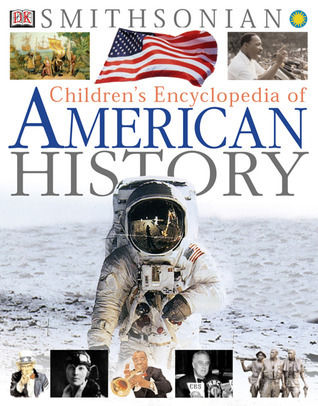
Children's Encyclopedia of American History
Current events discussions are now an integral learning tool in classrooms across the country. With its up-to-the-moment content and engaging style, this major reference book is an essential resource for helping children relate today's news to the events of the past. Focusing on the who, what, when, where, and how, with stunning pictures and a cutting-edge visual style, DK's Children's Encyclopedia of American History is published in conjunction with the Smithsonian Institution to present a completely unique survey of the story of America. Featuring more than 1,000 photographs, plus maps, charts, and profiles of famous Americans, the design of the book has been painstakingly considered to pull in even the most reluctant reader.
304 pages, Hardcover
First published April 1, 2003
About the author
David C. King
125 books8 followersLibrarian Note: There is more than one author in the Goodreads database with this name.
David has written--and published--more than 70 books, primarily nonfiction in American history and biography; there have also been about 20 studies of other cultures, including Taiwan, Rwanda, Bosnia-Herzegovina, and the United Arab Emirates. While most of his books have been for young-adult readers, many have been cross-overs, directed to both adult and young-adult audiences.
A former teacher of both English and History, David has also been a consultant to the State Department of Education, UNICEF, UNESCO, the World Bank, Lincoln Center Institute for the Arts in Education, Public Broadcasting Corporation, and several state departments of education.
"I love to write," he explains, "and my goal is to make encounters with history and culture as interesting, dramatic, and colorful as possible."
In his book on Taiwan, King explained why he felt comfortable writing about countries he has never lived in or even visited: "The important thing in writing about any other culture is to research your subject thoroughly and to develop a sensitivity for the people and their way of life. A good example is the classic study of Japanese culture, The Sword and the Crysanthemum. It was written by Ruth Benedict, who had never been to Japan."
David and his wife Sharon live in the picturesque Berkshires, surrounded by historical sites and cultural events. Sharon provides David with vital research assistance and is also the author of a young-adult novel--A Secret Star--now in its third printing. They have worked together on several projects, including an award-winning history of the Statue of Liberty.
(source: http://authordavidcking.com/index.php)
David has written--and published--more than 70 books, primarily nonfiction in American history and biography; there have also been about 20 studies of other cultures, including Taiwan, Rwanda, Bosnia-Herzegovina, and the United Arab Emirates. While most of his books have been for young-adult readers, many have been cross-overs, directed to both adult and young-adult audiences.
A former teacher of both English and History, David has also been a consultant to the State Department of Education, UNICEF, UNESCO, the World Bank, Lincoln Center Institute for the Arts in Education, Public Broadcasting Corporation, and several state departments of education.
"I love to write," he explains, "and my goal is to make encounters with history and culture as interesting, dramatic, and colorful as possible."
In his book on Taiwan, King explained why he felt comfortable writing about countries he has never lived in or even visited: "The important thing in writing about any other culture is to research your subject thoroughly and to develop a sensitivity for the people and their way of life. A good example is the classic study of Japanese culture, The Sword and the Crysanthemum. It was written by Ruth Benedict, who had never been to Japan."
David and his wife Sharon live in the picturesque Berkshires, surrounded by historical sites and cultural events. Sharon provides David with vital research assistance and is also the author of a young-adult novel--A Secret Star--now in its third printing. They have worked together on several projects, including an award-winning history of the Statue of Liberty.
(source: http://authordavidcking.com/index.php)
Ratings & Reviews
Friends & Following
Create a free account to discover what your friends think of this book!
Community Reviews
Displaying 1 - 29 of 29 reviews

April 7, 2026
Used this as a spine book for our homeschool year to study American History and really enjoyed it!
We spent 1-2 weeks reading each chapter and supplemented with other biographies, memoirs, historical documentaries and the Crash Course US History video series on YouTube. Highly recommend!
We spent 1-2 weeks reading each chapter and supplemented with other biographies, memoirs, historical documentaries and the Crash Course US History video series on YouTube. Highly recommend!
August 14, 2018
One of my favorite book as a kid.
May 14, 2019
Very boring at points has a lot of biased comments throughout the book
April 9, 2021
I loved this book. Definitely a good book to read for a little bit of historical knowledge about America.
May 29, 2021
I read this with my daughter as part of her 3rd and 4th grade curriculum. It is an excellent resource.
Want to Read
June 29, 2013Lisbeth Rider
Encyclopedia: Children’s Encyclopedia of American History
Call number
R
973.03
King
Brief Description
A comprehensive overview of history with period photographs of news events, objects, people; also includes maps and charts. 304pp. Publisher’s Weekly described it as “lavishly illustrated” and School Library Journal termed it “visually enticing and textually fascinating.”
Citation for where the item has been reviewed
Hoffman, M. (2003). The Children’s Encyclopedia of American History. School Library Journal, 38(3), p104. New York, NY: Dorling Kindersley in association with The Smithsonian Institution.. *Note…this book was published ten years ago, which made me question whether or not it would be outdated, but the reviews were so good that I believe I would go on and get it, after first checking with DK to see whether a new edition is in the works, or whether they plan to provide links to online sites that will bring the last section of the content up-to-date. Only the last of the eighteen sections would have changed.
Criteria:
Content Scope
Eighteen chapters from 1000AD to the present.
Accuracy, Authority, and Bias
Produced by DK in association with the Smithsonian Institution, whose reputation supplies the credentials necessary to prove their accuracy and authority. DK has received many awards for both informative text and entertainment value.
Arrangement and Presentation
The eighteen chapters are arranged both chronologically and thematically, with some overlap when necessary. A good feature is 10 four-page spreads with timelines, maps, photos, and sidebars with elaboration of important events and cross-references..
Relation to Similar Works
A comprehensive index plus a chart of key facts about the states and presidents, and full texts of the Constitution, Declaration of Independence, and the Gettysburg Address are features that not all similar texts offer. It is tied more to “themes and strands” than DK’s 2000 Chronicle of America.
Timeliness and Permanence
The reviews and descriptions do not mention any technological connections, such as weblinks which might offer more up-to-date information if something changes before a new edition is published. (This would only be important to the last section titled “A New Millenium.”
Accessibility/Diversity
Critics point out that since the volume is liberally sprinkled with illustrations and photographs, it is not as intimidating to students as similar ones that are heavier on text. Indigenous cultures and the impact of European exploration is a prominent feature.
Cost $27.51
Encyclopedia: Children’s Encyclopedia of American History
Call number
R
973.03
King
Brief Description
A comprehensive overview of history with period photographs of news events, objects, people; also includes maps and charts. 304pp. Publisher’s Weekly described it as “lavishly illustrated” and School Library Journal termed it “visually enticing and textually fascinating.”
Citation for where the item has been reviewed
Hoffman, M. (2003). The Children’s Encyclopedia of American History. School Library Journal, 38(3), p104. New York, NY: Dorling Kindersley in association with The Smithsonian Institution.. *Note…this book was published ten years ago, which made me question whether or not it would be outdated, but the reviews were so good that I believe I would go on and get it, after first checking with DK to see whether a new edition is in the works, or whether they plan to provide links to online sites that will bring the last section of the content up-to-date. Only the last of the eighteen sections would have changed.
Criteria:
Content Scope
Eighteen chapters from 1000AD to the present.
Accuracy, Authority, and Bias
Produced by DK in association with the Smithsonian Institution, whose reputation supplies the credentials necessary to prove their accuracy and authority. DK has received many awards for both informative text and entertainment value.
Arrangement and Presentation
The eighteen chapters are arranged both chronologically and thematically, with some overlap when necessary. A good feature is 10 four-page spreads with timelines, maps, photos, and sidebars with elaboration of important events and cross-references..
Relation to Similar Works
A comprehensive index plus a chart of key facts about the states and presidents, and full texts of the Constitution, Declaration of Independence, and the Gettysburg Address are features that not all similar texts offer. It is tied more to “themes and strands” than DK’s 2000 Chronicle of America.
Timeliness and Permanence
The reviews and descriptions do not mention any technological connections, such as weblinks which might offer more up-to-date information if something changes before a new edition is published. (This would only be important to the last section titled “A New Millenium.”
Accessibility/Diversity
Critics point out that since the volume is liberally sprinkled with illustrations and photographs, it is not as intimidating to students as similar ones that are heavier on text. Indigenous cultures and the impact of European exploration is a prominent feature.
Cost $27.51
Read
June 24, 2013Children's encyclopedia of American history. (2003). New York: Dorling Kindersley Publishing, Inc.
Citation By: Kayla Stewart
Type of Reference: Encyclopedia
Call Number: Ref 031
Content/Scope: This text is targeted towards student 8-14. This text provides information about important events and people from American history. The story actually goes back to about 1000 years to the first European explorer—Lief Eriksson's arrival in North America and follows the story of America up to current events such as September 11. The book refers to important world events that happened through history and what the U.S. was doing during those important events. An appendix includes a list of the U.S. presidents, a chart of key facts about the 50 states, and the texts of the Declaration of Independence, the Constitution and its Amendments, plus the Gettysburg Address. This text will help students who are inquiring about events in America’s past.
Accuracy/Authority/Bias: This text was produced in association with the Smithsonian Institution. DK publishing is a well-known publisher in the education field. Many educators us DK books within their schools and classrooms. The text provided is not in anyway associated with advertising. The text shares facts, not opinions to prevent bias influences.
Arrangement/Presentation: The text is arranged chronologically in 18 chapters. Each chapter has a theme that is related to important events that occurred during the corresponding time in history. The text includes many visual features that engage readers. There is an index to help readers find specific topics quickly.
Relation to Other Works: There are many children’s books that outline American history. This encyclopedia meets requirements for libraries that need a comprehensive geographical reference at an elementary level.
Accessibility/Diversity: This text appeals to a wide age range. The pictures make concepts easy to understand, but the words provide a more in-depth look into the history. Maps, charts, paintings, photographs and pictures make the text engaging for a variety of learning styles with visual being the most prominent.
Cost: $30
Professional Review: Grabarek, D., Minkel, W., & Hofmann, M. R. (2003). Children's Encyclopedia of American History (Book). School Library Journal, 49(10), 104.
Citation By: Kayla Stewart
Type of Reference: Encyclopedia
Call Number: Ref 031
Content/Scope: This text is targeted towards student 8-14. This text provides information about important events and people from American history. The story actually goes back to about 1000 years to the first European explorer—Lief Eriksson's arrival in North America and follows the story of America up to current events such as September 11. The book refers to important world events that happened through history and what the U.S. was doing during those important events. An appendix includes a list of the U.S. presidents, a chart of key facts about the 50 states, and the texts of the Declaration of Independence, the Constitution and its Amendments, plus the Gettysburg Address. This text will help students who are inquiring about events in America’s past.
Accuracy/Authority/Bias: This text was produced in association with the Smithsonian Institution. DK publishing is a well-known publisher in the education field. Many educators us DK books within their schools and classrooms. The text provided is not in anyway associated with advertising. The text shares facts, not opinions to prevent bias influences.
Arrangement/Presentation: The text is arranged chronologically in 18 chapters. Each chapter has a theme that is related to important events that occurred during the corresponding time in history. The text includes many visual features that engage readers. There is an index to help readers find specific topics quickly.
Relation to Other Works: There are many children’s books that outline American history. This encyclopedia meets requirements for libraries that need a comprehensive geographical reference at an elementary level.
Accessibility/Diversity: This text appeals to a wide age range. The pictures make concepts easy to understand, but the words provide a more in-depth look into the history. Maps, charts, paintings, photographs and pictures make the text engaging for a variety of learning styles with visual being the most prominent.
Cost: $30
Professional Review: Grabarek, D., Minkel, W., & Hofmann, M. R. (2003). Children's Encyclopedia of American History (Book). School Library Journal, 49(10), 104.
Read
April 27, 2015Title: David, C. (2014) Children’s encyclopedia of american history.r New York, NY: DK Publishing.
Citation by: Terri Skipworth
Type of Reference: Encyclopedia
Call number: 973.03 Dav
Grade Level: Elementary
Content/Scope:
The Children’s Encyclopedia of American History was written in collaboration with the Smithsonian Institute and includes more than 750 photographs, maps, art etc… The content covers the entirety of American history including the events leading up to the development of the United States to present day. This book is intended for children 8-17 years old and consists 320 pages of text and full color illustrations.
Accuracy/Authority/Bias:
DK Publishing is a division of Random House Publishing which was established in 1974. DK publishes non-fiction for adults and children that are highly visual. DK Publishing produces both print and digital titles that are highly reviewed from such agencies as School Library Journal and Booklist.
Arrangement/Presentation:
This book is a hardcover book with 320 pages. It consists of text and full color illustrations. The book occurs chronologically with each chapter starting out with a timeline and an overview of the period.
Relation to other works:
This book is a comprehensive reference guide to the particular subject of American History. The book is in encyclopedia form and provides basic information on each topic relating to American History.
Accessibility/Diversity:
This book would be a great resource for students ages 8 and up and with diverse backgrounds and abilities. The illustrations and graphics give the content material perspective and organize the information so that it is easier to understand.
Cost: 29.99
Review: McGuire, B. (2015). Children’s encyclopedia of american history. School Library Journal, retrieved from: http://www.slj.com/2015/02/reviews/re....
Citation by: Terri Skipworth
Type of Reference: Encyclopedia
Call number: 973.03 Dav
Grade Level: Elementary
Content/Scope:
The Children’s Encyclopedia of American History was written in collaboration with the Smithsonian Institute and includes more than 750 photographs, maps, art etc… The content covers the entirety of American history including the events leading up to the development of the United States to present day. This book is intended for children 8-17 years old and consists 320 pages of text and full color illustrations.
Accuracy/Authority/Bias:
DK Publishing is a division of Random House Publishing which was established in 1974. DK publishes non-fiction for adults and children that are highly visual. DK Publishing produces both print and digital titles that are highly reviewed from such agencies as School Library Journal and Booklist.
Arrangement/Presentation:
This book is a hardcover book with 320 pages. It consists of text and full color illustrations. The book occurs chronologically with each chapter starting out with a timeline and an overview of the period.
Relation to other works:
This book is a comprehensive reference guide to the particular subject of American History. The book is in encyclopedia form and provides basic information on each topic relating to American History.
Accessibility/Diversity:
This book would be a great resource for students ages 8 and up and with diverse backgrounds and abilities. The illustrations and graphics give the content material perspective and organize the information so that it is easier to understand.
Cost: 29.99
Review: McGuire, B. (2015). Children’s encyclopedia of american history. School Library Journal, retrieved from: http://www.slj.com/2015/02/reviews/re....

Read
November 22, 2015King, D.C. (2014). Children's Encyclopedia of American History. New York: DK Publishing.
Citation by: Donna Johnson
Type of Reference: Encyclopedia
Call number: Ref 973.03
Content/Scope: This encyclopedia's target audience is students in the 3rd grade and up. It contains 320 pages divided into 18 chapters, with 750 images. The content covers events in American history from the exploration of the New World to 2013, including recent events such as the Boston Marathon bombing, the War on Terror, and Hurricane Katrina. This is a visually appealing volume that would give students basic information on a variety of topics from nearly any time in US history.
Accuracy/Authority/Bias: Dorling Kindersley (DK) Publishing is a subsidiary of Penguin Random House. The company has offices worldwide and publishes in multiple countries and languages. Major brands such as WWE, Lego, and the Star Wars franchise choose DK to publish their books, showing their trust in DK's accuracy. DK has been in business for more than 40 years.
Arrangement/Presentation: The book is arranged chronologically, with 18 chapters dividing its 320 pages. Each chapter begins with a timeline and overview of the period it covers. The book is large and visually appealing with 750 images.
Relation to other works: This is a good source for an overview of the complete history of America. Some U.S. history encyclopedias focus on a specific, much shorter time period, limiting their usefulness for student information needs.
Accessibility/Diversity: A larger font and many images make this book a good choice for visual learners. The topics covered include those of interest to any gender or ethnic background.
Cost: $29.99
Professional Review: McGuire, B. (2015). Children's Encyclopedia of American History. School Library Journal, 61(2). Retrieved from http://www.slj.com/2015/02/reviews/re....
Citation by: Donna Johnson
Type of Reference: Encyclopedia
Call number: Ref 973.03
Content/Scope: This encyclopedia's target audience is students in the 3rd grade and up. It contains 320 pages divided into 18 chapters, with 750 images. The content covers events in American history from the exploration of the New World to 2013, including recent events such as the Boston Marathon bombing, the War on Terror, and Hurricane Katrina. This is a visually appealing volume that would give students basic information on a variety of topics from nearly any time in US history.
Accuracy/Authority/Bias: Dorling Kindersley (DK) Publishing is a subsidiary of Penguin Random House. The company has offices worldwide and publishes in multiple countries and languages. Major brands such as WWE, Lego, and the Star Wars franchise choose DK to publish their books, showing their trust in DK's accuracy. DK has been in business for more than 40 years.
Arrangement/Presentation: The book is arranged chronologically, with 18 chapters dividing its 320 pages. Each chapter begins with a timeline and overview of the period it covers. The book is large and visually appealing with 750 images.
Relation to other works: This is a good source for an overview of the complete history of America. Some U.S. history encyclopedias focus on a specific, much shorter time period, limiting their usefulness for student information needs.
Accessibility/Diversity: A larger font and many images make this book a good choice for visual learners. The topics covered include those of interest to any gender or ethnic background.
Cost: $29.99
Professional Review: McGuire, B. (2015). Children's Encyclopedia of American History. School Library Journal, 61(2). Retrieved from http://www.slj.com/2015/02/reviews/re....
April 26, 2015
King, D. C. (2014). Children’s encyclopedia of American history. New York, NY: Dorling Kindersley (DK).
Citation by: Bonnie Blevins
Type of Reference: Encyclopedia
Call Number: Ref 973
Content/Scope: This encyclopedia is targeted toward children 9-12. This book was written with the help of the Smithsonian Institute so it contains accurate information with over 750 photographs, additional maps, charts, and specific information on the states.
Accuracy/Authority/Bias: Dorling Kindersley (DK) was founded in 1974. It is the world’s leading illustrated reference publisher.
Arrangement/Presentation: This encyclopedia is arranged chronologically from the year 1000 to the year 2014. It contains articles, pictures, and maps about people, places, and events from America’s history.
Relation to other works: Even though there are a few different types of books listed under 973 in the library, the newest ones are from 2001. Many cover a particular part of American history such as submarines or being young and black. This book will give the students an overall look at America’s history and the different events which have shaped our country.
Accessibility/Diversity: This encyclopedia will appeal to every student in the school due to the vast number of photographs, maps, and other visuals. The text and pictures are directly related so struggling readers will be able to locate information easily. Since the information covers such a wide span of time, all students should find it relevant to their backgrounds and lives.
Cost: $29.99
Professional Review:
McGuire, B. (2015). Children’s encyclopedia of American history. School Library Journal, 61(2), 56.
Citation by: Bonnie Blevins
Type of Reference: Encyclopedia
Call Number: Ref 973
Content/Scope: This encyclopedia is targeted toward children 9-12. This book was written with the help of the Smithsonian Institute so it contains accurate information with over 750 photographs, additional maps, charts, and specific information on the states.
Accuracy/Authority/Bias: Dorling Kindersley (DK) was founded in 1974. It is the world’s leading illustrated reference publisher.
Arrangement/Presentation: This encyclopedia is arranged chronologically from the year 1000 to the year 2014. It contains articles, pictures, and maps about people, places, and events from America’s history.
Relation to other works: Even though there are a few different types of books listed under 973 in the library, the newest ones are from 2001. Many cover a particular part of American history such as submarines or being young and black. This book will give the students an overall look at America’s history and the different events which have shaped our country.
Accessibility/Diversity: This encyclopedia will appeal to every student in the school due to the vast number of photographs, maps, and other visuals. The text and pictures are directly related so struggling readers will be able to locate information easily. Since the information covers such a wide span of time, all students should find it relevant to their backgrounds and lives.
Cost: $29.99
Professional Review:
McGuire, B. (2015). Children’s encyclopedia of American history. School Library Journal, 61(2), 56.

January 9, 2010
I have to admit that I don't know my history very well. So I thought this Children's Encyclopedia of American History would be a fun way to review history I learned in school as well as learn some new facts about American History.
All the pictures in the book made history come to life for me. The book acts more like an overview or summary of American History. It was a good basic book to start out with for me. It explained everything in a simple way (but didn't cover everything or go into depth). Each time I read about a topic that interested me, I wrote it down so that I can read more about that topic at a later stage.
I did find a few spelling mistakes here and there in the book.
The little blurb in the book about the Mormons was incorrect. It's not "Joseph Smith's Mormon Church," but rather, "The Church of Jesus Christ of Latter-Day Saints" - or in other words, Jesus Christ's church. Members of the church worship God the Father, and His Son Jesus Christ and not Joseph Smith.
Members of the church belief that Joseph Smith was called to be a prophet and that he re-established the Church of Jesus Christ.
Also, Joseph Smith and his brother Hyrum were martyred (shot by a mob while they were locked in a jail on false charges) (and not "killed in fights" like the books says).
Lastly, I wasn't aware that the Mormons invented the "roadometer" to measure how far they had traveled. I tried to look for more information on that but couldn't find anything. So I'm not 100% sure on that fact.
All the pictures in the book made history come to life for me. The book acts more like an overview or summary of American History. It was a good basic book to start out with for me. It explained everything in a simple way (but didn't cover everything or go into depth). Each time I read about a topic that interested me, I wrote it down so that I can read more about that topic at a later stage.
I did find a few spelling mistakes here and there in the book.
The little blurb in the book about the Mormons was incorrect. It's not "Joseph Smith's Mormon Church," but rather, "The Church of Jesus Christ of Latter-Day Saints" - or in other words, Jesus Christ's church. Members of the church worship God the Father, and His Son Jesus Christ and not Joseph Smith.
Members of the church belief that Joseph Smith was called to be a prophet and that he re-established the Church of Jesus Christ.
Also, Joseph Smith and his brother Hyrum were martyred (shot by a mob while they were locked in a jail on false charges) (and not "killed in fights" like the books says).
Lastly, I wasn't aware that the Mormons invented the "roadometer" to measure how far they had traveled. I tried to look for more information on that but couldn't find anything. So I'm not 100% sure on that fact.
Want to Read
June 27, 2013King, D. (2003). The children’s encyclopedia of American history. New York, NY: Dorling Kindersley Publishing.
Type of Reference: Encyclopedia.
Citation by: Robbie Travis
Content/Scope: This text focuses on the who, what, when, where, and how of history. Written for Grades 3 and up, eighteen chapters span American history from the year 1000 to the year 2002. Each chapter includes a few paragraphs of text, a graph, an overview of the time period, and a timeline.
Accuracy/Authority/Bias: This book was published in conjunction with the Smithsonian Institute. The author is a freelance writer and educational consultant who has written more than 30 books and received numerous awards. DK Publishing is world-renowned for its distinctive books that inform and entertain readers.
Arrangement/Presentation: The book is illustrated with period photographs, paintings and drawings, as well as maps and charts. An appendix includes a list of U.S. presidents, key facts about U.S. states, and the complete texts of the Declaration of Independence, the Constitution, and the Gettysburg Address.
Relation to Other Works: Numerous similar works exist. However, this volume is relatively up-to-date and is written specifically for the elementary level reader. In addition, it is inexpensive for a works of historical text. Therefore, it would be a good choice for the elementary school media center.
Cost: $29.99.
Professional Review:
Hoffman, M. (2003). Reference review. School Library Journal, 38 (3), 104.
Type of Reference: Encyclopedia.
Citation by: Robbie Travis
Content/Scope: This text focuses on the who, what, when, where, and how of history. Written for Grades 3 and up, eighteen chapters span American history from the year 1000 to the year 2002. Each chapter includes a few paragraphs of text, a graph, an overview of the time period, and a timeline.
Accuracy/Authority/Bias: This book was published in conjunction with the Smithsonian Institute. The author is a freelance writer and educational consultant who has written more than 30 books and received numerous awards. DK Publishing is world-renowned for its distinctive books that inform and entertain readers.
Arrangement/Presentation: The book is illustrated with period photographs, paintings and drawings, as well as maps and charts. An appendix includes a list of U.S. presidents, key facts about U.S. states, and the complete texts of the Declaration of Independence, the Constitution, and the Gettysburg Address.
Relation to Other Works: Numerous similar works exist. However, this volume is relatively up-to-date and is written specifically for the elementary level reader. In addition, it is inexpensive for a works of historical text. Therefore, it would be a good choice for the elementary school media center.
Cost: $29.99.
Professional Review:
Hoffman, M. (2003). Reference review. School Library Journal, 38 (3), 104.

May 17, 2014
Children's Encyclopedia of American History is a valuable resource. The more I reference or read it, the more I like it.
Even if we weren't homeschooling, I would want to own this book to supplement learning American history. Primary source illustrations and brief text provide an engaging overview. Maps and photographs are typical of the format and publisher, but what I particularly liked are the primary source illustrations. Artwork, hand bills, line drawings (one by John Smith, one by Daniel Boone in early chapters), models of ships and photographs of traditional housing provide not only data, but a visual feel for a time period. The text ends with the September 11th attacks.
Although somewhat biased in places (there is a somewhat disproportionate mention of women and the environment), overall the text captures important people and events with brevity and works impressively to avoid partisanship. The occasional paragraph doesn't ring true, but overall this is a solid work, and you will be hard pressed to find much better (unless a biased work completely in favor of your opinions is what you are seeking).
Appendices continue the pattern of excellence in presentation combined with commitment to primary sources. Presidents of the United States, Facts about the USA, and a state by state chart are followed by The Declaration of Independence and the Constitution (including the Bill of Rights) and the Gettyburg Address.
Highly recommended for students of all ages seeking to understand the timeline of American history.
Even if we weren't homeschooling, I would want to own this book to supplement learning American history. Primary source illustrations and brief text provide an engaging overview. Maps and photographs are typical of the format and publisher, but what I particularly liked are the primary source illustrations. Artwork, hand bills, line drawings (one by John Smith, one by Daniel Boone in early chapters), models of ships and photographs of traditional housing provide not only data, but a visual feel for a time period. The text ends with the September 11th attacks.
Although somewhat biased in places (there is a somewhat disproportionate mention of women and the environment), overall the text captures important people and events with brevity and works impressively to avoid partisanship. The occasional paragraph doesn't ring true, but overall this is a solid work, and you will be hard pressed to find much better (unless a biased work completely in favor of your opinions is what you are seeking).
Appendices continue the pattern of excellence in presentation combined with commitment to primary sources. Presidents of the United States, Facts about the USA, and a state by state chart are followed by The Declaration of Independence and the Constitution (including the Bill of Rights) and the Gettyburg Address.
Highly recommended for students of all ages seeking to understand the timeline of American history.
Read
May 4, 2014King, D. C. (2003). Children's encyclopedia of American history. New York: DK in association with the Smithsonian Institution.
Review: https://www.goodreads.com/book/show/7...
Type of Reference: Encyclopedia
Content/Scope: This major reference book is an essential resource for helping children relate today's news to the events of the past. Focusing on the who, what, when, where, and how of American History.
Accuracy/Authority/Bias: The author has written--and published--more than 70 books, primarily nonfiction in American history and biography. A former teacher of both English and History, he has also been a consultant to the State Department of Education, UNICEF, UNESCO, the World Bank, Lincoln Center Institute for the Arts in Education, Public Broadcasting Corporation, and several state departments of education.
Arrangement/Presentation: This book features more than 1,000 photographs, plus maps, charts, and profiles of famous Americans.
Relation to similar works: One set of World Book Encyclopedias are present; however, none particularly on American History.
Timeliness/Permanence: This encyclopedia will be appropriate for many years as it refers to the history of America.
Accessibility/Diversity: The photographs, maps, charts, and other features will be helpful to all students. Goodreads.com states it has been known to pull in the most reluctant reader.
Cost: $25.64
Review: https://www.goodreads.com/book/show/7...
Type of Reference: Encyclopedia
Content/Scope: This major reference book is an essential resource for helping children relate today's news to the events of the past. Focusing on the who, what, when, where, and how of American History.
Accuracy/Authority/Bias: The author has written--and published--more than 70 books, primarily nonfiction in American history and biography. A former teacher of both English and History, he has also been a consultant to the State Department of Education, UNICEF, UNESCO, the World Bank, Lincoln Center Institute for the Arts in Education, Public Broadcasting Corporation, and several state departments of education.
Arrangement/Presentation: This book features more than 1,000 photographs, plus maps, charts, and profiles of famous Americans.
Relation to similar works: One set of World Book Encyclopedias are present; however, none particularly on American History.
Timeliness/Permanence: This encyclopedia will be appropriate for many years as it refers to the history of America.
Accessibility/Diversity: The photographs, maps, charts, and other features will be helpful to all students. Goodreads.com states it has been known to pull in the most reluctant reader.
Cost: $25.64
May 8, 2015
Children's Encyclopedia of American History is a valuable resource. Even if we weren't homeschooling, I would want to own this book to supplement learning American history. Primary source illustrations and brief text provide an engaging overview. Maps and photographs are typical of the format and publisher, but what I particularly liked are the primary source illustrations. Artwork, hand bills, line drawings (one by John Smith, one by Daniel Boone in early chapters), models of ships and photographs of traditional housing provide not only data, but a visual feel for a time period.
Although somewhat biased in places (there is a somewhat disproportionate mention of women and the environment as well as disproportionate praise of FDR), overall the text captures important people and events with brevity. Even though the occasional paragraph doesn't ring true, overall this is a solid work, and you will be hard pressed to find much better (unless a biased work completely in favor of your opinions is what you are seeking).
Appendices continue the pattern of excellence in presentation combined with commitment to primary sources. Presidents of the United States and Facts about the United States are followed by The Declaration of Independence and the Constitution, including the Bill of Rights.
Highly recommended for students of all ages seeking to understand the timeline of American history.
Although somewhat biased in places (there is a somewhat disproportionate mention of women and the environment as well as disproportionate praise of FDR), overall the text captures important people and events with brevity. Even though the occasional paragraph doesn't ring true, overall this is a solid work, and you will be hard pressed to find much better (unless a biased work completely in favor of your opinions is what you are seeking).
Appendices continue the pattern of excellence in presentation combined with commitment to primary sources. Presidents of the United States and Facts about the United States are followed by The Declaration of Independence and the Constitution, including the Bill of Rights.
Highly recommended for students of all ages seeking to understand the timeline of American history.
Read
May 1, 2015Citation:
Children’s Encyclopedia of American History. (2015). New York: Dorling Kindersley Publishing, Inc.
Citation by:
Amelia Ford
Type of reference:
Encyclopedia
Call Number:
Ref 900
Content/Scope:
This title is an essential resource for understanding American history and the events that have shaped the creation of the United States. It has more than 750 photographs and art pieces - plus extensive maps, charts, and state-specific information.
Accuracy/Authority/Bias:
This book was created in collaboration with the Smithsonian Institution and has accurate historical information.
Arrangement/Presentation:
Arranged chronologically into 18 chapters, each section begins with a time line and an overview of the period.
Relation to other works:
This title goes well with the collection, especially those references having to do with American History. It can be specifically used in a social studies classroom.
Accessibility/Diversity:
The book has increased in size, allowing for larger images, font, and charts, and the color quality is enhanced as well. It is visually attractive and can be a great resource for students that are struggling understanding history and factual information.
Cost:
29.99
Professional Review:
Mcguire, B. (2015). Children's Encyclopedia of American History. School Library Journal 61(2), 56
Children’s Encyclopedia of American History. (2015). New York: Dorling Kindersley Publishing, Inc.
Citation by:
Amelia Ford
Type of reference:
Encyclopedia
Call Number:
Ref 900
Content/Scope:
This title is an essential resource for understanding American history and the events that have shaped the creation of the United States. It has more than 750 photographs and art pieces - plus extensive maps, charts, and state-specific information.
Accuracy/Authority/Bias:
This book was created in collaboration with the Smithsonian Institution and has accurate historical information.
Arrangement/Presentation:
Arranged chronologically into 18 chapters, each section begins with a time line and an overview of the period.
Relation to other works:
This title goes well with the collection, especially those references having to do with American History. It can be specifically used in a social studies classroom.
Accessibility/Diversity:
The book has increased in size, allowing for larger images, font, and charts, and the color quality is enhanced as well. It is visually attractive and can be a great resource for students that are struggling understanding history and factual information.
Cost:
29.99
Professional Review:
Mcguire, B. (2015). Children's Encyclopedia of American History. School Library Journal 61(2), 56
Read
November 23, 2015King, D. C. (2014). The children’s encyclopedia of american history. New York, NY: Dorling Kindersley Publishing.
Citation by: Teresa Kennedy
Type of Reference: Encyclopedia
Call Number: REF 973.03
Content/Scope: This is Reference Book targeted to elementary students as resource to help learn about the events in American History.
Accuracy/Authority/Bias: The author has written multiple books about American History.
Arrangement/Presentation: This book is arranged in sections and include photographs, maps, charts, and profiles of famous Americans.
Relation to other works: There are many children's encyclopedias available; this encyclopedia meets requirements for libraries that need a comprehensive reference at an elementary level.
Accessibility/Diversity: The pictures, maps, charts, and profiles makes this book desirable to all elementary students.
Cost: $29.99
Professional Review: McGuire, B. (2015). The children’s encyclopedia of american history. School Library Journal, 61(2), 56.
Citation by: Teresa Kennedy
Type of Reference: Encyclopedia
Call Number: REF 973.03
Content/Scope: This is Reference Book targeted to elementary students as resource to help learn about the events in American History.
Accuracy/Authority/Bias: The author has written multiple books about American History.
Arrangement/Presentation: This book is arranged in sections and include photographs, maps, charts, and profiles of famous Americans.
Relation to other works: There are many children's encyclopedias available; this encyclopedia meets requirements for libraries that need a comprehensive reference at an elementary level.
Accessibility/Diversity: The pictures, maps, charts, and profiles makes this book desirable to all elementary students.
Cost: $29.99
Professional Review: McGuire, B. (2015). The children’s encyclopedia of american history. School Library Journal, 61(2), 56.
November 19, 2016
DK books are awesome and this is no exception. Don't care one whit that it is children's encyclopedia and that I am 55 soon.
The history of the US in some 300 pages, hitting the highlights and with beautiful page layouts and photographs.
Some funny coincidences while reading this - first one had to do with the industrial age and a picture of a "Bessemer Converter" used to melt iron ore for steelmaking.
After reading about it - it showed up as a clue in a crossword I was doing the next week!
Also, after wondering where the magazine on my table got its name, there was a whole blurb about "Mother Jones" an Irish labor organizer...
Learn something new every day - picked it up at a book sale on "bag day" and what a find it was. A keeper.
The history of the US in some 300 pages, hitting the highlights and with beautiful page layouts and photographs.
Some funny coincidences while reading this - first one had to do with the industrial age and a picture of a "Bessemer Converter" used to melt iron ore for steelmaking.
After reading about it - it showed up as a clue in a crossword I was doing the next week!
Also, after wondering where the magazine on my table got its name, there was a whole blurb about "Mother Jones" an Irish labor organizer...
Learn something new every day - picked it up at a book sale on "bag day" and what a find it was. A keeper.

March 22, 2011
Okay, so I didn't read it cover to cover but...it gives you very good snapshots of important events in American History. I liked it both for me, since I did not pay very much attention to the subject in school, and for my kids who will continue to benefit from good resource books throughout their school careers. I will be buying a copy for our personal library soon.

June 15, 2017
It is an encyclopedia, so it is hard to be excited about reading it. However, this one is laid out nicely with timelines and illustrations that make it fun to learn about American History.
We have only made it through the first half with our 3rd grade studies and will pick up the rest and update our review after next year's studies.
We have only made it through the first half with our 3rd grade studies and will pick up the rest and update our review after next year's studies.
August 5, 2019
As far as an encyclopedia goes, this one is pretty good. We are using it over two years so have only gotten through half so far. Nice two page spreads with illustrations or photos of historical documents/paintings/posters from the time period. A timeline at the beginning of each section helps you put things in perspective.
Finished second half. Still impressed by extra illustrations and content.
Finished second half. Still impressed by extra illustrations and content.

June 18, 2016
We studied this book for two years as part of our homeschool curriculum. Interesting, engaging, and well illustrated. I also found it to be fair and balanced. The vocabulary is complicated (without enough definitions) for children, and not as well done as other encyclopedias I've used.
April 20, 2019
This is an awesome book for children and adults who want to have a n overview on American history. Lots of pictures well structured. I think every American home would benefit from owning this book. I borrowed it from library but will be buying it for my family.

Currently Reading
December 5, 2015We aren't too far into this one yet. We'll be using it all year for history.
Read
August 12, 2016A good way to introduce American History

June 1, 2017
So glad to have completed this as a family! I learned almost as much as the kids! Very thorough.

Read
July 30, 2018An excellent book for a personal library to use as a reference for American History.

February 10, 2021
Brief intro to American history. Gives just enough information for you to be part of the discussion and not feel left out when friends are talking history.

January 19, 2015
i read this when i am bored because it is interesting
Displaying 1 - 29 of 29 reviews