

What do you think?

Lodore: Mary Shelley
Summary (differentiated book):
- Original Edition
- Book contains detailed biography of author
- Includes photos/illustrations of the author
Book details:
Lodore
The central story revolves around the fortunes of the wife and daughter of the title character, Lord Lodore, who dies in a duel.
About The Author
Mary Shelley (née Wollstonecraft Godwin 1797–1851) was an English novelist and travel writer best known for her Gothic book Frankenstein: or, The Modern Prometheus (1818).
She was married to the Romantic poet and philosopher Percy Bysshe Shelley, her father was the political philosopher William Godwin, and her mother was the philosopher and feminist Mary Wollstonecraft.
She died at age 53 after being diagnosed with a brain tumour.
Her novels include the historical work Valperga and Perkin Warbeck, The Last Man, and her final two novels, Lodore and Falkner. Her travel books included Rambles in Germany and Italy.
- Original Edition
- Book contains detailed biography of author
- Includes photos/illustrations of the author
Book details:
Lodore
The central story revolves around the fortunes of the wife and daughter of the title character, Lord Lodore, who dies in a duel.
About The Author
Mary Shelley (née Wollstonecraft Godwin 1797–1851) was an English novelist and travel writer best known for her Gothic book Frankenstein: or, The Modern Prometheus (1818).
She was married to the Romantic poet and philosopher Percy Bysshe Shelley, her father was the political philosopher William Godwin, and her mother was the philosopher and feminist Mary Wollstonecraft.
She died at age 53 after being diagnosed with a brain tumour.
Her novels include the historical work Valperga and Perkin Warbeck, The Last Man, and her final two novels, Lodore and Falkner. Her travel books included Rambles in Germany and Italy.
491 pages, Kindle Edition
First published January 1, 1835
About the author
Mary Wollstonecraft Shelley
2,299 books9,293 followersMary Shelley (née Mary Wollstonecraft Godwin, often known as Mary Wollstonecraft Shelley) was an English novelist, short story writer, dramatist, essayist, biographer, travel writer, and editor of the works of her husband, Romantic poet and philosopher Percy Bysshe Shelley. She was the daughter of the political philosopher William Godwin and the writer, philosopher, and feminist Mary Wollstonecraft.
Mary Shelley was taken seriously as a writer in her own lifetime, though reviewers often missed the political edge to her novels. After her death, however, she was chiefly remembered only as the wife of Percy Bysshe Shelley and as the author of Frankenstein. It was not until 1989, when Emily Sunstein published her prizewinning biography Mary Shelley: Romance and Reality, that a full-length scholarly biography analyzing all of Shelley's letters, journals, and works within their historical context was published.
The well-meaning attempts of Mary Shelley's son and daughter-in-law to "Victorianise" her memory through the censoring of letters and biographical material contributed to a perception of Mary Shelley as a more conventional, less reformist figure than her works suggest. Her own timid omissions from Percy Shelley's works and her quiet avoidance of public controversy in the later years of her life added to this impression.
The eclipse of Mary Shelley's reputation as a novelist and biographer meant that, until the last thirty years, most of her works remained out of print, obstructing a larger view of her achievement. She was seen as a one-novel author, if that. In recent decades, however, the republication of almost all her writings has stimulated a new recognition of its value. Her voracious reading habits and intensive study, revealed in her journals and letters and reflected in her works, is now better appreciated. Shelley's recognition of herself as an author has also been recognized; after Percy's death, she wrote about her authorial ambitions: "I think that I can maintain myself, and there is something inspiriting in the idea". Scholars now consider Mary Shelley to be a major Romantic figure, significant for her literary achievement and her political voice as a woman and a liberal.
Mary Shelley was taken seriously as a writer in her own lifetime, though reviewers often missed the political edge to her novels. After her death, however, she was chiefly remembered only as the wife of Percy Bysshe Shelley and as the author of Frankenstein. It was not until 1989, when Emily Sunstein published her prizewinning biography Mary Shelley: Romance and Reality, that a full-length scholarly biography analyzing all of Shelley's letters, journals, and works within their historical context was published.
The well-meaning attempts of Mary Shelley's son and daughter-in-law to "Victorianise" her memory through the censoring of letters and biographical material contributed to a perception of Mary Shelley as a more conventional, less reformist figure than her works suggest. Her own timid omissions from Percy Shelley's works and her quiet avoidance of public controversy in the later years of her life added to this impression.
The eclipse of Mary Shelley's reputation as a novelist and biographer meant that, until the last thirty years, most of her works remained out of print, obstructing a larger view of her achievement. She was seen as a one-novel author, if that. In recent decades, however, the republication of almost all her writings has stimulated a new recognition of its value. Her voracious reading habits and intensive study, revealed in her journals and letters and reflected in her works, is now better appreciated. Shelley's recognition of herself as an author has also been recognized; after Percy's death, she wrote about her authorial ambitions: "I think that I can maintain myself, and there is something inspiriting in the idea". Scholars now consider Mary Shelley to be a major Romantic figure, significant for her literary achievement and her political voice as a woman and a liberal.
Ratings & Reviews
Friends & Following
Create a free account to discover what your friends think of this book!
Community Reviews
Displaying 1 - 30 of 41 reviews

October 17, 2023
It took be quite a lot of days to read but it was definitely an interesting book to read both on the social commentary and the story as a whole.
I'm very glad to have finished a classic as I hadn't read as much of that this year and struggle a bit to get used to the way it's written.
I'm very glad to have finished a classic as I hadn't read as much of that this year and struggle a bit to get used to the way it's written.

August 3, 2020
It's unfortunate that today Mary Shelley is known only as the author of Frankenstein or the wife of Percy Bysshe Shelley. She was a tremendously popular and prolific writer in her day. This very long novel was written towards the end of her life. The summary on wikipedia is great:
"Shelley was "profoundly committed to an ethic of cooperation, mutual dependence, and self-sacrifice".[188] In Lodore, for example, the central story follows the fortunes of the wife and daughter of the title character, Lord Lodore, who is killed in a duel at the end of the first volume, leaving a trail of legal, financial, and familial obstacles for the two "heroines" to negotiate. The novel is engaged with political and ideological issues, particularly the education and social role of women.[189] It dissects a patriarchal culture that separated the sexes and pressured women into dependence on men. In the view of Shelley scholar Betty T. Bennett, "the novel proposes egalitarian educational paradigms for women and men, which would bring social justice as well as the spiritual and intellectual means by which to meet the challenges life invariably brings".
Having just narrated the first ever audiobook of this novel, and therefore having done several close reads/listens as I prepare, record and edit, I can say that this novel has so much depth of emotion, philosophy, beautiful language that one read or listen will never exhaust the profound talent of this truly gifted writer.
"Shelley was "profoundly committed to an ethic of cooperation, mutual dependence, and self-sacrifice".[188] In Lodore, for example, the central story follows the fortunes of the wife and daughter of the title character, Lord Lodore, who is killed in a duel at the end of the first volume, leaving a trail of legal, financial, and familial obstacles for the two "heroines" to negotiate. The novel is engaged with political and ideological issues, particularly the education and social role of women.[189] It dissects a patriarchal culture that separated the sexes and pressured women into dependence on men. In the view of Shelley scholar Betty T. Bennett, "the novel proposes egalitarian educational paradigms for women and men, which would bring social justice as well as the spiritual and intellectual means by which to meet the challenges life invariably brings".
Having just narrated the first ever audiobook of this novel, and therefore having done several close reads/listens as I prepare, record and edit, I can say that this novel has so much depth of emotion, philosophy, beautiful language that one read or listen will never exhaust the profound talent of this truly gifted writer.

March 29, 2016
Lodore is often reviewed as an Austen-like manners novel with a dark side.
There is no dark side.
People assume that because Mary Shelley wrote it, it must have the Gothic flair of Frankenstein that made her famous.
No.
This is just a story about people who have gotten involved in somewhat complicated relationships and failed to solve their problems quickly due to the customs of the day, some busy bodies, and a lack of clear communication skills.
If you love Jane Austen, you'll love this book. If you're looking for a "darker" Austen tale, check out Northhanger Abby--the book where Austen attempts the Gothic styling made famous by Shelley.
There is no dark side.
People assume that because Mary Shelley wrote it, it must have the Gothic flair of Frankenstein that made her famous.
No.
This is just a story about people who have gotten involved in somewhat complicated relationships and failed to solve their problems quickly due to the customs of the day, some busy bodies, and a lack of clear communication skills.
If you love Jane Austen, you'll love this book. If you're looking for a "darker" Austen tale, check out Northhanger Abby--the book where Austen attempts the Gothic styling made famous by Shelley.

January 8, 2023
through the complexity of the diverse range of women she writes in lodore, mary shelley creates the perfect picture of womanhood and explores the lives of misunderstood women, giving them the humanity and redemption they so thoroughly deserve. a man could not have written what shelley has written in lodore - only a woman could achieve such an accurate portrayal of life as a woman is like.
whilst the male characters are written in an empathetic manner, there is a clear divide between them and the women of the novel. it is made clear that they cannot understand the complexities of women and see them as simple creatures - which shelley outright rejects through having these misconceptions be the opposite of what the women think.
she also rejects the concept of 'bad women', and promotes the idea that 'bad women' are created by the society around them that wishes to oppress them from their birth and then villainizes them for reacting to that oppression in a way that does not benefit them.
all of the women in lodore are incredibly complex and completely accurate portrayals of real people - no character is one dimensional and all have layers that are explicitly stated throughout the book. even clorinda saville, who is portrayed to be villainous, is incredibly human in her reasonings for her actions and a shockingly accurate depiction of what has now been defined as borderline personality disorder. (or at least, that is my interpretation- if you dont have the same interpretation its totally fine 💗)
in conclusion i have only praise for this magnificent book. if you are debating reading this - READ IT !!! its like dorian gray but instead of having to bring in supernatural premises the horror story of the decline of youth is just, being a woman 😭 (i also love dorian gray dont get me wrong its also a wonderful book!)
mary shelley possesses a power over the pen that none can understand.
whilst the male characters are written in an empathetic manner, there is a clear divide between them and the women of the novel. it is made clear that they cannot understand the complexities of women and see them as simple creatures - which shelley outright rejects through having these misconceptions be the opposite of what the women think.
she also rejects the concept of 'bad women', and promotes the idea that 'bad women' are created by the society around them that wishes to oppress them from their birth and then villainizes them for reacting to that oppression in a way that does not benefit them.
all of the women in lodore are incredibly complex and completely accurate portrayals of real people - no character is one dimensional and all have layers that are explicitly stated throughout the book. even clorinda saville, who is portrayed to be villainous, is incredibly human in her reasonings for her actions and a shockingly accurate depiction of what has now been defined as borderline personality disorder. (or at least, that is my interpretation- if you dont have the same interpretation its totally fine 💗)
in conclusion i have only praise for this magnificent book. if you are debating reading this - READ IT !!! its like dorian gray but instead of having to bring in supernatural premises the horror story of the decline of youth is just, being a woman 😭 (i also love dorian gray dont get me wrong its also a wonderful book!)
mary shelley possesses a power over the pen that none can understand.

August 2, 2023
Looks at life, love and the effects of miscommunication (the hated yet relatable trope). Not just with love interests but also the effect it can have on a family.

February 6, 2023
This is emo not goth. Someone described Jane Austen novels as "just a bunch of rich people visiting each other's houses." This is definitely that genre of book.

January 3, 2025
Lodore is the most traditional 19th century novel I've read by Mary Shelley so far and still it's far from boring or derivative. Her lesser known works have been really interesting for me. This, as well as The Last Man, managed to surprise me both in details as well as in the general direction of the plot. She also managed to make me interested in and care for her characters, though you could argue Ethel is far too perfect. I wish there was more time in the end to explore changes and character relationships, but I can accept the brevity of the ending since I enjoyed the overal pacing and my reading experience in general a lot.

February 21, 2025
kind of the most boring book of all time. BOOOO edward and ethel and their “we’re so poor but it’s okay because we love each other” diatribes. best part was lodore smacking that guy for calling him a coward for running out on the duel that he very much did run out on and then lodore proceeding to die in the ensuing duel

Read
April 17, 2026Mary Shelley. It is amazing how you write a book. All the men suck so much and are criticizing each other for sucking, all while society encourages them to continue to suck. Society teaches women they must cater to them and also be dependent on them. I will shoot England with a laser.

December 26, 2024
soo much detail, very dragged out. but was relieved when lodore died and actually got to see a less dramatic perspective.
This entire review has been hidden because of spoilers.

November 11, 2025
4 ⭐️ this was very difficult to get through, but I’m glad I persevered. Completely different than Frankenstein which put Shelley on the map, but absolutely Victorian. The middle section of the book was incredible- action, drama, character development. The beginning and end were a drag.
I wish this was about 150 pages shorter, preferably taken from the front end. I didn’t need so much introduction of Lodore’s life to get the story (especially since he’s not in 2/3 of the book). I also think it would have been much stronger if the book focused more on Cornelia’s perspective and change of heart rather than Ethel’s life. And Fanny was sooooo interesting but she was barely in it.
Even with that I’m a sucker for an old societal commentary book.
I wish this was about 150 pages shorter, preferably taken from the front end. I didn’t need so much introduction of Lodore’s life to get the story (especially since he’s not in 2/3 of the book). I also think it would have been much stronger if the book focused more on Cornelia’s perspective and change of heart rather than Ethel’s life. And Fanny was sooooo interesting but she was barely in it.
Even with that I’m a sucker for an old societal commentary book.

June 7, 2017
This was not the best example of Shelley's writing. The narrative told rather than showed the reader what was happening. There was minimal dialogue which made the descriptions that much harder to enjoy. She often quoted other authors to justify her characters' actions. The main plot has potential to be a great story; it was just poorly executed.
June 4, 2019
This book needed an editor!!!! There was an interesting and compelling story buried in repetition, too much detail, and far too much inner monologue in third person. I did find hints of Austen in the setting and the social class of the main characters. Lodore describes social scenes that Austen avoided; namely debtor’s prison, mental illness, and even infant death. Poor Mary Shelley was quite eloquent on depression. I will definitely look for more of her novels.

August 19, 2012
This book was horribly boring. It was one of those books that you put down multiple times and then pick up again and try over? It wasn't worth picking up again all those times. And was the book that taught me that you don't HAVE to finish a book that you don't enjoy. Life's too short. I was so disappointed.

March 31, 2020
The most Jane Austen-like of all the five Shelley novels I’ve read so far, this work lives or dies depending on its characterization. While her other works presented exceptional settings (a world beset by plague), acute emotional outpourings (a would-be suicide devoting his life to the young girl who saves him) and unparalleled feats of scientific endeavour (artificially creating life), this book involves the triumvirate of love, family and straitened financial circumstances upon which Austen wove so many of her stories.
To make these issues come alive for her reader Shelley exhibited a highly imaginative range of characterization. The main characters are Edward Villiers, an ardent, well-intentioned but financially troubled young man and his love, Ethel, whose innocence and naivete rise above mere simplicity to present a pure form of devoted righteousness. Their relations with her father, the nobleman of the title, are problematic for both their lives, as his own life was constantly beset with difficulties of adjustment and thus, far too little satisfaction. Ethel’s mother, Lady Lodore, is an epitome of sophisticated vacuity and prejudice, largely engendered by her mother, Mrs. Santerre, whose prideful intolerance ruins her daughter’s marriage. Her aunt Elizabeth is a timid, reclusive figure; Villier’s father a spendthrift and dissolute travesty of the aristocratic class; his friend Horatio (often called Horace) a sensitive, wilful and almost misanthropic figure, whose marriage to the tempestuous Neapolitan Clorinda is a trial of epic proportions. A Polish countess and her son, the focus of a major confrontation, appear and disappear quite quickly as do a host of other minor characters. Finally, the Derham family are uniformly well-meaning, intelligent, generous but socially ostracized. Their daughter Fanny in particular has such a singular outlook on reality that she claims Adversity to be a friend who has generously chosen to stay long with her. In the contrast between her and Ethel, I felt Shelley was presenting the two sides of her own nature – the one intellectual and logical, the other loving and romantic.
Shelley could not create any character without some peculiarly rough edges, difficulties finding a place in society and even more problems achieving any form of personal happiness. In other words, these are real people, and only a dismissive, uncaring reader would fail to find their lives engaging and unworthy of a largely sympathetic response.
The story of these characters ranges widely both in geography and in fortune. Difficult times at both Eton and Oxford are followed by aimless wanderings through Europe, a ill-fated romantic liaison, an improbable marriage, a horrifically unsympathetic mother-in-law, an estrangement between the new couple, dangerous flirtations, a failure to take responsibility for a challenge, a flight to America, a separation of father and child from their wife and mother, years in the wilderness of Illinois,, a fateful duel, a new love, an unsatisfying tip to Naples, a catastrophic relation between an English husband and his Neapolitan wife, efforts to avoid extreme penury and prison, a miraculous change of character, a blissful reunion and a peaceful, loving denouement. It is an engaging story, but one which hinged too strongly on the change of heart of one key character: it tipped the scales from misfortune to blissful satisfaction far too easily and almost unbelievably. With such real characters, one wonders that Shelley could not have constructed a more plausible plot.
Still, a highly enjoyable read, and even at her weakest, I find Shelley quite superior to Austen. Her women are more fully alive in that they are never so uniformly focused on the social constraint of finding a husband. Her vision of the world is also much broader both spatially and thematically, as issues of race, sexual equality, social inequities and political justice all find a place. And most importantly, she has a genuine sympathy for people, as opposed to Austen’s far too supercilious dismissing of those personalities she deems too shallow for her exclusive taste.
Good, not great.
To make these issues come alive for her reader Shelley exhibited a highly imaginative range of characterization. The main characters are Edward Villiers, an ardent, well-intentioned but financially troubled young man and his love, Ethel, whose innocence and naivete rise above mere simplicity to present a pure form of devoted righteousness. Their relations with her father, the nobleman of the title, are problematic for both their lives, as his own life was constantly beset with difficulties of adjustment and thus, far too little satisfaction. Ethel’s mother, Lady Lodore, is an epitome of sophisticated vacuity and prejudice, largely engendered by her mother, Mrs. Santerre, whose prideful intolerance ruins her daughter’s marriage. Her aunt Elizabeth is a timid, reclusive figure; Villier’s father a spendthrift and dissolute travesty of the aristocratic class; his friend Horatio (often called Horace) a sensitive, wilful and almost misanthropic figure, whose marriage to the tempestuous Neapolitan Clorinda is a trial of epic proportions. A Polish countess and her son, the focus of a major confrontation, appear and disappear quite quickly as do a host of other minor characters. Finally, the Derham family are uniformly well-meaning, intelligent, generous but socially ostracized. Their daughter Fanny in particular has such a singular outlook on reality that she claims Adversity to be a friend who has generously chosen to stay long with her. In the contrast between her and Ethel, I felt Shelley was presenting the two sides of her own nature – the one intellectual and logical, the other loving and romantic.
Shelley could not create any character without some peculiarly rough edges, difficulties finding a place in society and even more problems achieving any form of personal happiness. In other words, these are real people, and only a dismissive, uncaring reader would fail to find their lives engaging and unworthy of a largely sympathetic response.
The story of these characters ranges widely both in geography and in fortune. Difficult times at both Eton and Oxford are followed by aimless wanderings through Europe, a ill-fated romantic liaison, an improbable marriage, a horrifically unsympathetic mother-in-law, an estrangement between the new couple, dangerous flirtations, a failure to take responsibility for a challenge, a flight to America, a separation of father and child from their wife and mother, years in the wilderness of Illinois,, a fateful duel, a new love, an unsatisfying tip to Naples, a catastrophic relation between an English husband and his Neapolitan wife, efforts to avoid extreme penury and prison, a miraculous change of character, a blissful reunion and a peaceful, loving denouement. It is an engaging story, but one which hinged too strongly on the change of heart of one key character: it tipped the scales from misfortune to blissful satisfaction far too easily and almost unbelievably. With such real characters, one wonders that Shelley could not have constructed a more plausible plot.
Still, a highly enjoyable read, and even at her weakest, I find Shelley quite superior to Austen. Her women are more fully alive in that they are never so uniformly focused on the social constraint of finding a husband. Her vision of the world is also much broader both spatially and thematically, as issues of race, sexual equality, social inequities and political justice all find a place. And most importantly, she has a genuine sympathy for people, as opposed to Austen’s far too supercilious dismissing of those personalities she deems too shallow for her exclusive taste.
Good, not great.

October 24, 2025
In her sixth novel, Mary Wollstonecraft Shelley drops her use of dystopian futures and historical settings in favor of addressing her reformist agenda to her present day. By setting Lodore in the 1830s, biographer Charlotte Gordon argues that the novel “became Mary Shelley’s most radical book to date” (p. 101). In the guise of a Jane Austen-style “domestic novel of manners” (p. 101), she criticizes the English aristocracy of her age and advocates for the education of women as a good for all of society.
While named after its male lead, the titular Lord Lodore dies at the end of Volume 2, with its female leads Ethel (his daughter) and Cornelia (his estranged wife), taken center stage. Cornelia has been damaged by the shallowness of aristocratic life and hampered by the lack of formal education she was allowed. Ethel was taken away from England Europe to the wildness of America by her father, then given an extremely sheltered life that left her totally dependent on him. After his sudden death, she is left rudderless at the age of 16.
The real moral center of Lodore, though, is a side character named Fanny Derham. She was given a strong education in a model that the author’s parents Mary Wollstonecraft would have approved of, leading her to become independent, unmarried, highly moral, focused on making the world and better place, and resilient to the ebbs-and-flows of fortune. Her worldview reminded me of
Stoic philosophy:
Fanny—the name likely chosen as an ode to Mary Shelley’s sister Fanny Imlay—is contrasted with Ethel and Cornelia. This is most explicitly done in Chapter II of Volume III. Whereas Fanny was raised by her father to go out into the world, use critical thinking, and think of self-education as a lifelong project, Ethel’s father took a very different tactic: “To guard Ethel from every contamination, Lord had secluded her from all society, and forestalled every circumstance that might bring her into conjunction with her fellow-creatures. He was equally careful to prevent her fostering any pride” (p. 2855). Whereas Fanny is assertive and confident, Ethel’s upbringing has left her “exceedingly shy; tremblingly alive to the slightest repulse; and never perfectly fearless, (morally so, that is), except when under the shelter of another’s care” (p. 2855).
I admire a great deal about Lodore , but don’t love it. The storytelling is slow-paced and I wish the plotting was tighter. It is Jane Austen-like, but lacks the wittiness that makes Austen’s best work so enjoyable. I would say that this is a good novel, particularly for its reformist message and its honest depiction of the casual oppression women lived under during its era.
*******************************************************************************************
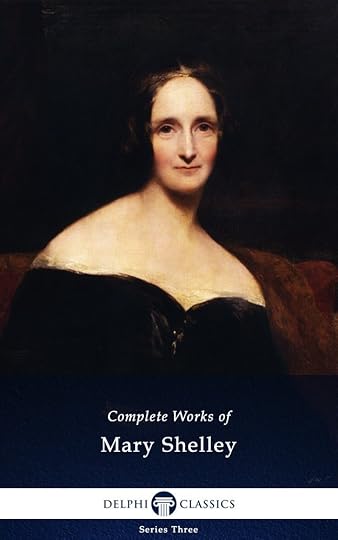
[Image: Book Cover]
Citations:
Gordon, C. (2022). Mary Shelley: A very short introduction (Kindle Edition). OUP Oxford. https://www.amazon.com/Mary-Shelley-S...
Shelley, M. (2015). Lodore. In Complete Works of Mary Shelley (Kindle Edition, pp. 2486-3020). Delphi Classics. https://www.amazon.com/gp/product/B00....
Title: Lodore, also sometimes published as The Beautiful Widow
Author(s): Mary Wollstonecraft Shelley (1797-1851)
Year: 1835
Genre: Fiction - Novel
Page count: 535 pages
Date(s) read: 10/12/25 - 10/24/25
Book 222 in 2025
*******************************************************************************************
While named after its male lead, the titular Lord Lodore dies at the end of Volume 2, with its female leads Ethel (his daughter) and Cornelia (his estranged wife), taken center stage. Cornelia has been damaged by the shallowness of aristocratic life and hampered by the lack of formal education she was allowed. Ethel was taken away from England Europe to the wildness of America by her father, then given an extremely sheltered life that left her totally dependent on him. After his sudden death, she is left rudderless at the age of 16.
The real moral center of Lodore, though, is a side character named Fanny Derham. She was given a strong education in a model that the author’s parents Mary Wollstonecraft would have approved of, leading her to become independent, unmarried, highly moral, focused on making the world and better place, and resilient to the ebbs-and-flows of fortune. Her worldview reminded me of
Stoic philosophy:
“Fanny spoke generally of these circumstances, and in a spirit that seemed to disdain that such things were; not because they were degrading in the eyes of others, but because they interfered with the philosophic leisure, and enjoyment of nature, which she so dearly prized. She thought nothing of privation, or the world’s impertinence; but much of being immured in the midst of London, and being forced to consider the inglorious necessities of life. Her desire to be useful to her mother induced her often to spend precious time in ‘making the best of things,’ which she would readily have dispensed with altogether, as the easiest, as well as the wisest, way of freeing herself from their trammels.” (p. 2839, Volume II, Chapter XVIII).
Fanny—the name likely chosen as an ode to Mary Shelley’s sister Fanny Imlay—is contrasted with Ethel and Cornelia. This is most explicitly done in Chapter II of Volume III. Whereas Fanny was raised by her father to go out into the world, use critical thinking, and think of self-education as a lifelong project, Ethel’s father took a very different tactic: “To guard Ethel from every contamination, Lord had secluded her from all society, and forestalled every circumstance that might bring her into conjunction with her fellow-creatures. He was equally careful to prevent her fostering any pride” (p. 2855). Whereas Fanny is assertive and confident, Ethel’s upbringing has left her “exceedingly shy; tremblingly alive to the slightest repulse; and never perfectly fearless, (morally so, that is), except when under the shelter of another’s care” (p. 2855).
I admire a great deal about Lodore , but don’t love it. The storytelling is slow-paced and I wish the plotting was tighter. It is Jane Austen-like, but lacks the wittiness that makes Austen’s best work so enjoyable. I would say that this is a good novel, particularly for its reformist message and its honest depiction of the casual oppression women lived under during its era.
*******************************************************************************************
[Image: Book Cover]
Citations:
Gordon, C. (2022). Mary Shelley: A very short introduction (Kindle Edition). OUP Oxford. https://www.amazon.com/Mary-Shelley-S...
Shelley, M. (2015). Lodore. In Complete Works of Mary Shelley (Kindle Edition, pp. 2486-3020). Delphi Classics. https://www.amazon.com/gp/product/B00....
Title: Lodore, also sometimes published as The Beautiful Widow
Author(s): Mary Wollstonecraft Shelley (1797-1851)
Year: 1835
Genre: Fiction - Novel
Page count: 535 pages
Date(s) read: 10/12/25 - 10/24/25
Book 222 in 2025
*******************************************************************************************

March 19, 2024
mary shelley is such an amazing writer of nature, characters, and just plain human nature. like srsly, this book was written in 1833, yet the way people act and their thoughts couldn't be more accurate to people today. her observations on people are spot on. i really liked all the characters and the romances were really cute. there were a few of what would be red flags if this was a contemporary, but since it was written in the 1800s, they can be excused. speaking of excusing things, there were hardly any of those sexist comments u usually see in classics where u know its just bc it was written when it was, but its still painful to read. this was a commentary on how women were/are viewed and of the power of female friendships, so yes, there was sexism, but it wasn't seen as the correct view. but it also wasn't a book that said "u have to hate these people and love those people" everyone had their flaws and their good qualities, and u could make ur own opinion on them. some classics in this genre end up being a few correctly dressed women going off to balls and marrying men, but this one had complicated, layered relationships that developed throughout the book and a point that it was making.

March 29, 2023
"in which all human excellence is founded-a love of truth in ourselves and a sincere sympathy with our fellow-creatures".
I enjoy a few classics myself but never latched onto that identity of being a classics lover- but if this book changes my mind on it I won't be upset.
For a book with very minor villains and a plot that should be considered boring (even in Victorian standards), it was not to me. The placements of society on both sexes (although particularly women) are described in such a way that one feels sorrow for their domestic chains but also their domestic wins. Shelley's prose and heartfelt descriptions of her characters brought them to life and made their very actions and thoughts a reality.
Supposedly written as one of her last works, it was heartfelt with mistakes of the past, vanity and the pursuit of material things, and lastly love. Many of these themes are also found in Shelley's life, which makes the heart and soul of the novel even more remarkable.
I enjoy a few classics myself but never latched onto that identity of being a classics lover- but if this book changes my mind on it I won't be upset.
For a book with very minor villains and a plot that should be considered boring (even in Victorian standards), it was not to me. The placements of society on both sexes (although particularly women) are described in such a way that one feels sorrow for their domestic chains but also their domestic wins. Shelley's prose and heartfelt descriptions of her characters brought them to life and made their very actions and thoughts a reality.
Supposedly written as one of her last works, it was heartfelt with mistakes of the past, vanity and the pursuit of material things, and lastly love. Many of these themes are also found in Shelley's life, which makes the heart and soul of the novel even more remarkable.

Read
November 28, 2021This is 'Mary Shelley writes a social novel', no gothic in sight. Vols I & II were great, though my interest had waned by Vol III, mostly because Ethel is just not as interesting as her parents. (Fanny Derham is amazing though. <3) Anyway I usually don't like to assume there are any autobiographical inferences to be had in a text but I have read too many biogs of the Shelleys not to see reflections of Mary Shelley's life in all the estranged parent-child relationships, the pecuniary difficulties, noble self-imposed exiles, and possibly in Mary's grudge against girls raised in Italian convents, welp.

March 7, 2025
In contrast to Frankenstein, Lodore is subdued; it’s like a conventional early Victorian narrative with only a few hints of wildness. There’s a duel here and an imprisonment there, but no monsters, poisonings, or shipwrecks. The plot is passably interesting, but the writing style renders the characters quite remote from the reader. The ending is good, and somewhat unexpected, in the sense that you suddenly wonder if maybe the book was a focused all along on a different character than you might have thought. Nevertheless, the journey to get there is nothing extraordinary.

Read
April 15, 2020Some parts were better than her near contemporaries Austen and Bronte. Some parts were worse. Shelley tended towards telling you what happened instead of showing you. I liked the way the story played out in Lodore. The misunderstandings and reactions seemed reasonable. I liked the characterization better in this book than Wuthering Heights.

June 17, 2020
Mary Shelley, the name alone inspires a crack at the pages within. 'Lodore' follows her modus operandi of semi-autobiographical motherless child as a leading character. Ms. Shelley's writing is beautiful in its perspective and language. I especially enjoyed her version of the wilderness of Illinois.
Read
January 17, 2025I found myself frustrated by what felt like the opening third of the book being plot exposition narration with no dialogue. It felt like far too much setup before the characters actually started living their lives and the story developing, so by then I was out of patience. A rare miss by Mary Shelly, maybe I will retry it in the future.

August 28, 2018
I love Mary Shelley. She was a genius, far ahead of her time. It was fascinating to read this book after Frankenstein, The Last Man, and Mathilda. I was spellbound, I throughly enjoyed it. Her insight into human nature and character was astonishing.

December 16, 2019
Technically 2.5 stars. Shelley’s writing doesn’t completely make up for how repetitive and somewhat boring this novel can be. Mostly strong female characters for a time in which females were so secondary is nice to read!

April 6, 2024
Love Frankenstein obviously but this just seemed out of her wheelhouse even for the time. I stumbled over some of the older spellings of things. I still say try it out if you want to read maybe not more well known books of hers. It just didn’t grab me like I wanted it to.

August 28, 2024
Slow read, but bold realizations of society at the time. I like the different depictions of love, whether it be parental, friendship, or romantic. The character development of Lady Lodore at the end was a nice touch.
This entire review has been hidden because of spoilers.
November 10, 2024
First line: “In the flattest and least agreeable part of the county of Essex, about five miles from the sea, is situated a village or small town, which may be known in these pages by the name of Longfield.”
Last line: “
Last line: “
Read
August 4, 2025I feel I am not able to give this a rating because my standards are so modern and this is very much not a modern book. HOWEVER, I enjoyed the book overall, and I enjoyed getting to know more about Mary Shelley through reading this book.

November 17, 2018
as a novel its a bit all over the place, yet it has its place in literary history, as one of the first novels to deal with the difficulties of women in managing on there own in the modern world.
Displaying 1 - 30 of 41 reviews