Cox's interpretation of contemporary culture & theology examines both the loss & reemergence of festivity & fantasy in Western culture. He evaluates both processes from a theological perspective, defining festivity as the capacity for genuine revelry & joyous celebration & defining fantasy as the faculty for envisioning radically alternative life situations. He asserts that both are vital to contemporary life & faith; both are a precondition for genuine social transformation. In a success & money-oriented society we need a rebirth of unapologetically unproductive festivity & expressive celebration. In an age that has quarantined parody & separated politics from imagination, we need a renaissance of social fantasy. It's been said that affluent Westerners have been gaining the whole world while losing their souls. In the face of this Cox affirms the necessity of a resurgence of hope, celebration, liberation & experimentation. The medieval Feast of Fools, from which he's taken his title, symbolizes both the problem & process. Centuries ago it provided an opportunity for the choirboy to play bishop & for serious townsfolk to mock the stately rituals of church & court. The eventual disappearance of the custom in the 16th century, unlamented if not welcomed by those in authority, illustrates the concerns of this controversial essay. Cox doesn't propose that a medieval practice should be revived. He does argue for a rebirth in our own cultural idiom of what was right & good about the Feast of Fools. It's likely that this book will become significant in wide circles. It speaks directly to such contemporary movements as the theology of hope, the rapidly disappearing radical theology & the theology of culture. For many it will provide a new perspective on the renewal of religious life & the secular search for religious experience. For others it will function as a window into the experimental laboratories of the "underground church." For everyone it's a refreshing encounter with a wholly new set of perceptive observations about the problems facing us. Overture Introduction Festivity : the ingredients -- Festivity and the death of God -- Fantasy : the ingredients -- Fantasy and religion -- Fantasy and utopia -- Mystics and militants -- Beyond radical theology -- A theology of juxtaposition -- Christ the harlequin Coda Appendix Notes Index of Names
Harvey Gallagher Cox Jr., Ph.D. (History and Philosophy of Religion, Harvard University, 1963; B.D., Yale Divinity School, 1955) was Hollis Professor of Divinity at Harvard, where he had been teaching since 1965, both at HDS and in the Harvard Faculty of Arts and Sciences, until his retirement in 2009.
An American Baptist minister, he was the Protestant chaplain at Temple University and the director of religious activities at Oberlin College; an ecumenical fraternal worker in Berlin; and a professor at Andover Newton Theological School. His research and teaching interests focus on the interaction of religion, culture, and politics. Among the issues he explores are: urbanization, theological developments in world Christianity, Jewish-Christian relations, and current spiritual movements in the global setting. His most recent book is When Jesus Came to Harvard: Making Moral Decisions Today. His Secular City, published in 1965, became an international bestseller with more than 1 million copies sold. It was selected by the University of Marburg as one of the most influential books of Protestant theology in the twentieth century.
A surprisingly good and relevant read for a book written 45 years ago and having to do with the social and theological shifts of that very specific time (the late 60's.) The book attempts to reclaim and give theological credence to festivity (feasting and play) and fantasy (what I'd prefer to refer to as imaginative creativity) within the structures of religious life. The chapters on festivity were especially compelling to me - explaining our need to step outside of "regular" and productive time to participate in celebrative, commemorative and excessive (within boundaries) play and revelry. Cox examines trends in modern art (specifically Artaud in theatre and John Cage in music) and uses them as examples of general trends in the emerging culture. He also exposes their weaknesses and how the elements of festivity and fantasy within the Christian tradition can balance out their critiques of society and approaches to seeing and being. He goes on to discuss the emerging approaches to theology of Radical (incarnational) theology and Theology of Hope, pointing out their strengths and blind spots. Cox also examines in length the youth culture of the time, comparing the hedonistic and more mystically minded hippies with the more militant radical student and civil rights activists. It's pretty fascinating to hear his analysis of things at the time, personally having the perspective of someone born more than a decade after the book was written. The book seems remarkably astute and revolutionary, and Harvey Cox was and is well respected and highly read. I just wonder how much impact this book had. It seems like it would've been a game changer at the time, but mainstream Protestantism has continued to decline sharply from the time of publication until now. Regardless, I found much of his observations really right on and still relevant to today's religious landscape.
Lastig leesbaar, mede door het technische taalgebruik. Dit is een boek dat ik wilde lezen vanwege de ideeen, de boodschap. Maar het was niet makkelijk. Hoe dan ook. We moeten meer feesten. Meer spelen. We moeten de huidige wereld ter discussie stellen. Onszelf niet te serieus nemen. En blijven verlangen naar en werken aan een nieuwe wereld!
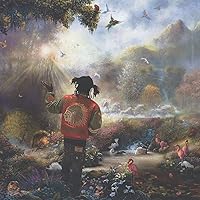
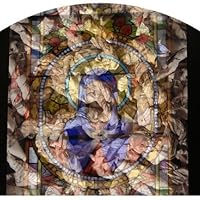
2.5 stars rounded down for lack of a meaningful conclusion, really. If ever a book wanted you to know it was from the '60s, this is it: the orange-brown kaliedoscope gometric cover, the bright neon frontispiece-like inside covers, the swirly L'Engle/Le Guin-ian heading fonts, the blue family photo of the author camping with family and dog in hats worn by actors playing Cherokees in a John Wayne film (blue in the color sense, not theme sense - it's a '60s book cover not a '70s rock album cover), the frequent quotations of Nietzsche as if he were misunderstood by Christianity, the lengthy apologia for what the book is not at the end, and so much more.
Like reading Matthew Arnold, the best material is in the introductory sections, upon which the majority of the treatise recapitulates ad nauseum (if you accidentally look at the inside covers). It is a snapshot in time, as Cox cites a number of thinkers, theologians, authors, and contemporary shakers he identifies as influential, up and coming, modern, and such ... almost none of whom are known sixty years later. I suspect (hopefully uncynically) not even the dark recesses of Ivy League Land can recall most of the cutting-edge thinkers Cox cites effusively, though many of us today are still fairly familiar with the generation of thinkers away from whom he thinks Western society is moving. What a time it must have been.
I do not blame Cox for not knowing which way the wind will blow sixty years on; I fault him for thinking Schleiermacher was a "great theologian" of the 19th century who was (refreshingly, from Cox's vantage point) coming back into popularity. I fault him for his indecisive ecumenicalism, embracing at once the past is a hindrance that must be sloughed off as well as a trove of exemplars. Much of the book is a peacemaking attempt to unite both sides, but not the beatitude-type peacemaker, the "coexist bumpersticker" type of "hey, you guys, stop holding so firmly to your beliefs, meet in the middle, and let's all get along blandly and groovily."
Listen, I'm all for enthusiastic (so to speak) worship services over the dryasdust typical Protestant fare; I did not appreciate the banner waving in Ireland back in '99 as much as I should have (but what could you have told me at 19?), and I'd be glad to bring that over. But I'm not quite sold on the plaintive "surely Christians can step outside and smoke themselves a j and get with it" folderol that undergirds most of the book.
Festivity and fantasy, sure, bring them on, but divorcing ourselves from the past and being only "forward-thinking" people, that's not the way forward - that's, as Beneatha says, "into the swamps."
But still, a mildly engaging snapshot in time, a firsthand philosophical/theological (ish) look at culture and life written after April 4, 1968 but before June 28, 1969. For him the Beatles are still together (and he makes an interesting point that perhaps their early success was due to their clown-like demeanor early on), the Space Race is still being run, and he's probably not heard of Kent State in O-hi-o. What a time it must have been.
HAS CHRISTIANITY LOST ITS SENSE OF FANTASY AND FESTIVAL?
Harvey Cox (born 1929) is an ordained American Baptist minister who also taught theology at Harvard Divinity School.
He wrote in the Preface to this 1969 book, "I wrote 'The Feast of Fools' not to solve a scholarly problem... I wrote it because I think what it says is true and is needed. In part, this book grows out of thinking I have had to do in response to the criticisms that were made of 'The Secular City.' Some people rightly saw that book as far too one-sided in its eager activism, its zealous concern for social change, its hyperthyroid extraversion... In this book I turn somewhat to the other side... I touch here on a different range of issues, including meditation, mysticism, prayer, and ritual. I strongly emphasize the noninstrumental significance of celebration and liturgy."
He suggests that "Our loss of the capacity for festivity and fantasy has profound religious significance... This may account in part for the malaise and tedium of our time. Celebration requires a set of common memories and collective hopes." (Pg. 15) Later, he adds that "Like fantasy, religion enables man to transcend the empirical world and to appreciate the sublimity and mystery of existence." (Pg. 80)
He observes that Christianity potentially has a "fertile 'mix' of time dimensions," but admits that ultimately it does not. "The reason is that in Christianity itself today the mix is badly distorted, with a bias not toward the present or the future but toward the past." (Pg. 50) He asserts that the church cannot be the metainstitution the world needs to open us to fantasy, or enlarge our petty dimensions of reality because they "have departed so markedly from their vocation... that only a residue of that historic calling remains." (Pg. 115-116) He suggests, however, that "celebration should open man... to the larger cosmos of which he is a part and the history he is involved in making."
Those who enjoy Cox's earlier theological reflections will also appreciate this book.
This book is no more relevant (if not more) today than it was when it was published at the end of the sixties. While LSD has been substituted with magic mushrooms as the popular mode of psychedelic-mediated fantasy and the Vietnam War with countless conflicts around the world, the core issue remains true: we are at a loss for comedy. To suspend our angst and our pessimism with laughter is our only hope at regaining our festive tradition as humans. I would be very interested to hear what Cox would say about the state of fantasy and festivity in the popular imagination today.