"One of the penalties of an ecological education," wrote Aldo Leopold, "is that one lives alone in a world of wounds." As climate change and other environmental degradations become more evident, experts predict that an increasing number of people will suffer emotional and psychological distress as a result. Many are feeling these effects already. In the pages of Solastalgia, they will find a source of companionship, inspiration, and advice.
The concept of solastalgia comes from the Australian philosopher Glenn Albrecht, who describes it as "the homesickness we feel while still at home." It’s the pain and longing we feel as we realize the world immediately around us is changing, with our love for that world serving as a catalyst for action on its behalf.
This powerful anthology brings together thirty-four writers—educators, journalists, poets, and scientists—to share their emotions in the face of environmental crisis. They share their solastalgia, their beloved places, their vulnerability, their stories, their vision of what we can create.
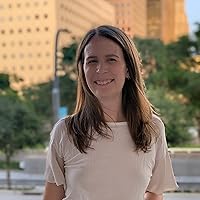
Born and raised in Minnesota, I have lived in Minneapolis, Albuquerque, Reno, northern Wisconsin, Winston-Salem, and now Harrisonburg, Virginia. Ah, the academic life.
I have a wonderful dog named Luna, a Brittany who is nearly 15. Her favorite place to live was Reno. Dog heaven, she says.
Every summer, we leave wherever we are and drive to New Mexico and Nevada to see old friends and walk old walks. Then we head to northern Minnesota for a few weeks. My family has a cabin on a lake there, and so I grew up standing out on our dock, or lying back in a canoe, watching the Milky Way bend from one horizon to the other. That's probably where my book The End of Night was first inspired.
"To feel solastalgia is to feel pain, sorrow and grief but it is also to recognize that the source of this pain is our love for the places of which we are a part."
Solastalgia as a word means the emotion felt when a much loved place is desolated by climate change. And as a book, Solastalgia brings together a myriad of authors to talk about the impact of climate change on their homes, families and lives. But what it does more is creates this unique reflection opportunity for the reader that is grounded in both grief and in hope, which is rare for a climate change book.
When we recognize the grief we feel over how the places we live and places we love are impacted by climate change, we are able to channel that sadness into action and that is ultimately the hope of this book in recognizing how many things people can do to help create change.
This book was special and made me think so much. I have so many highlights. I will be thinking about it for a long time.
Made me think a lot about my own climate anxiety and how intangible it is, having grown up in the suburbs. Was interesting to read perspectives from folks who are so deeply connected to their environment.
“I watch birds. I study birds. I absorb birds with a yearning many days of wanting to be one. But since I cannot be a bird, and knowing full well Icarus’s ego-fallen fate, I write about birds. I write for birds. I write to birds”
Another favorite essay from this was On Memory and Survival by Nikole Brown
None of those emotions really get to the heart of what I truly feel about nature. None of them are big enough. If I’m honest with myself, what I truly feel is . . . love. Hear me out. I don’t mean any simple, sappy kind of love. I don’t mean anything cute or tame. I mean living, breathing, heart-beating love. Wild love. This love is not a noun, she is an action verb. She can shoot stars into the sky. She can spark a movement. She can sustain a revolution. —Mary Annaïse Heglar
Solastalgia is defined as "the distress caused by environmental change; the homesickness we feel while still at home; the lived experience of the desolation of a much-loved landscape." It combined solace with nostalgia, and while I learned the word several years ago, this anthology appeared right as I was leaving a neighborhood I worshipped and moved to the suburbs. It is incredible how these authors describe their experience of this loss, and I think it is appropriate and necessary to process this grief. At the same time, the song in my head always sings of how grateful and fortunate I was to experience the world, the microcosm and the macrocosm, as it was and is. It's a default song that comforts and is my solace, a learned response that I am also grateful for, but grief can magnify if not processed. As my love squad of friends have a motto, shared joy is doubled and shared sorrow is halved. This shared sorrow helps us navigate this grief.
I also love a new word I learned here in the essay by Ben Goldfarb: Soliphilia is the "love of the interrelated whole" a term coined by philosopher Glenn Albrecht to describe a deep, affectionate responsibility for protecting one’s home, bioregion, or the entire planet. It serves as the positive antidote to solastalgia (distress from environmental destruction), fostering solidarity, sustainability, and actionable, and care for nature.
Soliphiliacs unite!
Our perception of time may help. For us [death] is very alarming and urgent, but for Mother Earth, if she suffers, she knows she has the power to heal herself even if it takes 100 million years. We think our time on earth is only 100 years, which is why we are impatient.” Thich Nhat Hanh
I mourn the wood thrush, even while I hear it sing. Or, not the wood thrush, but the thought of the woods without its song, and the thought of my children’s lives without its song. Without that song, my life would be poorer. But does that mean my children’s lives will be? What is sacred to me is so sacred to me. And because I am human I will mourn when those sacred things pass. I will mourn them because I love them. I do want to model this mourning for my children—I want to show them that grief is made out of love. Mourning songs are love songs and, in singing them, I can sing back to the wood thrush I love you, I love you, I love you. I want to teach my children how to feel sacredness and love and therefore mourning, but I don’t want to insist they feel those things about the same berries and birds that I do. Leah Naomi Green
The question for me—the question solastalgia asks—will be how? What will it mean to love the living world—lake, loons, daughter, and on—when so much of that world is being destroyed? Of this I am sure: love is the emotion that leads to every other—fear, grief, anger, happiness, joy, hope. It is the emotion to trust and follow as we find our way. We begin with water and sky, or mountains, or desert, or trees. We begin with animals, or birds, or seasons, or the sea. We stand under stars, absorbing their light. We feel the small hand in our own, the bones like those in a bird’s wing fanned, the fragility and the growing strength both. Alive now during this turbulent time, we do what we can and do all we can. We remember what was, imagine what could be, and learn to give thanks again and again. Paul Bogard
We mustn’t dismiss the truth of our pain, which arises from a profound love for all that’s being destroyed. Grief is a sign of compassion and connection with the living world. What would it mean not to mourn all this lost beauty, the humans and wild creatures that won’t survive the upheavals to come, and the suffering that didn’t have to happen? This recognition—that love is actually the source of our pain—may be the key insight needed to navigate the contradictions of climate despair. As Malkia Devich-Cyril has written, “Joy is not the opposite of grief. Grief is the opposite of indifference.” Jennifer Atkinson
Dislocation refers to the loss of equilibrium experienced within the confines of our minds but also the disturbance of a body part, say, a shoulder or a knee. Its root draws on the word “place.” We go about our lives dependent on the systems we’ve so far built, which require ancient carbon to be unearthed and burned to keep all the parts moving. In the process, we’ve changed the air, the oceans, the land. Climate change transforms the word “dislocation” into a literal upending of place. The mind tilts in response, towards longing or anger or a desperate search for certainty. Because what we know about our world we have learned by looking to the past. Whether considering our individual lives or what the fate of human society might be, it is the past—the reassuring experience of seasons throughout 10,000 years of a steady climate—that brings understanding and sets our expectations for the future. Such a fine model of existence is no longer relevant. Global scientific reports have made it clear and the daily news, too: the future will not look or feel like the past. I correct myself: the present does not look or feel like the past. Meera Subramanian
"Once, I read, we nearly went extinct before. The climate changed, turned cold and arid, deserts grewe, the ice did too, and we started to die off. Between 123,000 and 195,000 vears ago, we dropped in numbers from more than 10,000 adults to just a few hundred. Somewhere, tucked inside our bodies, is the DNA map that traces every single human alive today back to that group who survived. We've been here before, and our bodies knor it, our brains and emotions do too; we recognize this place of threat. The fear and despair; hope and imagination it calls us too. Fear and hope saved us when we were fish, and rat-like, vertebrates, and early humans in danger of extinction. And despair and imagination did too. I can imagine the end of us. It isn't hard an earth free of our wounding and a great exhalation of relief. And I can imagine the next evolution of us too, our change into something more glorious. That hoped-for land at the end of the water. This moment of possibility rises before us, none of it yet written except in our bones, our brains, our cells, our DNA, our nature, the thing we are. But I don't know where it will take us. What will happen next. I can only listen to the body, the universe that made it, this ancient desire to live. It sounds like prayer. Like begging the ancestors to teach us how to give up once again."
Solastagia, a term coined by Glenn Albrecht, refers to the distress caused by environmental change; the homesickness we feel while still at home; the lived experience of the desolation of a much-loved landscape. It is the emotion that so many feel in response to finding our beloved world so impacted, under threat, and certain to suffer radical change. "To feel solastalgia is to feel pain, sorrow, and grief, but it is also to recognize that the source of this pain is our love for the places of which we are part of." In this anthology, the authors masterfully guide us through this journey of grief, love, and ultimately, empowerment, urging us to embrace our emotions as a force for healing and change. They provide witness and beauty and a way forward, despite despair.
i didn't think this was "good" in that none of the essays blew me away with their writing (except rage, rage against the dying, that one slapped) nor did i feel like they told me anything new (other than climate change and ecological ruin are Bad) which i probably wouldn't have picked this book up if i didn't already agree with. however it still made me proud to share the planet with people who love it so much. reading (and writing, i'm sure) these essays was incredibly cathartic--the feeling of solastalgia has kind of been plaguing me the past few months when i couldn't find anyone to grieve with as my rocket scientist coworkers complain about epa regulations at the launch site and my parents' friends try to convince me to go to seaworld. there are undoubtedly better environmental essays out there but nonetheless this collection is an important one
This was my first anthology. Solastalgia took me on a wild ride of emotions. Each section of the book took me through a stage of grief, ending in an awe inspiring call to action.
At its peek, during the Nikole Brown essay, I bawled my eyes out. The front of my shirt was soaked with salty tears and perspiration. I’m not a cryer, but revolutionary writing will have that effect on any rational human-being.
I feel as though I’ve endured all the stages of grief in a mere five days, and now I’m ready to turn my own behavior around. I’m prepared to take on the task of controlling the controllable. Starting today. Starting now.
This book, so thoughtfully edited by Paul Bogard, and with so many wise contributors, is a must read here and now. 2024 feels like a crossroads for many of us simply cause it is one. Whatever direction we choose will bear enormous consequences, and we need to pause and consider deeply, with our full range of emotion, where we will travel. Our environment is collapsing around us. Grief is normal in a state of daily loss. But grief allows for resolve and for hope. And this books shows us how to acknowledge so much of what we feel. Read it. Now.
A lovely piece of vast evidence that community is our cure for solastalgia. So many beautiful examples in this book, truly a guide and resource for anyone battling eco-anxiety or struggling with activist burn-out. Keep it joyful and in community, even in the face of ecocide all around us. We still live in a beautiful world and are not separate from it. There is a possible future plot twist that we can all work together to establish.
Solastalgia is a neologism that describes a form of mental or existential distress caused by environmental change. OK, good. However, this slim and entirely too self-aware collection is not quite there regarding a grand unifying theory of psychological, cognitive, and spiritual impact of the climate crisis, but it is a start.
Poignant. Very American-focused but the research is still young, and the experiences from across the world are in the process of being captured. A lot of focus on spectacular violence rather than slow violence. It will be interesting to see how we develop from here, how we write about the un-spectacular, the non-viral disasters as well.
One of the best and most impactful books I’ve ever read. Incredibly sad, emotional, and moving. I am an activist and this gave so many messages to turn to in tough times. Everyone on Earth should read this book.
This book both wrecked me and helped me. Great to read about other people who also "suffer" from this. I honestly connected do much of what was on these pages.
To see in print all the pain we share. Knowing that we are all experiencing this together is somehow comforting and frightening. This book is topping a lot of my lists. It's so brutal and real
this anthology will sit with me forever. it gives comfort to those who are grieving the destruction and disappearance of our world. it’s heavy stuff—it took me a while to finish because it was so painful to read. but i found it really beautiful that things i’ve been feeling (even subconsciously) were put into words. one of my favorite reads of the year!
thinking about our environment and the world can feel too immense at times so here are some quotes that resonated with me since my own thoughts are still jumbled.
"It is characteristically a chronic condition, tied to the gradual erosion of identity created by the sense of belonging to a particular loved place and a feeling of distress, or psychological desolation, about its unwanted transformation."
"'Our hands imbibe like roots,' wrote St. Francis of Assisi, 'so I place them on what is beautiful in this world.'"
"Sixty-four thousand years ago, members of the Homo genus placed their palms flat on the walls of caves and blew the crushed powder of red ochre over them, creating stencils of their hands, the earliest human art...Art is born of the impulse to see who we are, what our relationship to the cosmos is, and if these hands are our species' earliest artistic creations, I feel it's a worthy endeavor to keep looking at them, these hands that reach across time to wave at us, ghostly."
"Pausing helps us to proactively anticipate the least harmful actions and to proceed response-ably. This is why Bayo Akomolafe writes, 'Oh, the times are urgent. Let us slow down.'"