“He is unsurpassed in the subtle manipulation of mood... You forget you’re just reading a story” – Publishers Weekly
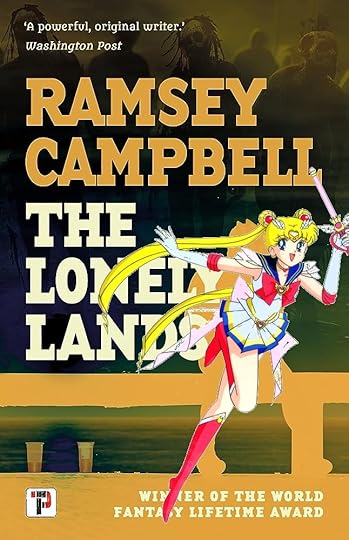
The latest bestseller from the ultimate craftsman of the dark fantastic, Ramsey Campbell. Joe Hunter has begun to adjust to the loss of his wife when he hears her calling from beyond, “Where am I?” His urge to help leads him into her afterlife, which is made up of their memories. Even the best of those is no refuge from the restless dead, and Joe can only lure them away from her. Soon they begin to invade his everyday life, and every journey he makes to find her leaves him less able to return. When her refuges turn nightmarish he may have to make the ultimate sacrifice to keep her safe…
FLAME TREE PRESS is the imprint of long-standing Independent Flame Tree Publishing, dedicated to full-length original fiction in the horror and suspense, science fiction & fantasy, and crime / mystery / thriller categories. The list brings together fantastic new authors and the more established; the award winners, and exciting, original voices. Learn more about Flame Tree Press at www.flametreepress.com and connect on social media @FlameTreePress.
Ramsey Campbell is a British writer considered by a number of critics to be one of the great masters of horror fiction. T. E. D. Klein has written that "Campbell reigns supreme in the field today," while S. T. Joshi has said that "future generations will regard him as the leading horror writer of our generation, every bit the equal of Lovecraft or Blackwood."
Joe Hunter meets Olivia at the library where he works, when his pea brained boss tries to stop her from purchasing used library books. Whether or not she intends to resell them in her own shop is really immaterial. Joe's boss Russell is being a bit of a git, and Joe lets him know this. Siding with an unwanted person instead of his colleague ultimately costs him his job, but Joe finds his own rewards: he meets someone with interests that match his own. Her resale shop, Made of Memories, certainly lives up to its name, rekindling a few of Joe's own. What's more, it serves as the site for more to come. He and Olivia hit it off nicely, eventually become a couple, and share their love, laughs, and lives.
Until the day a bloke uses an anti-maskers march as cover to rob the flower shop next door. When Olivia tries to stop him, he drags down his mask and coughs in her face. If the thief wanted a distraction, that works quite nicely. He makes good his escape, but not before Joe snaps video including his face. It's something the police could use to find him, hold him, bring him to trial. Unfortunately, soon after that day, Olivia succumbs to the disease running rampant, leaving Joe bitter and alone.
During and after Olivia's funeral, Joe grapples with some heavy feelings. Many are due to grief, some are due to the kindness of his shop's neighbor Abigail, others arise from his fraught relationship with his heavily religious in-laws, and several come from dredged up memories of his grandfather. The latter made quite the impact on his grandson, trying to push him into sports and away from girly pastimes like reading. That grandfather was also a man who passed on information about how the dead need to be thought well of, never included in dire thoughts just before he passed on when Joe was young. A living person could trap the dead in hellish nightmares if the wrong thoughts passed through the living's minds.
So, while Joe does his daily chore of work and serves as a witness for the trial of the captured cougher, Darrell Swann, he's also grappling with grief and bad instructions. And when he starts to hear his dead wife's whispers, he wonders if she might not still be with him and if he can somehow see her again …
Ramsey Campbell's The Lonely Lands injects a story of the passage into and through grief with some otherworldly touches. This is not a classic ghost story, per se, it's not a horror novel interested in scaring the bejesus out of us, and the psychological aspects are not about a man going out of his head and turning toward homicide as a healthy outlet. Instead, The Lonely Lands is a commiseration with a character who's lost everything, who's trying to pick up the pieces, and who is hearing or seeing uncanny things. Are the latter real or manifestations of guilt and/or remorse? Hard to say. The novel offers a meditation on the collateral damage death has on those left behind, and it's a piece about rediscovering balance in an off-kilter world.
There are the occasional eerie turns of phrase, the unsettling descriptions, the interacting with unsympathetic characters through awkward or frustrating but excellently penned dialogue, and the sly intrusion of the otherworldly into the mundane that we come to expect from Campbell's fiction. The icing on this cake is a presentation of The Other Side as fascinating as any I've encountered in quite some time.
Needless to say, the book grapples with heavy topics, and it treats them with the weight they deserve. So, readers eager for a fun, rollercoaster ride should certainly look elsewhere. This is a solid entry in the literary horror realm and arguably a straight-ahead literary novel. No matter where you'd stick it in a bookshop, however, Campbell has provided one more of the readable, emotionally honest gazes into the darkest regions of the human soul he always produces. His craft is impeccable, delivering the solid characterizations and quality storytelling we've come to expect.
Instead of a wild, fright filled horror epic like The Hungry Moon, a potent cosmic horror excursion like Fellstones, or a twisted psychological thriller like Somebody's Voice, we get something a tad more melancholic, personal, intimate. There are still plenty of things going on to hold the attention, of course.
The author cannot help but draw unease from the most innocuous parts of life. The occasional glimpses of shadowy figures or faces leave us wondering if Joe is experiencing a trick of the light or seeing something far more disquieting. The interactions with people like Olivia's controlling parents or the law enforcement individuals are unsettling. Conversations don't quite connect between characters, half-intelligible sounds are heard from just around the corner, and even the belligerence of appearing in a courtroom trial all serve as fodder for the author's particular way of injecting sinister overtones into everyday activity.
The Lonely Lands is a book worth returning to, a good yarn well told as well as a potent examination of what it means to love, to lose, and to go a little mad trying to escape grieving. It's a deceptively simple piece, drawing us into some sequences of despair and longing that reveal the lonesome land we reside in, no matter how much we tell ourselves we've found completion or a companion. In the end, each of us is made of the memories we've recorded, simultaneously balms against the dark and reminders of all that we once had and lost. # Thank you NetGalley and Flame Tree Press for supplying a free eARC in exchange for an honest review.
Until recently, I’d merely heard a lot about Ramsey Campbell, the 77 year-old, award winning horror writer who hails from the UK. Having apparently written 30+ books and hundreds of short stories, he’s been downright prolific and one of the mainstays within the horror genre. Now, I’ve actually read one of his books, and it honestly wasn’t what I expected.
Set in the UK, The Lonely Lands by Ramsey Campbell is a book about love, loss, grief and trying to move on after the death of someone close. It centres upon a man named Joseph, whose wife, Olivia, passes away. However, instead of grieving normally, Joseph either has delusions, or is able to visit his wife in the afterlife.
If you’re sick of hearing about Covid, this may not be the book for you. Reason being is that it’s set in the pandemic, which plays a big part in what happens. You see, Olivia doesn’t die of natural causes. She actually contracts Covid-19 after trying to stop a robbery in her friend’s flower shop. The jerk of a robber coughs in her face as he’s leaving, in order to keep her from following him or trying to do anything else.
We also go back in time to when Joe — now the owner of a second hand or thrift store, which is right beside the florist — lost his grandfather. The old man warns Joe not to think about him after he’s dead, saying that paying too much thought to the deceased can have consequences. It’s after this where Joe’s delusions, or his ability to delve deep into the afterlife, begin. He ends up finding his grandfather there, and is shocked to see what he’s turned into; that being something decrepit that’s hiding from the light.
Bothering the dead has consequences for our protagonist, who feels like he’s being followed by his grandfather’s ghost. Meanwhile, he deals with grief over Olivia’s death, tries to keep their shop going and has to interact with her very proper, and downright snobbish parents, who feel like they lost a lot more than Joe did.
Well, all that and the fact that the man who ‘murdered’ his wife is going on trial for his thefts, thanks to a picture Joe took.
Hell, there’s even a chapter mentioning how the couple met.
The Lonely Lands is a well written book, and its prose is quite abstract. The problem I had with this book, and what I didn’t expect, is how hard a lot of it was to follow. Things jump around a lot, and there’s no cohesive thread to the chapters. They can vary pretty wildly, and it can be hard to follow along, understand when something took place and keep it all straight.
However, as someone who’s lost someone very dear to them, I identified with the themes of grief and loss. I’d do anything to talk to said person again, and it’s hard knowing I cannot. That said, the overarching horror story, as light and not scary as it is, is a little messy due to the lack of cohesion.
Overall, I find myself feeling mixed about this book. On one hand, I identify with it and wholly respect it. Then, on the other, I have a hard time saying that I fully enjoyed what I read. A lot of it was too abstract, and jumped around too much for my tastes. Still, I do believe that The Lonely Lands by Ramsey Campbell is a good and respectable novel. It just wasn’t for me as much as I’d hoped.
This review is based on an advanced copy of the book we were provided with. Thank you to NetGalley and Flame Tree Press for the review copy. However, receiving this book free of charge did not sway our opinion.
This is the first book that I've read by this author and I really wasn't sure what to expect - but was pleasantly surprised by the fact that this was verging on the horror genre.
I have been obsessed with Stephen King forever and I really got a vibe of his work in this book. Something strange was going on, something unexplained and just a little bit more than creepy.
I knew that I was going to enjoy this book by the very first chapter, which incedently is 1 line long! "When he heard his wife say "I'm not alone" he thought she meant to reassure him" and that was it, end of chapter. I loved this even though it's not clear from this that we're heading into the unknown, it does intrigue and pull you in and for me, gets you thinking already!
The timeline flits around a fair bit at this point and we see flashbacks to Joe's youth and conversations with his grandad as well as Joe and Olivia's early life together up until she dies from the disease - something sounding very reminiscent of covid - which brings us bang up to date.
I really felt for Joe in lots of ways as he struggled to come to terms with life alone and works through his grief. But as he becomes able to see, hear and visit Olivia in his dreams, he discovers what awaits on the other side.
The writing style was a great mix of emotive and suspenseful. I definitely found this one much more thought-provoking than outright scary.....which maybe says something about my mentality :/ - and the ending left me mulling over this one for quite some time.
I found this a really intriguing read and feel like I need to explore more of this author's books given the strong SK vibe. Watch out for more reviews later.
It's a horror story but it's also a story about grief. There's always a lot of ambiguity as you never know if the MC is sane or allucinating. It's a slow burning story with an explosive final climax. Ramsey Campbell can write and this is an excellent story even if very slow at the beginning Recommended. Many thanks to the publisher for this ARC, all opinions are mine
I had a feeling this book was going to end the way it did (tbh, I don’t know if any other kind of ending would make sense for this story). I don’t know if i would call this a horror book, but it does have some horror elements. I’m a sucker for dream world stuff I guess 🙂↕️ it was a fun, quick read.
A little cryptic and hard to follow. Not much horror. But a lot to ponder over. What was it really all about? I love to see analyses and interpretations from the few hundred people who read it. (Though I have some ideas). Not perfect but his better books from the later stage of his career.
I can't say I found this novel to be about grief, as other readers are saying. The characters' emotions are generally buttoned-down, British, and internalised, as you'd expect in a Ramsey Campbell tale. Rather, it's about the struggle to let go when you've lost someone. All the protagonist Joe's escalating problems stem from his obsessive need to continue to protect his dead wife, when in fact she's not in any danger. She's moved on but he hasn't.
The main strength of this book is Campbell's portrayal of the murky world beyond death, which drifts without warning from a hazy reflection of reality to nightmare. The interludes between these sections suffer a little in comparison: the living world feels a little sketchy. Ramsey Campbell is banging out these late novels at a considerable clip, and good for him, but sometimes I can't help but wish he'd take twice as long and work twice as much substance into them, as he used to.
But that's a quibble. The Lonely Lands is another solidly enjoyable journey into Campbell country.
This story blends memory and dreams/nightmares with the present-day reality in disorienting and compelling ways. In fact, if I hadn’t read the blurb about the book it would have taken me a bit to figure out what was going on, and there are no seams to the repetitive and overlapping experiences that are all colored and grief and saturated with paranoia.
This story is very slow moving, and it is hard to keep a grasp on it. While our central character is interesting, he is also in many ways an everyman. His life is populated with interesting secondary characters, all of whom we experience through his perceptions and his projections, so none have remarkably rich inner lives. I never felt like this character was easy or simply a stereotype, it was hard to feel much of a connection with him, either, he was just kind of a bland mask for his loss and his downward spiral to be made apparent, and that is kind of the point. Still, it was hard to feel connected to the story, which is already so circular and painted with dream-logic, when there isn’t really the opportunity for an intimate experience with our suffering protagonist. I would have liked to be drawn into his experience more, instead of just observing it. This kind of story really shines when the reader feels complicit, and this felt like it was always keeping me at arms’ length.
That said, it was beautifully written and gives you a lot to ruminate on, especially about the ways anger and loss can warp our perceptions of reality. The story doesn’t give any easy answers, and is better for it. The story feels ephemeral, hard to grasp onto tightly, like it doesn’t want us to see its face too clearly, and it was a fun and contemplative journey to take. It does move slowly,. And even sometimes feels like it is moving backwards, and while there are a few heart-pumping scenes it isn’t a narrative that is structured around set pieces or frights, but instead around that liminal space between knowing, feeling and fearing. There is a really interesting journey to be had here, and so long as you don’t go in expecting some epic or terrifying story then you just might find yourself haunted enough to have a real good time.
(3.5 rounded up).
I want to thank the author, the publisher Flame Tree Press, and NetGalley, who provided a complimentary eARC for review. I am leaving this review voluntarily.
I’ve been reading the fiction of Ramsey Campbell for well over thirty years, and there are many observations I might make on it. For the purposes of this review, however, I’ll say only one thing: you never quite know what you’re going to get from one book to the next. That isn’t true of many of his weight-by-weight contemporaries. For instance, with Stephen King, except for a few exceptions down the years – the structural peculiarities of Gerald’s Game, the multi-novella composite that is Hearts in Atlantis, and the recent oddity “Life of Chuck” – you can pretty much guarantee that you’ll remain in familiar literary territory: everyday folk in everyday locales dealing with the outlandish.
Not so much with Campbell. Yes, the stories usually occupy the north of England, boast quirky characters battling some form of badness, and are related in richly lyrical and ambiguous language. But the tales themselves often come from leftfield. Take The Overnight as an example, a haunted place novel unlike any other you’ll ever read. Or maybe The Kind Folk, a book so strange as to be almost like a recollected dream. And now here we have The Lonely Lands, which I assure you is as distinct as any the author has ever written.
Joe Hunter meets Olivia at a library, and they soon wed. Life is good until, during a Covid anti-masking protest, the shop next-door to Olivia’s is broken into by a thug, Darrell Swann, who inadvertently coughs into her face as she tries to intervene and communicates the virus to her. Later at hospital, Olivia dies, and thus begins a nightmarish period of grief during which Joe simultaneously engages in Swann’s trial while also experiencing intimations of the afterlife, at first Olivia’s voice drawing him into her new realm and then less welcome denizens emerging from beyond that veil.
Campbell’s depiction of two worlds – the socially real and the spectrally unreal – hint at something like hell and heaven. For all the sordid activities of earthbound thugs, there’s an idyllic balcony in a sun-soaked hotel (the location of a honeymoon) to which Joe is first drawn and where he believes Olivia is safe. But soon the darker world starts bleeding into this other. It begins with irrepressible memories from Joe’s youth, a grandfather rather more interested in bullish games like football than studious pursuits such as reading. The older man and his ignoble cronies seem to represent the same kind of attitudes unworthy folk in the present day uphold, and on his death bed, the cranky grandfather threatens Joe with a visitation after he's passed on.
And so it goes. In the early sequences, some of the newfound amorphous imagery Campbell has evoked in later books – the finale of The Way of the Worm, especially – is drawn upon to depict a frightening lack of coherent form among the realm of the dead. For example, Joe’s grandfather, finally putting in his promised appearance, shapelessly lopes around a room before disappearing through a hole no larger than that of a mouse. That’s unsettling enough, but it’s only a start of the shape-shifting menace our lead character endures.
Then there’s Olivia’s sternly religious parents who seem determined to communicate their loss through passive aggressive meddling. There’s the court case, which, owing to a sharkish solicitor, soon becomes less clearcut than Joe had hoped. There’s also Joe’s female next-door neighbour, on the surface a sympathetically benevolent other, who often appears to be spying on him – or at least to know his every move. And worst of all, there’s the dead, who gradually, as Joe’s mind starts buckling beneath so much strain, start gaining a tenuous grip on his memories.
Memories is the prevalent theme of The Lonely Lands. From the name and nature of Olivia’s shop – Made of Memories, an outlet stocking nostalgic artefacts – to the struggle Joe has in keeping his recollections of his late wife untarnished by negativity. The chief threat is of course his late grandfather and his wastrel companions, but later, in a truly disturbing scene, quite another pursuer becomes involved, leading to a grim climax that involves a sacrifice perhaps representing the insuperable power of grief.
I shan’t give away more of the story, except to say that the whole experience is evoked in Campbell’s increasingly majestic command of prose. Some of the sentences here have a grandeur about them, being unashamedly adjectival and richly tessellated in their construction. Take this one, for instance:
He found himself wishing she could see the sights he saw, which might almost have been tributes the September afternoon was staging: a delicate intricate dance of butterflies kept in the air by an invisible juggler, an unstable elongated skein of geese high overhead like a hairpin reflected in rippling water, the comic relief of an extravagantly loose-limbed hound that had to keep halting to sneeze as it lolloped through the empurpled heather.
Just a few months ago, we literary folk said our sad farewells to Martin Amis, but with writing like this still in the world, our own grief needn’t be suffered so heavily.
Mix in a typically Campbellian collection of menaces and we’re treated to a claustrophobic narrative that veers between the ethereal spookiness of its dreamlike afterlife sequences and the gritty nastiness of its real world counterparts. The Covid-related protest activities out in the streets invoke a sense of things not being right in our familiar world. The court case, with its sleight-of-hand defence, adds further woe to Joe’s mental environment. A cold-call scam attempt shows how duress is unavoidable even when you think you’re being private.
It’s no wonder that Joe wants to keep Olivia where she is, free from such persistent unpleasantness. The visions of heavenliness in which she appears hint at the sanctuary of love, that unfailing refuge in the crisscrossing bullishness of life at large. Are we the readers encouraged to conclude that even the happiest times are shadowed by the imperiousness of death, its unknowable nature? If so, that would make Joe’s attempts throughout the book to wrestle with the terror of the void pitiably universal.
As I said earlier, this is an especially strange book, even for Campbell, and one that creeps inside you, slowly encouraging you to decode its dreamlike enigmas. Part paean to love, part meditation on death, it dramatises how the heavenly – communion with another – can only exist in the context of the grim: an inevitable termination of that bond. And I have a sense that, somewhat fittingly given its themes, The Lonely Lands will linger long in memory and stand alongside some of Campbell’s more idiosyncratic works, the kind of fiction only he can write.
I love Campbell, and getting an ARC seemed like a treat. The Lonely Lands...it's not his typical book. It felt as if it was at a remove. Joe goes down a dark path through his dedication. I feel like this one is going to require a re-read in the future.
This is another case of a Ramsey Campbell book being very hard for me to rate: it's really distinctive and memorable compared to a lot of other books by other writers, but as someone who's read a lot of Campbell's work I can't help being irritated by how repetitively he stretches out his ideas here and leans on some of his familiar writing devices. Overall I think I would lump it into the large and diverse group of middling-for-Campbell novels, but there are at least two ways that it stands out strongly from that group.
The first is just the premise, which takes the common idea of "if you try to make contact with the afterlife, scary things will take notice of you" and takes it in a very different direction by having the protagonist be aware of the scary aspects almost immediately, and find ways to work around them because the positive aspect is worth it. The spirit world (or purgatory or whatever our guy is visiting—it's also possible to read this as being all in his head, but that's a less interesting story to me) is described with all of Campbell's characteristic skill at atmosphere, a dream version of our world that's incomplete and ineffably hostile and lonely (very reminiscent of his great book Incarnate), but with little oases of happiness that are equally vivid, as well as bits that are surprisingly ordinary. There are also some moments of pretty effective horror-comedy in terms of what it's like to be haunted by a passive-aggressive family ghost. I did feel like the book spun its wheels a lot in this area, though; after the first few visits to the Lonely Lands, you know basically the kinds of things that will happen and continue happening there.
The second distinctive thing is that Campbell, for the first time as far as I know, makes major events from the modern world really integral to the story: this isn't only a pandemic-era horror novel, but one where the physical and social harm of COVID-19 are directly involved in the horror. It's hard now for me to imagine how little notice I would've taken a few years ago of the now-frightening moment where a character says they've lost their sense of taste, or how unusual the smug aggressive ignorance of the various anti-mask characters would've seemed to me. The latter especially stands out. Campbell has always been fond of tormenting a protagonist by devising every possible way for other people to angrily misconstrue whatever they're trying to say; for me that can easily feel repetitive, an author pushing the same button out of habit to keep obstructing the protagonist while reducing the other characters to reflexive hostility machines, and there's a lot of that here. But whenever the focus shifts from people's generic unreasonableness to the special kinds of unreasonableness that we've seen more recently, I think the author is more fired up, and as a result those passages are a lot livelier and more effective for me.
With The Lonely Lands, Ramsey Campbell shifts his focus from an anticipated examination of the unknowable cosmic realm to the unknowable and even more dangerous universe that secretes itself deep inside the human mind and the afterlife, or as the protagonist’s grandfather calls it--“The next place.” A quote from Christian Noble of the marvelous Daoloth Trilogy sets the stage:
“The dead use our dreams to return.”
The story opens with the protagonist, Joe, spending time with his grandfather who appears to have been a follower of Christian Noble, a character Campbell’s fans will all remember with intense interest.
Joe is warned by his beloved grandfather not to think of him too much when he passes on, because doing so might bring him back. Then he adds another warning to Joe, when he states that if he ever comes back, to be sure not to try to follow him back. This prophetic warning sets the stage for the possibility of dangerous things to come.
Years later, Joe falls madly in love. Unfortunately, his new wife is taken from him all too soon. Before long, he falls into a deep well of grief and is tempted to ignore his grandfather’s dire warnings.
Campbell’s language is as wonderful as always, evocative, and lyrical. Joe’s grief is clear and palpable. His pain sets the stage for his complicated and heartbreaking yearning for his lost wife which might defeat his ability to resist the call of the next place.
The characters are interesting. Many of them are not what they seen on the surface. Readers must agonize over what is real and what is madness.
The plot does not follow the usual straight line trajectory. It is disjointed and convoluted, mirroring Joe’s unsteady state of mind, his inability to clearly see if he is in the here and now or lost in that dangerous next place. Readers must, like Joe, let go of reality in order to follow him along his tortuous path toward a shocking ending.
One of Campbell’s most evocative lines states that “Darkness spreads like an infection.” The tale posits the question as to whether it is possible that pain and grief may also spread like an infection. In addition, readers may wonder if such an infection can be deadly.
The Lonely Lands is highly recommended, especially for those who may be tempted to gaze into the next place for a hint of what may lay in store for them. It could also serve as a cautionary tale, a warning to readers not to follow in Joe’s irresolute footsteps.
Joe Hunter is struggling with depression. He is only just beginning to adjust to life since his beloved wife, Olivia, passed away when he hears her calling from the 'beyond.' "Where am I?" she calls out to Joe. While her body has died, her soul, her essence, is wandering in an afterlife that is made up of her memories. Memories which he mostly shares. But she is not the only spirit inhabiting the afterlife and she wanders to avoid the restless.
Joe journeys into the afterlife each day to lure the restless dead away from his wife, but with each journey it gets harder for him to return and by opening the door to and from the afterlife, Joe allows some of the restless to invade his everyday life.
As his wife gets more frantic, facing increasing horrors among the afterlife, Joe will need to make a decision about whether or not to make the ultimate sacrifice to help his wife.
I've written before about how much I like Ramsey Campbell's slow-boiling horror and how the story creeps up on you and you sometimes you don't realize how terrible the events are until it's too late. But this book is different, and not in the best of ways.
This story moves even slower than usual for a Campbell novel. Some of this might be that it is also much more repetitious than other books from the horror grandmaster. Joe is lonely and concerned. Olivia is dead and afraid. Joe goes to help, then returns. Repeat. The only change is the intensity of the wanderers in the lonely lands.
This is almost not really a horror story as much as it is a novel about grief in a dark fantasy setting.
It's possible, even likely, that I was expecting something very different, given that it's a Ramsey Campbell book, and I'm more than willing to give this the benefit of the doubt that I missed something because of my expectations. The writing is sharp and the characters are so real they don't just disappear when you close the book. It's just ... the horror is too contained and the spiral that we expect to see happen to our protagonist isn't quite there.
Looking for a good book? Ramsey Campbell gives us lots of grief and depression in The Lonely Lands but the dark fantasy/horror is more backdrop than spotlight.
I received a digital copy of this book from the publisher, through Netgalley, in exchange for an honest review.
I admit up front to being somewhat out of touch with Ramsey Campbell's later works, but for me, "The Lonely Lands" is as unexpected a novel from him as, say, "What Dreams May Come" was from Richard Matheson. In evolving out of his early Lovecraft pastiche persona, Campbell has become a master of using a subtle and growing form of discomfort in building his narrative. In this book, he takes the next step forward with that in largely leaving the horror behind by creating something that is, largely, a meditation on loneliness and grief. There are ghosts in "The Lonely Lands", and moments that will chill the reader, but the novel mainly explores how the ghosts that haunt us can be the result of our unresolved attachments to people and places we have known. The drama in this story unfolds from one man's process of resolving those losses, and the dangers that can result from the refusal to let go. The contrast with Campbell's earlier work was made even more apparent to me because I was also listening to an audiobook of "Hungry Moon" concurrent with reading this new offering. Compared with that more classic and cosmic horror, this book is a Shoggoth of a different colour. "Hungry Moon" has clearly identifiable evils in it, menaces that are external and therefore opposable. "The Lonely Lands" however explores the dark territories that lie within, the things we must resolve with integration, not extinction. Campbell's work has always had elements of folk horror to it, so there's long been a locality to his work, but this one really feels personal, like the author himself is wrestling with the ideas of grief and loneliness, working out some kind of loss in the pages of fiction. This is not to say that long time fans of Campbell will not enjoy this work. His use of language is as subtle and effective as ever, and his talent for creating atmosphere continues to grow. Nobody can deliver a sense of unease in a single sentence of dialogue as well as Campbell can, and that skill is used to great effect in this book. Authors who carry strong genre associations don't always do well when their work aims at "Literature", but with "The Lonely Lands" it definitely feels like Campbell is moving into that rarer air that transcends genre. I am glad as a reader to be able to follow that evolution with such a rich and rewarding novel.
The Lonely Lands, Ramsey Campbell's latest, is a lot of things. A sombre rumination on love and loss, an old fashioned ghost story, a rather bleak extension of his creepy mythos from the excellent The Three Births of Daoloth series (which you should read immediately) and a deeply personal story of a man who would do anything for his wife, even after death has done them part.
Joe Hunter is an odd duck. A bit of a loner, slightly awkward but ultimately good hearted (a classic Campbellian protagonist). He meets and marries Olivia and the pair form a strong bond, which lasts until she tragically dies of COVID-19 related complications. However, when Joe hears Olivia's voice asking where she is, he is unpleasantly reminded of the dark truths about the afterlife imparted to him by his overbearing bully of a grandfather. Joe must venture into a place he barely understand to keep his wife's spirit safe from dangers he dare not even imagine.
The Lonely Lands does that classic Campbell trick of skirting the line between the supernatural and mental illness. Every conversation drips with menace, misunderstanding and people's inability to produce more than an ounce of empathy for one another. Joe's in-laws are particularly grisly, offering nothing but frustrating piousness at every turn. Events are portentous and fraught with potential danger, and the spooky shenanigans - when they do occur - are often surreal, tense and in one spectacular sequence, wonderfully absurd.
This probably isn't the book I'd suggest for first time Ramsey Campbell readers, mind you. I think Ancient Images, The Hungry Moon or The Searching Dead would fit that bill better. However, for longtime fans of the man's work (which seems to be going through a really excellent period at the moment, bravo!), this is gripping, bittersweet and oddly moving stuff.
Just don't think too hard about it, or you might just summon it to you.
After the sad loss of his wife Olivia, Joe Hunter begins to hear her voice again, speaking to him from the other side. "I'm not alone." This chilling statement eventually draws him into the afterlife, a tenebrous place built by their dreams and memories. The more that Joe yearns to communicate with his lost love, the more he threatens the safety of the barrier separating the two worlds. He comes to realise that the afterlife is a world where darkness dwells and shadows lurk and the restless dead strive to return to that of the living.
I've been a fan of Ramsey Campbell's fiction since I first discovered him in the early 1990s. He has such a distinctly unique voice - he often manages to be both hilariously funny and bone-chillingly terrifying in the same sentence - and I'm pleased to report that in The Lonely Lands these magical qualities are still on display. This novel is set during the Covid pandemic, which adds an element of disturbing surreality, and this fact is not there just as a gimmick - the facemasks act as both an unsettling side detail and also an essential plot point. Poor old Joe is a sympathetic central character, and the novel is peppered with brilliantly-drawn, grotesque secondary characters. Campbell's style - always engaging - possesses a nebulous dreamlike quality, perfectly suited to the nightmarish plots he creates. The narrative jumps around the various timelines, deliberately wrongfooting the reader. I never find Campell's writing style easy to read, as his meaning is sometimes cleverly skewed by the characters' dialogue, but this is a good thing really because prose of this quality should be savoured, not skimmed over.
The Lonely Lands is yet another terrific horror novel from one of Britain's best authors.
After the sad loss of his wife Olivia, Joe Hunter begins to hear her voice again, calling to him from the other side. “Where am I?” His grandfather was also a man who passed on information about how the dead need to be thought well of, never included in dire thoughts just before he passed on when Joe was young. A living person could trap the dead in hellish nightmares if the wrong thoughts passed through the living’s minds. Joe hopes though that he might see his wife again. Does he? This draws him into the afterlife, a dark place built by their dreams and memories. The restless dead are attracted to his ded wife. The more that Joe communicates with his lost love, the more he threatens the safety of the barrier separating the two worlds. He comes to realize that the afterlife is a world where darkness dwells and the restless dead strive to return to that of the living world. What will happen to Joe?
This is not a typical ghost story. The novel is about a character that has lost everything, who is trying to “pick up the pieces” and is seeing or hearing uncanny things. It is a god novel. It made me look at what love is, losing it and how one can go a little mad from it. I don’t think of this book as horror but about what happens in the afterlife and the love that doesn’t end.
Disclaimer: I received an arc of this book from the author/publisher from Netgalley. I wasn’t obligated to write a favorable review. The opinions expressed are strictly my own.
This review is for an ARC copy received from the publisher through NetGalley. When Joe Hunter was a boy his grandfather told him that if you think enough about someone who's died you can communicate with them. But to be careful not to think too hard or to dream about them because then you might bring them back, and the results could be bed. After his grandfather passes, Joe does, at times, find him returning when he thinks about him, even though Joe wishes he would just go away. When Joe's wife Olivia dies, he uses this trick to see her again, hearing her in this world and in his dreams, visiting her afterlife. But the more he connects with her, the more he becomes susceptible to bringing back other parted souls, and doing so may endanger Olivia. This was a interesting concept and different take on hauntings and communicating with the afterlife. IT took awhile to figure out what was going on, but the story eventually smooths out. Though the plot varies from Joe's past to the present to his dream visit with his wife from chapter to chapter with no segue, which often made for some confusion. I liked it more than some of Campbell's more recent works, but did find it hard to keep up at times. 3.5/5 stars.
A new Ramsey Campbell is always a treat to be savoured and The Lonely Lands - his new novel for 2023 – is no exception.
As I read this, I was put in mind of Richard Matheson’s ‘What Dreams May Come’ – both novels deal with a bereaved husband who must deal wIth life after the loss of a beloved wife and must endure the horrors of the other world as a result. Having said this, these are two very different stories.
As always, the author’s prose flows, transporting the reader where danger lurks around every bend and the unexpected and frightening is always to be expected. In among the scares and darkness, The Lonely Lands also resonates with poignancy and it is that – along with the carefully drawn characterizations, that raise this book among so many of its contemporaries.
Ramsey Campbell is still not recognized for the genius writer that he is, in my opinion. Yes, he holds many awards and distinctions – including an Honorary Fellowship from Liverpool John Moores University – but still not enough readers have discovered his incredible gift for storytelling which transcends any specific genre. I hope The Lonely Lands will go some way towards redressing this. It deserves to.
A surprisingly desolate tale here; I’m not sure whether the narrator is simply suffering from severely unpleasant delusions, or whether the supernatural is simply a matter-of-fact occurrence in the context of this novel. Certainly, the journey of reading the novel was as mysterious and confused as some of the protagonist’s experiences, and I found that I had to work harder than I’d like to figure out what was passed for reality and what might be unreliable narrator. It was nice to see Christian Noble appear again, albeit only in passing, although his mention brought a desire for more detail which remains unrequited. Characters’ speech, as ever, was ambiguous and interpretable, and at times this became exhausting. I’m a big Ramsey Campbell fan, but for me this book’s narrative, alas, didn’t really give me what I’ve come to like from him.
Description, though: amazing. Such redolent prose, with exceptional simile and metaphor. The chilling descriptions of horrific events are marvellous, and Campbell’s use of language is as wonderful as ever.
A mixed review from me, then, but of course we all bring our own preferences to the table. Perhaps this one, sadly, just wasn’t for me.
I’m sharing my thoughts on The Lonely Lands, by Ramsey Campbell, as part of the book tour hosted by Random Things Tours. Thanks to Anne for my copy of the book in exchange for an honest review.
MY REVIEW
I had been looking forward to Ramsey Campbell's next book and it certainly didn't disappoint. This is a horror story but also a story of grief. The author's unique writing style pulled me into this slow burner which grew in tension right up to the explosive climax.
The characters were interesting although your perception of them is from Joe's perspective so they were difficult to relate to. I liked Joe. His grief was palpable and I had an outpouring of empathy for him. His downward spiral of suffering felt, to me, tragic and unstoppable.
Overall, this book gave me a sense of pain, grief, and horror, which I think was the point. The author's fans will love this. I gave The Lonely Lands, by Ramsey Campbell, four stars.
A heartbreaking examination of grief and loss, The Lonely Lands is not an easy book to read. Campbell has always been able to get into the minds and emotions of his characters, and here he wields that ability like a stiletto, slicing delicately in to create the most pain. Nothing seems to go well for our dear hero Joseph Hunter, as he loses his wife and everything around him falls apart accordingly, and we're there for every painful stumble. The way this is told is beautiful, and there are moments of real power within the novel, I just wish it would have been a little swifter out of the gate. Those expecting supernatural spookiness need probably look elsewhere, as at its heart, this is more a tale of the pain and torture of loss, and holding on to something too tightly.
Thank you to NetGalley and Flame Tree Press for giving me the opportunity to review this piece.
I have never read a book with a plot as unique and revolves as this. It was so interesting and a clever blend of heart-warming and heartbreaking. As we got to know the husband’s situation, having lost the love of his life and then found out he could find her, you almost got your hopes up. Then it all came tumbling down, as you found out that he needed to protect her and it may cost him everything. It was so interesting to read along and really get to know the character, especially our main character, with his determination and undeniable love for his wife. I found the pace interesting and enjoyed the time it gave us to get to know the characters and the situation, as well as the faster moments we got swept up in trying to get back.
Ramsey Campbell's books are one of its kind. The Lonely Lands also fall into the same category. At first, the plot would not at all feel appealing but slowly and slowly the interest develops. The book paints a vivid picture of our society that pokes its nose everywhere. But, the climax felt satisfying. There were moments when the pacing was uneven. But, the intricate plot twists need a reader's full attention to grasp the story. This book will keep you enthralled from start to finish, leaving you wanting more from the author.
This short book was interesting, but I’m not sure I would classify it as a horror novel; I would perhaps consider it more a literary novel that deals heavily with grief and loss. It really is not scary at all and is very slow moving. I could only give it three to, 3.5 stars because it was hard to follow: the action jumps from the real world to the afterlife and also past memories of a husband having experiences with his dead wife whom he very much loved. This book is actually quite different and I’m glad I read it, but it was a chore at times because I was often unsure exactly what was going on
If you think enough about someone who's died you can communicate with them, this is what Joe Hunter's grandfather had told him growing up. So when Joe's wife Olivia dies he decided to try and see if this really works. Hearing his wife and seeing her in his dream, starts him thinking deeper. Lost souls start to fill his mind day and night. Was this making it dangerous for Olivia? I have to say the writing style did confuse me at times as it jumps around timelines. but once I got further into the book it, I began to understand it more.
What can I say, the master story teller still at the top of his game. Loved the book. Ramsey takes you hand and walks you through Joe's mind, full of creepy scene had me hooked from the start. As with most of Ramsey Campbell's book it's a slow burner, good characters and plotting. Thank you publishers for letting me read this book.
Not exactly sure what to think of this one beyond just a sad story. I wouldn't call it a horror book. The story is about a man whose wife died under circumstances where he was unable to help. I think the loss and guilt of losing her makes him go off the deep end. He becomes obsessed with keeping her safe in the afterlife. I was hoping it didn't end how it did but it seemed inevitable.
This is such a memorable book for me, although I suspect it wouldn't resonate with some readers. It's not really a horror, although of course it's unsettling. It's a tale of grief and the need to let people go after they pass. It's the kind of text that should be studied in English lit classes (but it won't because it's quote-unquote horror).