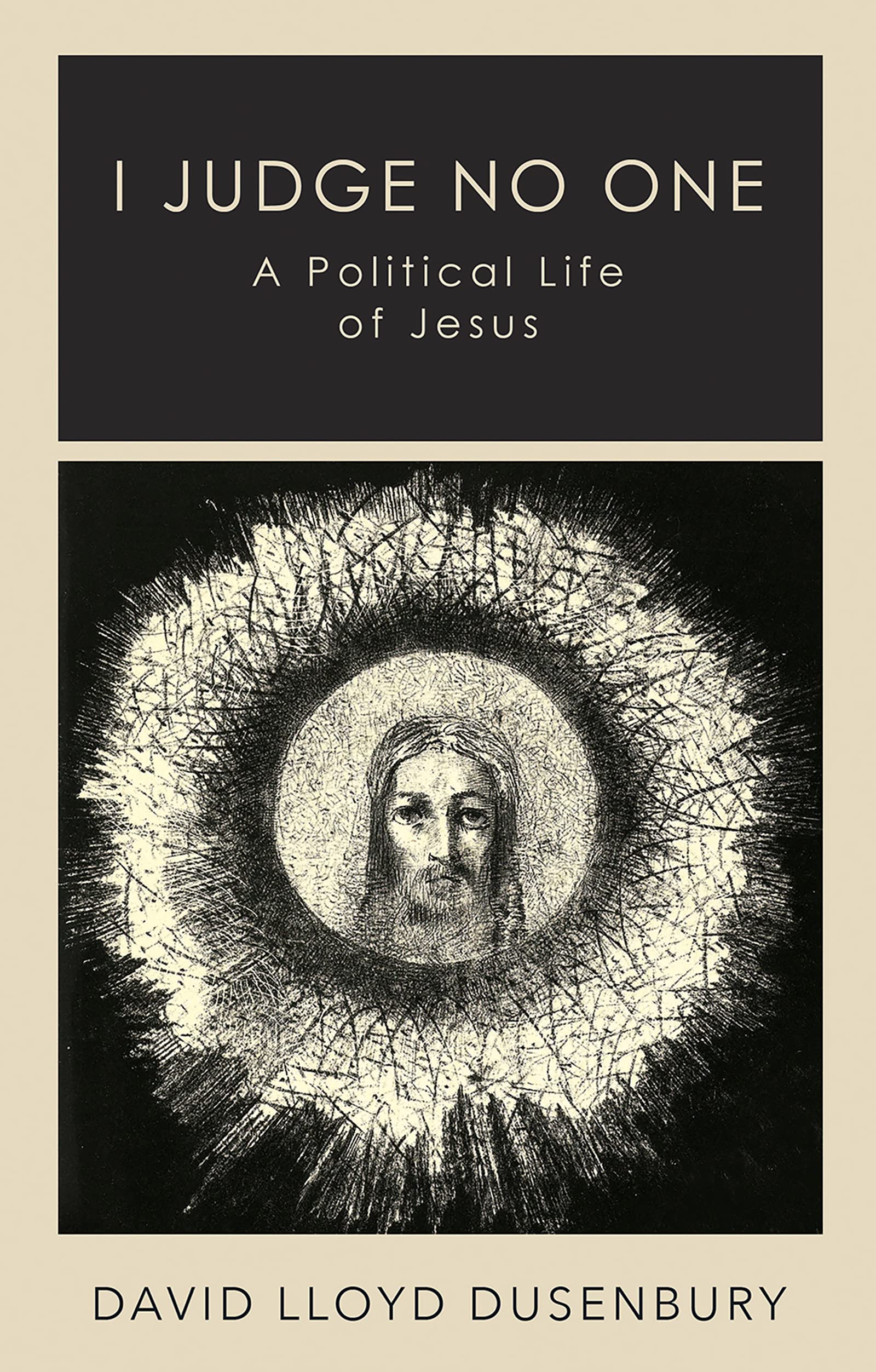
Why was Jesus, who said I judge no one, put to death for a political crime? Of course, this is a historical question--but it is not only historical. Jesus's life became a philosophical theme in the first centuries of our era, when pagan and Christian philosophers clashed over the meaning of his sayings and the significance of his death. Modern philosophers, too, such as Immanuel Kant and Friedrich Nietzsche, have tried to retrace the arc of Jesus's life and death.
I Judge No One is a philosophical reading of the four memoirs, or gospels, that were fashioned by early Christ-believers and collected in the New Testament. It offers original ways of seeing a deeply enigmatic figure who calls himself the Son of Man.
David Lloyd Dusenbury suggests that Jesus offered his contemporaries a scandalous double claim. First, that human judgements are pervasive and deceptive; and second, that even divine laws can only be fulfilled in the human experience of love. Though his life led inexorably to a grim political death, what Jesus's sayings revealed--and still reveal--is that our highest desires lie beyond the political.
What a surprising portrait of Jesus! I can’t remember the last time a book made Jesus feel so compelling in such a strange way. Dusenbury links oft-neglected, peripheral Gospel passages into an original constellation of meaning. His readings are not scandalous; they make the scandal of Jesus fresh. Equal parts history, theology, philosophy, and exegesis, this is a study of Christ that is not to be missed.
This is an extremely original work that held up to its praise. It is both a balm and critique for our politically contentious times amongst Christians who increasingly define their faith in political terms on both the left and right. Jesus was a strange figure who confounded Roman’s, zealots, Jews, Judeans, etc. and he ought to confound us today. Tom Holland in his review said it best - “I can’t think of a book that has made the gospels seem as fresh and strange to me as this one does.” That is exactly my feeling about this too. I certainly don’t agree with all the conclusions Dusenbury comes to but I still highly recommend it.
An interesting book. I didn’t enjoy this one quite as much as I enjoyed his “Innocence of Pontius Pilate,” however it was still worthwhile read. Dusenbury makes claims and follows lines of thought that frustrated me at times, but he had many remarkable into the political ramifications and aspects of Jesus’ life. There were many things Dusenbury said that could’ve been elaborated on, but one can’t say everything in a book.
In our post-enlightenment world there is a pervading sense that Christianity is tired and has nothing to offer any more. How lucky we are then that D.L Dusenbury can show us the endless mystery and continuing relevance of the gospels. A relevance we could possibly consider needing our urgent attention if we want to understand this crumbling edifice of civilization we are sitting on.
Solid. Not as revelatory as the reviews imply, though; that Jesus is, among other things, a philosopher, one who presents a kingdom of transformed values beyond the idolatrous kingdoms of the present time, is hardly original. It's a shame people see it as such; if this book helps with that, though, then it has worth, even if it said little of interest to me.