

What do you think?

The Sandalwood Tree
A sweeping novel that brings to life two love stories, ninety years apart, set against the rich backdrop of war-torn India. In 1947, American historian and veteran of WWII, Martin Mitchell, wins a Fulbright Fellowship to document the end of British rule in India. His wife, Evie, convinces him to take her and their young son along, hoping a shared adventure will mend their marriage, which has been strained by war.
But other places, other wars. Martin and Evie find themselves stranded in a colonial bungalow in the Himalayas due to violence surrounding the partition of India between Hindus and Muslims. In that house, hidden behind a brick wall, Evie discovers a packet of old letters, which tell a strange and compelling story of love and war involving two young Englishwomen who lived in the same house in 1857.
Drawn to their story, Evie embarks on a mission to piece together her Victorian mystery. Her search leads her through the bazaars and temples of India as well as the dying society of the British Raj. Along the way, Martin’s dark secret is exposed, unleashing a new wedge between Evie and him. As India struggles toward Independence, Evie struggles to save her marriage, pursuing her Victorian ghosts for answers.
Bursting with lavish detail and vivid imagery of Calcutta and beyond, The Sandalwood Tree is a powerful story about betrayal, forgiveness, fate, and love.
But other places, other wars. Martin and Evie find themselves stranded in a colonial bungalow in the Himalayas due to violence surrounding the partition of India between Hindus and Muslims. In that house, hidden behind a brick wall, Evie discovers a packet of old letters, which tell a strange and compelling story of love and war involving two young Englishwomen who lived in the same house in 1857.
Drawn to their story, Evie embarks on a mission to piece together her Victorian mystery. Her search leads her through the bazaars and temples of India as well as the dying society of the British Raj. Along the way, Martin’s dark secret is exposed, unleashing a new wedge between Evie and him. As India struggles toward Independence, Evie struggles to save her marriage, pursuing her Victorian ghosts for answers.
Bursting with lavish detail and vivid imagery of Calcutta and beyond, The Sandalwood Tree is a powerful story about betrayal, forgiveness, fate, and love.
360 pages, Hardcover
First published February 1, 2011
About the author
Elle Newmark
5 books83 followersElle Newmark is an award-winning writer whose books are inspired by her travels. She and her husband, a retired physician, have two grown children and five grandchildren. They live in the hills north of San Diego.
Ratings & Reviews
Friends & Following
Create a free account to discover what your friends think of this book!
Community Reviews
Displaying 1 - 30 of 541 reviews

February 1, 2014
What I liked best about this book was the beautiful, descriptive writing . Just a few pages in and I was there in India seeing what Evie sees as she first arrives in India - flowers , trees ,the market , and the people . I was glad to be reading it on my kindle so I could easily look up the flowers and trees mentioned as well as some of the Indian words and phrases.
Many recent books have used the mechanism of alternating stories blending past and present . It didn't quite work here for me. It seemed too much like I was reading separate stories that just didn't connect for me. However, I was taken in by both stories and even though they felt separate to me, I was interested in what would happen to these characters.
I liked the strong willed independent women we meet in Adela and Felicity who were willing to live their lives as they wished , in spite of the fact that their relationships were not acceptable in society . There's much to think about in this book : the political unrest in India in 1857 and in 1947, the cultural differences, the caste system ,and the poverty .
While I loved the writing, the ending was a bit predictable and though there were similarities in both of the stories regarding what was happening in India ,I just didn't feel a connection between Evie and Adela and Felicity .
3.5 stars if I could .
April 20, 2011
I think The Sandalwood Tree is a humdinger of a story. Of course, I wrote it so I might be biased. It involves two love stories, 90 years apart, set in war-torn India. The research for this book was fascinating. We Americans do not ordinarily study Indian history (world history is usually limited to Europe) and reading about the drama and pageant that was the British Raj was colorful and gripping. I topped off all that reading with a trip to India, driving around northern India to check facts and collect sensory details for a feeling of authenticity. Writing The Sandalwood Tree was an adventure, and my life is richer for it.

August 18, 2011
I had high hopes for The Sandalwood Tree as I love historical fiction set in India - and I'm pleased to say that it didn't disappoint me at all.
This novel consists of two storylines, both of which take place during an important period of India's history. In 1947 we meet an American woman, Evie Mitchell, who has moved to India with her husband, Martin, and five-year-old son Billy. Martin, a historian, is planning to study the end of British rule and the process of Partition (the separation of Hindus and Muslims which led to the creation of Pakistan). As the Mitchells try to settle into their new life it becomes obvious that there are big problems in their marriage. Martin, who served in the US army during World War II, is still haunted by some of the things he experienced in Germany and is suffering from what we might now call post-traumatic stress disorder.
Soon after moving into their new house in the village of Masoorla, Evie discovers some old letters hidden behind a loose brick in the wall. The letters were written by two British women, Felicity Chadwick and Adela Winfield, who lived in the same house during the 1850s - a time of rising tension between the British and Indian people, leading to the Sepoy Rebellion of 1857. Evie is intrigued and begins to search for more information about the two Victorian women. As she slowly uncovers Felicity and Adela's story through a series of letters, diaries and historical documents, she starts to see some similarities between her own life and theirs.
Elle Newmark's descriptions of India are filled with colour and detail. Whether she's writing about the food prepared by Habib, the Mitchells' cook, a monkey swinging from the branches of a tree, or a perfume stall at the bazaar, her images really help to bring the book's setting to life. Because most of the story is told from Evie's perspective and she is new to India, seeing everything for the first time, we can experience all the sights, sounds and smells along with her. We also share Evie's fascination with Adela and Felicity and we feel her frustration every time she attempts to address the problems with her marriage.
Reading The Sandalwood Tree is an excellent way to learn about India's history and culture and Elle Newmark makes everything easy to understand. But it's also a great story with a beautiful setting, fascinating plot and complex characters who grow and change over the course of the novel. The transitions between the two periods are handled perfectly, moving smoothly from Evie's story to Felicity and Adela's, and it was interesting to see the parallels and connections between them. I found I enjoyed both storylines equally - each one would have been strong enough to form a complete novel on its own, but it's the way the two are interwoven that makes this book special.
This novel consists of two storylines, both of which take place during an important period of India's history. In 1947 we meet an American woman, Evie Mitchell, who has moved to India with her husband, Martin, and five-year-old son Billy. Martin, a historian, is planning to study the end of British rule and the process of Partition (the separation of Hindus and Muslims which led to the creation of Pakistan). As the Mitchells try to settle into their new life it becomes obvious that there are big problems in their marriage. Martin, who served in the US army during World War II, is still haunted by some of the things he experienced in Germany and is suffering from what we might now call post-traumatic stress disorder.
Soon after moving into their new house in the village of Masoorla, Evie discovers some old letters hidden behind a loose brick in the wall. The letters were written by two British women, Felicity Chadwick and Adela Winfield, who lived in the same house during the 1850s - a time of rising tension between the British and Indian people, leading to the Sepoy Rebellion of 1857. Evie is intrigued and begins to search for more information about the two Victorian women. As she slowly uncovers Felicity and Adela's story through a series of letters, diaries and historical documents, she starts to see some similarities between her own life and theirs.
Elle Newmark's descriptions of India are filled with colour and detail. Whether she's writing about the food prepared by Habib, the Mitchells' cook, a monkey swinging from the branches of a tree, or a perfume stall at the bazaar, her images really help to bring the book's setting to life. Because most of the story is told from Evie's perspective and she is new to India, seeing everything for the first time, we can experience all the sights, sounds and smells along with her. We also share Evie's fascination with Adela and Felicity and we feel her frustration every time she attempts to address the problems with her marriage.
Reading The Sandalwood Tree is an excellent way to learn about India's history and culture and Elle Newmark makes everything easy to understand. But it's also a great story with a beautiful setting, fascinating plot and complex characters who grow and change over the course of the novel. The transitions between the two periods are handled perfectly, moving smoothly from Evie's story to Felicity and Adela's, and it was interesting to see the parallels and connections between them. I found I enjoyed both storylines equally - each one would have been strong enough to form a complete novel on its own, but it's the way the two are interwoven that makes this book special.

August 6, 2023
Digital audiobook performed by Justine Eyre
3.5***
The blurb that put this on my TBR promised “Two love stories. 90 years apart.” That’s not quite what I got. But I did get a good historical fiction tale framed by the British leaving India as that country gained its independence.
In 1947, Evie, her husband and son, arrive in India; Martin has a Fulbright Fellowship to study India as part of his Ph.D. dissertation. But the unrest surrounding the coming partition of India and Pakistan results in the family being located in the small village of Masoorla rather than in Dehli. When cleaning the kitchen of their rented bungalow, Evie discovers a loose brick and behind it a stash of letters hidden in a cubbyhole. Those letters were written in the mid 19th century and have been partially destroyed by the heat and humidity of the kitchen, but slowly the story of two British women in India emerges.
Newmark captivated me with this dual story line, although I wasn’t sure there was a real reason to include the lesbian relationship, which was really such a small part of the whole tale. Basically, though, she gives us a story of relationships and the difficulties two people might have as a result of different cultural backgrounds, family expectations, and emotional trauma suffered by one or both of the parties.
Evie narrates most of the story, though flashbacks provide the story of Felicity and Adela. I liked how Evie grew and came to understand her husband and her own emotions by reading the journals / letters / poetry of these long-dead women. The struggles Felicity and Adela endured help Evie realize what she truly valued. Additionally, Evie, an American, has to come to grips with the British mentality as Britain’s rule over India is ending.
Justine Eyre does a fine job of performing the audiobook. She sets a good pace and is able to give the many characters sufficiently unique voices, so it was easy to tell who was speaking.
3.5***
The blurb that put this on my TBR promised “Two love stories. 90 years apart.” That’s not quite what I got. But I did get a good historical fiction tale framed by the British leaving India as that country gained its independence.
In 1947, Evie, her husband and son, arrive in India; Martin has a Fulbright Fellowship to study India as part of his Ph.D. dissertation. But the unrest surrounding the coming partition of India and Pakistan results in the family being located in the small village of Masoorla rather than in Dehli. When cleaning the kitchen of their rented bungalow, Evie discovers a loose brick and behind it a stash of letters hidden in a cubbyhole. Those letters were written in the mid 19th century and have been partially destroyed by the heat and humidity of the kitchen, but slowly the story of two British women in India emerges.
Newmark captivated me with this dual story line, although I wasn’t sure there was a real reason to include the lesbian relationship, which was really such a small part of the whole tale. Basically, though, she gives us a story of relationships and the difficulties two people might have as a result of different cultural backgrounds, family expectations, and emotional trauma suffered by one or both of the parties.
Evie narrates most of the story, though flashbacks provide the story of Felicity and Adela. I liked how Evie grew and came to understand her husband and her own emotions by reading the journals / letters / poetry of these long-dead women. The struggles Felicity and Adela endured help Evie realize what she truly valued. Additionally, Evie, an American, has to come to grips with the British mentality as Britain’s rule over India is ending.
Justine Eyre does a fine job of performing the audiobook. She sets a good pace and is able to give the many characters sufficiently unique voices, so it was easy to tell who was speaking.

March 2, 2013
Overall I was disappointed in this novel. The characters and the idea of the story were brilliant but the execution was poor. In a novel structured in this way it’s important (in my opinion) that the reader ‘discovers’ the history of the house’s former inhabitants at the same pace as the protagonist. Unfortunately, as a reader, I got to know more about Felicity & Adela than she did and therefore kept forgetting what Evie knew. I wish the author had stuck to the idea of telling the 1858 story though diaries, photos, Empire records and letters rather than throwing in a few ‘real life’ chapters from that time. I also got very frustrated because my advance knowledge helped me ‘get’ the connections before Evie did so although the author perhaps felt she was building up tension all I felt was an intense frustration.
The history the author gives is fantastic and the sense of time and place feels authentic. I wish the author could have balanced the story with some native characters that had a real voice and also given Mr Singh more of a prominent role, by the time he entered the story in any real way you were speeding through to a very neat and contrived conclusion. Another frustration was in the diaries of Adela, which didn’t have a convincing ‘voice’ and were written in much the same way as the main story, with a descriptive storytelling narrative rather than an inner monologue.
As a light read it serves its purpose but it could have been a real triumph and I would have liked to read the novel it could very easily have been.
The history the author gives is fantastic and the sense of time and place feels authentic. I wish the author could have balanced the story with some native characters that had a real voice and also given Mr Singh more of a prominent role, by the time he entered the story in any real way you were speeding through to a very neat and contrived conclusion. Another frustration was in the diaries of Adela, which didn’t have a convincing ‘voice’ and were written in much the same way as the main story, with a descriptive storytelling narrative rather than an inner monologue.
As a light read it serves its purpose but it could have been a real triumph and I would have liked to read the novel it could very easily have been.

September 6, 2017
Historical fiction is my favorite genre; that being said, this was a good story.

December 12, 2016
A Slumpbreaker ...
Particularly enjoyed the ending.
Particularly enjoyed the ending.

April 25, 2020
THE SANDALWOOD TREE is the second and final novel by late author, Elle Newmark, who passed away the very year that this book was published. Given this sad coincidence, reading the book was all the more poignant, as it's imbued with the author's obvious love for travel and for India.
Set in a dual timeline, this is the entwined story of three women, whose arrival in India during the upheaval and eventual downfall of the Raj changes their lives. In 1947, Evie comes to India with her young son and her husband, who's suffering PTSD after his service in WWII. Their marriage is falling apart as a result, but in the colonial bungalow where they reside, Evie happens upon a hidden packet of letters belonging to the bungalow's prior occupants, Felicity and Adela, two Victorian-era women whose intimate friendship is described in alternating chapters.
Newmark eloquently describes the majesty of India, sweeping us into this complex nation as it expunges centuries of British rule. Evie's struggles to salvage her marriage find respite in her discovery of Felicity and Adela's refusal to conform to their own era's rigid standards, even as violence in India increases and the deadline for Partition looms. While the denouement feels too coincidental, the characters are vividly portrayed and unexpected, especially Adela, as is their conjoined plight. Above all else, the depiction of India itself, with its whirlwind of colors and scents, its desperate poverty and sage humility, display Newmark's meticulous on-site research and passion for her subject matter. She was a gifted writer who left us a wonderful novel.
Set in a dual timeline, this is the entwined story of three women, whose arrival in India during the upheaval and eventual downfall of the Raj changes their lives. In 1947, Evie comes to India with her young son and her husband, who's suffering PTSD after his service in WWII. Their marriage is falling apart as a result, but in the colonial bungalow where they reside, Evie happens upon a hidden packet of letters belonging to the bungalow's prior occupants, Felicity and Adela, two Victorian-era women whose intimate friendship is described in alternating chapters.
Newmark eloquently describes the majesty of India, sweeping us into this complex nation as it expunges centuries of British rule. Evie's struggles to salvage her marriage find respite in her discovery of Felicity and Adela's refusal to conform to their own era's rigid standards, even as violence in India increases and the deadline for Partition looms. While the denouement feels too coincidental, the characters are vividly portrayed and unexpected, especially Adela, as is their conjoined plight. Above all else, the depiction of India itself, with its whirlwind of colors and scents, its desperate poverty and sage humility, display Newmark's meticulous on-site research and passion for her subject matter. She was a gifted writer who left us a wonderful novel.
November 5, 2012
This was an annoying book. Right from page 2 when Evie Mitchell refers to Gandhi as "a skinny little man in a loincloth". I wondered how Indian readers would regard this.
One narrative is set mid-20th C with Evie and her husband and son travelling to India on a Fulbright Scholarship. She appreciates the purpose behind the scholarship "to foster a global community" little in the rest of the book indicates she the scholarship is doing that for her. And little time is devoted to her husband, Martin, to indicate he is experiencing this either.
And then there is the other narrative of two women in the mid-19th C. much of their story is told through letters and a diary. All of this appears in the edition I read in italics. Italics is very annoying font to read. And either the author or the publisher should give the reader a little credit. We learn very quickly that Evie is in the 20 century and Adela and Felicity are in the 19th. We do not need italics to help us make that discrimination.
I kept putting off reading this book. A very bad sign. Then I just picked it up and flipped through to the end. And what a tidy ending it was.
One narrative is set mid-20th C with Evie and her husband and son travelling to India on a Fulbright Scholarship. She appreciates the purpose behind the scholarship "to foster a global community" little in the rest of the book indicates she the scholarship is doing that for her. And little time is devoted to her husband, Martin, to indicate he is experiencing this either.
And then there is the other narrative of two women in the mid-19th C. much of their story is told through letters and a diary. All of this appears in the edition I read in italics. Italics is very annoying font to read. And either the author or the publisher should give the reader a little credit. We learn very quickly that Evie is in the 20 century and Adela and Felicity are in the 19th. We do not need italics to help us make that discrimination.
I kept putting off reading this book. A very bad sign. Then I just picked it up and flipped through to the end. And what a tidy ending it was.

September 10, 2011
It's fluffy, it's cutesy, it takes about a day to read.
It's horribly cliche in the most banal ways. Post-traumatic stress is resolved by an epiphany and a resolution. A wife with a promising career in science is happy raising her adorable, blond, beautiful child, and saves her husband through her womanly virtues. India is a place of acceptance and spirituality, flavours and smells, compared to the bland, arrogant West...
Et cetera, et cetera.
It's not a very god book. The only thing that saves it from being a really bad book is its utter pretentiousness. It doesn't aspire to be a profound examination of conditions in India. It just wants to be a feel-good historical fiction story that can be consumed and then immediately forgotten. It's easy to read in all ways, including a large print and colourful pretty cover.
Recommended fro: doctors' offices, trains, and sickdays.
Not recommended for: anyone who wants to read about PTSD, India, or family relationships.
It's horribly cliche in the most banal ways. Post-traumatic stress is resolved by an epiphany and a resolution. A wife with a promising career in science is happy raising her adorable, blond, beautiful child, and saves her husband through her womanly virtues. India is a place of acceptance and spirituality, flavours and smells, compared to the bland, arrogant West...
Et cetera, et cetera.
It's not a very god book. The only thing that saves it from being a really bad book is its utter pretentiousness. It doesn't aspire to be a profound examination of conditions in India. It just wants to be a feel-good historical fiction story that can be consumed and then immediately forgotten. It's easy to read in all ways, including a large print and colourful pretty cover.
Recommended fro: doctors' offices, trains, and sickdays.
Not recommended for: anyone who wants to read about PTSD, India, or family relationships.

October 14, 2011
3.5 The strength of this novel is the descriptions of the sights and sounds and smells of India. Absolutely atmospheric, made me want to be there. Also liked the history of Gandhi, Partition and the political maneuverings between Great Britain and India, there was much I didn't know. Two alternate stories, one from the 1940's and one following the lives of two women a decade earlier. Great easy to follow writing and the story lines were interesting. All in all a very good read. When I went to look up further info on this author I found she had passed away last year from a long illness. She did have a few earlier books that I will go back and read.

January 20, 2015
Ova nam knjiga donosi dvije priče, s razmakom od 90 godina. Naime, sada je 1947., godina u kojoj polako prestaje prevlast Britanaca u Indiji. Kako bi upravo tu temu dokumentirao, Martin Mitchell (američki povjesničar i veteran 2. svjetskog rata) otputovat će u Indiju, sa suprugom i petogodišnjim sinom. Njegova supruga Evie pokušava održati brak živim i vratiti onog Martina, kakav je bio prije rata. U obavljanju tog ponekad vrlo teškog zadatka, naletjet će na pisma iz 1857. g. i jednu snažnu priču o Felicity i Adeli, njihovom prijateljstvu i životu tadašnjeg doba, u toj istoj kući.
Autorica vrlo vješto isprepliće ove dvije radnje, pomalo nam otkrivajući sve brižno zakopane tajne, koje će na kraju biti zaokružene u jednoj lijepoj i toploj harmoniji.
Obožavam ovaj stil pisanja, priču u priči, a još k tome i Indiju. Neki će odmah pomisliti isključivo na siromaštvo, prljavštinu i krave na cesti, ali osim toga Indija ima jednu čudesnu i zadivljujuću kulturu, tu vjersku i životnu raznolikost i filozofiju. Fascinira me taj britanski svijet 19. stoljeća, u kojem djevojke koje se nisu udale u razdoblju godine dana od predstavljanja u društvu, odlaze brodom na drugi kraj svijeta, kako bi doslovno „upecale“ supruga i pridružile se tzv. Ribarskoj floti. A Indija 20. stoljeća pokušava ostvariti svoju nezavisnost, pod vodstvom mladog Ghandija, u svakodnevnim razmiricama između Hindusa i Muslimana, koje nerijetko prerastaju u nešto opasnije.
Preporuka za čitanje onima koji vole bilo koji dio ovoga što sam navela, a imaju hrabrosti zakoračiti u dva različita svijeta i otkriti odgovore koje nude duhovi prošlosti.
Autorica vrlo vješto isprepliće ove dvije radnje, pomalo nam otkrivajući sve brižno zakopane tajne, koje će na kraju biti zaokružene u jednoj lijepoj i toploj harmoniji.
Obožavam ovaj stil pisanja, priču u priči, a još k tome i Indiju. Neki će odmah pomisliti isključivo na siromaštvo, prljavštinu i krave na cesti, ali osim toga Indija ima jednu čudesnu i zadivljujuću kulturu, tu vjersku i životnu raznolikost i filozofiju. Fascinira me taj britanski svijet 19. stoljeća, u kojem djevojke koje se nisu udale u razdoblju godine dana od predstavljanja u društvu, odlaze brodom na drugi kraj svijeta, kako bi doslovno „upecale“ supruga i pridružile se tzv. Ribarskoj floti. A Indija 20. stoljeća pokušava ostvariti svoju nezavisnost, pod vodstvom mladog Ghandija, u svakodnevnim razmiricama između Hindusa i Muslimana, koje nerijetko prerastaju u nešto opasnije.
Preporuka za čitanje onima koji vole bilo koji dio ovoga što sam navela, a imaju hrabrosti zakoračiti u dva različita svijeta i otkriti odgovore koje nude duhovi prošlosti.

February 23, 2011
Rich in details and history, The Sandalwood Tree will keep the reader turning pages. A book that teaches while telling a great story is worth reading, and this book meets that criteria.
Martin, Evie, and Billy leave Chicago to live in India while Martin, a historian, documents the end of the British Raj. As they settle into a small town amid brilliant color, strange customs, and agonizing poverty, the tapestry of the story begins.
Against the wallpaper of a solid but troubled marriage and religious and political turmoil, Evie discovers a few letters secreted away in their rented bungalow. She seeks more information about the people in the letters from a local church. One scrap of information leads to another, along with some accidental, fortuitous finds, and the story of Adele and Felicity emerge. The year is 1947; the letters were written 90 years ago in the Victorian era.
The dual stories of Evie's family in an increasingly war-ravaged, unstable land and young Adele and Felicity's growing up across continents alternate in the book. The characters are finely crafted by the author.
The book engages the senses and emotions leaving the reader with drifts of the story long after it is read. I loved the book. It would make a good movie, if it's possible to fit so much into a movie.
Martin, Evie, and Billy leave Chicago to live in India while Martin, a historian, documents the end of the British Raj. As they settle into a small town amid brilliant color, strange customs, and agonizing poverty, the tapestry of the story begins.
Against the wallpaper of a solid but troubled marriage and religious and political turmoil, Evie discovers a few letters secreted away in their rented bungalow. She seeks more information about the people in the letters from a local church. One scrap of information leads to another, along with some accidental, fortuitous finds, and the story of Adele and Felicity emerge. The year is 1947; the letters were written 90 years ago in the Victorian era.
The dual stories of Evie's family in an increasingly war-ravaged, unstable land and young Adele and Felicity's growing up across continents alternate in the book. The characters are finely crafted by the author.
The book engages the senses and emotions leaving the reader with drifts of the story long after it is read. I loved the book. It would make a good movie, if it's possible to fit so much into a movie.

October 6, 2016
I wanted to like this book, but as I continued to read I felt like I just wanted it to be over.
In all fairness I do think that Newmark is a good crafter of words.
The story felt contrived, as there were too many neat and tidy coincidences. I also wondered if Newmark had done her research in India or in books. The story within the story was better, but neither story rang true for me.
I especially felt that Evie, the main character was a woman from the 21st century that had been inserted to a story which took place in 1947. For some reason I could not like her, and that aside, simply lost interest in her world.
I love India, and books about India by their authors. One must tread carefully when reading a book about another country. Who wrote it, what where did the author obtain their information?
I will leave it at that.
In all fairness I do think that Newmark is a good crafter of words.
The story felt contrived, as there were too many neat and tidy coincidences. I also wondered if Newmark had done her research in India or in books. The story within the story was better, but neither story rang true for me.
I especially felt that Evie, the main character was a woman from the 21st century that had been inserted to a story which took place in 1947. For some reason I could not like her, and that aside, simply lost interest in her world.
I love India, and books about India by their authors. One must tread carefully when reading a book about another country. Who wrote it, what where did the author obtain their information?
I will leave it at that.

February 19, 2011
This is a lovely and informative novel. The setting is India, both 1947 and 1858. There are five love stories in a way.. There's the heroine, Evie and Martin. They are married with a five year old boy. Their marriage was wonderful until Martin went to serve in WW2... now things are falling apart. Evie thought that coming to India would bring them closer together, but they have simply "exported" their unhappiness... In order to save their marriage, Martin must get rid of his inner demons and both of them must learn to live for joy..
To read full review, please click on the link:
http://wwwbookbabe.blogspot.com/2011/...
To read full review, please click on the link:
http://wwwbookbabe.blogspot.com/2011/...

February 24, 2020
The book provides a unique view of the lives of people living in India in the 1940s. As the main character finds memoirs of another era and life, she transplants it into her current situation. And yet it also enables the reader to understand how these same situations, relationships and challenges could easily be transplanted into today’s times and real life. Very strong characters that are well defined in a historical setting.

August 6, 2023
3.5
Ova knjiga me je podsjetila koliko u stvari volim povijesnu fikciju, dobru povijesnu fikciju koja te bez problema prebaci u drugo vrijeme i na drugo mjesto. A ova knjiga to čini vješto preplićući dva narativa jedan iz sredine devetnaestog stoljeća u Indiji za vrije vrhunca Britanske vladavine i drugi dva mjeseca prije odlaska Britanaca iz Indije i cijepanja potkontinenta na Pakistan i Indiju. Prateći priče tri žene, dvije Britanke i jedne Amerikanke koje pokušavaju živjeti po svojim pravilima i istovremeno se uklopiti u Indiju shvaćajući da će im bit ove zemlje uvijek izmicati ali da cilj nije uklopiti se prema van nego pronaći utočište i sidrište unutar sebe autorica stvara uvjerljive likove i zanimljivu radnju.
Topla preporuka.
Ova knjiga me je podsjetila koliko u stvari volim povijesnu fikciju, dobru povijesnu fikciju koja te bez problema prebaci u drugo vrijeme i na drugo mjesto. A ova knjiga to čini vješto preplićući dva narativa jedan iz sredine devetnaestog stoljeća u Indiji za vrije vrhunca Britanske vladavine i drugi dva mjeseca prije odlaska Britanaca iz Indije i cijepanja potkontinenta na Pakistan i Indiju. Prateći priče tri žene, dvije Britanke i jedne Amerikanke koje pokušavaju živjeti po svojim pravilima i istovremeno se uklopiti u Indiju shvaćajući da će im bit ove zemlje uvijek izmicati ali da cilj nije uklopiti se prema van nego pronaći utočište i sidrište unutar sebe autorica stvara uvjerljive likove i zanimljivu radnju.
Topla preporuka.

September 28, 2012
Uživala sam u svakom elementu ove knjige: bogata postavka i kultura Indije tijekom dva važna razdoblja u svojoj povijesti, složen lik razvoja i odnosa, bezvremenski kvalitetnih temeljnih tema, zrak - misterija u cijeloj knjizi i uporaba pisama i dnevnika koji se koriste za ispričati priču o prošlosti.
Nekoliko puta me nasmijala oko samih likova, često me držala znatiželjnom što se dogodilo dalje; bilo sa likovima u prošlosti, bilo sa likovima u sadašnjosti. Jako lijepi opisi same Indije i života, ali i zadnji otkucaji Britanske vladavine u Indiji i početak kaosa između vjerskih razlika, stvaranje muslimanskog dijela nazvanog Pakistan i Indijskog dijela koji drži mladi Gandhi.
Nekoliko puta me nasmijala oko samih likova, često me držala znatiželjnom što se dogodilo dalje; bilo sa likovima u prošlosti, bilo sa likovima u sadašnjosti. Jako lijepi opisi same Indije i života, ali i zadnji otkucaji Britanske vladavine u Indiji i početak kaosa između vjerskih razlika, stvaranje muslimanskog dijela nazvanog Pakistan i Indijskog dijela koji drži mladi Gandhi.

December 16, 2022
This was excellent. I have had this on my shelf, and have looked over it for a more "interesting" read for about two years.... Boy was I wrong.
This is a VERY interesting look at 1940s India, but also the country 90 years before in 1850s.
The chapters kind of alternate between the timelines and tells two interwoven stories.
I would definitely recommend this!
This is a VERY interesting look at 1940s India, but also the country 90 years before in 1850s.
The chapters kind of alternate between the timelines and tells two interwoven stories.
I would definitely recommend this!

June 5, 2022
Brilliant book! The writing was beautiful and descriptive and easily evoked images of India in the past when under British rule. I loved the main characters who were telling their stories and how they interweaved. I became so engrossed in the story and the mystery that kept evolving, I couldn't put the book down. Would absolutely recommend this book.

January 2, 2026
Two engaging narratives twined around each other, and of course, I can never resist a story set in India...

January 16, 2011
I really enjoyed Elle Newmark's previous novel, The Book of Unholy Mischief. The Sandalwood Tree was my most awaited book this year. I am glad to say that it more than lived up to my expectations. The Sandalwood Tree by Elle Newmark is an excellent read, the best book I've read this year, till now. I adore books involving long-ago secrets, mysterious letters, strong female protagonists and tragic love stories; this book offered me all of these and more. Needless to say, I LOVED this book! Yes, LOVED!
In 1947, Americans Evie and Martin Mitchell, along with their young son, move to Simla, a hill station in India. Martin, a historian, wants to document the events surrounding the end of British rule in India after a period of more than two hundred years. For Evie, following her husband to India is a last resort to save her marriage. However, Martin is still battling his horrific memories and dreams of the World War II. The Mitchells are mesmerized and quite taken with India. But 1947 is a turbulent time. The date of partition is approaching. The future appears dangerous as India is to be divided into two - a separate country called "Pakistan" is about to be created. Chaos and violence ensues due to the inevitable clash between Hindus and Muslims. Evie doesn't believe that the violence can touch the peaceful Simla and doesn't want to leave the country.
Martin and Evie, once so much in love, are now falling apart. All of Evie's attempts to restore her marriage fail. Her life looks bleak and lonely. Things change, as Evie comes across some hidden letters, written almost hundred years ago. She's drawn towards these letters, written by two Englishwomen, Adela and Felicity. As her marriage falls apart further and violence reigns over India, she becomes more and more obsessed with the mystery. The letters become her own little secret, her solace.
There are two story-lines running simultaneously - Evie's journey towards uncovering the secrets of the letters as well as Adela and Felicity's story. Entwined in all of this are two love stories that will stir you deeply. While Adela and Felicity's story is beautiful and heartbreaking, it's Evie's voice that I was drawn to the most. She's dissatisfied and desperate, lonely and unhappy. My heart went out to her.
The most captivating thing about The Sandalwood Tree is the author's enchanting, stunning portrayal of India, especially Simla. At first, I was quite doubtful about how the author would depict the most important year in Indian history. But Elle Newmark seems to have done so much of research. I learned things that I didn't know despite having studied History for four years in school (the major part of which encompassed the freedom struggle). I was transported to 1947 India and I could see everything through Evie's eyes. It's always interesting to read another perspective on the Partition and the freedom movement. I loved how objective the author was. Through Evie's voice, she has presented both sides of the argument- both the British and the Indian perspective. The description of Simla is especially enthralling - the way the author has described the Himalayas, the people, the bazaars and so on. I've been to Simla twice; somehow my interest in the place is rekindled and I can't wait to visit again. Of course, much has changed since 1947.
I've heard some horror stories of the Partition from my grandfather, as well as read about it; so I could relate to the events described in the book. We all know about the tensions between India and Pakistan, all going back to the Partition. I wonder - what if the division had not happened? I feel we gained as well as lost something in 1947. I'd prefer to have peace and friendship rather than the bitterness and prejudices that still prevail.
Evie, Felicity and Adela are such fascinating women, each different and yet connected. Their stories will mesmerize you and even make you teary-eyed. One of the most powerful aspects of the book, for me, is Evie's relationship with her son, Billy. Some of their scenes together really tugged at my heartstrings.
There were some minor problems I had with the book. There's a storyline that stops midway, which I wished the author had pursued further. Moreover, though I love Evie, some things she did really bothered me. Despite these, the good points outdo the few bad ones.
The Sandalwood Tree gives out some relevant messages about forgiveness, acceptance, love and happiness. Lush Imagery combined with characters that remain with you, make The Sandalwood Tree a memorable read. Beautiful and evocative writing brought to life the characters and the setting, creating a lingering effect in my mind.
Overall:
Beautiful, compelling and heartrending story of three women during British India.
Recommended?
Highly recommended! If you love vivid imagery and "exotic" settings, this one's for you.
In 1947, Americans Evie and Martin Mitchell, along with their young son, move to Simla, a hill station in India. Martin, a historian, wants to document the events surrounding the end of British rule in India after a period of more than two hundred years. For Evie, following her husband to India is a last resort to save her marriage. However, Martin is still battling his horrific memories and dreams of the World War II. The Mitchells are mesmerized and quite taken with India. But 1947 is a turbulent time. The date of partition is approaching. The future appears dangerous as India is to be divided into two - a separate country called "Pakistan" is about to be created. Chaos and violence ensues due to the inevitable clash between Hindus and Muslims. Evie doesn't believe that the violence can touch the peaceful Simla and doesn't want to leave the country.
Martin and Evie, once so much in love, are now falling apart. All of Evie's attempts to restore her marriage fail. Her life looks bleak and lonely. Things change, as Evie comes across some hidden letters, written almost hundred years ago. She's drawn towards these letters, written by two Englishwomen, Adela and Felicity. As her marriage falls apart further and violence reigns over India, she becomes more and more obsessed with the mystery. The letters become her own little secret, her solace.
There are two story-lines running simultaneously - Evie's journey towards uncovering the secrets of the letters as well as Adela and Felicity's story. Entwined in all of this are two love stories that will stir you deeply. While Adela and Felicity's story is beautiful and heartbreaking, it's Evie's voice that I was drawn to the most. She's dissatisfied and desperate, lonely and unhappy. My heart went out to her.
The most captivating thing about The Sandalwood Tree is the author's enchanting, stunning portrayal of India, especially Simla. At first, I was quite doubtful about how the author would depict the most important year in Indian history. But Elle Newmark seems to have done so much of research. I learned things that I didn't know despite having studied History for four years in school (the major part of which encompassed the freedom struggle). I was transported to 1947 India and I could see everything through Evie's eyes. It's always interesting to read another perspective on the Partition and the freedom movement. I loved how objective the author was. Through Evie's voice, she has presented both sides of the argument- both the British and the Indian perspective. The description of Simla is especially enthralling - the way the author has described the Himalayas, the people, the bazaars and so on. I've been to Simla twice; somehow my interest in the place is rekindled and I can't wait to visit again. Of course, much has changed since 1947.
I've heard some horror stories of the Partition from my grandfather, as well as read about it; so I could relate to the events described in the book. We all know about the tensions between India and Pakistan, all going back to the Partition. I wonder - what if the division had not happened? I feel we gained as well as lost something in 1947. I'd prefer to have peace and friendship rather than the bitterness and prejudices that still prevail.
Evie, Felicity and Adela are such fascinating women, each different and yet connected. Their stories will mesmerize you and even make you teary-eyed. One of the most powerful aspects of the book, for me, is Evie's relationship with her son, Billy. Some of their scenes together really tugged at my heartstrings.
There were some minor problems I had with the book. There's a storyline that stops midway, which I wished the author had pursued further. Moreover, though I love Evie, some things she did really bothered me. Despite these, the good points outdo the few bad ones.
The Sandalwood Tree gives out some relevant messages about forgiveness, acceptance, love and happiness. Lush Imagery combined with characters that remain with you, make The Sandalwood Tree a memorable read. Beautiful and evocative writing brought to life the characters and the setting, creating a lingering effect in my mind.
Overall:
Beautiful, compelling and heartrending story of three women during British India.
Recommended?
Highly recommended! If you love vivid imagery and "exotic" settings, this one's for you.

August 14, 2011
About the book: There are two storylines in this book. The first is the story of American Evie Mitchell, who has recently moved to India with her husband Martin and their five-year old son Billy. It’s 1947 and there are troubles ahead for India. Martin is researching the process of India becoming independent from England and especially the Partition (in which Pakistan and Bangladesh were formed).
Evie isn’t interested in joining the other ex-pats and wants to experience India first-hand. Her husband was part of unmentionable events as an american soldier in Germany in the second world war, and their relationship isn’t going very well. When she finds some letters hidden in her house, she is intrigued, as the letters are 100 years old.
The second storyline is about the writers of the letters, Felicity and Adela, two English young women in the 1850s. Felicity was born in India but sent to England to live with Adela and her parents when she was eight years old. Later she moves back to India and an interesting story follows, complete with scandals.
What I thought: This book drew me in from the first few pages. The atmosphere in India, the smells, colors, people and everything else is described so beautifully.
The story itself is very interesting, with both Evie and Felicity going against the grain and not fitting in with the people around them. That was also a weak point of the book, because some of the stories of Evie and Felicity were too similar, and sometimes I wasn’t sure whose story I was reading.
Finding old letters and discovering a story from them has been done so often, but in this book it really worked. It was fun that sometimes the reader knew things that Evie hadn’t discovered yet. At first, it seemed that Evie wouldn’t find out more than what she’d read in a few letters, but eventually, and with some help of others, she found out the whole story of Felicity and Adela.
What I liked about this book, too, is that the (re)search into Felicity’s story doesn’t overtake Evie’s life completely. When she has husband troubles and when there is a scare involving her son, she puts everything aside and it becomes totally unimportant to her. I liked that a lot, as in some books, the search into the past seems to become the main issue of the book, while what happens in the present, should always be most important.
Absolutely wonderful read!
Evie isn’t interested in joining the other ex-pats and wants to experience India first-hand. Her husband was part of unmentionable events as an american soldier in Germany in the second world war, and their relationship isn’t going very well. When she finds some letters hidden in her house, she is intrigued, as the letters are 100 years old.
The second storyline is about the writers of the letters, Felicity and Adela, two English young women in the 1850s. Felicity was born in India but sent to England to live with Adela and her parents when she was eight years old. Later she moves back to India and an interesting story follows, complete with scandals.
What I thought: This book drew me in from the first few pages. The atmosphere in India, the smells, colors, people and everything else is described so beautifully.
The story itself is very interesting, with both Evie and Felicity going against the grain and not fitting in with the people around them. That was also a weak point of the book, because some of the stories of Evie and Felicity were too similar, and sometimes I wasn’t sure whose story I was reading.
Finding old letters and discovering a story from them has been done so often, but in this book it really worked. It was fun that sometimes the reader knew things that Evie hadn’t discovered yet. At first, it seemed that Evie wouldn’t find out more than what she’d read in a few letters, but eventually, and with some help of others, she found out the whole story of Felicity and Adela.
What I liked about this book, too, is that the (re)search into Felicity’s story doesn’t overtake Evie’s life completely. When she has husband troubles and when there is a scare involving her son, she puts everything aside and it becomes totally unimportant to her. I liked that a lot, as in some books, the search into the past seems to become the main issue of the book, while what happens in the present, should always be most important.
Absolutely wonderful read!

August 21, 2011
I read and reviewed this book as part of the Transworld Reading Group Challenge.
I am very partial to well told dual time-frame stories although I usually find the contemporary narrative weaker so this is a rare gem indeed, a dual time frame narrative with both stories set in the past, both in India, one in 1947 and the other in the mid 19th century. I’m delighted to report that both stories drew me in from the opening pages and I was sad to finish this very engaging novel.
In the 1947 setting, Evie and Martin Mitchell, and their little boy, Billy, have moved to India in a bid to embark on a new life, far away from the nightmare memories of WWII which continue to haunt Martin, a former soldier. Unfortunately, the turmoil of war torn India with all its religious divisions mirrors the turbulent nature of the Mitchells’ relationship. Evie feels isolated but a diversion arrives when she discovers some old letters hidden within the walls of their bungalow – she is enthralled by the story which emerges of two Victorian women who once occupied their home during the 1840s.
There’s a lot to satisfy the reader in this carefully woven tale – history, romance, eccentricity, various thrills and spills. Elle Newmark has an almost painterly approach to her descriptions and you feel plunged into this dusty landscape – it is very easy to visualise the eponymous sandalwood tree in front of the bungalow which has witnessed so much change as India gradually edges its way towards partition. We also witness first-hand the sights, smells and sounds of an India which has learned to “bend” rather than be “broken” by the streams of invaders and conquerers over the centuries.
I was very saddened to learn of the recent death of Elle who was still working on the final draft of this captivating novel during a long illness. However she has left a wonderful legacy in both this and her previous novel The Book of Unholy Mischief.
I am very partial to well told dual time-frame stories although I usually find the contemporary narrative weaker so this is a rare gem indeed, a dual time frame narrative with both stories set in the past, both in India, one in 1947 and the other in the mid 19th century. I’m delighted to report that both stories drew me in from the opening pages and I was sad to finish this very engaging novel.
In the 1947 setting, Evie and Martin Mitchell, and their little boy, Billy, have moved to India in a bid to embark on a new life, far away from the nightmare memories of WWII which continue to haunt Martin, a former soldier. Unfortunately, the turmoil of war torn India with all its religious divisions mirrors the turbulent nature of the Mitchells’ relationship. Evie feels isolated but a diversion arrives when she discovers some old letters hidden within the walls of their bungalow – she is enthralled by the story which emerges of two Victorian women who once occupied their home during the 1840s.
There’s a lot to satisfy the reader in this carefully woven tale – history, romance, eccentricity, various thrills and spills. Elle Newmark has an almost painterly approach to her descriptions and you feel plunged into this dusty landscape – it is very easy to visualise the eponymous sandalwood tree in front of the bungalow which has witnessed so much change as India gradually edges its way towards partition. We also witness first-hand the sights, smells and sounds of an India which has learned to “bend” rather than be “broken” by the streams of invaders and conquerers over the centuries.
I was very saddened to learn of the recent death of Elle who was still working on the final draft of this captivating novel during a long illness. However she has left a wonderful legacy in both this and her previous novel The Book of Unholy Mischief.
April 16, 2013
I tried to pinpoint what it was about this novel that made me so angry, and I think it's because it's a lightweight entertainment about traumatic historical events: the Partition, the Sepoy Rebellion, World War II and the Holocaust. If you've read any literature about the Partition, you'd know that it wasn't a time for dithering around with old letters and diaries. I also felt the novel was somewhat patronizing of its Indian characters, and of India itself; the characterization doesn't go much deeper than the standard "So hot! So dirty! So poor! So colorful!" Meanwhile, the author's decision to tell the story through entirely Western protagonists means that the Indians either get relegated to the non-speaking background, or to stereotypes, as with the cheeky head-waggling ayah.
And what of those protagonists? The narrator is curiously insensitive to her husband's trauma; it can't be easy living with someone suffering from PTSD, but you'd think she would be more understanding of a *Jew* fighting *Nazis* coming home with some issues. Of course, that husband comes across more as sulky and pigheaded than traumatized. Their little son is alternately pathetic and annoying. The Victorian ladies barely register as characters, due to the novel's tendency toward diary-as-expository-device. And for a novel where not much seems to happen, the ending feels rushed, and several promising loose ends are left hanging.
And what of those protagonists? The narrator is curiously insensitive to her husband's trauma; it can't be easy living with someone suffering from PTSD, but you'd think she would be more understanding of a *Jew* fighting *Nazis* coming home with some issues. Of course, that husband comes across more as sulky and pigheaded than traumatized. Their little son is alternately pathetic and annoying. The Victorian ladies barely register as characters, due to the novel's tendency toward diary-as-expository-device. And for a novel where not much seems to happen, the ending feels rushed, and several promising loose ends are left hanging.

January 5, 2011
I couldn't help kinda sorta feeling that this book was intentionally crafted to appeal to Sarah Waters fans. But my feeling could be attributed to the fact that I had Waters' 'The Little Stranger next on my queue, and was impatient to start it.
The Sandalwood Tree isn't as good as Waters - but it's still an enjoyable book.; I very much enjoyed the vivid depictions of rural India. However, I felt that the connection between the American woman in India in 1947 and the Victorian lady in the same location in the mid-1800's was a bit forced (the various discoveries of the earlier woman's letters &c became progressively less believable),
I also personally would have preferred more glimpses of events from a local's perspective, rather than only from the foreigners' - it would have made a nice contrast. And the focus on the Americans' marital troubles got a bit Lifetime-y at times, and detracted from the more interesting (to me) social issues that were also brought up by the story.
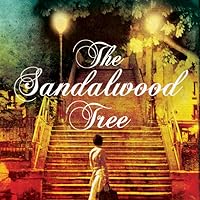
(Oh, just a note - I love the cover. It looks like an ad for a Merchant Ivory movie... it's why I picked it up.)
The Sandalwood Tree isn't as good as Waters - but it's still an enjoyable book.; I very much enjoyed the vivid depictions of rural India. However, I felt that the connection between the American woman in India in 1947 and the Victorian lady in the same location in the mid-1800's was a bit forced (the various discoveries of the earlier woman's letters &c became progressively less believable),
I also personally would have preferred more glimpses of events from a local's perspective, rather than only from the foreigners' - it would have made a nice contrast. And the focus on the Americans' marital troubles got a bit Lifetime-y at times, and detracted from the more interesting (to me) social issues that were also brought up by the story.
(Oh, just a note - I love the cover. It looks like an ad for a Merchant Ivory movie... it's why I picked it up.)
March 29, 2011
This book is a very easy read, however it did not keep my attention at all. It was to tell two love stories, one from the past(late 1850's) and one in the present(1940's). The past love story involves a young girl who is a lesbian(not really my type of read), however after only one or two chapters(which I am glad about) nothing more happens. She is caught with her "lover" and then ships off to India. A second "love" story from the past involves a English women and an Indian man which of course is taboo, but the author never really portrays their love story. The two characters start meeting for tea then secretly meet at a "hotel" and that was it. The present day love story was worse. It was the typical they meet, marry, then he goes off to war, comes back tramuatized, becomes distant then one day he tells her why, and they live happily ever after. I also felt the author spent too much time on the couples little boy and his stuffed toy then the love stories. I love historical fiction, but this unfortunatly is not one I would recommend.

June 2, 2015
A terrific read. Elle Newmark did a wonderful job with her evocation of India in the 1850's and in 1947, when racial and religious tensions were high - largely as a result of the British Raj. I never felt she was shoving research down my throat, and yet she must have done a lot of it, because the story includes not only historical background but the sights and smells of India. Even more interesting is her consideration of what it means to come to terms with one's life, how fragile that life can be, and how our stories are what remain of our lives long after we are gone. Since she died very shortly after this was published, I'm sure her awareness of what it means to be mortal was crucially important at that time. Plenty to discuss in a book club.
Lovely.
Lovely.

April 3, 2011
Now this is a story!
And one I will remember for a while.
I loved the way the author broke up the story between the present and the past, only to create a wonderful future for all the characters.
I fell in love with the little boy, Billy, and feel he really shone through in the book, for being such a subtle and small part. His part had impact on me.
A story of family, love, tradition and doing something new all wrapped in one. I really loved it, and hopefully will read more from Miss Newmark again.
And one I will remember for a while.
I loved the way the author broke up the story between the present and the past, only to create a wonderful future for all the characters.
I fell in love with the little boy, Billy, and feel he really shone through in the book, for being such a subtle and small part. His part had impact on me.
A story of family, love, tradition and doing something new all wrapped in one. I really loved it, and hopefully will read more from Miss Newmark again.

June 4, 2022
For $2, from my local Goodwill, this book wasn't even that bad but I do feel the need to add a trigger warning list, since there are a view.
Racism, it is set in the mid-1800's and mid-1900's in India but oh boy do you get the full serving of it in each century.
Homophobic comments.
Pretty descriptive depictions of poverty and some violence set in India like riots, ritualistic sacrifice, and some good old fashioned murder.
While there were some moments where I was wondering if I should even continue reading I finished it and I have to say, it was "alright." Nothing life changing but I did get some insight on life in India, considering the author seems to have actually been there and that you can fix a crumbling marriage by reading a dead woman's diaries.
Would I read it again...?
Probably not, unless I'm looking for names of an Indian style meal or simple phrases.
Racism, it is set in the mid-1800's and mid-1900's in India but oh boy do you get the full serving of it in each century.
Homophobic comments.
Pretty descriptive depictions of poverty and some violence set in India like riots, ritualistic sacrifice, and some good old fashioned murder.
While there were some moments where I was wondering if I should even continue reading I finished it and I have to say, it was "alright." Nothing life changing but I did get some insight on life in India, considering the author seems to have actually been there and that you can fix a crumbling marriage by reading a dead woman's diaries.
Would I read it again...?
Probably not, unless I'm looking for names of an Indian style meal or simple phrases.
Displaying 1 - 30 of 541 reviews