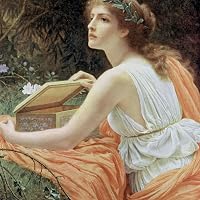
Incredibly illustrated by Caroline Bindo who also illustrated the children's book, Amazing Grace. Beautifully told story about a young boy who doesn't grow.
Hue is the smallest boy in the village with a big problem, he’s to short! Hue is smaller than all of his friends and not growing at all. Everyone has advice to give him but nothing seems to work, until the day his dad comes back from oversea and tells Hue boy that his height is not a problem. With the wise words from him father he stops worrying and stands confident with the person he is and to his surprise without realising Hue boy grows taller and taller! This book dealt with the issue in a humorous way and was a great read.
I had read this book to my year 2 class and they liked the moral of the story and the illustrations were great and kept the audience engaged.
I'd actually read this a long time ago but wanted to return to look at Binch's Caribbean setting and Rita Phillips Mitchell's writing. I still really enjoyed the story and images and had forgotten how a lot of the story revolves around, at a deeper level, Hue Boy missing his father. The illustrations are wonderful and the story feels normative and something that many children must worry about: being the smallest. The reason the story works so well in relation to diversity is because non of the cultural elements felt forced or convoluted. It felt like a story set in its place and time and therefore 'real'. A lovely addition to any bookshelf.
Hue Boy (Paperback) by Rita Phillips Mitchell, Illustrator-Caroline, Hindi language translation by Vidushak- Children’s Illustrated Colour Picture Book- The book narrates the story of an Afro-American short child named Hue Boy. His father works on a ship and his out on his work journey. His mother consults his doctor, the village learned person but no one is able to suggest a solution. On day the child is near the seaport where he finds that a large, beautiful ship has arrived on the port. He also finds that a smart man comes out. He recognizes that the man is his father. The child is happy. He starts playing more games. This story revolves around, at a deeper level, Hue Boy missing his father. Coloured illustrations help the reader in relating to the story. I have read the Hindi language translation of this book.
A heartwarming story that I enjoyed reading. If you look a bit deeper beneath the words on the page you soon realise this is actually a story of a boy who is missing his dad, and for this reason may be powerful for many children to read. But above all I liked this book because in its diversity it was not forced, this felt like a story that really was based in the Caribbean and did justice to this life without just including it in order to “tick a box”.
The illustrations are vivid and help express the story to the reader. The moral and message of Hue as being smaller than the other children pulls on the hearts of children who will also empathise. It shows that throughout an individuals lifetime people will be different and that's ok its about accepting and believing in yourself. Self-empowerment!
Hue Boy is the smallest child in the village. His mother worries that everyone will tease him. She seeks advice from all the adults in the village for ideas to help Hue Boy grow, but he still would not grow. Hue Boy showed the entire village what it means to walk tall with his head in the air.
Maybe I'm missing something, but when the teacher, the wise man, and the doctor all said that there was nothing wrong with Hue Boy, I really wish his mama would have stopped fretting and making him feel incomplete/ inferior.
Gorgeous illustrations save this picture book. But some kids grow tall, and some don't grow so tall. And some just grow at their own pace. And other spurt up. Hue boy will need some time to stretch out.
My view on Social Studies: I believe that social studies is the study of humans, their interactions with each other and the world around them. As teachers, we must open the eyes of our students to the diverse cultures around us. Every individual is unique and can offer something to the world. Summary and integration of book: This book is about a boy names Hue Boy. He lives in a village with his mother and grandmother and his father is away on work. Hue Boy is short and does not grow despite his mothers best attempts. Finally, his father comes home and Hue Boy is so proud he starts to grow and grow. What I like about this story is it is something that many people can relate with. There are things we want to change about ourselves no matter our culture or background. We see how this affects our relationships and our view on ourselves. We must learn that we are special and matter to those in our lives.
Hue boy by Rita Philips is a personal childhood favourite; it is the story of a young boy whose father is working on a ship. Hue boy is the smallest boy in his class and the story follows Hue boy and his mother’s attempts to make him grow. It’s a lovely story about a young boy who misses his father and touches on many issues such as bulling which would be good to talk about after reading in class. Set in the Caribbean it is good to teach about other cultures also. Hue boy would be a good book to read aloud to a class as it has the repetition of the words “still Hue boy didn’t grow one little bit. He didn’t grow at all at all.” Also the Caroline Binch’s beautiful illustrations will be appreciated in the classroom. I read this when I was working in a primary school to children of 5 and 6 and it went down very well. So I would recommend it for year 1 and 2 pupils, to spark class discussions.
Everybody knows Hue Boy, he is the smallest boy in the village! And everybody has a suggestion when it comes to making him grow – pumpkin soup, stretching exercises and herbal baths. Hue Boy tries everything! His worried mother measures him every day, but still, he will not grow! The doctor says there is nothing wrong with him. So surely he must grow one day?
Caroline Binch’s fantastic watercolour illustrations really bring this book to life and Rita Phillips Mitchell has the reader wanting Hue Boy to grow from the very first page. The character’s local dialect helps to transport the reader onto Hue Boy’s Caribbean island. The author approaches the issue of height with humour and lets children of all sizes know that they need not worry. This book would be suitable for 4-6 year olds.
This is a story about a young boy in the Caribbeans who is the shortest boy in the town. It goes on to tell the many ways that Hue Boy tries to grow. It is a great story about a different culture. The illustrations are also very engaging.