Beauty is a fat black woman walking the fields pressing a breezed hibiscus to her cheek while the sun lights up her feet
Nichols gives us images that stare us straight in the eye, images of joy, challenge, accusation. Her 'fat black woman' is brash; rejoices in herself; poses awkward questions to politicians, rulers, suitors, to a white world that still turns its back. Grace Nichols writes in a language that is wonderfully vivid yet economical of the pleasures and sadnesses of memory, of loving, of 'the power to be what I am, a woman, charting my own futures'.
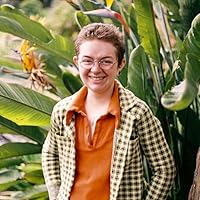
Grace Nichols was born in Georgetown, Guyana, in 1950 and grew up in a small country village on the Guyanese coast. She moved to the city with her family when she was eight, an experience central to her first novel, Whole of a Morning Sky (1986), set in 1960s Guyana in the middle of the country's struggle for independence.
She worked as a teacher and journalist and, as part of a Diploma in Communications at the University of Guyana, spent time in some of the most remote areas of Guyana, a period that influenced her writings and initiated a strong interest in Guyanese folk tales, Amerindian myths and the South American civilisations of the Aztec and Inca. She has lived in the UK since 1977.
Her first poetry collection, I is a Long-Memoried Woman, was published in 1983. The book won the Commonwealth Poetry Prize and a subsequent film adaptation of the book was awarded a gold medal at the International Film and Television Festival of New York. The book was also dramatised for radio by the BBC. Subsequent poetry collections include The Fat Black Woman's Poems (1984), Lazy Thoughts of a Lazy Woman (1989), and Sunris (1996). She also writes books for children, inspired predominantly by Guyanese folklore and Amerindian legends, including Come on into My Tropical Garden (1988) and Give Yourself a Hug (1994). Everybody Got A Gift (2005) includes new and selected poems, and her collection, Startling the Flying Fish (2006), contains poems which tell the story of the Caribbean.
Her latest books are Picasso, I Want My Face Back (2009); and I Have Crossed an Ocean: Selected Poems (2010).
Grace Nichols lives in England with her partner, the poet John Agard.
I do make periodic efforts to read more poetry and I’m already a fan of Grace Nichols, having read another collection of her poetry and a novel. Nichols is Guyanese and her poetry reflects Caribbean culture and rhythms. These poems have more playfulness and humour than some of Nichols other works. Nevertheless they make serious points:
“Shopping in London winter is a real drag for the fat black woman going from store to store in search of accommodating clothes and de weather so cold Look at the frozen thin mannequins fixing her with grin and de pretty face salesgals exchanging slimming glances thinking she don’t notice Lord is aggravating Nothing soft and bright and billowing to flow like breezy sunlight when she walking The fat black woman curses in Swahili/Yoruba and nation language under her breathing all this journeying and journeying The fat black woman could only conclude that when it come to fashion the choice is lean Nothing much beyond size 14”
Nichols is obviously questioning the traditional aesthetic concerning female beauty and creating a non-conforming heroine. The title of the book immediately raises three social stereotypes; fat, black and female. Nichols also considers the role of female labour as the poems move between Britain and the Caribbean;
The daily going out and coming in always being hurried along like like ... cattle In the evenings returning from the fields she tried hard to walk like a woman (...) O but look there’s a waterpot growing from her head
These portrayals of women are not monolithic and there is a nuanced exploration of female identity, but all of the poems have a great vitality about them because of the way Nichols expresses herself. She describes her own purpose in writing this:
“Although The Fat Black Women's [sic] Poems came out of a sheer sense of fun of having a fat black woman doing exactly as she pleases, at the same time she brings into being a new image--one that questions the acceptance of the "thin" European model as the ideal figure of beauty. The Fat Black Woman is a universal figure, slipping from one situation to the other, taking a satirical, tongue-in-cheek look at the world”
And
“The fact that, I mean, all of our cultural "things" were denigrated and looked down upon while the European "things" were the ones celebrated in every way, even in terms of physical beauty. So there is always going to be that tension because some of these things still exist even today. So some of your writing will be a kind of reaction against that, impacting against it and at other times there is synthesis.”
The fat black woman remembers her Mama and them days of playing the Jovial Jemima tossing pancakes to heaven in smokes of happy hearty murderous blue laughter Starching and cleaning O yes scolding and wheedling pressing little white heads against her big-aproned breasts seeing down to the smallest fed/ feeding her own children on Satanic bread But this fat black woman ain't no Jemima Sure thing Honey/Yeah
Again here there is a warmth, but it is also satire as it reflects on a US advert for pancakes from the midcentury.
This is a good collection of poetry and Nichols makes her points with great grace and humour.
The recent booktube debates over the importance of diversity in literature led to me finally picking up this book, after having it on my tbr since forever and my bookshelves for almost a year. I use the term 'debate' lightly, as there should never be a question over the importance and impact that the representation of all persons of colour and expression of all sexualities can have on an individual. The only 'problem' I can see with diversity, is that there isn't enough of it! Thankfully the vast majority agree and the few hate-filled individuals concerned in the original argument were told in no uncertain terms where to go with their outdated and disgusting views! This debate has, however, heightened my awareness over my own need to diversify my reading and my bookshelves.
Now that is settled, let's get on with the actual review.
This is an anthology of short, autobiographical poems upon the primary subjects of skin colour and body image. I found each one a strong and representative literary manifestation of the strong and independent woman who penned them. This collection, despite short, was beautiful and poignant and each individual poem managed to convey a vast amount in such few words.
I found this a wonderfully empowering collection that both heightened my awareness over the feelings expressed by someone of Caribbean origin whilst remaining relatable and approachable to all. This depicts feminist values that spurs the individual to reject categorical definitions of both themselves and others and to learn to love both the physical form and the soul of the person they are.
My first foray into a book of poems. These poems were clever and deep. Initially I was set aback as some of the first poems were specifically about being fat and black and were tinged with some self-loathing and defensiveness. As the poems continued, I started to understand (without it being stated) that these were Caribbean Island life (specifically sugar plantations). There were also poems of (what I hope was) genetic memory of the feelings evocative of subjugation and unwanted expectation. The ending poems were evocative of independence, and renewal.
What a thing to see! What a thing to experience! I loved every page.
Invitation, a beautiful piece of poetry, body positive before body positivity was a thing, felt like Phenomenal Woman from an Island woman's perspective, and I was here for every second of it.
There's something about when things are written for you. It feels like love, it reads like love, it fills your soul up, and it gives and gives.
Born in Guyana, Nichols moved to the UK in the late ’70s and, since then, has written some of the most vital and moving works of Black poetry we’ve ever seen.
The Fat Black Woman’s Poems is divided into several sections, each with its own emotional and thematic focus. The first section is a joyous celebration of fat and Black bodies.
The poems in this opening section will have you laughing out loud and feeling proud of your physicality.
أن تمـوت ممتلئـًا بالأمل أفضل من أن تعيش بيأس هـزيل .................... الوطـن حيث يكون القلـب .................... فى انتظار ابتسامة ثيلمــا :
تريدين أن تمسكى العالم بيديك وتصلحيه كما تصلحين غرفة معيشتك تريدين أن تمسكى بظلم الحياة الكثير والقليل وتسحقيه بيديك بحلوه ومـره تريدين أن تصرخى لأن رأسك صغير جدا على أحلامك والأطفال يجرون بسرعة يتصرفون كالمهرجين ويدمرون الأثاث بينما أجلس بين ذلك كله .. أراقبك وأعلم أنك فى أيه لحظةالآن ستظهر ابتسامتك.. لتغمرنا وتداوينا كلـنا
A generous, flexible collection that traverses themes of embodiment, migration, lust, and longing in deceptively-simple verse. Nichols really shines here in her ability to collect and connect different poems in such a cohesive collection (seriously, this is one of the best assembled books of poetry I've ever read) AND in her skillful and spare-enough use of repetition, slant-rhyme, and word-invention so that each moment felt intentional, never commercial, never gimmicky. Superb.
Grace Nichols is a marvelous poet, who uses humor to explore her own alienation as a Caribbean person living in Britain and as a large woman in a European culture that valorizes thinness. Her poems are laced through with both vicious irony and good natured wit, drawing attention to how her skin tone, her Caribbean heritage, and her size make her an oddity in London, but also finding moments to identify with other immigrants also dreaming of home in the London cold. She writes lovingly of the tropical Caribbean, evoking the sea, various fruits, sugar cane, and the equatorial sun. But this longing for home is counterbalanced with poems evoking the colonial plantation heritage of the Afro-Caribbean--poems looking back to the days of slavery and plantation service when African slaves cut down sugar cane for transport back to Britain. All of these themes, all of these concerns, come together in a wonderful collection demonstrating the humor, sorrow, pride, and rage of the postcolonial experience. https://youtu.be/s0jQxxc8a00
I really enjoyed Grace Nichols's poetry and this was no exception! Her selection of poems from this book were some of my favorites in her poetry anology I Have Crossed an Ocean: Selected Poems which made me want to pick this one up! I very much enjoyed this one as well, but once again my favorites were in the first section of "The Fat Black Women's Poems" and I enjoyed, but slightly less so, the other sections.
I felt hugged by this book. I loved the self-love, adoration, and pride in these poems as well as the honest eye on history and what that means/has meant to the black woman's body. These are short poems, like little jabs at perception. Mostly what I felt is love in these poems. Which was really nice. These poems have a Caribbean accent, which was also really nice.
I studied this book when i was finishing my a level english language and literature course at college. I loved it. She writes with pure honesty on how she views the world and vise versa. It made me laugh at some of the references she uses. Its one of the best poetry books i have ever read and what makes it brilliant is it written as though the words were being spoken. Must read.
I enjoyed this slim volume of poems by Grace Nichols, which I picked up after reading an anthology of poems on World War 1 in which her's stood out. There are some lovely sounds and images in these deceptively simple poems, and like poetry by Linton Kwesi Johnson or Robert Burns, it is poetry in which the accent of the author is an integral part.
This was amazing. Everything about this anthology is deeply personal, and immensely relateable. All women, especially woman of colour, should read this book. It evokes such powerful imagery of Caribbean culture and of the general, often overlooked struggles of a black woman in western society. Just incredible.
I enjoyed this collection by a British poet who emigrated from Guyana - loved the occasional humour and playfulness, the body-positivity, the way she dealt with themes of race, migration, and female labour.
Economical with language yet evocative and lyrical, Nichols’ poems collected herein are autoerotic odes to fat black joy; brimming with vitality and roll-of-the-tongue rhythm. The ‘thin’ (in length only) titular collection, as well as those grouped with it, not only dismantle Eurocentric beauty standards and racial stereotypes with relish, but are poignantly ruminative on the homesickness of the Afro-Caribbean immigrant experience.
A really good poem anthology. Grace Nichols discusses body positivity, Caribbean culture, race and migration from a personal level. While important subjects are discussed there is also quite a lot of humour in these poems too.
I love this collection of poetry that empowers from the point of view of a black woman. A scholar I know spoke about the similarities in voice to Chaucer’s Wife of Bath.
The word play was so incredibly clever and I really did enjoy trying to dissect and understand the authors point of view. Also I feel like I learned so much cool vocabulary haha! Always a big plus :)
I'm not a huge poetry fan. I find it difficult to engage with and, sometimes, to understand. That's something I'm looking to change, but I don't think collections like this are going to change anything.
There were some poems in here which I really, really liked. I found them very empowering and I found the concepts of exploring blackness and fatness very interesting indeed. If I was more of a poetry fan than I am maybe I'd have liked this more. Maybe some of the messages wouldn't have got lost in translations like they did when I read it this time around.
I don't think this kind of poetry is for me. Lines are very short and something that could simply have been said as a sentence is spread across many, many lines. That doesn't really appeal to me no matter what the poetry is about. It's too choppy for my liking and I don't really see the point of it. In a couple of the poems in here it generated a nice rhythm and I could understand its use in that respect. Otherwise I wasn't very impressed. Also, there's quite a lot of repetition in this collection. Many of the poems are very similar. I understand the need for that because they're addressing a common theme, but it can get a little monotonous.
I wanted to really like this collection because I love the title and I liked the sound of the premise and the dominant themes. Unfortunately, I didn't click with the style. Poetry and I just don't get on and especially not this style of poetry. Perhaps upon studying it or upon me finally getting into poetry my opinion may improve, but for now this isn't really my thing and that's restricting my view of it.
I have mixed emotions about this poetry book. Nichols is studied widely at GCSE and at A-level so I did get into this poetry book hoping to read some empowering black feminist literature. While I'm sure Nichols may very well have intended to write an empowering poetry book, the poor, lack lustre writing style let this book down big time, and I'm not going to lie, I was incredibly disappointed.
Ok, so I get that Nichols and her husband Agard have a habit of write short, simple yet powerful poetry. I personally thought Agard's poem "Flag", as short as it was, was incredibly powerful. This was not so much the case with this book. A lot of the poems became quite repetitive and at times silly. A lot of poems had one worded lines. I thought "...And A Fat Poem" was ridiculous.
My other problem with this book was there were so many poems that I thought had real potential to be seriously empowering, like "The Fat Black Woman Versus Politics", but these poems were just ruined by Nichols' habit of going off on tangents when writing.
The reason however as to why I gave this book 3 stars instead of 2 if I disliked it so much, was because there were powerful poems like "Looking At Miss World" that made up for the other dire poems. If only Nichols followed this pattern with the rest of her poems.
"IT IS BETTER TO DIE IN THE FLESH OF HOPE THAN TO LIVE IN THE SLIMNESS OF DESPAIR"