

What do you think?

a
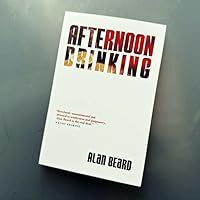
In the late 1960s Andy Warhol, one of the most influential artists of the twentieth century, set out to turn an ordinary book into a piece of pop art. He said that he wanted to create a 'bad' novel 'because doing something the wrong way always opens doors'. The result was this astonishing account of the famously influential group of artists, superstars, addicts and freaks who made up the world of Warhol's Factory.
a: a novel was created from audiotapes recorded in and around the Factory between August 1965 and May 1967 and transcribed verbatim, complete with typos and missing words. It begins with the fabulous Warhol superstar Ondine popping pills and follows its characters as they converse with inspired, speed-driven wit and cut swathes through the clubs, coffee shops, hospitals and whorehouses of 1960s Manhattan.
This is a unique conceptual project -- part novel, part artwork -- and is the perfect literary manifestation of Andy Warhol's pop art sensibility.
a: a novel was created from audiotapes recorded in and around the Factory between August 1965 and May 1967 and transcribed verbatim, complete with typos and missing words. It begins with the fabulous Warhol superstar Ondine popping pills and follows its characters as they converse with inspired, speed-driven wit and cut swathes through the clubs, coffee shops, hospitals and whorehouses of 1960s Manhattan.
This is a unique conceptual project -- part novel, part artwork -- and is the perfect literary manifestation of Andy Warhol's pop art sensibility.
451 pages, Mass Market Paperback
First published January 1, 1968
About the author
Andy Warhol
417 books618 followersAndy Warhol was an American visual artist, film director and producer. A leading figure in the pop art movement, Warhol is considered one of the most important American artists of the second half of the 20th century. His works explore the relationship between artistic expression, advertising, and celebrity culture that flourished by the 1960s, and span a variety of media, including painting, silkscreening, photography, film, and sculpture. Some of his best-known works include the silkscreen paintings Campbell's Soup Cans (1962) and Marilyn Diptych (1962), the experimental films Empire (1964) and Chelsea Girls (1966), and the multimedia events known as the Exploding Plastic Inevitable (1966–67).
Ratings & Reviews
Friends & Following
Create a free account to discover what your friends think of this book!
Community Reviews
Displaying 1 - 28 of 28 reviews
February 4, 2009
Written by my cousin Robert Olivo who was one of Andy Warhol's Velvet Underground Superstars, Ondine. Robby was a stutterer, an alcoholic and drug addict. He wrote the book and Andy put his name on it. What people will do for drugs!

May 30, 2008
This sounded as though it might be interesting, but it turned out to be sort of unreadable. Andy just said "Hey, let's tape record everybody and then have someone type it." That's a good way to document a scene, but not exactly a stellar way to write a novel.
It did make me almost late for work when I was reading it in the tub..it's the sort of book you end up jumping all around in, because it's so homogenously gossipy, bitchy, bland....it's about Ondine more than it is about Drella (Andy)...and Ondine is friggin' annoying...you get the sense he thinks of himself as a character out of Genet...everyone in A is so messed up on amphetamine (partially responsible for the title...the A-heads grouped around Ondine) and whatever else is available, that normal life is a weird joke to them. I believe it's called arrested development...like when Ondine finds the newspaper pics of a child suffering from progeria hilarious. These are people who let one junkie shoot them all up with rat poison (strychnine) at a party and still wax nostalgiac about it. But like most things associated with Warhol, in the end the book is not horrifying, illuminating, endearing, or even that interesting...it's neutral to the point of boring, as neutral as Warhol was in his stance towards life...this is the guy that filmed a mall escalator running mostly empty for hours, after all, the guy who said that all cars should be black (he did have a sense of humor)...although I admit he's very funny in that little book of his thoughts on love, because no one ever talks about love in those neutral, blah terms...that one's worth picking up if you can find it, it's like a five minute read; I think it's called Warhol on Love. I suppose some people would read A and think it's Felliniesque or a modern adaptation of the Satyricon, but it's so, "oh, i don't know...something or other." Uh huh.
Andy Warhol may be the only "important" artist in the Western canon whose entire oeuvre was based more on attitude than ideas. (Neutrality and boredom are attitudes more than they are ideas.)
Hello Juliet and Robert.
I think these people dropped acid (and trou) more than they dropped names.
It did make me almost late for work when I was reading it in the tub..it's the sort of book you end up jumping all around in, because it's so homogenously gossipy, bitchy, bland....it's about Ondine more than it is about Drella (Andy)...and Ondine is friggin' annoying...you get the sense he thinks of himself as a character out of Genet...everyone in A is so messed up on amphetamine (partially responsible for the title...the A-heads grouped around Ondine) and whatever else is available, that normal life is a weird joke to them. I believe it's called arrested development...like when Ondine finds the newspaper pics of a child suffering from progeria hilarious. These are people who let one junkie shoot them all up with rat poison (strychnine) at a party and still wax nostalgiac about it. But like most things associated with Warhol, in the end the book is not horrifying, illuminating, endearing, or even that interesting...it's neutral to the point of boring, as neutral as Warhol was in his stance towards life...this is the guy that filmed a mall escalator running mostly empty for hours, after all, the guy who said that all cars should be black (he did have a sense of humor)...although I admit he's very funny in that little book of his thoughts on love, because no one ever talks about love in those neutral, blah terms...that one's worth picking up if you can find it, it's like a five minute read; I think it's called Warhol on Love. I suppose some people would read A and think it's Felliniesque or a modern adaptation of the Satyricon, but it's so, "oh, i don't know...something or other." Uh huh.
Andy Warhol may be the only "important" artist in the Western canon whose entire oeuvre was based more on attitude than ideas. (Neutrality and boredom are attitudes more than they are ideas.)
Hello Juliet and Robert.
I think these people dropped acid (and trou) more than they dropped names.

September 1, 2021
Dreadful

February 15, 2014
This is a tough nut to read, and I never would recommend starting with this as an introduction to Warhol's writing products. Basically it's typed-down (by various people, including schoolgirls) document of a-heads talking rubbish and doing things - and not always written down perfectly. Not something you want to re-read very often, especially if you can't concentrate much, but it's an experience for sure.

March 27, 2007
So this book is pretty fun. Not acutally fun to read, but fun in the way it was made. Andy had all these tape-recorded conversations of him with people on some amount of days (like 4, I think) and he hired a bunch of girls to sit at typewriters and listen and transcribe them. It's really fun to see it came out all jibberishly and random. (File under my weird fascination with typing thingies.)

January 22, 2020
Leave it to Warhol to create a novel without doing any writing. Just start recording, and let your friends do most of the talking. They all know what's going on, so it's more performance than natural behavior of life and business at the amphetamine-fueled, LGBTQ-centric Factory. Taboos of the time are circumvented because it's Art. In the end, the tape recorder is the main character.
November 29, 2008
Transcribing interesting people having conversations isn't as entertaining as you think it would be.
December 23, 2008
boring

July 11, 2025
This was read for illegible novels and oh boy is it illegible alright. I think that if I was invested in Andy Warhol this would have been interesting, but frankly this was just boring and a waste of time. In one of my in-class assignments, I mentioned that Warhol wanted to write a bad book and God, he sure did.

September 14, 2026
I thoroughly enjoyed this. It is not actually a novel, but transcribed audio recordings of conversations. I would recommend anyone who reads this, first read the last chapter or glossary that explains all of the nicknames used as well as various settings.
December 26, 2024
Unreadable and transcendent
March 24, 2025
mostly unintelligible with occasional revelations
September 13, 2025
Rating: yeah no definitely not

Read
September 18, 2026Let’s just say that only Andy Warhol & Co could put something like this together and call it a novel.
January 3, 2014
I rarely never finish a book, but couldn't read past page 168 of this book that Andy Warhol calls a novel. Yet I still feel compelled to write a review. While Warhol may identify this voluminous text as a novel, I won't waste space explaining why none of it fits any of the basic structure of a novel. Instead, I view this as just another one of his passively provocative art projects. Like those 24 hour films of the Empire State Building, this is a recording in text of many consecutive hours of his Factory denizens, centered on Robert Olivio, identified as Ondine. The "a" in the title is for amphetamines which fuel Ondine's gibberish that composes most of the "narrative." If you attempt this book, make sure you have an edition with Victor Bockris' glossary which explains who the players are and what's happening, including the passages with Edie Sedgwick, identified as Taxi. Reading this is like being a fly on the wall or cockroach in the floorboards of the Factory in the 60s. If you're obsessed with Warhol and the Factory then this is a must attempt to read, if you can get through it. What I really found revealing about this was just how fucked up the members of the Factory were and how much Andy, or Drella (Cinderella & Dracula) as he's referred to, manipulated them for his own artistic purposes. I can't say what my ultimate conclusion would be if I had made it to the end, but what I read left me sad and disappointed in how the revered artist used the people that clung to him.

March 19, 2012
Review originally written in may 2005
a a novel By Andy Warhol
Well I've spent most of this year wading through
this so called novel by Warhol. This is a book
that is a concept far ahead of its time as the
basic premise of taping 24 hours in the life of
Ondine and his A-head pals and then transcribing
it as a novel is pretty much the reality tv
concept as novel. the fact that the book is
unedited non spell checked and a complete mess
in terms of narrative etc only re-enforces the
reality tv concept.
The frequent yeah but no but type conversation
is almsot at times verbatim script for the
current comedy show Little Britain, a show that
has a couple of characters called Lou and Andy
so is giving out clear clues.
That and most of the lyrics to Walk On The Wild
Side by Lou Reed who of course is one of the
books caracters.
Still I would have preffered to read a well
edited 180 page book rather than the 457 pages I
waded through, but then you would not expect a
book about a bunch of Amphetamine Junkies to be
concise would you.
a a novel By Andy Warhol
Well I've spent most of this year wading through
this so called novel by Warhol. This is a book
that is a concept far ahead of its time as the
basic premise of taping 24 hours in the life of
Ondine and his A-head pals and then transcribing
it as a novel is pretty much the reality tv
concept as novel. the fact that the book is
unedited non spell checked and a complete mess
in terms of narrative etc only re-enforces the
reality tv concept.
The frequent yeah but no but type conversation
is almsot at times verbatim script for the
current comedy show Little Britain, a show that
has a couple of characters called Lou and Andy
so is giving out clear clues.
That and most of the lyrics to Walk On The Wild
Side by Lou Reed who of course is one of the
books caracters.
Still I would have preffered to read a well
edited 180 page book rather than the 457 pages I
waded through, but then you would not expect a
book about a bunch of Amphetamine Junkies to be
concise would you.
April 25, 2014
While this book sounded interesting when I bought it, it turned out to be the most insipid book I've ever read or seen. It's truly terrible. Whoever told Andy Warhol he could write did America a grave disservice. This isn't even a real novel! It's tape recorded conversations Warhol had typed up by high school girls and saved complete with misspellings and all. And it's all dialogue, most of it one sided, so you rarely know who's saying what. That's if you can get past all the gay sex and drug use. I don't want to know about rim jobs, thanks. Warhol himself is a character in this book, but he seems largely to be a bit player. I actually couldn't finish this book, it was so bad. One of the characters stutters and that's displayed in the text. It's like Andy took one of his bad movies and made a book out of it. I can't believe mostly one sided dialogue. How stupid. Definitely not recommended.

June 14, 2020
Hmm….A bit of a weird one. A collection of off the cuff conversations between random people (one of them who turns out to be Andy himself) recorded at ‘The factory’, Warhols legendary hangout for artists, junkies, rockstars, drag queens and seemingly anyone who was weird, wonderful and ‘in’ during the height of the swinging sixties in New York’s underground art scene.
It’s disjointed, repetitive and lacks any unifying theme or meaning. Although the content isn’t Andy’s, the concept certainly is. It is what it is, quintessential Andy, definitive pop art. Great to talk about, but not really an enthralling experience to actually read. Sort of like a literary equivalent to a reality TV show, in all its cringeworthy, vapid, but somehow strangely compelling glory.
It’s disjointed, repetitive and lacks any unifying theme or meaning. Although the content isn’t Andy’s, the concept certainly is. It is what it is, quintessential Andy, definitive pop art. Great to talk about, but not really an enthralling experience to actually read. Sort of like a literary equivalent to a reality TV show, in all its cringeworthy, vapid, but somehow strangely compelling glory.
October 27, 2011
This book solidifies my opinion that Andy Warhol's 'friends' were totally f*ed up. Beyond that, it is an extremely interesting, albeit unadulerated, portrail of an infamous social group. Kind of a Warhol painting in text form, if you will. It is a little hard to read at first, though. I suppose that is the way Candy Andy wanted it.
December 29, 2012
Conversations between drug-addicts and gay men was interesting for about twenty pages, and then it just became unreadable and unbearable. Also, it might be helpful to read the index in the back BEFORE you read the book, because it gave background on the characters that would have been helpful to know. Like that one of the characters is actually Andy Warhol himself.

April 5, 2010
An experiment worth finding the single-line gems in. I'll probably pick this up and read pieces of it again, but its the kind of document you might go for when you don't feel like paying attention to what you're reading.

July 25, 2007
A bit eccentric with conversation-ish writings. Fun but I would rather enjoy his art or films. Good collectible and reference though.

January 12, 2010
bizarre and entertaining.

July 17, 2012
This book is fucking terrible; I couldn't even get through 100 pages. There's no plot, just random people saying random things. This just reaffirmed my belief that Andy Warhol was a jackass.

November 11, 2012
One question.
Why?
Couldn't even get by the first 30 pages.
Great book for home decor though.
Why?
Couldn't even get by the first 30 pages.
Great book for home decor though.

February 7, 2013
GREAT !!!!!!!!!!!!!!!!!
June 26, 2014
SO AMAZING
May 6, 2016
Could not even get past page 40...
Displaying 1 - 28 of 28 reviews