The ancient Celts lived by and worshipped the moon. While modern, digital life is often at odds with nature – rubbing against it rather than working in harmony with it – is there something to be said for embracing this ancient way of being and reconnecting to the moon’s natural calendar?
January’s Quiet Moon reflects an air of melancholy, illuminating a midwinter of quiet menace; it was the time of the Dark Days for the ancient Celts, when the natural world balanced on a knife edge. By May, the Bright Moon brings happiness as time slows, mayflies cloud and elderflowers cascade. Nature approaches her peak during a summer of short nights and bright days – this was when the ancient Celts claimed their wives and celebrated Lugnasad. With the descent into winter comes the sadness of December’s Cold Moon. Trees stand bare and creatures shiver their way to shelter as the Dark Days creep in once more and the cycle restarts.
In The Quiet Moon, Kevin Parr discovers that a year of moons has much to teach us about how to live in the world that surrounds us – and how being more in tune to the rhythms of nature, even in the cold and dark, can help ease the suffering mind.
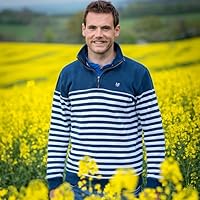
Kevin Parr is a writer, angler and amateur naturalist who lives deep in the hills of West Dorset.
He is a regular contributor to BBC CountryFile Magazine and Podcastt, Deputy Editor of Fallon's Angler, and has written for The Telegraph, The Independent, Caught by the River and many others.
His books include;
An Unnatural History of Britain - A Journey in search of our non-native species
The Quiet Moon - Pathways to an Ancient way of being
Rivers Run - An Angler's Journey from Source to Sea
If you go back a couple of thousand years, the people that inhabited this country are often called Celts. Very little is written about them, but what there is was written by the Romans and they took a dim view of their customs and habits. It is thought that they lived using a lunar calendar and no doubt use the four pivot points of solstice and equinox to frame their lives. But the truth is no one knows.
One man who has found that following a lunar cycle helps him deal with modern life and all the crap that it throws at him is Kevin Parr. He has slowly come to the conclusion that this less regimented way of marking time helps him become more in tune with the natural rhythms of nature and as a bonus, it has helped him no end with his mental health.
This is more than a gentle meander around the Dorset countryside though. Parr uses nature as a crutch to get him through the tough moments in his life. The book is split into twelve chapters each with a title of a moon, with wonderful names such as The Moon of Ice, The Moon of Dispute, The Bright Moon and it begins with the Quiet Moon.
In each chapter, we join Parr on his walks in his part of West Dorset. It is partly a history book and partly a natural history book and interwoven with these two main threads is a dusting of folklore, travel, memoir and musings on modern life. At times it feels like a confessional as he opens up about personal matters and other things that have been troubling his mind. As he immerses himself in research about the Celts way of life he realises that there is no clear definition of them and he fills in the gaps in a way that makes sense to him.
This in some ways is incredibly difficult to review. I can’t really put my finger on the exact reason why, but I really liked this book. But, I think it is because he is forging his own philosophy in his local landscape. There are things he writes about that I haven’t contemplated yet and need time to go away and think about them. However, there are other subjects that he writes about that I felt like I was looking into a mirror ball, where I would sometimes glimpse my own ways of interacting with the landscapes around me. It might not be everyone’s thing, but if you want something different to read about landscapes and one man’s place in the world, then I can recommend this.
A beautifully honest and poetically written book from Kevin Parr.
Kevin's meanders through nature whilst musing on our ancient ancestors, the wildlife, flora and fauna and rhythms of life are soul enriching to read. He is brutally honest about his mental health issues over the years, and as an increasingly potent anxiety sufferer, I found his writing very therapeutic and reassuring. A reconnection with nature, without any expectation, is a great thing for our troubled and tortured souls.
This was delightfully easy to read, yet full of information. Parr’s turns of phrase are immersive and his knowledge of the natural world extremely informative and full of interest. He is honest, soulful, provocative and relevant. I would recommend this to almost anyone.
I was really looking forward to reading this book- having read both of Kevin Parr's books and thoroughly enjoyed them cover to cover. So much so I asked for it for Christmas looking forward to time on the sofa with it.
I'm not suggesting that I didn't thoroughly enjoy this book - I did! But I think - for me - at times it falls between a few different bar stools in terms of its focus and flow. The context of the authors musing and walks during covid is there but occassionally the book jumps from idea to idea almost absent mindedly, which is fine and possibly how most of us were during lockdowns. However, whilst I enjoyed the context of the phases of the moon the inconclusive celt research and 'word' stuff eventually - for me - interupted some excellent passages of natural history writing.
Being a reader of Fallon's Angler I was amused to see Chris Yates pop up and wondered whether there might be a concession to the reading anglers but no - which is also fine -its not an angling book.
The author is obviously knowledgeable about the natural world, but I like the way that Kevin Parr doesn't take his reasearch and understanding too seriously - at one point, stating he doesnt want to be an expert on any one subject. In particular he accepts the reality is that we will never know the answers to some things but he can feel his own personal connections to the landscape and past civilisations which may have some basis in fact but simply provide him with his own way to look at and understand the world around him.
I loved the myth of woodcocks carrying goldcrests over the north sea (idea for a print I think) and I will never absent mindedly stub a walking boot into an anthill ever again having read this book. The illustrations are good and in keeping as well.
I have book marked some pages to go back and re-read at some stage - which is always a postive sign.
The Quiet Moon is a non fiction book that is a mix of nature writing, natural history, ancient history and a memoir. It follows Kevin Parr’s exploration into the how the celts connected with the moon, their names for their months and speculations on what the names of the months might mean. Kevin also describes a lot of the walks he goes on both in and out of Dorset throughout the second half of the pandemic in 2021/2022, and the wildlife he sees. Some of my favourite parts were about adders and kestrels, and it has inspired me to try and find an adder out in the wild myself. The prose and descriptions were beautiful and made the book more immersive. I also really liked how Kevin was open about a lot of things such as mental health and other personal struggles.
It is a slow paced book, set over a year and I wish I had the whole year to read it and to take it at that pace instead of reading it in a month for book club, as the pacing suits the topic and nature of the book perfectly. I definitely recommend this book if you want something that crosses an exploration of nature mixed with ancient Celtic beliefs, the moon, and honest personal writing from the pandemic.
It is a strange coincidence that I finished reading Kevin Parr’s The Quiet Moon on a New Moon. It made me think of several conversations in recent weeks about the calendar year, alternative calendars, and the concept of time. Austin Kleon wrote about the difference between experiencing time as linear vs. circular. How almanacs and lunar cycles observe the passage of time as the birth and rebirth of seasons, crops, and life itself. Humankind has needed a linear time structure to record and plan events. It is how the world runs. But simultaneously, the pandemic showed us that experience of time is subjective. It waxes and wanes just like the moon despite what the calendar says. I love how Parr describes ‘time’ in the prologue of this book:
Time is a harness because of our interpretation of its passing.
While reading about embracing seasons rather than rigid months in a calendar, Flint Books sent me this gorgeous book about the beauty of moon cycles. The cover page is a field drenched in the moonlight in a deep swathe of sapphire and sky blue. Subtitle- Pathways to an Ancient Way of Being. The writer, naturalist, and fisherman Kevin Parr journals his year of moons in the way of the Celtics.
Each chapter title is a traditional Celtic full moon name like the Quiet Moon for January and the Harvest Moon for October. The author delves deep into the etymological origins of the lunar months introducing the reader to the Coligny calendar- the oldest lunisolar calendar made in Roman Gaul perhaps in the second century CE. Physically, the Coligny is a fragmented bronze plaque written in Latin inscriptional capitals and numerals, but the terms are in the Gaulish language. There are twelve lunar months and an intercalary month is inserted before every 2.5 years- titled the Blue Moon in this book’s epilogue.
The author lives in the Dorset countryside. There are ponds, hedges, marlins, peregrines, adders, and of course, the moon. He writes about the family of adders that live nearby quite lovingly. I must confess my inherent unease about snakes has mellowed to a degree after reading this book. I suppose it’s the writing. Caring, insightful, fluid. There’s rain, sleet, and ice. There are tens of different species of birds, wildflowers, insects, snakes, and trees. Every walk described in this book can be revisited with the changing seasons. Here’s a dreamlike sequence from the book:
The sunset in the south-west is impressive, yet the moonrise has brought layers of lavender, rose and saffron that are soft like watercolour and yet dazzle like acrylic. And near the top sits the moon, a neat circle of clotted cream topping a slice of rainbow sponge.
Breathtaking prose. Sometimes witty in a sort of delightful phosphor spark. Even though the Dorset climate is different than here in Calcutta, I wrote down some remarkable similarities too such as the changes in flowering time and the appearance of birds during changes in seasons- called the phenological mismatch- thanks to climate change.
Parr doesn’t shy away from personal narratives in the book. Some of them are very honest and give the book an alloy-like strength. His struggles with mental health and anecdotes from his younger years actually elevate the core sense of this book- the way of being- life being a vast sum of cycles and seasons.
I think as a reader, I felt a connection to the mysterious Celts through this book more than any other historical account I have read. Even those are scant, often relying on the works of Julius Caesar and Pliny. The fruits of this book are to be enjoyed slowly over many lunar cycles. The reader might find solace in the way the Celts revered the land, the moon, and the seasons. Yesterday was Eid and a new moon brought cool showers late at night. It has been a record-shattering heatwave in the Indian subcontinent. Every day is a reminder of the stressed planet. And on Earth Day, I can’t think of a better book as a gift for family and friends to rejuvenate their interest in their relationship with nature.
In The Quiet Moon Kevin Parr takes the 12 full moons each year plus an additional blue moon and ponders life, mental health struggles, the natural world and relates this to the experience of the Celtic peoples who inhabited the land before him, as the year turns reaching each one in turn. Published in 2023 the research and setting for the book is primarily during 2021 when the world was still struggling to come out of COVID enforced lockdowns and lots of people discovered a new appreciation for the natural world on our doorsteps. I chose to read this book throughout the year, reading each chapter with the corresponding full moon as the year progressed and hence this book has remained a presence with me throughout the year.
During my time of reading I truly felt some nuggets of connection with Parr, particularly on his understanding of the difficulties of living with depression and anxiety and trying to keep them at bay, and I too have turned many times to the rhythm of the natural world to find some sense and stability in my life. These however tended to be much later on in the book towards the autumn and winter of the year but were few and far between and on the whole, sadly I felt this book missed the mark for me and had I been reading it less spaced out I suspect it would have been a DNF.
I enjoyed the nature elements of the writings; the retelling of Parr's experiences as he walked around the countryside close to his home in Dorset, and appreciated the level of research he had done into the Celtic world, how our ancestors lived in that part of the world and the importance of the natural world to their existence. However, I never felt that the two subject matters really intertwined well, the juxtaposition of subject matters was very disjointed and I felt parts of the text dry and difficult to wade through as Parr expounded his theories as to why he had chosen to give the full moons different names to the generally accepted ones. This felt like I was reading a self-indulgent dive into subject matter that lockdown had finally given him the time and space to explore and write about for his own benefit that he chose to turn into a book and I never felt I was really taken along on the journey. I think that as I committed to reading the book each full moon to relate my own current 2024 experiences of the natural world on my doorstep I was most let down by the final revelation that in fact only one of his walks related in the book was even done at the period of the full moon, and somehow that felt to me that we had not shared an experience at all.
I rated this book two stars for some of the mental health insights I did connect with but it won't be staying on my shelves for a reread.
I bought this book online thinking it was more about the Celts and their relationship with the moon. There was some info but not as much as anticipated. It is more the account a year through lockdown, with the Celtic moons as chap titles. I loved this because we seem to have inherited the use of North American tribes, a fact I was aware of before reading the book. Although I love to be in nature I don't read about it. Despite not ticking the anticipated box, it was beautifully observed, the detail was amazing, captured and described in delightful language; at times rather lyrical. Not for everyone but it would be a good intro for someone wanting to try out a nature themed book. I enjoyed how he hghlighed little things that created gratitude in his encounter with leveret.
Couldn’t finish it. Couldn’t get into it. Book club book of this month and just didn’t hold me, seemed to jump around a bit. Wasn’t what I expected. However meeting the author put much insight into it and it made a lot more sense. I’d be keen to try other books he’s written and his illustrated book that’s upcoming is just beautiful. His passion is worthy of more than this book enabled. Big on conservation and a nature lover. Others who persevered said it got better and the mushrooms bit is wonderful’
An approachable and engaging book that is part self help journal, part philosophical musings, part personal journal, and part nature journal. If I was to write a book, this is the sort of publication that I would gladly put my name behind. I had no idea what to expect going in, and found myself pleasantly surprised
In The Quiet Moon Kevin Parr discovers that a year of moons has much to teach us about how to live in the world that surrounds us – and how being more in tune to the rhythms of nature, even in the cold and dark, can help ease the suffering mind. And this just sums it up perfectly, I found fascinating the authors reflections and his connection to nature through the cycles.
This is a beautiful meditation about self, nature, England ( Dorset) and the roll the moon plays in connecting these and other subjects. Each chapter is a year’s journey through the phases of the moon and how one man discovers his part in the vastness of the natural world. The Quiet Moon is, for me, a bedside companion to pick up and read in the quiet of the evening.
Sometimes a little too wordy - uses 10 adjectives where 1 would do - but generally I enjoyed this collection of thoughts on the phases of the natural world, and the author's clear knowledge of local wildlife is enthusiastic and enjoyable
I love Eggardon hillfort. As a Dorset native I know it so well, its atmosphere, its changing moods, and these have been so beautifully and sensitively captured in this book, along with the wildlife of the changing seasons in this unspoilt area of west Dorset. A real treat to read.
Such a cosy read and every word was perfect for nature lovers. A great book for reading whilst camping, by the fire at home or anytime you want to connect with nature and feel warm and cosy. Loved this book, hoping there is more by this author.
More about the authors relationship with countryside and wildlife than about the ancient moon. Disappointing and despite being locally placed, I couldn’t get into this.