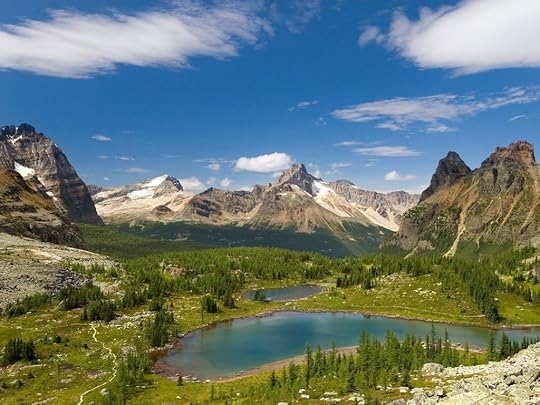
A tenth anniversary edition of the environmental classic includes a new introduction by the author, along with the moving personal narrative that celebrates the beauty and value of places yet to be corrupted by human presence. Reprint. IP.
Paul Gruchow was an American author, editor, and conservationist from Minnesota. A student of poet John Berryman, he is well known for his strong support of rural communities.
Gruchow died by suicide soon after completing the first draft of a book about depression. In memory of his literary contributions, an annual Paul Gruchow Essay Contest is conducted by Writers Rising Up to Defend Place, Natural Habitat and Wetlands through the University of Minnesota Landscape Arboretum.
This book came as an unexpected blessing, a pertinent reminder that sometimes we need to empty ourselves to reconnect with the world, to see it for what it truly is. We tend to associate the word empty and all its derivates with a long list of negative connotations, but Paul Gruchow’s meditations on the effect of emptying one’s mind is nothing short of electrifying. And regenerative.
Gruchow’s essays are like nothing I have read before. Natural history written in melodious prose, words carefully picked to create a lyrical effect, Gruchow is a thorough researcher with a poet’s heart. Respect for nature and transcendental ideas coexist in this book to the point of nourishing each other, engaging anyone who reveres life.
Following Gruchow’s musings while he trailed across Minnesota, Wyoming and Montana gave me much food for thought. Many of the things we have come to think of as logic or moral are the result of intellectual distortions after centuries of believing in the superiority of the human race over other forms of life that we consider trivial. Butterflies or lichens seem to be of no consequence in our civilized surroundings, but they might have a crucial role in the natural environment that defines a specific territory. Gruchow’s is as generous as he is unforgiving about the near-sightedness of human beings. With gentle but undermining prose, he navigates the contradictions of an artificial existence completely detached from nature and ponders about its future. Some of his conclusions sound premonitory and I can’t help but wonder what he would have thought about the current, unimaginable situation we got ourselves in, where a global pandemic and the more and more evident effects of global warming are severely affecting millions of lives around the globe.
An immense sense of communion, of belonging to something greater than us comes from emptiness. Getting rid of arrogant assumptions might enable us to recognize the wilderness in us, the kind of wilderness that Thoreau, one of Gruchow’s role models, equaled to goodness. And it’s precisely in this wilderness where fear and silence have no need to be at odds with fulfillment, as fear keeps us alive, and silence allows us to go beyond words. Silence is the language of clouds and sky, and in darkness the night can whisper to us. Everything that comes next is sheer magic; the kind of magic of discovering the right writer meeting the right place, like Solnit writing about Iceland or Wendell Berry creating a place like Port Williams; the kind of magic that brings you back home, no matter how, no matter what.
If there is any cure this side of the grave, I am certain that it lies in the balm of nature.
Maybe you'll only find oneness with this book only if you understand the necessity of empty places, naturalistic places. Maybe you'll appreciate this book if you love nature, travel, and the solitude of divine places. Maybe this is the book to read only when the introvert within you requires the simplicity of silence, the elegance of words structured so evocatively, so eruditely, they sink to the core of the solitary reader. One thing you won't disagree with: this guy knows how to write. In fact the sublimity of Gruchow's prose has been compared to Thoreau's.
Blue Mountains, Minnesota
This is powerful and poignant nonfiction writing, the kind I yearned for in Dillard, but alas, I couldn't get lost in Pilgrim at Tinker Creek - something was missing. However, regardless of my shallow appreciation of Dillard's deliberate, academic and scientific breakdown of nature, Gruchow certainly appreciates her works, for he quotes her at different intervals. If I dare compare this nuanced effect of thematic essay writing laced with subtle personal undertones to another's, I'd say this affecting texture reminds me of Solnit's writing; I'm thinking: The Faraway Nearby. After all, the respecter of nature goes to nature (and nature reading) seeking something; a reordering of the soul, calm for the chaos inside, rejuvenation of spirit, an understanding of the world.
I was drawn to this title because empty places are necessary for me. I grew up in a world of chaotic trauma and although I'm grateful to be years past it, I know how hard it is to ignore the trails that memories carve. Empty places are necessary for my peace; they are where I go to release skepticism and fear. See the beauty of the non-speaking world around you and forget the cruelty of the human race. And then there are the beautiful things about nature that happens in one's own backyard: like the idea that a chipmunk can be lured to you; the sounds that birds make when they make love, or when they call their children to eat the safflower seeds you've put into feeders for them; the dance of multi-colored Koi when it's feeding time; the turtle: where did he come from, where does he go? Slowly, I'll transform my backyard into a safe haven for nature's children, a necessary place.
Gruchow had noise within and it reveals itself in brief, subtle moments within these chapters. A sense of place provides healing balm. He was an adventurer, a climber of mountains, a seeker of solace, a man at odds with himself and his surroundings. This book was mentioned in a literary magazine lately, when another writer talked of his meeting with the cynical Gruchow, and the title made me look it up. I'm glad I did. The writing is sharp and soulful, profound and poignant, informative and insightful. It provides commentary on America's most beautiful landscapes, and a psychological look at one of America's most brilliant minds.
My favorites were:
The Blue Mountains of Minnesota "It is an odd irony that the places we call empty should retain some memory of the diversity of life, while the places we have filled up grow emptier and emptier."
The Nebraska Sandhills: The Flight of Cranes "I find structure in the life of cranes but not in my own life or in the lives of my children, I realized, because I see cranes in communities but I think of humans individually."
The Big Horns of Wyoming "I like too the idea of life lived at the edge. A spruce tree at the upper limits of a mountain treeline, thick and misshapen, shorn of its branches on its windward side, no more than shoulder high although it may be a century old, such a spruce speaks powerfully of the persistence of life."
The Summit "...the magic of a mountaintop takes hold, the allure of the summit grabs you and pulls you into its embrace. Its beckoning is as irrestitble as the pull of the magnetic field on the needle of a compass."
Wilderness Basin: The Ouzel "...the ouzel seems joyful because it sings in the face of adversity..."
Walking in Clouds "I had been, I realized, searching for the silence, begging for it, for the calm eye at the center of the storm raging inside me, and here, where I was unprepared for it, it floated down upon me like an autumn leaf."
In this book of twenty short interconnected essays, Paul Gruchow, wanders through the empty spaces of the upper continental US. Starting and ending in his home state of Minnesota, he travels down through South Dakota to Nebraska then west through Wyoming and Montana, before looping back east towards home.
For Gruchow, nature has a spiritual/mystical dimension that he exalts throughout the book; one increasingly under assault by an uncaring and unknowing populace. My favorite essay is his second where he recounts his annual pilgrimage to visit the Sandhill Cranes on the snowy banks of the Platte river in Nebraska one cold Easter. As is typical with all his essays, he not only deftly places the cranes in their natural environment, but positions them within the broader unnatural environment of highways and motels which surrounds and menaces their millennial-old pilgrimage with casual indifference.
This book is not only an exaltation to the natural world, but a lamentation to all that has or will be lost.
Unfortunately I didn't find all the writing a crisp as it could have been, nor all the insights so deep. Still definitely worth a read for all those with a yearning for some of the empty and rarely visited parts of the US.
Profound, sad, exhilarating, and lonely in the best way. I don't really know what to say about it. A book about empty places and the way humans have pretended they can detach themselves from the natural world as a whole.
I really enjoyed this collection of essays which I slowly savored each day over a two and a half week period. The essays are divided into three sections or books. The first two are about the author's travels in two different areas of the US. In the first book, Gruchow related traveling to areas of the midwest such as Nebraska, Minnesota, and Kansas. He went there to see migrating Canada geese and certain natural features of the landscape. In one essay he told about joining a group that traveled part of the Oregon Trail in wagons to experience a tiny bit what that was like for pioneers in the 19th century. It is typical of many people to see the flat prairies as boring and mundane, but in his eyes they are beautiful and full of interesting flora and fauna. It was obvious for those in wagons that the terrain was far from flat.
In the second book Gruchow and a friend traveled to Wyoming and climbed all around the Absarokas and the Bighorn mountains. He was not an experienced mountain hiker prior to these trips, but his friend wanted to show him how incredible being in the mountains is compared to Gruchow's beloved plains. It is clear that the author fell in love with mountain hiking, and his knowledge of the plants and wildlife makes reading about his hikes come alive in a way I haven't always found in nature writing. Gruchow wrote in a philosophical and lyrical way that I found both restful and enthralling.
The third book is still about his Wyoming hikes but now he was alone. These essays are more introspective as he experienced nature on his own, but he was also a bit tired of his travels and ready to go home. Gruchow had a wonderful way of describing what he saw and for realizing what is slowly disappearing due to the encroachment of humans. Much of what he foresaw as changing quickly in 1988 when this was published has undoubtedly come to pass. I recommend this book to anyone who loves nature writing.
I met Paul in 2001 (? or there about, I can't remember exactly what year it was). He was a guest speaker our annual Loren C. Eiseley Society dinner in Lincoln, NE. I was the current president of the society and wanted to know something about Paul when he arrived so I grabbed this book from B&N and read it before he arrived. It was helpful for me to put the words and the person together.
As a naturalists writer, I was impressed with the imagery Paul added to his prose. It was intense and meaningful. What I read was his MN upbringing, love for the upper Midwest and deep roots become obvious right away within just a few pages in. I would recommend the book especially for those with Midwest and upper Midwest roots.
Pleasantly surprised by this book. I found it calming and enjoyable. I appreciated the authors respect and empathy towards Native American history and culture. No shying away from or hiding the ugliness and racism of the colonization of the west while describing beautifully the natural world as it exists and existed.
Gruchow was a fine writer and naturalist. I most liked his asides that were imperceptibly wrought from natural descriptions to personal insights into the human dilemma that became part of his philosophies.
Even though this book was written over ten years ago, Gruchow's thoughts about nature and seemingly empty locations are true today. I do find it interesting when naturalists explore remote pristine areas write their concerns about the increasing number of people visiting these places. His work could not exist if he hadn't visited the area. The paradox is that written works about such places raise awareness about their fragility but also may increase the human traffic to them. Gruchow writes beautifully about the prairies in Minnesota and Nebraska as well as mountain areas in Wyoming and Montana.
This author was my first professor at Concordia College, a wonderful Minnesota writer. He was so inspiring to all whose lives he touched. He truly allowed me to believe in myself and my ability to make a difference. A wonderful book, and one which inspired my concern and love for "empty places," which of course are not empty at all. What a tragic loss to lose such an amazing writer who brings nature, community, and culture to life. He has been compared to Thoreau, Berry, and others in this genre, and I would agree.
Incredibly moving description of the tallgrass prairie--one of the rarest of all American landscapes. A gentle outrage against consumptive practices that continue to threaten it by a most-beloved nature writer.
This series of essays eloquently extolls the virtues for our psychic well-being of being able to spend time in places where there is no evidence of humans or human activity.