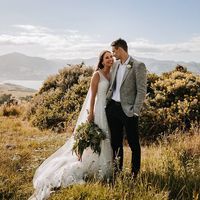
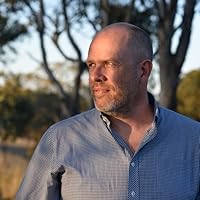
"More than a memoir, Farm is a call to arms for farmers to do better, for people to understand food systems better, and for all of us to join together and help heal the planet." Matthew Evans Is it possible to survive as a new farmer and change the future of farming at the same time? For years we’ve been told that the food system is destroying the planet. That there are too many cows and tractors, too much fertilizer, too much waste, and that farmers and food manufacturers are polluting our atmosphere. But we’ve also been told that food can help save us from the worst of global warming. How can it be both destroyer and savior? In 2018, Nicola Harvey and her husband, Pat, left their careers and inner-city Sydney life to farm cattle in rural New Zealand. They thought it would be exciting, even relaxing, but soon found themselves in the middle of heated arguments and deep divisions about food, farming, and climate change. In this profoundly personal story, Harvey takes readers into the heart of the industrialized global food system to share what life on the land is like when you’re a new farmer just trying to survive―and change the status quo. At odds with her family and struggling to find a place within her new community, Nicola is at first outraged at the lack of action to curb global warming. When she realizes, though, that we're all being sold a false fix, she begins to transform the farm into a site of activism. In the kitchen and on the land, Nicola finds hope and a path towards a cooler future.
A surprisingly engaging read. I expected a preach from the pulpit diatribe of environmental absolutes, instead a balanced honest personal reflection of the balances farmers are constantly trying to meet (no matter how contradictory)
A must read for anyone interested in a boots on the ground perspective of a kiwi attempt to make their ethical, environmental and financially viable
What stands out about this book is the narrative style of writing which made the topics of farming and the meat industry in the larger context of climate change a lot more interesting for me. As someone interested in these topics but can find them a bit taxing, the weaving of her own personal story into these issues made the learning process a lot more enjoyable. What was most interesting and touching to me was her own personal relationship with meat and the ways it nourished and comforted her after her miscarriage. It really makes the reader see things beyond what we establish as black and white in our heads when it comes to arguments between e.g environmentalist groups vs meat industry.
I especially liked how authentic and real Nicola was throughout, not offering any over-simplified solutions to these issues but took the time to show how complex they are from different perspectives between farmers, consumers, industries and governments. For example she argues that whilst we should all reduce our meat intake, the rise of meat replacements/fake meat has created mono-crops that can also harm the environment and is resource & energy intensive.
This book is for those who want a nuanced approach by someone who lives in between these chasms- a meat farmer that is also a climate activist.
Quotes: - ... but it's also a book about sacrifice, because I do not see a future without us all giving up something in order to create something better. That shouldn't be a cause of fear. The human impulse to break and remake afresh can result in a thing of startling beauty. p. 10
- If plant based products command a premium, and fresh whole foods are out reach for many, how can we crawl our way out of global warming via food choices? The entire food system is geared to profit, not collective wellbeing. p. 66
- Food has the power to transport and nurture, if you give it the room to do so. If it's reduced to an equation, a sum of footprints, methane and carbon dioxide equivalents, then we will fail at our task, because that process removes all traces of culture, care and joy- the very thing we need most to get us through. If it's used to shun, to label, to accuse someone else of inaction, we will fail. For that is a puny act that ruptures community, the very thing we need to rebuild. - p. 207
3.5 stars I enjoyed this book because I've been working in this industry and thinking about this kind of thing for a few years. The gist is... farming is hard, and even if you have good intentions re sustainability and regenerative it's hard when profits and cashflow are squeezed. Some new ideas for me - - The difference between how long methane and CO2 stays in the atmosphere. But are treated as equivalent. - How transparency gets lots amongst food for processing, catering etc. Eg. the supermarkets 'got rid of' cage eggs, but the majority of eggs produces in Aus don't end up in supermarkets. - How good intentions from the consumer might end up in supporting the wrong thing - eg. plant based products supporting intensive monocropping, or carbon-neutral beef often has to come from more intensive systems like feedlots which doesn't give off the warm fuzzies like 'grass fed' does.
Well researched and also well written and personable. Shows there are no simple answers - especially not to 'consume' our way to reduce climate impacts. A recommended, thoughtful read.
Farm tells the story of the author, a New Zealand-born woman, and her Australian partner moving to New Zealand to take up cattle farming after many years of office life in Australia. The change of life presents many struggles, none more than the author’s emergent passion for doing good by the animals and the environment. The story follows the author’s developing knowledge as she does her research and talks to many people in different countries. Also evident is the pressures of traditional farming and farming in a new way on the farmers themselves, and their relationships with each other. The story does not arrive at a solution, but rather the realisation that this is a journey of small wins and many failures.
Positive features 1. The author has done her research and covers a broad range of topics from ethics to soil, and from animal welfare to the motivations of the big firms in the food value chain. She leaves no stone unturned in her investigation, which leads the reader to learn something new in every chapter. 2. The author does not shy away from the failures they experienced, or the pressure put on her relationship with her husband and his with her father, a traditional farmer. She broaches the realities when for example they sell cattle for live export although it was against their principles, but they needed the income. 3. This is a book for farmers and city people alike, with both standing to learn. It is a broad subject that engenders much discussion.
Negative features 1. The author’s many research topics are covered too lightly. She introduces a topic and then is on to something else completely. This makes reading the book frustrating. She does not string her learnings or her arguments together, as they so deserve, being serious matters. There are many examples, such as when she introduces Māori people she has spoken to, but then does not delve into their thinking, which is slowly becoming more influential in NZ farming. 2. While the pace is fast, it feels rushed, as if a collection of notes have been strung together in a hurry. This may betray the author’s past employment on Buzzfeed, dealing with snippets of news. 3. Readers hoping for a solution – such as regenerative farming methods – to be singled out and explained will be disappointed. 4. The reader gets only a fleeting sense of the excellent work being done by many farmers who have the author’s passion for doing well while doing good.
I am grateful to the New Zealand Book Discussion Scheme for providing my review copy.
A rambling mix of semi-memoir of transitioning from city life to farming, treatise on the effect of post-colonial globalisation on agriculture, and aphorisms plucked from interviews and other works of literature about ethical and environmental challenges in cattle farming.
There are many interesting moments and issues raised, but the book suffers by trying to do too many things and is somewhat insufficient at each.
A fast-paced, almost desperate book that meets the urgency of climate change head on, this book is replete with simple messages. The best in my view is that we each need to drop puritanism and pick one thing to do to stop the slide.
Important message, and at times a joy to read. However this message is often hidden under superfluous, adjective-laden sentences that seem there only to prop up the author’s writing chops, as opposed to the narrative. Nary an editor in sight.