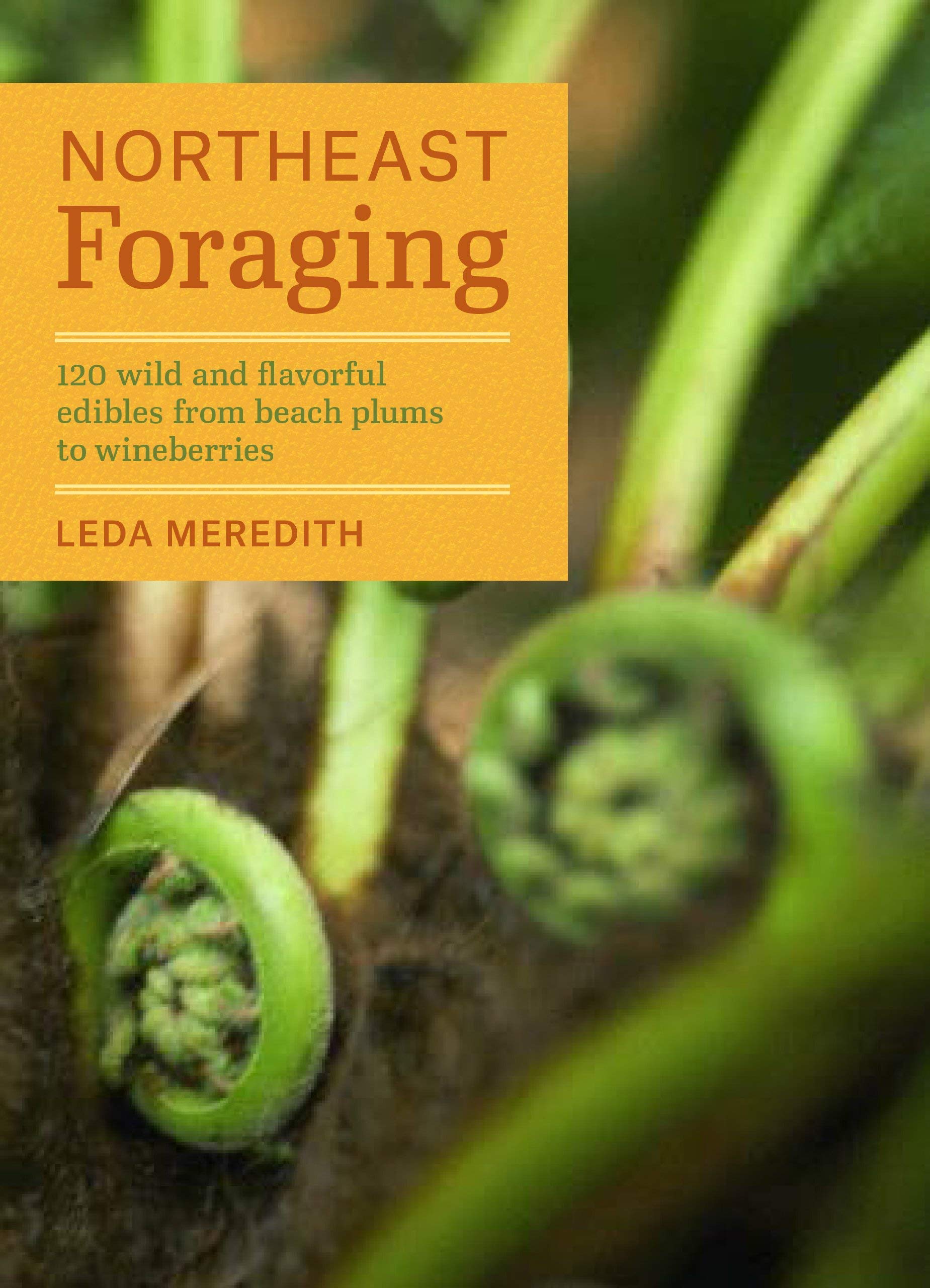
“An invaluable guide for the feast in the East.” —Hank Shaw, author of the James Beard Award–winning website Hunter Angler Gardener Cook
The Northeast offers a veritable feast for foragers, and with Leda Meredith as your trusted guide you will learn how to safely find and identify an abundance of delicious wild plants. The plant profiles in Northeast Foraging include clear, color photographs, identification tips, guidance on how to ethically harvest, and suggestions for eating and preserving. A handy seasonal planner details which plants are available during every season. Thorough, comprehensive, and safe, this is a must-have for foragers in New York, Connecticut, Massachusetts, Maine, New Hampshire, Vermont, Pennsylvania, New Jersey, Delaware, and Rhode Island.
I just read Gary Lincoff's book last week and gave that a not so great review on here because it had a few really bad mistakes. Some of this book's mistakes seem to be coming straight from his but I still think this one's better overall. My biggest issue with Lincoff's was that he uses pictures of green acorns and never mentions that green acorns are poisonous. This book at least mentions that they should be brown. Lincoff also recommends boiling acorns to leach the tannins before grinding them, which I can say from my experience hardly gets rid of any tannins at all (unless you're supposed to change the water a couple dozen times and spend 3 or 4 straight days boiling them or something). Meredith presents that technique as one option too, and actually kind of screws it up even worse by telling you to shell the acorns after leaching, which makes absolutely no sense. It almost looks like a typo but she says more than once to shell them after boiling. After that she at least mentions another approach that actually works though. I had also criticized Lincoff's book for basically saying that cattail rhizomes aren't worth the effort. This book gives a little more credit to cattail rhizomes but still doesn't mention that you can skip the work of processing the starch by just eating them like potatoes. Those two things are the only real issues I had with this one and neither of them are putting reader's lives at risk, so unlike Lincoff's green acorns they're forgivable.
It's kind of strange that such a comprehensive book left out chestnuts, beechnuts and pine nuts. I can kind of understand leaving out beech since it's so rare to find a nut that's actually healthy. In 4 years of gathering them I've only found one that looked the way they're supposed to. And you'll probably only find edible pine nuts around here if you steal them from someone who's intentionally growing them. Things like cambium and pine needle tea would have been worth mentioning at least. Chestnuts though.... how do you leave out chestnuts? A lot of people interested in this might be disappointed to see that there aren't any mushrooms either but that didn't really bother me so much personally. Mushrooms can be a lot of risk for something that doesn't produce much calories. Most people probably shouldn't feel too encouraged to play around with them. Other than those omissions this book covers almost every wild edible plant that I know of. It's still better than most other books I've seen on the subject. The title actually sells it a little short. It's not beach plums to wineberries. It's amaranth to yarrow.
A great guide that even beginners will be able to understand (and I include myself in that category!). I read this mostly for identification purposes, but I loved that the author skipped over the botany-speak and described the plants in language in a way that's easy to grasp. I also loved that she includes a "future harvests" section for each plant, so that readers are aware of when they can freely use as much of a plant as they can find and when they should be careful to leave some to seed.
This is mainly for my Northeastern US people, because while some plants mentioned aren’t strictly grown in the Northeast, overall, it won’t be entirely useful to people living in other regions.
🌱🌿☘️🌻🌼🌸🌹
I’m unsure exactly what I was expecting from this book, but as someone that has moderate foraging knowledge of plants in the area, I find it to be a good resource to start with, but also advise to dig deeper on each plant that you are looking into for absolute certainty before foraging.
☠️ Especially with the plants that have poisonous look alikes.
📸 Pictured is the Wild Carrot page to showcase that visually you only get one photograph to go off of, even though the author is fairly descript in explaining how to identify it. An overhead photo of the flower pattern, and a close up on the stalk itself would be useful (especially to a beginner) visually to ensure the plant they intend to harvest is not Poison Hemlock.
🌿 This book starts out with a preface from the author explaining her experience and how she cultivated a passion for foraging. It then moves forward with a well detailed introduction to foraging, being sure to emphasize sustainability in the practice of harvesting wild foods. It goes over concerns of pollution and how it affects these plants, and foraging safety.
It also categorizes these edible plants by season, so that you can narrow down and focus on only the plants that are available in the season we’re in. For example; field garlic is not likely to be found in the summer.
I found the formatting for information on each of the 120 wild edibles is simple, easy to read, and informative. This book explains how to identify the plant in question, where and when to gather, how to gather, how to eat, how to preserve, harvesting ethics, and any warnings that need to be known such as being aware of look alike, and what plants to avoid if pregnant and breastfeeding.
At the back of the book the author lists useful websites for identification, as well as foraging blogs to be inspired by, gives online community forum suggestions, YouTube channels, book lists, and a list of useful tools for foragers, however it’s really just three types of but crackers and tree sap tapping supplies, so not very comprehensive.
I do wish each plant had an accompanying recipe, and just a bit more information on it biology. Otherwise, I found this book to be a decent resource to reference as you begin your foraging adventures.
This is a great guidebook for foraging! There is a guide at the front that lists forageables by season and general location. The rest of the book is an alphabetically organized guide of foragable items. Each forageable has the following info: How to Identify, How to Gather, How to Eat, How to Preserve, Future Harvests, and Warnings for safety if necessary. Each entry has at least one photo. Some entries could have been better served with more photos, but in general the photo plus the "How to Identify" section is enough.
Unfortunately, like most other foraging guides, this book lists milkweed as edible. It seems that some people can eat milkweed and be fine, whereas other people can have very severe reactions to milkweed. There is a poison control web page dedicated to milkweed. They have "cardiac glycosides" which can possibly be medicinal in small quantities, but it has a narrow therapeutic window, which easily results in overdoses. Best to avoid altogether.
An excellent, useful guide. I just wish the alphabetization were not so wonky: it would be helpful to group all of the Rubus species together, for instance.
I enjoyed the general lay-out - which had edibles grouped in lists by season in the first few pages and then the bulk of the book was plant descriptions in alphabetical order by their common names. I also like how she described where and when to find and gave cooking examples. However, the plant specifics were short and left much to be desired. Each plant had one photograph, and I did not feel they were representative enough for me to use as a guide. I would prefer to have detailed diagrams of the entire plant or at the very least a picture of each edible portion of the plant (for instance roots, crowns, leaves, flowers). Instead the images often felt irrelevant and/or out of context and used more for the purpose of being pretty. Lastly, I did not feel that enough emphasis was placed on potential poisonous lookalikes or potential parasites (ie liver flukes and watercress was not even mentioned)... when warnings were present they were more of an afterthought; again an image for comparison would have been nice.
This is an excellent introduction to an intimidating topic, and one I will be adding to my own bookshelf and taking along on hikes and camping trips. My only qualm is that I wish each entry were accompanied by more than one photograph, some of which are not the most helpful for identification.
A great book promoting sustainable foraging and eating locally and in-season. I liked that sustainable practices were highlighted and information was given on how to harvest each plant sustainably so no habitat is destroyed, which can be an issue with foraging.
A list of plants in the very beginning of the book is arranged by season and habitat so a certain part of the plant that is available at that time is highlighted as edible. After that are plant profiles for over 100 edible plants in the Northeastern United States. I would definitely make sure you bulk up on identification of any plant you are going to eat before using this book as your definitive guide. There are identification sections describing each plant, however you would have to know some botany terms to use effectively. Pictures are included, but every plant may not look like that. The sections that are a lot more useful are how to harvest the edible part of the plant, when to harvest, and how to eat and preserve. I was also impressed with the variety of plants in this book that I don't often see elsewhere such as basswood, black nightshade, cattail, garlic mustard, juneberry, mugwart, mulberries (my favorite) and pineappleweed.
This book was provided for free in return for an honest review.
This may well be most of my area (I read the Midwest Foraging book) I recognize far more plants from my early foraging days! I liked this book! I am going to begin foraging again in the spring just to see whats available in my community. This book seems to cover everything, but I do like the warning at the beginning to know your plants before eating! Much like mushrooms, some edibles look similar to poisonous plant. And sometimes some plants CAN be toxic seasonally, or only parts of the plant. I think it was mentioned, too, that just because a plant is "safe" doesn't mean it's going to "agree" with you; try a very small amount before eating too much! Great book for new foragers. Photos will come in handy when id-ing plants.
Excellent basic ID images and lengthy number of species that most, if not all, could identify with some ease.
Only wish is for either an additional illustration or photos of a closeup of key identifying factors like “the hairs on the back of the leaves” to look for, or the “striation on its stalk”, that is specific to that plant, etc.
Written really comfortably for all levels and experience to enjoy!
Probably the best local guide available, this book provides simple yet substantial information on edible plants in the wild- from fruits to nuts to greens to roots. It includes information on where to harvest, how to harvest, when to harvest, the impact of harvesting, how to prepare, what to be cautious of, and what are some of the nutritional health benefits. Only criticism is that I would have liked more photos and/or illustrations.
This feels like 3 point something, but I'm rounding up to four. I appreciate the layout, and the information concerning use of different parts of the pants (in addition to the simple language descriptions of books). I think this sets out what it aims to do: introduce you to a number of plants that grow uncultivated in the northeast US. I do not feel that I could use this as a guide to safely go foraging, but it is a lot of information that can get you pointed in the right direction.