Longlisted for The Asian Prize for Fiction 2023 Shortlisted for the POPULAR Readers’ Choice Award 2024
The stories in Agnes Chew’s first fiction collection illuminate the complexity of choice when duty and desire collide, and what a person is willing to sacrifice. A daughter grapples with an unexpected discovery in the aftermath of her mother’s death. A husband struggles to understand his wife’s reaction to her pregnancy. An adolescent and a domestic worker exchange secrets whose weight they find they cannot bear. And in a corner of Changi Airport, a nondescript office cubicle, a patch of open forest, others strive to find meaning and home.
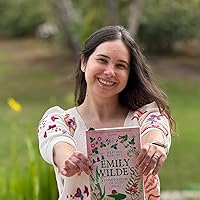
Agnes Chew is the author of the short story collection, Eternal Summer of My Homeland (2023), which was longlisted for the Asian Prize for Fiction, shortlisted for the POPULAR Readers’ Choice Awards, and a national bestseller in Singapore; and the essay collection, The Desire for Elsewhere (2016). Her short fiction won the Commonwealth Short Story Prize (Asia), and has been published in Granta, Necessary Fiction, and Best New Singaporean Short Stories, among others. An honorary fellow of the University of Iowa’s International Writing Program, she has been awarded scholarships and fellowships from the Sewanee Writers’ Conference, Tin House, Granta Writers’ Workshop, Hawthornden Foundation, Thailand’s Ministry of Culture, and more. She is currently working on her first novel, which was longlisted for the Mslexia Novel Competition and the Goldfinch Novel Award.
Such a lovely read, with 11 short sorties full of emotion and glimpses of Singapore. This book made me miss the country immensely!! My favorites: - Garden City - Home - Under the same sky
reading slump for awhile so took the longest time to finish this. Not bad though, i wish there was more to some of the short stories that ended abruptly
Garden City - An interesting examination of Singapore’s reputation as a garden city. She is beautiful and manicured, but at what costs? 🏡
When What Is Linear Meanders - The scoliosis mentioned feels like an incomplete metaphor of otherness in Singapore; of not following the norm. 🩻
All We Are at the End Is Ash - A story of a life cut short and the protagonist’s attendant regrets. We should all live our lives well before it is too late. ⚱️
For One Minute on Stage - The downsides (and dark side) of having braces. 😬
Home - When home doesn’t feel like home, you go to Changi Airport and make it your home. 🛄
Under the Same Sky - Albeit under the same sky, the grass is always greener on the other side. 🌾
Alone in Punggol - A slightly supernatural story of living alone and hearing voices. 💬
Diary of an Employee - This had me riling and made me want to punch through the pages to wake the protagonist up. More accurately: the diary of an employee who sees her manager as her god. 👩🏻💻
The Only Constant - Change is the only constant. Where we feel is our home changes according to time and our experiences. 🌏
Did You Know - You wouldn’t have known the horrifying end to this story about eco-anxiety. 🤰🏻
Don’t Be Foolish - Probably foolish for maids to have boyfriends. Perhaps less so for them to become closer to the children than their employer mothers. 🧑🧒🧒
Overall, these stories capture vignettes of life in Singapore, which I believe is Agnes Chew’s love letter to one of the countries she calls home. 🇸🇬
4 stars. I admire Agnes’ creativity for she managed to show a different aspect of Singapore in each story, not to mention with only a couple characters at a time.
While others described it as simplistic, I felt that Agnes’ writing skillfully conveyed her intended messages behind every short glimpse into her characters’ lives.
That said, I do feel some stories might have been better had they been slightly longer, but I appreciate Agnes’ aversion to closure, since that is a privilege life rarely offers us.
As brought up by Yati (@yatzerooni/Instagram), although the stories were unique, there was not much variation in the characters’ backgrounds as they mostly seem to be Chinese and from the higher-middle income group, the stereotypical Singaporean.
But perhaps that was the point; To show how 一种米养百种人 (one kind of rice feeds or raises a hundred kinds of people) and that despite having similar beginnings, we all end up at different points in life.
Overall this was a quick, enjoyable read that I would recommend to fellow SG denizens. While it was not world-shaking for me, that may be attributed to the fact that I have experienced much of it myself, from the late-discovery-scoliosis operation to studying overseas and traditional funeral rites.
Thank you again to Epigram Books for my review copy; all views are my own.
Agnes Chew’s Eternal Summer of My Homeland is an intriguing collection of short stories with an excellent portrayal of her homeland, Singapore, while residing in Germany. The protagonists of all eleven stories vividly explicate different realities in one’s ordinary lifestyle.
The opening story, Garden City, focuses primarily on Hui Shan and her father. In the aftermath of her mother’s demise, Hui Shan desperately grieves for her late mother and struggles to do her household single-handed with her newborn baby. Her father’s detachment from her and his isolation from his wife’s memories eventually disturbs Hui Shan, which grips her to find the reason behind his unusual behaviour that he secretly maintains a garden in a deep forest in memory of her late wife and fulfilling her last wish of creating an own garden. The discovery of his secret mission ends up in trouble. The heart of this story gets the attention towards the endless love of Hui Shan’s father towards her wife, which sets a great example of bonds.
Sonya, a ten-year-old girl in the story When What is Linear Meanders is diagnosed with scoliosis after a screening at school, which changes her entire life. Her forthcoming days were focused on her treatments and surgeries, wherein she failed to keep her connection with her studies and with her school friends. Later, she dropped her schooling and decided to step in as a financially independent girl. Sonya’s struggles cause the readers to meet up with self-confidence and self-assurance.
The story All We Are at the End is Ash is bound within the happy family of Jonathan. Their life was flawless until his grandmother was diagnosed with cancer. Jonathan was compelled to choose either his profession or his family at the point when his grandmother was struggling between life and death. Fortune later turns into an unfortunate, and he leaves home for his work and desperately returns for his grandmother’s final rituals. With this notion, the writer unveils the necessity of family bonds while Jonathan remains guilty of choosing the profession over his family.
The school-going boy, Jia Hao’s braces becomes a challenge for him in the story, From one minute on Stage. The complications he undergoes with his braces create a great impact on his daily routine while his inner battles transform him into a tenacious person. Also, the difficulty he faces in his Orchestra practice challenges his Commitment and Persistence.
Home is a story about Lim Bee Geok, a 61-year-old lady leaves her home and arrives at Changi Airport. Her daughter’s random visits to take her back home gradually lose sight, while Lim Bee Geok finds her present place more exciting and starts occupying the place for days, months and even years while considering Changi Airport as her future home. The reader’s focus is directed to her inner conflict, which she encounters while recalling her family disputes and trying to make attempts to express them to the two young ladies who started asking her several personal questions and the reason behind her extended stay at the airport.
The story Diary of an Employee is in contrast to other stories in means of the writing style. The epistolary form of writing adds focus to the story, while the story is woven about a hardworking man who updates his experience in written layout and becomes a permanent employee in a firm organisation, inspired by his manager’s dedication to his work. He learns various skills at his workplace and with his manager. He dedicates his fullest time to acquiring knowledge and achieving his goals at work while keeping aside his personal life. The writer’s experience and commitment towards his work and the workplace are the epicetre of this story.
A young Singapore girl, Nadine, meets a German man, Matthias, from whom she learns about love, mortality, and philosophy; this is the central portrayal in the story The Only Constant while Under the Same Sky gives a depiction of adapting Christianity as one of the primary notions in the story.
The other stories in the collection also give a vivid picture of one’s independent resolutions, as in the story Alone in Punggol, and Don’t be Foolish, while Did You Know focuses on a husband’s struggle to understand his wife’s pregnancy reactions and the idea of having children during a climate crisis.
Simple language and insightful characterisation make the readers easily get into the story. The ordinary lifestyle of the people living in Singapore, along with different perspectives of living, is clearly bought out through the character portrayal in each story. The stories have a subtle interconnection with one another, which delves a more profound message to the readers about the realities of life. The application of Singapore landmarks makes the stories more realistic and brings a clean depiction of the cultures and traditions of Singapore, which provides a vast familiarity among creative readers. The visual representation of the characters and the places makes the readers organic with the setting of Singapore while equally framing their traditions and cultures.
The characters recalling their nostalgic splits drive the story with interest and create suspense within every character, which immensely holds the readers to capture the focal points. The long nostalgic flow of every character in the story brings the contrast switch in each character from the past to their present life.
Agnes Chew’s Eternal Summer of My Homeland delves into a wide range of themes that have a direct focus on family bonds and relationships. The notion of questioning mortality gives a slight vision which advances due to overwhelming love towards their loved ones. Revealing the main ideas through flashbacks creates a significant impact on the advancement of the story. Ange Chew discloses the facts and experiences an individual encounters with an ideal portrayal of eleven stories.
11 short stories told through the lives of Singaporeans.
My favourites ones: (ranked) 1. Garden city (brought me to tears from start till end - grief from the pov of daughter & father who lost their mother/wife. Written 💯 ) 2. Home (a 61 yo elderly whose children estranged from her and husband left her for a younger woman. She ended up homeless and slept in the airport. Through her daily routine living in the airport (discreetly), her past were revealed. Next time when I go to the airport, I’ll look harder at the corners…) 3. Don’t be foolish (young Indonesian woman came sg to be a domestic helper. I thought I couldn’t relate because I never had a Domestic Helper… but it was such a untold and unheard perspective for me. Are our expectations too much on them? Are we even treating them as fellow human being whom we respect and trust?) 4. Under the same sky (2 girls who are bestest friend, primary sch —> JC , ups and downs of their friendship. Reminded me of my secondary sch days & friends 👋🏻)
Worthy mention:
- diary of an employee (written in diary forms where a young enthusiastic employee started her first job. Reminded me abit of myself. I was expecting a turn of events….. but it ended quite bland) - did you know (woman who struggle to accept her pregnancy in view of climate change)
Overall, easy to read and fast to finish as the stories are relatable and nostalgic for any Singaporeans who grew up in the 90s. The stories focus on the lower-middle income population where they long to find a place that belong.
The second half of the book is better than the first half but because of that, I think the writing falls prey to criticism in the sense its simplistic, 2nd pov, with minimal dialogue and a lot of “he did this” and “she did that” and with the odd sentences where it seems like she pulled out the thesaurus to change every word in a sentence — it all felt too Singaporean school compo writing-like for me.
The stories themselves, while I do understand the intention, also felt frustrating to read at times as majority of them felt like they ended too prematurely (very much like school compos once again with very sudden and ambiguous endings with little weight to linger in readers’ minds).
However, I did like the variety of stories and I felt like there was a good bland of stereotypical and unique characters and situations.
我在Iowa的International Writing Program認識了Agnes Chew,來這裡評分時不幸看到一篇書評,這書評的主要論點是作者沒有充份反映新加坡不同種族的處境,以及小說的情節沒有推展。這樣的評論能夠在重要的文學期刊出版,頗令人稱奇。 第一點,稍為對於文學倫理有了解研究的人也應該知道,為其他種族代言是甚具爭議的。在1988年,作家Anne Cameron決定停止再寫原住民主題的小說,原因是在該年的書展她遭到原住民抗議,反對她作為白人為少數族裔代言。我想到了2023年,文學討論應該與時俱進,討論的不再是作品寫多少其他種族——就算是書寫更多,也不代表不會陷入倫理困局。我想在作品中想像的倫理與邊界才是重點;就算寫得再少,如果作者提供了新的想像,也可以是好的作品。我從中文的二手資料已讀到了Shameem Black的Fiction Across Borders: Imagining the Lives of Others in Late Twentieth-Century Novels、Monica Ali的Brick Lane的觀點,他們對於這議題有很深刻的反思。 第二點,這是個很基本的文類問題,我想的是,如果作者對於短篇小說的期待是正確的,那麼短篇小說這個文類可以取消,長篇小說可以取而代之,因為後者才是適合闡述人生,推進劇情的文類。令我震驚不的單是的是書評作者論證粗疏,更加是新加坡的重要文學期刊竟然會刊登這種水平的觀點。 我在新加坡開過讀書會,認識了很多中文系的研究生,他們對於文學倫理、語言也有深刻反思,有一些評論是衝著我而來的,我也感覺獲益良多,我想在英文的文學界也有很多這樣的人,期望相遇,深入討論。
Finished this short and sweet Singaporean story collection in one day, the bulk of it on the red MRT line from Jurong East to Bishan. Although I would have hoped to see more transgressive and diverse themes explored in the short stories à la Ministry of Moral Panic, I did enjoy the simple yet poignant local portraits, stepping slightly beyond realism. Even though some of the stories fell a bit flat, I nonetheless liked "Garden City", "Under the Same Sky", "Home" and "Don't Be Foolish". An easy read that at times made me smile.
Eternal Summer of My Homeland is a gentle collection of stories about everyday life. While one story felt out of place, Garden City was unforgettable.
A husband tending a garden of his late wife’s favourite flowers—even after being ordered to clear the plot—became a quiet yet powerful expression of enduring love.
A reflective collection best read one story at a time.
Second half of the book was stronger. First half the stories read like incomplete narratives or conclusions often left you wanting. Favourite stories were the satirical Diary of an Employee, For One Minute on Stage and Did You Know.
Always interesting to see how Singapore life gets embellished. I think Chew manages to keep it believable and realistic enough. The one about the hydrangeas was such a strong opening to the series though.
Collection of short stories that is uniquely Singapore, although only a few stories were memorable and my favourite was on the satirical diary of an employee
Lovely collection of short stories. Thoroughly enjoyed reading them. I wish some of the stories could have more development. But I guess that’s what you get with short stories, right?
I loved this book. Having recently visited Singapore so I know a bit of the atmosphere and the surroundings some stories take place, but it's both very Singaporean and recognisable for people who don't know the city at the same time. Sweet, short and simple, elegant stories. Easily one of the best books this year already.