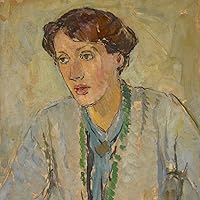
First published in 1977, this book focuses on Modernism, one of the most frequently used terms in the discussion of twentieth-century literature and culture. It provides an historical account of the concept, showing the relation of Modernism to Victorian culture and uses the work of Henry James and W. B. Yeats in its analysis. The text focuses on the time period between 1910 and 1930 and considers the criticism of T. S. Eliot and Virginia Woolf, Joyce’s Ulysses , Pound’s Hugh Selwyn Mauberley and the complex relationship of D. H. Lawrence to Modernism. The author also includes a section on developments since 1930 to show both the value of Modernism as a critical term, and the problems of achieving an exact usage.
Somewhat uneven and even unbearable at times. I sincerely enjoyed the discussion on Joyce, as well as the last summarizing chapter. Otherwise, this book felt like a rather too shallow study to be called academic, and too wearisome to be labelled popular.
This book provides an introduction to literature before, during and after Modernism. This is exactly what I wanted, having not studied literature and being interested in Modernist writers.
I quite liked the before 'Development' section. I haven't yet read Yeats and this book points me to some good poems especially 'The Tower.' I like his quote about how poetry should have 'blood, imagination, intellect, running together.' This has similarities to D. H. Lawrence's essay on the novel.
There is a necessarily small but interesting selection of discussions about criticism by T.S Eliot, Virginia Woolf, a long poem by Ezra Pound, Ulysses by James Joyce and a general discussion of D. H. Lawrence. There is a small bibliography of some criticism that looks interesting. The introduction to this section is great and discusses some of the things that characterise Modernist writing.
I am not so sure I'd like Pound, and the section on Ulysses is occasionally pretentious but I liked the discussion about Woolf. Sometimes these writers, like her, don't always do as they say. Her essay on 'Modern Fiction' seems worth a read: "Life is not a series of gig lamps symmetrically arranged; life is a luminous halo, a semi-transparent envelope surrounding us from the beginning of consciousness to the end."
This book is from 1977, so the section after 'Since 1930' is out of date. However it is quite interesting to see how the period after a first 'Modernist Revolution' was seen. Mostly, it seemed to have reverted back to realism.